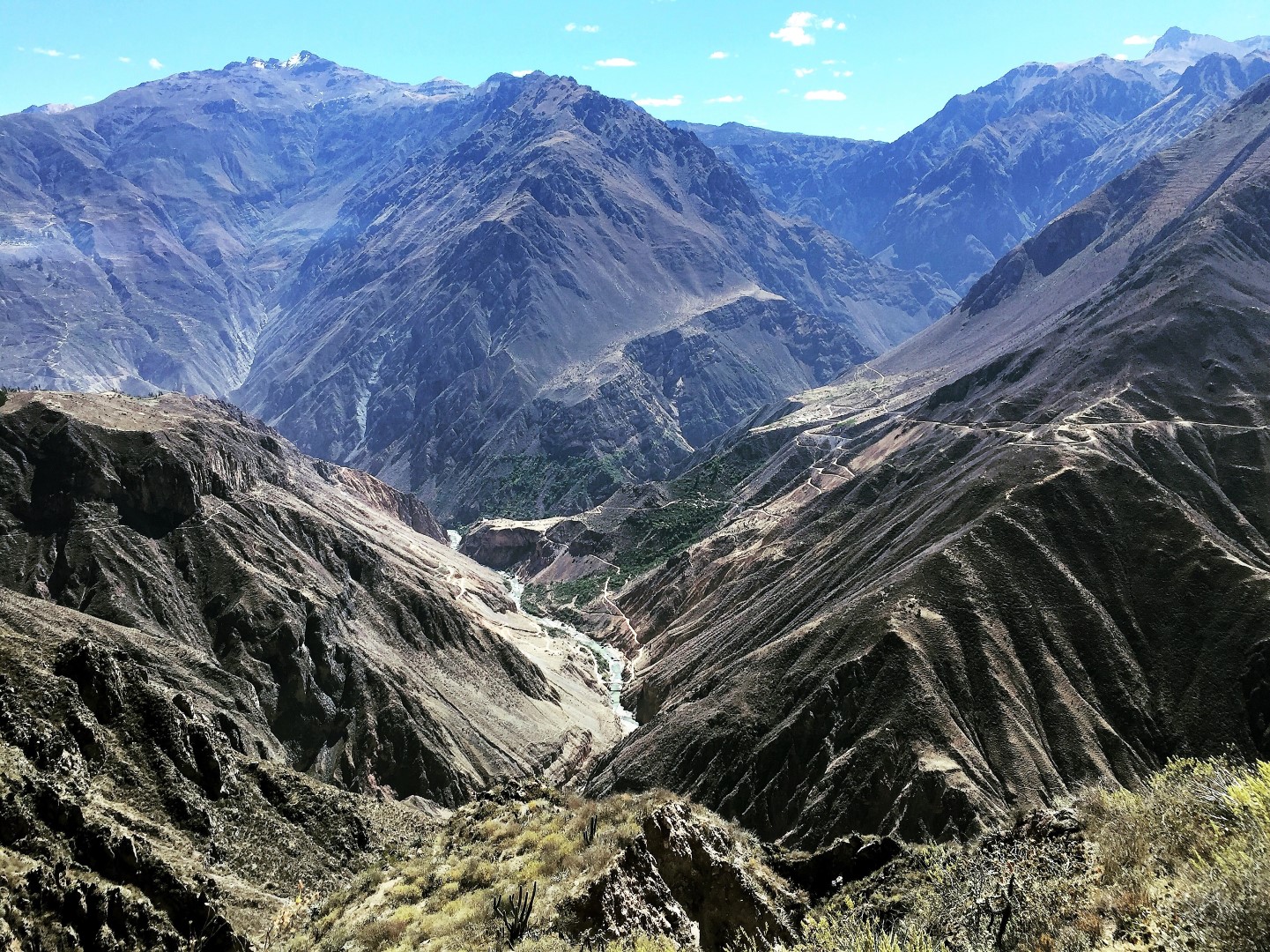
Peru encompasses glacier-covered Andean peaks, a desert coast along the Pacific, and steaming rainforest in the Amazon basin. Whether you are looking into a deep canyon from its rim, standing among gigantic jungle trees, or feeling the sun’s heat in the middle of the desert, it all makes you feel like a speck of dust within an incomprehensible expanse. Grandeur is the word that defines Peru’s natural world. Yet that is far from everything. Inca temples, the tombs of ancient civilisations, and shamanic rituals still practised today will make any curious person realise how much remains to be learnt.
To do more than simply see Peru—to get to know it—you need time. Every bus journey between cities takes at least eight to ten hours. Flying is possible, of course, and saves a great deal of time, though rather less money. With considerable effort, two weeks would be enough to cover the route most popular with tourists: Lima – Arequipa and Colca Canyon – Lake Titicaca – Cusco and Machu Picchu (of course!). But that is only a small fraction of what Peru offers. We spent four wonderful months in the country—the route is shown on the map—and volunteered on a research project along the way, yet still missed places well worth visiting.
Facts
Area: 1,285,220 km²
Population: 29.5 million
Languages: Spanish, Quechua, Aymara
Currency: nuevo sol (S/1 = EUR 0.28)
Capital: Lima
For scale: Peru is the size of twenty Latvias,
with fifteen times Latvia’s population.
Seasons:
- Dec.–Mar.: The hottest months, suitable for surfing along the coast
- Jun.–Aug.: The dry season, ideal for hiking in the Andean highlands and rainforest
- Sept.–Nov. and Mar.–May: Reasonable weather for travelling and fewer tourists
Characteristically Peruvian
The Incas and their ruins. Born in the Andes within present-day Peru, the mighty Inca Empire stretched from southern Colombia to northern Chile and Argentina. Although the Spanish conquered and destroyed the empire, the ancient sites and traditions left by the Incas remain relevant and alive. Cusco and the Sacred Valley are especially rich in ruined Inca structures, reminding residents and visitors of events more than five hundred years ago. Inca traditions have also survived, including celebrations of the summer and winter solstices known as Inti Raymi. It is largely thanks to the legacy of the Incas that thousands of tourists arrive in Peru every day.
Languages. Yes, one of the principal languages of the Incas is still alive: Quechua continues to be spoken. Peruvians are, in fact, proud of speaking it. When local people talk to me in Spanish, they often emphasise that their family speaks Quechua, demonstrating that they consider themselves descendants of the Incas. Aymara, a language that also existed during the Inca Empire, is spoken in southern Peru. Today, both languages are used mainly in the Andean highlands. In regions where they are common, they are taught in schools, and in recent years, the Peruvian government has paid increasing attention to their preservation. Various languages are spoken by indigenous communities in the jungle as well. Some of these communities remain untouched by modern civilisation—the so-called uncontacted tribes—so it is impossible to count precisely how many languages exist in the rainforest.
Plant medicine. Peru has an extraordinarily rich plant world, and people still hold folk remedies in high regard as the first treatment for simple ailments. Yet there are much more serious problems for which we Westerners have found ourselves at an impasse. This is why Western visitors increasingly travel to Peru for ceremonies that shamans have practised for centuries. For one person, it may be a last hope in treating depression or addiction; for another, simply a search for themselves. Other travellers have told us miraculous stories about Kambo, San Pedro, and ayahuasca ceremonies. While Western medicine treats consequences, shamans begin by treating causes. Most people would undoubtedly look at this critically: “But it hasn’t been studied in a laboratory...” Who knows? A worldwide “return to our roots” has begun, and perhaps these ancient ceremonies will be revived to address what seems impossible to resolve. In a sense, it is already happening. Research centres have appeared in recent years where Western scientists document and study shamans’ knowledge of medicinal plants. One such organisation is the Runa Foundation. The potential hidden within the Amazon rainforest’s botanical diversity is beyond comprehension.
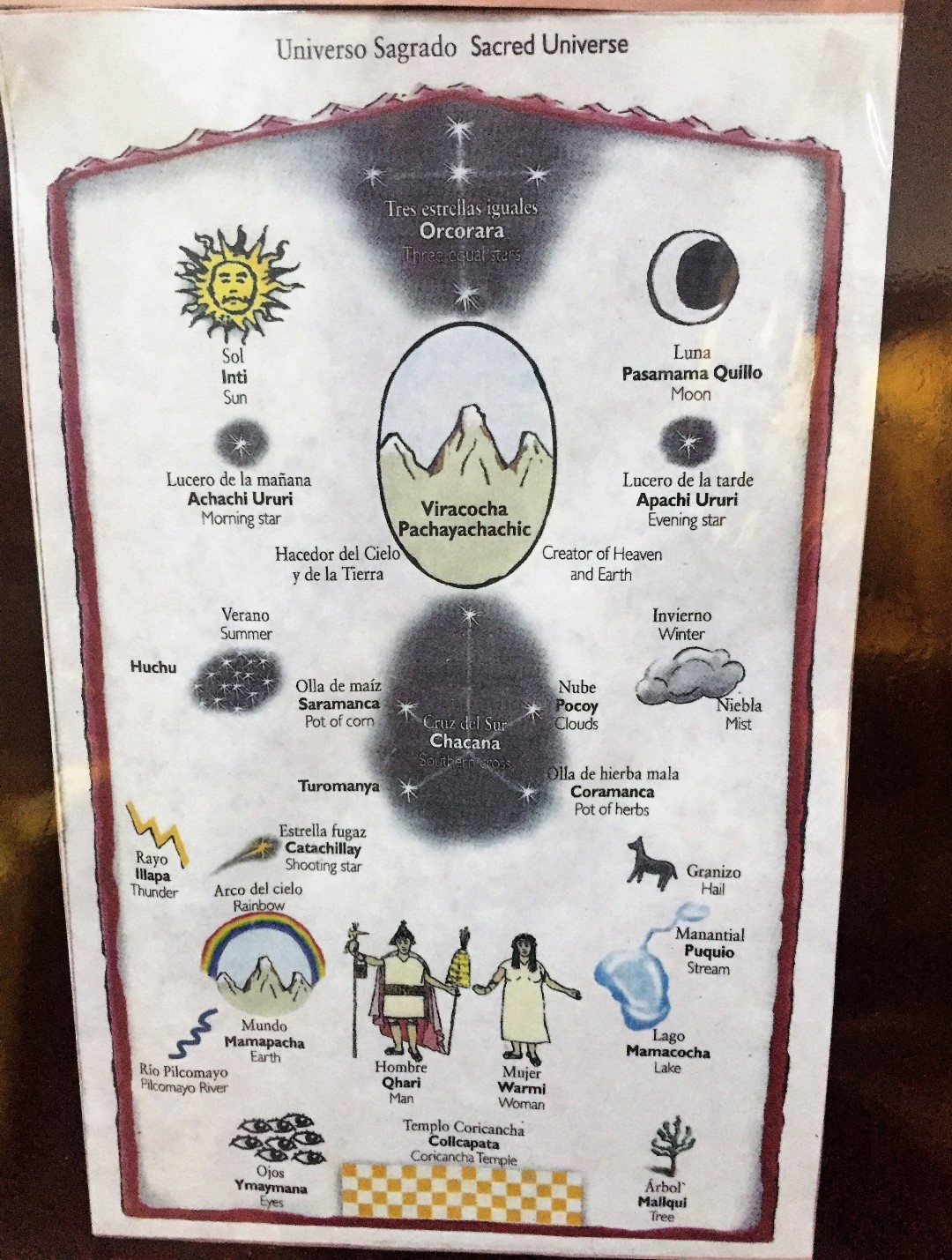
Worship of Pachamama. Pachamama—or Mother Earth in Quechua—is one of the most important deities in Andean culture. She is responsible for the earth, life, crops, plants, and fertility. Pachamama is still honoured by pouring the first sip of chicha or another drink onto the ground before finishing the rest. Some people perform this toast, called a challa, every day; it is certainly observed at major celebrations, especially those dedicated to Pachamama. To my mind, her essence resembles Māra in Latvian mythology. The sad difference is that today we have grown distant from and, in a sense, “forgotten” what Māra means to a Latvian, while people in Andean culture hold Pachamama in their hearts and honour her daily. There remains a belief that taking too many resources from nature can bring enormous problems and disasters because too much has been taken from Pachamama. Hmm, another excellent reason why Western culture might benefit from remembering its roots... It is also interesting that Inca cosmology—shown in the picture—coexists closely with the country’s Catholic faith. Like the Spanish language, Catholicism arrived with the Spanish in South America. Many rituals associated with Pachamama have intertwined and adapted themselves to Christian traditions, because Peruvians are often Christians and pachamamistas at the same time.
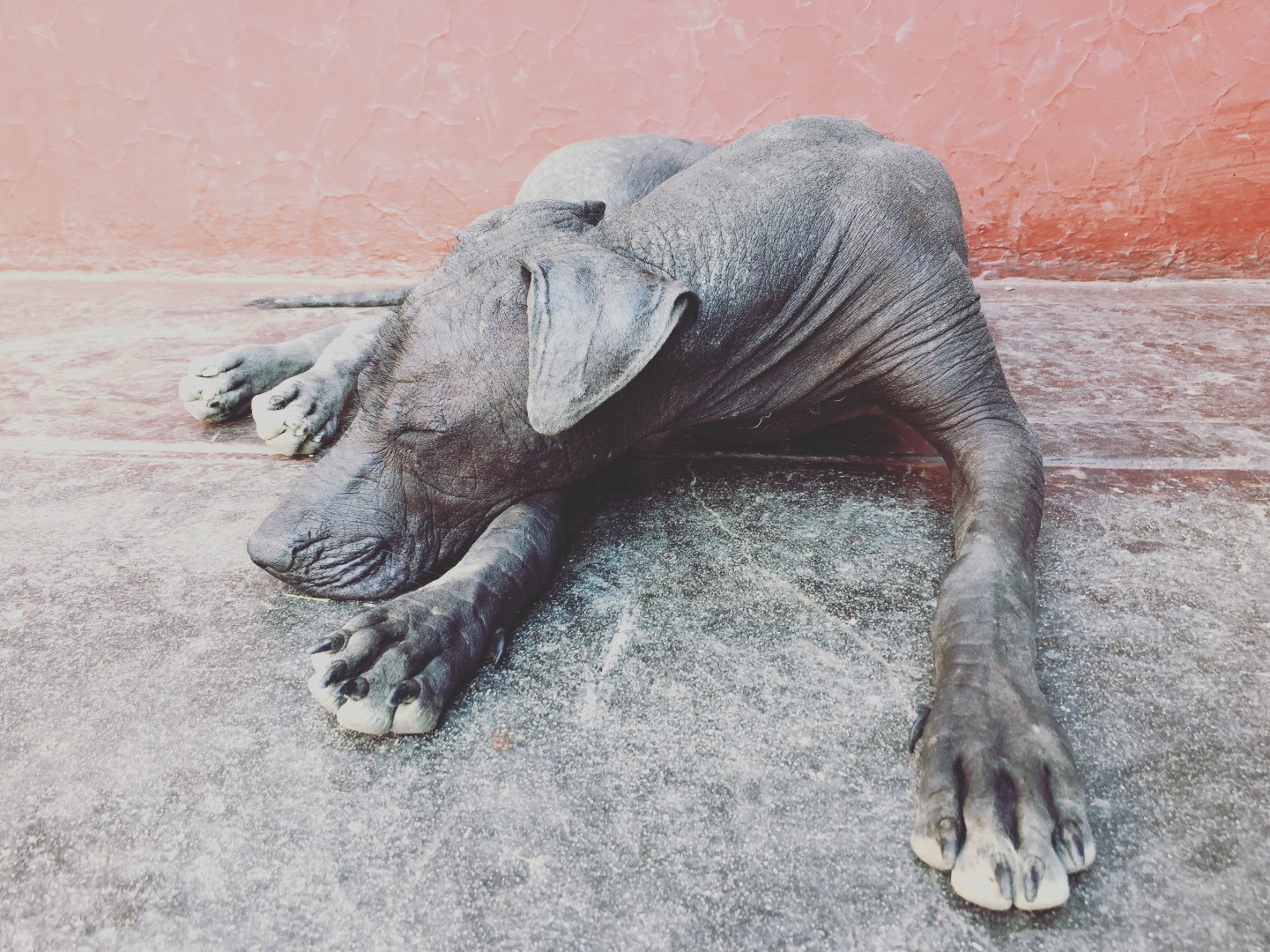
The Peruvian Hairless Dog. The breed is associated with Inca and Chimú cultures, although ceramic objects depicting it, found in archaeological excavations, show that these dogs lived in present-day Peru much earlier. They come in small, medium, and large sizes. Some have more hair and some less, but it grows only on the head, feet, middle of the back, and tail. Their skin requires special care with moisturising creams to protect it from sunburn. From my observations, the trait they share is reserve towards strangers. Dogs encountered in the street—and there are many strays—usually welcome “communication” with people and often approach to make friends. A Peruvian Hairless Dog, by contrast, will merely look at you, turn away, and never wag its tail. Even puppies show this quality: although they want to play and run wild, they do it only beside their owner’s feet. Peruvian Hairless puppies look especially comical, like tiny, lovable oddities.
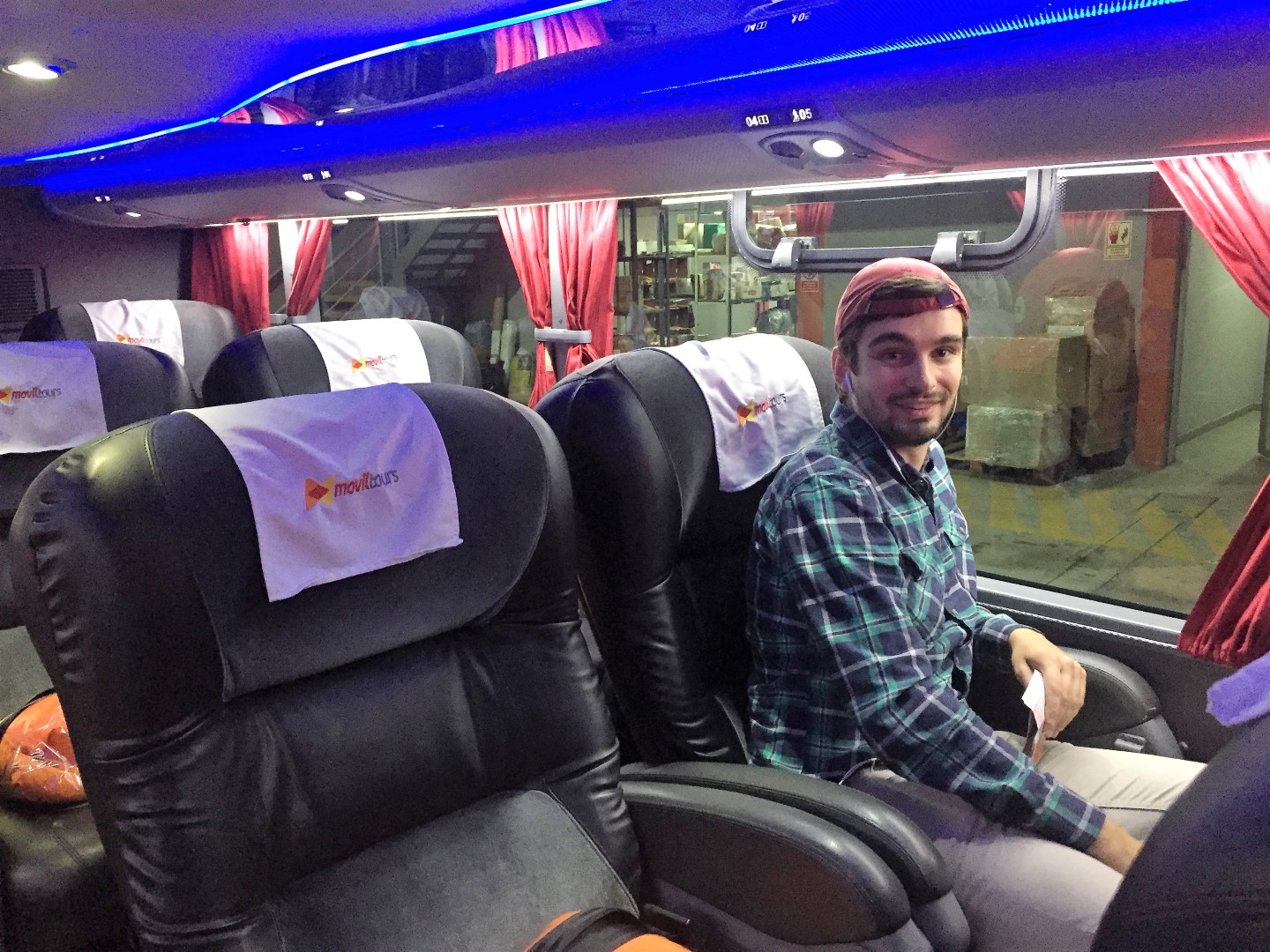
Cama buses. Peru is enormous, and every trip to a “neighbouring” city can turn into a journey lasting all day or night. Travelling from Cusco to the capital, Lima, for example, takes twenty-two hours by bus. Flying is possible, and domestic services are frequent, but airfares are not affordable for everyone. The torturous hours aboard a bus have therefore been considered: cama (“bed” in Spanish) buses are popular, with seats reclining to 160 or 180 degrees depending on the class of ticket. In VIP class, for example, large leather seats fold completely flat; displays built into them offer a broad selection of films and music; and a snack and drink are often served. Cruz del Sur is one company providing this service and has the largest range of routes. Such a bus is almost like an aircraft, apart from one serious drawback: nausea is more likely because most routes cross mountain roads, and the bus sways violently and brakes sharply.
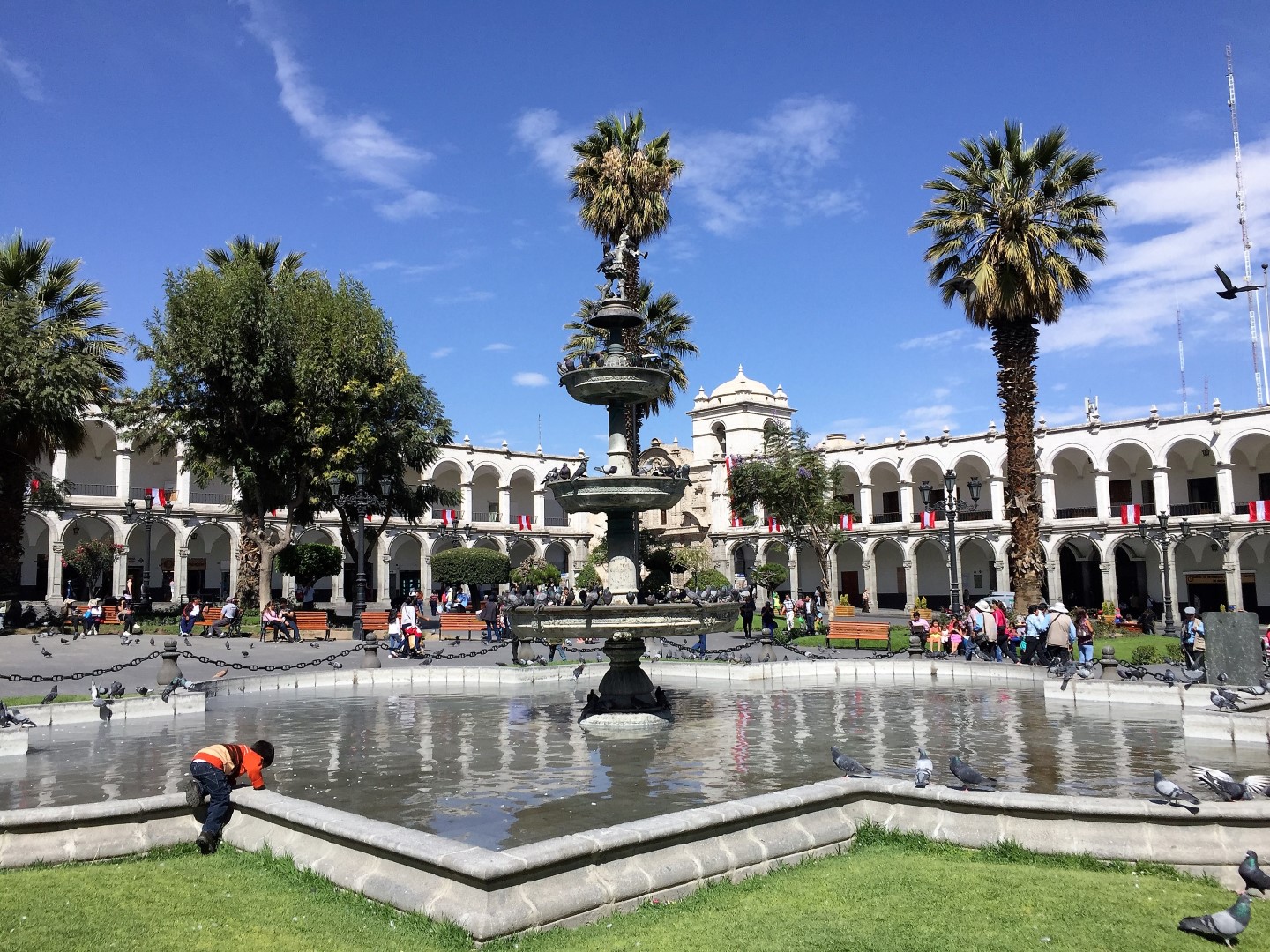
Plaza de Armas. A central square almost always called the Plaza de Armas exists in nearly every Peruvian city and village. Because it lies in the historic centre—which in turn is a more or less safe district and the heart of the action—it makes an excellent landmark. We often arrived in a new city without having booked accommodation. A glance at the map—we use the offline app maps.me—was enough to establish which district to search for a hotel. The central square is usually the most ornate part of town, filled with flowers and fountains, with cathedrals and other important buildings arranged around it. We have visited the central square of every Peruvian city we entered. In our opinion, the most beautiful Plaza de Armas is in Arequipa.
Prices and currency exchange. Food prices in supermarkets, which exist only in large cities, are very similar to those in Latvia—with the obvious exception of fruit. The market is the proper place to shop. When it is impossible to cook for yourself, as often happens in hotels, eating does not cost much more if you choose a menú, or set lunch, in a café. You never have to search hard for one: they are offered by smart restaurants and by canteens that open only for lunch. Even small shops often transform into miniature cafés at midday, with the owner selling whatever she has cooked. Currency exchanges are equally easy to find, with dedicated kiosks everywhere. Money changers even walk the streets wearing recognisable vests. The risk of receiving counterfeit soles is higher from them, so we never used the service, although locals do because people working in tourism often accept dollars. Counterfeit soles are a considerable problem in Peru. Fortunately, coins are copied most often because they are easier to make. We have received fake coins several times, even though we know what the real ones look like. We simply never developed the habit of inspecting our change, especially when it was a handful of coins. Locals, however, examine every piece of money carefully. If a coin is not genuine, they say “falsa” and hand it back.
A small guide to Peruvian prices:
- Menú del día (soup, main course, drink, and often dessert): around S/9 = EUR 2.50
- Lunch in a restaurant in a tourist area: S/35 = EUR 10
- Fruit juice at the market (a wide choice of fruits, usually nearly one litre): S/8 = EUR 2.20
- 0.5 litres of water: S/1.50 = EUR 0.45
*An overnight cama bus (for example, Lima–Huaraz): S/90 = EUR 25 - A double room in a budget hotel in the Sacred Valley: S/80 = EUR 23
Food. This subject deserves an article of its own. The principal characteristic is that typical Peruvian dishes are filling, aromatic, and readily understandable to Latvian taste buds—with a few exceptions, of course. The most striking is cuy al horno, or roast guinea pig. Its flavour is perfectly comprehensible... It is the presentation that takes some getting used to. Guinea pigs, considered pets in Europe, are a popular food here. Families often raise them in city flats before serving them for lunch or dinner. Equally meaty but easier to understand are anticuchos (pieces of beef heart on a skewer) and lomo saltado (beef fried with onions, tomatoes, and potatoes, served with rice), both found in any standard eatery. Typical dishes vary by region. Quinoa soup, for example, is popular in the Andes and always served during organised hikes. Arequipa has widespread picanterías, serving regional dishes such as chupe de camarones (prawn soup), rocoto relleno (pepper stuffed with minced meat), and causa (a kind of rolled mashed potato filled with tuna or chicken). On the coast, there is ceviche: raw fish or seafood marinated in lime juice. A meal can be accompanied by chicha morada, a characteristically Peruvian drink made from purple maize. It could essentially be described as fruit compote, only much sweeter. Sometimes—and this is normal—the drink has fermented slightly, leaving you mildly tipsy after lunch. It has happened to me; I still made it home unaided. If you deliberately want to try a traditional alcoholic drink, Pisco Sour is the right choice. Peru’s national cocktail contains grape brandy, egg white, sugar, and lime juice. Peru’s much-disliked neighbour, Chile, also confidently claims to have invented Pisco Sour. Nobody can now determine who was first, as with so many disputes between Peru and Chile...
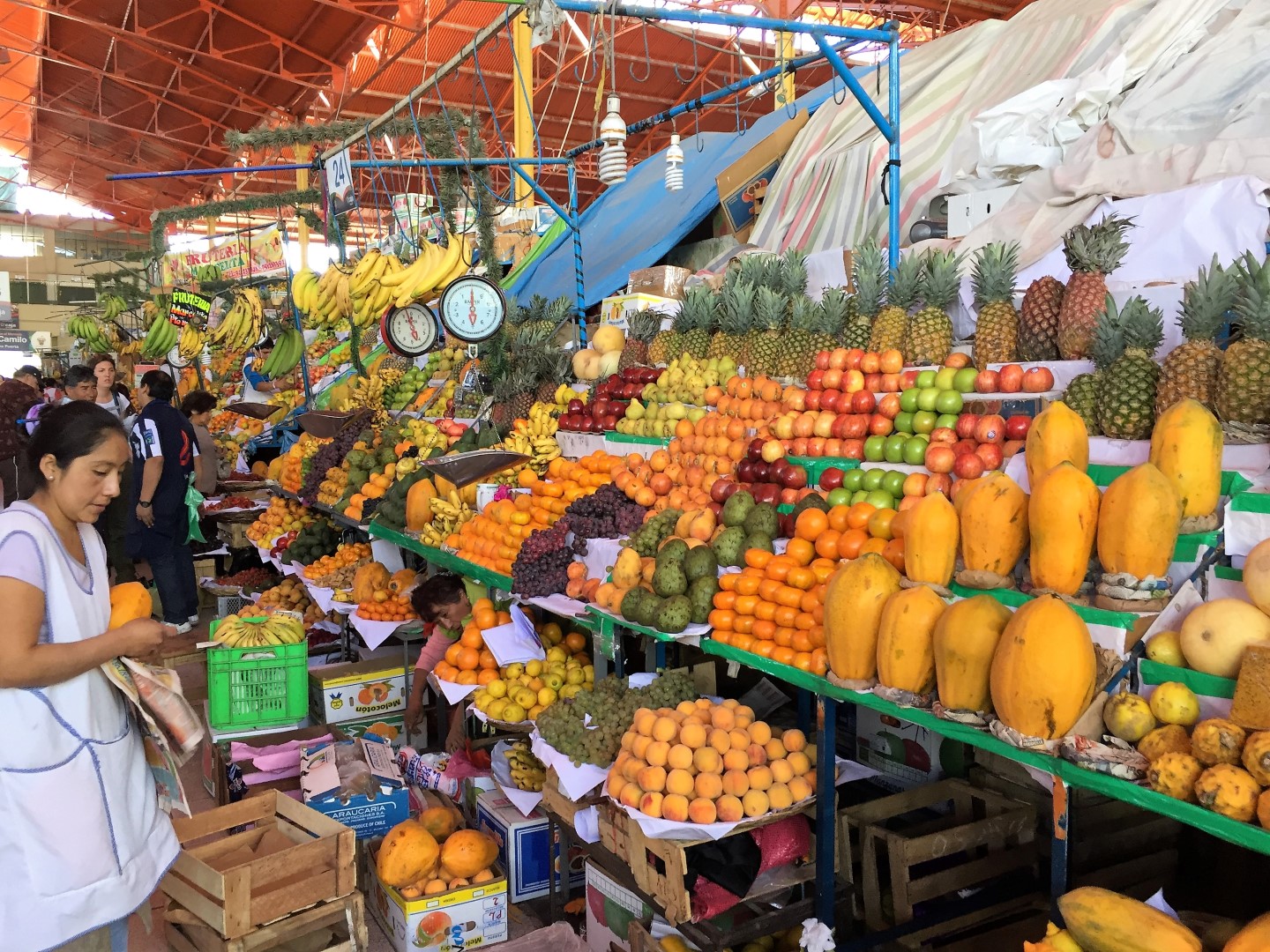
In an earlier article, I described Peru’s diversity of maize and potato varieties, another legacy of the agriculturally gifted Incas. A market visit is compulsory when travelling through Peru. I doubt there is another country in the world—apart from Bolivia—where one woman’s stall might display more than thirty varieties of potato. Naturally, markets also offer an impressive assortment of fruit at delightful prices. Among all the fruits we had never tasted before, lúcuma deserves special mention. It has green skin and orange flesh with the texture of a boiled egg yolk; its sweet flavour lies somewhere between sweet potato and maple syrup. Lúcuma is an excellent ingredient in milkshakes, producing a creamy drink without added sugar. It is also used in ice cream, creating a unique flavour that is difficult to find elsewhere. Several market women proudly told me that lúcuma grows only in Peru. Internet research revealed, however, that it is also cultivated in Chile and Ecuador. The main requirements for a good harvest are an altitude of 2,700–3,000 metres and a subtropical climate, making the Andean valleys ideal.
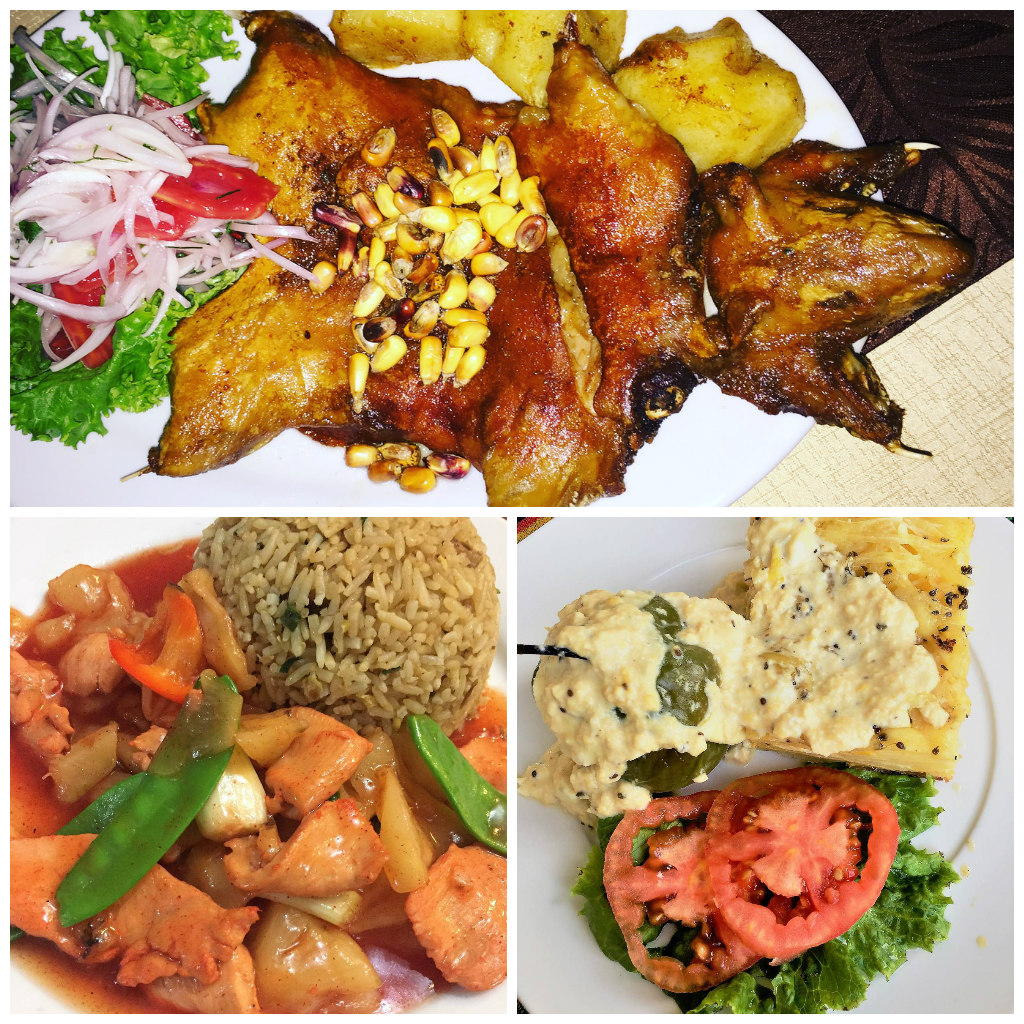
Chifa restaurants—Peruvian interpretations of Chinese noodle and rice dishes—are another feature unique to Peru. Their popularity and quality vary between cities. The cheapest chifas make you suspicious of every ingredient on the plate. In rare cases, though, you find one worth returning to repeatedly for a delicious meal. By my observations, if every eighth restaurant in Cusco is a chifa, in Arequipa it is every fifth and in Lima every third. Except for Lima’s Chinatown, where there are only chifas. :) The dish uniting the entire country is arroz con pollo (rice with chicken). This classic will certainly appear among the main-course choices at lunch, whether you are on the coast, in the mountains, or in a jungle city. I have the impression that a Peruvian eats chicken at least once every day. Pollo a la brasa (grilled chicken) shops are so ubiquitous that we ate at one exactly once. Merely seeing all the roast-chicken counters and the word “pollo” seems to have extinguished our desire to include meat in our diet.
Handicrafts and souvenirs. Souvenir markets exist wherever tourists go, and in great numbers. They sell top-quality alpaca- and llama-wool products, as well as mass-produced knitwear in traditional patterns that appears at every second stall. Back at the hostel, you can play “Count the Identical Jumpers”. Yes, I own THAT jumper—the one that looks hipsterish to somebody from Riga and like an ugly Christmas jumper to somebody from Britain. So far, however, I have not gone full gringo: a tourist climbing Inca ruins in an alpaca-wool hat, gloves, jumper, poncho, knitted knee socks, and billowing cotton trousers, all bought at the handicraft market. (Anyone who has visited Peru knows exactly what I mean.) Ah, if only all of it would fit in the backpack. I would buy mountains of alpaca knitwear; it costs a fortune in Europe. Beyond textiles, there is pottery, paintings, and jewellery. You can find an extraordinary number of high-quality, creative things—and such a beautiful selection of postcards to send home... This saturation of souvenirs does have one unpleasant side effect. Sit on a bench in an old-town park in Cusco, for example, and street vendors will approach one after another to sell their wares. They do not leave you in peace even while you eat a set lunch inside a café.
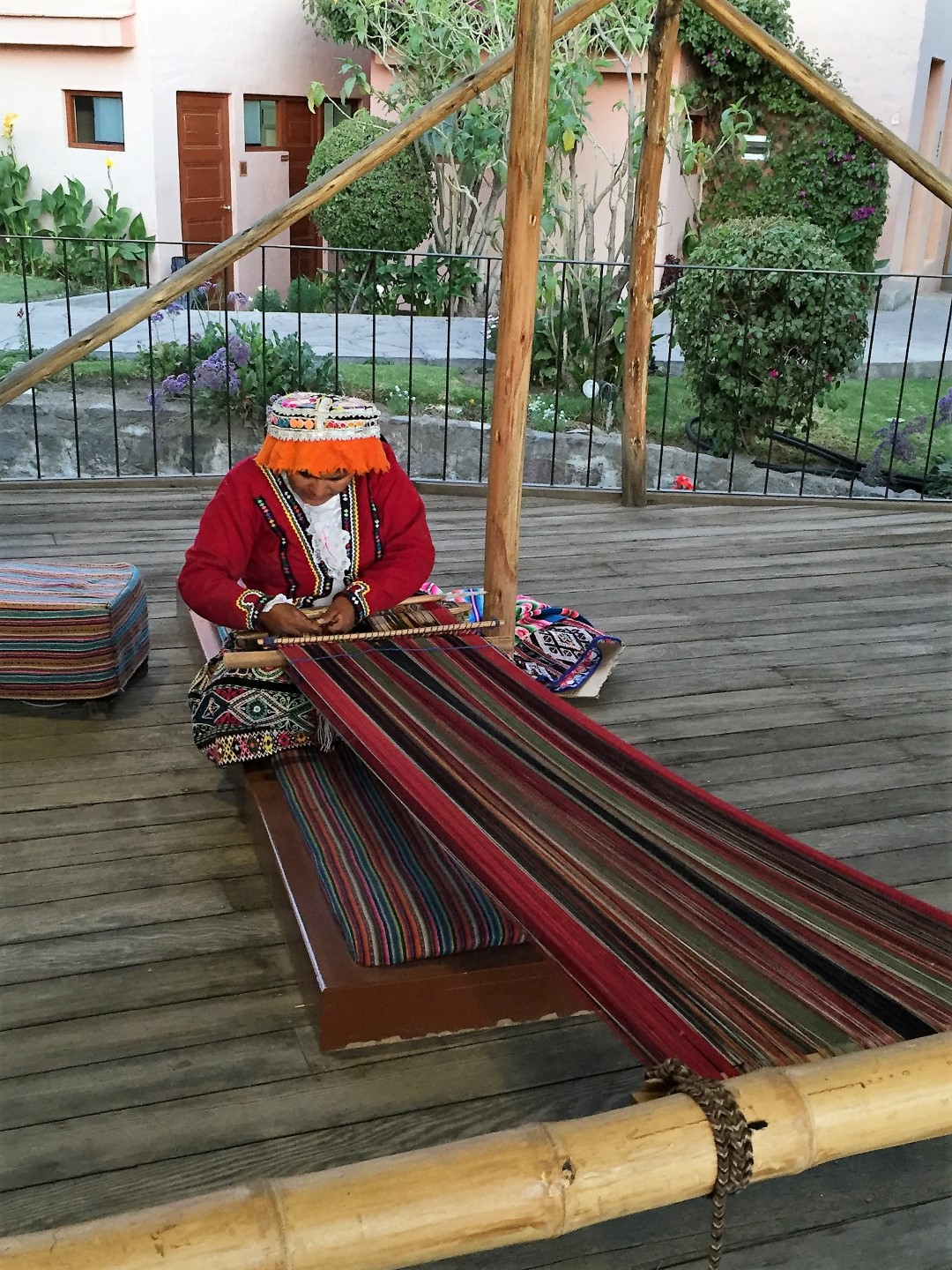
Traditionally dressed women and men. In Peru, as in Bolivia—which was once part of Peruvian territory and known as Upper Peru—you encounter people in traditional clothing on the streets. They are usually older, although in rural regions, entire families often dress traditionally. Early in our journey, it was unusual to see an elderly woman at a big-city bus station carrying an enormous patterned bundle on her back while dressed in traditional clothes. People bring their crops and knitwear into town to sell. Traditional men’s hats are intriguing, with an elongated crown ending in tassels. The side on which a man positions the tassels indicates his status: married or looking for a wife. Men make these hats themselves. A guide told us that when asking for a woman’s hand in marriage, a man must arrive with a hat he crocheted himself—it looks more crocheted than knitted—into which water is poured as a test. A good man’s hat must be worked so tightly that no water seeps through.
Visa. Tourists from Europe do not need to arrange a visa before entering the country. On arrival, at a border crossing or airport, a stamp is placed in the passport, an immigration card is issued, and a stay of ninety days—three months—is permitted. If necessary, this can easily be extended for another ninety days. Peru allows a total stay of up to six months within one year, and extensions are available at migration offices in larger cities. Another option is to leave Peru and receive a new ninety-day period on returning. We spent four months in Peru altogether, with a six-week trip to Bolivia in between. When we came back, we automatically received a new ninety-day stay.