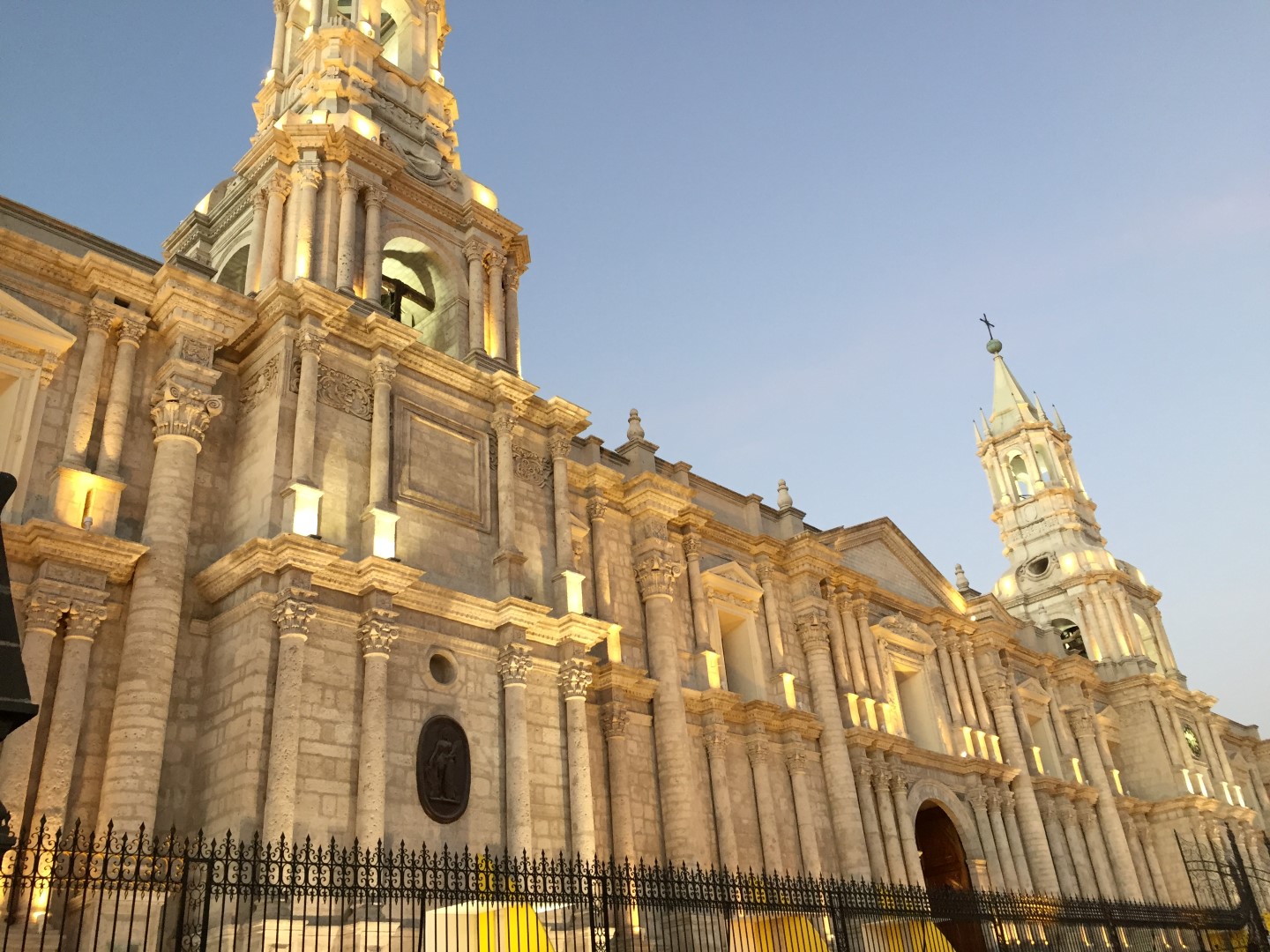
We have spent five wonderful weeks in Arequipa. This beautiful city, with its colonial architecture and volcanoes on the doorstep, has delighted us every day. One morning we wake to see Misti wearing a white cap of snow—apparently, its previous brief covering was in February. On another day, a loud noise made by birds flying over the house sends me running to the balcony, where I see dozens of green parrots with red heads passing overhead. There is balm for the soul here almost every day; you need only notice, listen, and feel.
More than anything, however, I will remember Arequipa for our Spanish school. We attended throughout all five weeks, four hours every weekday apart from the two days we took off to celebrate Jāņi. In its very first month, this journey has given us not only enormous inspiration from everything we have seen and experienced, but also an invaluable treasure: knowledge of a new language. It makes travel and communication with the people we meet considerably easier. After five weeks of intensive study, we can now hold a simple conversation in Spanish. Our excellent teacher, Ada, has given us firm foundations that must, of course, be developed further. Spanish phonetics come more naturally to a Latvian speaker; Ada says students whose native language is English find them harder to grasp. Spanish and its many verb tenses, however, are considerably more complicated than English.
Our time with Ada also gave us a local person’s view of Peru and its neighbours. We learned about the war with Chile, in which Peru lost territory in the south and Bolivia lost its access to the Pacific; about the prevalence of violence against women in Peru and the frequent media reports of women killed over family disputes; and about cockfighting, which remains popular here, along with the Peruvian breed raised especially for combat—gallos de pelea peruanos. There were many other facts, but the most valuable part was always a local person’s perspective and attitude. Spending time every day with a Peruvian teacher and learning so much about the country added another dimension to the lessons.
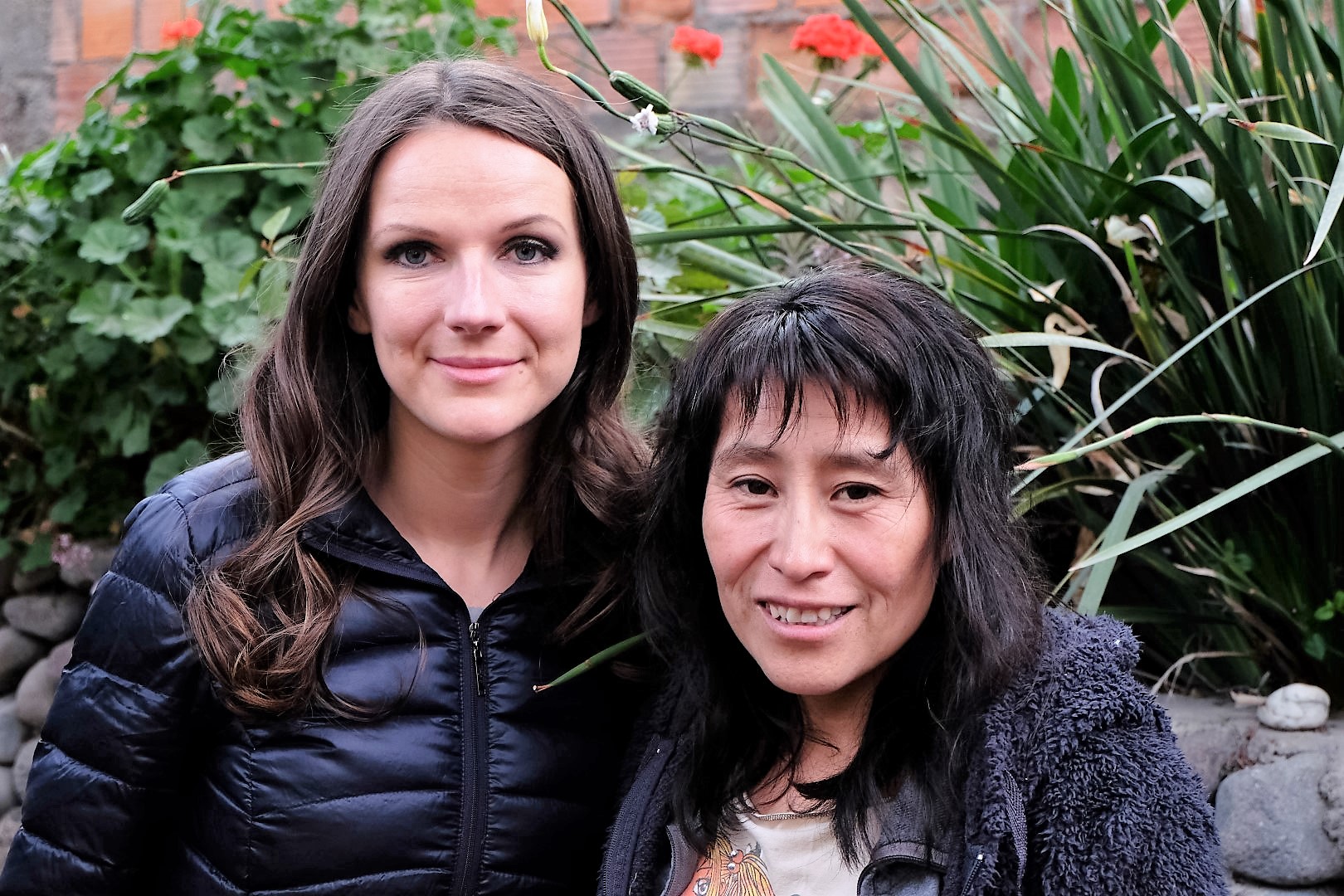
Here is a photograph with Ada, taken after my hair and make-up were done for an advertisement for a local beauty salon.
And then there is the school garden. Could there be a better place to study than one where a hummingbird sometimes arrives and drinks nectar from a flower a metre away? At moments like those, even Ada lets us take a break and we silently watch until the bird flies away.
Our first visitor in Peru
While we were still in Latvia, I told family, friends, and colleagues, “Come and visit!” Several are considering it, and I genuinely hope they will make the journey during the year ahead.
While the Latvians are still thinking, my friend Marcelo hears that we are in Arequipa and writes to say he will fly over for a weekend. Yay! Our first visitor, and much sooner than expected. Visiting is, of course, considerably easier for Marcelo than travelling from Europe because he lives in Santiago, Chile.
We agree on the beginning of July and wait for him at Arequipa airport on the appointed day. I watch people waiting for their loved ones. The screen announces that our flight has landed, and passengers begin emerging one by one. Behind my sunglasses, I wipe away a tear as a school-age boy meets his mother and cries with joy, and tiny children dart beneath the barrier towards their mothers and fathers. Marcelo appears last because his checked bag was damaged and he had to deal with the resulting paperwork.
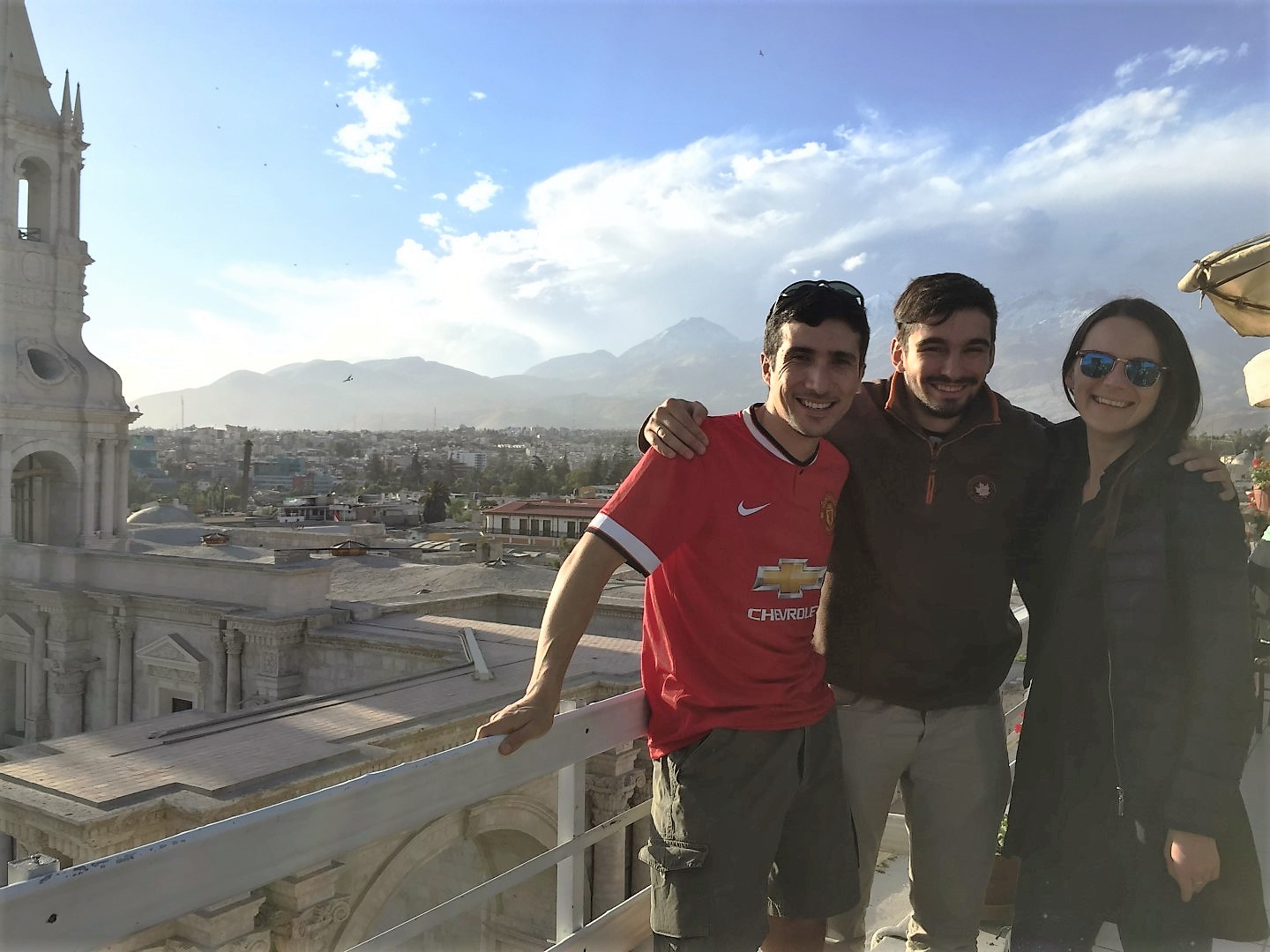
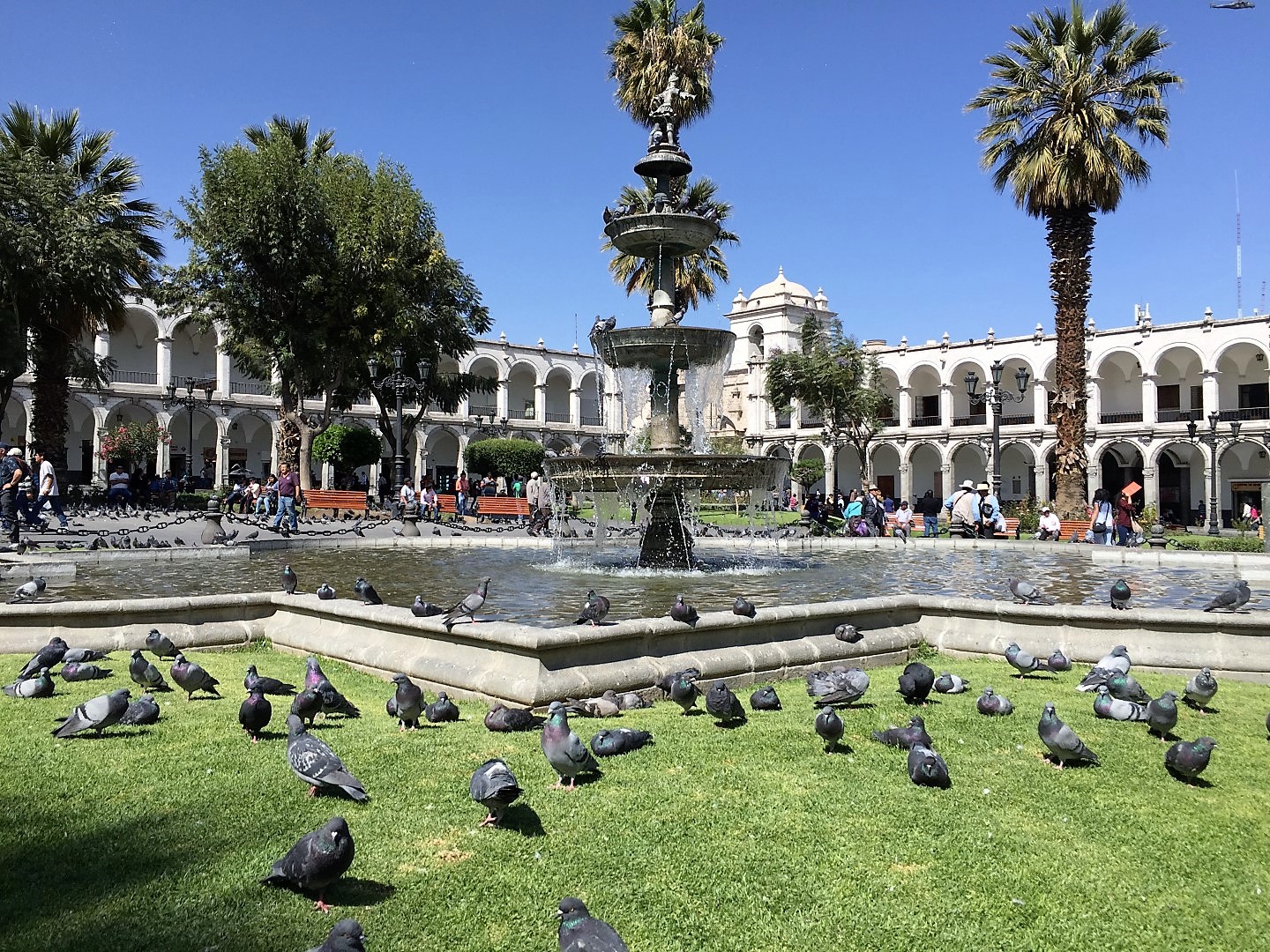
Marcelo has agreed completely to the weekend programme I devised. We begin with a long lunch overlooking Arequipa’s main square, then go for exotic fruit juices at my beloved San Camilo market.
Next comes the Museo Santuarios Andinos, famous for the Inca mummy Juanita. The Incas believed that mountains were the homes of gods. When the gods “became angry”—in other words, when a volcano erupted—an offering had to be made. One such offering was Juanita, a girl of about eleven to fifteen years old whose body was found in the crater of Ampato volcano (6,309 m) in what is now the Arequipa region. The Incas selected the most beautiful and healthy adolescents for sacrifice. The chosen children knew they would be offered to the gods, and this was regarded as a great honour. The determination of Juanita and other sacrificed children is demonstrated by their journey on foot from the Inca capital of Cusco to Ampato, roughly four hundred kilometres away. They then climbed the 6,309-metre volcano in sandals, scattering dried grass across the snow as they went. At the crater, a pre-sacrifice ritual was performed and Juanita was given a drink that sent the already exhausted child to sleep. A blow to the head followed. She is not the only child discovered in a volcanic crater, but the museum’s story centres on her because her body is the best preserved—frozen uniformly and mummified naturally. This has allowed scientists to study Inca genetics, diet, and much more.
After the museum, and thanks to Marcelo’s initiative, we explore Arequipa’s bars. We still go home before the real party begins, however, because a hike is planned for the next day.
Canyoning and waterfalls
At seven in the morning, we board a colectivo for the ninety-minute journey to the village of Yura. A ride in one of these minibuses is an adventure in itself: it travels with the door open while a dedicated caller hangs out and shouts the destination. As we leave Arequipa, the bus fills to capacity—and then another sixty per cent is squeezed aboard. We are glad we joined at the first stop and all three found seats.
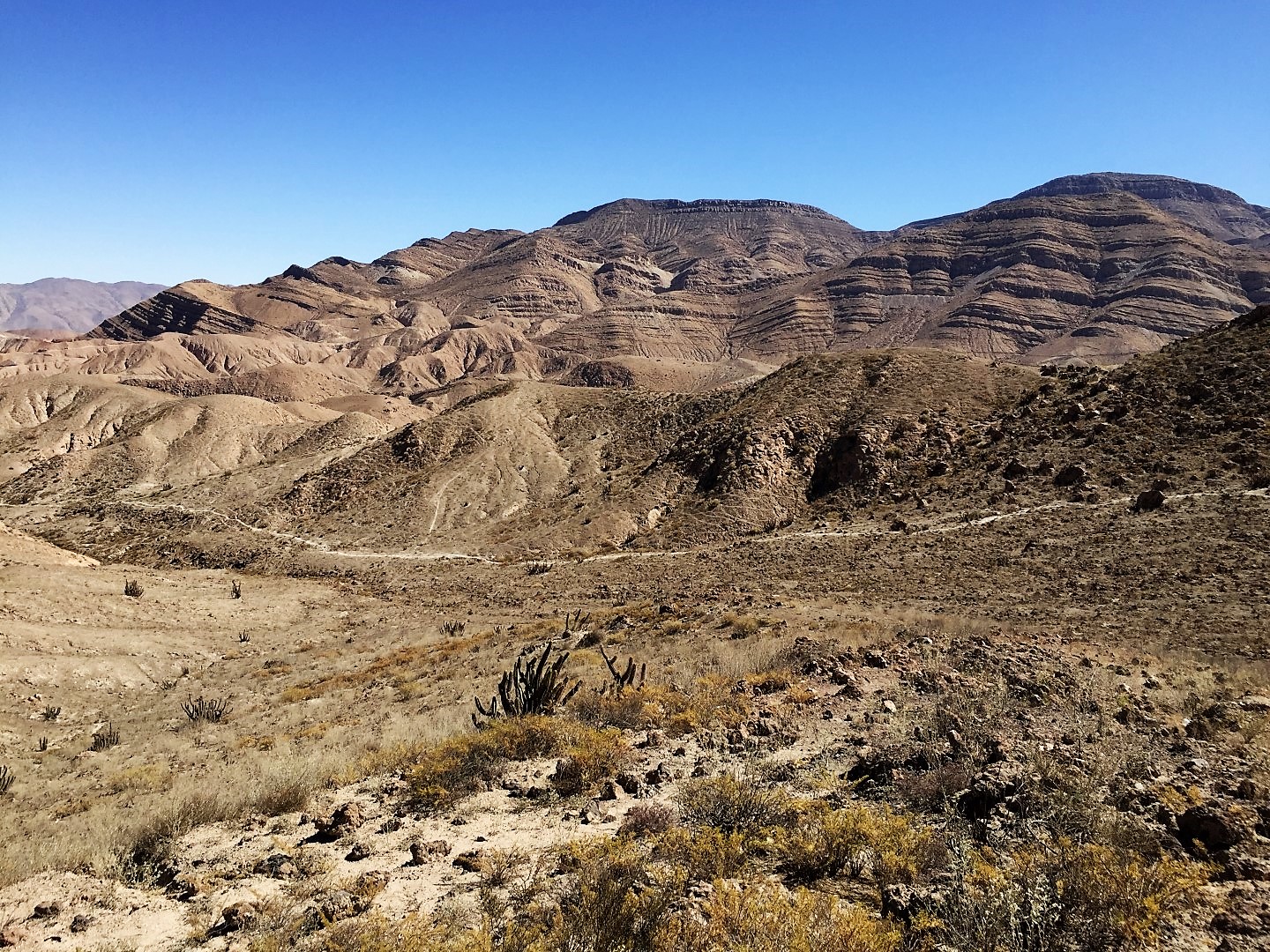
We get off in Yura and begin hiking towards the waterfalls. Our destination is the tallest, Corontorio. At first, we climb steadily through the mountains; for the opening two hours, the landscape resembles a scene from Star Wars.
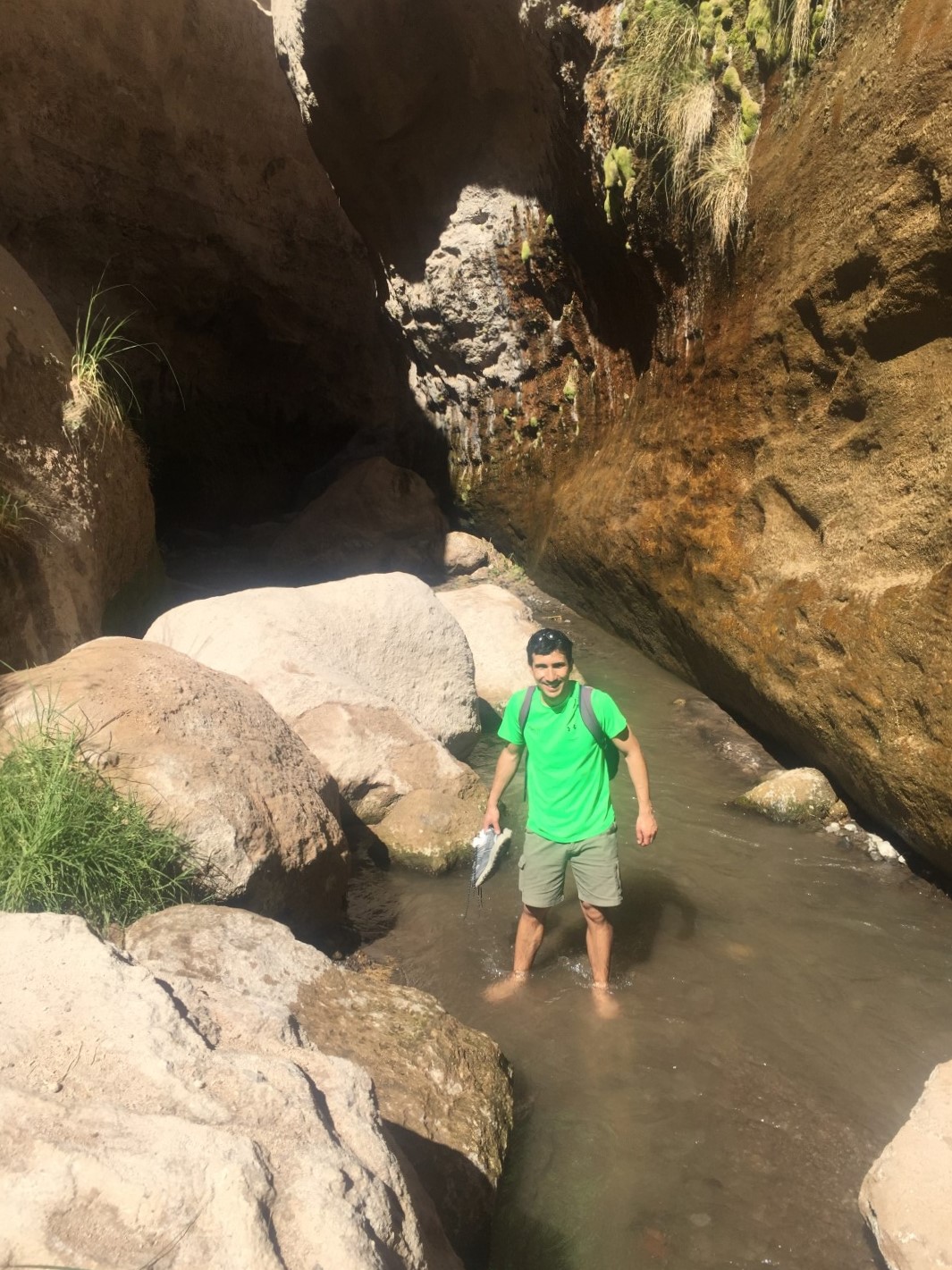
After the monotonous walk across another planet, the surroundings become greener, signalling that we are approaching the river. At first, we follow its bank, but the canyon grows narrower and narrower until travelling over dry land is no longer possible. We begin wading through the fast, rocky river, which is wonderfully refreshing. The canyon is so narrow and high that sunlight cannot reach its floor, and the air begins to feel cold. Eventually, we reach the first waterfall, then a second pouring from a cliff, followed by several low cascades. A great roar sounds in the distance. Sure enough, after a few more bends in the river, an enormous waterfall appears. Even from afar, we can feel tiny droplets blown towards us by the wind. They are so cold that I abandon my original plan to swim. Jānis is not deterred by icy water and does not miss the chance to stand beneath the falls.
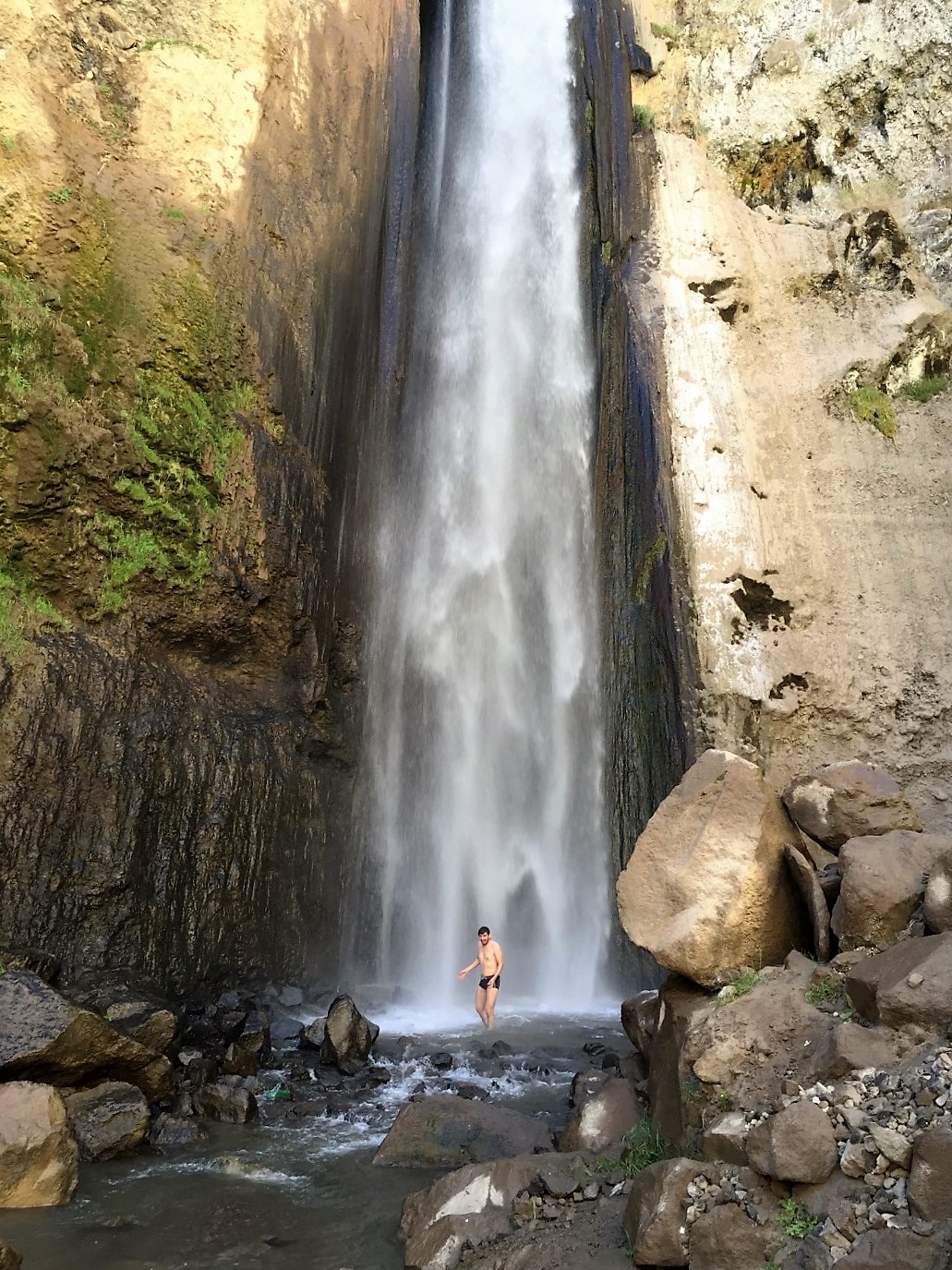
Everything goes exactly to plan: two hours there and two hours back, followed by a well-earned lunch at a local establishment. A parrot sits in a cage there, green with a red head, just like those that fly in flocks over Arequipa. I approach and the frightened bird looks into my eyes. I have an overwhelming urge to “accidentally” open the cage door.
We continue to the therapeutic baths. The mineral water called Socosani, sold in every Arequipa shop, comes from Yura. The baths contain the same water and are said to be extremely healthy. Eight different types are available, each with distinct healing properties. After an hour of soaking, squeaky-clean and with wrinkled fingers, we board a colectivo back to Arequipa. One more lunch together the following day, and Marcelo’s express holiday is over.
How lovely it was to see Marcelo! The interesting part is that we met in London in May last year, and a month later he visited Jānis and me in Riga. I remember Marcelo asking when we might come to see him in Chile. At the time, we still had a trip to the United States ahead of us, and I said realistically it would be no sooner than a year. And here we are: the reunion happened almost exactly on schedule. Technically, however, Marcelo has visited us again, so we still owe him a trip.
Living in Arequipa at 2,335 metres has been an excellent starting point from which to acclimatise and move higher—not only higher in our adventures, but literally higher into the Andes. Our next stop is Puno and Lake Titicaca.