After midnight, the bus stops at the La Tina border crossing. Sleepy-eyed, we get off and join a long queue for a Peruvian exit stamp, followed by an equally long queue for an Ecuadorian entry stamp. Although it is dark outside, a significant difference between the two countries is immediately apparent once we cross the border: Ecuador’s roads are in excellent condition. This is welcome news. We are not travelling in a comfortable cama bus this time, with seats reclining to 160 degrees, but the smooth road at least means we are not periodically thrown from our seats and can get some sleep. When we reach Loja in the morning, the view from the bus suggests a neat, well-kept city whose buildings are more solidly constructed and easier on the eye than those in Peru.
The next pleasant “surprise” comes almost immediately at the bus station. When I ask a taxi driver how much the trip into the centre will cost, he says $1.50 (Ecuador has adopted the US dollar as its national currency). Wow! In Peru, I had grown accustomed to drivers quoting twice the normal fare simply because we were gringos, followed by a round of bargaining until we reached the standard price. It seems I can relax on that front in Ecuador.
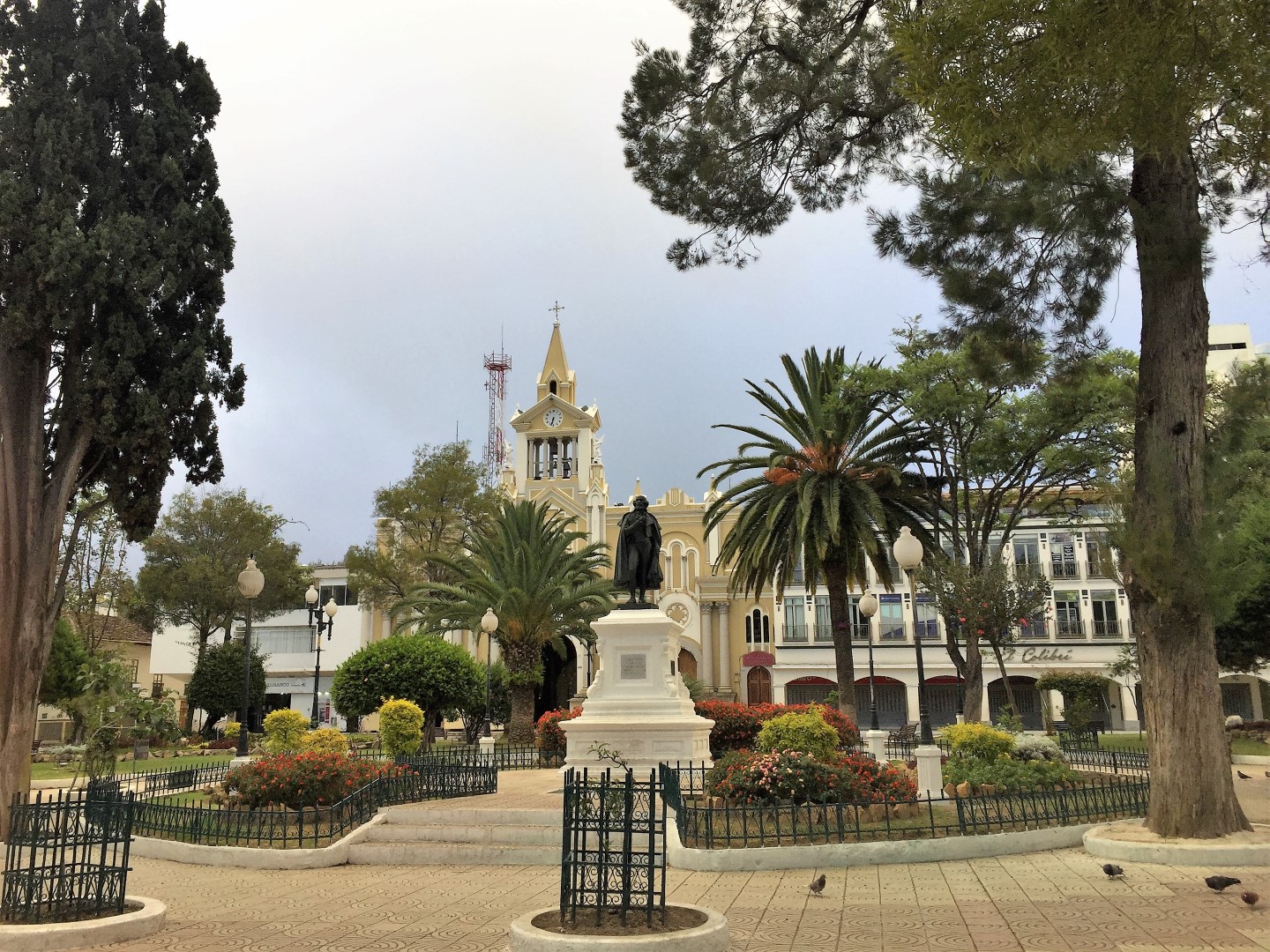
We have not booked a room in Loja. A very clever move indeed! So, at about six in the morning, the two geniuses wander leisurely through the city centre, sit for a while in a pleasant park, and then begin making the rounds of the hotels. We quickly gain our first impression of Ecuadorian hotel prices: they will be higher than in Peru. What is more, prices are quoted per person rather than per room, making the total rather unfriendly to the wallet. Eventually, though, we find a hotel where the two of us can stay for $20. It soon becomes clear why prices are higher. The quality standards are entirely different, and our room would do the Hilton proud.
Loja is known for its musicians, thanks to one of Ecuador’s most important conservatories, and for its parks. It is also close to Podocarpus National Park, which is essentially the area’s main tourist attraction. Given the long distances involved, there would otherwise be little reason to travel to Loja. For us too, the city is simply a stop on the way to Cuenca, so we spend only one day there.
Cuenca
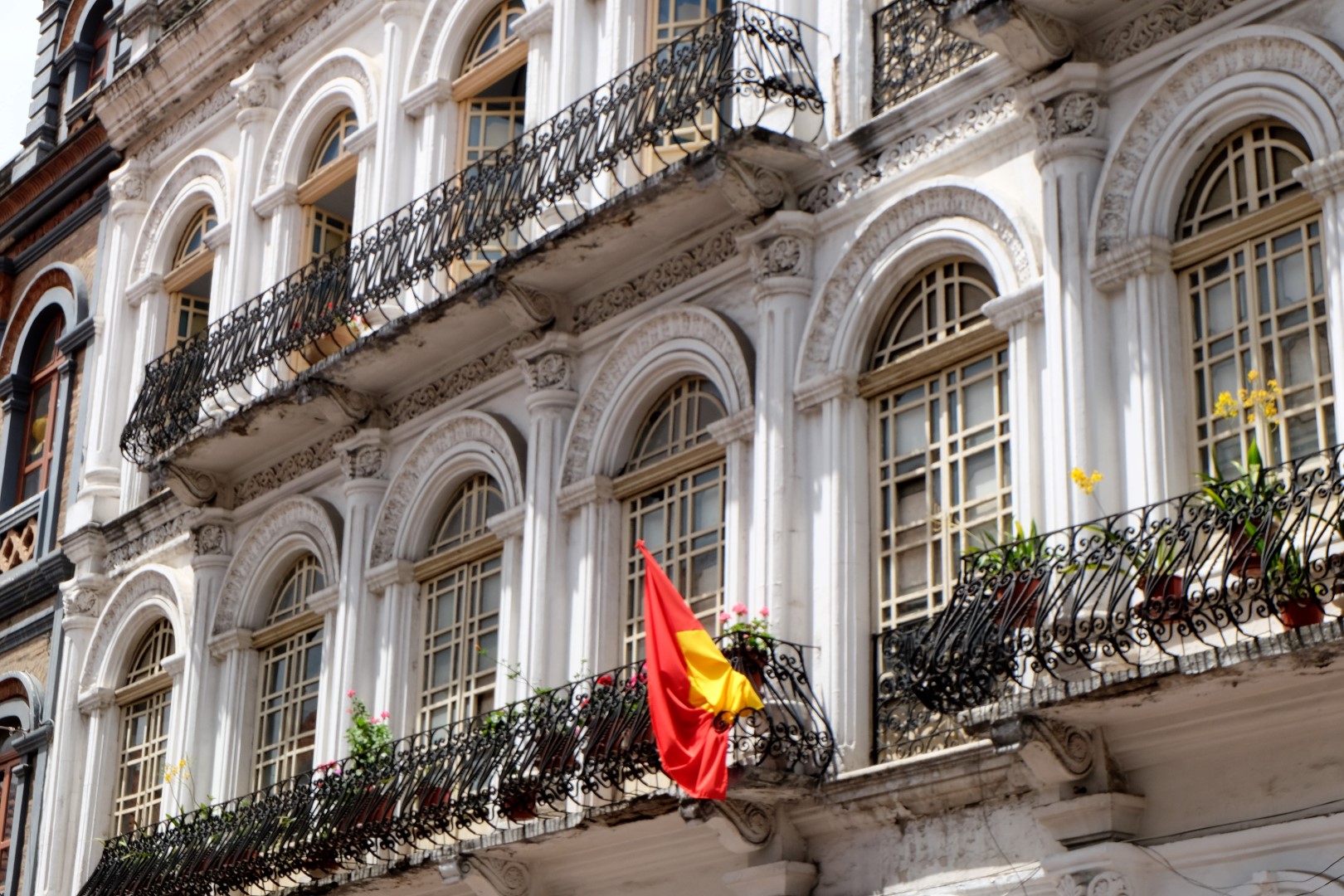
Lonely Planet says that comparing the colonial architecture of the capital, Quito, with that of Cuenca is a favourite pastime among city dwellers. At this point we had not yet seen Quito, so we had nothing with which to compare it, but Cuenca thoroughly enchanted us with its beauty. It is difficult to imagine an enormous capital outshining Cuenca, which feels like a small town and is exceptionally charming. We shall see; we can make the comparison later.
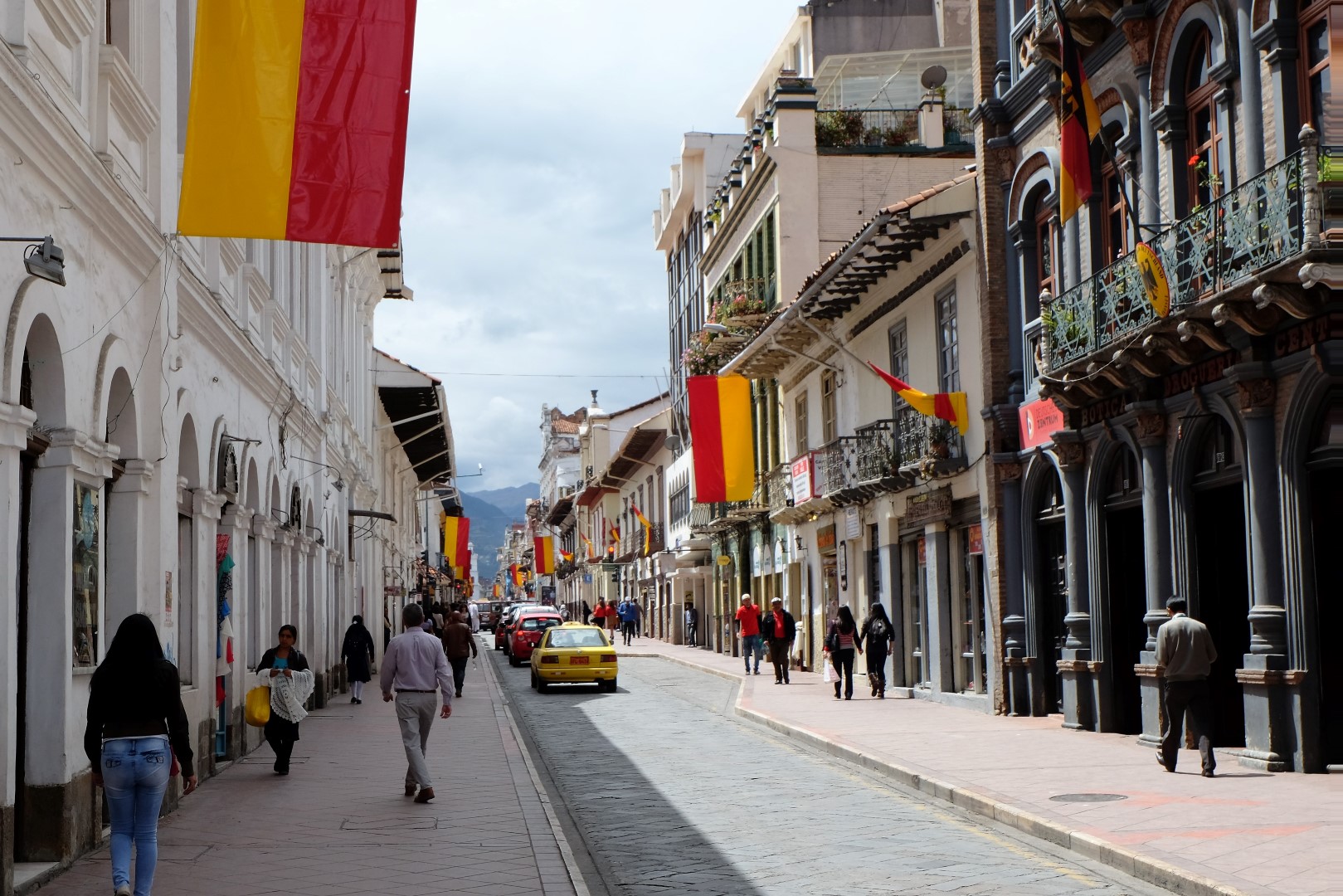
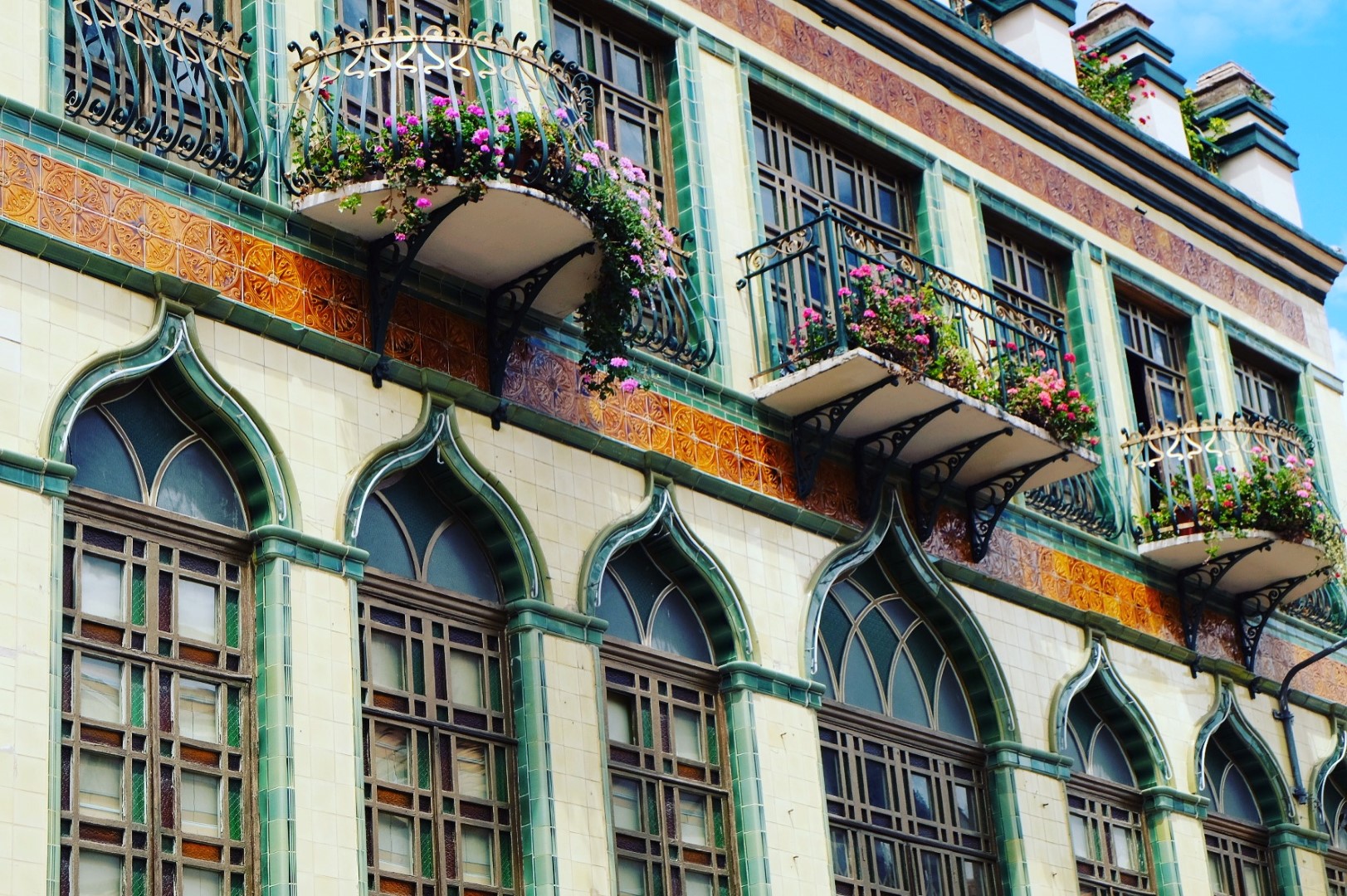
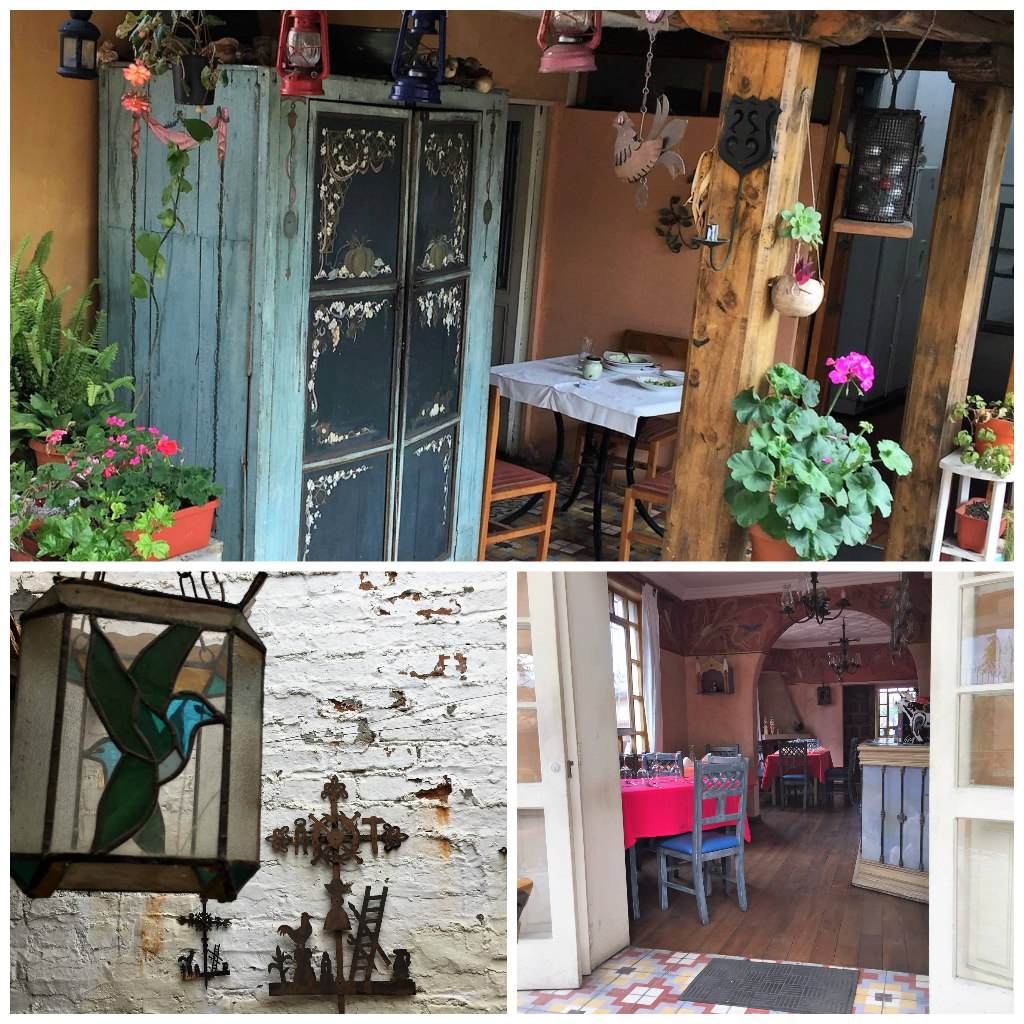
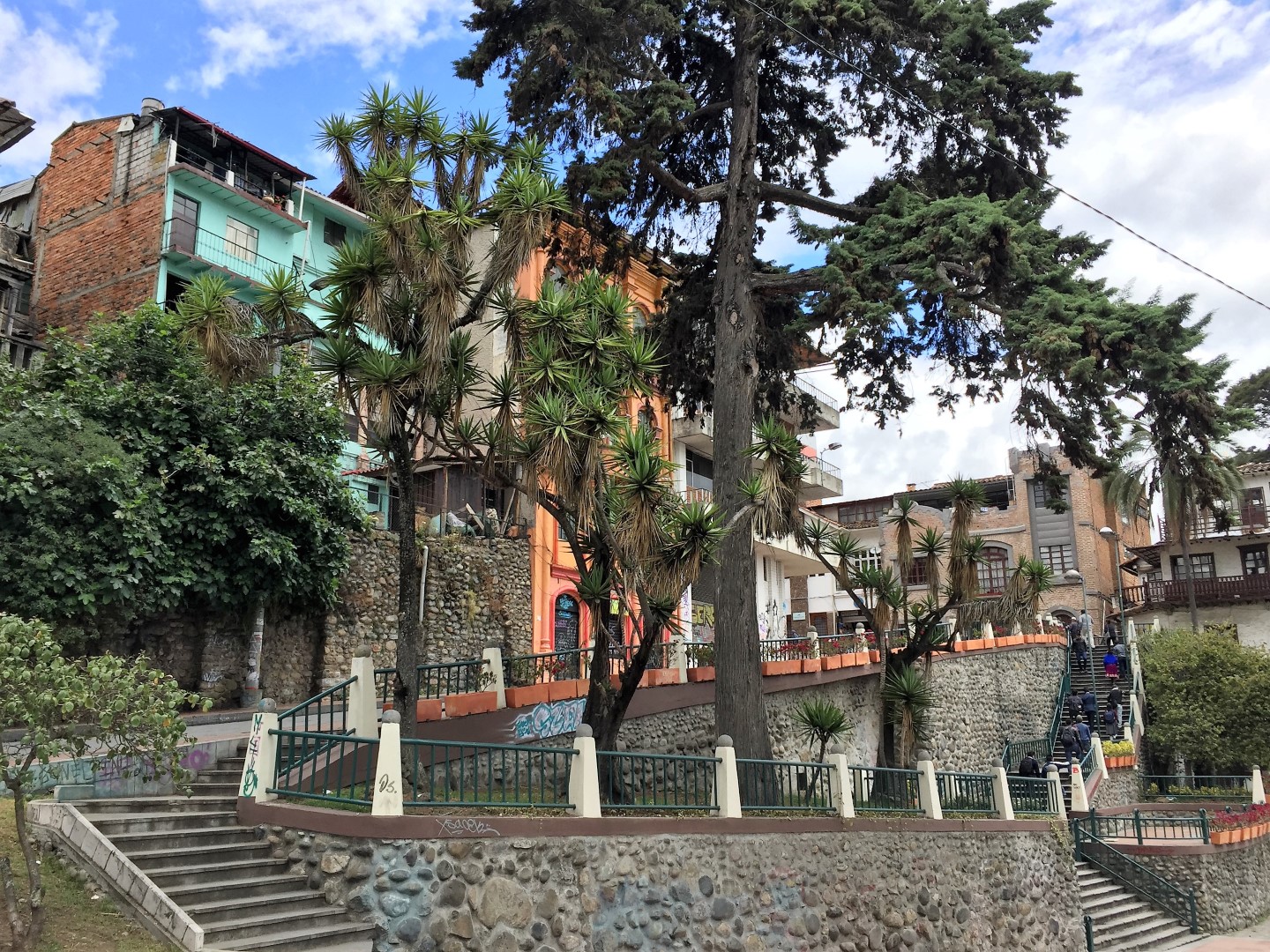
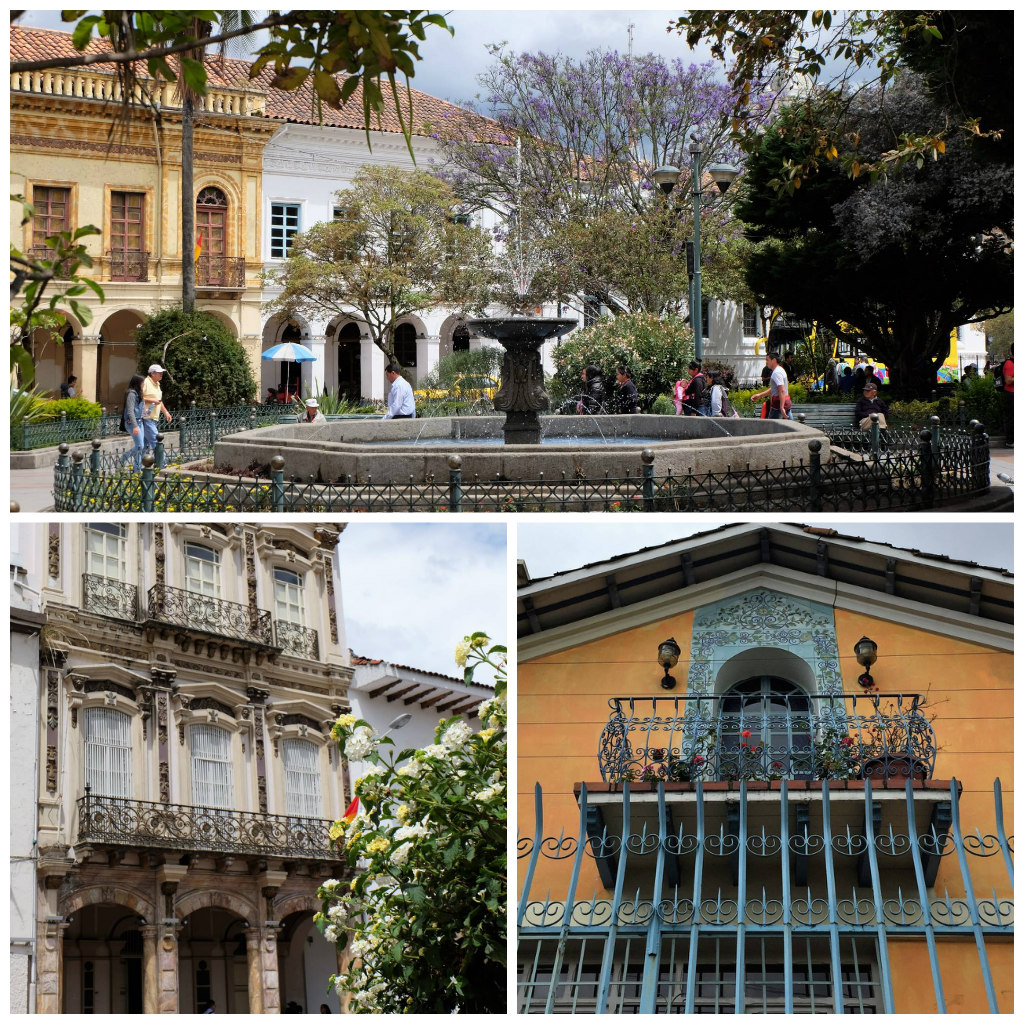
In the meantime, Cuenca invites you to stroll along the banks of the Tomebamba River, lined with colonial buildings; admire the tasteful decoration and colours around Parque Calderón in the city centre; step inside the old and new cathedrals; or visit one of its art museums. You might call at the city’s most important museum, Museo del Banco Central Pumapungo. If it is closed, you can enter the archaeological park behind it and, when heavy rain begins, stand under a shelter whose only visible “exhibit” is a llama grazing in the rain. You can sample the local cuisine—at El Maíz, for example, where the interior is as enjoyable as the food. At least, that is what we did. In short, Cuenca is a city simply to be savoured.
We came to know central Cuenca particularly well because we searched relentlessly for a currency exchange. In our rush before leaving for Ecuador, we had not changed our Peruvian soles into dollars. We did not worry much, assuming we could exchange them once we reached a larger Ecuadorian city. It turns out that Ecuador has none of the little exchange kiosks we had expected (in Peru, money was even changed on the street—you simply looked for someone in a special vest holding a thick bundle of notes). Following local advice, we visited at least five banks. Every one confirmed that they exchanged only dollars and euros; the currency of their large neighbour was not taken seriously.
The hat museum, or Museo del Sombrero de Paja Toquilla, is also worth a visit. Its subject is no ordinary hat, but the Panama hat. Why should an Ecuadorian museum be devoted to the Panama hat? Because this woven Ecuadorian straw hat was unfortunately given the wrong name. When the style first became fashionable, hats were shipped from Ecuador to Panama and then onward to North America, Asia, and Europe. During the California Gold Rush, they were worn by prospectors who regularly passed through Panama and bought them there. Their popularity grew further when early twentieth-century film stars wore them on screen.
Toquilla palms grow around Montecristi in Ecuador, providing the material for these pale, light, breathable hats. Five years ago, the traditional Ecuadorian toquilla hat was added to UNESCO’s list of intangible cultural heritage. The craft has been passed down from generation to generation for several hundred years. Montecristi and Cuenca, where most are woven, are the best places to buy one at a reasonable price. A hat costs around $100 in these cities, while elsewhere in the world you should expect to pay at least twice as much.
We leave Cuenca without a hat, but having seen the city, and head towards Ecuador’s long-awaited beaches.