A chance to meet a friend we last saw 2,300 kilometres away? Hmm, that sounds like a new twist in the journey. While we are in Huanchaco, a message arrives from Igor, with whom we worked at Tambopata Research Center. He is back in his home city of Chiclayo and suggests that we meet. Chiclayo lies on our route towards the Ecuadorian border. Visiting would mean abandoning our planned trip to Chachapoyas, but sometimes you have to follow events, and this is one of those occasions. Chiclayo it is!
After more than four hours on a bus from Trujillo, we arrive in Chiclayo that evening. Igor is ready to meet straight away, and we go for coffee together. We also meet his girlfriend, Diana. Igor has recently returned from Tambopata and will spend several weeks with his family in Chiclayo before beginning work at another nature reserve. This time, Diana is involved too and will prepare educational material about birds. We sit talking and consider what we might see together the following day. Chiclayo was never conquered by the Spanish, although missionaries visited in the sixteenth century. Consequently, the city has no colonial architecture, but it is an excellent base for exploring archaeological sites nearby. The Moche, Chimú, and Sicán cultures all flourished in this region, leaving ancient pyramids and artefacts behind. During the conversation, Igor mentions the Bosque de Pómac Historical Sanctuary. He once worked there as a birdwatching guide, and the reserve also contains the Huaca Las Ventanas pyramid. Yes, a visit would kill two birds with one stone—nature and history. More importantly, birdwatching with Igor is an adventure in its own right, which becomes our principal reason for going to Bosque de Pómac.
Bosque de Pómac
We travel to the reserve in a colectivo, ready to see many different birds. We leave early because they are more active at this hour and our chances of taking a good photograph are higher. On the way, Igor gives us a bird book containing his photographs, with an affectionate inscription on the first page.
The minibus drops us beside the highway. The first birds we see are turkeys walking along its sandy verge. Only now, while writing this, do I realise that I missed a wonderful opportunity for a silly birdwatching joke. I could have shouted, “Lifer, lifer!”—the term birders use when seeing and identifying a species for the first time—then continued, “That is a turkey.” It would have been interesting to see whether Igor believed I had truly never seen one before. But who knows with those Europeans?
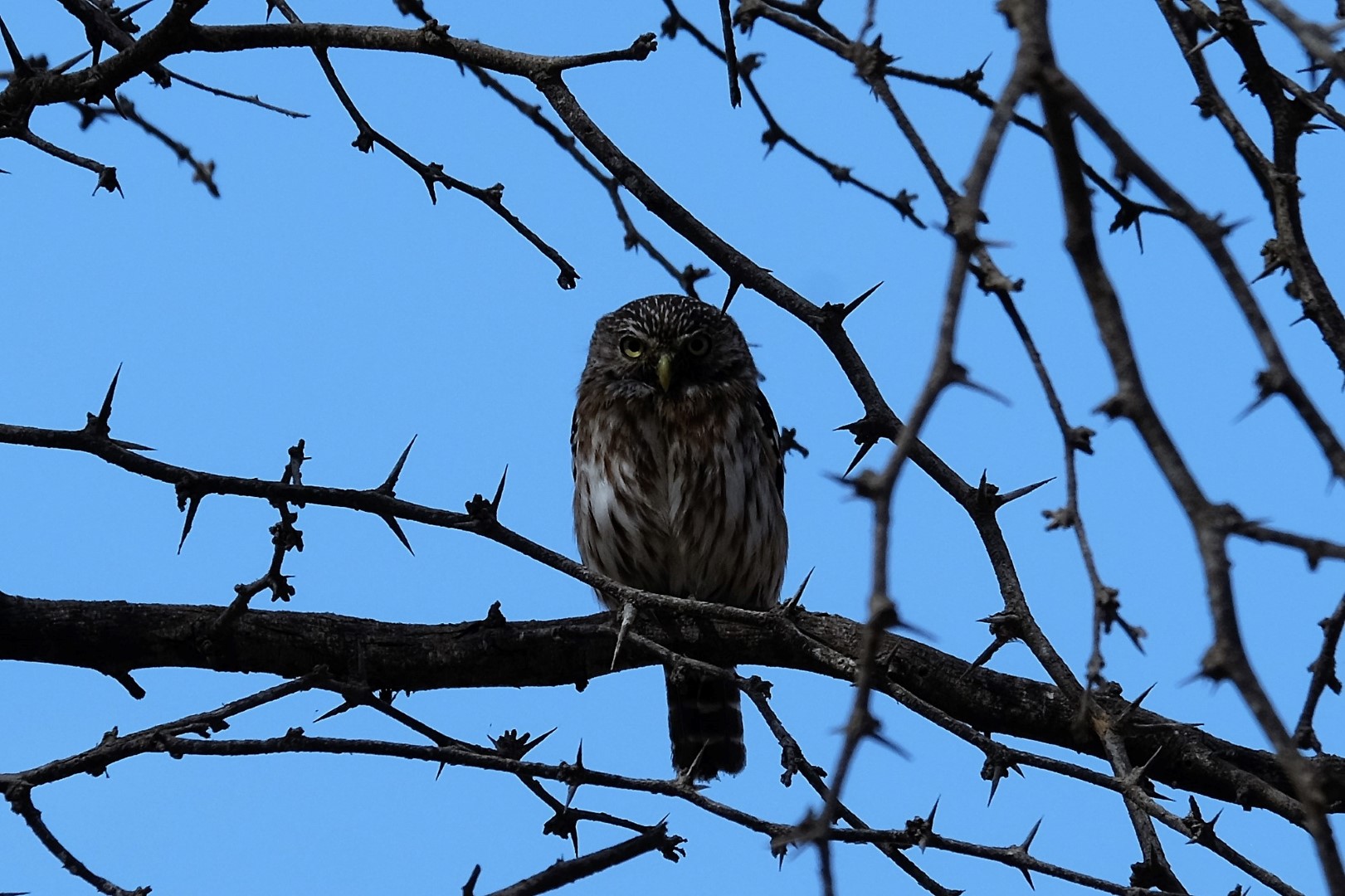
Following Igor’s directions, we spot a tiny woodpecker poking its head from a small hole in a post near the park entrance. He does not even need to hear a bird’s call to notice it. In nature, he seems to switch automatically into birdwatching mode, using his knowledge to study places suited to particular species. In this way, he sees what an ordinary passer-by would miss.
As a brief aside, Igor is not a typical Peruvian name. Igor has no roots in Eastern Europe or Russia, but his grandfather is a great admirer of Russian ballet and suggested that his grandson should be called Igor. Interestingly, his middle name is Ivan. That name honours his father, also Ivan, who was named by the very same grandfather. Igor’s grandfather must be proud: alongside his professional work in ornithology, Igor performs in the theatre. He and Diana met at poetry classes too. Romantic.
Bosque de Pómac is an unusual nature reserve: an enormous tract of completely dry forest. It remains this way for most of the year, apart from several months of rainy season when the river fills. The severe dryness means that only three principal types of tree grow here. The birds do not seem troubled, however, and all we can do is keep looking wherever Igor points.
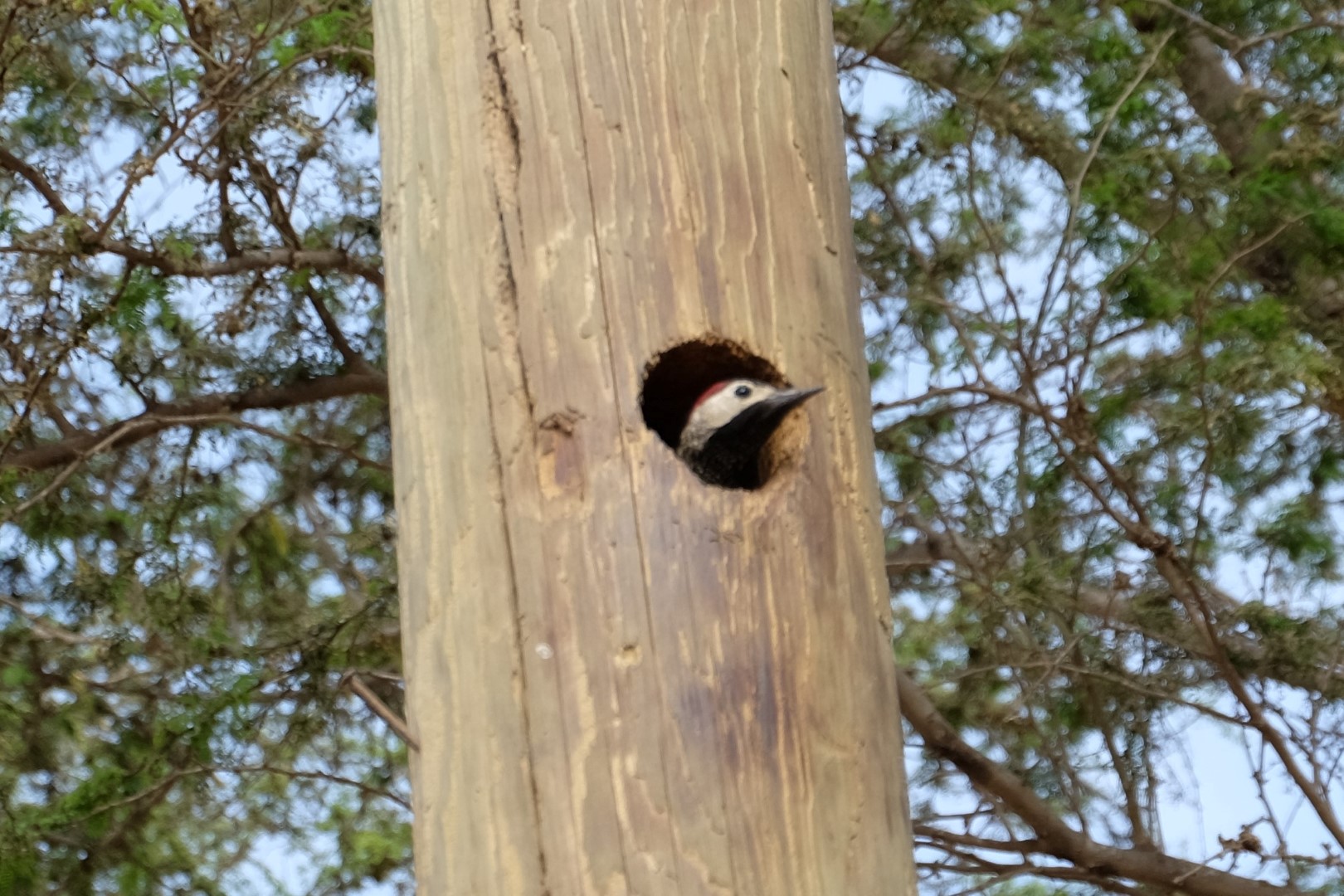
The first species we meet inside the reserve is its only parrot, the mountain parakeet. Like its larger relatives, this small green bird sits beautifully on a branch beside its mate.
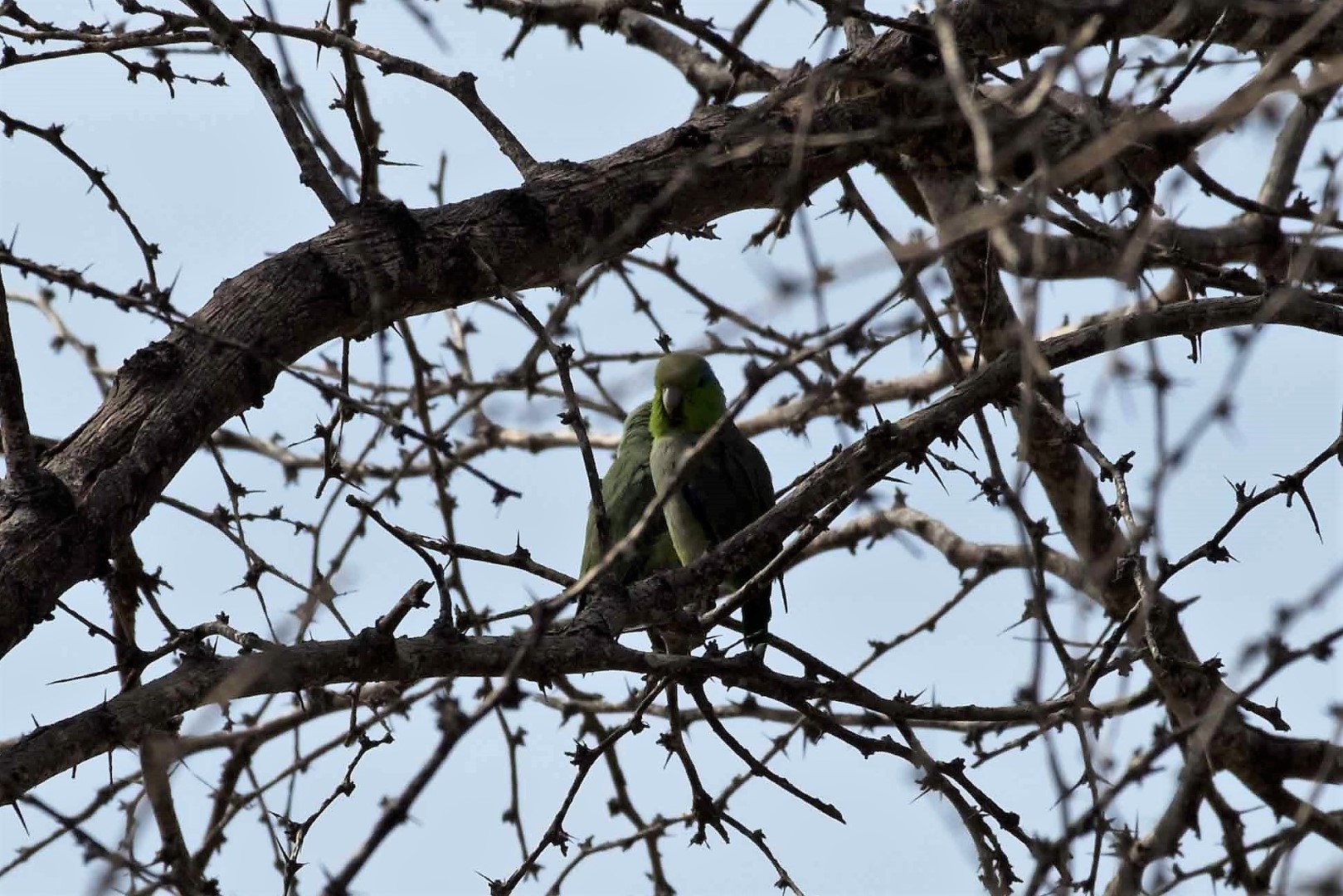
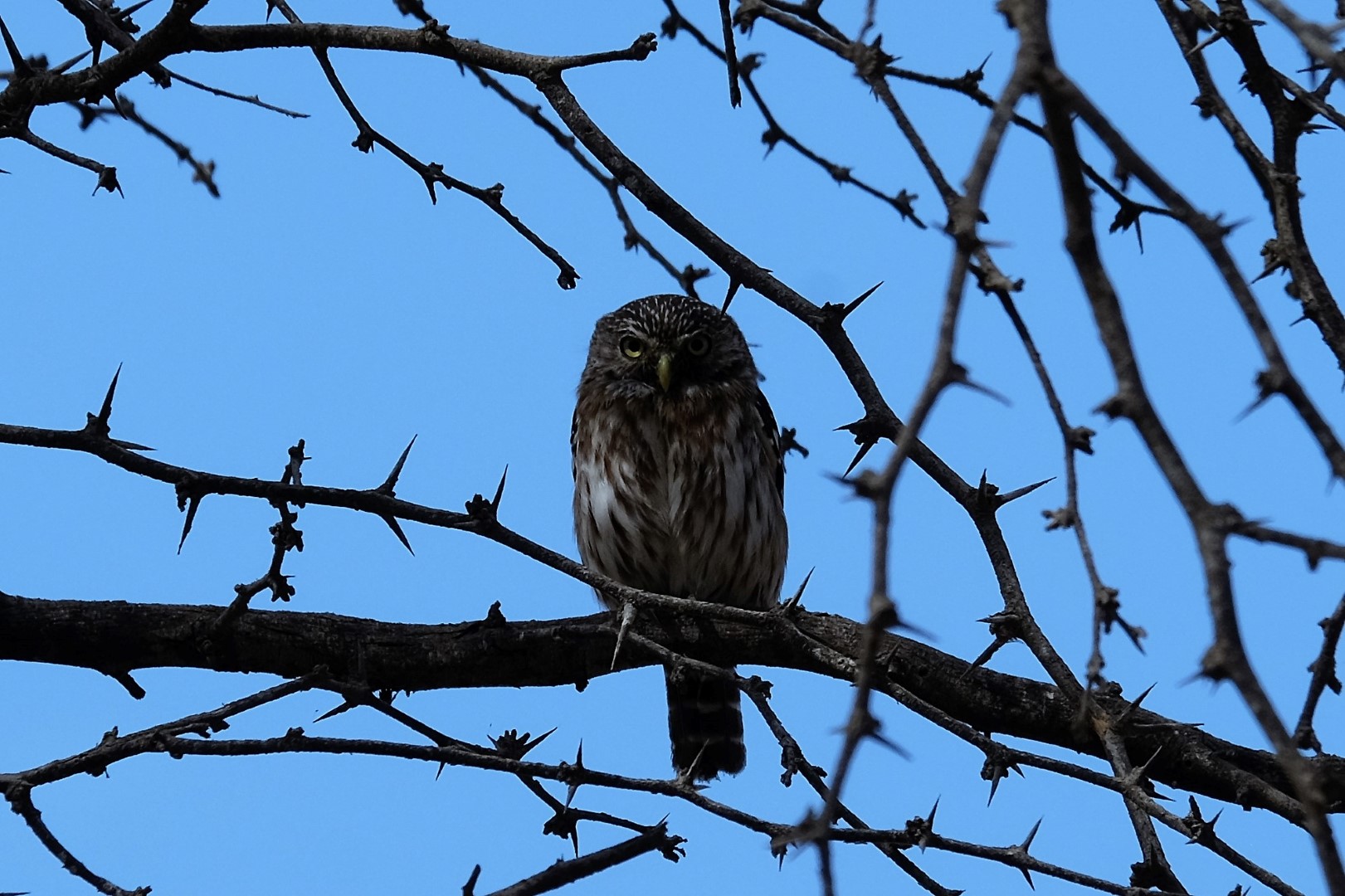
We must be in exactly the right place at the right time because, to my great surprise, the next bird is an owl. Even Igor appears impressed and hurries to take a photograph. I capture the first owl picture of my life. In fact, this is only the second time I have seen a wild owl at such close range. After consulting the bird book, I think it is an Andean pygmy owl. The first time this magical bird visited us—though in a considerably larger form—was during our wedding celebration in Kurzeme. It flew low above us while we were being photographed.
The most common bird in this dry forest is one I unfortunately cannot find in the guide. I only remember that Igor gave it a name resembling “cheesecake”, which made us laugh. Another familiar inhabitant is the black vulture. These scavengers can be encountered almost everywhere in Peru.
We stop to rest our legs and take photographs beside the Árbol Milenario, the thousand-year-old tree. It lies along the ground without leaves, yet is apparently still alive and continues to grow. The Sicán culture is said to have predicted that it would live for several hundred years. Many legends surround it too. One says that anyone attempting to cut it down will meet a cruel fate, such as a snakebite. Stories like this have encouraged belief in the tree’s magical powers, and villagers regularly visit to admire it and offer prayers.
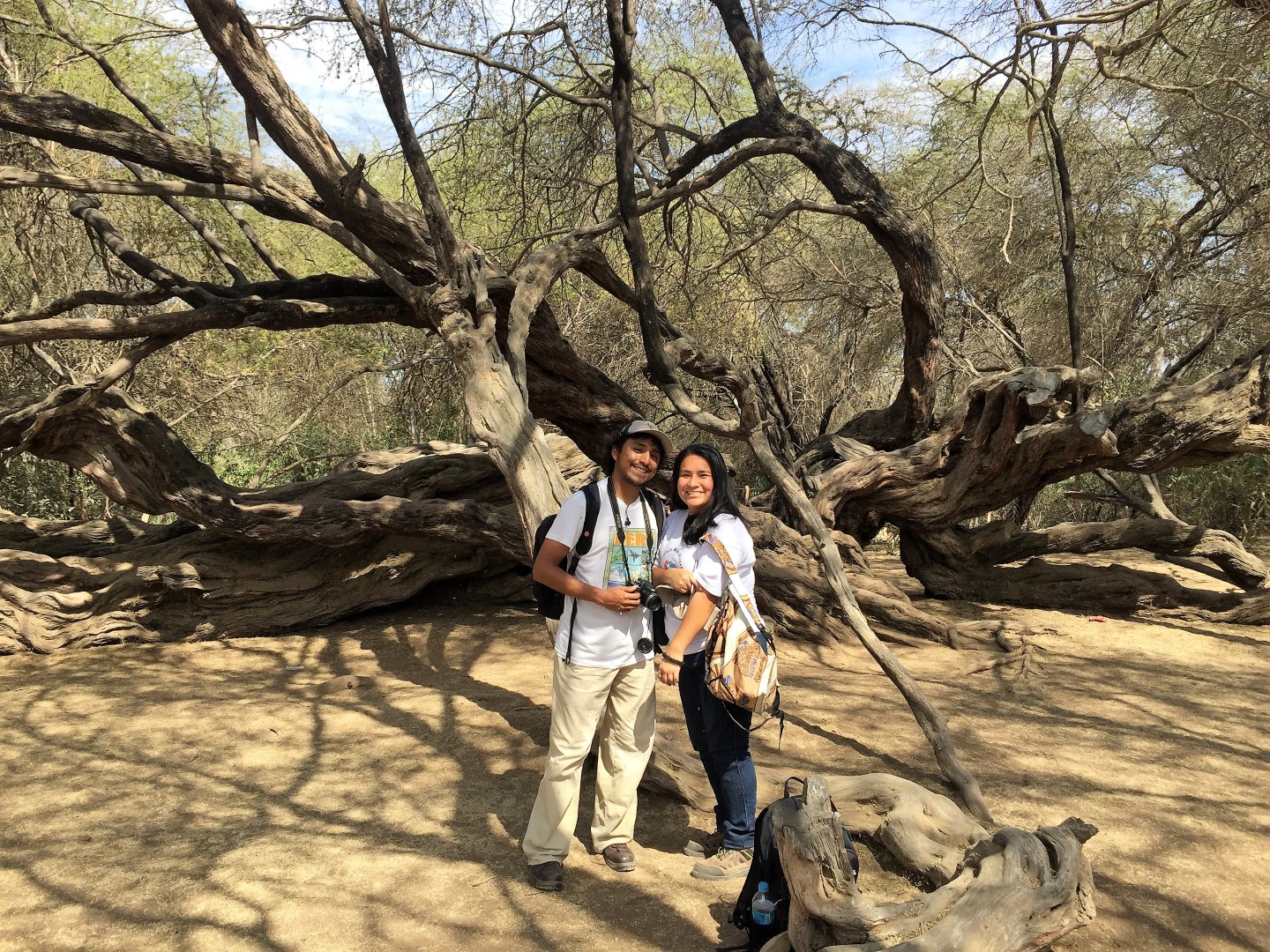
We also visit the river, which looks substantial on the map. At present it is completely dry—not even the smallest trickle flows. We walk along its sandy bed. In a few months, this would be impossible because a powerful current will occupy the entire channel.
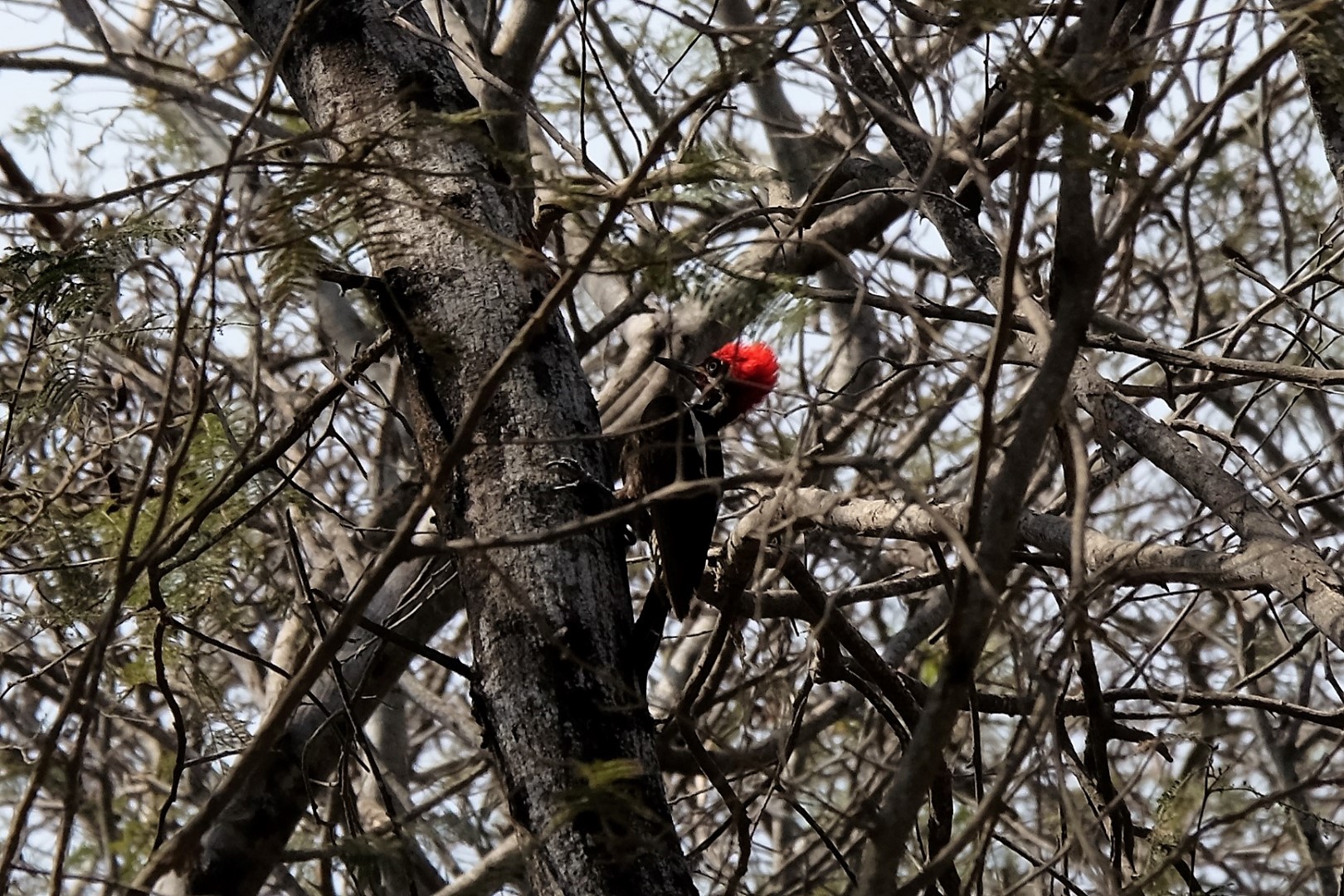
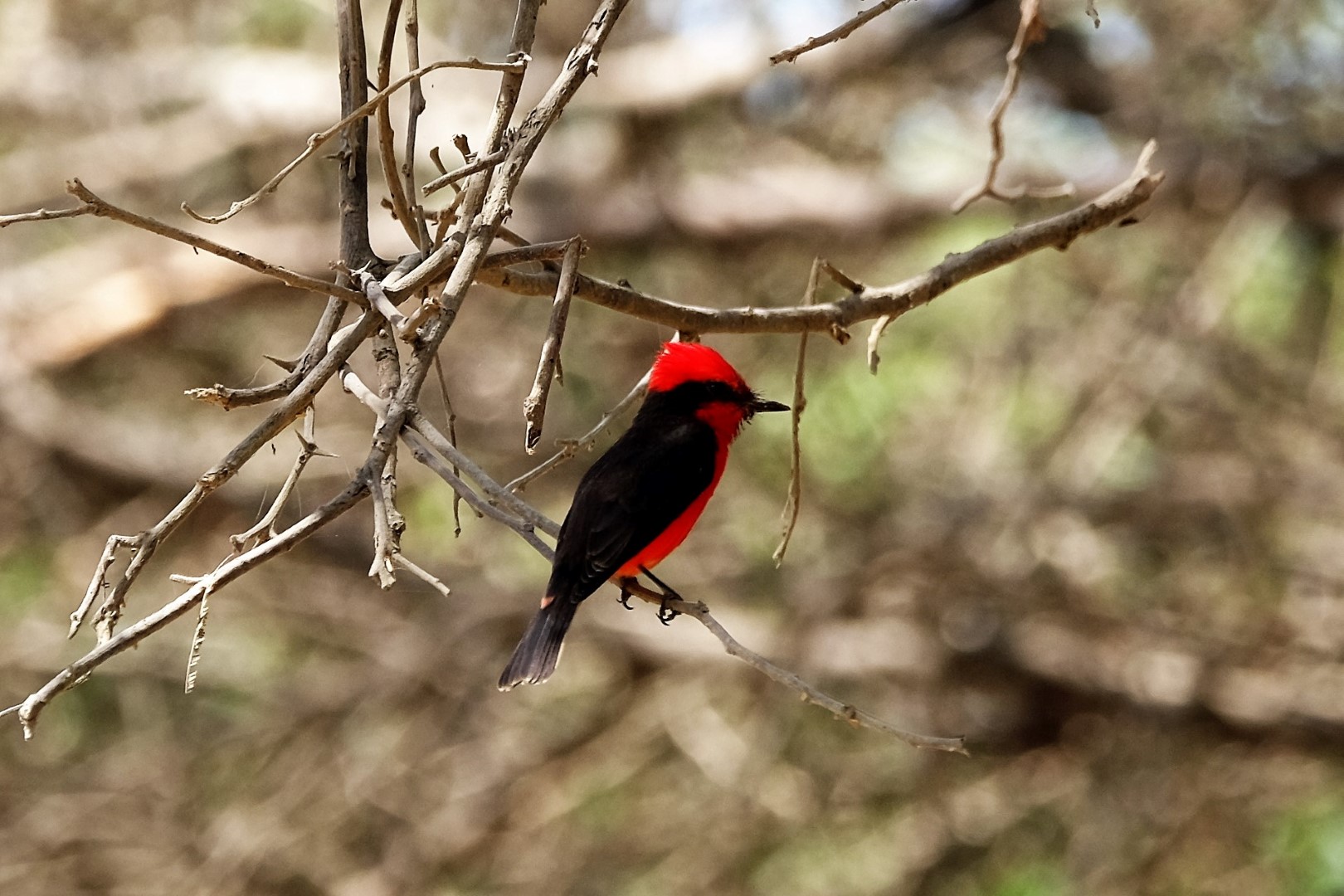
After photographing the owl, I am entirely satisfied with the day and simply enjoy the surroundings and the little birds everywhere. The surprises continue, however. Directly above us on a branch, we spot a larger male woodpecker, possibly a powerful woodpecker. Soon another bright but smaller red-headed bird appears: a vermilion flycatcher. I identify all these names from the photographs using our Peruvian bird guide, although I am far from confident that my homework is correct. Around thirty-two species of woodpecker alone have been recorded in the country. Females may differ from males in colour and size, while young birds often wear different plumage until they mature. I will have to submit the homework to Igor for checking.
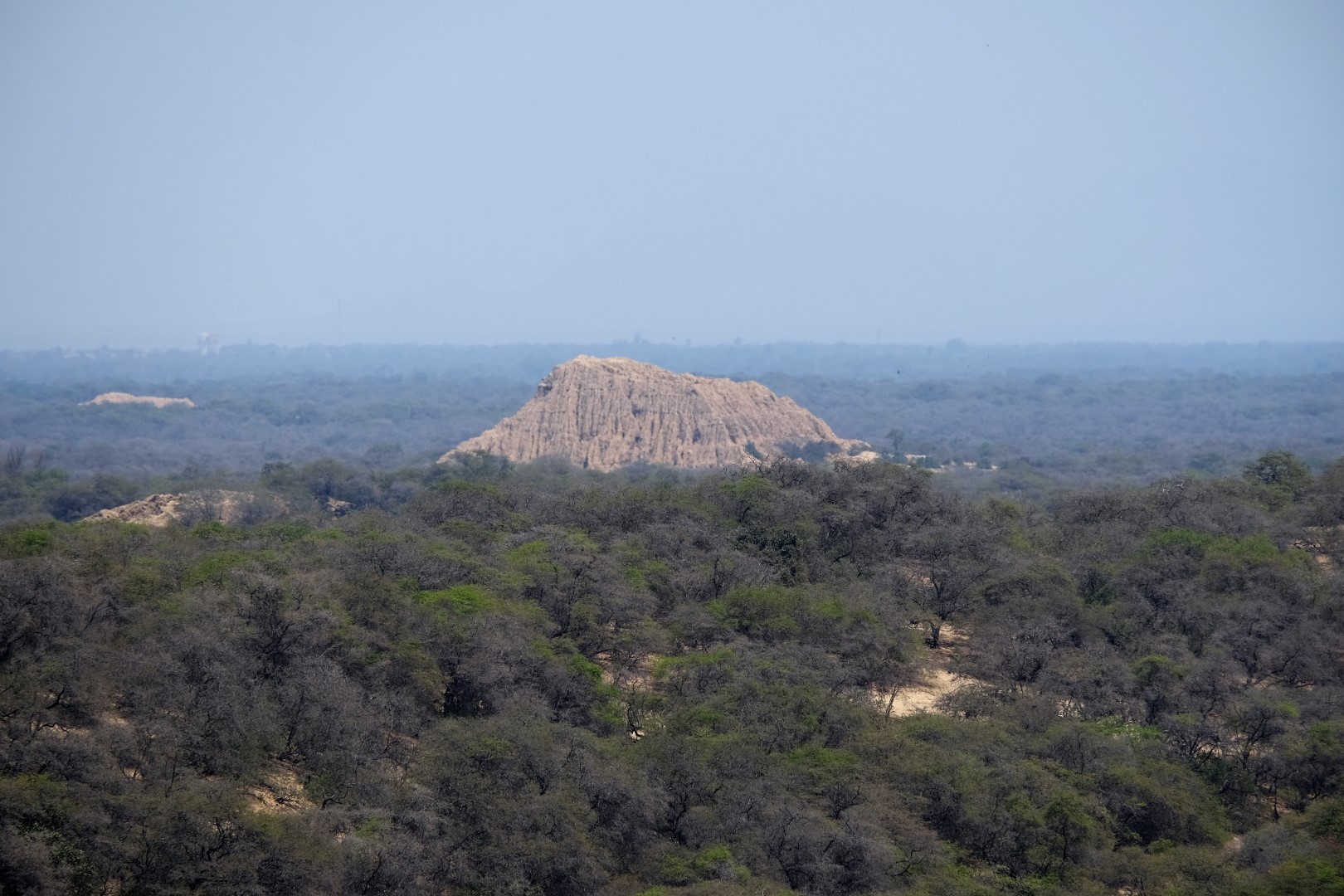
Bosque de Pómac conceals another secret: pyramids left by the Sicán culture. One of the twenty in the region, Huaca Las Ventanas, stands in the middle of the reserve. Near the end of our walk, we climb to a viewpoint on a hill. From there, the pyramid resembles a mountain rising from the plain. It has now lost its original form and is collapsing under the effects of weather. Even at a great distance, its scale is clear. Once again, the question arises: how was it possible to build something like this, and why here in such a dry place? Igor remarks that many people still believe aliens created it. Archaeological evidence, however, shows that it was the burial place of one of the most powerful Sicán men. The word huaca has two meanings: tomb and treasure. Both are appropriate here because the Sicán buried important people with all their most valuable possessions. When discovered, Huaca Las Ventanas was a genuine treasure chest. An estimated 1,200 kilograms of gold had been used in the tomb’s decoration, objects, and the dead man’s clothing.
We follow the dry road back. It seems strange that the verges inside a ranger-managed reserve are still rather littered. Igor explains that a village stands on the far side. Without access to this road, its residents would need several additional hours to reach Chiclayo, so they alone are permitted to drive through.
The sun is directly overhead and it is extremely hot. Every so often, a tuk-tuk from the village passes us. We decide to flag one down because Diana feels unwell from the heat and walking. She and Igor take the seats, while we choose to ride in the little trailer behind. It is a perfectly enjoyable way to make the return journey.
After our day together, it is time to say goodbye. We continue to Piura and from there towards the Ecuadorian border.
More of Igor’s bird photographs can be enjoyed on the Facebook page he created especially for his work: Igor Lazo.