Ecuador has so much to offer. Swim with sea lions in the waters of the Galápagos, climb a volcano, raft down fast rivers, watch wildlife in the jungle, or swing out over the edge of a cliff—these are only a few of the country’s many unforgettable, adrenaline-filled activities. Ecuador can also be enjoyed at a much gentler pace: settle into a fishing village, search for beautiful beaches, surf, and eat seafood. This is the version we chose, along with the lovely cities of Loja and Cuenca and Quito. Altogether, we spent three weeks in this contrasting country (our route is shown on the map).
Facts
Area: 283,560 km²
Population: 14.7 million
Language: Spanish
Currency: US dollar (US$1 = €0.96)
Capital: Quito
For scale: Ecuador covers 4.4 times the area of Latvia and has 7.5 times its population.
Seasons:
- June–September: the best time to visit the highlands, with less rain and warmer days.
- October–November: the most suitable period for the Amazon, when rivers are navigable and humidity is lower.
- December–May: rainy season on the coast.
Distinctly Ecuadorian
The equator, of course! Ecuador is one of eleven countries crossed by the equator, but it alone has taken its name from the line dividing the Earth into northern and southern hemispheres. Quito is the closest capital city to the equator, standing twenty-six kilometres from it. We crossed the line three times while travelling through the country. We have heard that the United States and Russian navies hold initiation ceremonies when new sailors cross the equator at sea for the first time. These rituals are infamous for their brutality.
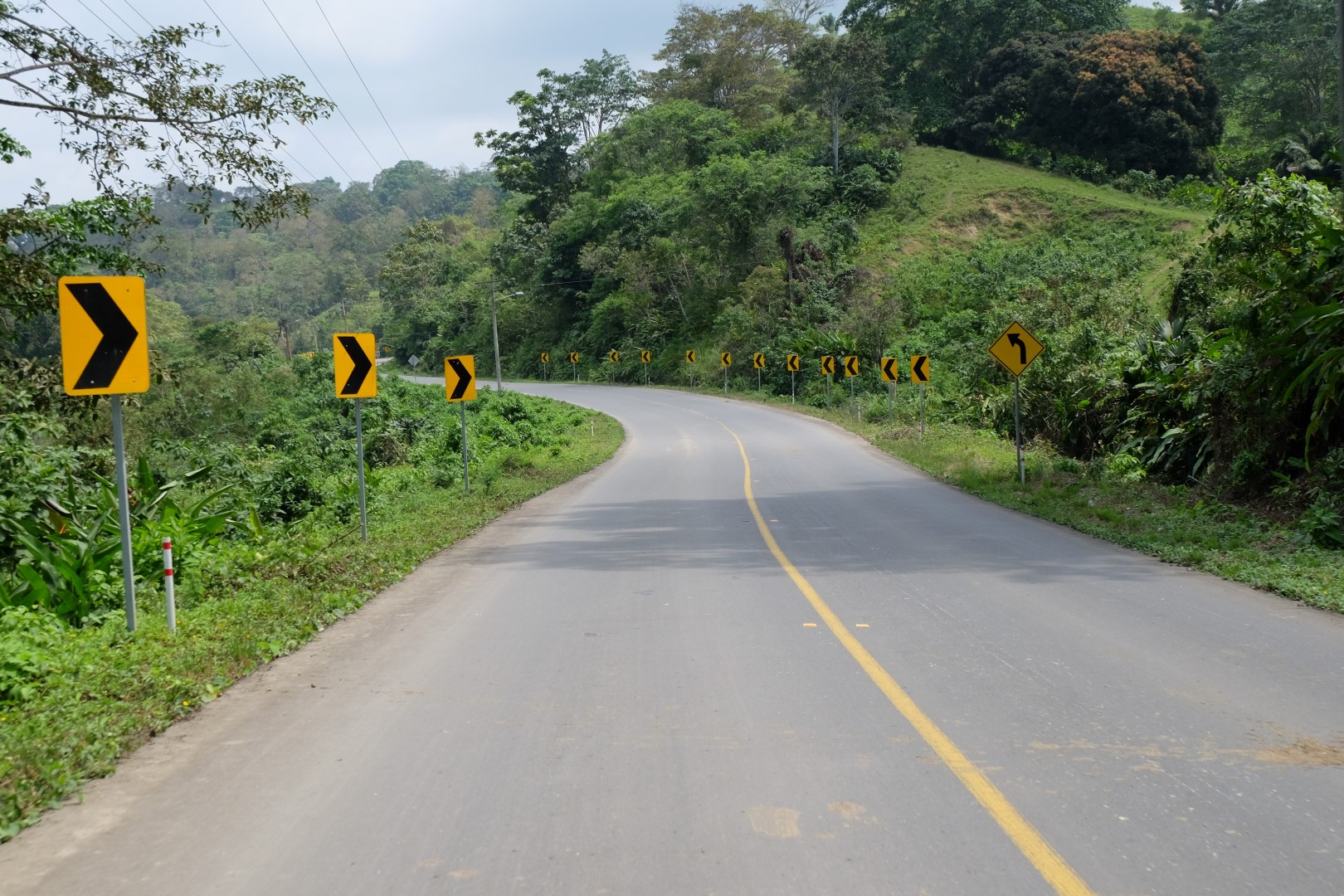
Good roads. For some reason, we knew about Ecuador’s roads before leaving Latvia. Once in South America, it becomes clear why the country is famous for them: compared with its neighbours, good road quality is noteworthy. Around ninety-five per cent of Ecuador’s roads are in good condition. The government made this a priority and received technical and financial support from the United States to achieve it. As a result, Ecuador is well suited to a road trip in a hired car.
Prices and currency. Ecuador has adopted the US dollar as its national currency. Banknotes are identical to those in the United States, while coins are a mixture of regular US cents and Ecuadorian designs that cannot be used in America. Many businesses display signs saying that they will not accept notes larger than twenty dollars—possibly because of concerns about counterfeiting. In any case, shopkeepers examine notes carefully and hold them up to check their watermarks.
Ecuador is often counted among South American countries with a low cost of living. Perhaps that is true somewhere deep in the Amazon, but not in the places we visited. Maybe arriving from Peru influenced us, but we would hesitate to say that “everything is so cheap”. Accommodation and food in particular cost considerably more than in Peru. A few examples:
- Lunch special (soup, main course, and drink): US$3 = €2.85
- Dinner at a café in a tourist area: US$8 = €7.60
- A cup of coffee: US$1 = €0.95
- Half a litre of water: US$0.60 = €0.57
- A six-hour bus from Esmeraldas to Quito: US$9 = €8.53
- A double cabin at Mud House hostel in the coastal village of Mompiche: US$23 = €21.80
- A double room at The Secret Garden hostel in Quito: US$28 = €26.52
Plantation fever. Ecuador is the world’s largest exporter of bananas, and its economy depends significantly on exports worth around US$2.5 billion each year. Latvians eat Ecuadorian bananas too, as the little Ecuador stickers in Latvian shops confirm. In recent decades, plantations of African oil palm have also spread rapidly across the country. Palm oil is the least expensive type of vegetable oil. Irreplaceable, biodiverse forests are destroyed to establish plantations, and endangered species lose their habitats.
Oil-palm cultivation also encourages poverty. The regions where plantations are most widespread are among Ecuador’s poorest. Landowners who sold their property for plantations or established plantations themselves acted unsustainably, following the principle “fed today, hungry tomorrow”. Before the palm-oil era, Ecuadorians grew native crops such as cacao. This did not make them rich, but it provided a clean environment and a long-term living. Oil palms, by contrast, require investment in seeds, fertiliser, and pesticides to support the growth of an introduced plant. Their plantations are intensive monocultures. Cultivation in fragile ecosystems exhausts the soil, leaving it infertile after a few years. Oil palm is not a sustainable solution. Ecuador’s problem is portrayed in the film La Fiebre de la Palma—Palm Fever—with English subtitles.
You may not cook with palm oil, but you almost certainly consume it every day. At least half the packaged products sold in a supermarket contain it. Chocolate, crisps, biscuits, margarine, soap, shampoo, and laundry detergent are only some of the products in which it is used. The labels do not always state clearly that palm oil is present. This list explains the names under which palm oil and its derivatives may be hidden.
Gastronomic excess on the buses. Everything associated with buses in Ecuador is colourful, beginning with the vehicle itself, often painted with an enormous image of Jesus. Music is compulsory. It is not a quiet sound from the front for the driver’s benefit; the volume ensures that passengers in the final row hear it clearly and can sing along when a good song plays. Fortunate are those whose driver has excellent taste. On longer journeys, a film is shown—usually an action movie starring Jackie Chan. The picture commonly freezes from time to time. At such moments, there is a glimmer of hope that the driver might return to the music. Usually he does not, and everyone continues to the destination with a single frozen frame and its accompanying sound.
It is also fascinating to see what local people carry. Large bags, sacks, and boxes must go in the luggage hold, but certain things are sacred—in the literal sense—and cannot possibly be entrusted to baggage. Once, we see a wooden statue of the Virgin Mary held carefully on a woman’s lap throughout the journey. On another bus, somebody carries a banana plant for which the word “seedling” is only just still applicable. I would call it a small tree.
The loveliest part of the ride is the food sellers. As a bus passes through towns and villages, the driver opens the door and vendors jump aboard while it is still moving slowly. Passengers can buy fruit, empanadas, warm coconut biscuits, drinks, and even a complete hot meal such as boiled beans or a fried chicken leg. Ecuadorians—and we—gladly take advantage, so a bus journey often becomes a gastronomic adventure. It is extremely convenient: there is no need to organise water and snacks before departure, and everything costs less and is fresher than at the station.
Some vendors specialise in drinks and others in snacks. People who have just baked empanadas leap aboard with a warm tray and sell out in moments. Most unusual are those who hand their products to passengers. After boarding—or jumping on—they explain the item, walk down the aisle placing one in every person’s hands, then collect either payment or the product on the way back. The method works well for DVDs, socks, zips—yes, you can buy those on a bus too—and other goods. We are less convinced when it is used for chocolate and never buy a bar that has already passed through a hundred hands.
When I first experienced a classic Ecuadorian bus, my initial thought was, “What exactly is happening right now?” Then I laughed for a long time and eventually decided that I liked the whole affair. There is a party, acrobats jumping on and off the bus, and plenty to eat. Exceptions do exist: large buses travelling for more than five hours do not admit vendors, keep the music quiet, and are thoroughly boring because you can even sleep.
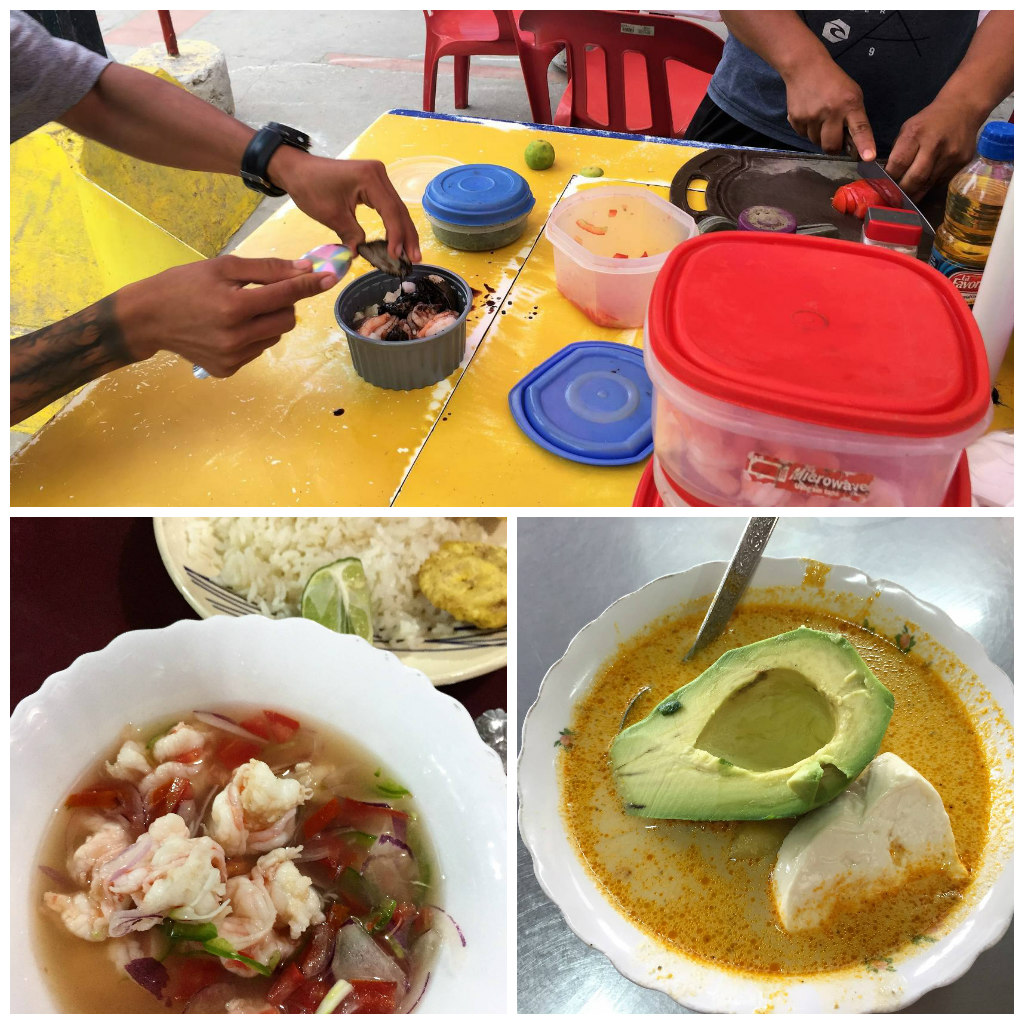
Food. Ecuador’s Andean cuisine differs little from the food of the Peruvian Andes. Grilled guinea pig (cuy), chicken with rice (arroz con pollo), and spit-roasted chicken (pollo a la brasa) are popular here too. One dish deserves particular attention: the creamy vegetarian potato soup locro de papa, served with avocado and fresh cheese. We had not tasted anything like it in Peru.
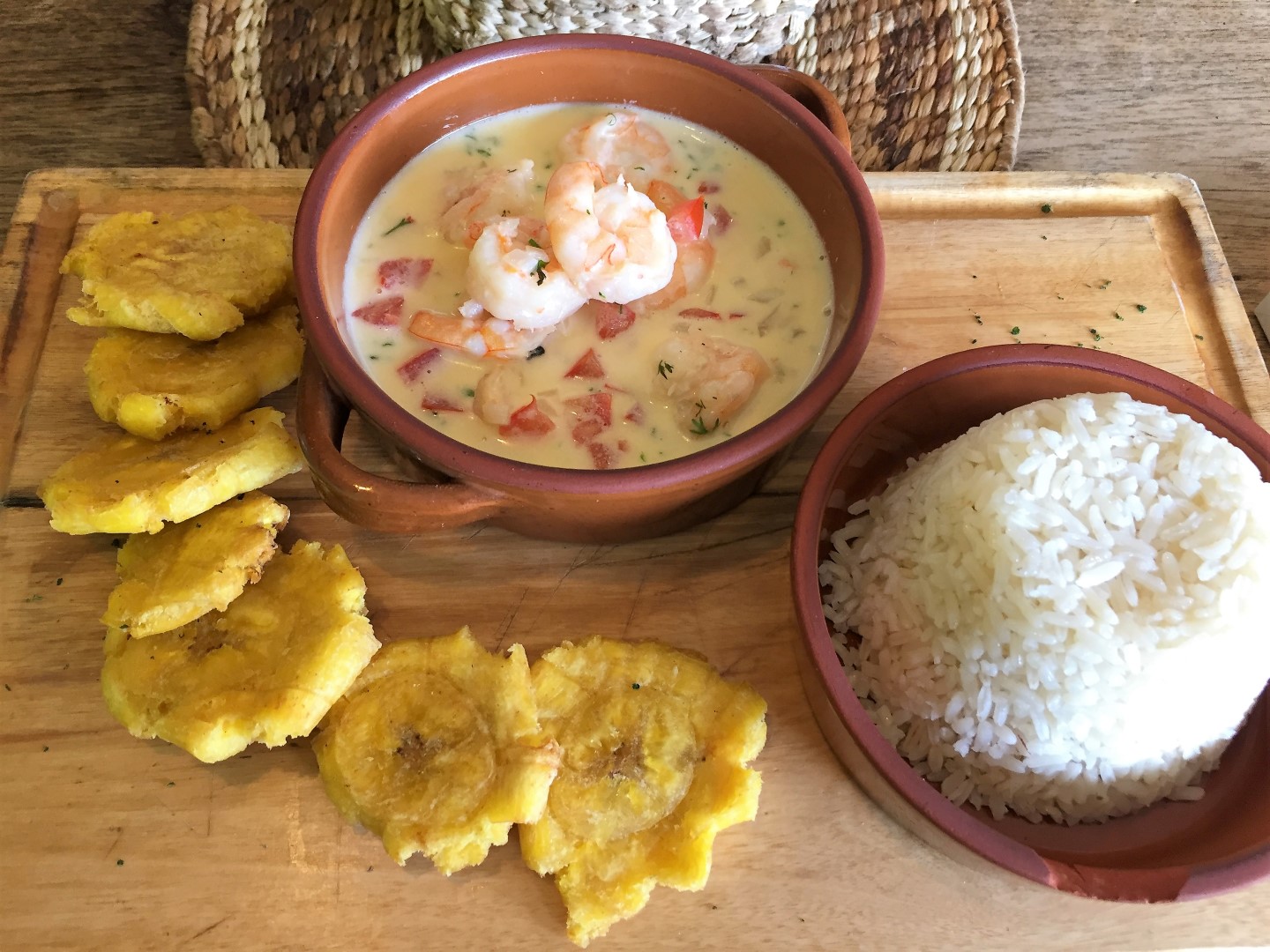
Ecuador’s coastal towns and villages offer an especially wide choice of fish and seafood. For seafood lovers, the coast is a paradise of flavours. Alongside ceviche, there is seafood soup (sopa marinera), visually exotic maito—fish grilled in palm leaves—and other intriguing dishes. Giving up meat was easy in Ecuador because seafood replaced it. My favourite dish was encocado: prawns cooked in a creamy coconut-milk sauce and served with rice and fried plantain. It resembles prawn curry but is not spicy.
The Panama hat. This famous, exceptionally fine straw hat is woven in Ecuador but mistakenly called a Panama hat because it travelled from Ecuador to Panama before being shipped onward to North America, Asia, and Europe. Toquilla palms grow around Montecristi, providing the material for this pale, light, breathable hat. Five years ago, traditional Ecuadorian toquilla weaving was added to UNESCO’s list of intangible cultural heritage. The craft has passed from generation to generation for several hundred years. Montecristi and Cuenca, where most hats are woven, are the best places to buy one at a reasonable price. A hat costs around one hundred dollars there, while elsewhere in the world you should expect to pay at least twice as much.
The Galápagos Islands. The archipelago lies in the Pacific, 960 kilometres west of Ecuador’s coast. Although we did not visit, it is one of the country’s main attractions—and with good reason. What Charles Darwin observed on these remarkable islands helped inspire his theory of evolution. They are home to unique animals such as the famously fearless marine iguana and the world’s largest tortoise, the Galápagos giant tortoise, as well as seabirds, sea lions, dolphins, and many other fascinating creatures.
Visa. Latvian citizens visiting Ecuador for tourism or a short private stay may remain for up to ninety days without a visa.