The big day is approaching: we will cross the Ecuador–Colombia border and travel to our first destination in Colombia, salsa-filled Cali. Every traveller we have met has said only the best things about the country. Without our noticing, our expectations have adjusted accordingly, and we await our arrival impatiently. Flights between Ecuador and Colombia are currently unreasonably expensive, so we will return to the good old bus. To make the journey more entertaining, we will be joined by Linnea from Sweden, whom we met at our hostel in Quito.
Crossing the Ecuador–Colombia border
On the morning of departure, we meet Linnea at the breakfast table. Yesterday, she spoke to Paulo from Australia, who also plans to cross the border today and will join us. Our group grows by another person, and the four of us climb into a taxi for the distant Carcelén bus terminal in northern Quito.
Rumichaca is the principal border crossing between Ecuador and Colombia. Our route is therefore: 1) bus from Quito to the border town of Tulcán; 2) cross the border on foot; 3) taxi to the Colombian border town of Ipiales; 4) overnight bus from Ipiales to Cali.
The bus to Tulcán takes five hours. At first, we chat with Paulo and Linnea; later, we fall asleep. When we arrive, the men exchange several dollars for Colombian pesos so we can pay for a taxi on the far side. The rate in the border town is not encouraging, although we have heard that it is even worse at the crossing itself. Meanwhile, Linnea and I discuss my concern that initially it may be difficult to understand prices in Colombia. Until now, I have practised Spanish numbers in tens and hundreds; suddenly, I must switch to thousands—mil—and millions—millón. And Latin Americans speak so quickly... In my head, I try to work out how to say 58,500 COP correctly. Linnea, who does not speak Spanish, is unconcerned. “I usually estimate what something might cost, give them a little more, and wait to see whether I get change.” It is worth noting that price labels are rare in Latin America, so you have to ask before every purchase unless you want to pay an inflated gringo price several times over. To my mind, only the ability to talk with vendors gives you access to reasonable prices. It would be interesting to study how much a Spanish-speaking traveller saves on the same goods and services during a trip of identical length compared with somebody who does not speak the language. From our previous experience, the difference would be considerable. On a journey as long as ours, Spanish has a monetary value too.
We find a taxi, negotiate a reasonable fare, and travel to the border. An unwelcome sight awaits: the queue of travellers is so long that it extends several metres beyond the Ecuadorian immigration building. At first, time passes unnoticed as we talk among ourselves; later, the people ahead and behind join the conversation. We eat ice cream, buy a cup of freshly cut mango, then another of watermelon. We take turns leaving to buy water or simply stretch our legs, and so it continues. When we finally get inside, where the queue snakes through several turns, Jānis and Paulo hold our place while Linnea and I sit down. I look at the time and realise we have been waiting for three hours.
We successfully receive Ecuadorian exit stamps and walk across the bridge towards Colombian immigration. Happy people carrying boxes come towards us: televisions, printers, blenders, and other appliances suggest that Colombia’s low prices may not be a myth. If Ecuadorian families make shopping trips across the border, it must be worthwhile.
There is no trace of a queue on the Colombian side. At the window, we receive a warm welcome to the country; without even examining the passport details, the official simply stamps them. We can officially remain in Colombia for ninety days, with the possibility of extending for another ninety. A foreign visitor can therefore spend six months here within one year.
Next comes a taxi to Ipiales. Here, we will say goodbye to Paulo because he is continuing in another direction, towards San Agustín. I ask whether he plans to visit its archaeological park, the only thing I know about the region. No, he replies; there is a hostel where they run cocaine-making workshops. All the ingredients are provided, participants go through every stage of production, and at the end, they receive one gram of the “product”.
After saying goodbye to Paulo, we continue to Ipiales bus station and buy overnight tickets to Cali. Despite Colombia’s reputation for low prices, buses are not cheap. We pay 50,000 COP (EUR 17) each. Then again, considering that we will cover 500 kilometres and travel for nearly ten hours, perhaps it is not so bad.
In Ipiales, we had planned to see the beautiful Las Lajas Sanctuary, a thirty-minute drive from town. We had not anticipated the long line at the Ecuadorian border, however. We are tired, and darkness will fall very soon. Outvoted two to one by Jānis and Linnea, I concede that we will not attempt the only noteworthy activity near Ipiales. Instead, we enjoy the few free hours before our bus, taste our first delicious cup of Colombian coffee, and eat a lovely dinner for 6,000 COP, or EUR 1.95. For the remaining time, we educate ourselves about Sweden. Linnea describes her city and Swedish universities—she is studying for a master’s degree in mathematics—and shares her thoughts on the refugee crisis.
Colombian buses are notorious for excessive air conditioning. Since this is our first overnight journey in the country, I had forgotten that warning. Linnea prepared wisely and removed her sleeping bag from her large backpack. By the time I saw it, ours were already in the luggage compartment and the bus was moving. During the night, I repeatedly wake from the cold and wonder whether there is a logical reason for setting the air conditioning this low, or whether it is simply a characteristic of Colombian drivers. Although Peru’s roads were dreadful, its bus service was excellent—cheaper, and often including a small pillow and blanket.
Salsa and Cali
We arrive in Cali with the first morning light, passing smart residential districts filled with apartment buildings. Later, the view changes radically: homeless people sleep beneath a bridge in worn tents, structures made from cardboard boxes, or simply on cardboard laid over the ground. It is still early when we roll into the terminal, so we linger in a café to increase the chances that somebody at the hostel is awake to open the door. Linnea’s booked hostel is near ours, allowing us to share one final taxi.
We are admitted to the hostel and receive our room several hours later, once it has been vacated and cleaned. The day after a night bus is always a “quiet” day, so we sleep for a few hours to recover. Afterwards, we feel ready to see the city. We begin by walking through our hostel’s district, a glamorous neighbourhood with restaurants and shops of every kind. The sight surprises us; it feels more like a large European city. The range of restaurants creates further excitement: Indian food, French crêpes, pizza and pasta, sushi, Middle Eastern dishes—we are bewildered by the choice. We settle on the set lunch at a French crêperie, where an appetiser, main course, dessert, and drink are served at the highest quality for a reasonable price.
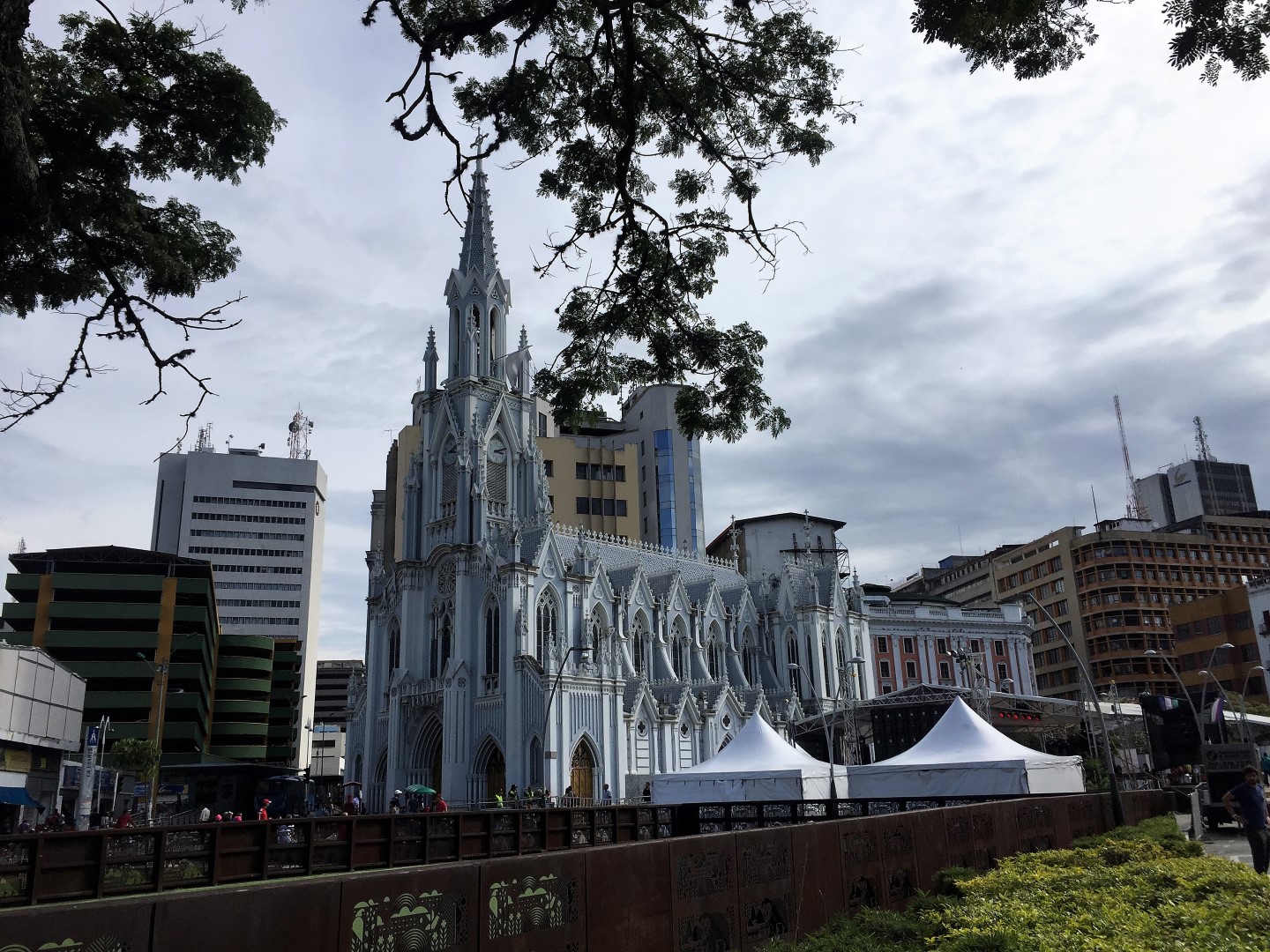
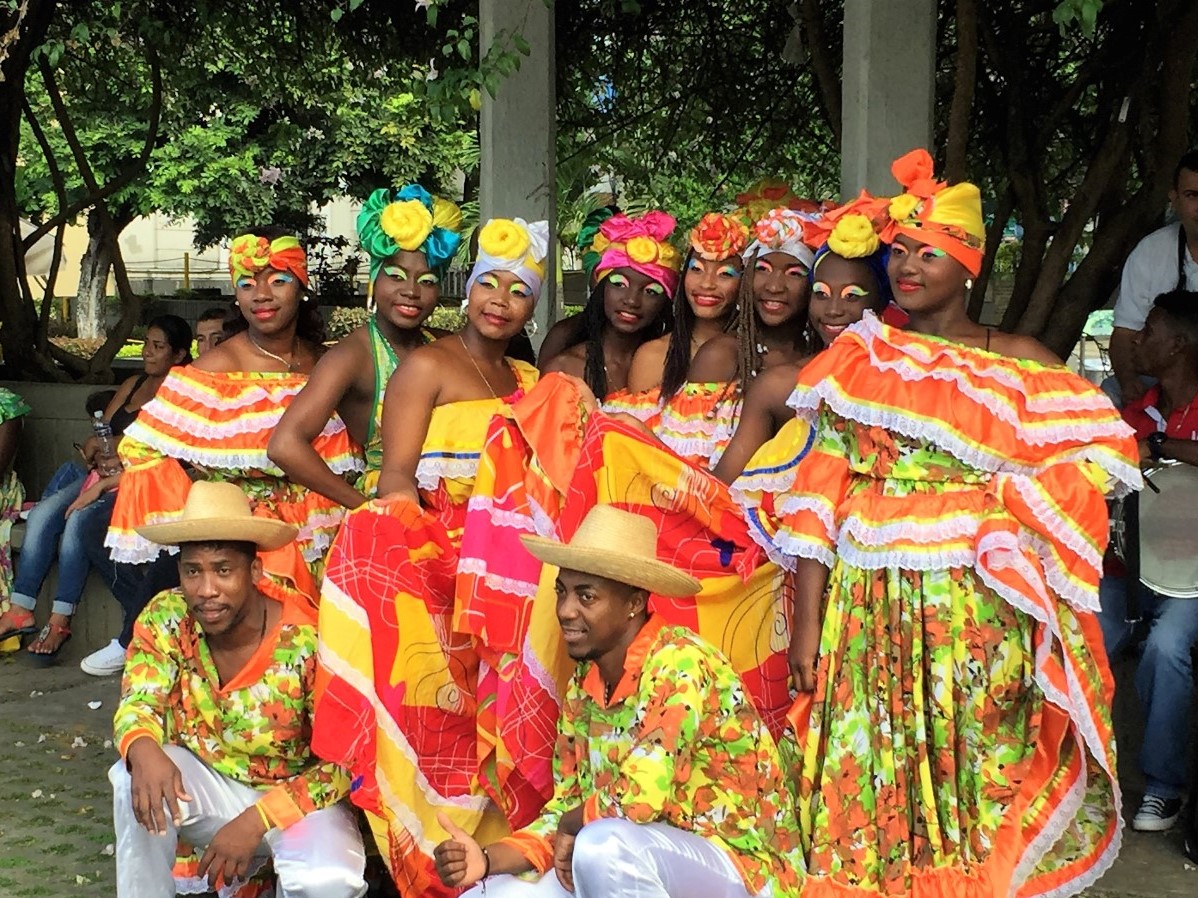
We also decide to walk to central Cali on the far side of the river. The first sight is the neo-Gothic Iglesia de la Ermita, standing on the riverbank with modern city-centre buildings behind it. An event is under way in a nearby square. A women’s salsa group rehearses inside a pavilion, while other dance groups in vivid costumes pose for photographs. As one group poses for its photographer, I take the opportunity to capture them too.
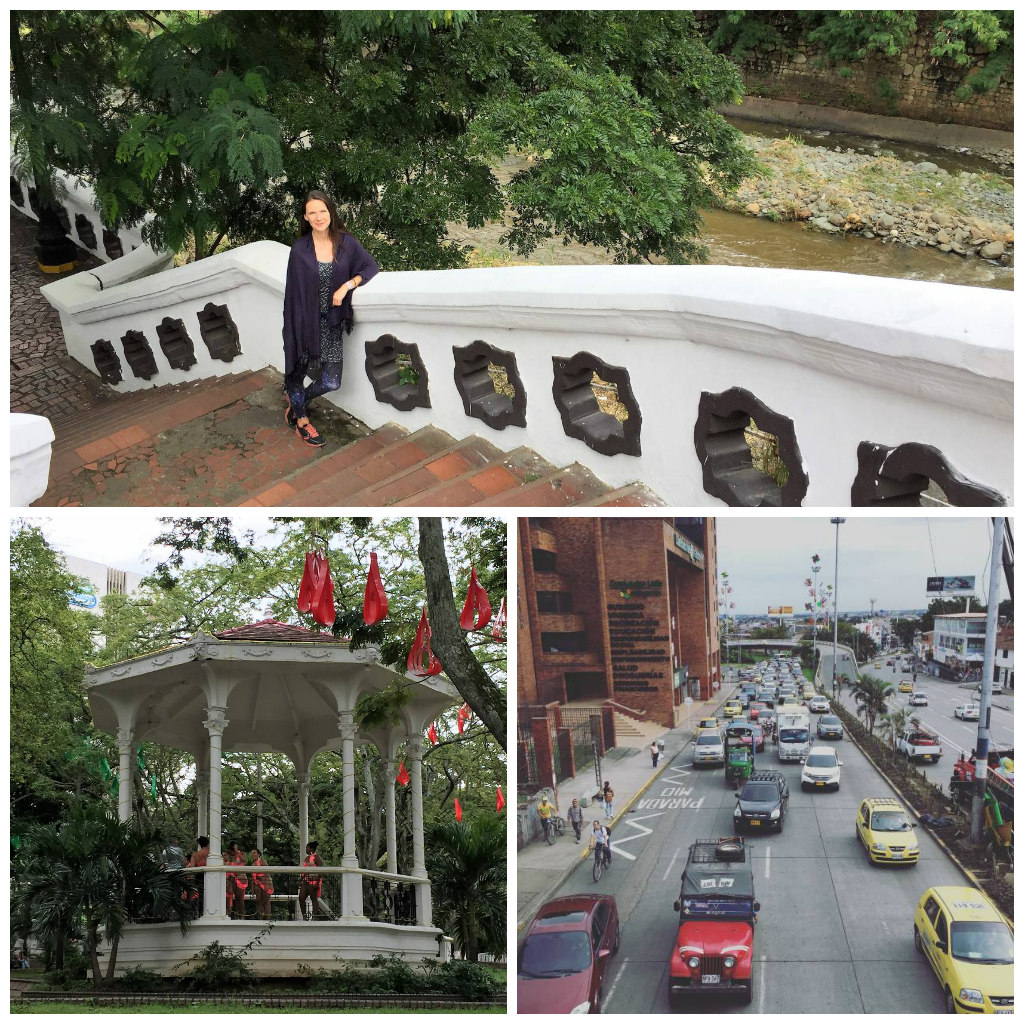
A school graduation is taking place today as well. We wander into a crowd of elegantly dressed young people taking photographs with their families. I wonder why walking through Cali feels so comfortable, and observation soon supplies the answer. Colombian traffic is night and day compared with Peru and Bolivia. Drivers stop at pedestrian crossings. On quieter streets, they sometimes halt without being asked and politely signal us to cross. The famous kindness of Colombians genuinely exists. In every establishment, regardless of its importance, we are greeted warmly and told the popular phrase Con mucho gusto!—“with great pleasure”. Previously, we used mucho gusto only when something truly wonderful happened, such as meeting and having a lovely conversation with a taxi driver, to express mutual pleasure at the time spent together. Most pleasant of all, however, is that we can walk through Cali without attracting unnecessary attention. Historical events have made modern Colombia racially diverse. Cali is especially distinguished by its Afro-Colombian heritage, visible everywhere.
And salsa! This passionate dance originated in Cuba and is loved throughout Latin America, but especially in Colombia. Cali is unquestionably the country’s salsa capital. A distinct style, Salsa Caleña, even developed here with slightly different steps. Music and dance do not seem to be mere entertainment but a way of life uniting the caleños, the people of Cali.
A second form born in Cali is Salsa Choke, or urban salsa. It uses salsa footwork but different body movements and music. Here is an example of Salsa Choke performed by a little caleña:
Cali has a rich selection of salsatecas, or salsa clubs. It is Saturday night, and I urge Jānis that we should at least watch the skilled dancers and listen to the music. We return to the hostel to choose somewhere. A surprise awaits us: we have arrived just before a free salsa class begins on the terrace. Excellent! Visiting a salsa club will be more meaningful if we know at least the basic steps ourselves.
We begin with the footwork. Everything seems simple until the instructor tells us to add movements of the hips and arms. Latin Americans have these rhythms in their blood; I suspect any local child would dance better than our group of gringos. We dance and laugh at ourselves. Jānis, for example, tries to be especially energetic—so energetic that he appears to be preparing to perform his salsa in a boxing ring. As the most active and cheerful dancer, he wins praise from the teacher. The weather is hot, and the effort soaks us with sweat. I tell a man who brought a large bottle of cold water that it was a good idea. Laughing, he says he knew because he attended yesterday’s class too. With each new song, our feel for salsa improves and we begin dancing in pairs. The instructor calls me forward to demonstrate the next figure with him. I concentrate and try my best. It turns out to be an easy game: the professional leads so well that I finish our short dance thinking, “I’m not a hopeless salsa dancer—I just need to keep digging!”
After the energetic class, Jānis persuades me not to continue to a salsa club. Instead, we go and stuff ourselves with sushi. Priorities... While waiting for the food, we watch the street. Wealthy Colombians have excellent taste. Women in dresses and men in neatly ironed shirts have come out for dinner. It is also lovely to see the attitude of Colombian men towards their partners. Young and old couples hold hands and look at each other lovingly. Although these observations and the sushi replaced the salsa club, they were worth it. The food is masterfully prepared, and at last we find the authentic flavour that eluded us in earlier countries. After months outside Europe, a choice of international food is sometimes exactly what you need.
A new day arrives, and today we will visit the zoo. I have mixed feelings about zoos. They can preserve species and educate people, but a poorly maintained one becomes torment for animals and exists merely for selfish human entertainment. For that reason, zoos rarely appear on our sightseeing lists. I am interested in seeing how Cali Zoo is managed because Lonely Planet calls it the best in Colombia. Our hostel owner adds that it is the best in South America. So let us go!
A taxi—containing something we have not seen in recent months, a meter—takes us through a green residential district of high-rises. The buildings are at least fifteen storeys tall, tasteful, with terraces and guarded entrance gates. For a moment, we even consider staying in Cali for a while.
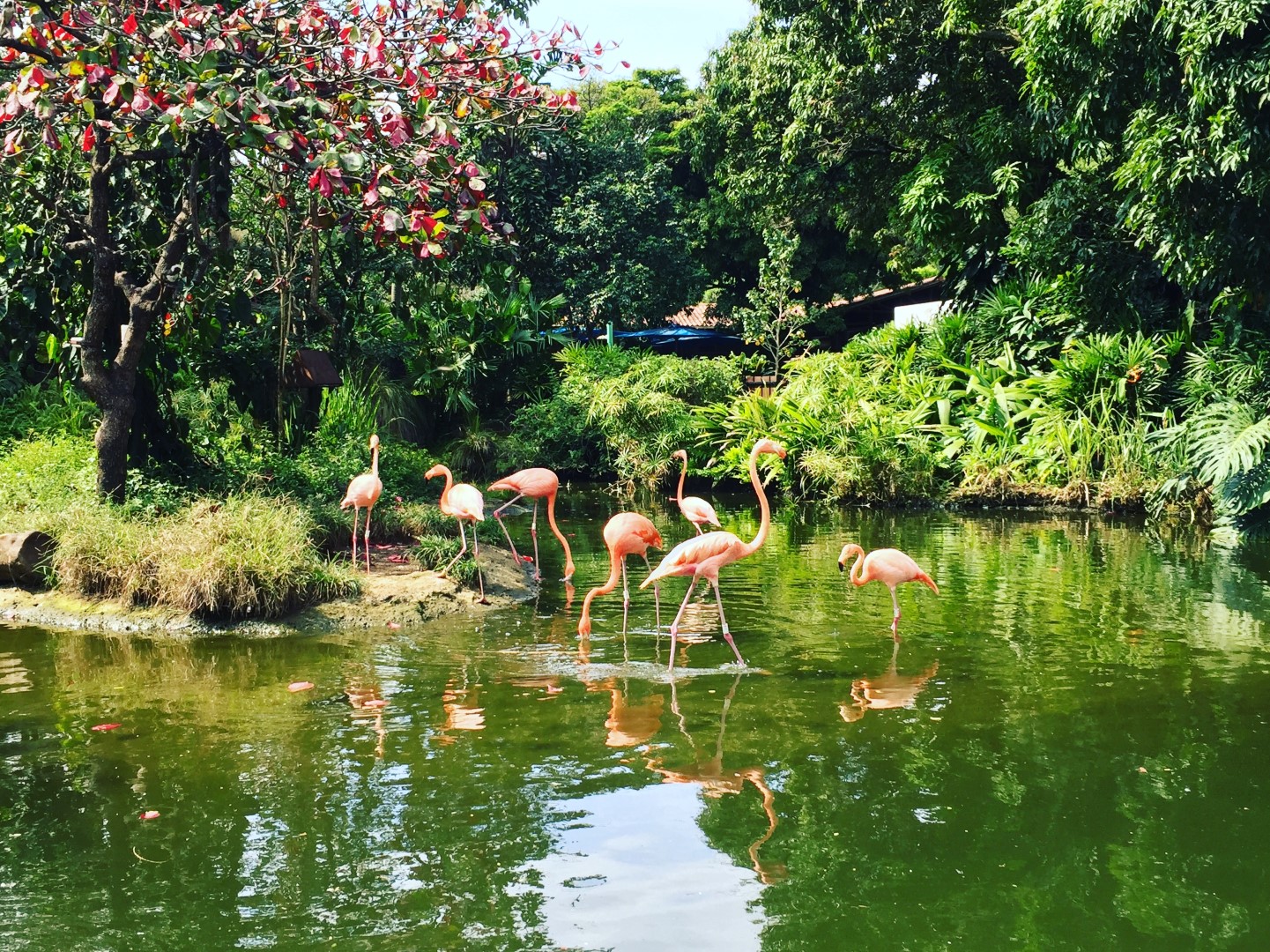
At the zoo entrance, we pay 18,000 COP (EUR 6). It is Sunday, and many Colombian families have come, but the crowd is not excessive. Flamingos are the first animals we see near the entrance, followed by the aquarium. In the bird section, familiar macaws await us. We walk past their enclosures and name the species. Professional instinct cannot be restrained, and I have a comment. Although the cages are spacious enough, it is a problem that unrelated birds can pass through their bars. Smaller birds bustle inside the macaw enclosure, gathering scraps of food, while pigeons sit on top. I remember chasing a neighbour’s hen and chicks from the bird area while working in Bolivia because they could introduce bacteria and parasites. Macaws are extremely complicated and sensitive in this respect. In their natural habitat, they have no contact with poultry or city birds such as pigeons. I believe the zoo should also isolate them from urban birds to avoid unnecessary health problems.
In the raptor section, I finally see a King Vulture, a bird I had long wanted to encounter after studying the guidebook. It has a colourful head and bill, with fleshy folds of skin. At last, we also see an Andean Condor close up; in Peru, we observed them only flying at a great distance. Incidentally, Riga Zoo has an Andean Condor too.
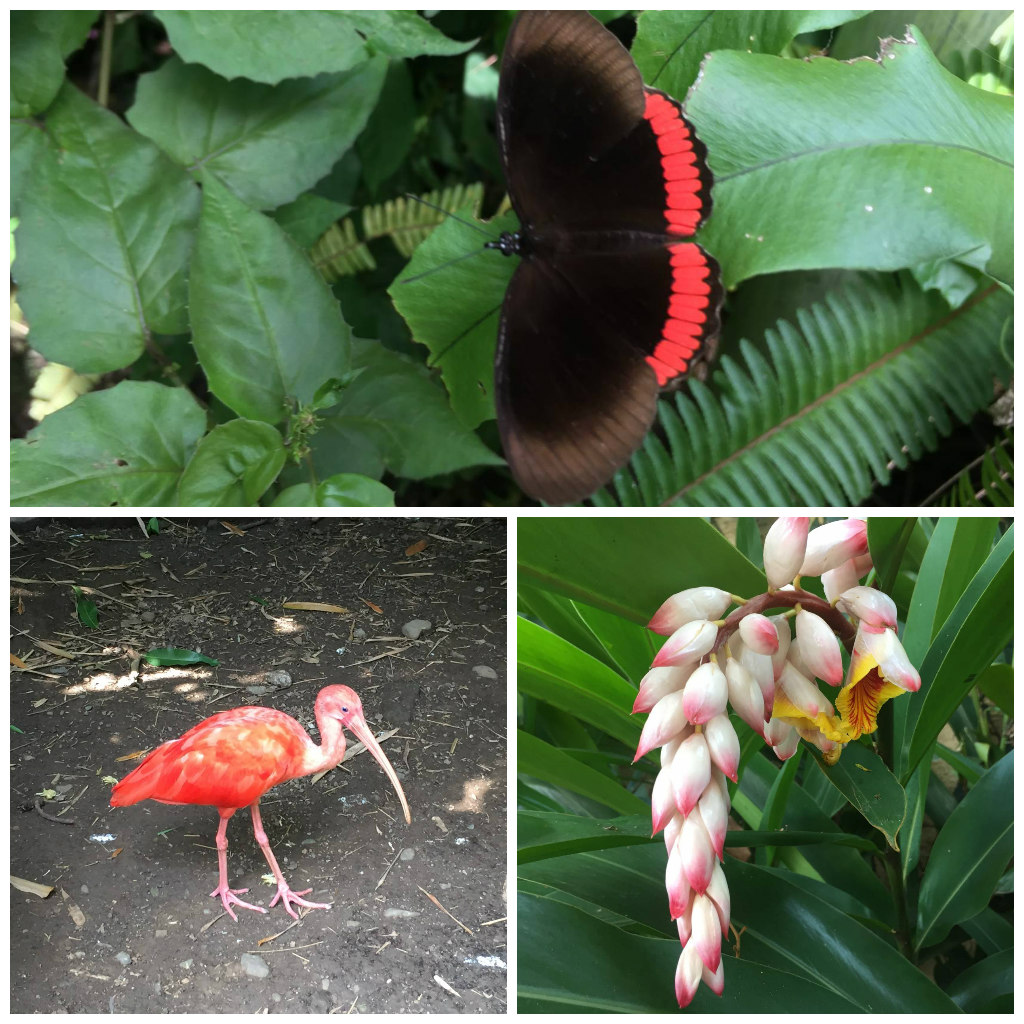
The most interesting feature of the butterfly house is a terrarium displaying pupae at different stages. Several specimens have already been “born” and crawl helplessly around it.
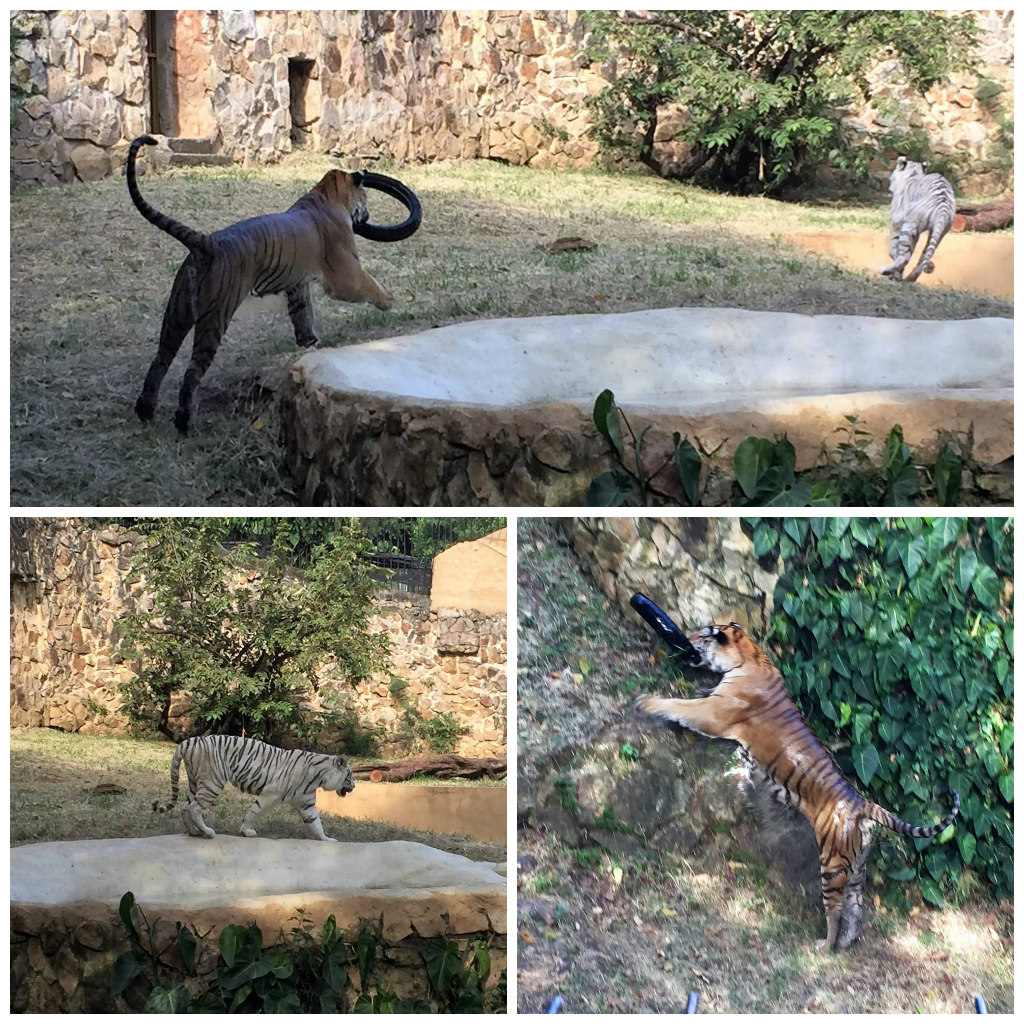
The tigers win our hearts with a proper show. First, they splash in the pool. Then they suddenly drag out a tyre and a large piece of wood and race around the enclosure at full speed. Like all cats, they are very playful creatures.
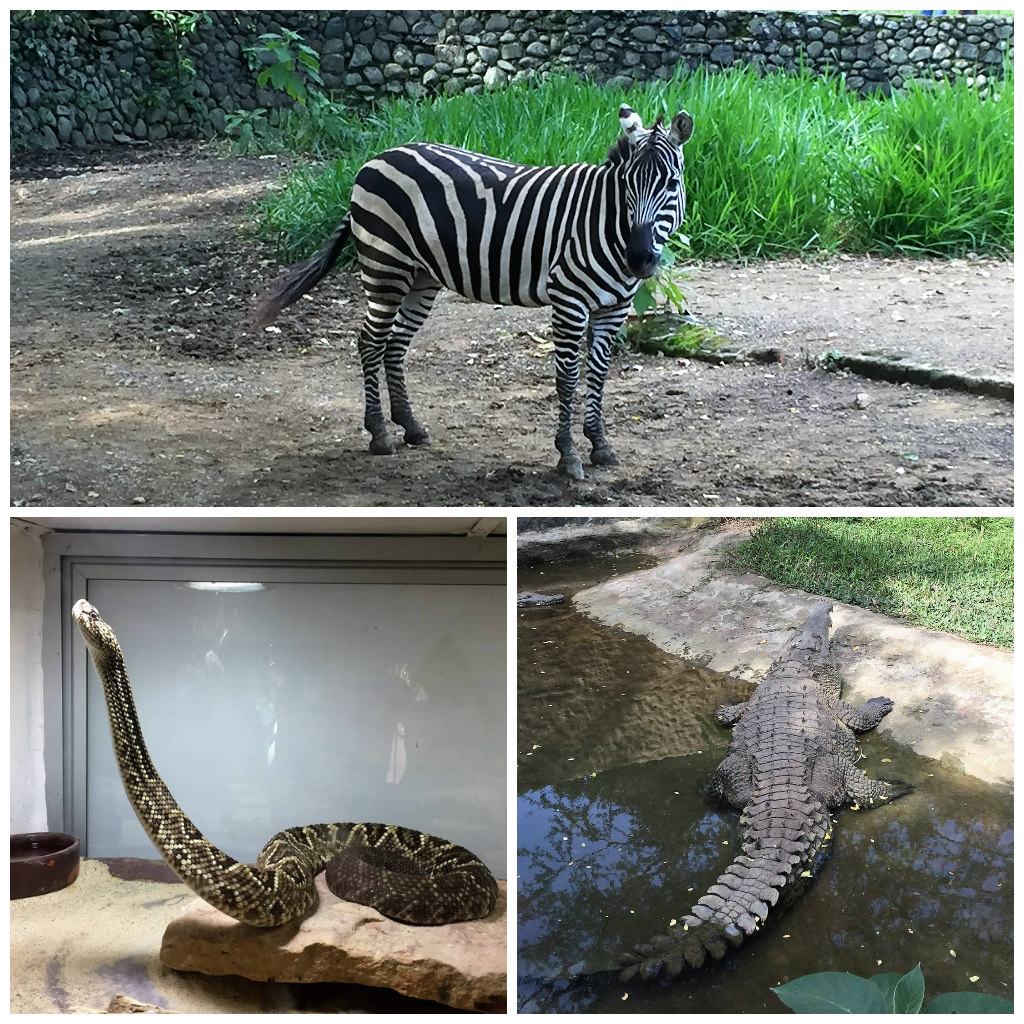
The zoo genuinely is modern and well arranged. It displays species endemic to Colombia, with information boards and educational activities for children. In addition, the grounds function as a botanical garden containing exotic plants and flowers.
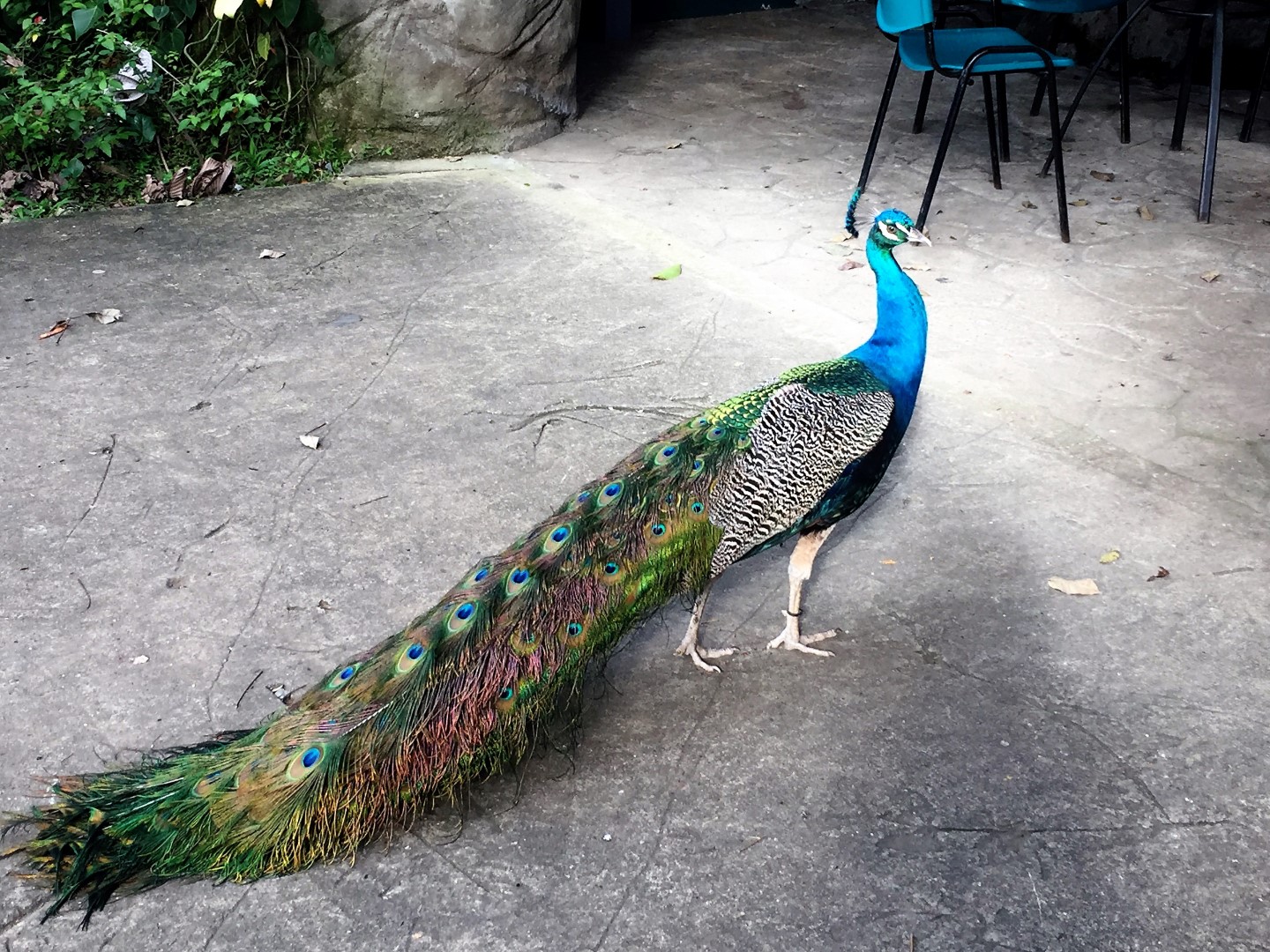
As we approach the exit, a peacock cuts across our path. When asked, “Mate, where are you rushing off to?” it gives no answer but hurries towards its imagined destination. We follow for a while because it is going our way. It does not intend to leave, however; it is heading for the zoo café. Several men eating sandwiches look surprised when a peacock marches over with an expression saying, “Well then, hand over whatever you’re eating!”
That evening at the hostel, we search for flights from Cali to Medellín. Unlike other South American countries, Colombia has its own low-cost airline, VivaColombia. As a result, other carriers such as Avianca and LATAM often offer comparable fares. We have heard stories of domestic flights costing only USD 20, little different from the bus but eliminating many hours on the road. We find reasonably priced VivaColombia tickets too, but cannot buy them with our bank cards. We try repeatedly without success. I had read about this problem on travel forums. It existed in the past, although posts from the last few years made me optimistic. Jānis calls VivaColombia because the tickets appear reserved and we have a booking code. He selects the option for English, but the woman on the phone can say only yes and okay, so the conversation goes nowhere. Jānis suggests switching to Spanish, and at last she understands the problem. Her answer—“try buying the tickets again”—does not help, and we give up on flying to Medellín. It is unpleasant to realise that purchasing flights may remain difficult during the rest of our Colombian journey, because we had expected to use them as our main form of transport.
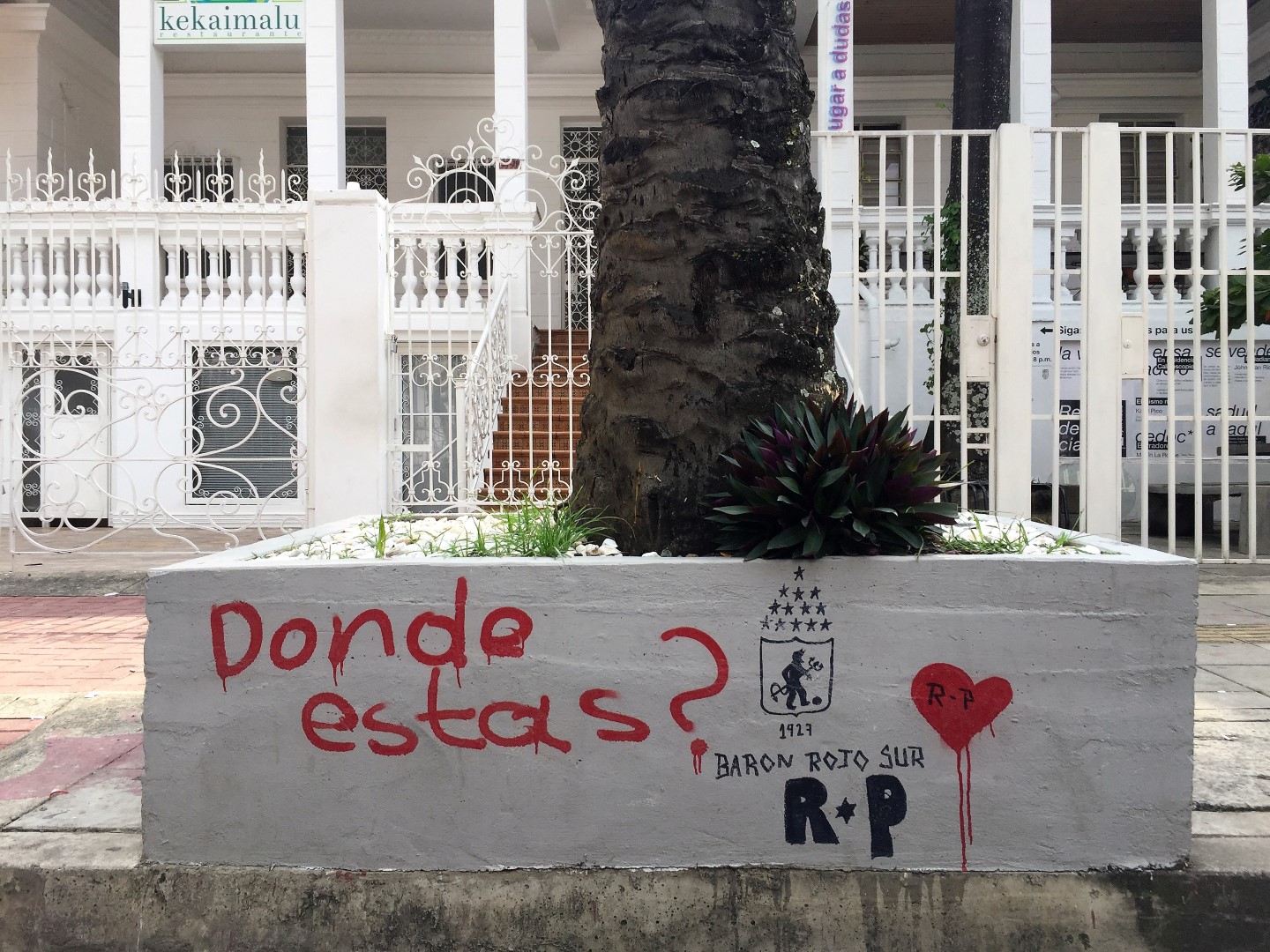
We abandon the fight with the VivaColombia website and will take an overnight bus to Medellín tomorrow. We continue exploring Cali’s food by going out for pizza. Although our hostel is in a fancy district, we see sharp contrasts here that were absent in Bolivia, Peru, and Ecuador. There are homeless people. In the evenings, they arrive to search bins and sleep on the streets. Earlier, Jānis watched two homeless men begin fighting from the hostel terrace. Police appeared immediately, resolving the situation. Now, as we sit eating pizza, an Afro-Colombian man walks past. His footwear has been fashioned from plastic bags and cardboard. He stops across the street in a darker corner and settles down to sleep. We discuss giving him something to eat. No sooner said than done: Jānis goes to a nearby shop and buys a drink and several bread rolls. I watch him approach the man with the bag of food. The man’s first reaction is fear. I imagine that homeless people may divide territories here, as the fight Jānis witnessed suggests. Jānis says something, and he reaches for the bag. Jānis returns to the pizzeria, while the man eagerly begins eating. Jānis is confused because the first question he asked was, “Is that yours?” I look at Jānis’s tousled hair and clothing, which falls well short of the consistently smart Colombian standard. We conclude that the man initially mistook him for another homeless person who might have stolen food to share. Despite the sad situation, we laugh about Jānis’s dishevelled image this evening.
In the South American countries we visited earlier, we met desperately poor people who asked for help and struggled against difficult lives. Poverty is these countries’ shadow, and in most cases, the structure of the state prevents people from escaping it. Yet they try and continue living. Here in Colombia, we realise that none of the earlier countries displayed such an obvious problem with homelessness. Colombia is visibly a step ahead of Ecuador, Bolivia, and Peru in development. Why, then, are so many people homeless?
While in Cali, we did not yet know the explanation. I will return to the subject in later articles.
P.S. When Jānis went to the station to buy Medellín tickets, several taxi drivers refused to pick him up for a long time, although normally it takes seconds: step into the street, wave to a taxi, and climb in. A visit to the barber will be urgent in Medellín, because Colombians do not understand a beard and untidy hair.