We have travelled along more than half of Ecuador’s coast, seeing charming seaside towns and beautiful Pacific beaches. Although we are happy with our dose of sun and water, a lingering feeling remains that something—only the tiniest something—is missing. Our list still includes beaches in northern Ecuador that we have yet to see. Perhaps there we will find a place we can leave with a sense of fulfilment? Almost without our noticing, the little fishing and surfing village of Mompiche becomes our most eagerly awaited destination.
Mompiche
Getting there is hardly easy on the nerves. The route is Canoa–Pedernales–Chamanga–Mompiche. Just before Pedernales, we cross the equator. We are back in the Northern Hemisphere! After the Pedernales–Chamanga section, we are dropped in some warehouse district in the middle of nowhere, where we are supposed to wait for the next bus to Mompiche. To complete the picture, local boys wander around wearing nothing but shorts and carrying machetes. The rather charmless ticket seller from our previous bus suddenly approaches, waves a receipt book, and says he will sell us tickets for the next one. Logic and intuition both say that the next ticket should be bought aboard the bus and that this man is a nasty liar hoping to squeeze a few dollars from tourists he assumes understand nothing. His appearance, theatrical behaviour, and facial expressions mark him as an exceptionally unpleasant character. When he tries again to sell us the tickets, I can barely restrain myself from saying something sharp—at the time, my Spanish vocabulary contains only outright insults, not elegant dismissals. Instead, we ask a woman who also left our bus and is waiting for another whether she is going towards Mompiche. She confirms that she is. Good: we wait for the bus and buy our tickets there, just like the locals.
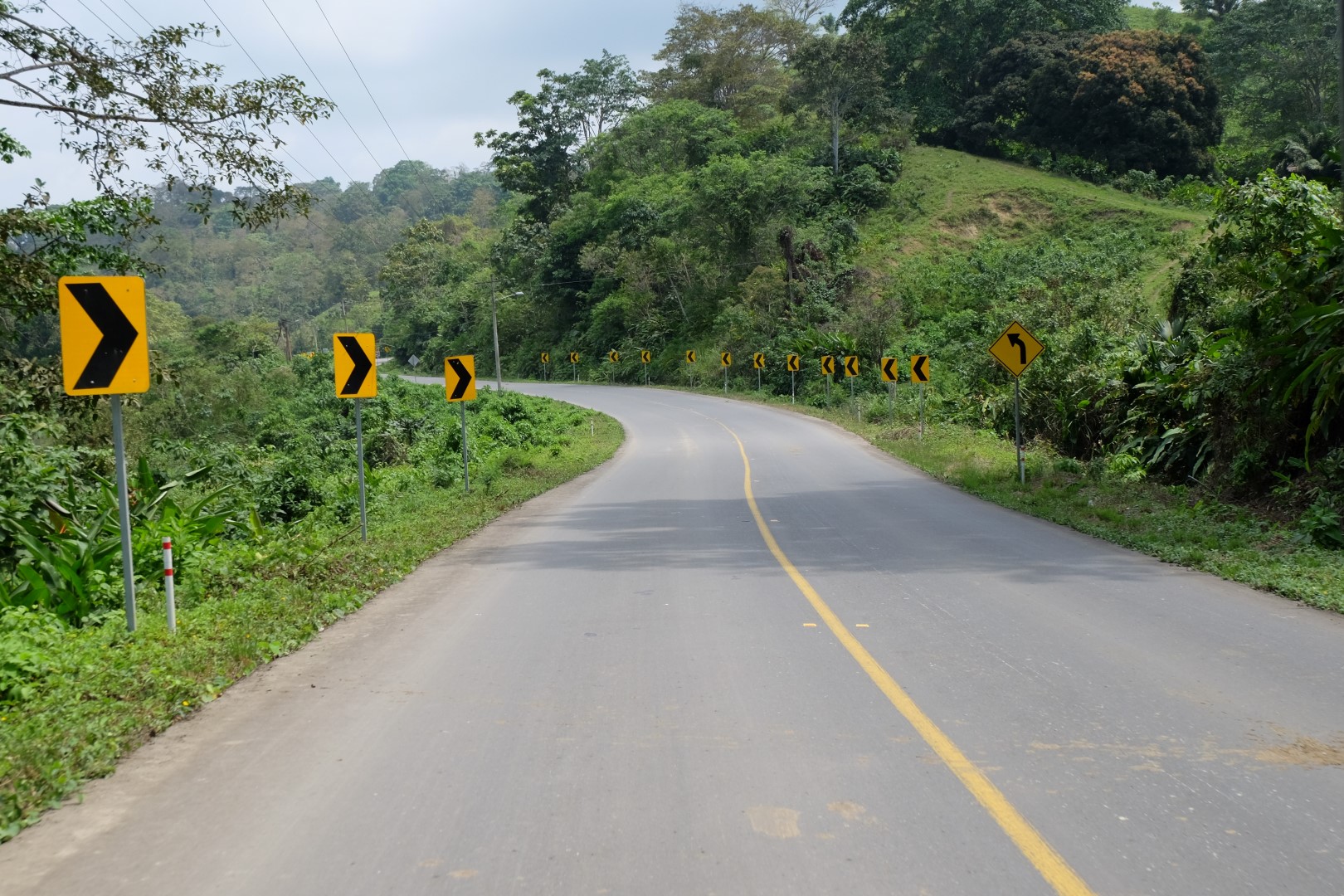
There are no direct buses to Mompiche from the south, so we are dropped on the highway, six kilometres from the village. A car waiting at the junction offers to take us for four dollars. After the earlier events, I am in an argumentative mood, the price seems too high, and I reject the offer without thinking much. We begin walking. The surroundings are green and pleasantly hilly. My mood improves, and I look at the navigation. On foot, we will arrive in one hour and fifteen minutes; by car, it would have taken eight. I dread to imagine whether we will be able to get out of bed tomorrow after covering that distance with our large, heavy backpacks. I keep walking and begin laughing at my own foolishness. Jānis merely sighs and says nothing about my stubbornness. Before we have completed even the first kilometre, the only passing car stops. A kind Ecuadorian takes us all the way to the hostel door and refuses the payment we offer. I give Jānis a proud “the wife always knows best” look.
We have rented a bamboo bungalow for a few nights at Mud House hostel. In person, it looks far better than it did online: bamboo walls, a bamboo bed, bamboo shelves, and a hammock outside the entrance. Two dogs and a cat also run around the grounds. The owners, an American woman and a Colombian man, are warm and friendly. In short, this place has exactly the right atmosphere.
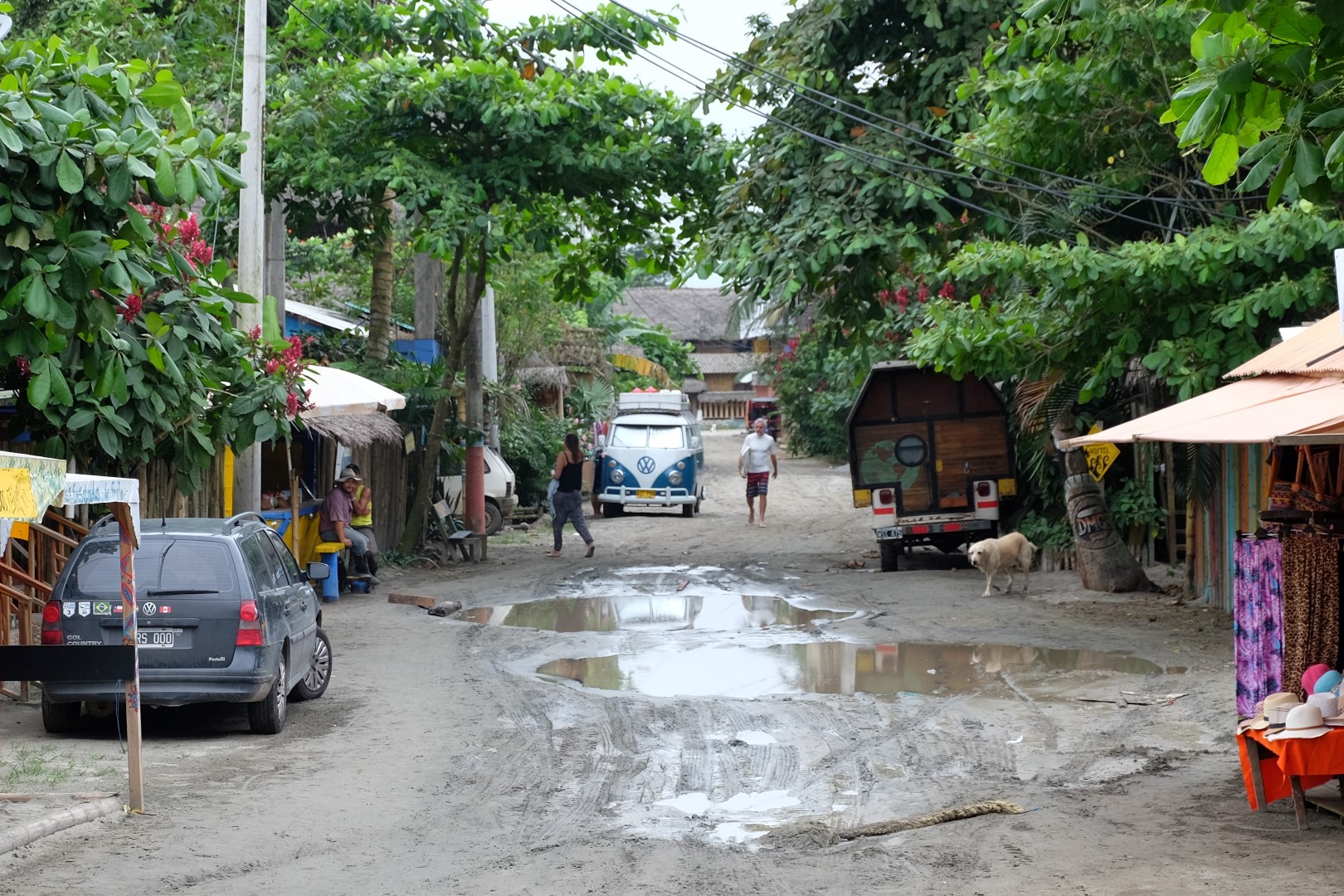
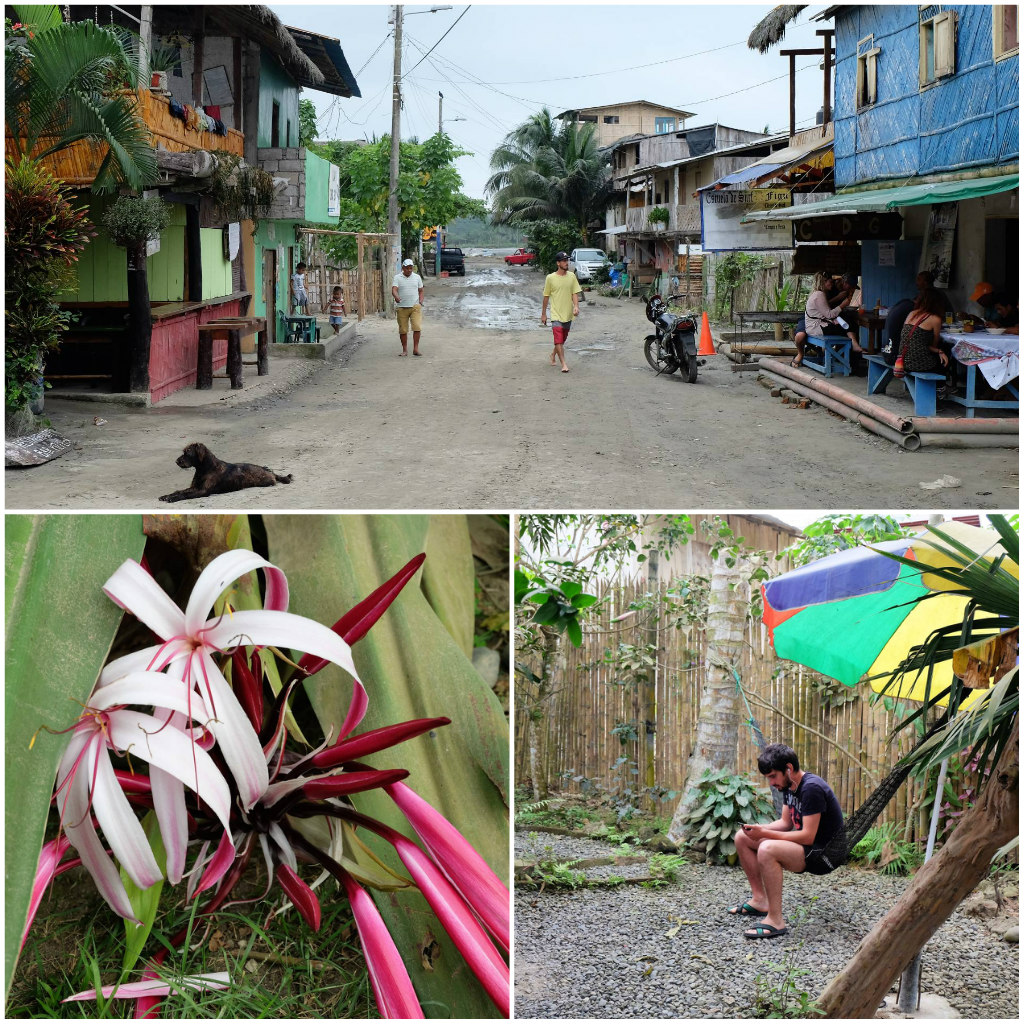
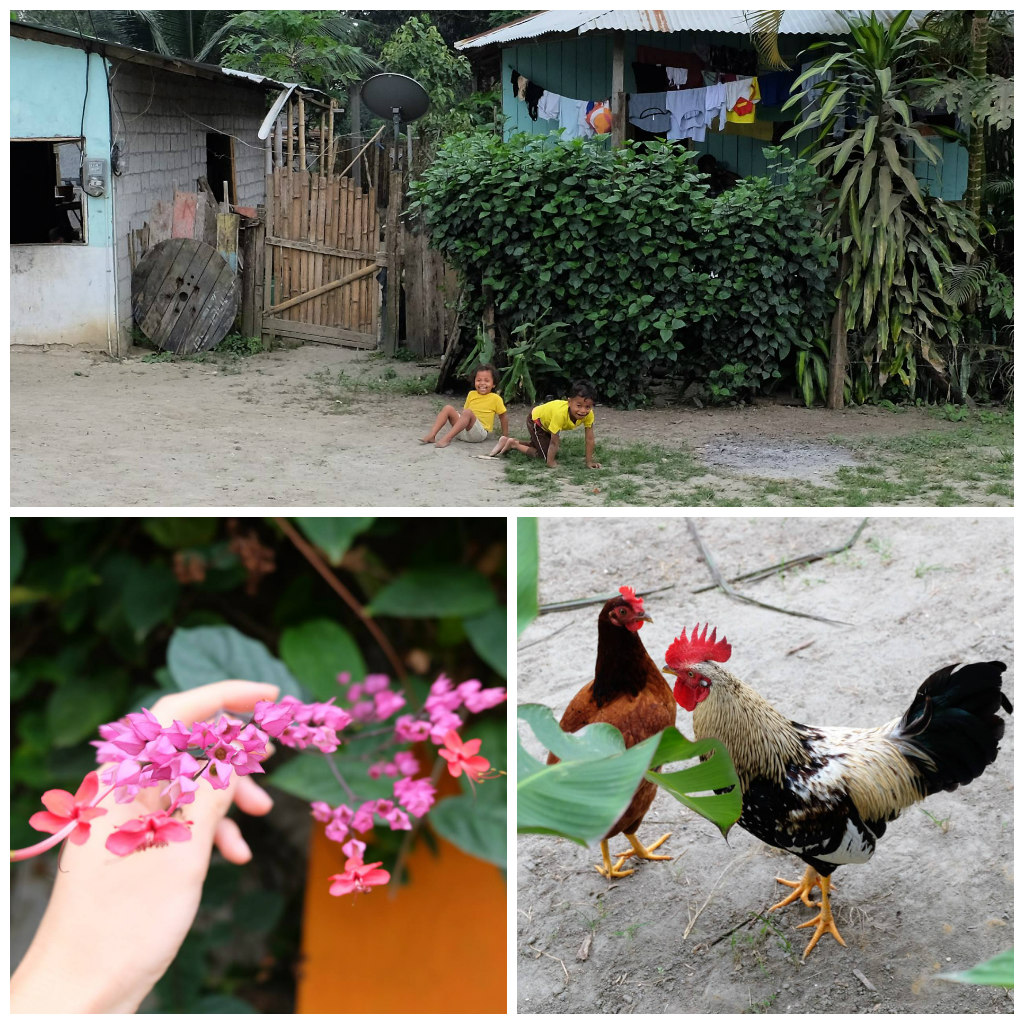
We set out on our first circuit of the village. Only a few lines of dirt roads run alongside the beach, yet there is plenty of local activity. Fishermen bustle around blue boats; residents and travellers sit chatting in the eateries; chickens wander along the streets; village dogs lie beside the roads. At first sight, Mompiche feels so authentic that it surpasses all my expectations. This is the small, charming, atmospheric place we had been looking for.
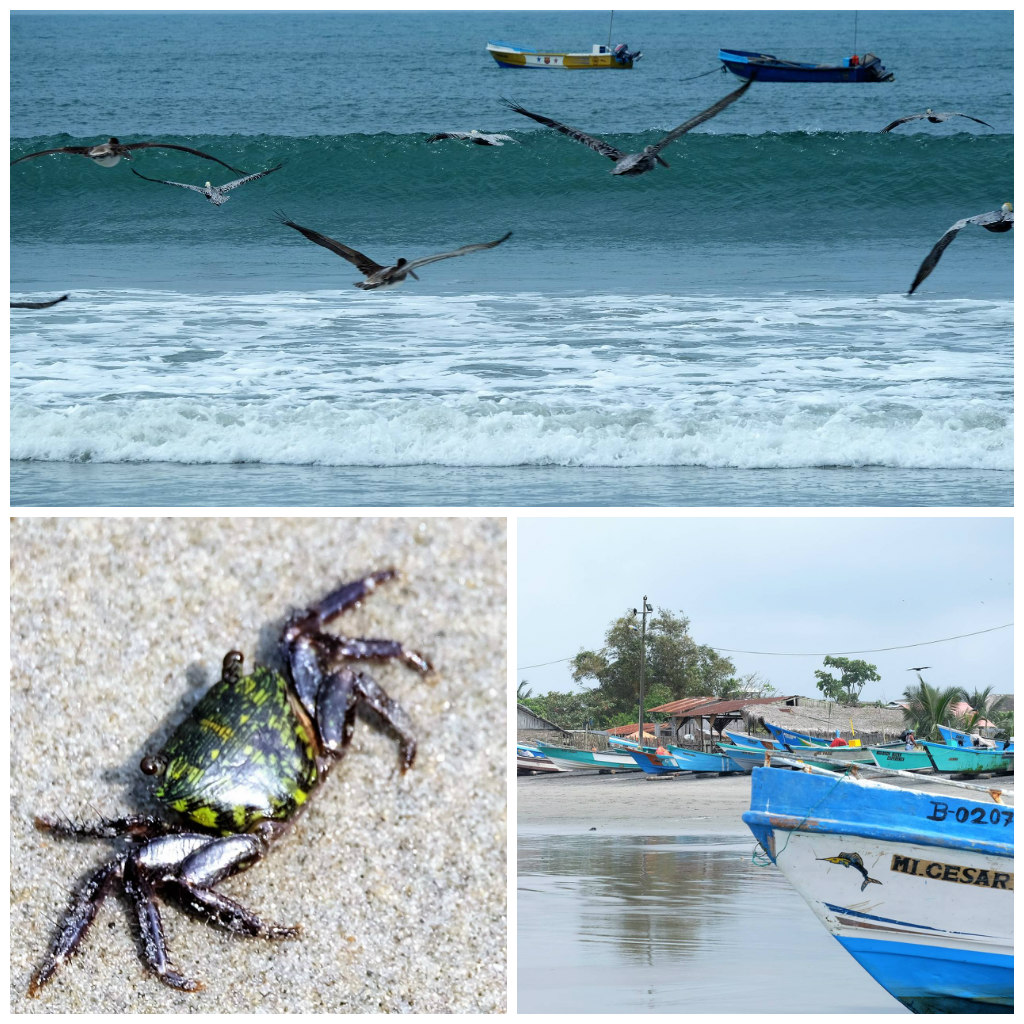
The following day passes surfing in Mompiche’s beautiful waters. That evening, beside the hostel kitchen, we meet Harry and Ross from the United Kingdom and Tom from Australia. We decide to explore Mompiche at night together and visit the bar at another hostel. Tom surprises us with the fact that he has been to Latvia—but by accident. Apparently, that can happen too. He was competing in a triathlon in southern Estonia, took a wrong turn on his bicycle, and crossed the Latvian–Estonian border. Harry worked for a nature education organisation in Britain, so when he learns about our involvement in a macaw research project, an enthusiastic conversation about birds begins. Time slips away unnoticed. After a visit to another bar, several arm-wrestling bouts, and lessons in a few painful MMA holds—yes, this is a peculiar group—we return to our hostel. On the way, Tom tells us about the book he is writing. The story is so intriguing that we sit for another hour in the hostel garden. When we finally go to bed, we are certain that we will buy Tom’s book the moment it is published.
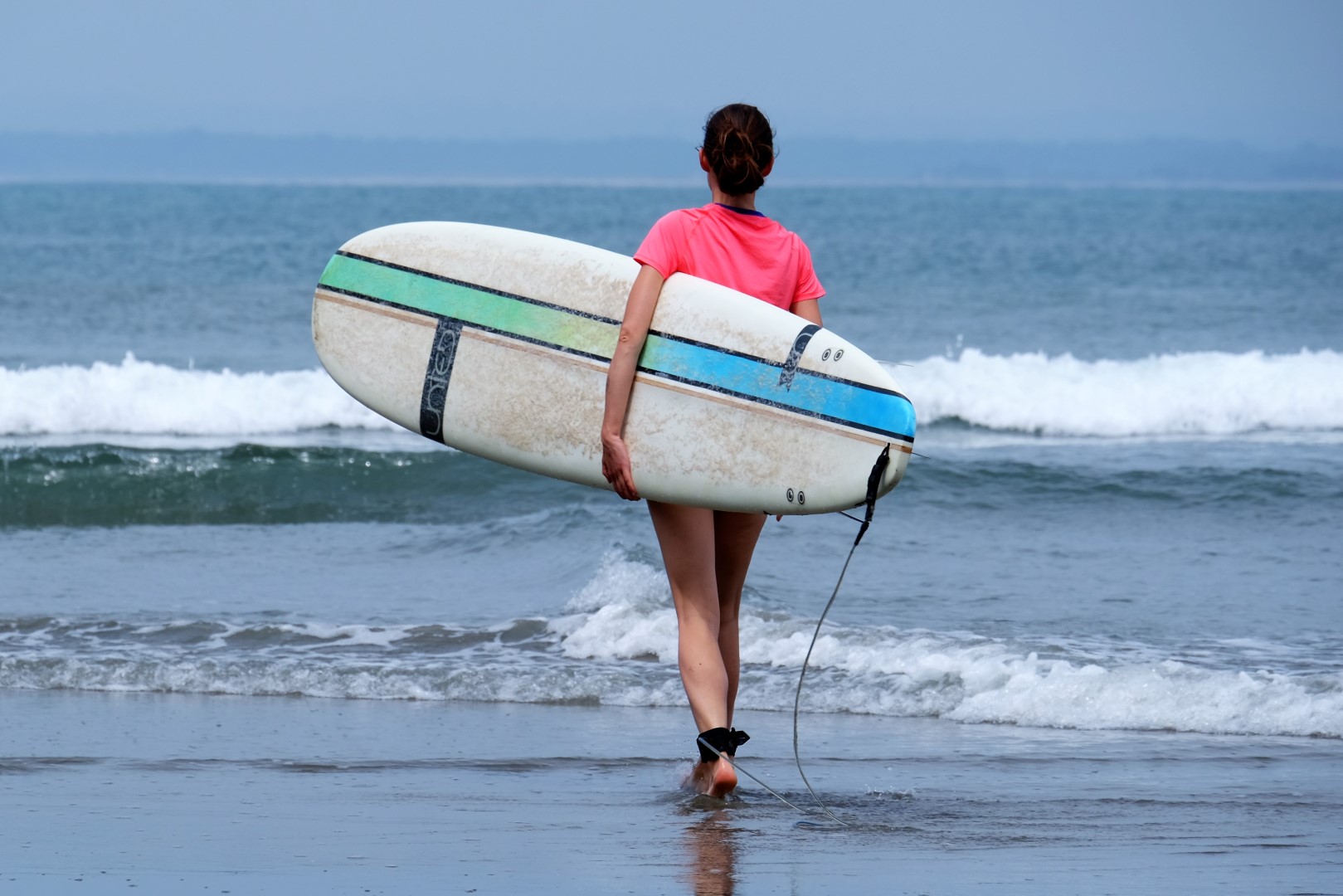
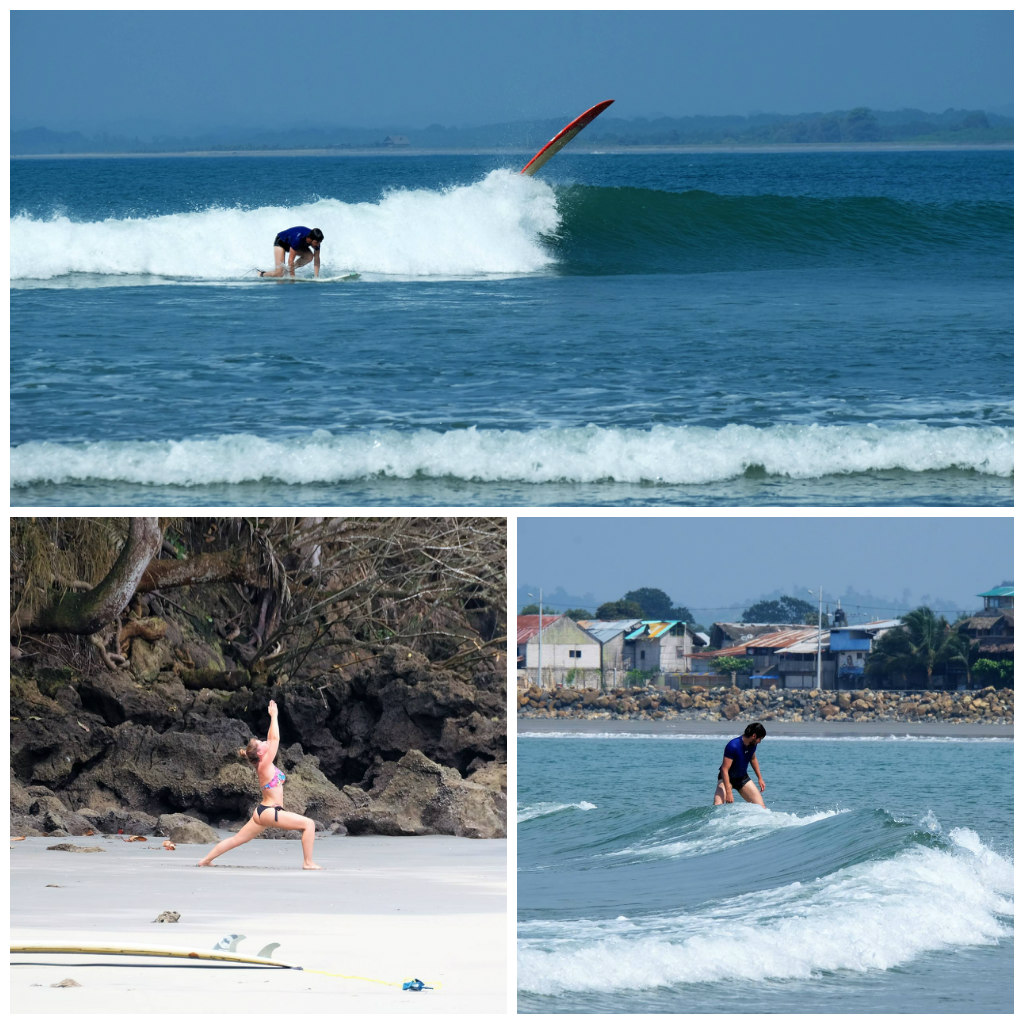
That is how the friendly Mud House group begins, setting out to surf together every day. Once again, we discover something new about Tom; this time it is his ability on a surfboard. As an Australian who lives on the coast, he really is an expert. While the rest of us stay nearer shore, he heads farther into the ocean towards the large waves, taking long rides and moving across his board as lightly as a feather. Tom also assumes responsibility for the forecast and decides when the waves will be best. Each morning, an announcement follows: today, for example, we are surfing at 11:00. I am convinced that if we spent another week in Mompiche, we would learn another seven astonishing facts about Tom.
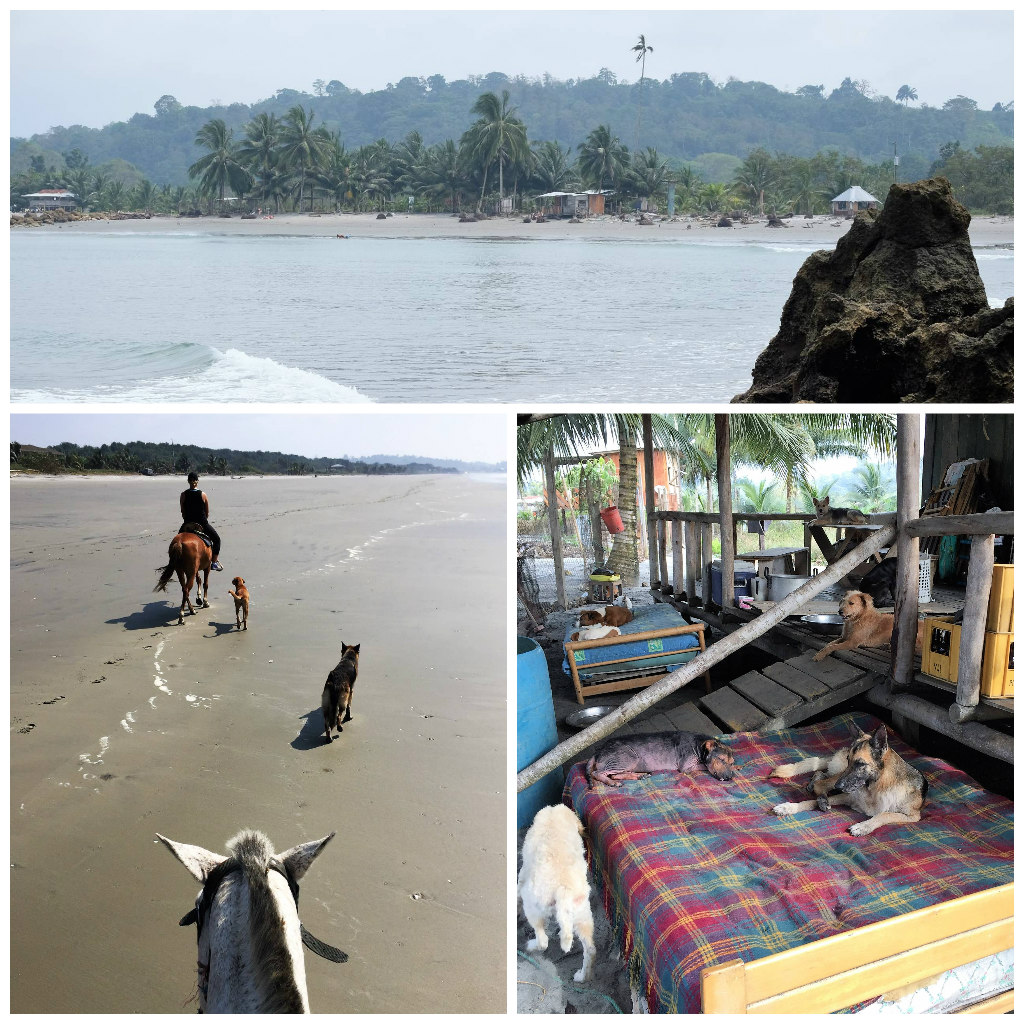
Since our daily surfing occupies no more than two hours, we spend the rest of our time exploring. Among other places, we visit Playa Negra and Isla Portete near Mompiche. One day, I decide to go horse riding, which the hostel owner had mentioned; Jānis will surf in the meantime. Finding somebody to lead the horses would take time, so it is arranged that Kate, a volunteer at the hostel, will accompany me. She has a horse of her own in New Zealand and plenty of experience. The two of us walk to Mompiche’s animal shelter, which enjoys an exclusive location directly on the beach. A very kind woman has brought the horses we arranged. Kate is assigned the brown one, while I receive the pale horse with a warning to be careful because he is especially fond of water. Excellent—so am I!
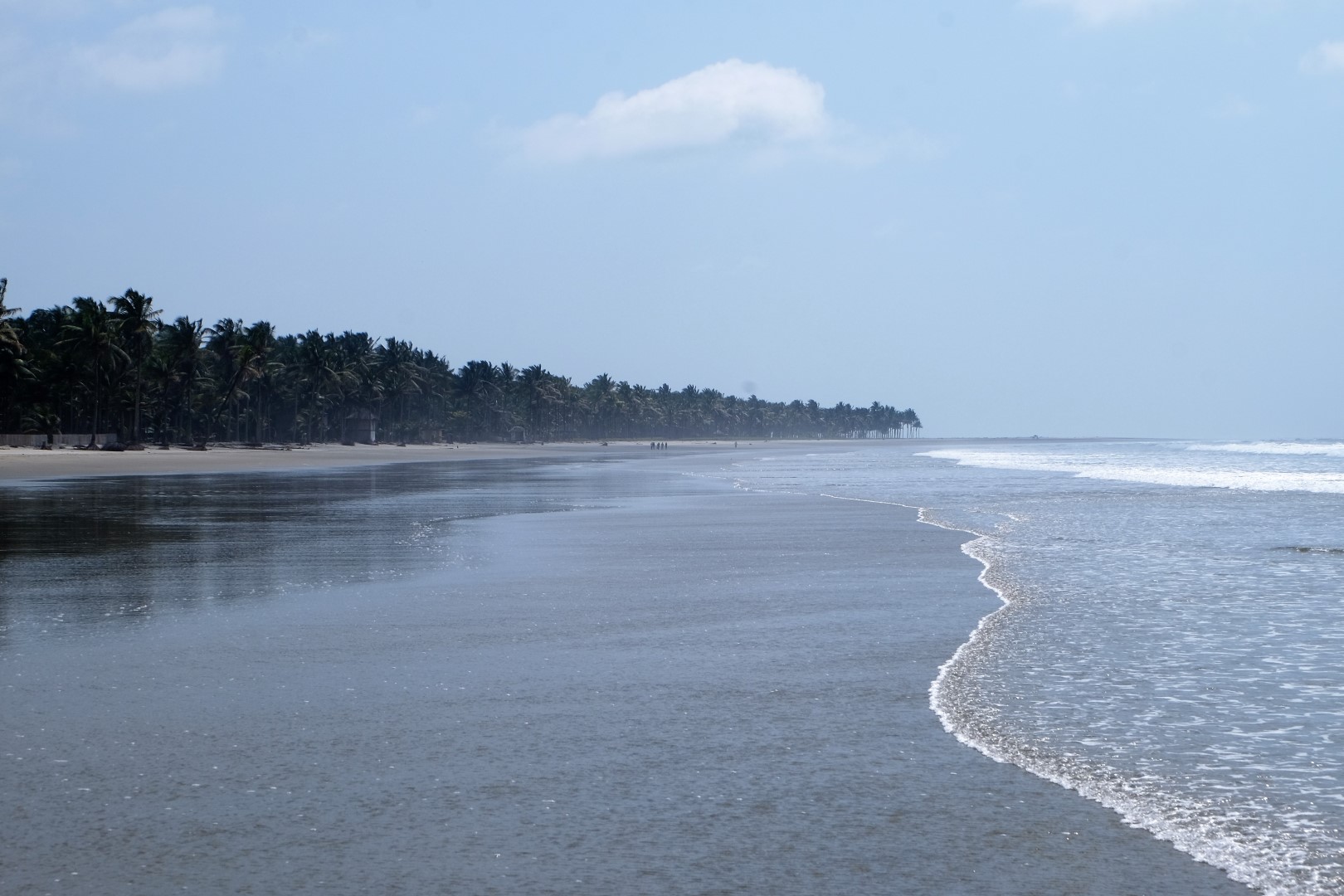
We mount the horses and begin riding along the beach. Once we have passed through the village beachfront, a seemingly endless strand stretches ahead, fringed with palms and interrupted by the occasional house. Otherwise, there are only Kate, me, and the horses. As promised, my horse gradually “drifts” towards the water, testing whether I will notice. Naturally, I notice every time he tries to enter the ocean. Animals can be very funny... At the same time, he is so obedient that a gentle pull on the reins is enough for him to understand. Soon, two dogs join us and walk beside the horses as though they know them. Occasionally, they race away to chase birds or swim in the ocean, but they always return and continue alongside us.
For nearly three hours, the dogs follow us, eventually returning to the shelter gates at our side. It turns out that they live there. One is named Arturito, which in Latvian would be little Artūrs. The name lodges in my memory because it seems rather amusing for a dog. To my even greater surprise, the horses are rescues too. It would never have occurred to me that they had once needed saving; now they look so healthy and well cared for. Their attentive keeper quickly gives them water, and carrots have been prepared for us to offer as a reward for their good work.
Now comes the loveliest part of the day: we can take the horses into the ocean for a swim. Kate’s horse enters cautiously; mine approaches the water with much greater confidence. Walking into the ocean with this enormous animal is an indescribable feeling. When the horse decides that he has reached the right depth, he begins splashing joyfully. The brown horse starts doing the same. Kate and I look at each other and laugh—we are soaked. My pale fellow is so delighted by this chance to cool down that he lies sideways in the water and continues kicking up spray. It is such a joyful moment: joy for me and joy because the horse is so happy!
After the swim, the shelter owner greets us with freshly opened coconuts to drink. She asks whether we can sit for fifteen minutes and watch the shelter while she takes the horses back to the farm. Several dogs are outside the enclosures and sit faithfully beside us. They are extraordinarily gentle creatures, responding to every glance with happy panting and wagging tails. I walk over to the dogs inside an enclosure. This causes quite a commotion: each one leaps from its bed and runs to the fence. Friendly and wagging, they crowd against it as a pack. Among them is a German shepherd-like puppy with no fur and healing skin inflammation, who boldly produces a long bark. The moment I address him personally, he softens and joins the tail-waggers. I am deeply moved by how friendly these dogs are. Despite what they have plainly endured, they can still look at a person with eyes full of love.
The owner returns and thanks us for the money we paid for the ride. It is essential to maintaining the shelter. The high costs of running such a place are obvious: the animals need food, and all are vaccinated and sterilised. Asked whether she receives any help from the responsible authorities, she says no. All the funds are her own, with support from around seven families living near Mompiche, including the owners of our hostel. I also express my surprise that, despite the number of dogs, every one seems so friendly. She replies, “It’s chemistry. You like dogs and they feel it. They aren’t nearly this friendly with everyone.” I have the sense that this woman’s own kindness is what restores the dogs’ trust in people. If only there were more people like her in the world... Having listened to our conversation, Kate offers to help with work at the shelter because she will remain in Mompiche for several more weeks.
The electricity often disappears in Mompiche, and nobody finds it unusual. It might go for a moment, a few hours, or a whole day. During one such dark evening, Eduardo from Portugal arrives at the hostel. After settling into his room, he joins our candlelit conversation. Eduardo is from Porto, a city famous among surfers. He clearly knows the subject and soon finds common ground with Tom as they discuss different types of surfboard and the sport itself. Eduardo is a photojournalist by profession. Thanks to his knowledge of Spanish and Portuguese, he specialises in events in South and Central America. His photographs from the field have appeared in influential publications including The Washington Post. Like Tom’s, his stories are worthy of a book. He tells us, for example, how somebody in Venezuela held a gun to his head during a robbery. On another occasion, he was badly beaten and lost all the equipment he needed for work, including the photographs he had taken during upheaval in Venezuela. As we talk, something happens that we later call the apocalypse. The whole village is dark without electricity, when suddenly the sky lights up in the distance. A moment later comes another burst of light accompanied by the crackle of electricity. The men conclude that the generator has failed, followed by the backup generator as well. Given Mompiche’s remote location, we speculate that the power might not return for days. It would not be comfortable, of course, but with this group, living without electricity would be manageable. Every business in town is closed. Just as we begin organising a vote on which member of the group to eat first, Jānis becomes a hero and makes pancakes for everyone by candlelight.
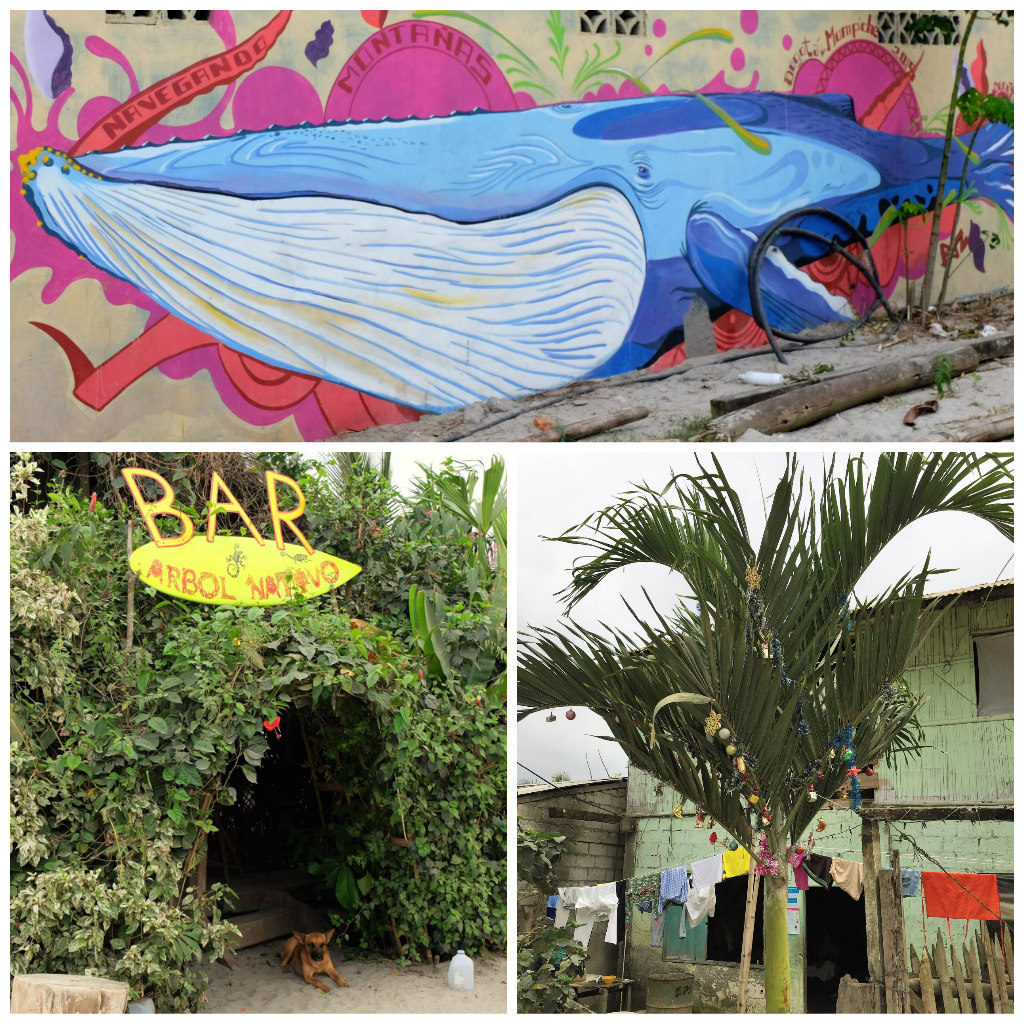
Christmas is approaching, and decorations are beginning to appear here and there. My favourite is the palm tree outside the neighbouring house, transformed into an attractive Christmas tree. One day, a celebration takes place there. Several dozen guests crowd into the small house and sing together. The singing continues all day, well into the evening.
Isla Portete
This beach is a mototaxi ride from Mompiche. As its name suggests, Isla Portete is unusual because it lies on an island. A small motorboat carries us personally across a channel about the width of a river for fifty cents each. A broad white beach surrounds the island, while a forest of coconut palms fills its centre. The sand is very clean and beautiful. A few other families have come, but there are so few that it is easy to find a place to spend the day undisturbed. Unlike Montañita and Puerto López, no vendors walk around offering fruit, ice cream, drinks, or tattoos, which is pleasant.
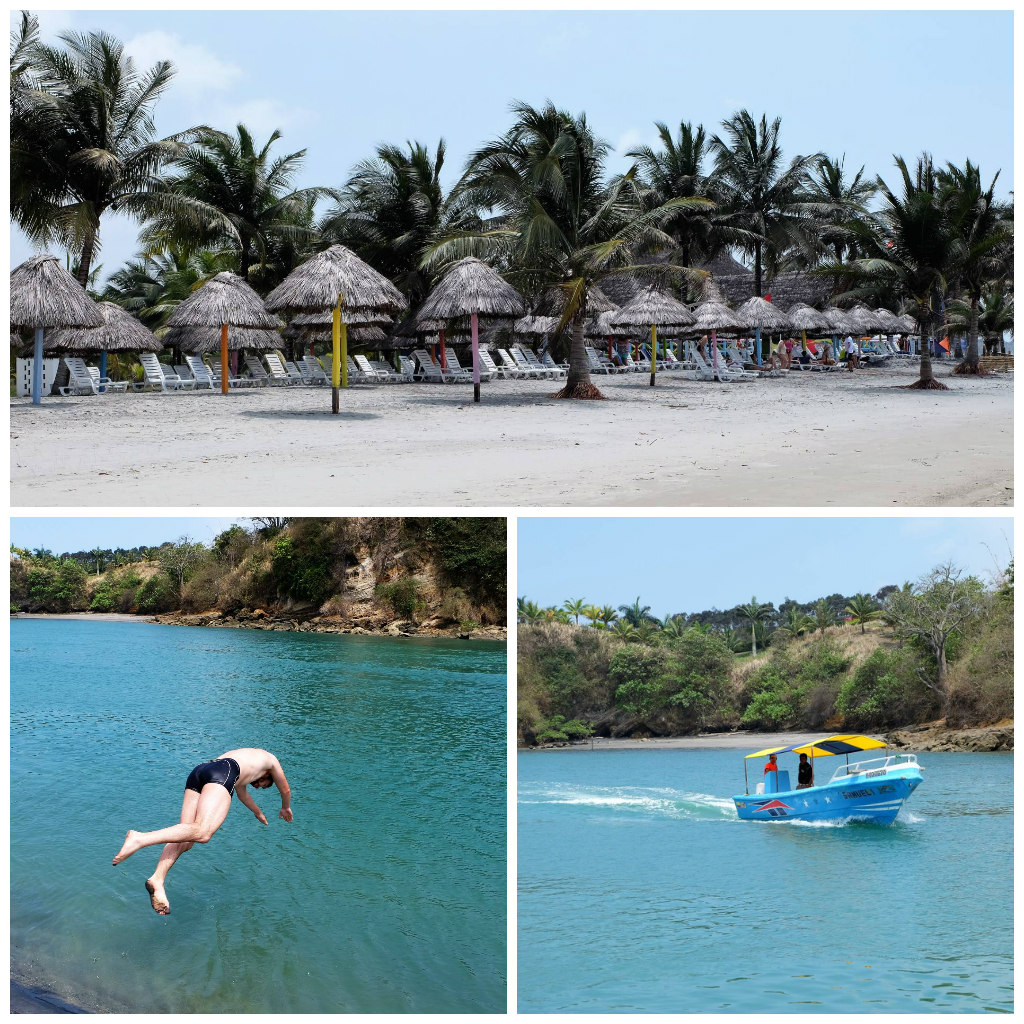
Jānis spends his time catching waves on a bodyboard. When we prepare to return to Mompiche, he considers swimming the stretch covered by the boat. For safety reasons, the idea is abandoned when we notice that boat traffic has grown busier during the afternoon.
Playa Negra
The next day, we visit Playa Negra, only a forty-minute walk from Mompiche. We follow the roadside past horse pastures. Ecuador’s roads are excellent, even this relatively minor one. At the end of the walk, we turn onto a small, overgrown path and descend beside the cliff to the beach.
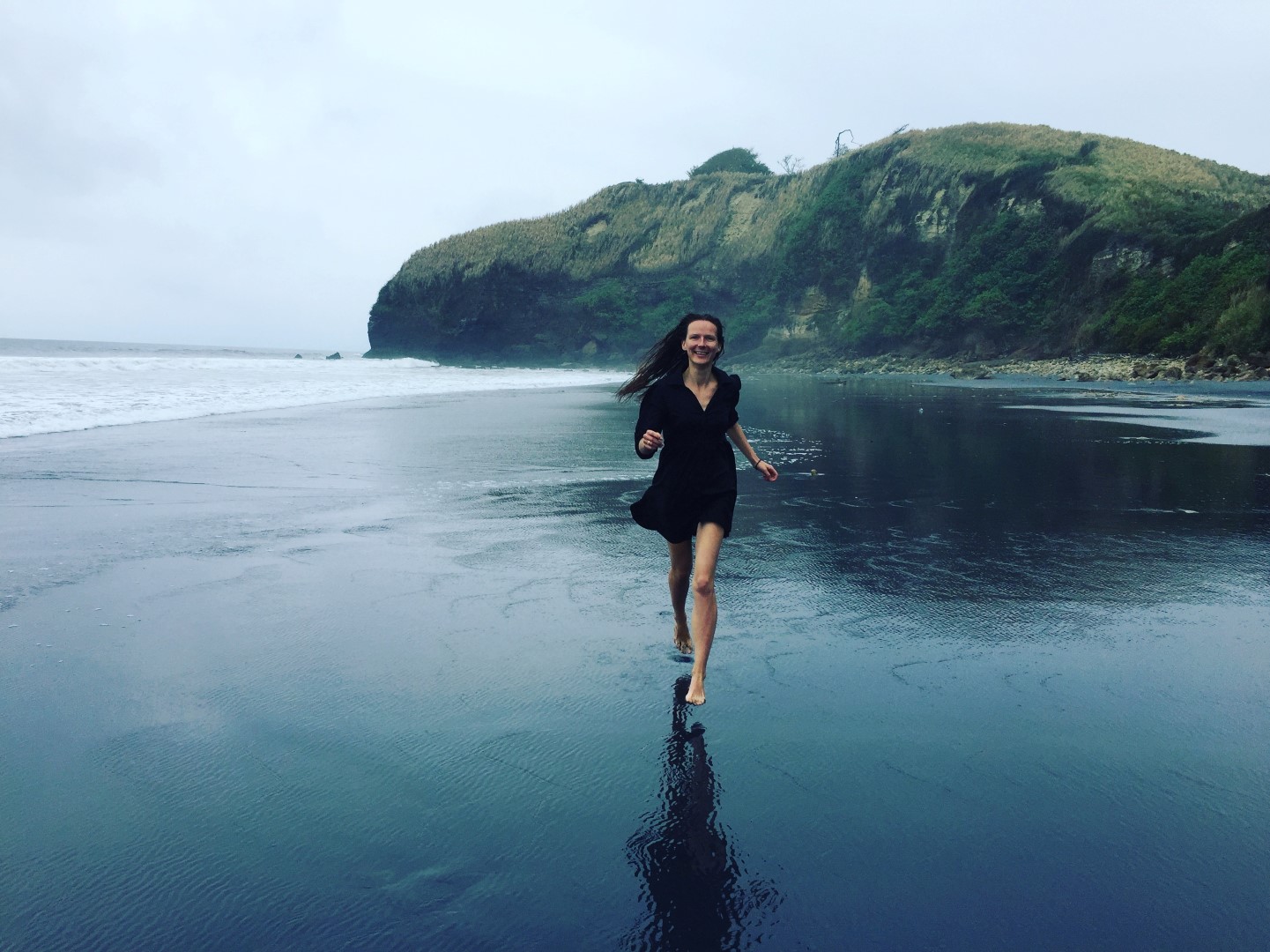
The name makes it clear that our destination might have black sand, but we are unprepared for what we see. Combined with the overcast day, the restless ocean, and silver-black sand, the view is surreal. Better still, the beach belongs to the two of us alone. We are the first people to leave footprints here today, and they stand out vividly against the dark sand.
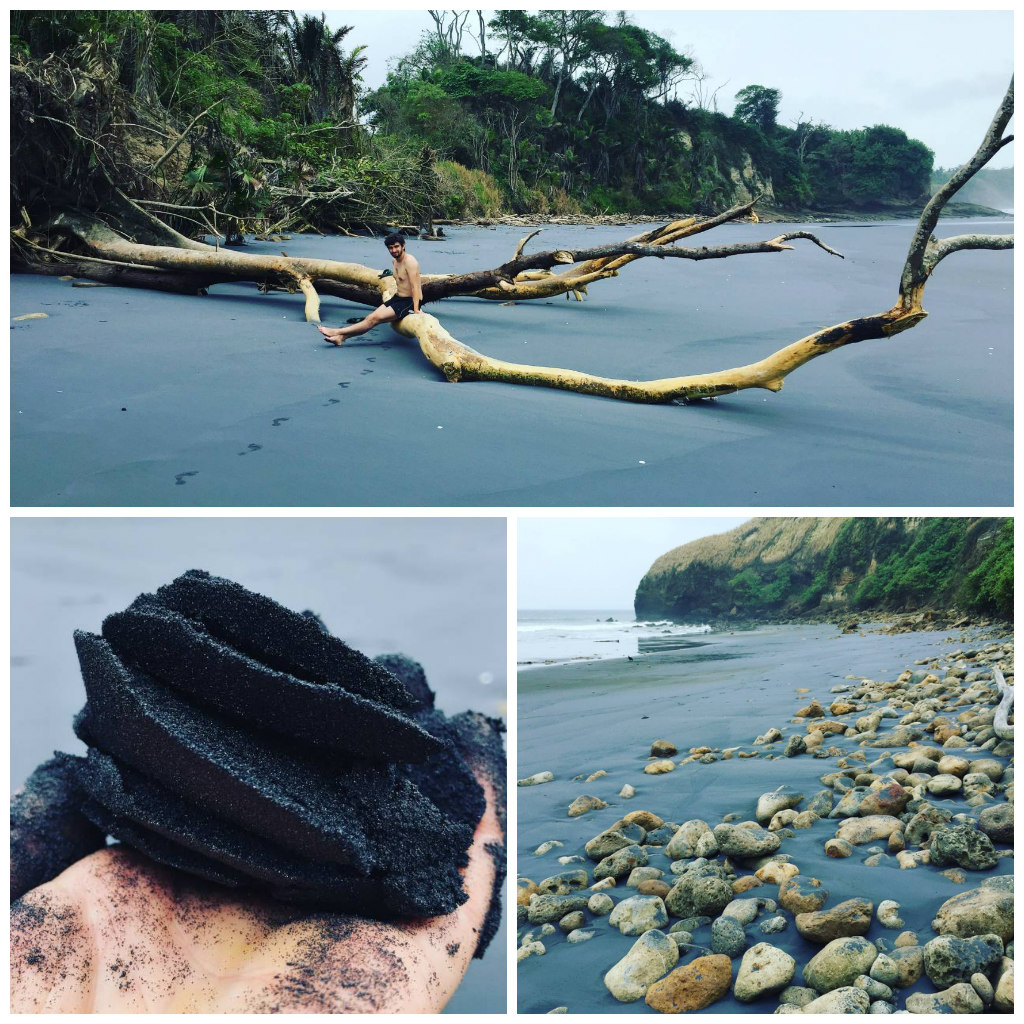
While Jānis swims, I study the black sand and the silver particles glittering within it. At the water’s edge are many tiny shellfish that deftly burrow into the sand whenever a wave washes over them. I have seen their kind before, but among them is one twice the size and entirely white, chasing a smaller creature. At first, I imagine that perhaps this has something to do with males and females. I change my mind when, before my eyes, the large shellfish seizes the small one and sucks it inside. Jānis joins me, and for quite some time, the two of us watch shellfish hunting on this deserted black beach.
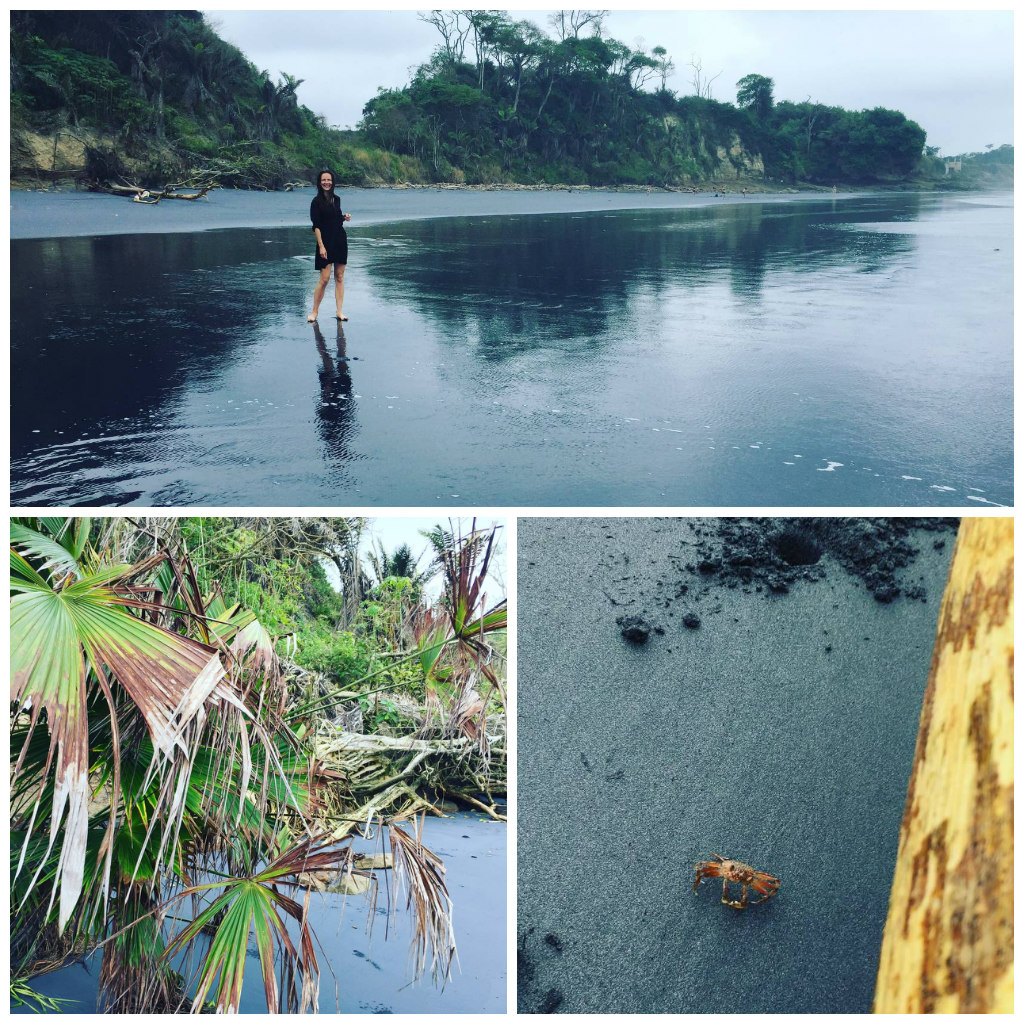
I sit on the sand and admire extraordinary Playa Negra. Until the moment we leave, my eyes can hardly believe what surrounds us, or that we have found the most beautiful beach of all—one mentioned by none of the guidebooks. For me, Playa Negra is Ecuador’s loveliest beach and the most special place in the entire country.
And Mompiche is exactly the fishing village we had been searching for. We spent a full week there and would gladly have stayed even longer.