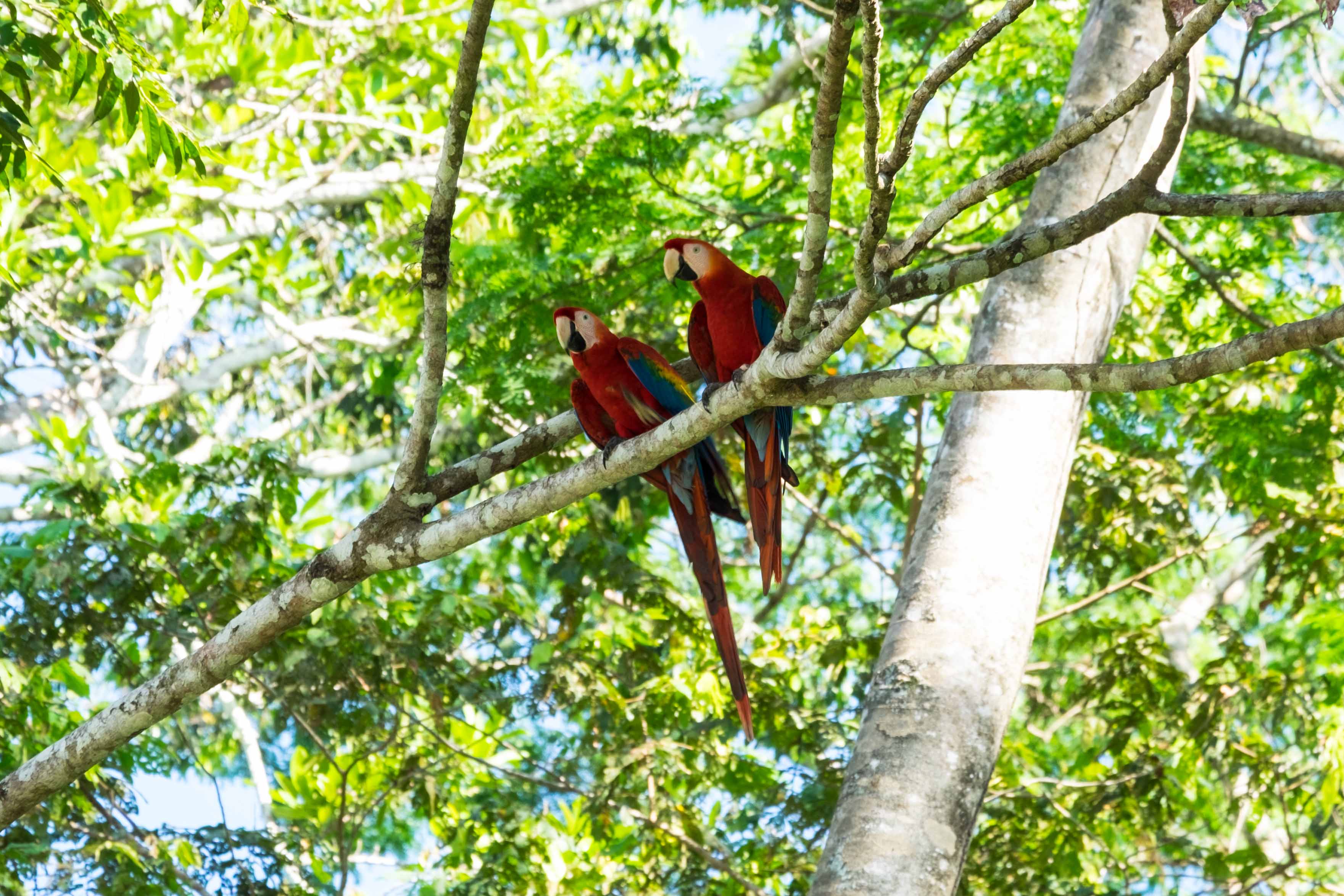
After returning to civilisation from CIWY, I read extensively online about macaws. On the very first resource, Wikipedia, I learnt about The Macaw Project. I will not deny it: these birds have left a vivid mark on my mind and heart, and intuitively, I knew that I had to meet them again. It seems almost as though fate intended me to reach the project, because every practical circumstance aligned as well. It accepts volunteers and operates in the Peruvian Amazon, while we were already planning to return to Peru and spend some time in the jungle—although originally as tourists.
I begin corresponding with the Macaw Project coordinator to discover whether my experience at CIWY will be sufficient. This is research, after all! Still, there is no harm in writing. At the same time, I discuss it with Jānis, who reacts completely normally to my announcement that I might disappear into the jungle again. Somewhere during the process, I have the idea that he could participate too, because an experience like this would be among the most unusual of anyone’s life. To my delight, Jānis agrees.
We receive a warm response from the project: they are currently very short of volunteers and would be delighted to welcome us. We answer yes—we will take part! First come various administrative formalities with Texas A&M University, which coordinates the project. In this connection, a huge THANK YOU to our colleagues in Latvia, who wrote the positive references required during the application process.
But now to The Macaw Project itself, known in Spanish as Proyecto Guacamayo. All practical work takes place at the Tambopata Research Center, or TRC, in the Amazon rainforest within Tambopata Nature Reserve. Researchers live here and collect data. TRC lies in an extremely remote wilderness accessible only by boat, a six-hour journey along the Tambopata River. The project is led by Professor Donald Brightsmith, one of the world’s foremost macaw researchers. Its administrative team is based in Texas in the United States, specifically at Texas A&M University. All the collected data is sent there for processing and analysis.
The Tambopata Macaw Project began in 1989, when biologist Eduardo Nycander and his colleagues studied the surroundings of the Tambopata River and were astonished by its biodiversity. Partly thanks to proposals and campaigning by the researchers, the area received nature-reserve status. Realising that this was an exceptional gathering place for parrots, which flew every day to eat clay from the riverbank at the clay lick, the researchers decided to begin studying them here. That led to the creation of Tambopata Research Center. It later began welcoming nature enthusiasts as tourists, which over time resulted in two further lodges on the Tambopata River. The riverbank here holds the largest clay lick in the world. Why parrots in southeastern Peru supplement their diet with clay—elsewhere it is not a significant part of their food—has two possible explanations that remain under investigation: 1) the clay is a source of sodium; 2) some seeds and fruits in their diet contain toxins, and clay helps remove them.
The learning process
Once the formalities are complete, Texas A&M University gives us access to training material that we must study before travelling to TRC. A series of documents explains the purpose of each protocol and how to complete it correctly. Altogether, eight kinds of protocol about parrots must be filled out during field activities. But first, we have to get that far! We begin by learning to identify six species of macaw, five other parrots, six parakeets, and three parrotlets found in the region. Training slides show photographs in which we must name the species and count the birds of each kind. When an image displays around a hundred birds photographed from a great distance, Jānis gives me an ironic look. But that is not all. The birds must be recognised by sound as well as appearance, because sometimes they cannot be seen at all. My courage sinks into my boots. I can distinguish, for example, a macaw from another parrot, but all the large macaw calls sound alike to me, as do the voices of the other parrots. A day later, after reviewing the training, even Jānis says, “What have I signed up for?”
In addition to material about parrots, we receive information about dangerous “factors” in the region and instructions for emergencies. Yes, working in the jungle will be nothing like “going to the forest near Maņģene to pick chanterelles”. We receive, for example, an identification chart for Tambopata’s snakes, from which we firmly commit the four venomous species to memory, along with directions for treating a bite. The victim must remain as calm and still as possible to slow the spread of venom. A tourniquet is applied for the same purpose. If the person must walk to seek help, they should move as slowly as possible. Identifying the snake is extremely important because different antivenoms are required.
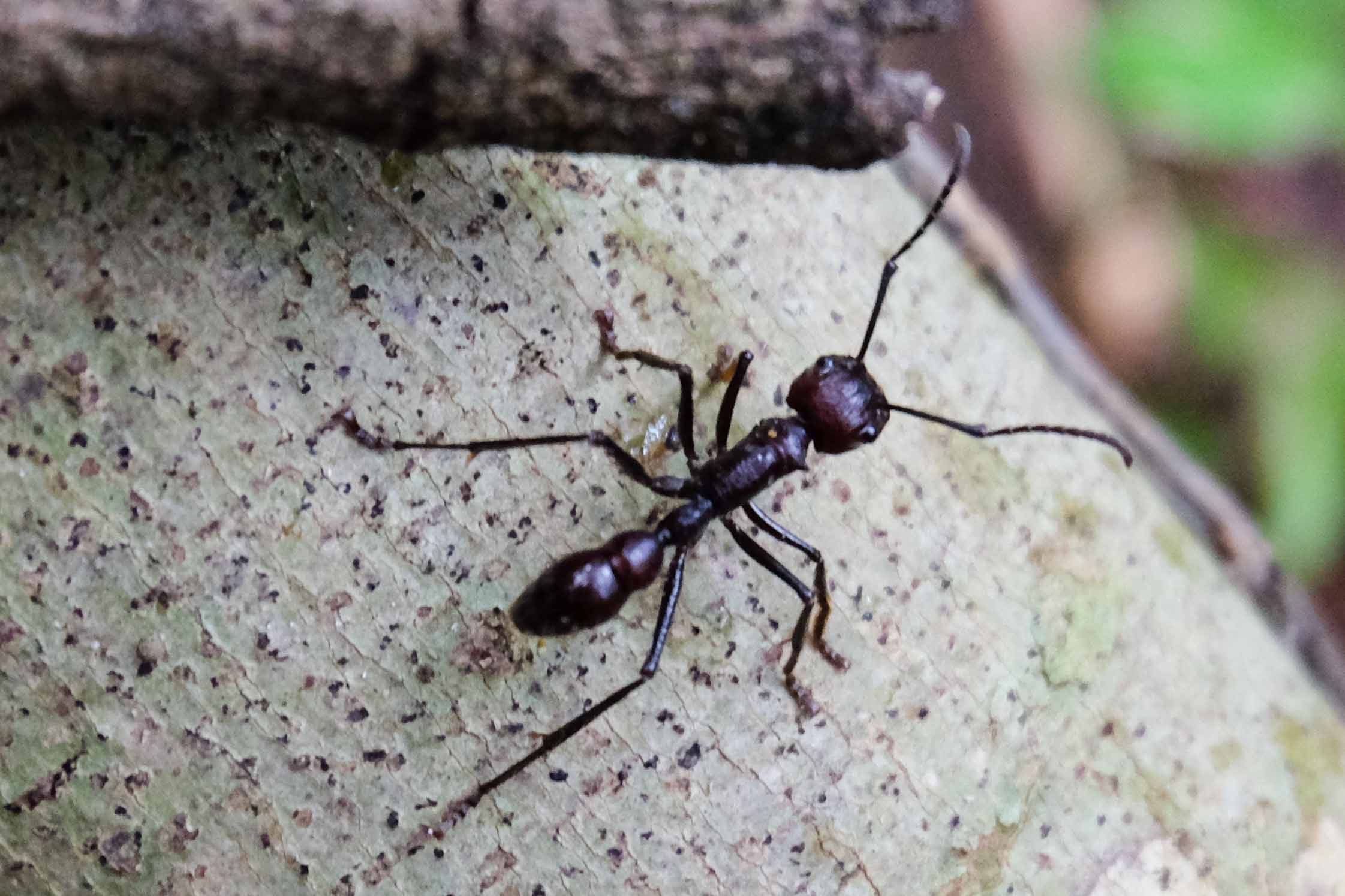
Beyond snake instructions, there is advice on encounters with pumas, jaguars, peccaries, monkeys, poisonous frogs, venomous spiders, scorpions, bees, wasps, and ants, which are especially diverse here. One example is the three-centimetre-long isula, or bullet ant. Its sting is considered the most painful of any insect in the world, with agony lasting several hours.
Among tropical diseases, yellow fever occurs in this region, and we have been vaccinated against it. Leishmaniasis can be considered the greatest problem; its treatment is extraordinarily difficult and comparable to chemotherapy. The only way to reduce the risk is to wear clothing that covers the body after 17:00, minimising bites from sandflies. As for mosquitoes, the region has recorded no malaria cases during the past thirty-five years, so we will not take malaria tablets.
Oh, the jungle contains hundreds of other things capable of killing you. Yet is being in a place where life seethes within every square centimetre, where so much remains unexplored and unknown, not worth more than fear?
The day before our planned departure, we finally receive confirmation that our stay in Tambopata Nature Reserve has been approved. Living in the reserve and participating in research requires official permission from the Peruvian state agency SERNANP. We will have to present this document at checkpoints along the river on the journey to TRC.
Puerto Maldonado—a city in the Amazon jungle
An overnight bus carries us from Cusco to Puerto Maldonado, the capital of the Madre de Dios region—“Mother of God” in Spanish. When we step sleepily from the bus at 7:00, hot, humid air envelops us. I immediately remove my jumper; a garment like this will not be useful here. Gabriela, the project’s coordinator in Puerto Maldonado and the person responsible for welcoming volunteers, greets us at the bus station with a smile. We climb into a minibus, where two lovely children and the driver, Gabriela’s father, await us.
From our earlier emails, I gathered that the boat to TRC enjoyed something like sacred-cow status. It is the only way to reach the Rainforest Expeditions lodges, including TRC, and the boats are often full. Naturally, priority goes to tourists paying a considerable amount to stay at the lodges. That is exactly what has happened in our case: we cannot travel to TRC today and must spend the night in a hotel in Puerto Maldonado. In a way, this is useful because we still need several items for work, such as rubber boots and digital watches. No boat is scheduled to travel all the way to TRC the next day either, so we will spend the night halfway at a lodge called Refugio Amazonas.
Several rivers run around Puerto Maldonado, and on the way to lunch, we ask where it is safe to swim. Gabriela’s father hears us and offers to drive us to one. After lunch, we gather our swimming things and travel twenty-five minutes along the new Interoceanic Highway, which connects the Pacific and Atlantic coasts across Peru and Brazil. It turns out that the Brazilian border is only three hours from Puerto Maldonado. By Peruvian standards, that is so close that locals often cross the border, eat lunch on the Brazilian side, and return to Puerto Maldonado.
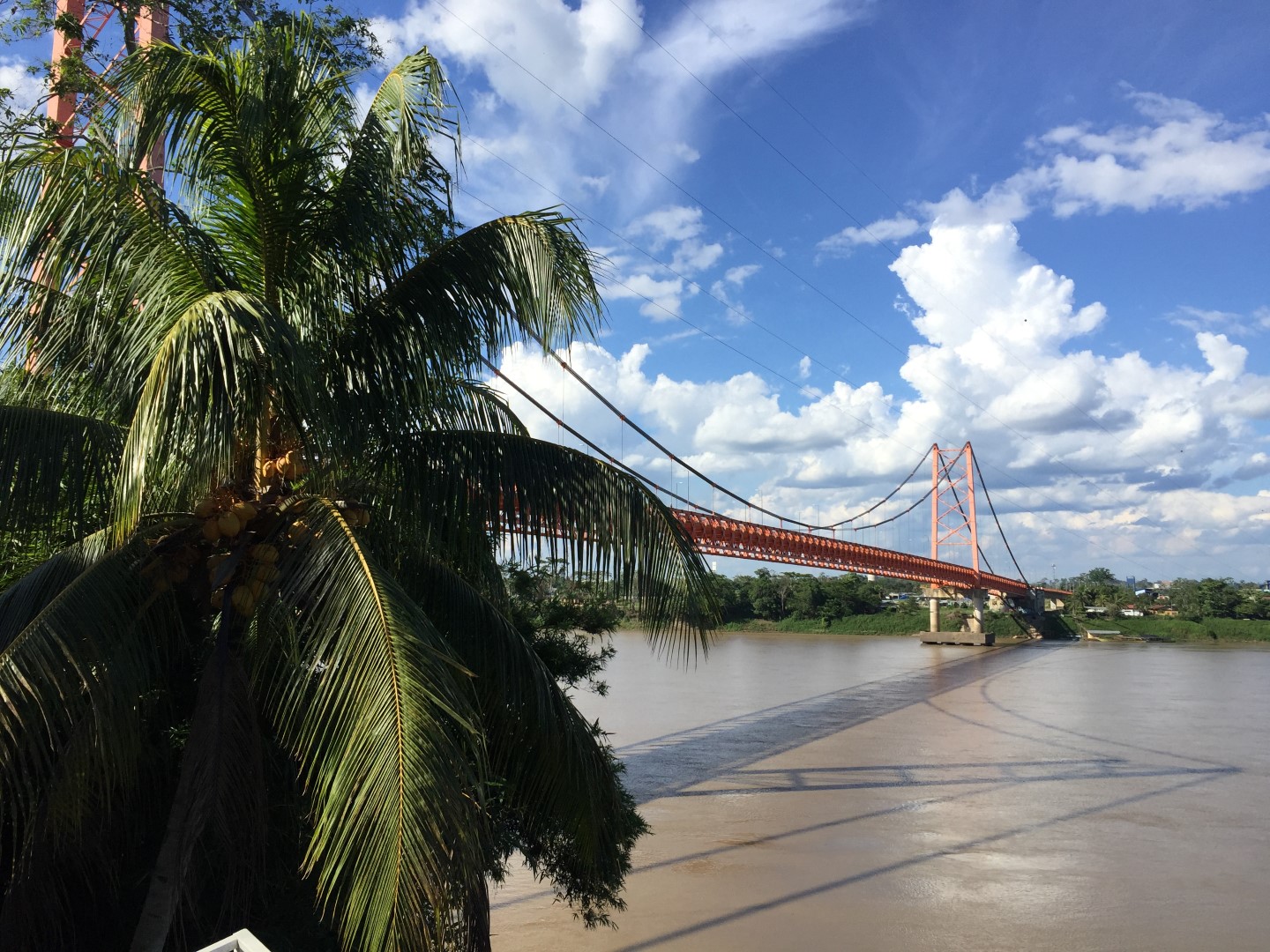
Puerto Maldonado itself is very flat. We are no longer in the Andes but only two hundred metres above sea level. Unlike Andean towns, the principal form of transport here is the mototaxi. Every street buzzes with motorcycles carrying passengers; amusingly, sometimes four people share a single bike. If Puerto Maldonado did not sit within one of South America’s most biologically diverse rainforest regions, there would be little reason to visit the city itself. It is a base from which tourists continue to ecolodges in the jungle.
Following the Tambopata current
The following day, we meet Gabriela, and her kind father drives us to the Rainforest Expeditions office. From there, we will be taken to the boat landing and onwards to one of the company’s three lodges, Refugio Amazonas. Setting aside the fact that the boat schedule will make us reach TRC two days late, we are fortunate in one sense: we will see another lodge. We have seats aboard the day’s final boat at 14:30. One tourist is delayed at the airport, so in reality we depart another hour later. The river journey will last up to three hours. We are warned that darkness will fall before we arrive and told to prepare our torches.
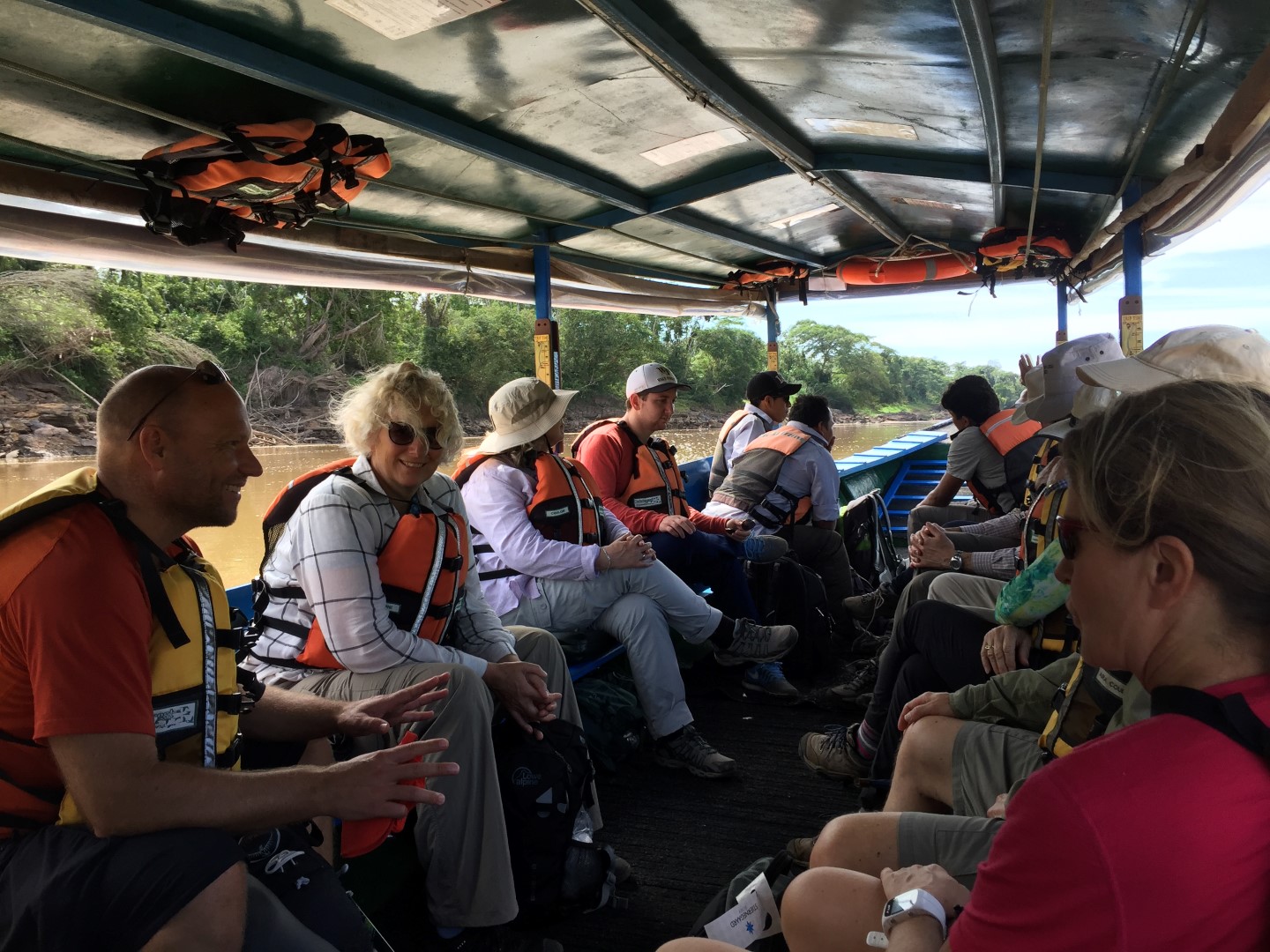
During the journey, several macaws are already visible in the sky. Seeing them flying free fills me with emotion.
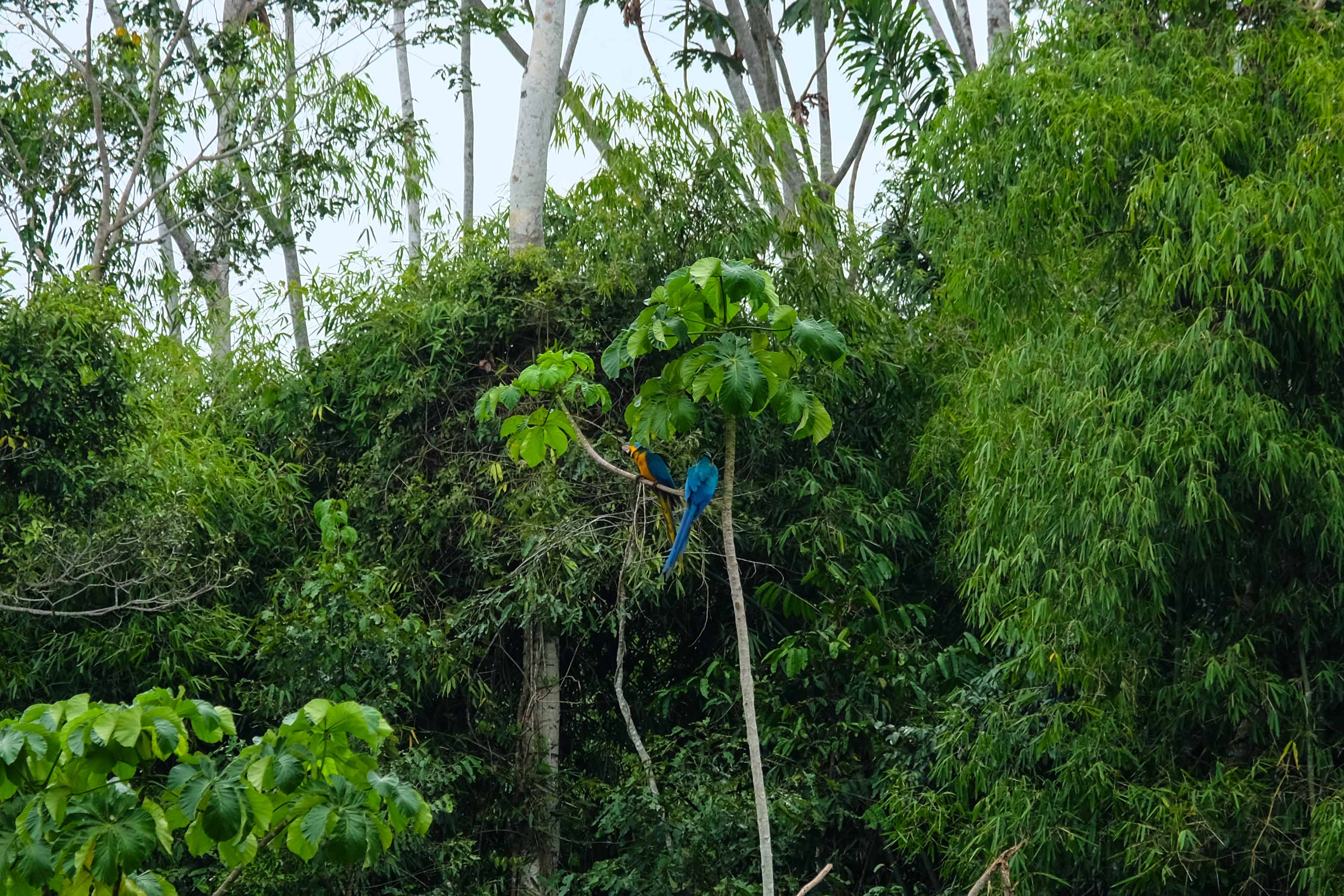
Dusk begins, and I cannot quite understand how we will continue in darkness. The boat is hardly modern: a long vessel with an engine attached and a roof overhead. Suddenly, the guide signals the boatman to approach the bank. A capybara, the world’s largest rodent, stands there chewing something. A small black bird sits alternately on its head and back, making the scene rather comical. Once darkness is complete, the guide takes a large torch and sweeps its beam across the river. Every so often, we approach the shore to look at caimans. Some are in the water with only their eyes visible; others rest on land. Our guide is observant enough to spot these creatures from the middle of the broad river because their eyes shine in the light. I had previously imagined that I would certainly take the opportunity to swim in the Tambopata, but I slowly begin to change my mind. Giant anacondas live here too.
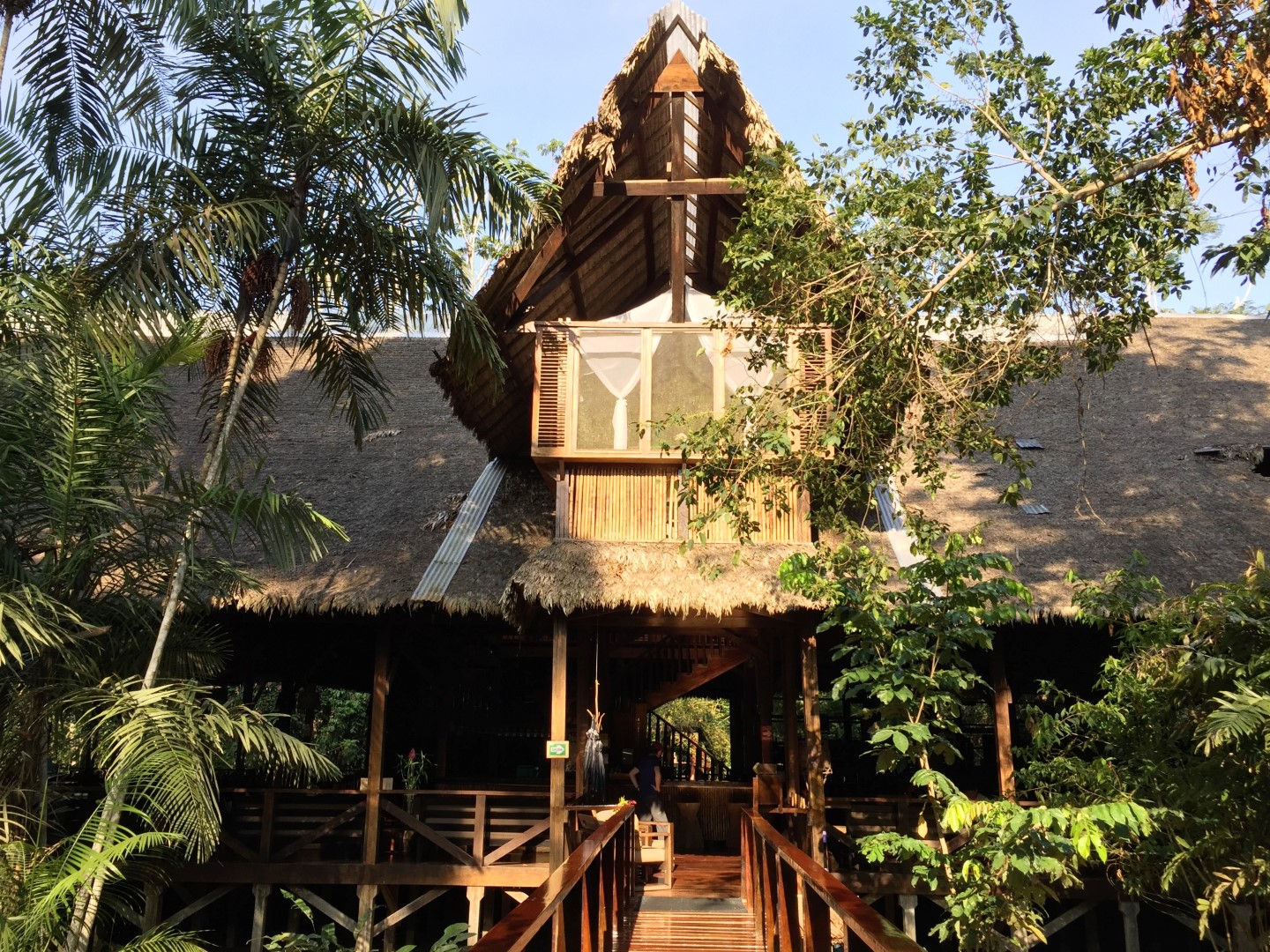
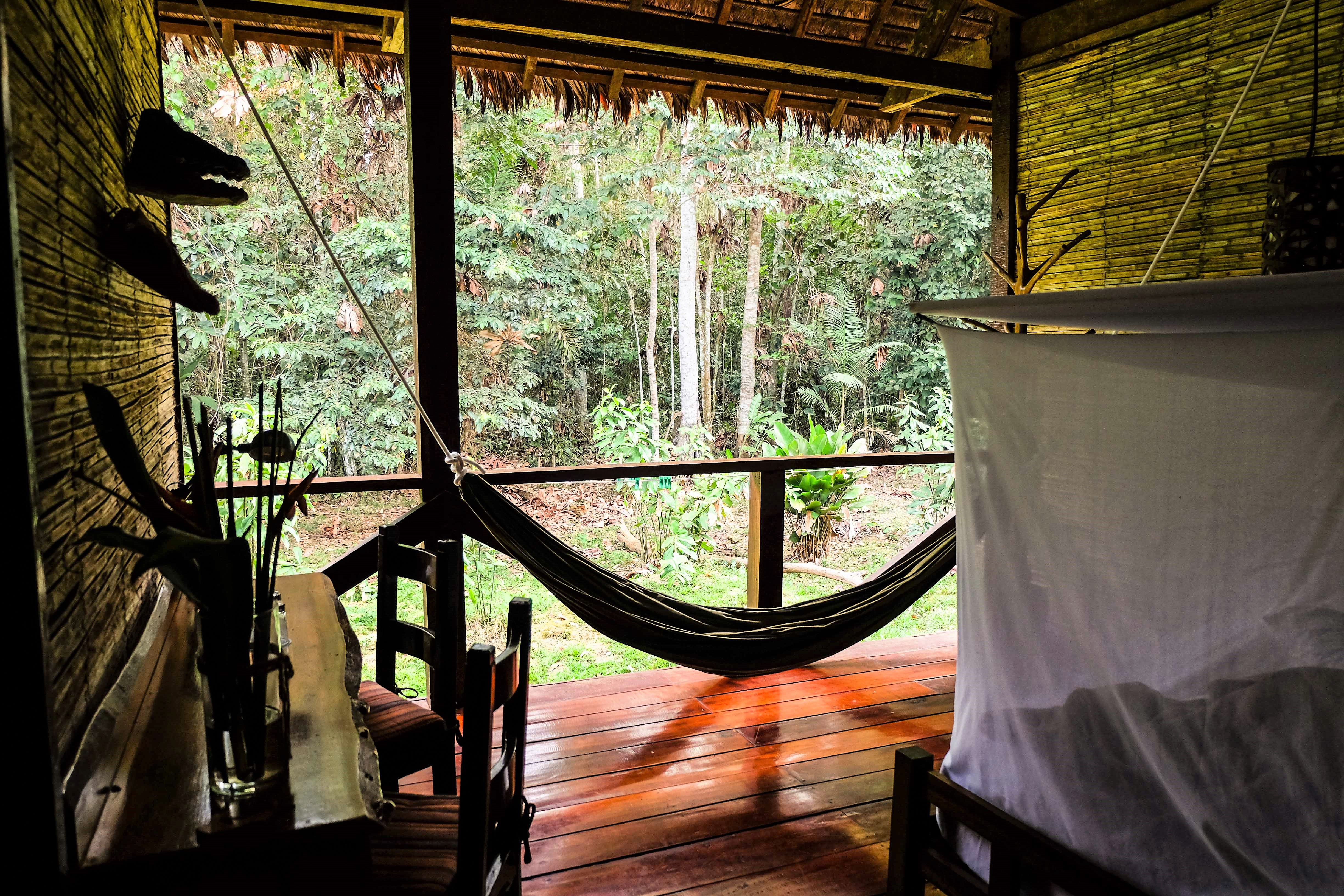
Our starlit boat ride ends as we tie up at the bank. A fifteen-minute hike along a jungle trail follows. When an enormous, illuminated, extraordinarily beautiful building suddenly emerges in the middle of the dark forest, I once again perform a reality check: is this a dream? We receive a warm welcome and are shown to a room. The lights are dimmed to avoid attracting insects, mosquito nets surround the beds and make them look fit for princesses, and jungle flowers sit on the desk. One wall is entirely open, allowing nature to enter the room. Because of this, I remove a bag of snacks from my small backpack; should a nocturnal monkey decide to feast, at least it will not carry away the whole bag. Generators provide electricity here in the morning and evening. Power in the middle of nowhere is already a luxury, but to our great surprise, even the internet is available. Once we finish exploring, we realise how lucky we are. As volunteers, we have received a tourist room costing guests more than USD 350 per night, while we enjoy it as an unexpected extra.
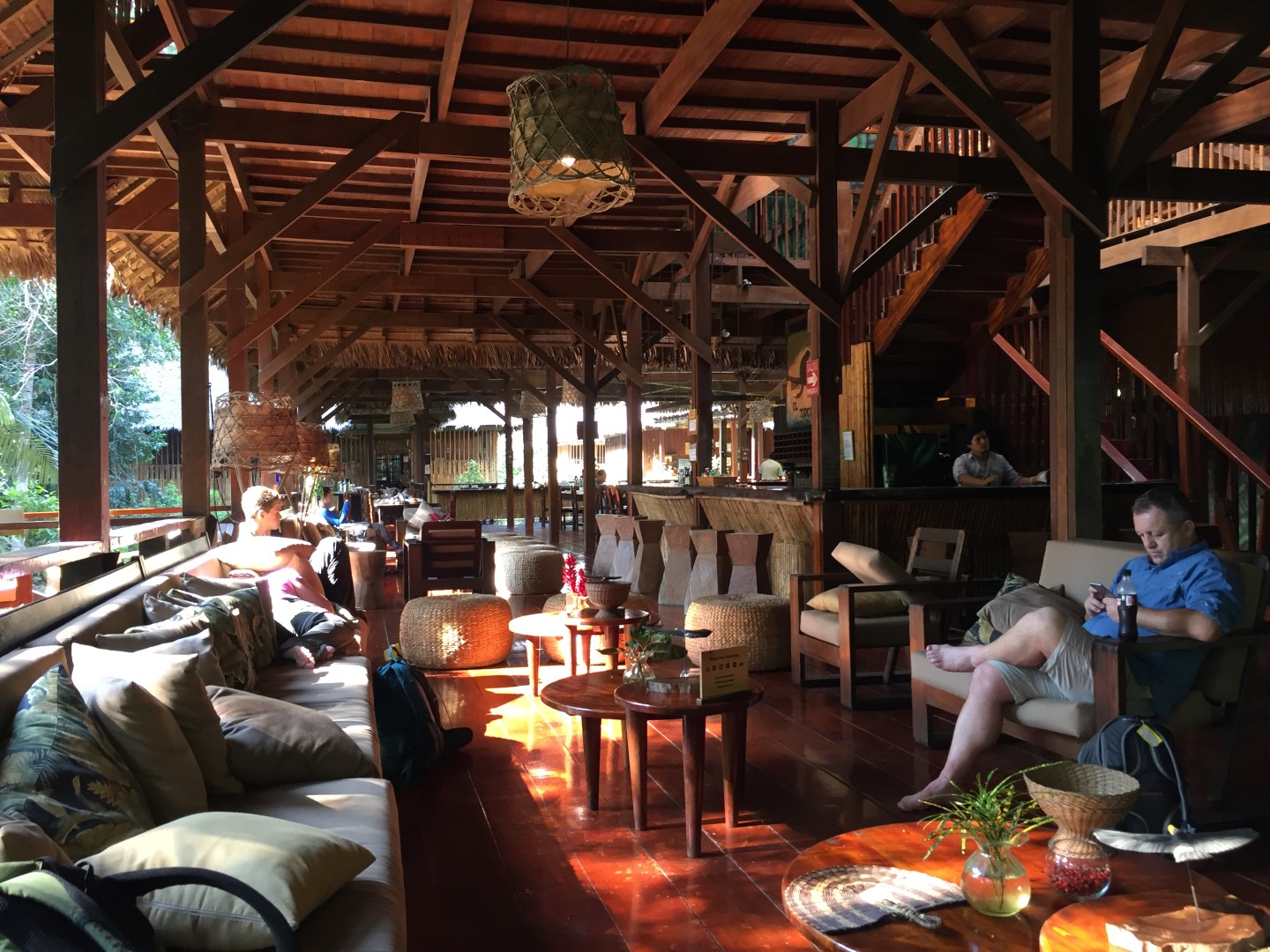
At dinner, served to a standard worthy of a five-star hotel, we are seated at the lodge employees’ table. It turns out that several staff members are biologists working here so they can conduct rainforest plant research in their spare time. Of everything they tell us, Jānis is especially fascinated by their use of drones to observe tree blossoms.
Tambopata Research Center
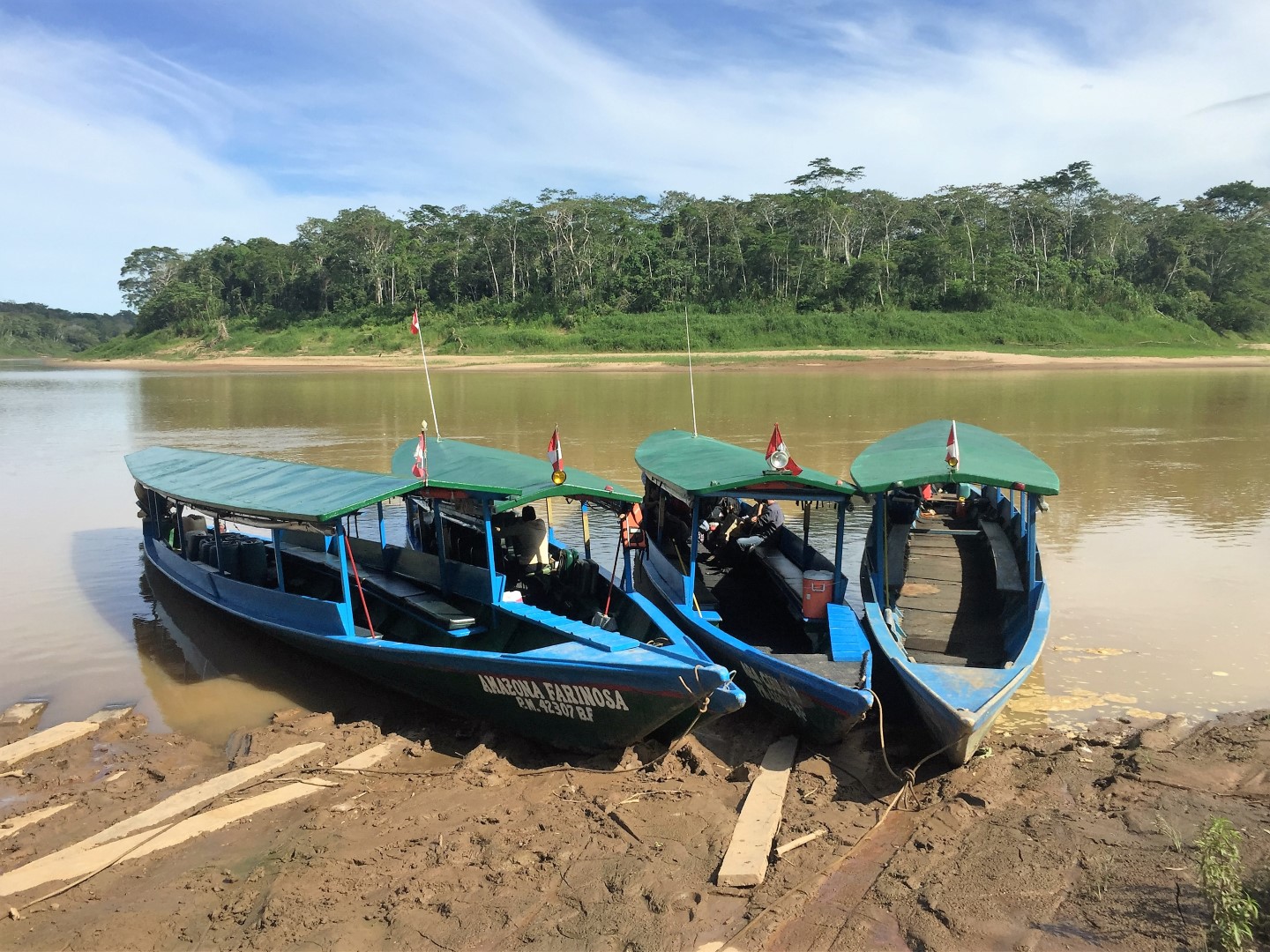
The next morning finds us on the boat again, with another three hours to TRC. At the confluence where the Malinowski River enters the Tambopata, the guide announces that from this point onwards there are no more lodges and nobody lives here—only TRC and nature. Perhaps an Amazonian community also inhabits the area? Several are known to exist in this region.
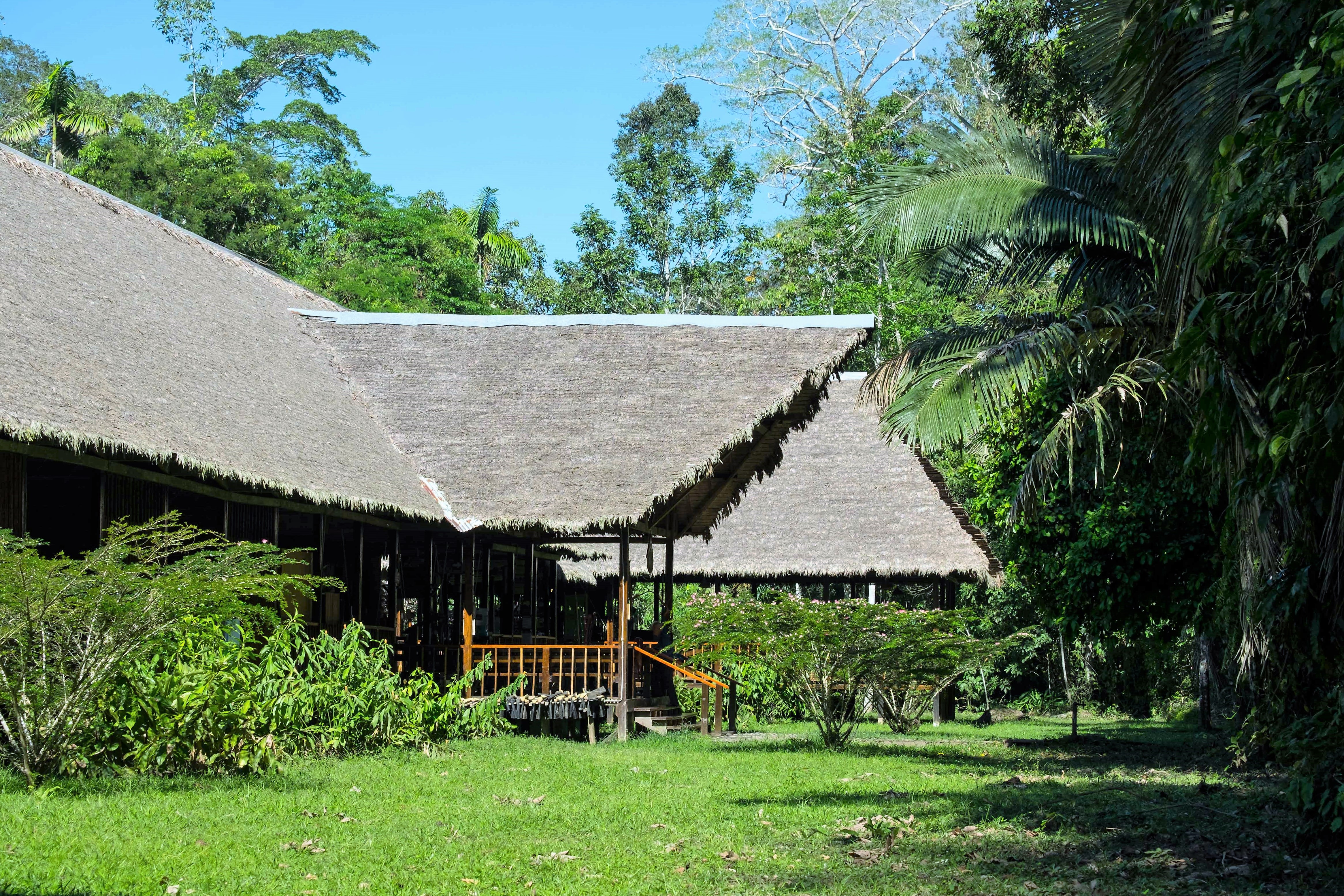
At TRC, we are met by Jorge, the research field lead. He shows us the building and introduces the lodge and research-centre staff. Jorge and Lisa are the researchers who have lived here for years. There are also two volunteers: Sophie from the United States and Igor from Peru. In the coming days, we will be joined by Dylan from the United States, who spent eight months here three years ago.
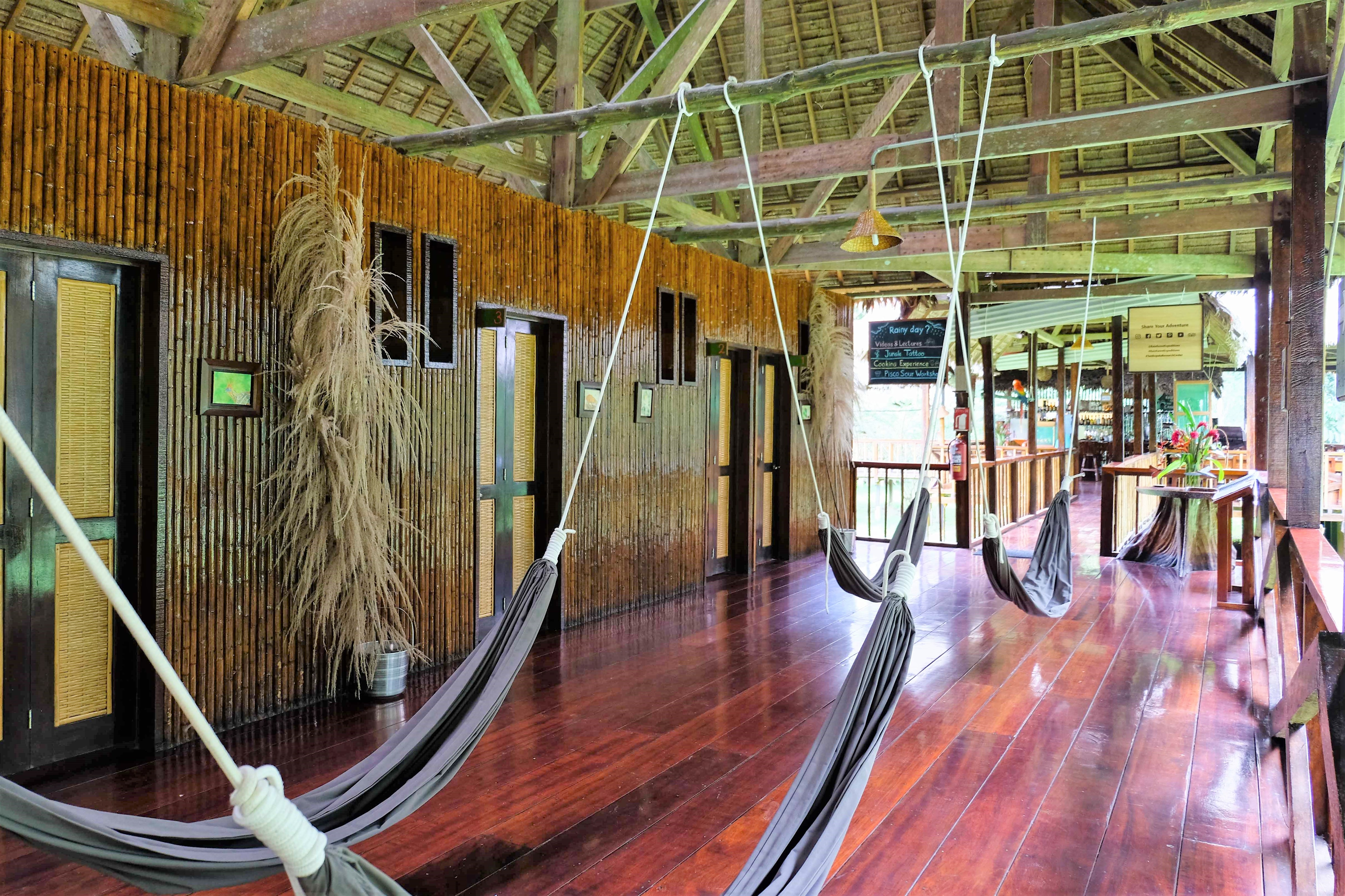
I must say that this lodge is no less impressive than Refugio Amazonas, where we spent the previous night; all its tourist areas are maintained to the highest standard. It is divided into tourist and research sections, with the researchers’ rooms at the far end. Here, the atmosphere changes completely. It looks just like something from a film: slightly dusty, with books and documents everywhere, enormous military chests holding equipment, and so on. Naturally, the rooms are not as grand, merely simple beds with mosquito nets and a shelf. Still, knowing that life will be spent in a place like this for the coming weeks feels wonderfully exotic.
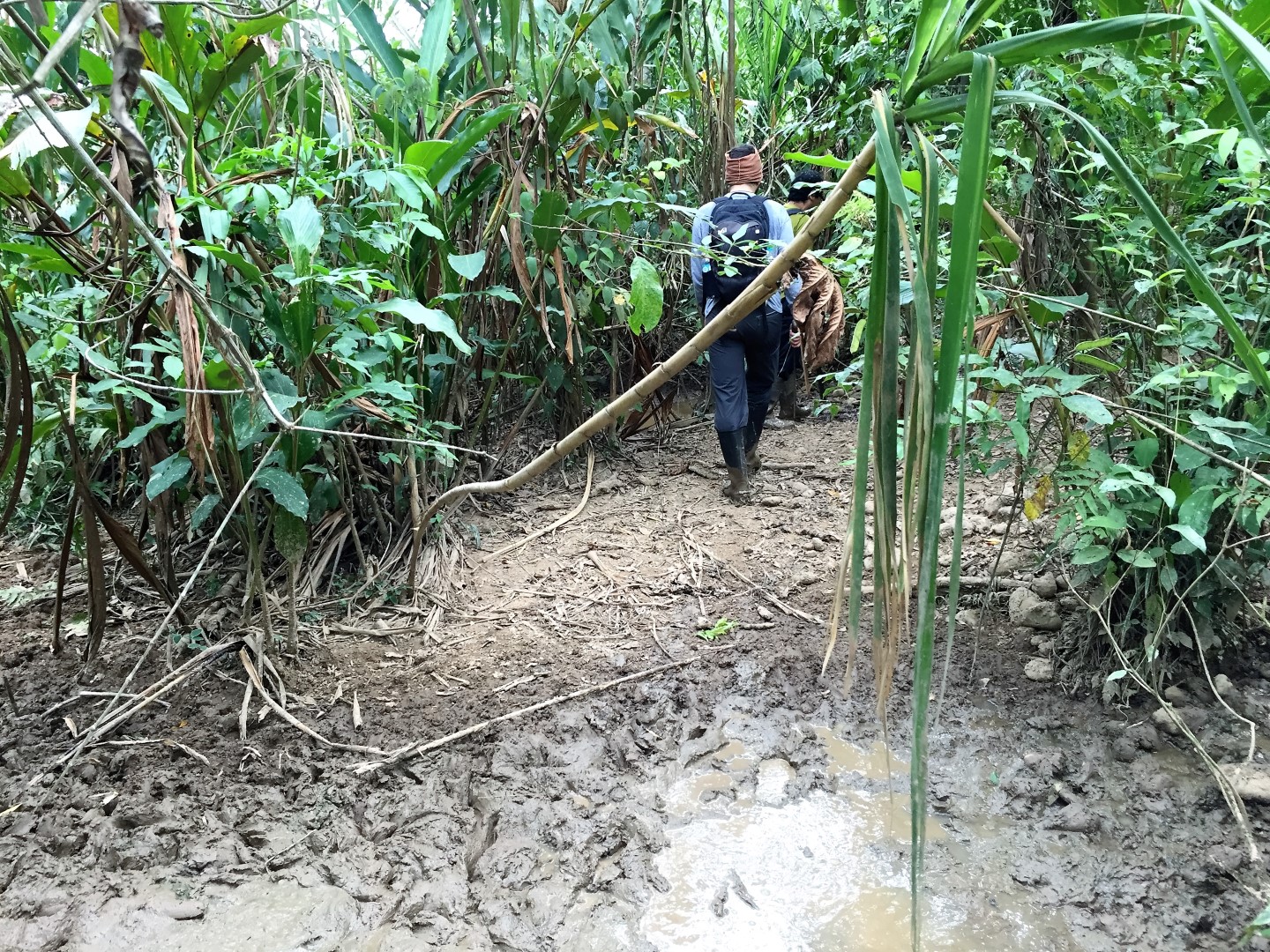
It is already afternoon, and Jorge suggests that we rest today and begin work tomorrow. We decide instead to accompany him to Colpa Colorado, the world’s largest clay lick. The Latvian translation sounds rather awkward, but because this is a key term throughout the macaw research and must be used often, I will stick with the English name. Thousands of birds—mainly parrots—and other animals visit every day to eat clay. We travel there by boat in about five minutes. Special cameras have been installed at the foot of the clay bank, and their batteries need replacing. Today, our only responsibility is to hold them while Jorge changes the batteries. Each of us also carries a machete. I do not mind bending beneath or walking around fallen branches, because in my hands, the machete does not perform quite as I would like. Jānis, meanwhile, is delighted with his new tool and tries to use it whenever the slightest obstacle appears. Colourful parrot feathers along the route reveal the scale on which birds visit. We will soon see them for ourselves: tomorrow, we begin our principal duty, collecting data about them.
Meet the chicos!
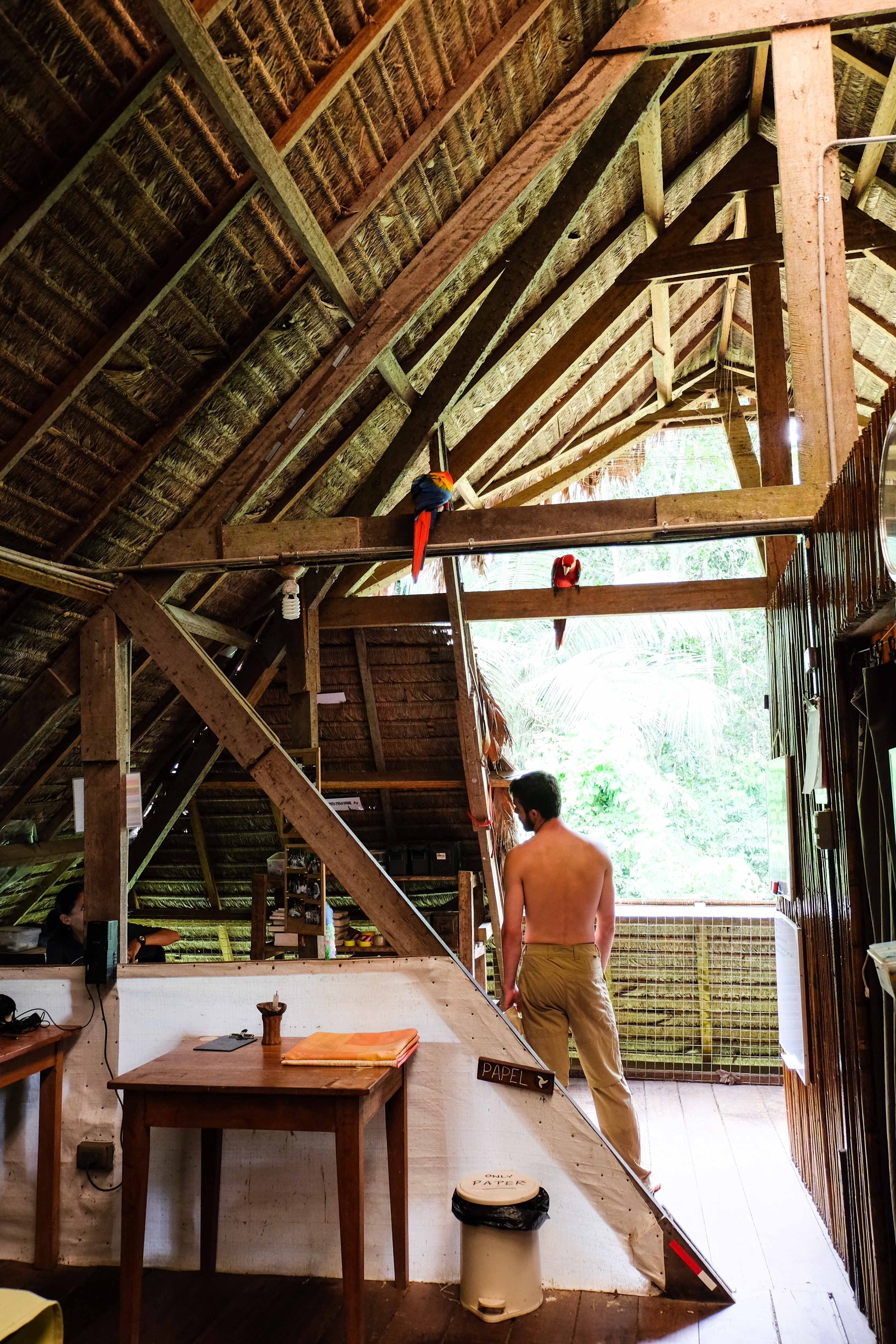
The Macaw Project studies wild parrots living in large populations within Tambopata Nature Reserve. Their voices can be heard from TRC throughout the day, but certain macaws also visit its rooms. These are the chicos!
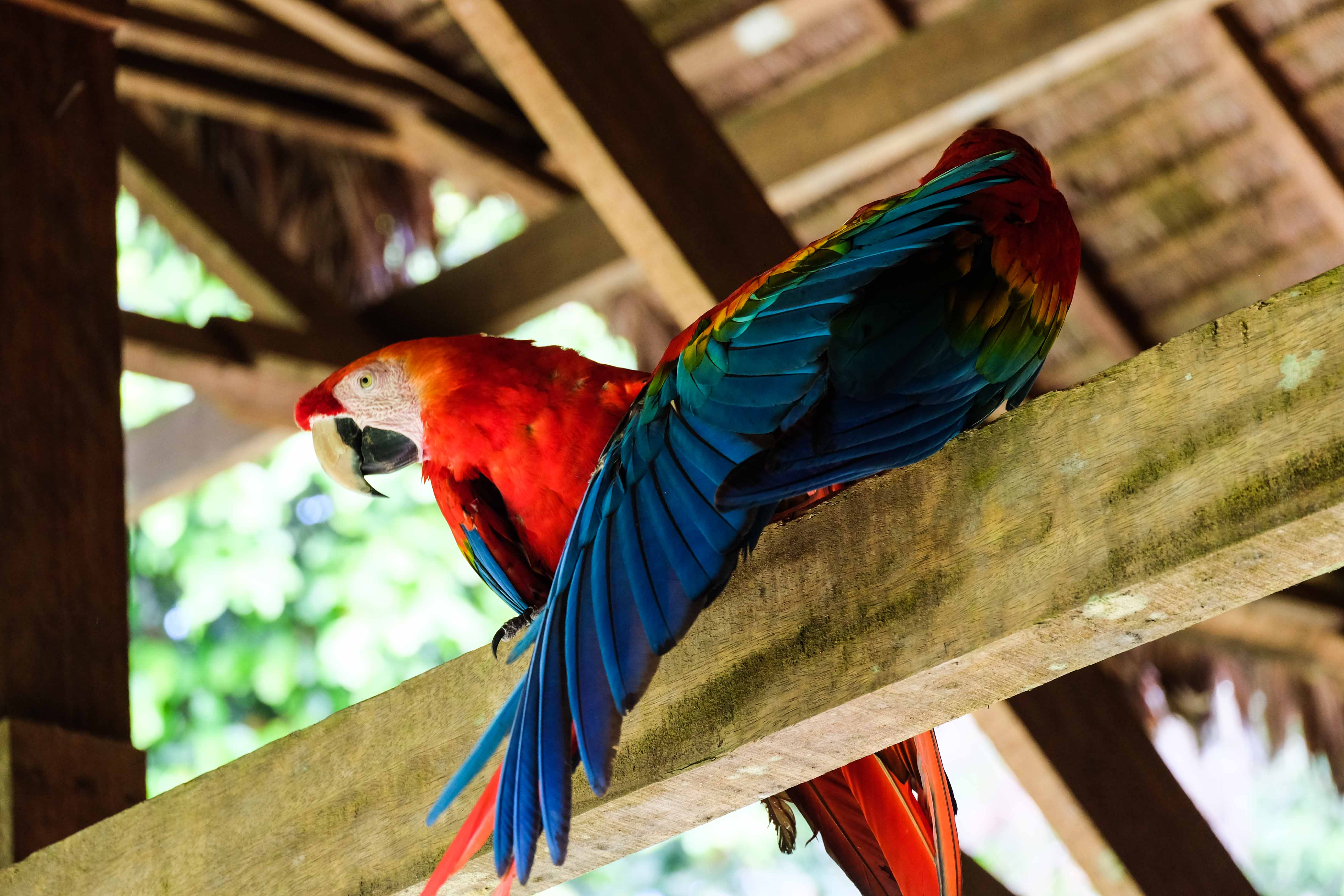
Before meeting the chicos, it is important to understand how macaw eggs are laid and incubated in the wild. A female lays an average of three or four eggs, but nature is harsh. The first test for new parents is whether all the eggs hatch at all. Second, a toucan or another animal may steal one—or every one—from the nest. If everything goes well and all the chicks hatch, the parents feed only the strongest, usually one or two, because there is simply not enough food for both adults and a whole brood. And chicks eat a looooot! It is therefore normal for the weaker youngsters to struggle for existence in the nest, receive no food, and soon die. When we speak to the researchers, Lisa says this is the most emotionally difficult part. Regular nest monitoring leads them to become attached to the chicks, and they often have to watch them die. Yet nature knows best, and they cannot intervene. There are exceptions, of course. If the year has brought an abundant food supply, some macaw parents successfully raise every chick they hatch.
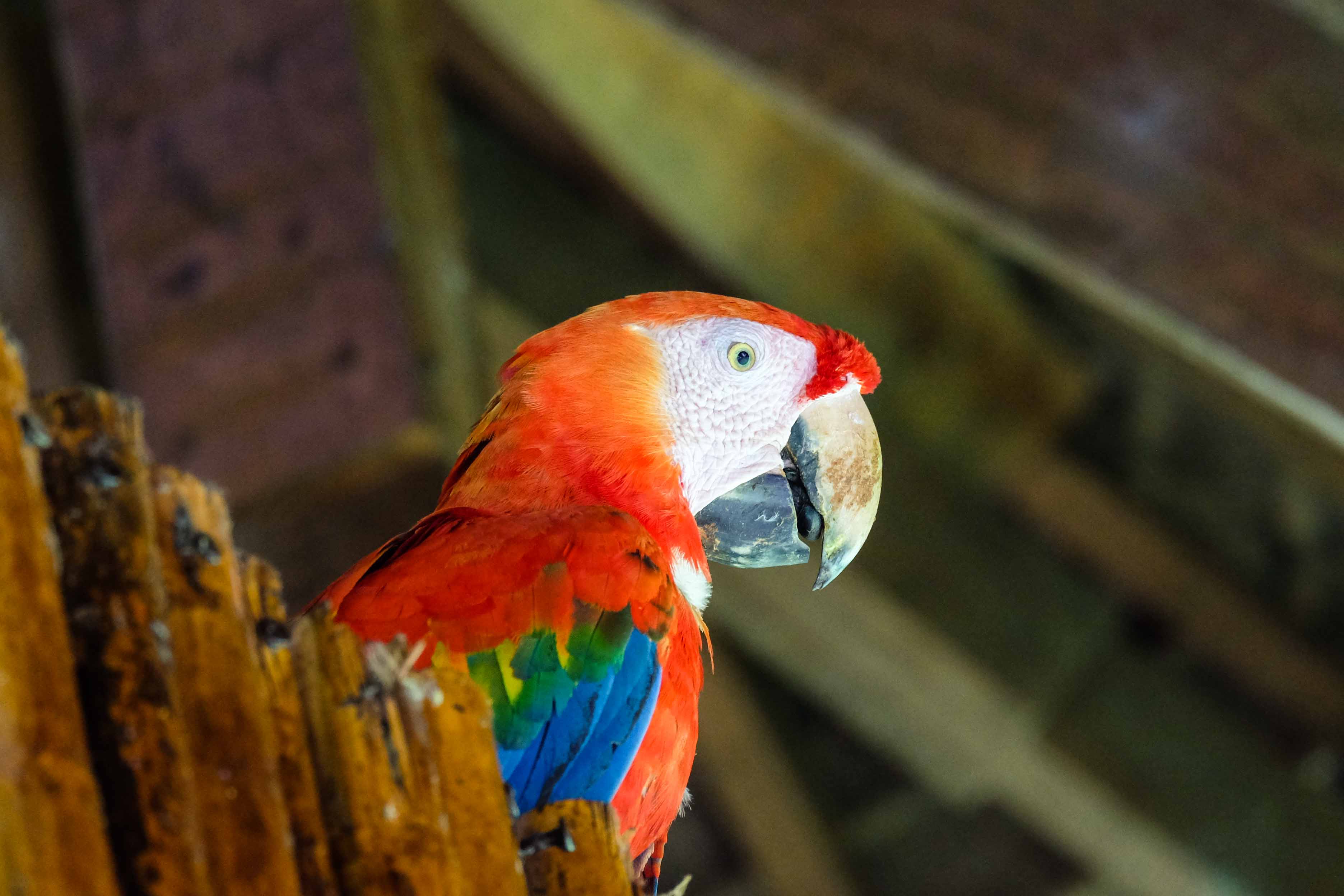
So who are the chicos? In the early 1990s, when the region’s macaw population had fallen dramatically, Eduardo—the research director and TRC founder at the time—removed from nests the chicks that were doomed to die. Across several years, there were around thirty such macaw babies. They were kept and fed at TRC until they reached the appropriate age, then released into the wild. This experiment of sorts proved successful: the young birds adapted and survived. Many formed families with wild macaws. But home is home, even when people created it, and these feathered children still visit TRC. Nobody feeds them here, but they know very well how to acquire—or steal—the occasional treat. And although it is forbidden, tourists clearly give them “gifts” when a beautiful, colourful bird visits their room.
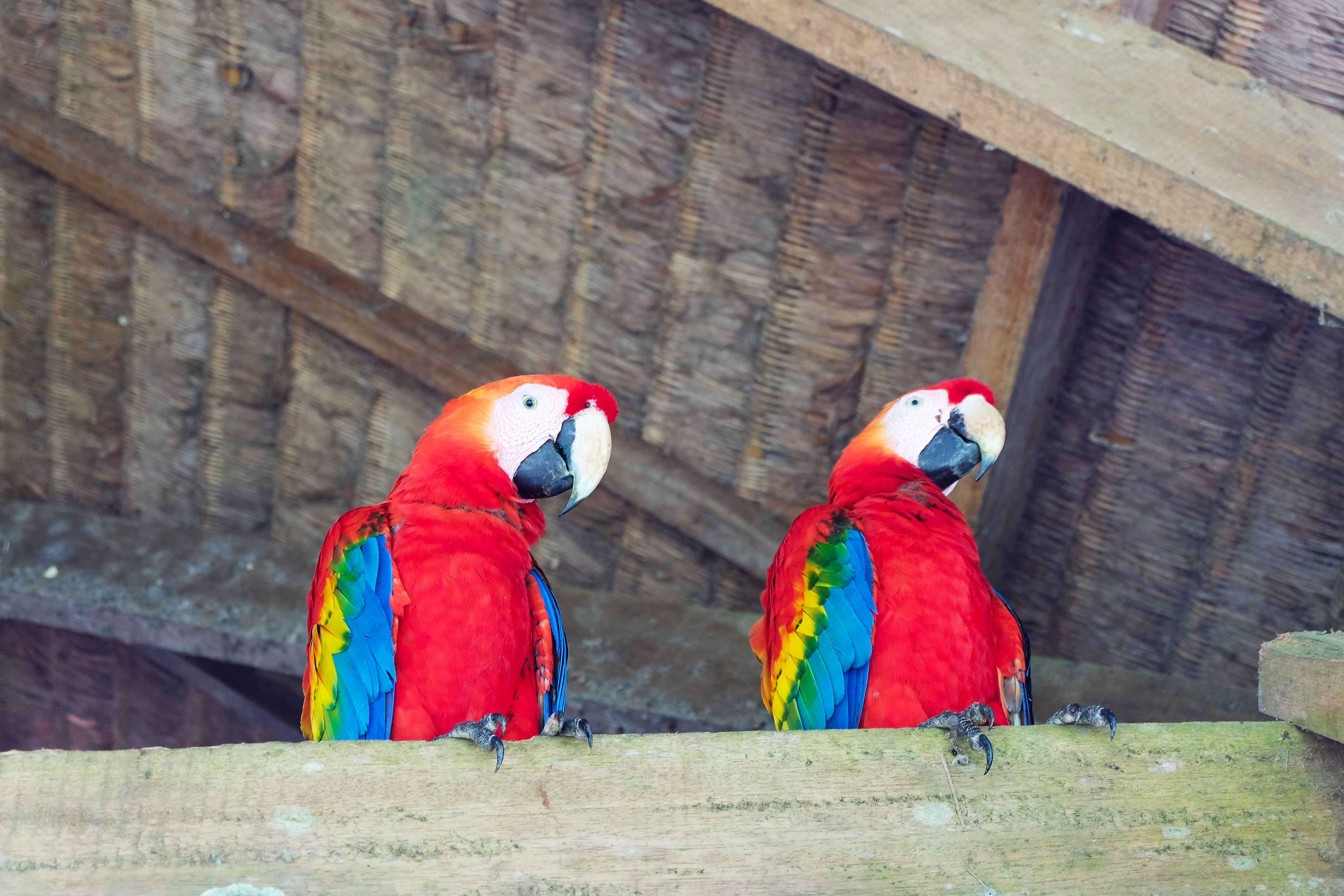
Macaws are generally considered monogamous. I discuss this with Jorge and tell him about our experience in Bolivia, where a female macaw left her long-standing partner for another. Does it happen in the wild too? Yes: it turns out that macaw monogamy is much like human monogamy—some individuals are more monogamous than others. Jorge has a story about one pair of chicos. After nesting together for several years, the female began a relationship with a wild macaw. They raised chicks for one year, but during the following nesting season, she returned to her previous partner. Jorge explains that the chico, as a father, can provide more food. He finds it in nature and, unlike a completely wild macaw, also steals things from TRC. More food means well-fed children and a happy family. What mothers will do for their young!
Our daily activities and responsibilities will follow in the next article.
More information about Tambopata’s macaws:
Video: The Mysterious Macaws of Tambopata
Forbes: “How Scientists Research Macaws in the Peruvian Rainforest”
Video for the forthcoming documentary: “The Macaw Project”
An educational article about macaws and the project