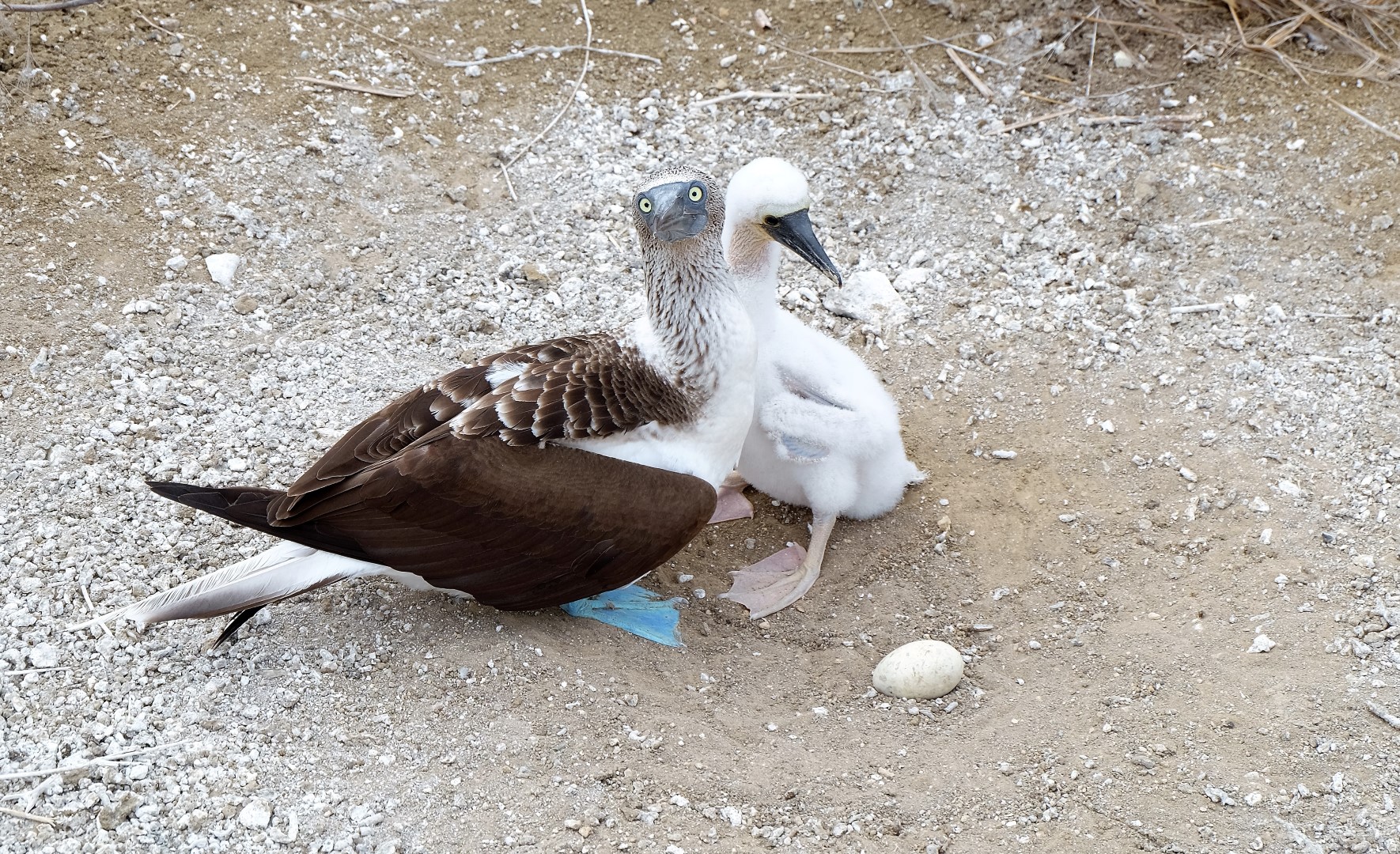
Isla de la Plata—“Silver Island” in Spanish—is an uninhabited island renowned for the variety of seabirds that come here to live, nest, or simply rest. Its emblem and leading character is the blue-footed booby, an amusing bird in every respect and the main reason the island has become so popular.
The island lies within Machalilla National Park, forty kilometres off Ecuador’s coast. A visit can become a particularly memorable adventure from mid-June to September, when migrating humpback whales enter Ecuadorian waters. They travel from Antarctica to the warmer coasts of Ecuador and Colombia to mate and give birth. We visit in November, so whale watching is not on the programme.
Isla de la Plata is also called the “poor man’s Galápagos”. The cost is, of course, incomparably lower than a visit to the real Galápagos Islands, although the variety of wildlife is considerably smaller too. We are leaning towards skipping the Galápagos, so we choose Isla de la Plata as an alternative.
In the morning, we wait beside the tour company’s office on the Puerto López promenade. Once the group is assembled, we make our way to the jetty. Our first impression of Machalilla Tours could hardly be better. We will travel in a new-looking motorboat; everyone receives a life jacket; and the guide seems professional and experienced, as well as speaking good English. The journey from Puerto López to the island takes an hour. Our guide informs us that a Nazca booby, for example, can fly the same distance in twenty minutes. There are also stories about drug traffickers crossing the ocean in eight-hundred-horsepower speedboats. The ocean is one of the most important routes for transporting drugs.
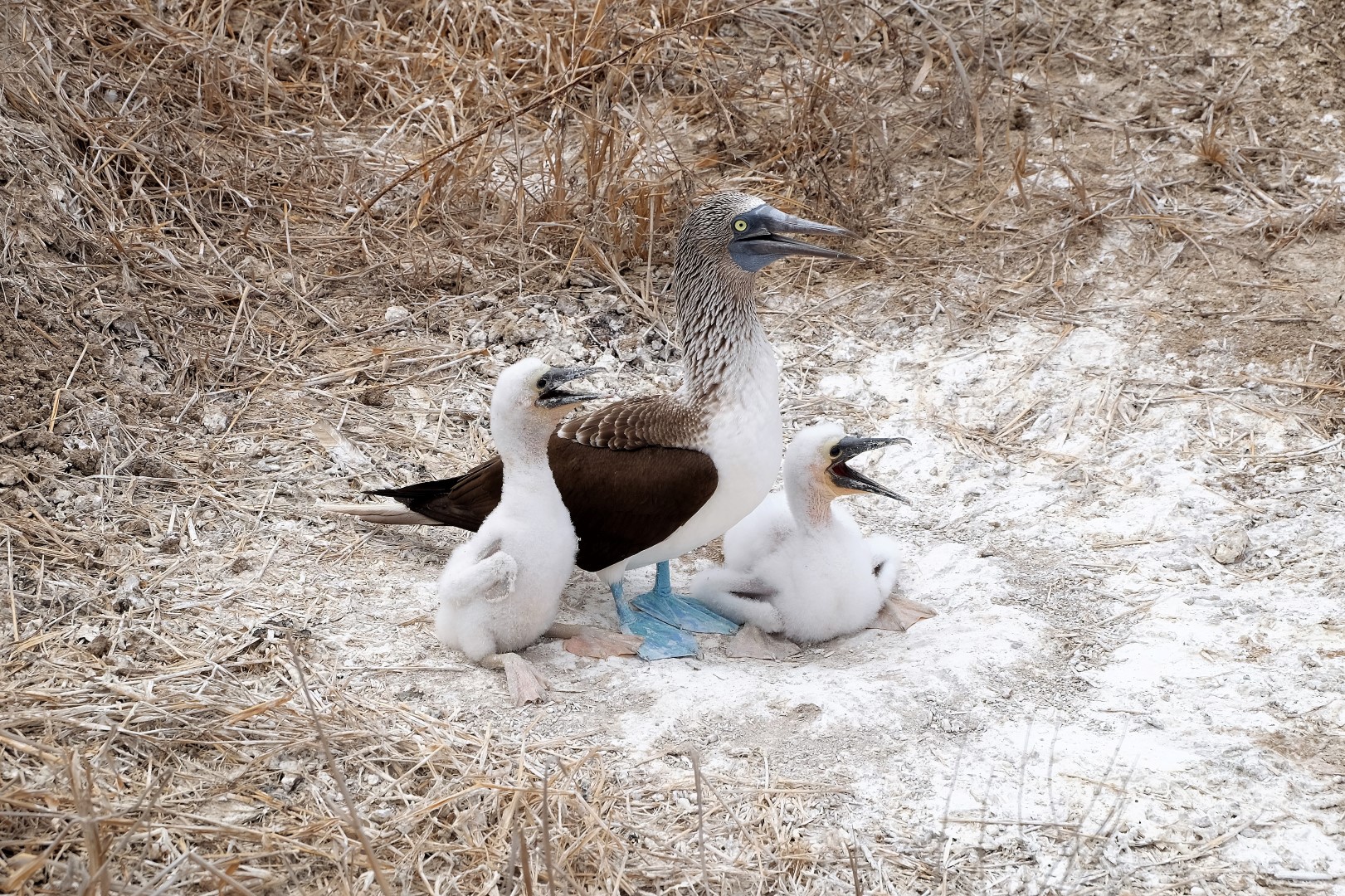
The island has three trails, divided according to which bird species visitors most want to see. We choose one of the longer routes, which promises blue-footed boobies. Birdwatching normally means observing birds from a distance. Blue-footed boobies are different and show little fear of people. Near the very beginning of the trail, we encounter birds that have chosen to nest directly on the path. We can study these curious seabirds properly: blue webbed feet, heads resembling penguins, and bodies like gulls.
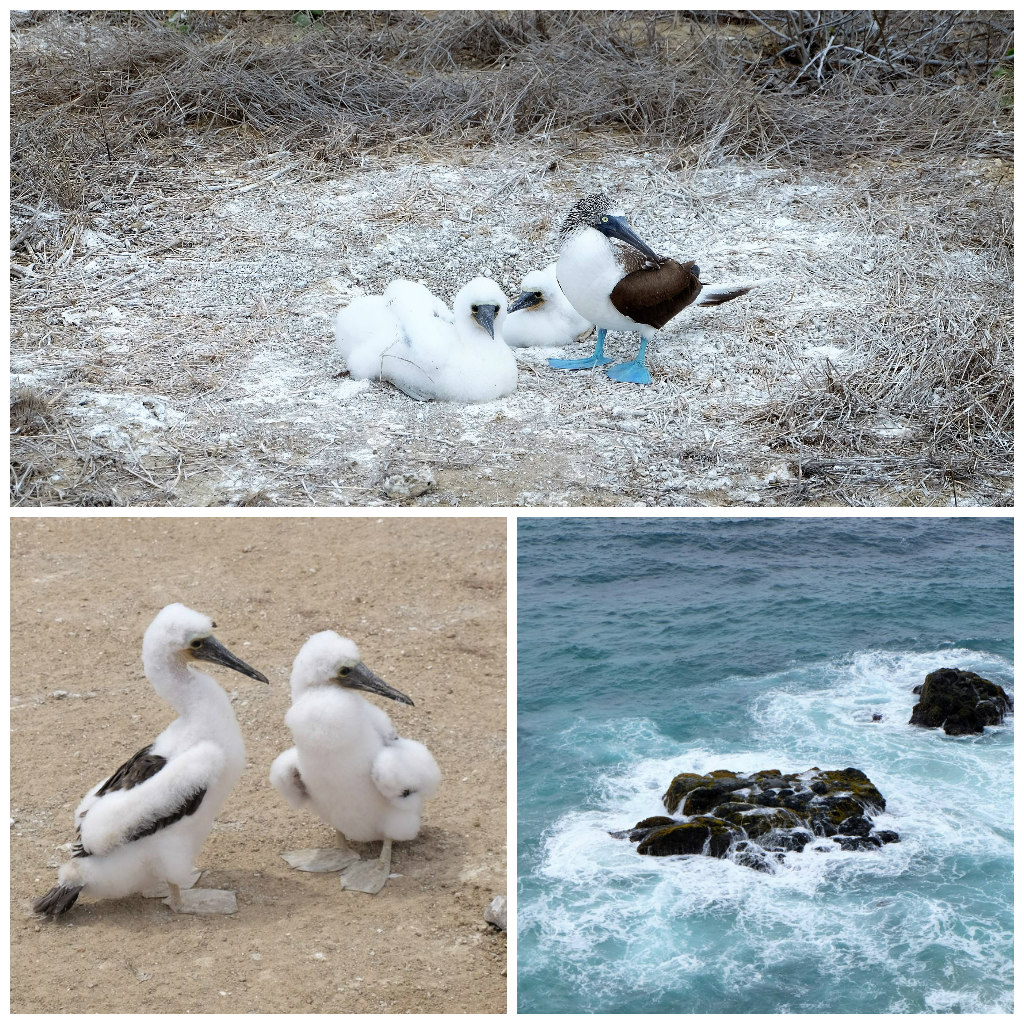
We have reached the island at a significant time, when most chicks have already hatched and remain close to their nests. Perhaps that is why the adult birds do not flee from people: their fear of abandoning chicks and eggs is much greater than their fear of us. We try to respect the new parents and their young by giving the nests a wide berth. Covered in white down, the chicks look adorable. Some birds seem entirely unbothered, while others let out a warning squawk to make sure we do not even think about coming closer. Eggs are still visible here and there because booby chicks hatch asynchronously. They emerge about five days apart, so chicks from the same nest differ in size. This creates an unequal distribution of food: as so often happens in nature, when the parents cannot provide enough, only the strongest chick is fed. Dead chicks can be seen in places. Saddest of all are the abandoned young. Weak and using their final reserves of strength, they pace beside their nest and cry out, but the stronger chick and its mother will not let them return. The guide merely sighs and says, “This one has been abandoned. It will die soon.”
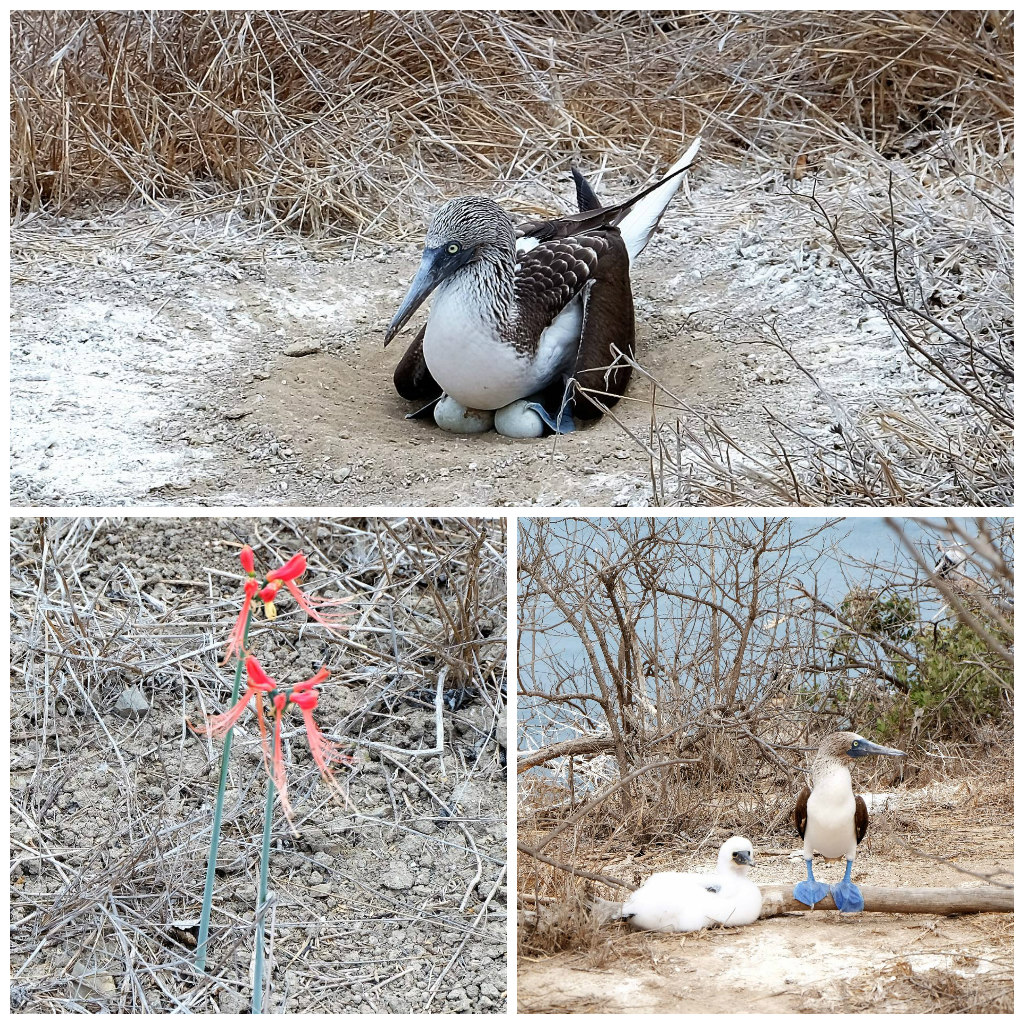
The guide explains that younger females, lacking experience, sometimes mate late in the season, when other mothers’ chicks have already hatched and grown. We are lucky enough to witness one such belated courtship dance. Two males attempt to impress a female. The central ritual consists of lifting their blue feet at the beginning and end of the dance, because brightness is the main factor by which the female chooses. A more vivid blue supposedly indicates that the male is young enough, has good genes, and will care well for the chicks early in life. It turns out this is wishful thinking on the females’ part. Researchers conducted an experiment in which they brightened males’ feet to improve their chances of selection, yet their chicks were, on average, just as healthy as those produced by naturally brighter-footed birds. The dance also involves spreading the wings and looking skyward to display the beak. Nesting material is presented to the female too, although this is pure show: these birds build no nest and merely scrape a shallow depression in the ground. The performance concludes with another display of the feet. From the sidelines, it is wonderfully funny to watch the males dance with such passion while the female simply stands there, following everything with a swaying head. It becomes even funnier when I imagine what she might be analysing and how she makes her choice: “Hmm, lovely little feet, though they could be a touch bluer. That beak is rather curved too. No, no—I’ll study the other one a little longer.”
Our guide clearly enjoys jokes about relationships. During the walk, we also learn various details of Ecuadorian culture. If a woman has a partner or husband, for example, she should walk down the street holding his arm or hand. Something similar applies when dancing salsa. If palms are simply clasped, the woman is merely a friend or a partner for that particular dance. Interlaced fingers mean the couple is in a relationship or married. Salsa itself, however, may be danced as freely and passionately as one likes regardless of the relationship with that partner, because that is simply the nature of the dance. The guide’s explanation also reveals why men paid me attention in Montañita even when I was with my husband. It had seemed brazen. Apparently, we were merely holding hands incorrectly. Such are the finer points of culture.
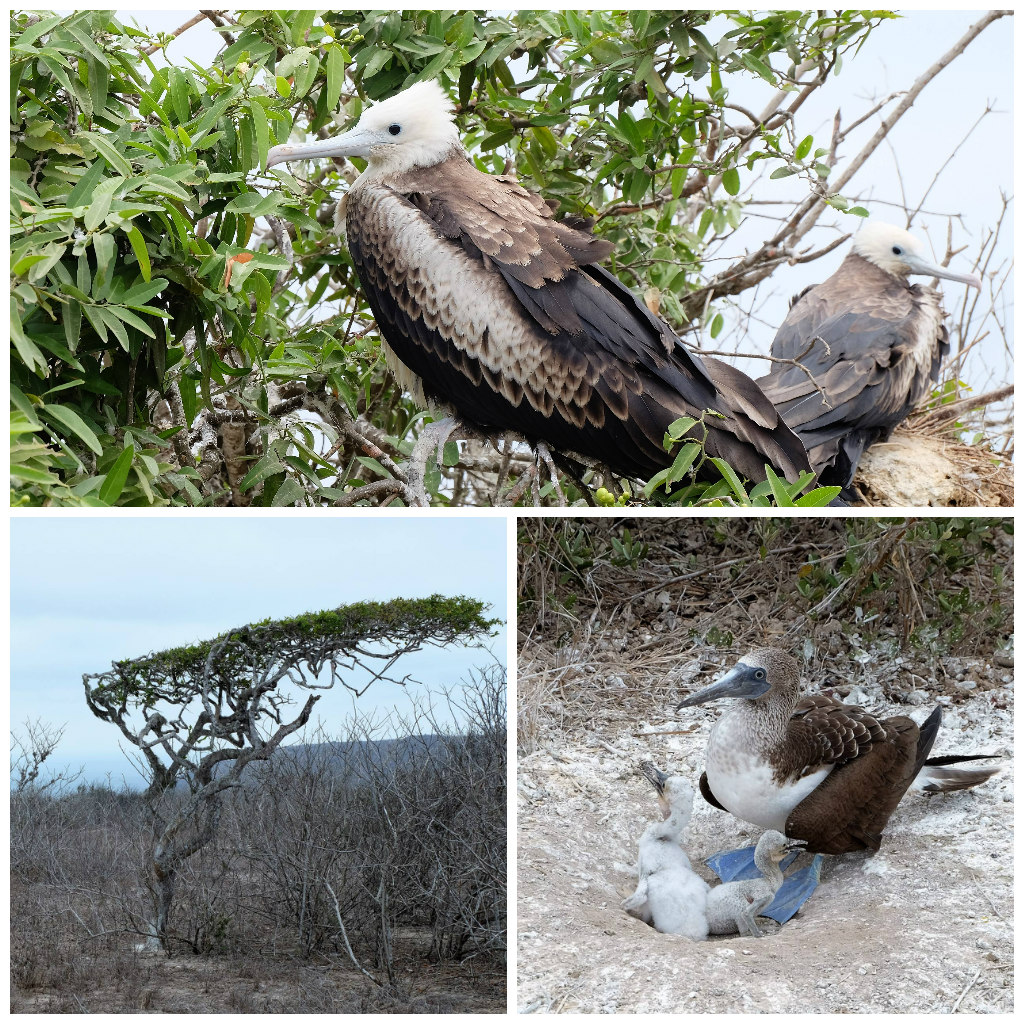
We cross the island and reach cliffs pounded by the ocean. Here, we turn onto a path leading towards its far end. Countless nests with booby chicks and eggs line the way. Other seabirds gather at the tip of the island: agile Nazca boobies, albatrosses, red-footed boobies, and frigatebirds rest there. The island is also home to a hummingbird species only three centimetres long. Unfortunately, we do not see it—or perhaps simply fail to notice it.
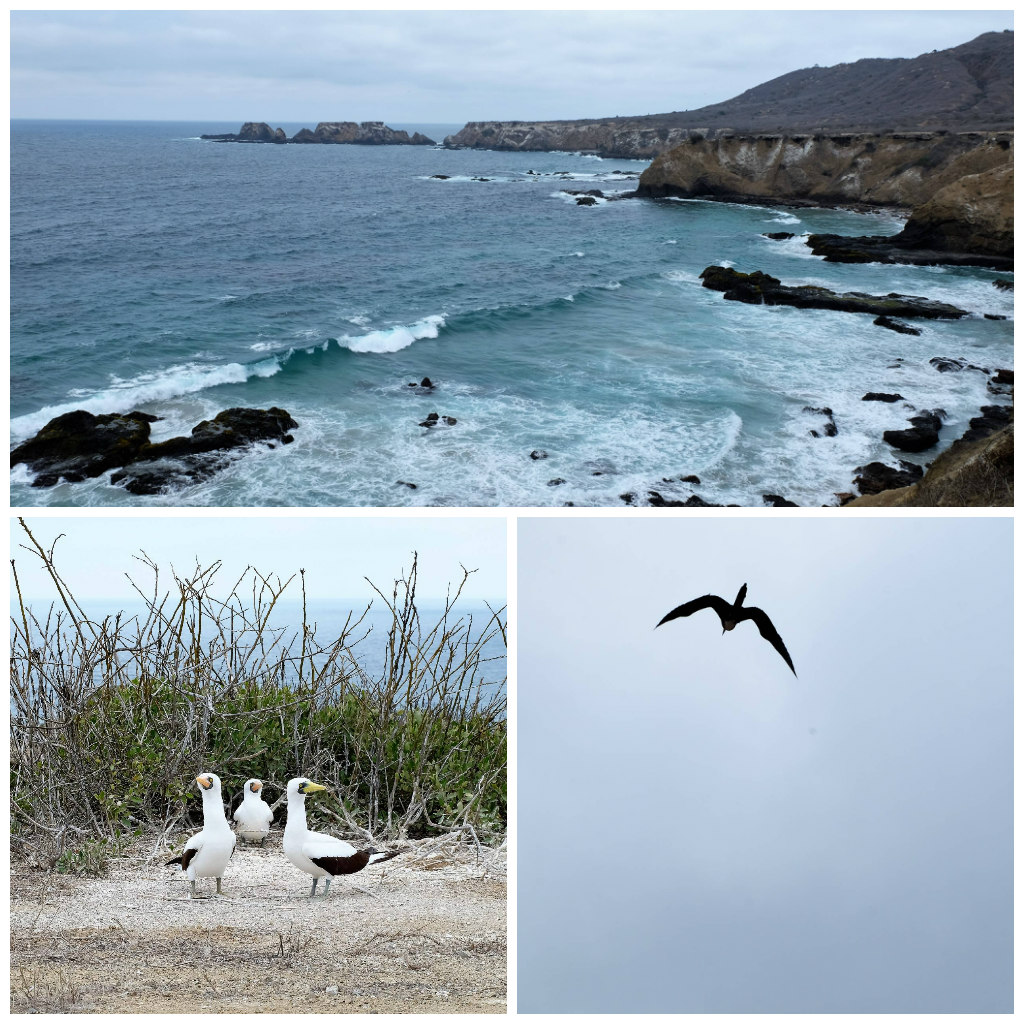
One explanation for the name Silver Island is that it sometimes gleams silver in the moonlight because it is covered in white bird droppings. Naturally, there are pirate legends too. One version claims that the famous Captain Sir Francis Drake—more of a pirate from the Spanish point of view—hid a great cargo of silver here. We favour the bird-dropping explanation because the evidence is plainly before our eyes. Walking around the island presents no difficulty, however: everything has dried neatly, and we enjoy the exclusive privilege of following a white path.
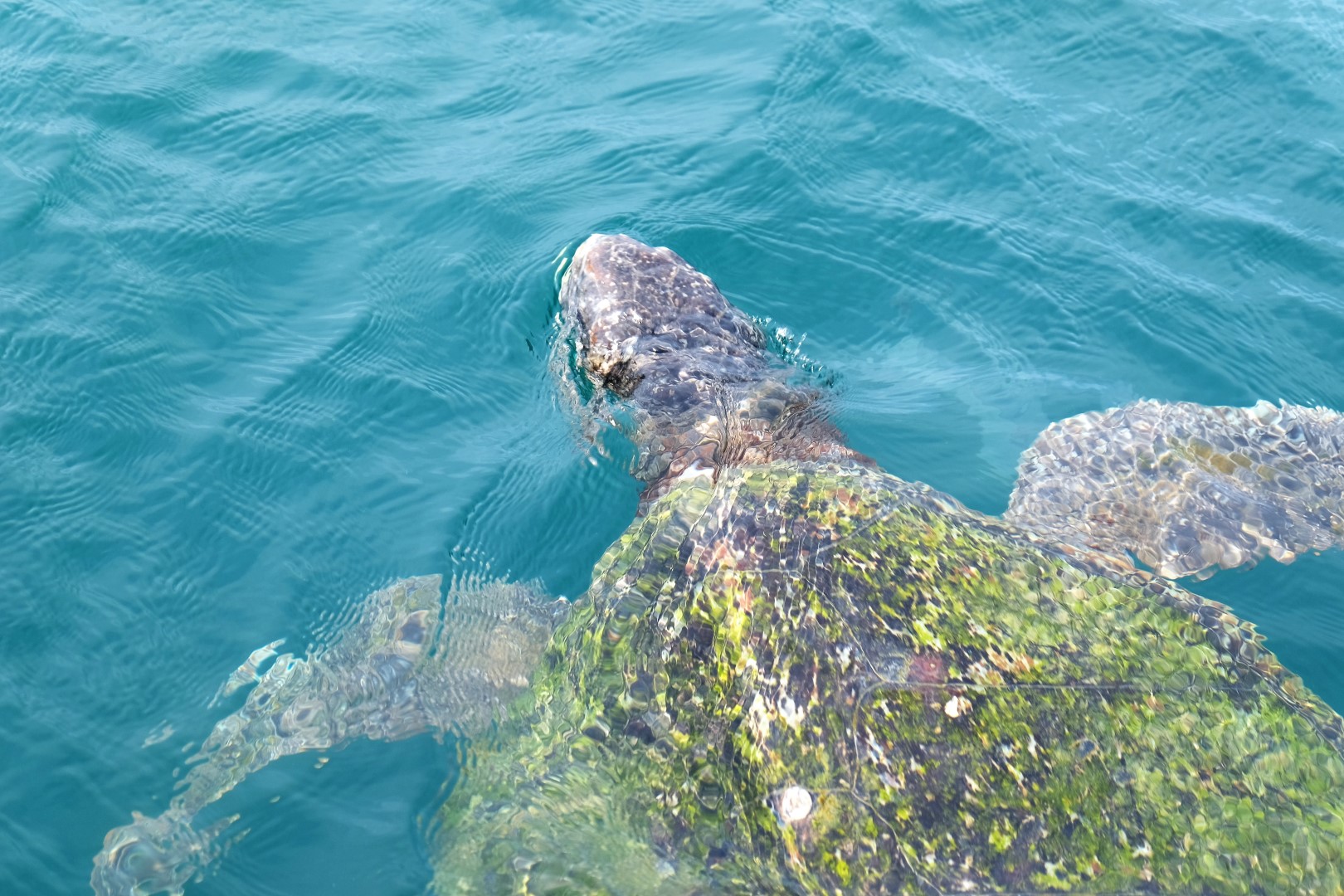
We return to the boat, as snorkelling is next. On the way to the snorkelling spot, the captain stops because giant sea turtles are swimming towards us. Leaning over the side, we watch three large, heavy bodies approach beneath the surface. When the first raises its head from the water, my heart trembles with delight—such an ancient, kindly face. It is fairly clear that the turtles have come to beg. Fruit has just been handed around, and the guide allows someone to throw in a piece of watermelon rind, which they devour eagerly. A boy prepares to offer them pineapple as well, but that, apparently, is not allowed.
We begin snorkelling. The moment I put my head underwater beside the boat, a marvellous world opens below: long, snake-like fish; shoals of small, vivid fish; and rays. The water is so clear that sculptural rock formations remain visible six metres down. Endlessly beautiful.
It has been a wonderful day, and we speed back across the waters of the Pacific towards Puerto López.