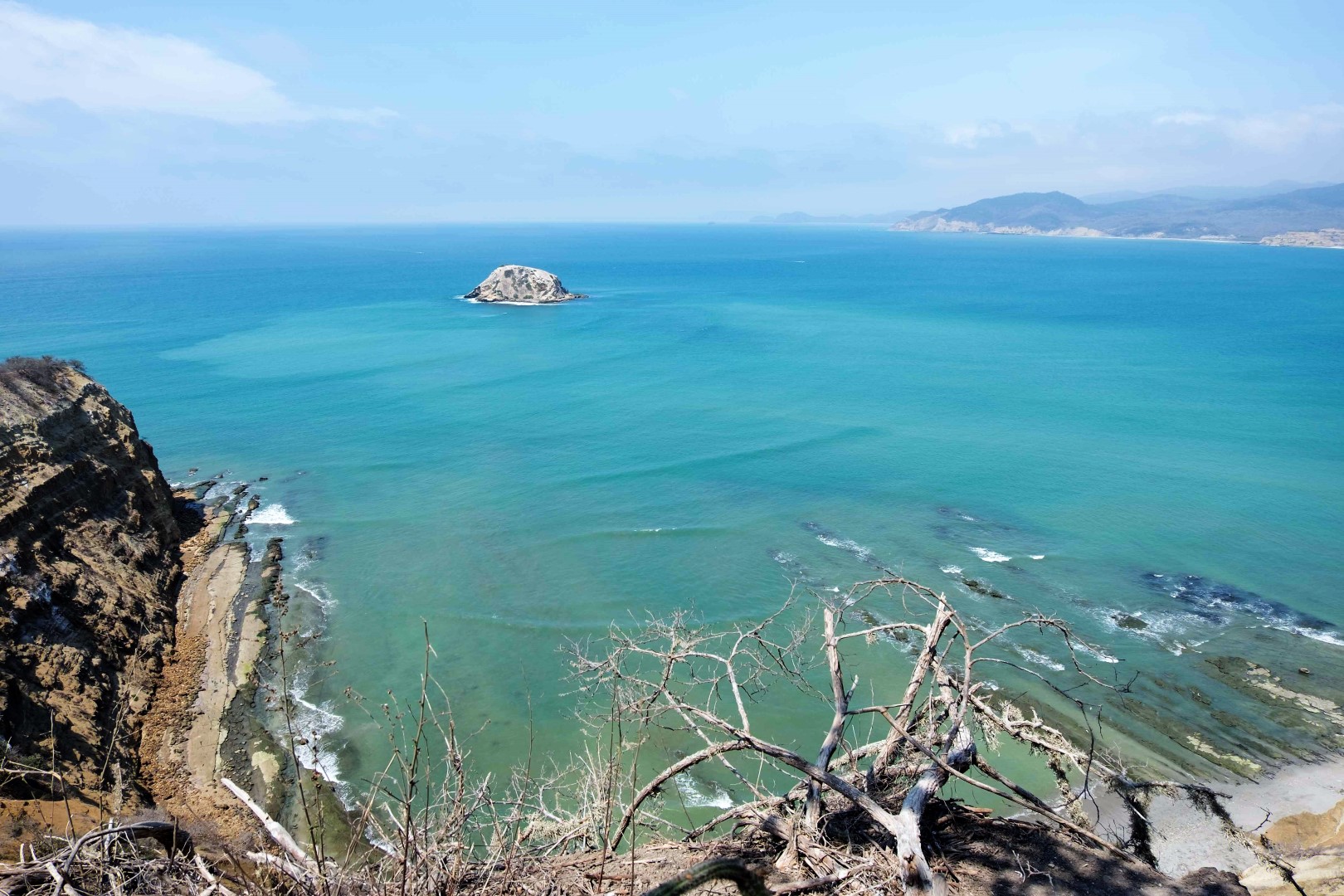
And so our beach tour began... We had decided to travel to Ecuador’s capital, Quito, along the Pacific coast. Travellers do not tend to associate Ecuador with beaches, yet the country has some of the most beautiful in South America. Guidebooks rarely give them much attention, so most people choose Ecuador’s Galápagos Islands or activities in the Andes instead. Naturally, this will not be a story about entertainment at five-star seaside hotels—that is not what we expect from this country. Having spent most of the Latvian summer (the South American winter) in the Andes with very few opportunities to swim, we did not need long to choose this unconventional coastal route. Our newly acquired taste for surfing was another very good reason.
To reach the coast, we first travel from Cuenca to Guayaquil. For a change, the bus journey is only four hours long, so we can make it in daylight. (To save time in Peru, we travelled overnight whenever a journey lasted more than eight hours.) At first, the road winds through the mountains, straight across Cajas National Park, and we enjoy panoramas of the Andes. Later, the landscape gives way to greener shades. At times, we also have to look sadly at the vast banana and oil-palm plantations. Although Ecuador is one of South America’s smallest countries, it ranks first in the world as the largest exporter of bananas. Look at the stickers on the bananas you buy in Rimi: Ecuador’s name will probably be there.
We make a grand entrance into Guayaquil across the long bridge spanning the broad Guayas River. Our plan is simply to change buses for Montañita, so the bus station is the only part of the city where we spend any time. It is quite a remarkable station too—built on several levels, with a shopping centre on the ground floor, it feels more like an airport. Most importantly, nobody is shouting out destination names, something we had grown very accustomed to in the bus stations of Peru and Bolivia.
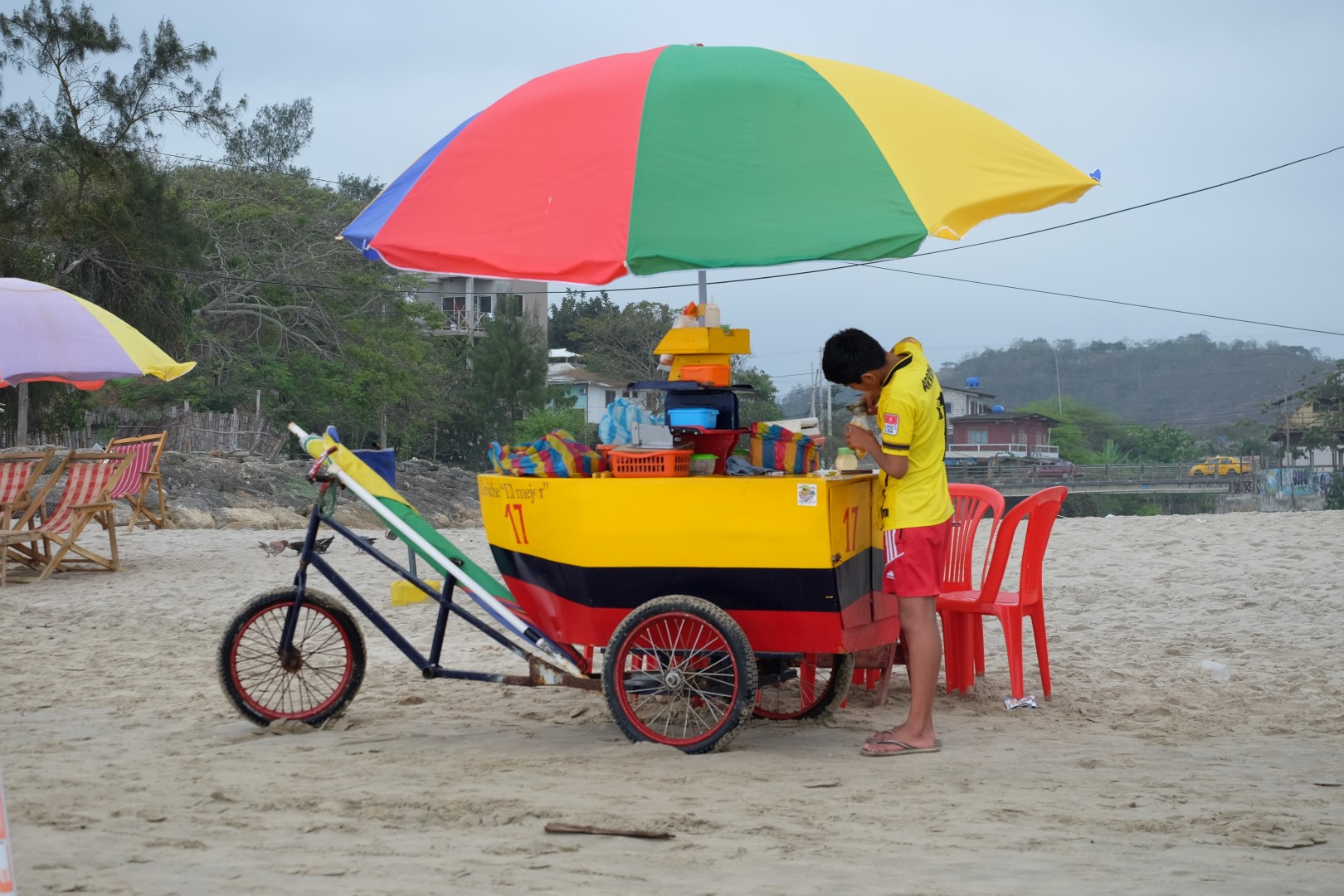
Montañita
We arrive in Montañita after dark. The town is small—more like a large village—and lives mainly from tourism. Thanks to its suitable waves, Montañita attracts surfers above all, along with people simply looking for a bohemian atmosphere. We see proof of this on reaching our booked hostel, where the receptionist hands us our room key to a soundtrack of guitar music and the scent of marijuana.
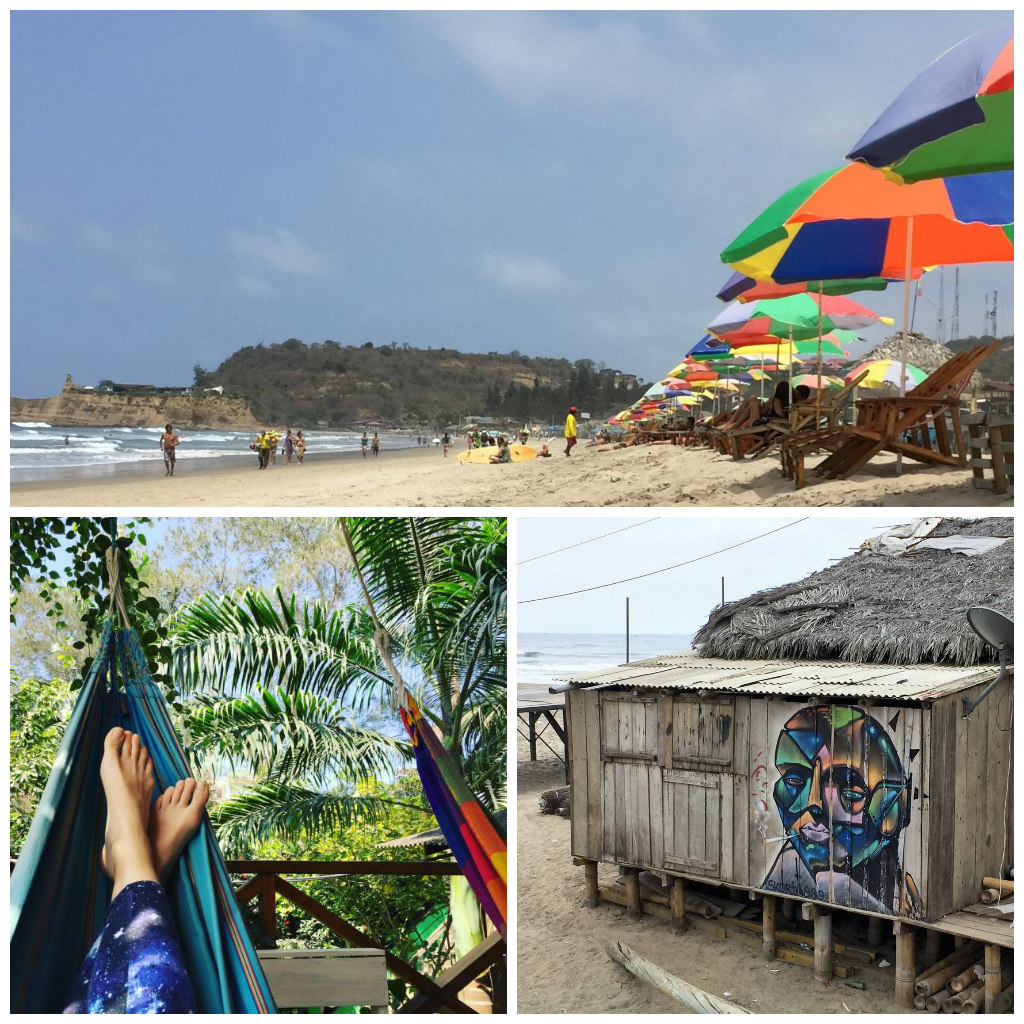
We had heard that Montañita was a party town, where travellers spend their days surfing and their evenings in local bars and clubs—and that light sleepers should bring earplugs. Accordingly, people who have visited Montañita fall into two groups: those who love it and those who cannot enjoy it at all. Partying is not really our aim this time, because we are a little tired after weeks of constant activity and travel. For quietly reading books in a hammock, our hostel, Moai, turns out to be an excellent choice. It stands across the river, a five-minute walk from the town centre, and we hear the parties only in the distance. The long-awaited beach is excellent too, with pale, soft sand. The next day, we extend our stay by another night.
The following morning, a tiny kitten dashes into our room and heads straight for the bathroom to drink the water left on the floor after our shower. Once it has finished drinking, it jumps onto the bed, curls up, and falls asleep purring. The staff later tell us that it is the hostel kitten, Sumo. It is far from the only creature living in and around the hostel. When Jānis returns from the shop, he calls me outside to see something. A large iguana is standing nearby on the riverbank and appears entirely unbothered when I approach to take photographs.
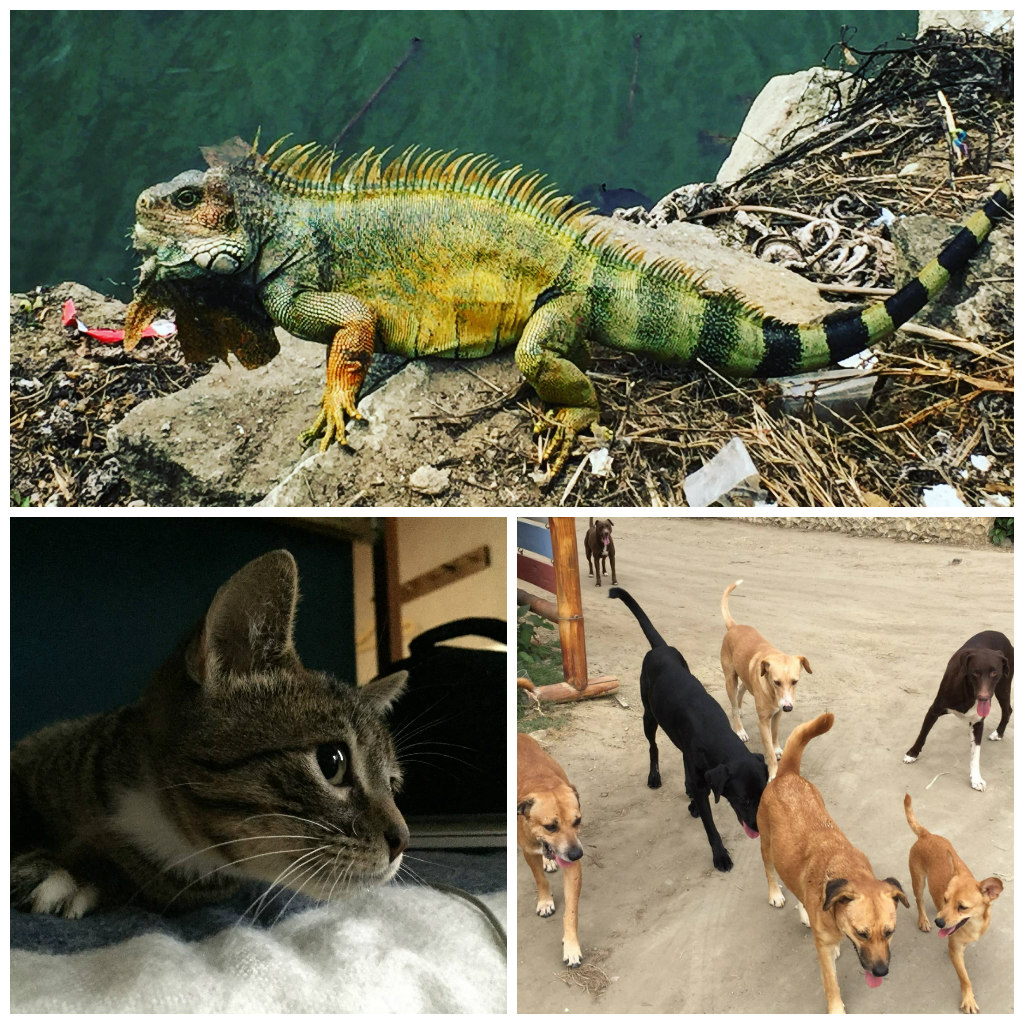
The place where we are staying has such a pleasant atmosphere that we decide to remain for a few more days. We have also befriended the hostel staff, a woman from Austria and a man from Chile. They too are long-term travellers, currently volunteering at the hostel in exchange for free accommodation. Beach season has not quite begun, which merely means cloudy weather and occasional drizzle, so there are few guests. As a result, we know everyone, and our evenings pass in quiet conversations in the hostel courtyard, with Sumo and Batman, the hostel cats, stretched across our laps.
One evening, we decide to try a cocktail in the so-called Cocktail Alley. It is quite literally an alley of cocktails: stalls line both sides of a pedestrian street, each with a table or two where bartenders serve drinks. The street is rather noisy because every bartender plays their own music. Prices and menus are much the same at every stall, so we take our time choosing a bartender and sit down with one offering happy hour—two cocktails for the price of one. Our bartender proves skilled at his craft, and on our way back to the hostel we “accidentally” wander into one of the local dance clubs. Admission and cocktails are free for women until midnight; men pay USD 10, which also includes free drinks. The music is tailored to tourists, with current popular songs chosen to get everyone moving. A shirtless man dances enthusiastically on stage, showing off his tattoos, and beside the stage is a small pool. Before long, the first gringos join him on stage; a little later, the first trio of men jumps into the pool. After plenty of dancing, we decide to return to the hostel before we begin wanting to jump in too.
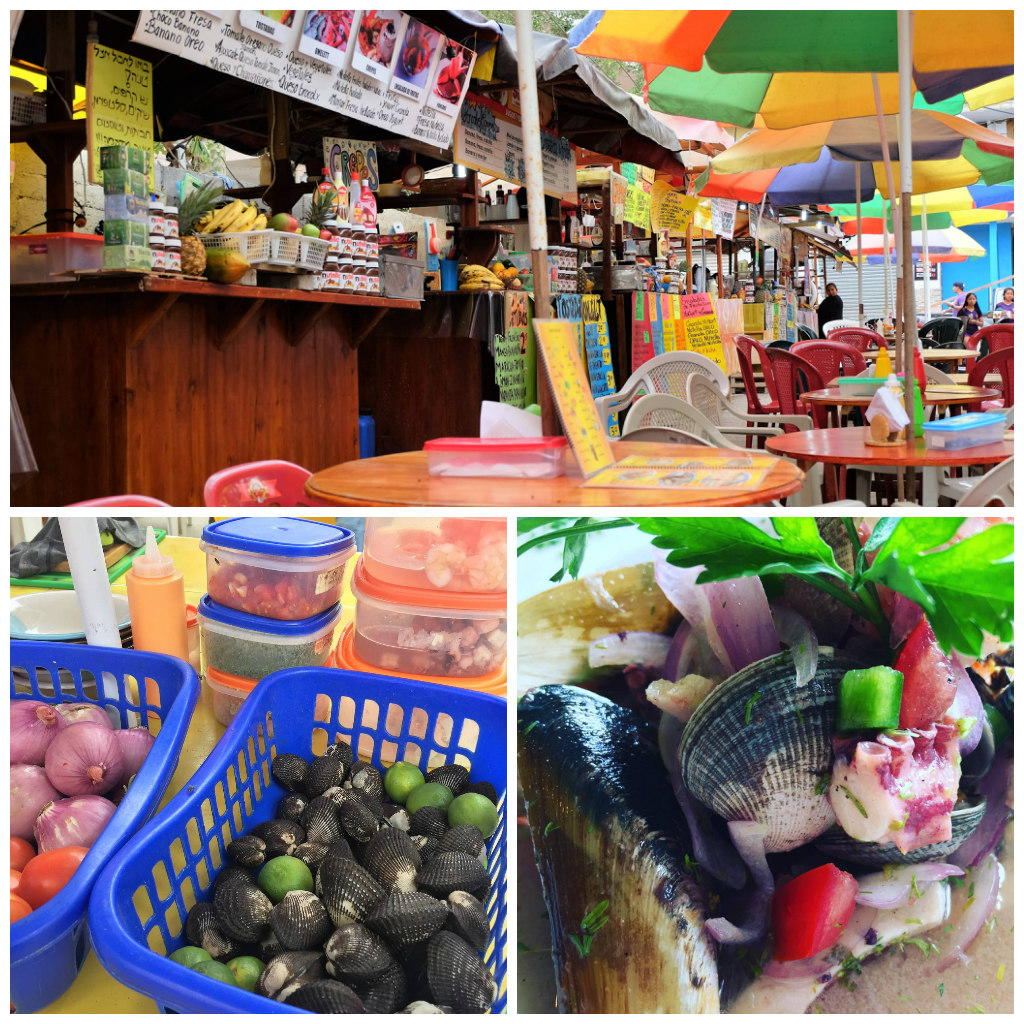
A beach of soft sand; our first sunburn; surfers; the prawn seller who walks past the hostel every morning shouting “camarón!”; party music drifting from town regardless of the day; men in Jamaican-coloured hats offering marijuana on the beach while hiding behind catalogues of temporary tattoos; delicious seafood; and the best pizza of our trip—these are the things Montañita means to us. After the Andes, we enjoyed spending time somewhere relaxed. Much of the credit goes to Moai and its people. They are the reason we stayed in Montañita for five days instead of the couple we had planned.
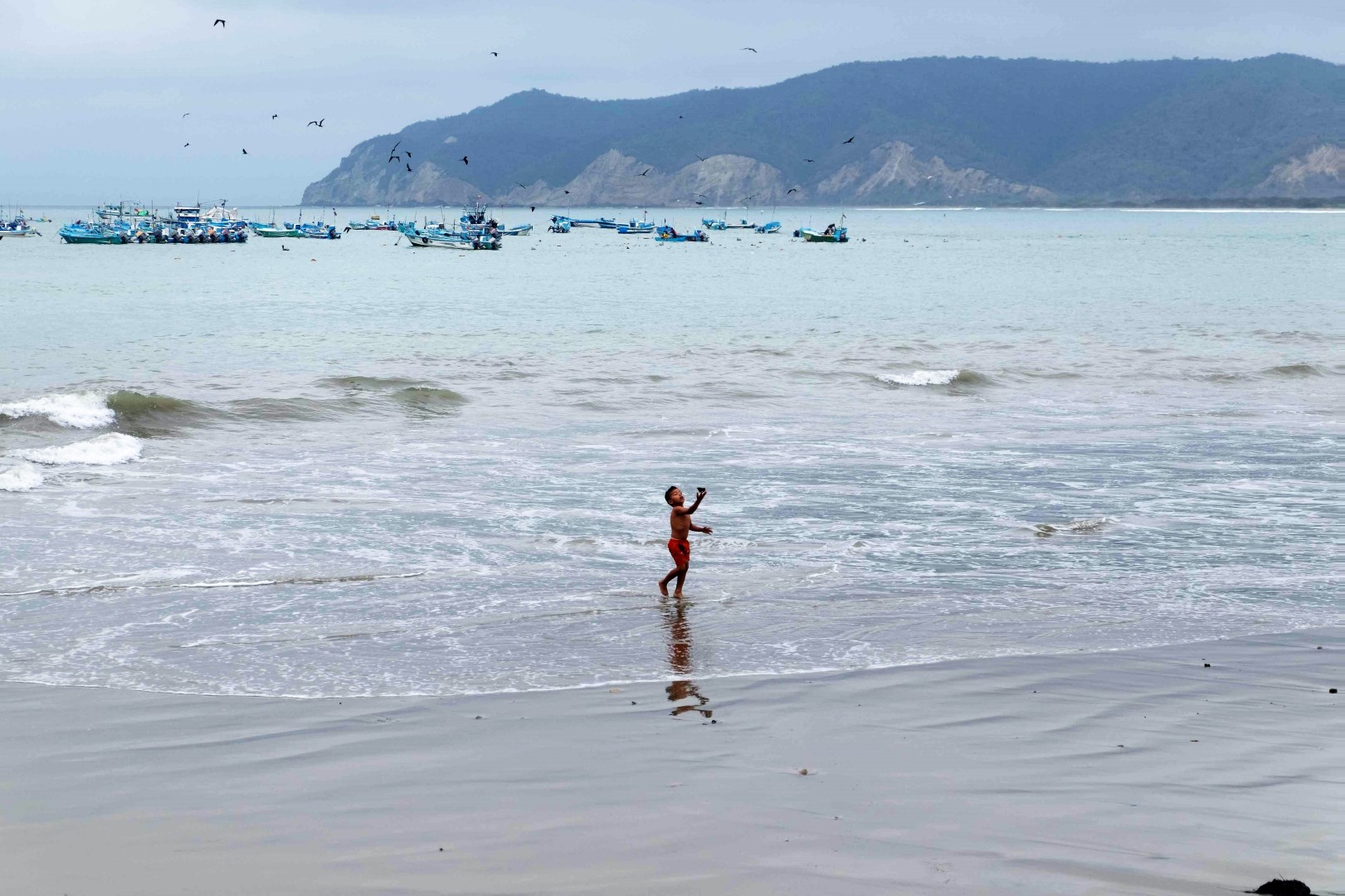
Puerto López
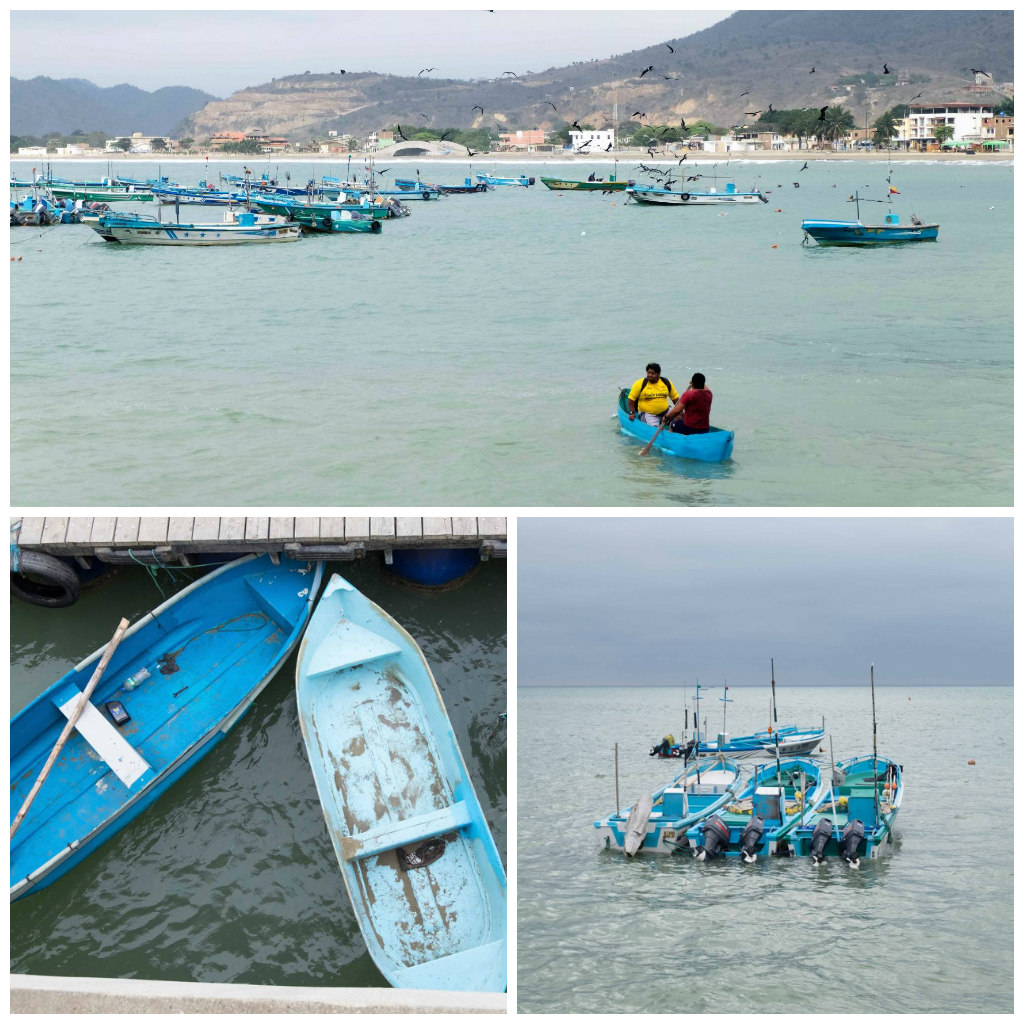
Our next stop is Puerto López, 40 kilometres from Montañita. The town’s principal sources of income are tourism and fishing. Several fishing vessels and wonderfully photogenic blue fishing boats can be seen at the landing. Pelicans, gulls, Nazca boobies, and other seabirds float on the water and wheel over the bay. The best time to see them is said to be in the morning, when the fishermen return and hundreds of pelicans fly around their boats trying to snatch a fish.
Most of the town’s activity takes place along the oceanfront, where shops, restaurants, tour agencies, and hotels are clustered. There is a lovely white-sand beach, but it is not managed particularly well, with rubbish visible both along the shore and in the water. We have not come to Puerto López for the town itself; it is the most convenient base for visiting Isla de la Plata and the beaches of Machalilla National Park. In the meantime, we have booked a room right on the promenade. After speaking to the hotel owner, we are given a large room on the top floor overlooking the ocean.
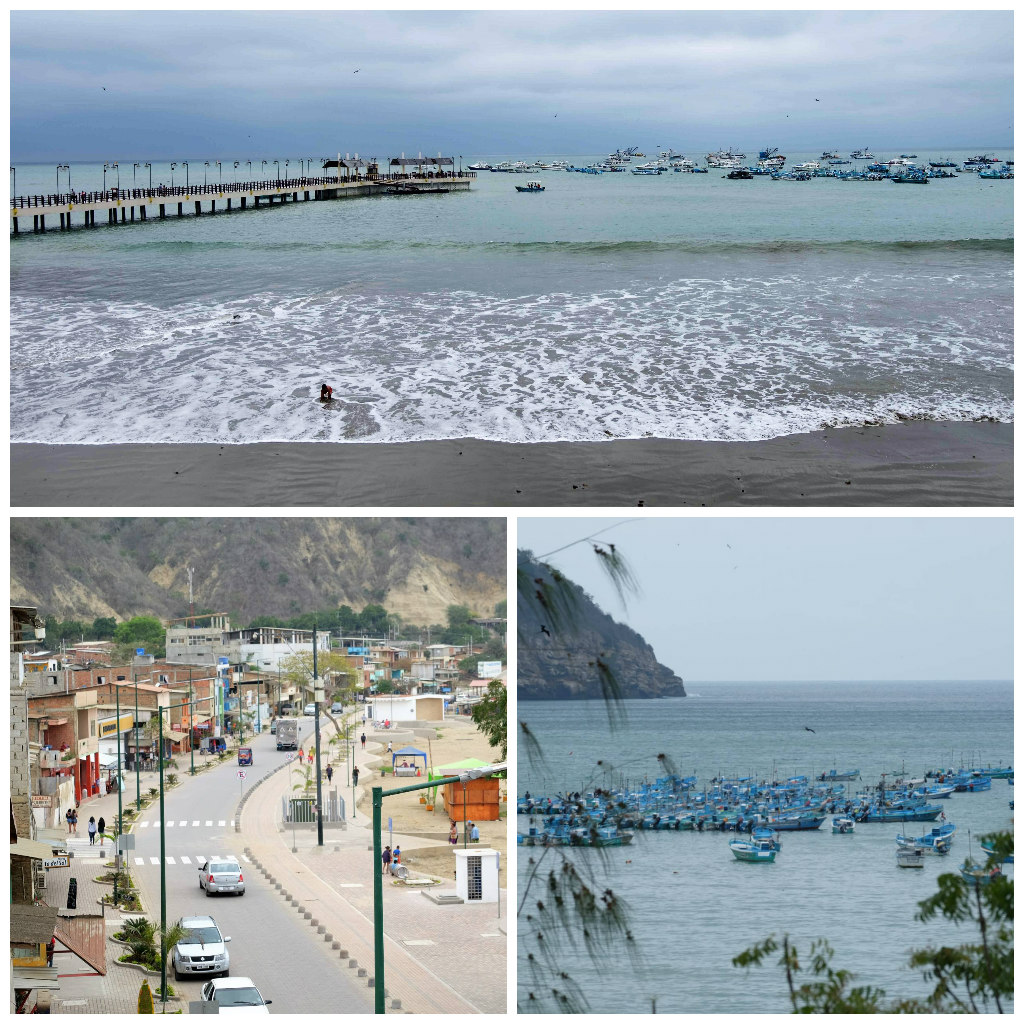
Locals tell us that Ecuador’s president will soon arrive for the official opening of the new promenade. From our balcony window, we watch the frantic final polishing: cleaning the promenade and touching up its flaws with paint. Against the backdrop of Puerto López, where most streets remain unpaved, the new promenade looks positively futuristic. There are wavy lines, decorative blue lights set into the pavement, and so on. It seems that continuously keeping the beach clean and tidy would have been a wiser use of the money, and would make a better impression on tourists than a futuristic promenade. Still, everyone is an expert when looking in from the outside.
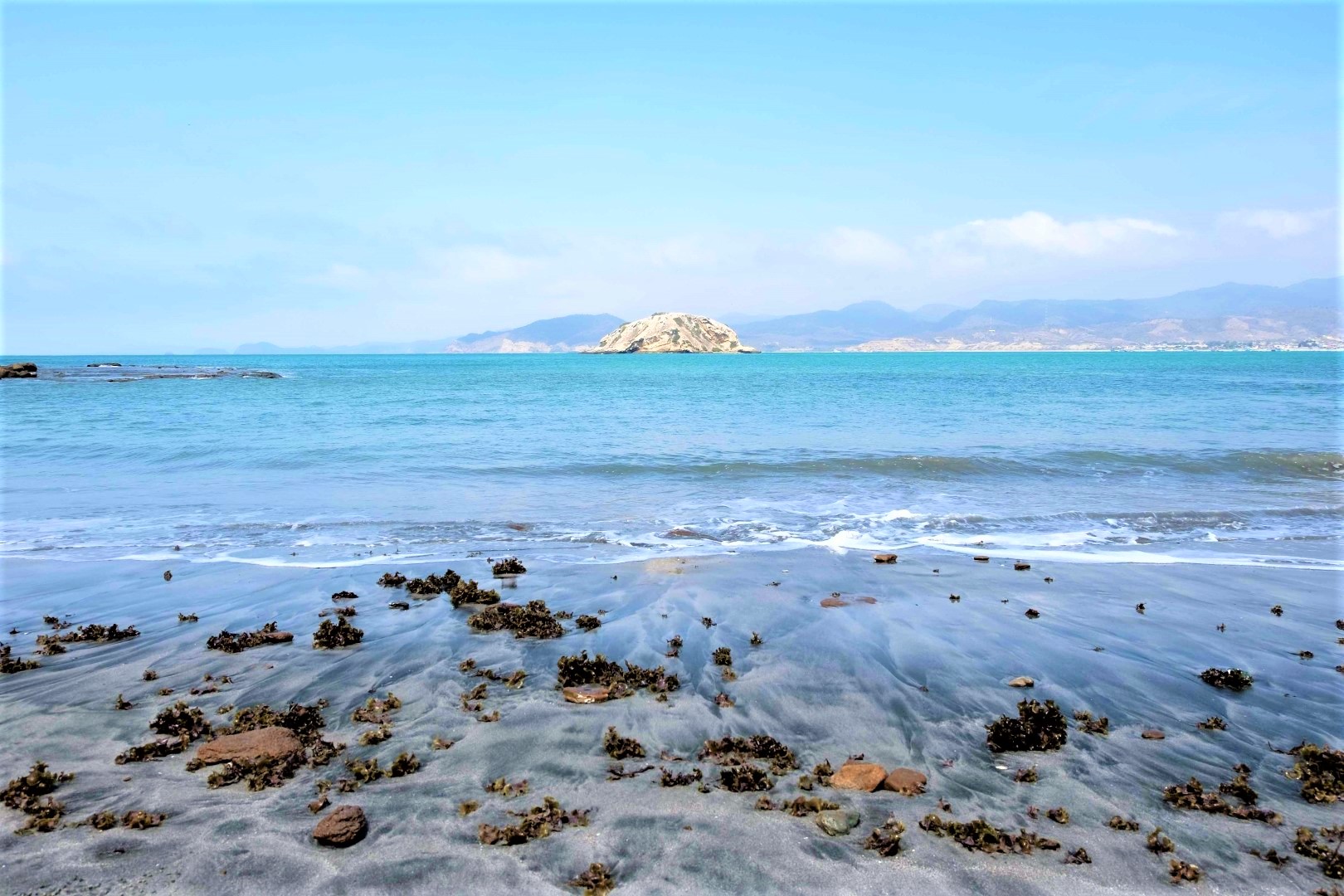
The beaches of Machalilla National Park
As it happens, on 15 November—my name day—we visit one of Ecuador’s most beautiful beaches, Los Frailes. It and two other secluded beaches lie within Machalilla National Park. Ecuador’s only coastal national park encompasses coral formations, two offshore islands, tropical dry forest, archaeological sites, and twenty hectares of ocean.
Getting there is very simple. We take a mototaxi to the bus station and board any bus heading towards the towns beyond the park. The journey lasts only twenty minutes. We are dropped on the main road near the park ranger station, where we register free of charge and begin a four-kilometre hike that will finish at Los Frailes beach.
It is very hot. We leave the dry gravel road for a path surrounded by seemingly parched shrubs and low trees. Tropical dry forest of this kind once stretched along the Pacific coast from South America all the way to Central America. Sadly, it has now been brought close to extinction, replaced by roads, towns, and plantations.
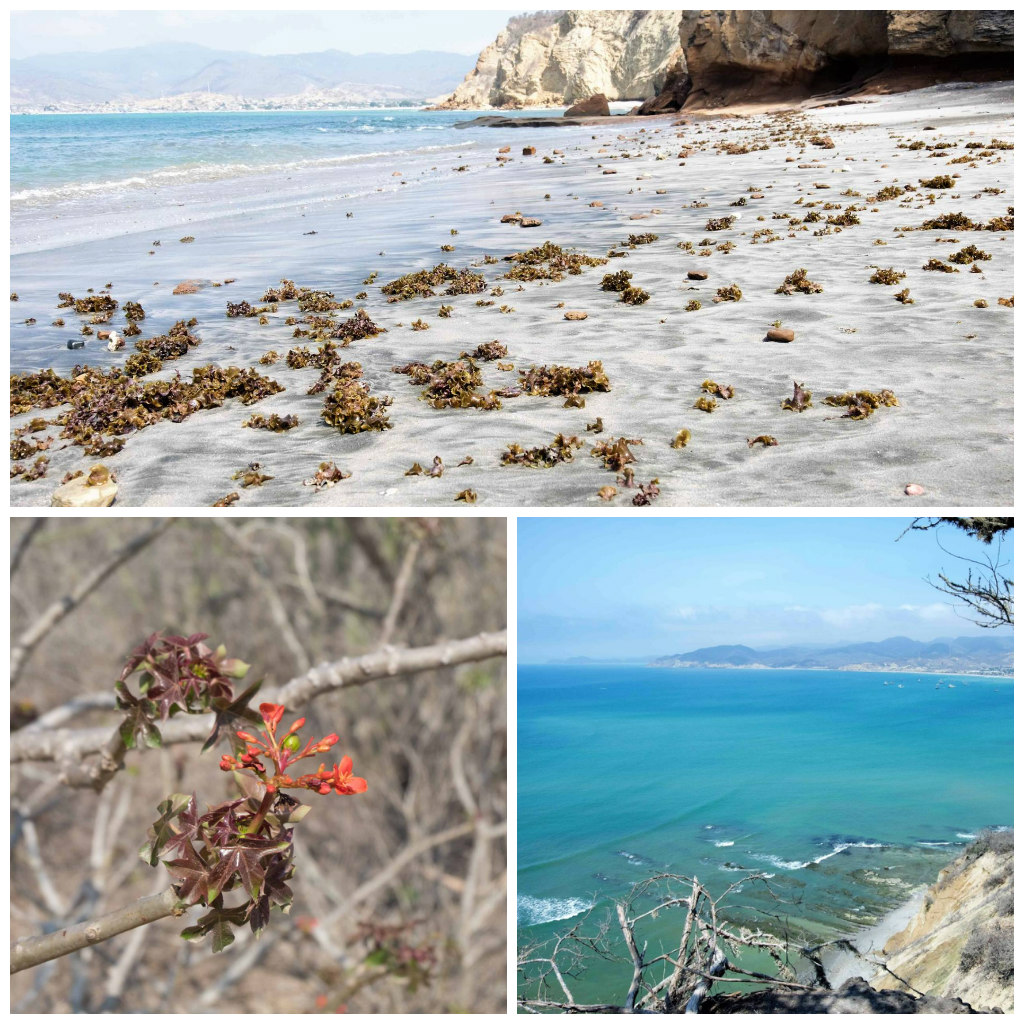
The first beach on the route is Playita Negra. It seems that the only visitors are us and hundreds of little crabs scurrying across the sand and deftly diving into the holes they have dug. There is a cave in the cliff beside the beach that we want to explore, but there we spot a couple changing clothes with their bare bottoms in the air. We decide not to disturb them. Swimming at Playita Negra is forbidden because of strong underwater currents, so we simply continue.
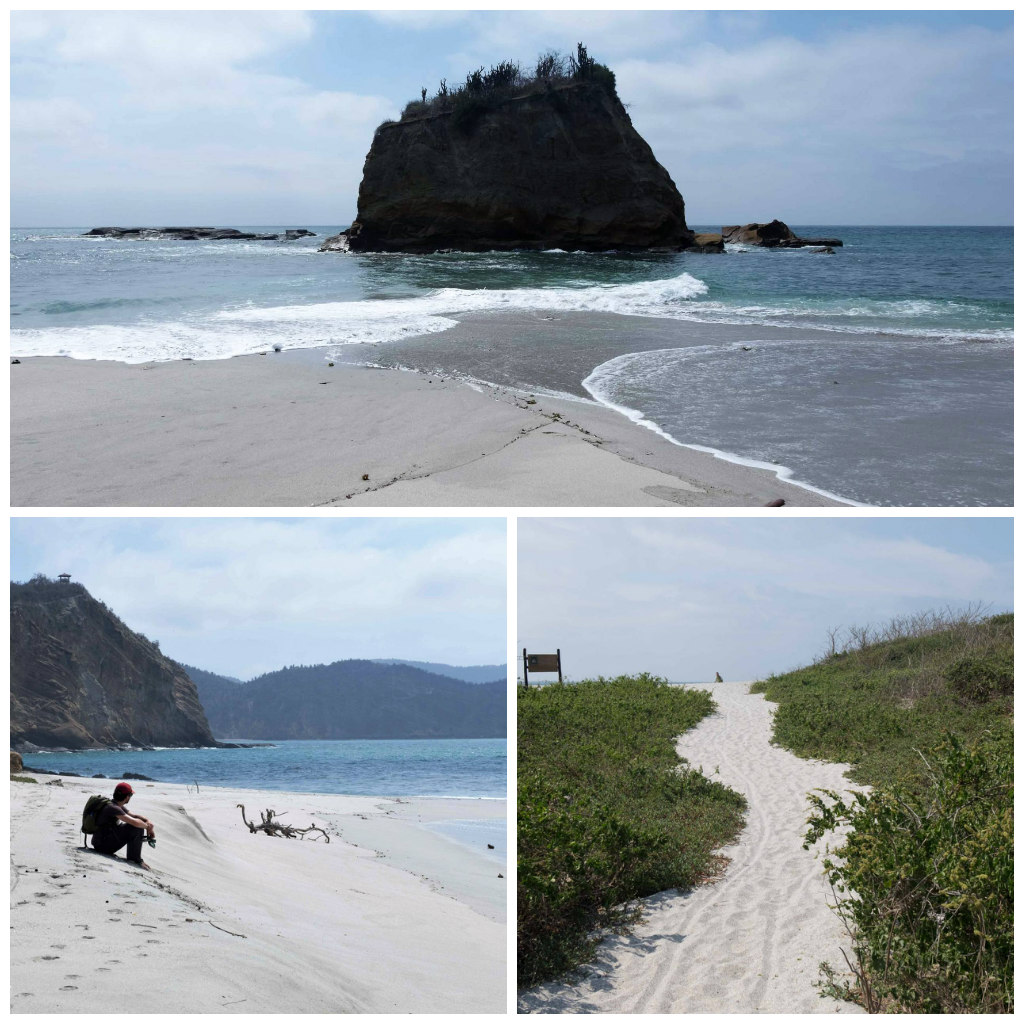
Next, we reach Playa Tortugita. Despite the beach’s name, no turtles are in sight, although little crabs are once again running everywhere. This beach is also dangerous for swimming, as powerful waves crash against the rocks in the water. An island close to shore has created a headland on the beach; we name it Mini Cape Kolka and carry on.
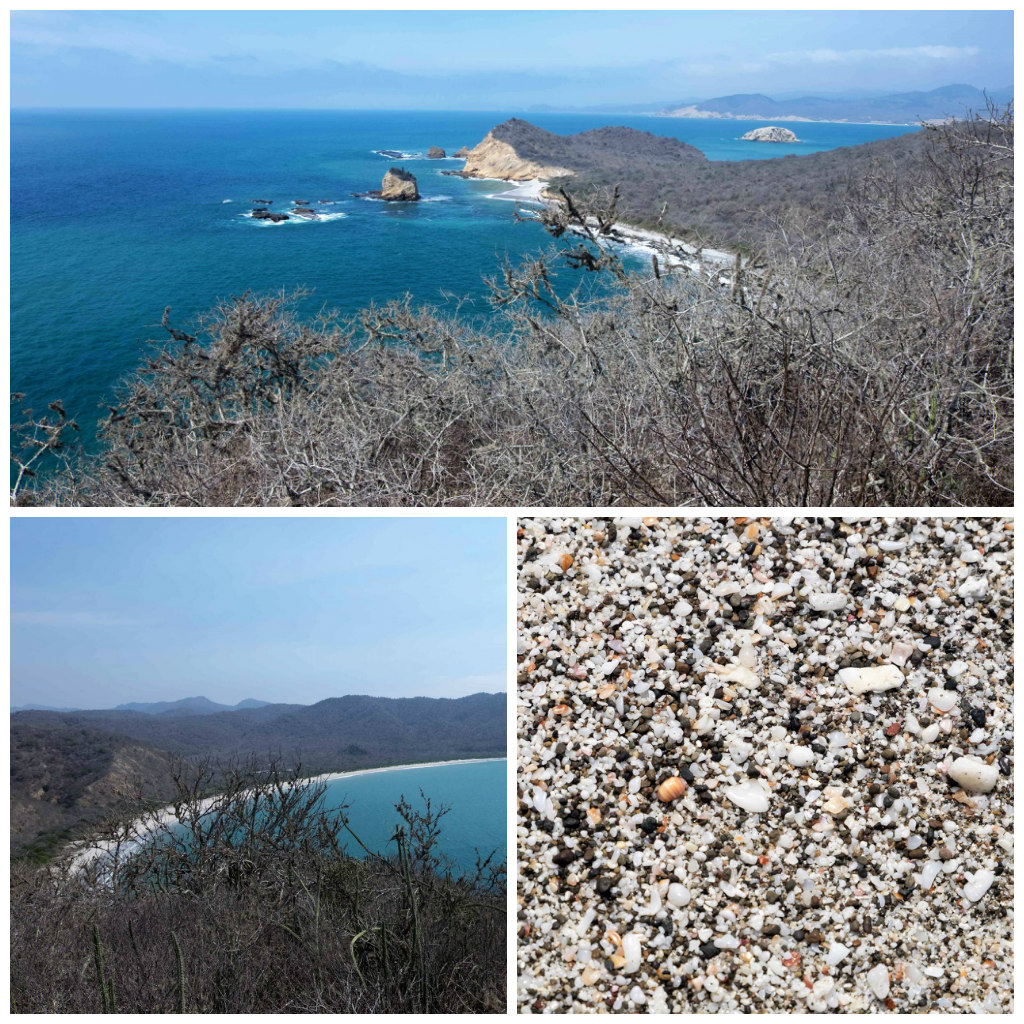
We round the cliff, and Los Frailes beach appears before us: a long stretch of golden sand beside blue-green ocean. Jānis cannot wait to swim, so we settle down near the beginning of the beach. In the distance, we can see other people enjoying the sun and water. Here too are the amusing little crabs, so nimble that taking a proper photograph proves impossible. While I swim, Jānis watches an argument between two members of the species fighting over the same hole in the sand.
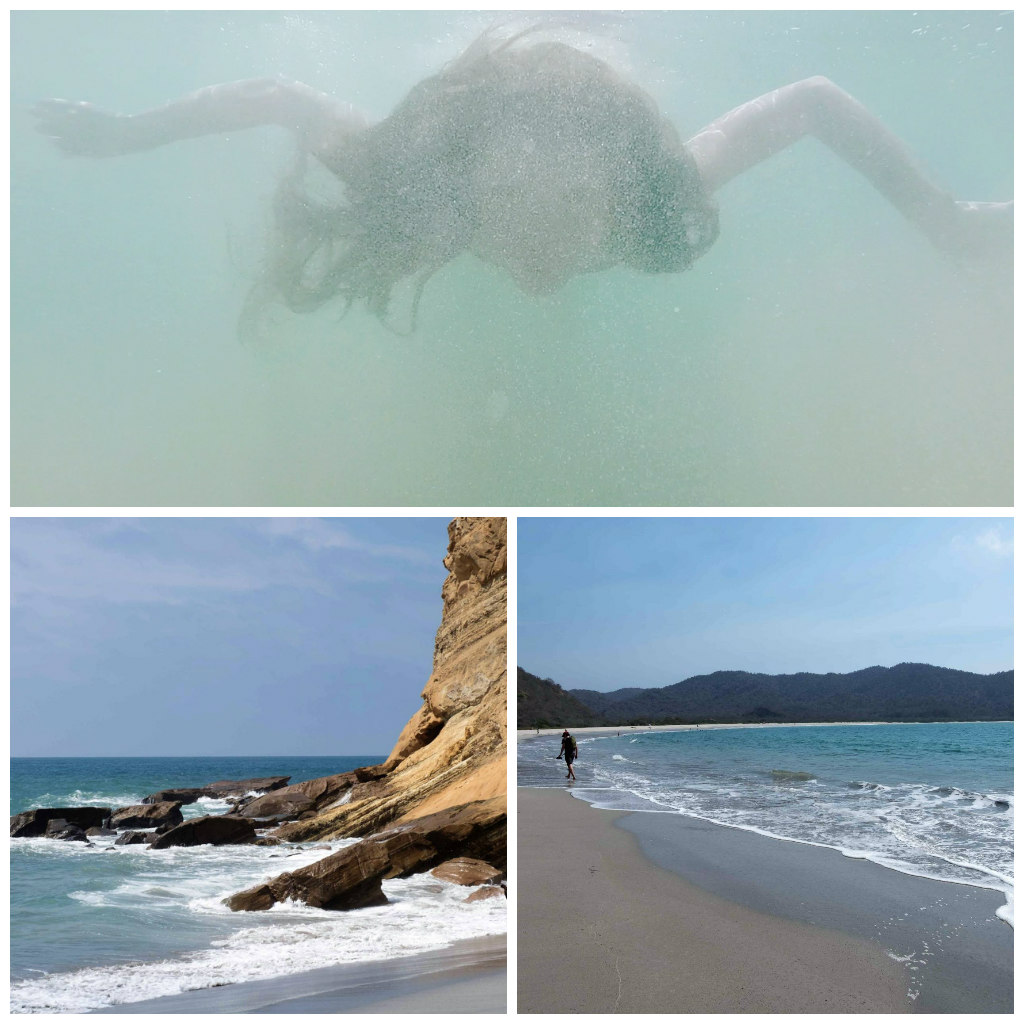
For the return to the park entrance, we choose the gravel road, where it is possible to hire a mototaxi. We find the only one in sight, fitted with a wooden trailer, and that is where we are seated. As we rattle along the bumpy road, we exchange glances at every louder noise, each one suggesting that this contraption will definitely break one day. Fortunately, it does not happen during our ride.
One final task remains for the day: getting back to Puerto López. We wait beside the main road for a bus heading into town, but none appears for a good twenty minutes. Then a car stops and its driver offers us a lift to Puerto López. Perfect! Inside are three men from France touring Ecuador’s beaches in a hire car. With other travellers, a subject for conversation is never hard to find, and as we chat, the drive feels only a few minutes long. Better still, they happen to drop us directly outside our hotel, because theirs is next door.
We have spent three nights in Puerto López in order to visit Isla de la Plata and Machalilla National Park. It is time to move on.
Canoa
Our next destination is Canoa, a town of fishermen and surfers. Agnese from Austria, whom we met on Isla de la Plata—the Silver Island—told us that she used seven different buses to travel from Canoa to Puerto López. After asking at the bus station, we choose the route Puerto López–Portoviejo–Canoa and reach our destination with two buses rather than seven. Neither leg was supposed to last more than two hours, yet we arrive only after about six. On the bright side, we have watched a Chinese action film on each bus, listened to loud Latin music, and been fed as well. Whenever we pass through a town, vendors leap aboard with snacks—empanadas, fruit, biscuits, crisps, and so on—or drinks, selling perfectly good food for very little money.
We reach Canoa at sunset. We have not booked anywhere to stay, so we wander along sandy roads asking room prices. The town feels bleak: hostel courtyards are empty and places to eat are closed. There is no sign of surfers or the atmosphere that usually follows them.
We find a hostel that seems to contain the handful of visitors who have come to Canoa at all. We are shown a six-bed room that smells of mould, contains a motorcycle, and has a roaring refrigerator built into one of the doors leading directly to the hostel bar. Oh well, it will do for one night.
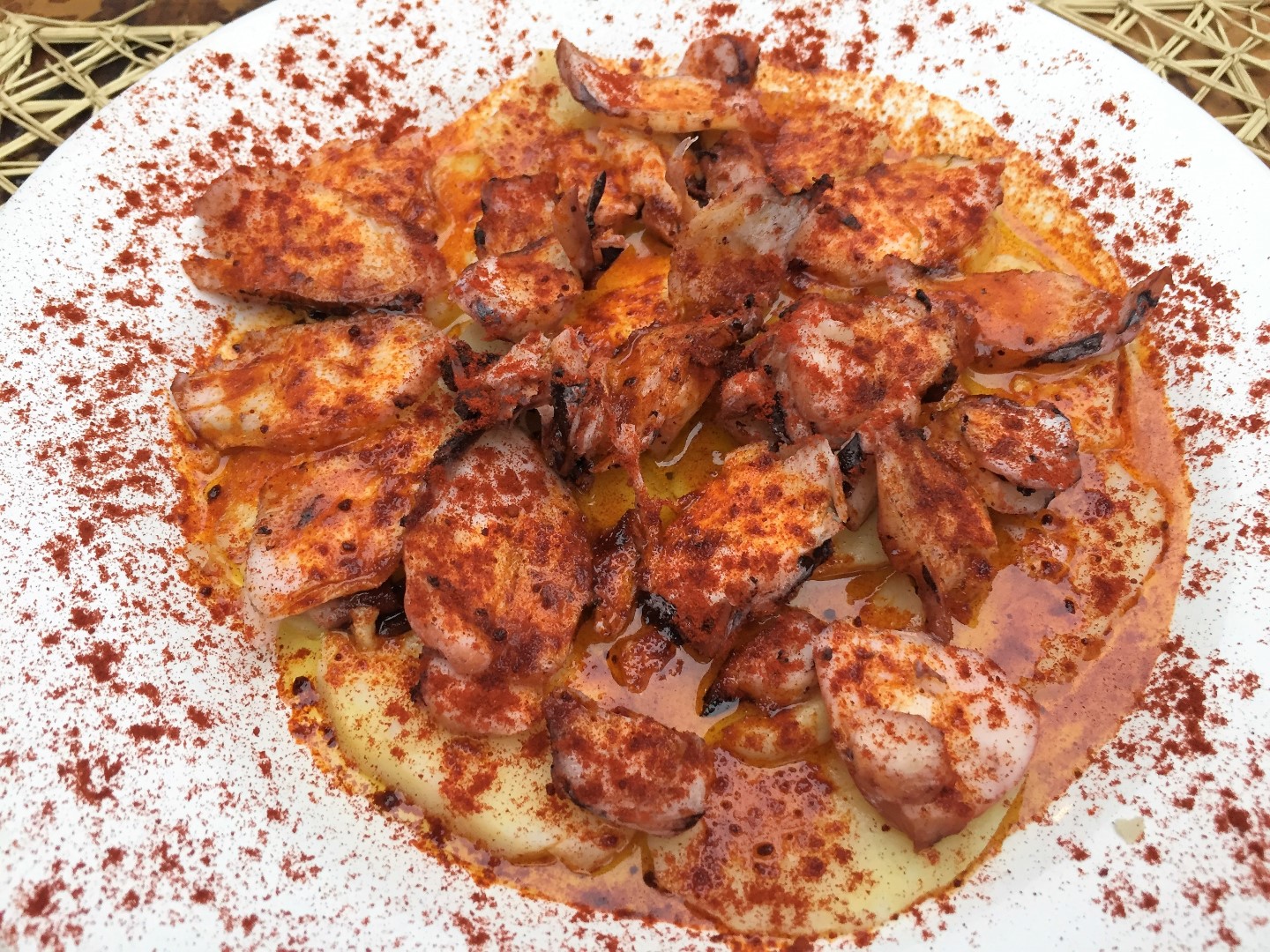
We go in search of dinner and find what appears to be the only grand building in town, which also happens to contain a restaurant. We meet the owner, who moved to Ecuador from Spain. The menu shows a clear Spanish influence, as we confirm by trying octopus with potatoes in olive oil. It turns out that there is a hotel in the same building and its rooms cost little more than the one we chose. When we return to our hostel and say that we would prefer to sleep elsewhere after all, the staff member kindly agrees to refund our money. We collect our backpacks and return to the restaurant building.
This hotel has table tennis, which becomes the evening’s main entertainment. We have already decided to leave the next day without trying Canoa’s beach. Only a few days later do we learn why the town felt as though it were still under construction and lacked the atmosphere of a seaside resort. Seven months earlier, Canoa was among the towns struck by a powerful earthquake. It is one of the places that has still not truly recovered from that terrible event.
The next morning, we leave for Mompiche, a remote coastal town on which we are placing great hopes in our search for the perfect beach. Whether it proves to be the one will be revealed in part two.