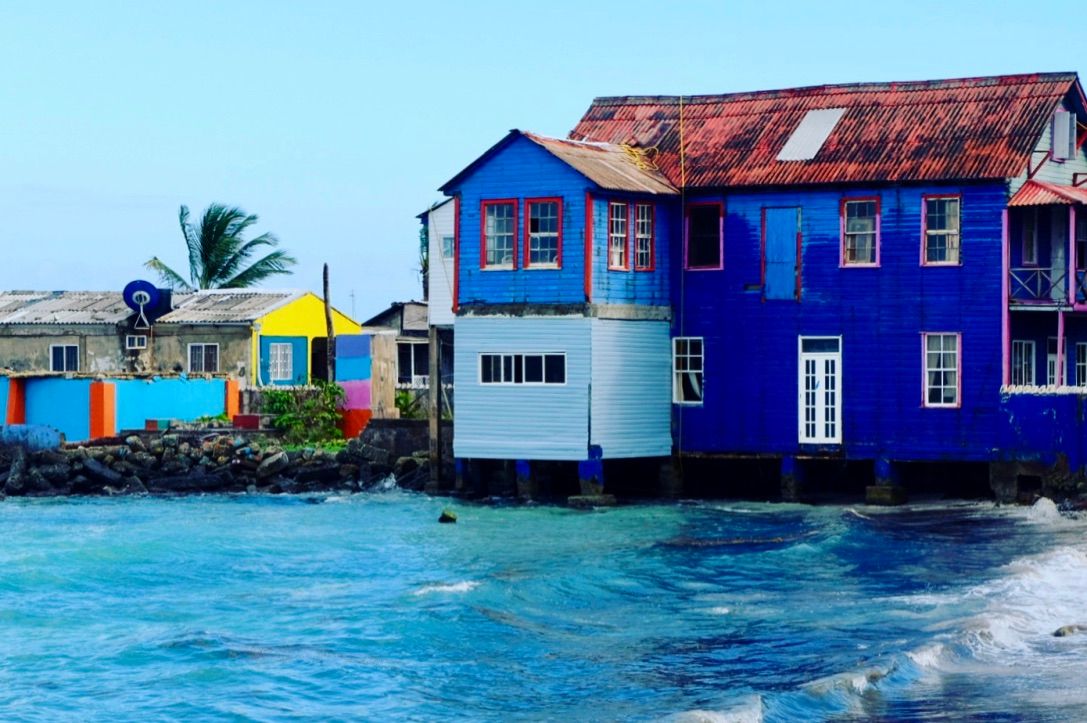
We have already been in Colombia for three weeks, and Christmas is approaching. We will have four days off, so a week before the holiday, I begin looking for somewhere to go. I do not have to search far: the local low-cost airline VivaColombia has relatively inexpensive Christmas flights (USD 70 per person) to Colombia’s San Andrés and Providencia archipelago. It lies in the Caribbean Sea, 110 kilometres from the coast of Nicaragua and 800 kilometres from mainland Colombia. When we leave, all I know is that Caribbean beaches, coral reefs, shipwrecks, tales of pirates—including Captain Morgan, who once had a base there—excellent diving, reggae, and a Creole language await us.
Two days before Christmas, we set off. The airport is in the midst of festive commotion: a green elf is rousing the crowd, the airline’s ground staff are dressed for the season, and cheerful decorations are everywhere. At one point, Father Christmas appears and cheers sweep through the airport. These festive characters even escort us as we walk towards the aircraft. Laughing, I tell Jānis that the elf shouting into his microphone has already managed to irritate me, so it is a good thing we are about to fly away.
I have been assigned the middle seat. Jānis sits to my right, while a teenage boy has the window seat to my left. As we wait through all the preparations, the boy nudges me and points to the stairs being removed from the aircraft. A moment later, he nudges me again and gestures towards some airport service vehicle. Soon afterwards, he speaks to me. He asks whether we are from Spain because he heard an accent in our Spanish. We explain that we are actually from Latvia, which surprises him. We introduce ourselves. His name is Juan Pablo.
Take-off begins. Juan Pablo is visibly nervous, crosses himself, and whispers to me, “It’s dangerous, isn’t it?” Once we have climbed fully—about ten kilometres into the air—loud music begins to play, women rise from their seats, step into the aisle, and start singing. Suddenly, the noisy elf from the airport appears in the aisle, along with the other characters we saw there. The entire Christmas troupe is aboard our plane! Before long, Father Christmas appears too. Juan Pablo gives him an especially warm greeting as he passes, and the boy’s eyes sparkle with happiness. The flight attendants hand out gifts prepared by VivaColombia. The party grows until the aisle is filled with festive characters and passengers dancing together. Colombians can turn even Christmas into a proper party!
It turns out that Father Christmas is Juan Pablo’s brother. The teenager tells us that two more of his brothers are currently aboard other VivaColombia flights, also playing Father Christmas. The brother on our plane is an actor and a footballer in Colombia’s national league. The spirited airborne party is an extraordinary experience in itself and makes our first journey to the Caribbean special. Meeting Juan Pablo and hearing about his Father Christmas brothers is the cherry on top.
We land on the island shortly before midnight and walk to the accommodation we booked. We have brought only our small backpacks, and the airport is almost in the town centre, making our arrival remarkably simple. The scent of the Caribbean hangs in the air, the sea can be heard breaking nearby, and we cannot wait to see the “Sea of Seven Colours” in daylight.
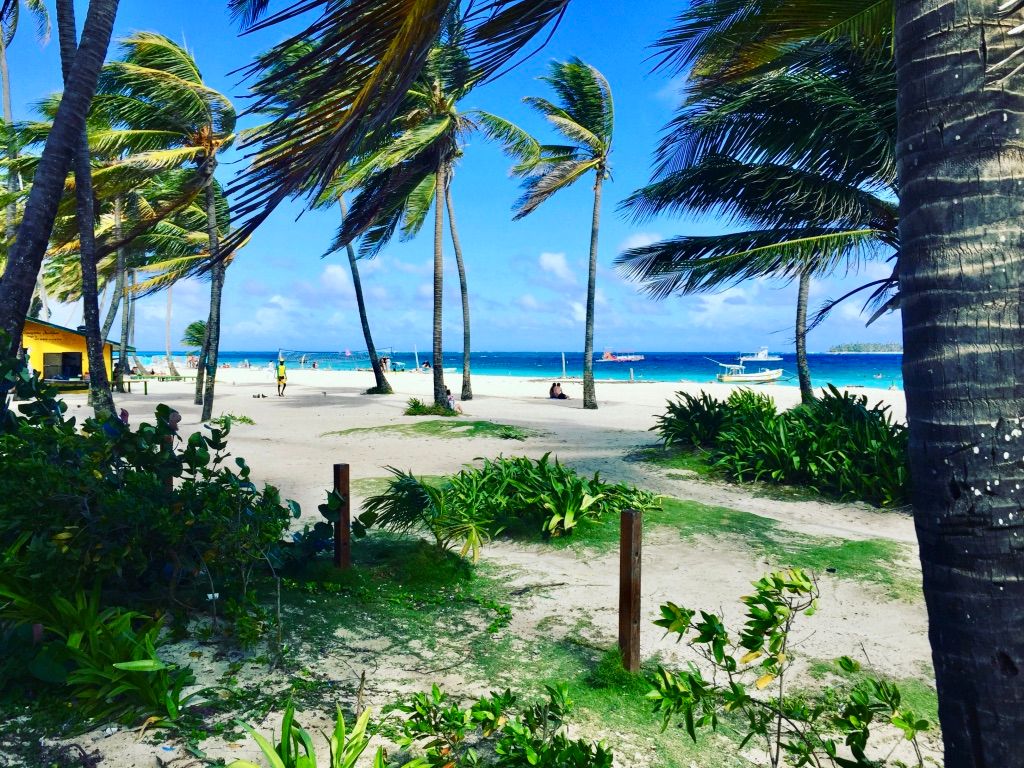
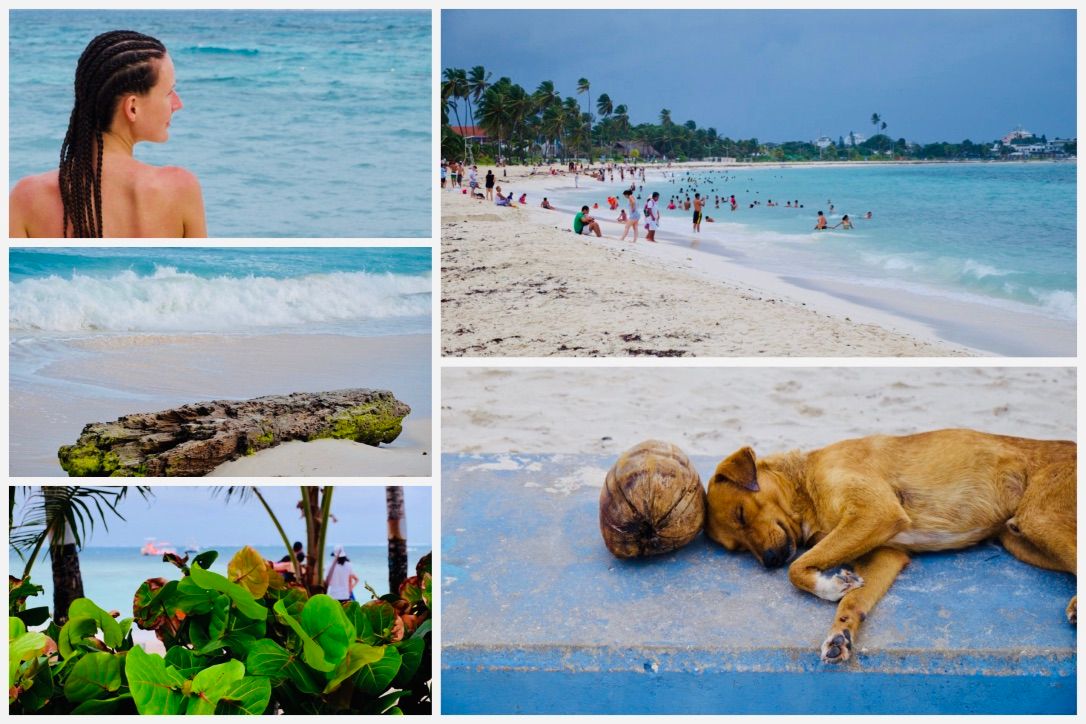
The next morning, walking along the coast to hire a scooter, we finally see the Caribbean Sea for the first time. I have seen many seas and many shades of water, but I must admit that the Caribbean—with its turquoise colour—is the most magnificent so far, at least to me. The island covers only 27 square kilometres, so a scooter or golf buggy is perfectly sufficient for exploring it. At the hire shop, a helpful employee named Angela assists us. We begin speaking Spanish, but at some point discover that English would be easier for both sides. And there it is: our first encounter with the English-based Creole spoken by the island’s Raizal people. This seems the right moment for a brief look at the island’s colourful history, which explains the origins of Raizal culture and why life here differs from mainland Colombia. The island’s first inhabitants may have been a group of Dutch colonists in the sixteenth century. In 1631, arriving English settlers expelled them and colonised the archipelago. The English brought enslaved Black people from Jamaica, who themselves had been taken from Africa, and began cultivating tobacco and cotton. The Raizal people, then, are the descendants of the English settlers and those they enslaved, and they speak an English-based Creole. For almost three hundred years, Raizals formed most of the islands’ population. Since 1928, when Colombia gained sovereignty over the archipelago, they have become a minority and now account for one third of its inhabitants. Because of unemployment on the islands, many have moved to mainland Colombia.
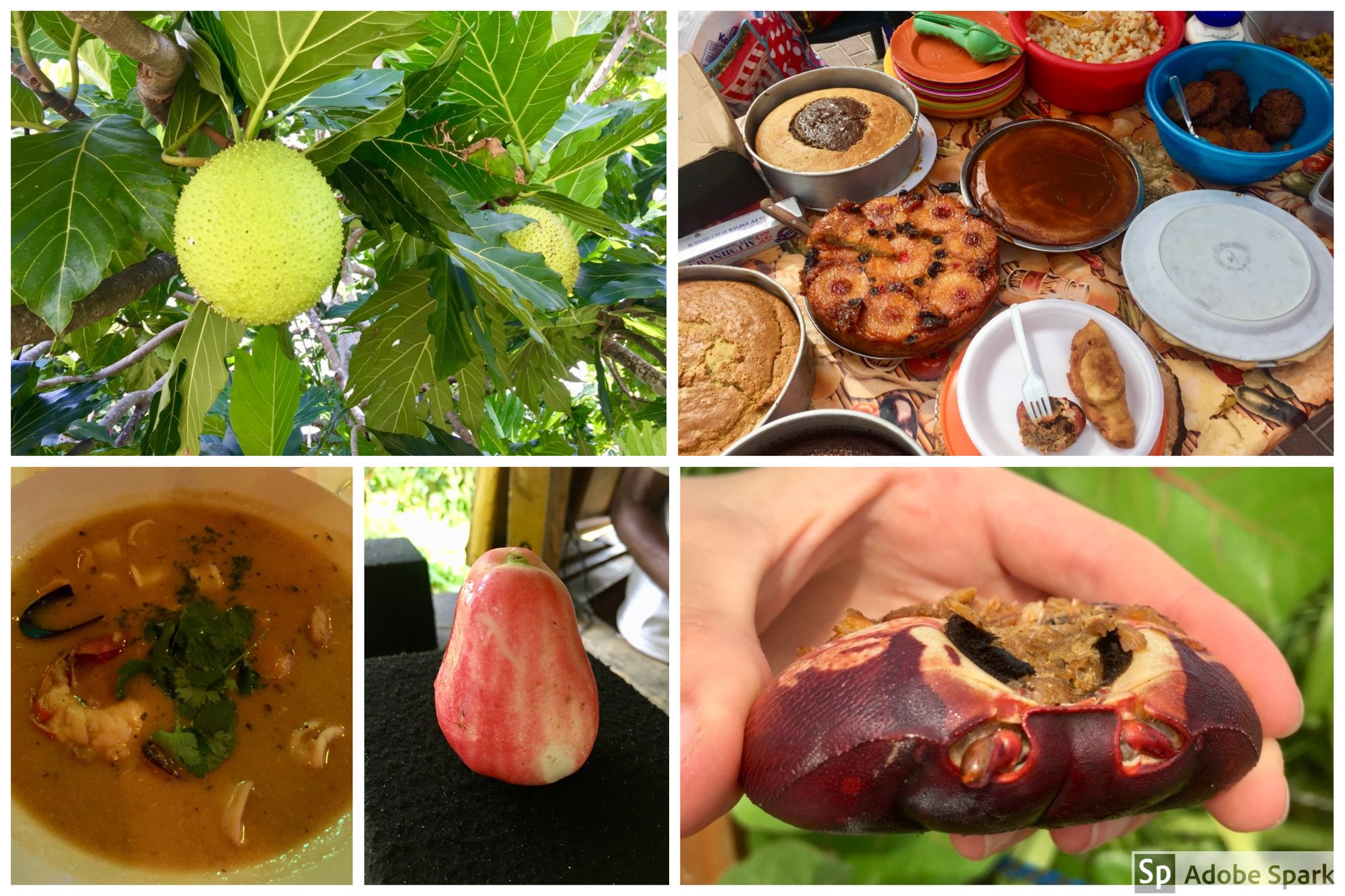
With the scooter keys in hand, we immediately decide to circle the island. The entire loop takes only an hour along thirty kilometres of paved road. We begin on the western side, which is less populated, with the road running continuously beside the sea. I agree with Lonely Planet: it is a scenic ride. We stop every so often to take photographs. In one tree, I spot a fruta de pan, or breadfruit, the first I have seen in Colombia—the green fruit in the corner of the picture. Along the road are occasional food stalls and cafés selling seafood such as stuffed crab or rondón, a traditional Afro-Caribbean dish made with seafood, coconut milk, plantains, vegetables, and spices.
Christmas is tomorrow, so we have booked a room for the next two nights in the town of San Luis on the island’s eastern side. Because we made the reservation only this morning, we chose from what remained within our price range. First, we wanted somewhere with a kitchen so we could prepare our own Christmas Eve dinner. Second, it was cheap—EUR 32 for two nights. Third, Tino’s Place had excellent reviews. As a bonus, photographs of the room showed curtains printed with Bob Marley, making it stand out from the other options.
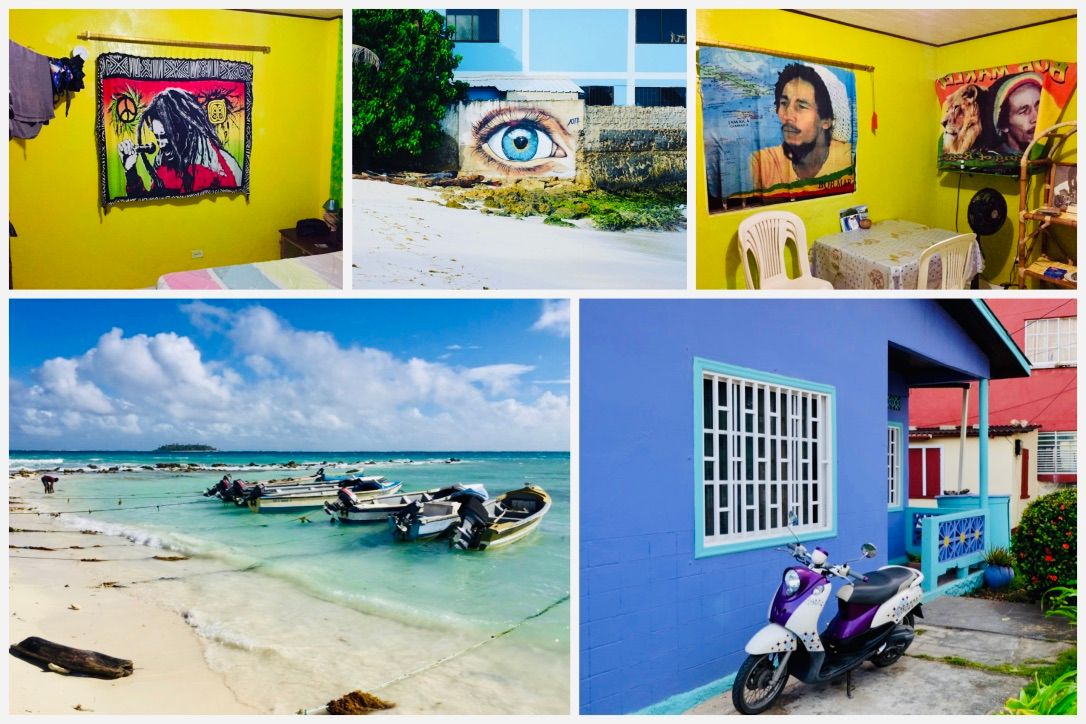
When we reach San Luis, there is no sign of the Colombian tourists who fill San Andrés town, the island’s largest settlement, which shares its name. We park the scooter and circle among the houses because we cannot find our booked Tino’s Place. A group of local young people stands outside a shop, watching us and smirking. They have reason to: we are the only people on the island riding a scooter in helmets. I hear the boys speaking Creole, walk over, and ask in English whether they know where Tino’s Place is. The smirking stops; they immediately begin helping us find the owner, Tino. I feel that we have changed from ridiculous tourists into honorary “locals”, apparently because we are staying with Tino. I see moments like this—the shift from an “outsider” to “one of us”—as one of travel’s rewards. They make you feel that you have made at least some of the right choices in trying to integrate into the culture around you, allowing yourself to experience it more deeply: transformed from a stereotypical ordinary tourist into a tourist-local. Here comes Diane, the owner of the house and Tino’s wife. She gives us a room in a little building beside their home, where the promised Bob Marley curtains sway gently in the windows. As we talk, it emerges that Diane is from Germany. Her life on the island began many years ago when she came on holiday with her mother, met Tino, fell in love, and never went back. I used to think such life stories appeared only in invented romantic films. Yet here in San Andrés is a ready-made documentary plot, should anybody feel inspired to make one. Tino is a colourful character too. That evening, he and his wife come to sit and talk with us. He is originally from Jamaica and a Rastafarian by conviction. Both Tino and his teenage son wear enormously long dreadlocks. Diane tells us that their son inherited his blond hair from her; twisted into dreadlocks, it draws particular admiration from locals. As is well known, smoking ganja—as Rastas call it—is an important element of Rastafari culture. Tino explains that although it is not legalised in Colombia, the authorities tolerate its use on the island, especially among Rastas, much as they do in Jamaica. We end the evening with Tino’s words, “They can take us out of Africa, but they can’t take Africa out of us,” and go to bed.
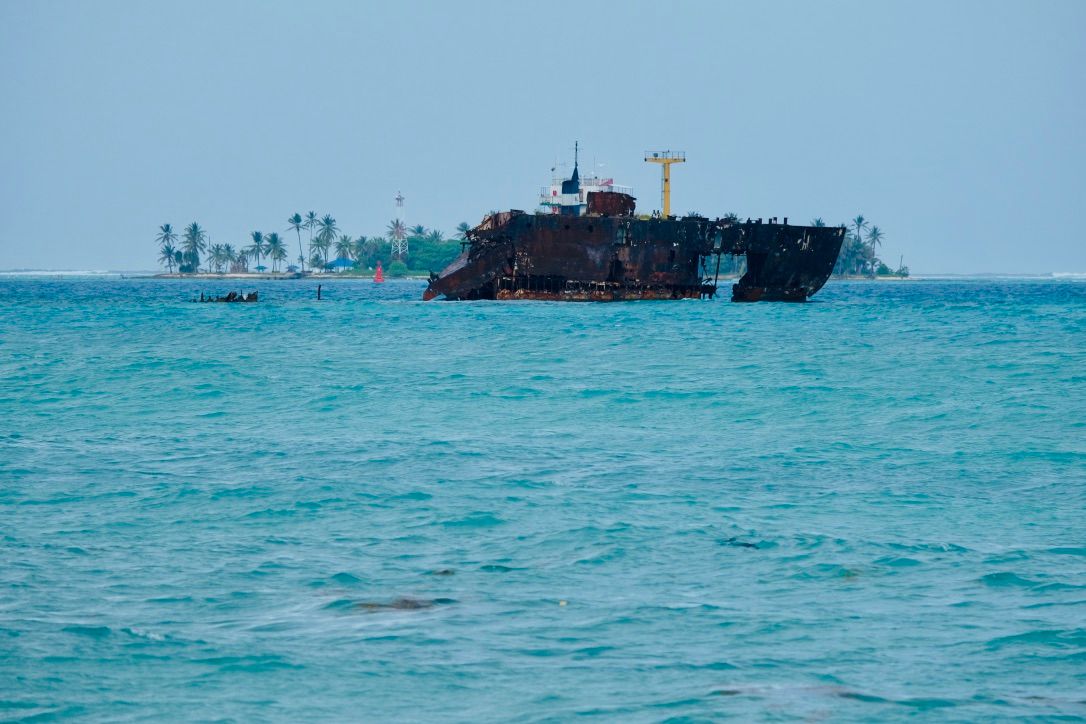
On the morning of our second day, we are booked on a “Seven Colours Tour”. The Caribbean around San Andrés is said to have seven different shades. We lie on the netting at the front of a catamaran, watching the transparent water below as it carries us farther out to sea. I gaze into the distance and try to identify seven colours, but cannot make out more than five. Perhaps the light is wrong today... We stop at a shoal where coral is visible and begin snorkelling. I need only put my face into the water to see clusters of colourful coral, bright fish, starfish, giant molluscs, sea cucumbers, and other creatures. Gazing at such a vivid underwater world above a floor of white Caribbean sand gives me a deep sense of peace. Incidentally, the waters around San Andrés are a major diving centre with more than thirty-five sites, including shipwrecks.
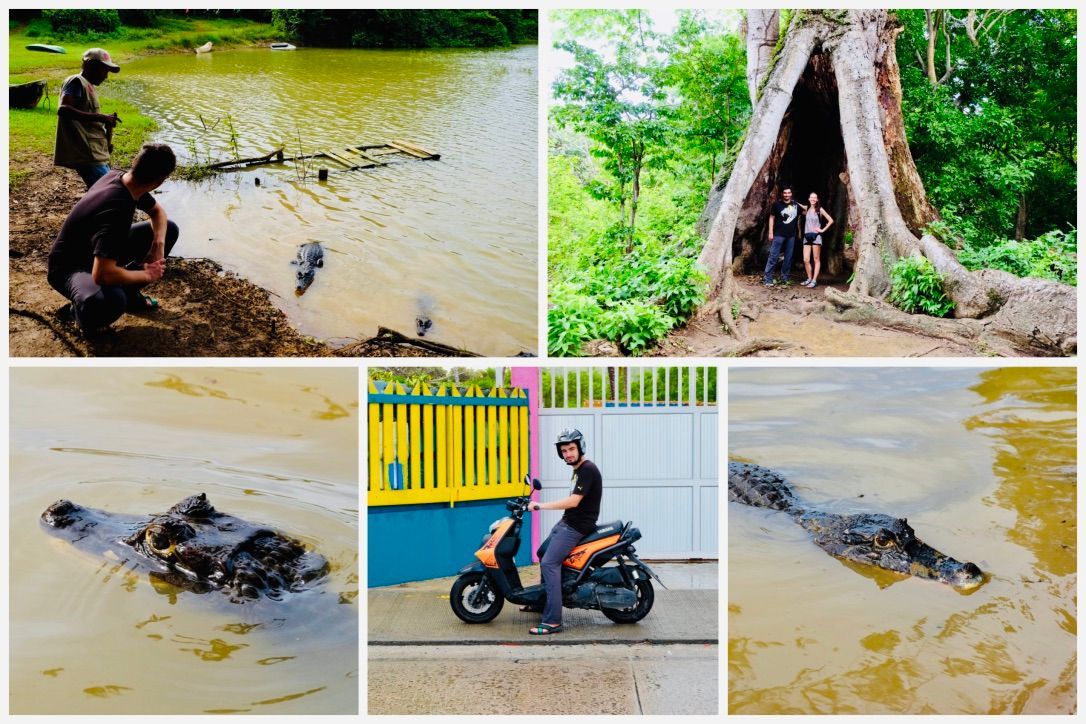
After the boat trip, we ride into the island’s interior, where traditional villages are scattered and a lagoon appears on the map. We turn onto a path descending from the hill towards it. We know the direction must be right when a man intercepts us and begins walking alongside, telling us about the area. We realise that he will probably want payment, but never mind—we have already begun, so we let him show us around. Besides, he is kind and pleasant company. First, he takes us to the lagoon. It is nothing remarkable, merely a rather large pond beside which another local man has built a hut serving as a bar. We are pleased that residents find inventive ways to earn a living, because beyond tourism and fishing, the island offers few options. We buy cocktails and sip them while looking towards the pond. Our surprise is considerable when the guide begins calling something at the water’s edge. And he succeeds in summoning it: two caimans!!! The caimans simply swim to shore and watch us. Unlike those we encountered in the jungle, these do not make me afraid, perhaps because they are habituated to people. The surprises continue when our guide leads us to a tree that he says is very special. On arrival, he announces that it is the vagina tree. Jānis and I laugh and climb into its hollow for a photograph.
The vagina tree concludes the tour, and the guide leads us back the way we came. On the way, rain begins pouring so heavily that every layer of clothing is soaked through. I become a little worried about the camera, and the guide arranges for us to shelter beneath an elderly couple’s roof. While we wait for the rain to ease, they offer us fruit that looks like apples but tastes different. Afterwards, the guide accompanies us to the scooter without really asking for payment. Clearly, we should give the man something, but it so happens that neither of us has anything smaller than 20,000 Colombian pesos—about EUR 5, compared with only 13,000 pesos for the boat tour. Still, it is Christmas and we had an entertaining time, so we hand him the money as our thank you. Surprise shows in his eyes. He wishes good health to us and our families, then repeatedly warns us to ride carefully because the road is slippery.
Christmas Eve has arrived, and we feel tired after the busy day. The shop beside the house has nothing extravagant for a festive dinner, and we lack the energy to ride into San Andrés town. We end up making pasta and laugh that we are having a student Christmas this year. The happy news: on the festive evening, a rather large blue crab visits our veranda. Perhaps it was Father Christmas? That is our Christmas Eve in one paragraph.
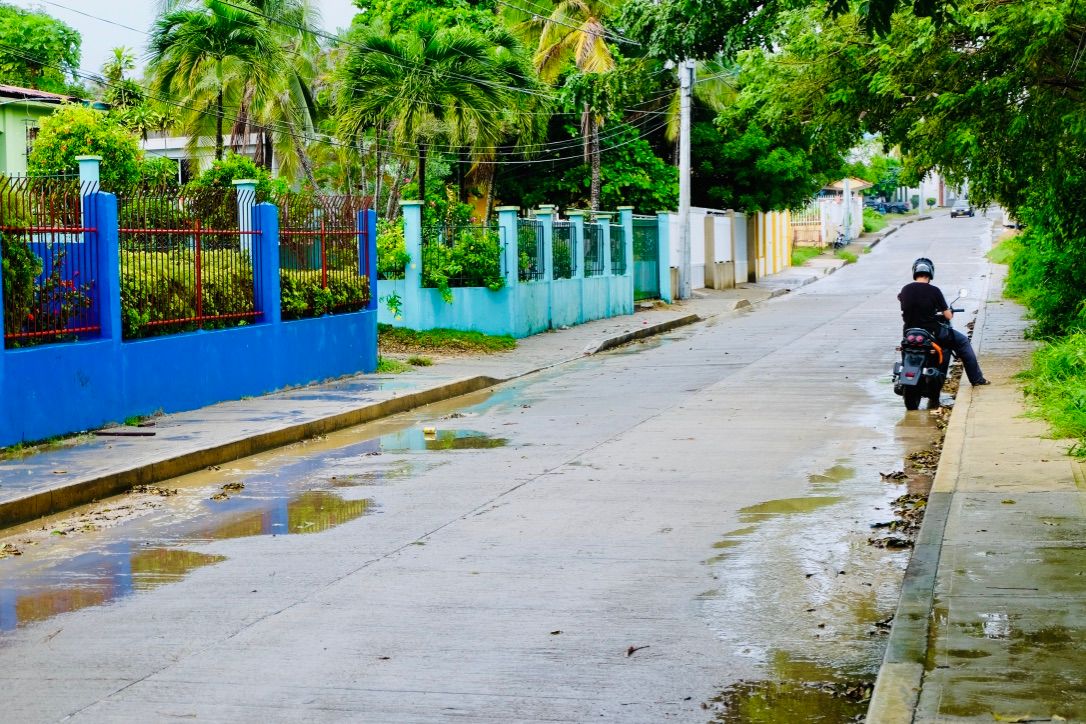
On our third day, we return the scooter. We will stay in San Andrés town today because tomorrow evening we fly back to Medellín. It has rained again recently; December is still partly within the rainy season. Instead of asphalt, the road is made from concrete slabs that become extremely slippery. Jānis makes the slightest manoeuvre, and we fall. We topple onto our side and slide across the concrete. As we skid sideways along the ground, I have time to notice how close my face is to the surface and hear my helmet scraping against it. On the seemingly empty, rain-soaked road, a stream of people suddenly appears to help us up, check that we are unhurt, lift the scooter, and push it aside. We are fine, largely thanks to the helmets that genuinely did make us the only people on the island wearing them. I have a small graze on my palm, while Jānis has a larger patch of road rash below his elbow. The scooter is barely scratched, and the hire shop does not complain. Falls in wet weather appear normal here; earlier, we watched a young couple topple on level ground, although their grazes were much worse than ours.
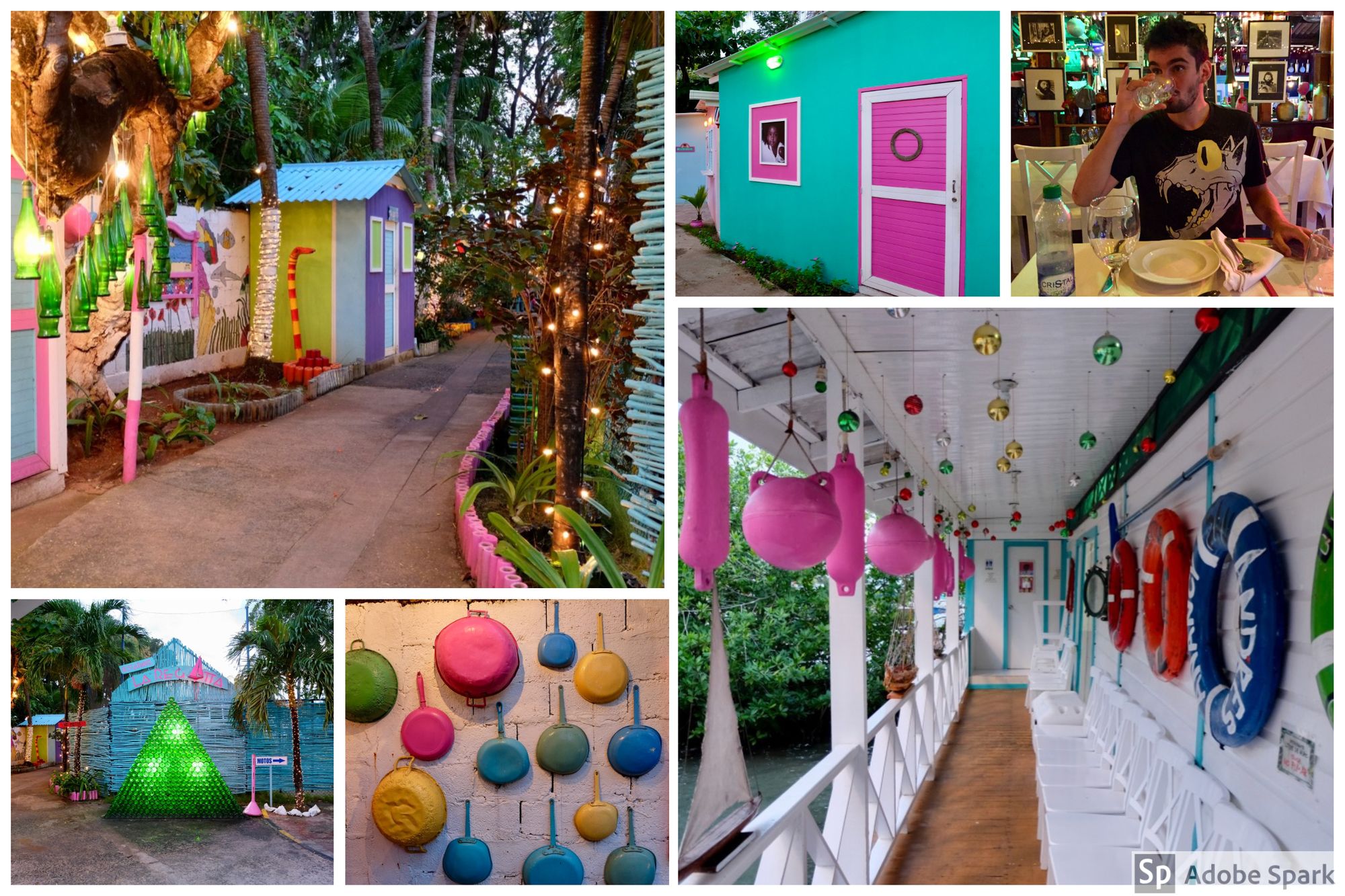
This is our final evening on the island, and we have reserved a table at its best restaurant. According to Lonely Planet, the food is heavenly, although we were most attracted by its location on a platform—a pontoon—above the sea. We arrive at the appointed time and stroll lazily through the restaurant grounds, tastefully decorated with used bottles and little wooden structures devoted to themes such as Pirates of the Caribbean and Bob Marley. In only three days, we have relaxed so completely into island life that we have forgotten the usual expectations for the appearance of diners in an elegant restaurant. We have no smart clothes with us anyway. Jānis is wearing sports shorts, a printed T-shirt, a backpack, flip-flops, and tousled hair. I look much the same, with the addition of Caribbean-style braids done on the beach today. The waiters’ looks make us slightly uncomfortable, and beside the other dressed-up diners, we feel homeless. Technically, at the moment, we are... On the way to our accommodation, we encounter a proper party outside a shop, complete with dancing. It brings our last evening on the island to a cheerful close.
On the fourth day, we do nothing but visit the beach. That evening, we walk to the airport and fly back to our current home in Medellín.
P.S. The story of meeting Juan Pablo pushed aside our encounter with the police on the way to Medellín airport. We were travelling there by Uber. Outside the city limits, the police pulled us over. Just before stopping, the driver blurted out, “Don’t say I’m an Uber driver.” He was asked to get out, the boot was searched, and we sat in the car with no idea what was happening. The driver was led a little distance away. A police officer opened the door and quietly asked whether we spoke Spanish. I said a little. He asked whether we knew the driver. Suspecting that they had found nothing illegal in the luggage and that the problem more likely involved an Uber licence or the vehicle’s papers, I replied that he was an acquaintance whom friends had asked to take us to the airport. A moment later, the driver returned, relieved to have escaped unharmed. He explained that the car did not have the licence required to transport passengers as a taxi, including for Uber. The offence carries an enormous fine and can permanently prevent the vehicle from becoming a licensed taxi. Not knowing what we would say, the driver had told the police that we were friends he was taking to the airport. He was grateful that our answers matched.
P.P.S. Before arriving in Colombia, I did not even know that San Andrés and Providencia existed. While writing this, I searched for information about the islands in Latvian but found nothing. For that reason, I had to adapt the island’s name into Latvian myself, following my own understanding and rendering its Spanish pronunciation in the Latvian alphabet. (State Language Centre, please forgive me!) The same applies to Raizal culture, so I use the word as it is written in English. The complete lack of Latvian information made me wonder whether any Latvians had ever visited these islands before us. If you know one—perhaps a diving enthusiast—who has travelled specifically to San Andrés or Providencia, let us know! Until then, Jānis and I will happily consider ourselves among the first Latvians to set foot on San Andrés.