Our overnight bus has reached Trujillo an hour early. The sun is only beginning to rise, and after a half-sleeping night we feel completely crumpled. As we wait for our bags from the luggage hold, our spirits improve: there is ocean air around us, and the temperature suggests we may finally enjoy the swim we have wanted for so long. Trujillo is not our destination. We find a taxi and head directly to Huanchaco, a small town twelve kilometres away on the coast.
I had written to the hostel saying we would arrive after seven, but we are there shortly after six. Fortunately, the receptionist is already awake and lets us inside. Our room is still occupied and may not become available until the official noon checkout. He offers a solution: there are mattresses and sleeping bags on the roof terrace, where we can rest in the meantime. We accept gladly and discover that the arrangement feels rather exclusive. Moist ocean air has made the mattresses slightly damp, but what a view! The beach and Pacific Ocean lie directly across the road. We sleep so well in the fresh air that we wake only at ten, when the terrace has become too hot and a woman is busy washing the hostel linen.
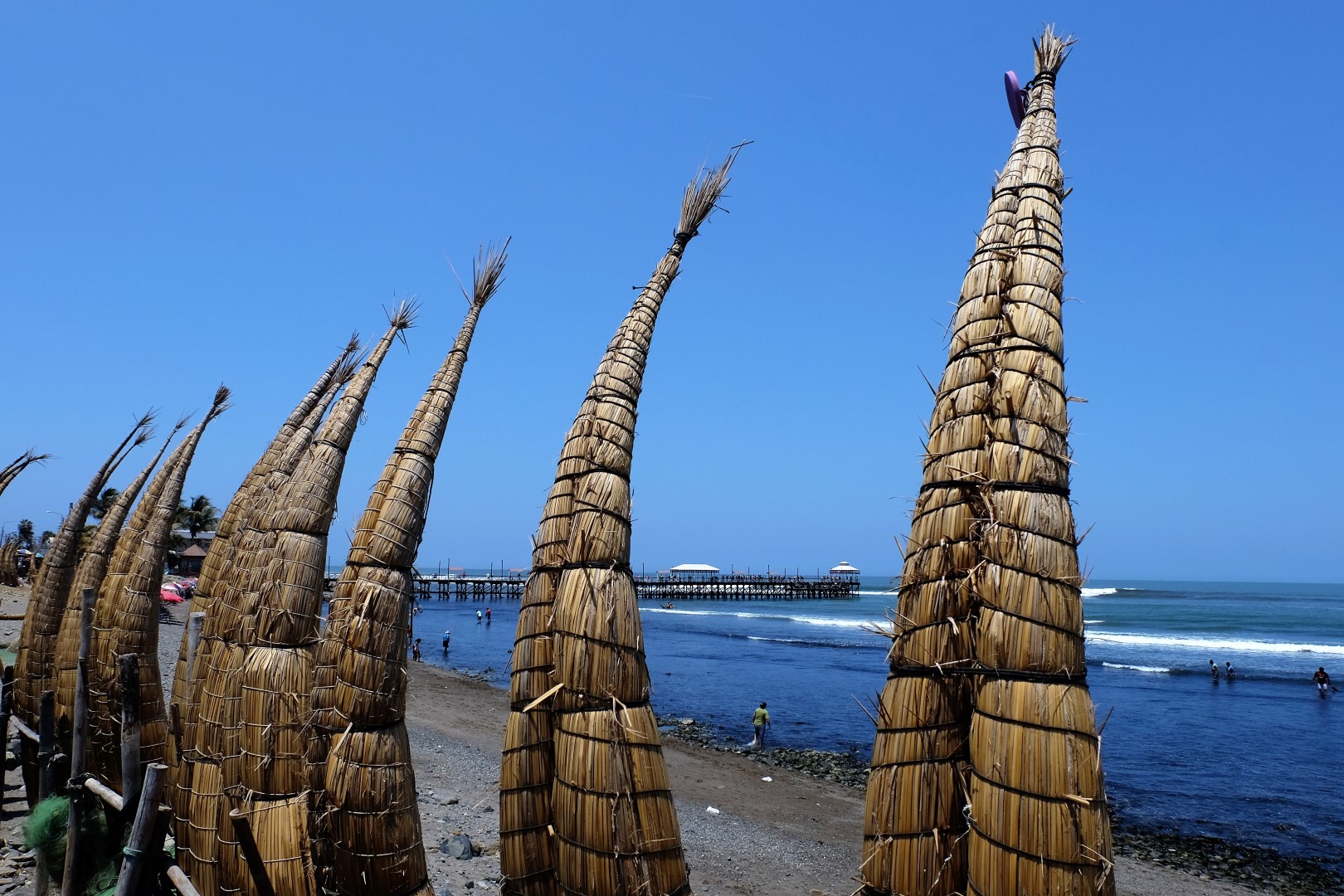
We go out in search of breakfast and take our first look around town. Everything centres on the main road beside the beach. Totora-reed fishing boats known as caballitos—little horses—are “parked” on the sand. Fishermen once rode them out into the ocean.
Good things come to those who wait. After noon, we receive a simple room with the finest ocean view. We have also recovered from the night bus and should use the day well. Huanchaco is a popular surfing town, and Jānis has decided to learn today. I have never surfed either, but choose instead to explore the archaeological complex of Chan Chan.
Chan Chan and an unusual encounter
The Incas left an immense cultural legacy in Peru, but other powerful cultures lived here before them. Around Trujillo, the Moche and Chimú left the greatest volume of archaeological evidence, although they were by no means the only ones. Every year, archaeologists discover new and previously unexplored sites. Peru truly is a land of plenty for them.
The landscape surrounding Trujillo is principally desert, and an unusual feeling takes hold as I approach the ruins of Chan Chan rising from sandy yellow ground near the ocean. After a moment’s thought, I decline the guides waiting at the entrance and decide to discover the city myself.
What visitors see today is only a fraction of the enormous settlement. Chan Chan was the largest pre-Columbian city in North and South America, with between forty and sixty thousand inhabitants. Modern Huanchaco and part of Trujillo are effectively built over its ruins. The area now open to visitors belonged to the city’s nobility. I cross a vast ceremonial square where the Chimú honoured their gods. Its walls are decorated with animals, perhaps sea otters.
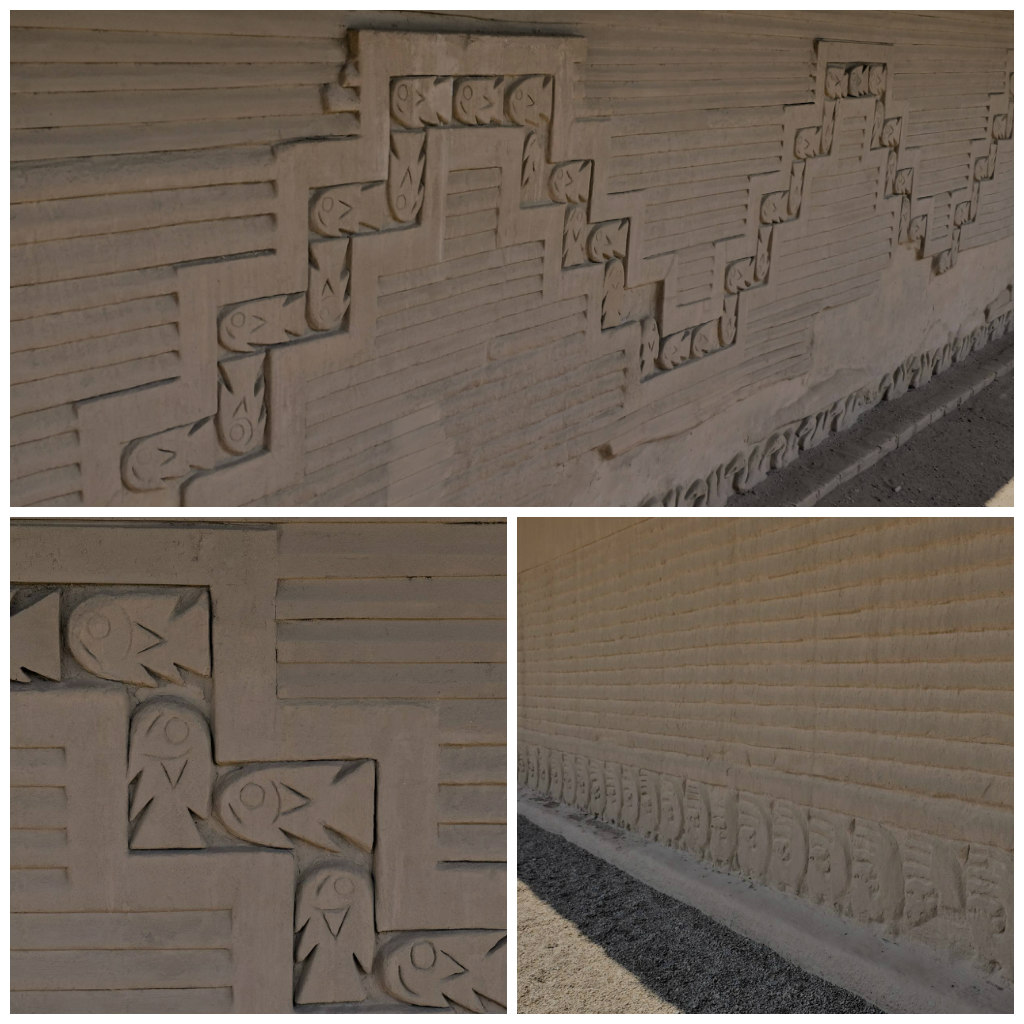
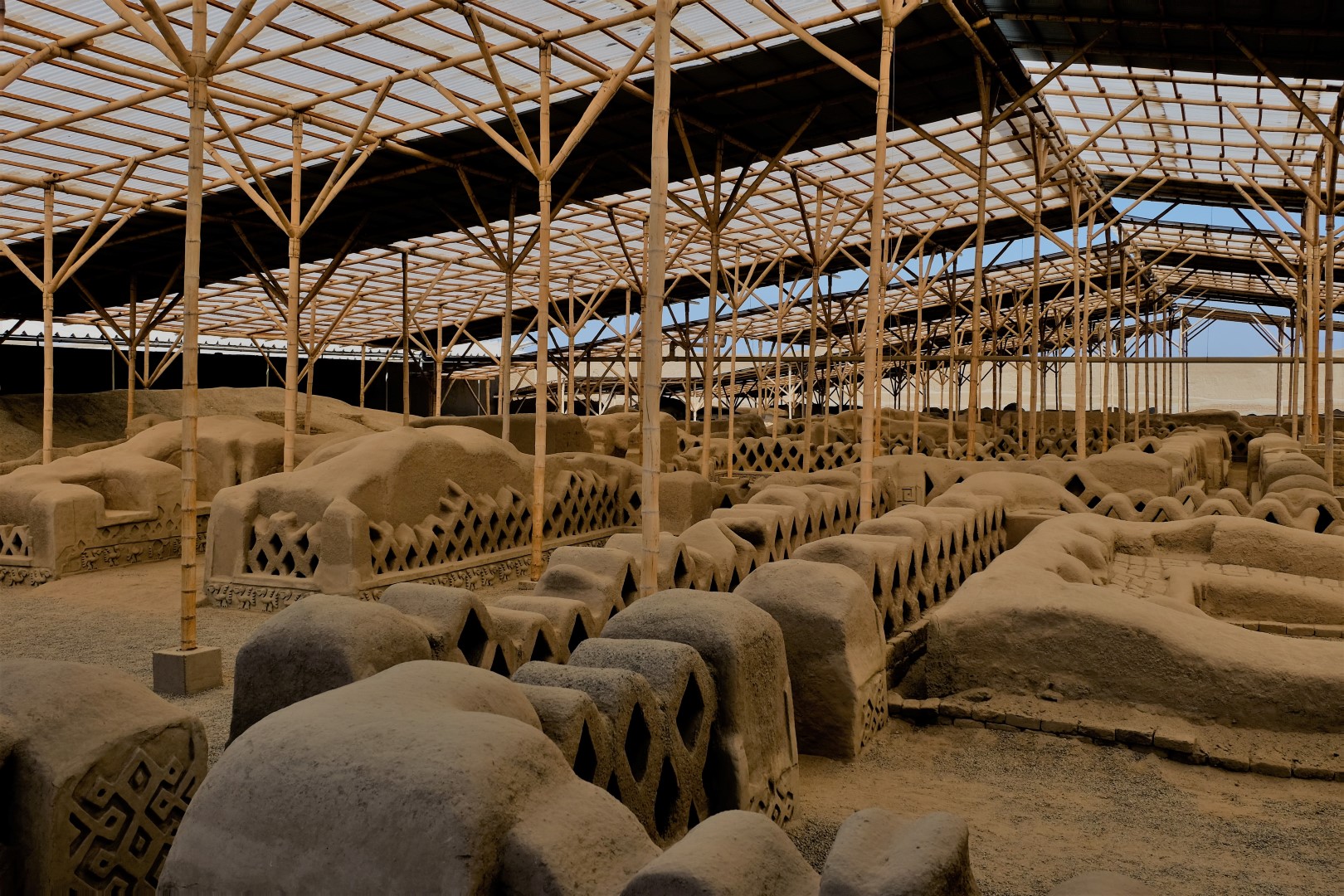
A corridor patterned with fish and seabirds leads to something resembling a labyrinth, its walls covered in marine motifs. I stand looking around in confusion, wondering what purpose it served. Soon, a small elderly woman approaches. Her vest indicates that she works here. We greet one another, and as she passes I ask in Spanish, “Is this roof completely new? I’ve seen recent photographs in which this area had no roof.”
“Yes, it was added last year,” she replies in clear English. She explains that unusual storms and rain in recent years have caused the ancient structures to deteriorate rapidly. Roofs now protect certain areas so that this important site can survive for as long as possible.
From the first moment, there is an inexplicable affinity between me and this older woman. I do not know whether she feels it too or simply wishes to pass the time with an obviously interested listener, but she continues her fascinating explanation. What looked like a maze is actually a set of U-shaped offices. Chimú ministers sat there while residents brought offerings and paid their dues.
“Look,” she says. “Those diamond-shaped decorations represent fish. That wall shows pelicans, over there are waves, and this is the most important place, decorated with circles representing the moon.” The Chimú honoured marine creatures and phenomena because the sea was their principal source of sustenance in this desert. Unlike the Incas and their worship of the sun, the Chimú revered the moon. It is perfectly logical: Andean nights are cold and create a longing for daytime sun, while coastal days are so hot that people long for night.
At last, we introduce ourselves. Teresa is a historian who now works as a guide at the Chan Chan ruins and museum. After a while, she says, “Come, I want to show you something.”
In a second ceremonial square, Teresa announces that she will sing Peru’s traditional Song of the Condor. She also performed it when a UNESCO delegation came in 1986 to declare Chan Chan a World Heritage Site. She begins by imitating the sound of an antara, the traditional Peruvian pan flute. Incredibly, her voice truly resembles the instrument. Moving around a marked square in the centre, she gradually transforms the performance into song.
The experience is beyond words. I am standing in an ancient ceremonial square while this performance takes place for me alone. The Chimú would not have permitted such a thing because ordinary people were forbidden to enter. Although the walls retain only a fraction of their original height and the space is open to the sky, its acoustics are flawless. That is precisely what Teresa wanted to show me.
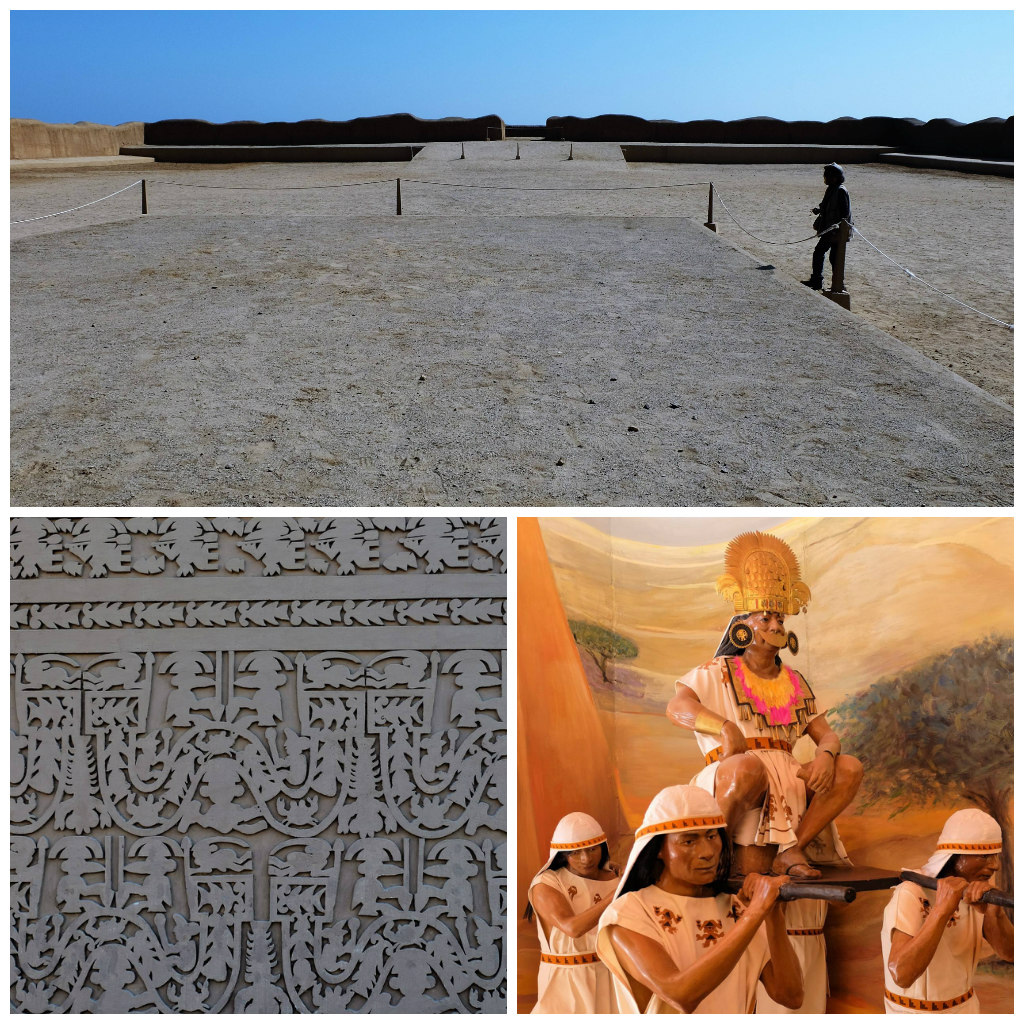
Teresa then leads me to an artificial oasis. Ceremonies restricted to the nobility also took place here. The Chimú ingeniously irrigated this dry land, carrying water from mountains that are not at all nearby. Grass grows in the oasis, evidence that the system still works. A dedicated area for grazing livestock lies close by, and it too remains green.
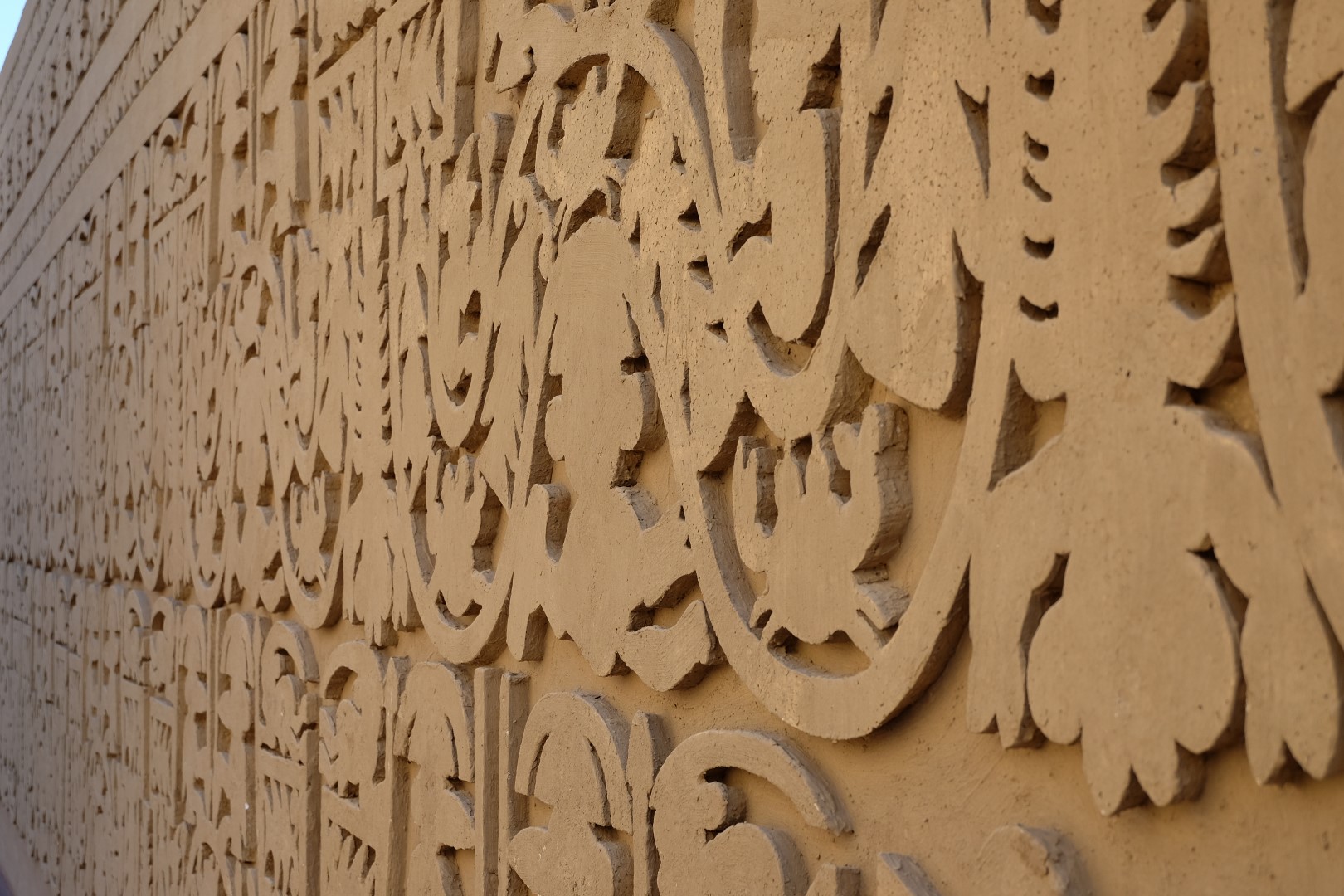
The walls raise further questions. I understand how Inca structures made from perfectly fitted stone blocks have survived, but Chan Chan, possibly built around AD 850, is not made of stone. Its walls appear to consist of a clay-like material. Teresa says that the Chimú knew how to mix desert sand with substances that bound it together. Researchers have even found traces of bird eggs. The Incas conquered the Chimú around 1470, but the city’s precious metals and noble burial sites remained untouched until the Spanish conquerors arrived.
It is already afternoon, and after visiting Chan Chan I want to reach the museum. Teresa happens to be going there too. It stands beside the highway, a long walk along a gravel road in the heat, so she asks a taxi driver his price. It is too expensive. Instead, she arranges a lift with an acquaintance selling souvenirs near the entrance.
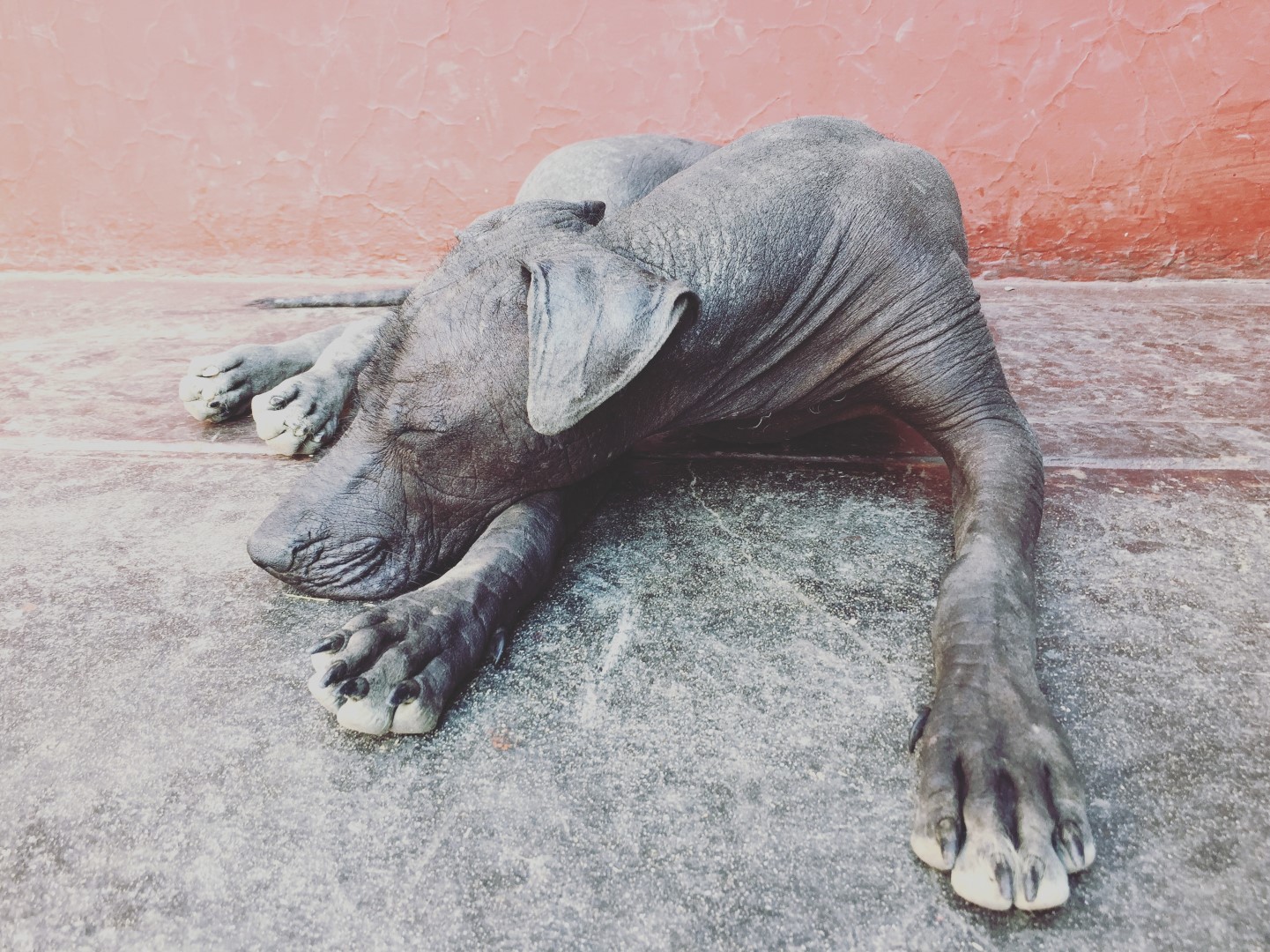
When we reach the museum, three Peruvian hairless dogs run to greet Teresa. The staff welcome her just as warmly. She is clearly much loved. As I am the first Latvian she has ever met, she says goodbye with the words, “Now I have a friend from Latvia. From now on, I’ll know that Latvians are lovely people.”
When I meet Jānis that evening, we exchange impressions of the day. His first surf lesson sounds excellent: he stood up on his very first wave. I am equally enthusiastic as I tell him about my remarkable day with Teresa.
The first wave and ruined vegetarianism
We wake the next morning and Jānis persuades me to stay one more day in Huanchaco. That can mean only one thing: today I must surf. We meet the instructor, Alejandro, while I look anxiously at the stony beach. The ocean water here is not especially clear, possibly because of nearby ports, and is full of stones large and small. Alejandro says that over the coming months the ocean will do its work and cover them all with sand. The process repeats every year.
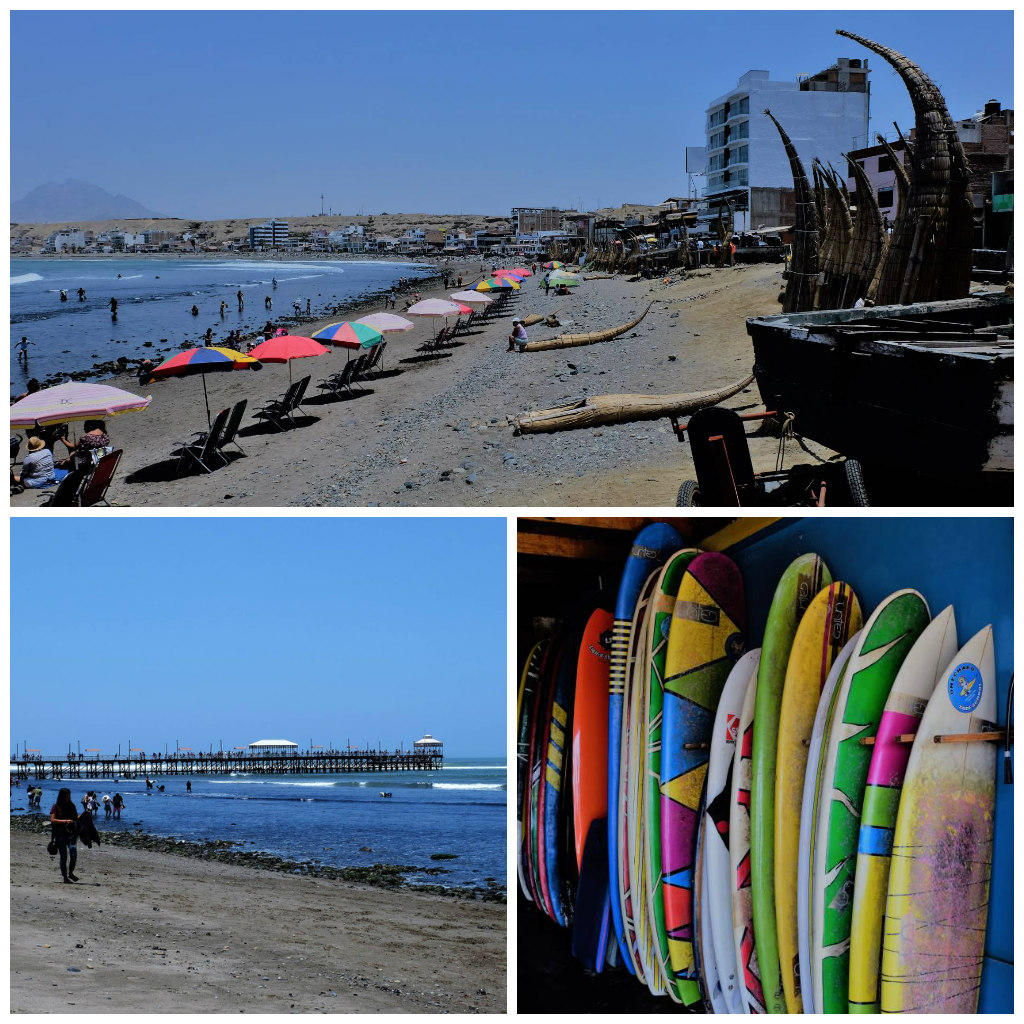
Having learned the basics yesterday, Jānis enters the water and attempts to catch waves independently. I receive instructions on shore and perform exercises on the beach. In the water, more drills follow: paddling and turning the board. Once Alejandro sees that I have some understanding of how it behaves, we wait for my first wave.
I lie flat against the board and listen patiently for his commands. “A wave is coming. Paddle, paddle, paddle! Now stand!” Yeeeeeeey—my first wave, and I am completely upright! To avoid shooting onto the beach, I jump into the water several metres from shore. I survive that too without even striking a stone. At that very moment, I decide that I like surfing. That is usually how it works: when you succeed, you enjoy it. :)
The rides over the next hour are not bad either, although they all follow Alejandro’s commands. Jānis says our windsurfing and stand-up paddleboarding experience helps. I think we simply found the ideal instructor and the credit belongs to him.
After an active day, we go to eat. Peru may be the last place in which anyone should decide to become vegetarian because its cuisine is extraordinarily meat-heavy. In recent years, however—and especially now—every piece of meat on my plate reminds me, even for a millisecond, that it once belonged to a living animal. So I decided to try life without meat. Over the past few months, I have navigated around it quite successfully and seem to have gained a stronger sense of smell.
I am not strict: I eat fish and am prepared to eat meat when there is no alternative. With its abundance of seafood, Huanchaco is actually a convenient place to avoid meat. At dinner, Jānis orders chicken curry while I choose fish. After several spoonfuls of little “fish” pieces in coconut-milk sauce, I think what remarkably unpleasant fish it is. Suddenly, the truth hits me like a plank: perhaps it is not fish at all.
Boiled fish and boiled chicken are not especially easy to distinguish in coconut sauce, but the texture looks more like chicken. I ask Jānis, who does not eat fish, to taste it. Reluctantly, he gathers his courage. Then he exhales with relief: “Oh, it really is chicken!” I am less delighted.
On the way back to the hostel, I complain that the aftertaste is making me feel ill. Half laughing, Jānis tells me off: “Good grief, I never thought you would become THAT vegetarian!” I find the situation funny too, especially the discovery that, without noticing, I truly have become THAT vegetarian—the one who reacts acutely to any trace of meat. I was not exaggerating about the aftertaste, though. It was genuinely awful.
Lately, our route has been planned either the day before we travel or on the day itself. Before going to bed, a message arrives from Igor: “Hey, you’re close to Chiclayo… :)”