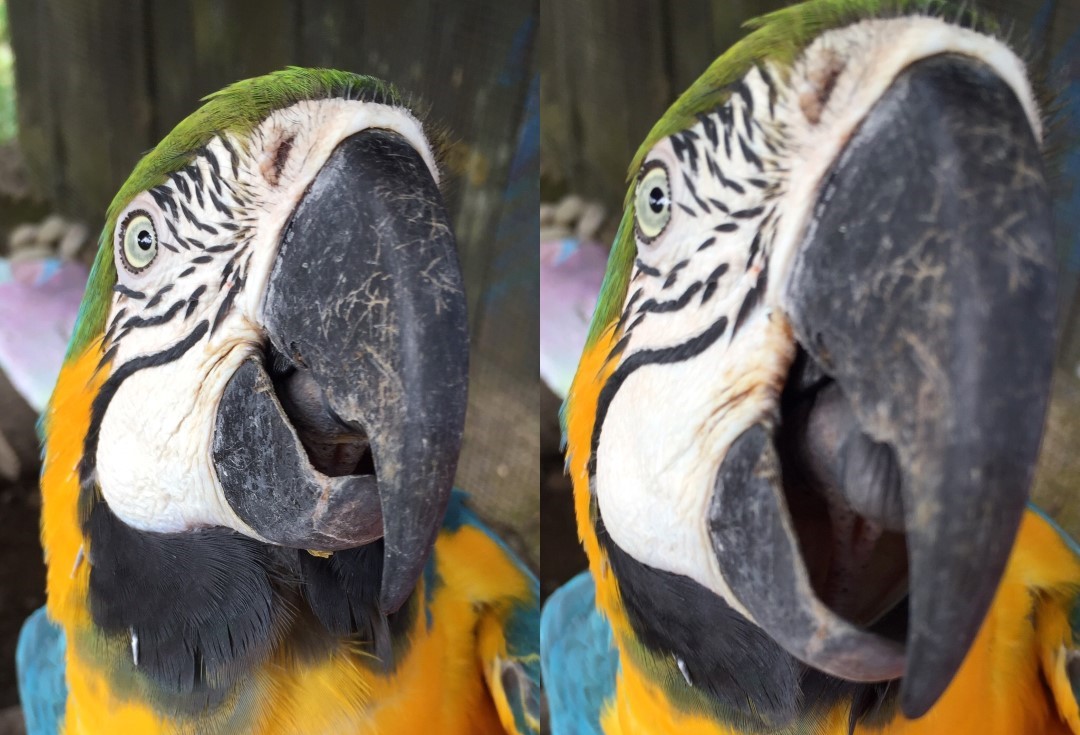
It is so strange to spend every day among large, intelligent birds—especially so many, each with a personality and qualities of their own. One needs human attention and affection; another is aggressive. Every bird has its habits, places to go, and things to do.
They also share several traits. My greatest fear is a macaw’s beak. It is powerful enough to peel apart hard wood like a sunflower seed, carving with its lower half. Every one of them is intensely interested in the bird section’s kitchen because they know that fruit is stored inside. They can open the door by lifting a metal loop from its hook, so whenever we leave, it must be secured with a carabiner. They climb the kitchen walls and cut through strong wire mesh with their beaks until the hole is large enough for a head. As a result, the entire wall is covered in patches. Banana is every bird’s favourite food and appears on the menu at least once a day. Only peanuts can surpass it, although they are served rarely. When I approach with a plate of peanuts still in their shells, the birds somehow understand from a distance. They scream loudly, and their pupils expand and contract with excessive excitement. Naturally, the peanut is the first thing snatched from the plate.
The loveliest characteristic of parrots, however, is love. Most birds here form inseparable pairs. They remain together constantly: eating, walking, sitting on the same branch, and naturally sleeping in the same enclosure. Watching how they treat each other offers lessons for us. Every couple formed here at Parque Machía, another enormous benefit for its birds. They have the chance to meet others and find a partner as they would in nature. To me, the story of Juanita and Destroyer captures macaw relationships best. Juanita has been weak for some time, and her husband is now especially attentive and slightly aggressive towards anyone who approaches. One day, I open the enclosure as usual, but they do not come out. I offer a stick—a wooden branch on which parrots climb to be carried—but they refuse. For two days, neither came outside because Juanita felt unwell, and Destroyer sat beside her guarding. This may spoil the tender story slightly, but Destroyer received his name after biting off a volunteer’s finger. He had another name before that, but afterwards, Destroyer stuck.
The most compatible pair, in my view, is Rosa and Watson, both Red-and-green Macaws shown in the photograph. They met at the park and have been together since 1998. If one decides to cause trouble, the other never remains behind but joins in. Their habit is visiting the volunteers’ kitchen together. I know this very well, yet they always notice the exact moment I look away. When I see that they have disappeared from their branch, I immediately search for the two of them running across the grass towards the kitchen. Fortunately, they are obedient. When I catch up, they stop and know that I will offer the stick. Both climb onto it obediently, and I carry them back. On days when they have kitchen plans, I chase them several times. Occasionally, they reach their destination, quickly open the door, enter, and scatter the entire organic-waste bin across the floor.
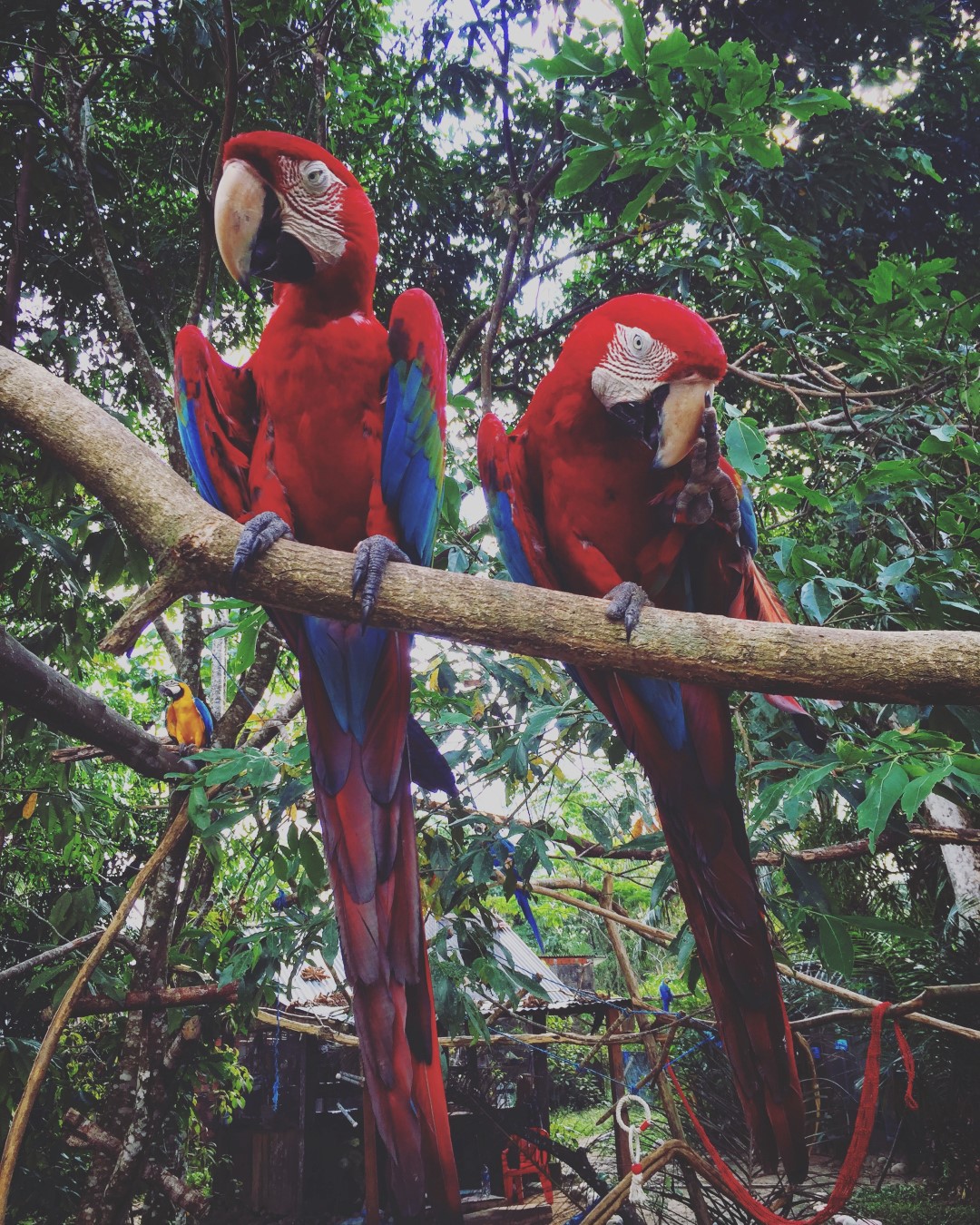
We do not know every bird’s history, but Watson’s former owner brought him to the park herself. He was kept in a family home in La Paz, Bolivia’s administrative capital. After he repeatedly destroyed the house, the family began keeping him on the balcony. La Paz has a radically different climate from the jungle, sometimes falling below freezing, so they decided to surrender Watson to Parque Machía.
Another colourful pair is Rojo and Robin, a Red-and-green Macaw and a Military Macaw. Both are over twenty and the oldest birds in the park. They feel like a king and queen and look the part: graceful and reserved. They alone follow an individual release schedule because they seek trouble with other parrots. The royal appearance therefore takes place first thing in the morning, while enclosures are cleaned and food served.
The cave everybody wants
The most unusual story concerns the trio of Melina, Maciel, and Loco—“Crazy” in Spanish. Melina is Maciel’s wife, and they share an enclosure. They were always so loyal that neither would even eat without the other. Then something happened that would not occur in natural conditions. Melina began a friendship with Loco, who, unlike her, is a Red-and-green Macaw. Outside, they started excavating a cave in the trunk of an old tree. The moment they are released, they run towards each other and spend all day inside or beside it, while Maciel watches from somewhere nearby. If he approaches too closely, Loco attacks. If I go near the cave, Melina rushes out and sharpens her beak against a stone to show her anger. This phenomenal cave caused many fights because other birds wanted it too. One day, for example, Pacha, a Blue-and-yellow Macaw, was sitting as usual on a branch above the entrance. Melina and Loco climbed up and began fighting her. The next moment, Pacha was hanging from the branch by her beak. I ran over and offered the stick, onto which she scrambled. After the cave appeared, there was a fight every day, including broken feathers and blood, and the vet had to be called to the bird section.
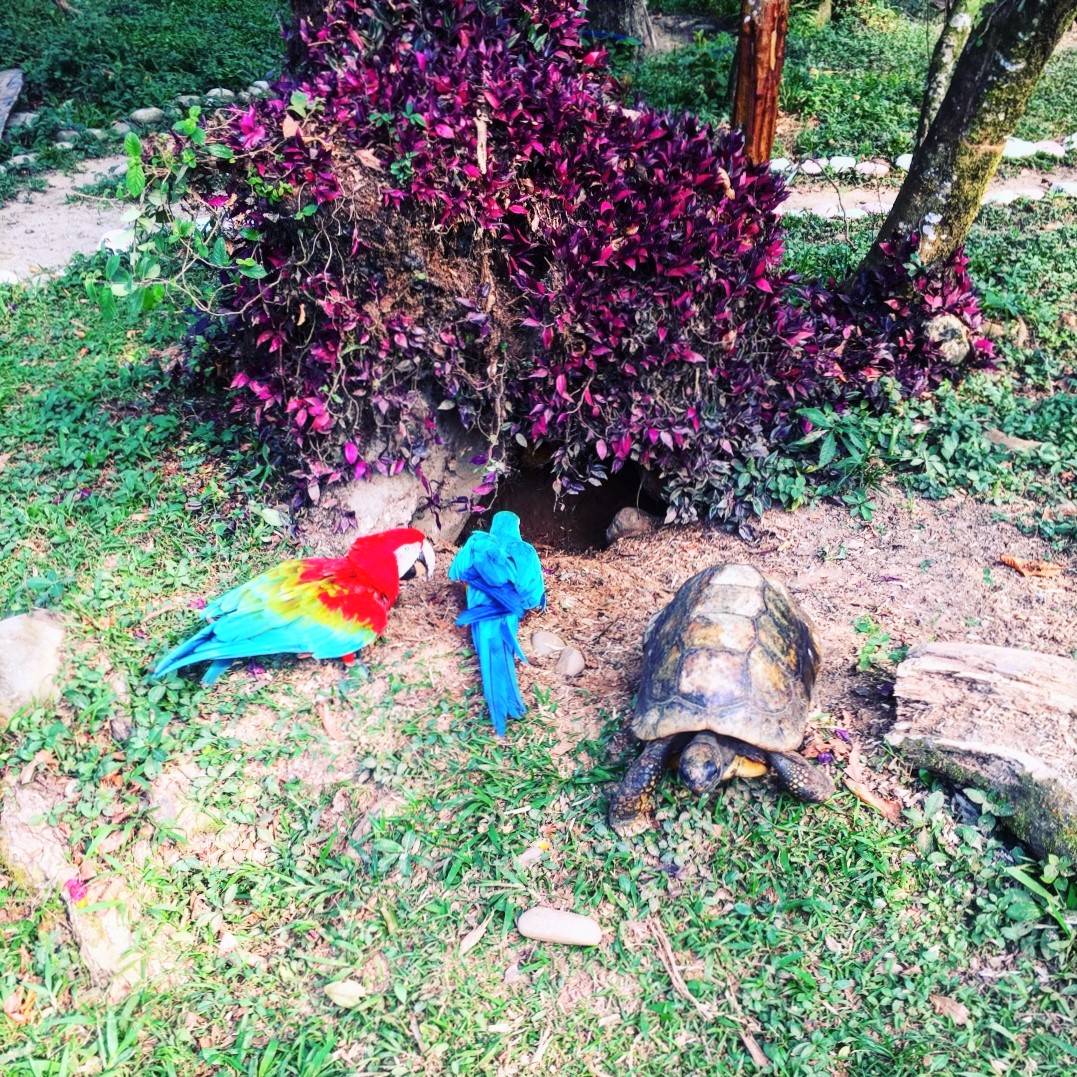
Realising that the situation was becoming uncontrollable, Ronnie decided that Loco would remain enclosed whenever Melina was outside and vice versa. Naturally, once released, Melina stopped thinking about the cave and hurried instead to Loco’s enclosure, where she clung until dinner. The cave did not remain unattended: Rosa and Watson occupied it immediately. Destroyer and Juanita soon wanted it as well, and Pacha’s interest continued. After three days of heightened vigilance for another fight, we decided to fill the cave. We used soil excavated for the future pool, then blocked the front with boards and rocks. Peace returned to the park that very day.
The desire to be loved
Parrots with partners do not try to approach people. They occupy themselves with bird activities, guarding and grooming each other. Others have not found their other half, and you can feel them searching for human attention. Carolina, for example, always chooses a branch extending slightly beyond the boundary. Whenever people walk past, she greets them and begins talking intensely, naturally drawing their attention. Sometimes she simply speaks without pause; then I usually go over for a conversation, and Carolina receives what she wanted.
From my first day, Roma, a Chestnut-fronted Macaw, stood out for climbing onto the food bowl while I served it. Remembering this, I began waiting briefly at mealtimes for her to run over, then placed both Roma and her bowl onto the enclosure’s feeding table. Ronnie told me that Roma’s husband died several months earlier. She grieved deeply, and her behaviour changed considerably. Very recently, another Chestnut-fronted Macaw arrived at the park, and Roma gradually began spending time beside his enclosure. How fateful that the only two macaws of this species here are opposite sexes and show affection for each other. Great happiness came to Roma when she was moved in with her new partner. At the same time, four macaw babies had grown so large and quarrelsome that two needed another enclosure, but none had previously been free.
Only days after the two birds began living together, I notice Roma exploring the entire area. When released before, she remained near her enclosure; now she is so confident. Ronnie says she behaved like this when her husband was alive, secure in the knowledge that he would protect her from other birds. Her new partner is not released yet because he can fly, and nobody knows whether freedom will confuse him. Thanks to Roma, the process will probably happen sooner, and before long, the two should walk outside together.
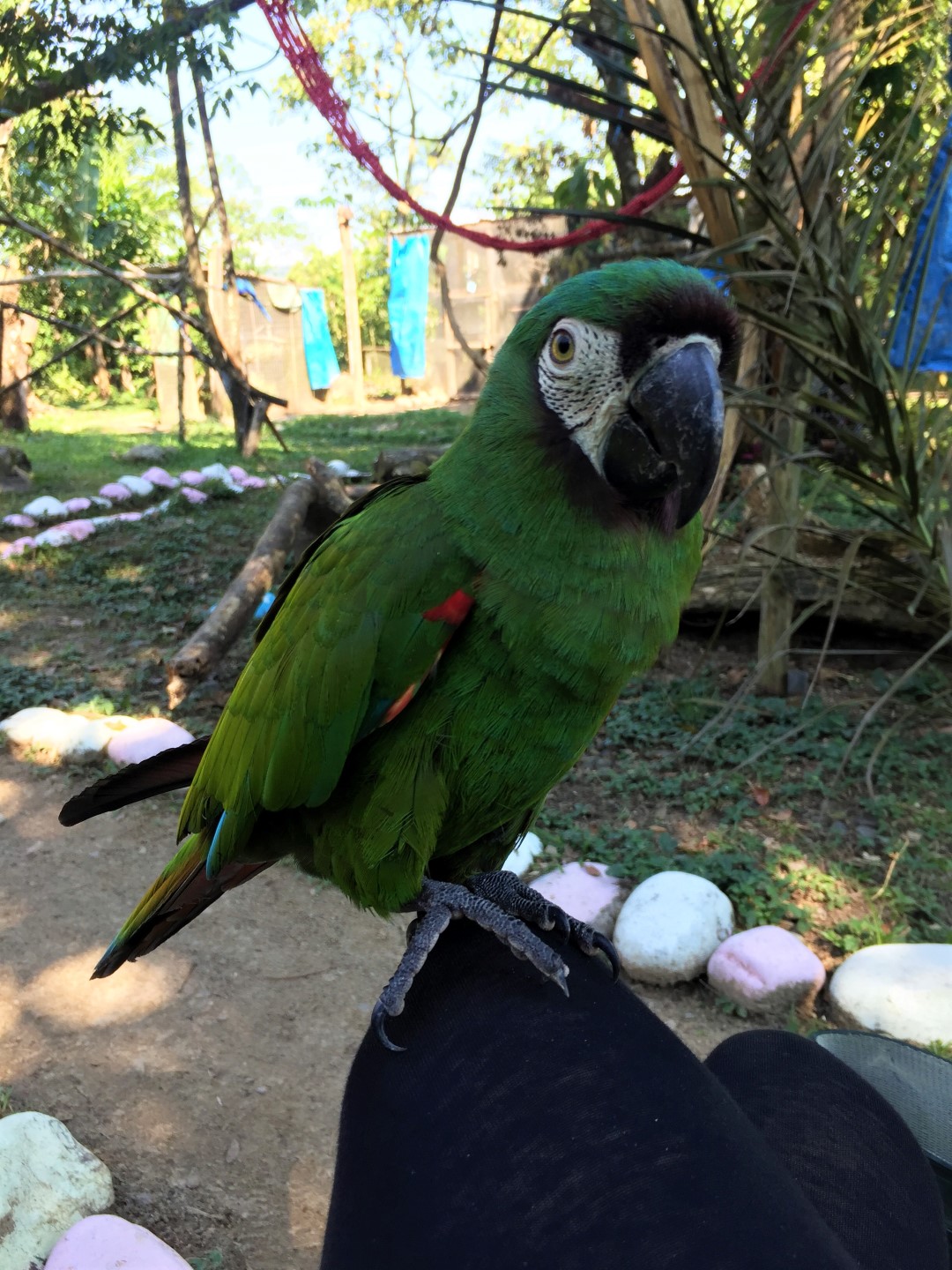
I feel so happy that Roma changed before my eyes, becoming confident and joyful. One day, she suddenly landed on my shoulder. I was astonished because I had assumed she could not fly. Her wings are perfectly healthy; she simply never used them before. Landing on my shoulder became an ordinary part of every day, as did my fright because she always appears unexpectedly. She is an extraordinarily curious and friendly bird. Whenever I sit in a chair, she watches me, and it always ends with her landing on my knee so we can talk.
Pablo, a Blue-and-yellow Macaw, is a bundle of sorrow: a stress-ridden bird who pulled every feather from his chest. Macaws pluck themselves when they suffer stress caused by human actions, usually unsuitable living conditions and care. Some days, Pablo refuses to come outside and sits in an upper corner, moving his head anxiously. I do not want to imagine what he endured to leave such obvious trauma. Initially, he did not trust me and always rejected the stick I offered to carry him out. Outside, he usually hid alone in a corner. When I passed, he covered his head with a wing and spread his tail as if to disappear. Gradually, however, I understood that he is a good soul who needs time to trust. He loves Ronnie, steps onto her hand, and clearly shares a close bond with her. On the kitchen’s wooden wall, somebody proudly painted Pablo, apparently in 2007, looking exactly as he does today with his bare chest. That artist must have found a path to Pablo’s heart, and Pablo to theirs. Slowly, I too felt him beginning to open to me, although a close friendship would require far more time.
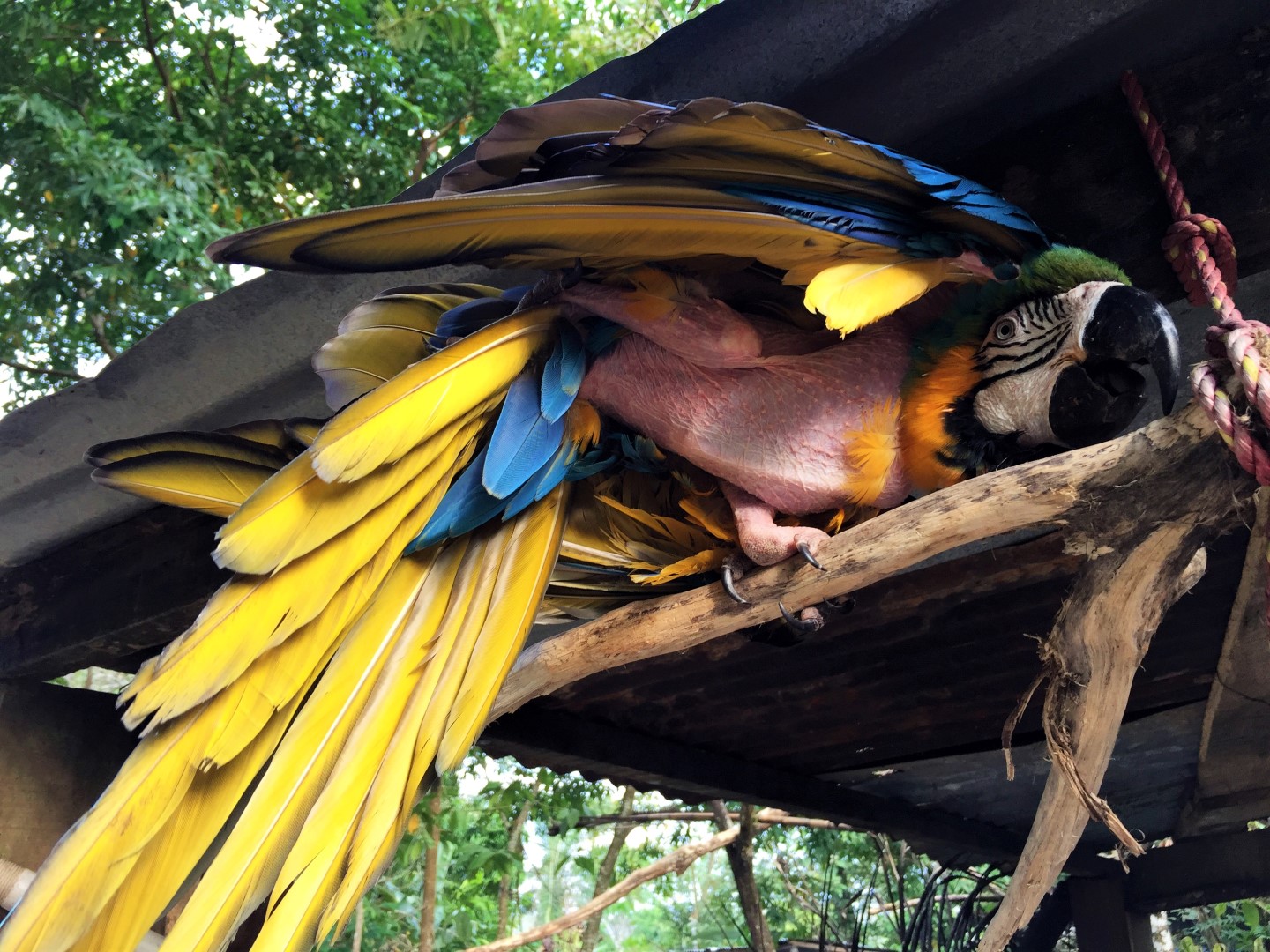
Monchito is my special friend, a Blue-and-yellow Macaw with a broken wing. In his previous family, a child broke it while playing, after which Monchito was brought to Parque Machía. Before I knew him, I felt uneasy because he always approached too closely while I cleaned his enclosure. Then one day outside, he came over again and climbed onto my rubber boot. He lifted one foot as though asking to be picked up. I gathered my courage and offered my hand. Monchito climbed onto it, looked into my eyes, and said in his special voice, “Hellooouu!” He held my hand so gently that his two-centimetre pointed claws seemed not to exist. That was how our friendship began. Every day afterwards, we had our ritual. Monchito signalled that he wanted my hand, then we sat in a chair. He stepped onto its edge and pointed with a claw to where I should scratch: first beside his beak, then the back of his head. If I chose the correct spot, he closed his eyes with pleasure. Sometimes our spa session lasted thirty minutes, until every feather on his neck and back was arranged and groomed as parrots do for one another. It makes me sad that Monchito has no partner to fuss over him and must seek this from a person.
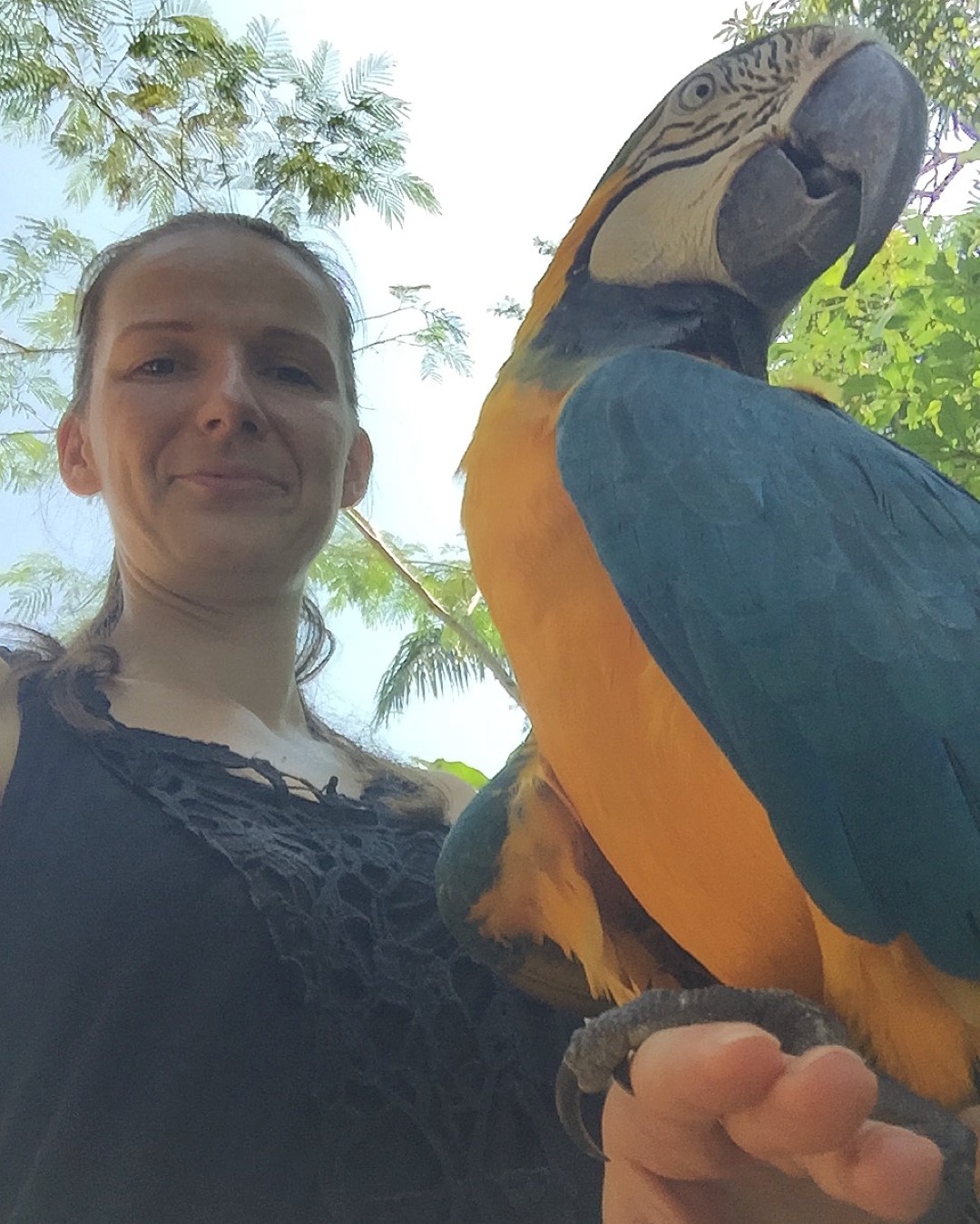
Sometimes, when Monchito is on my hand, I feel that he believes he can fly again. We walk through the park, and he happily moves his healthy wing as though in flight. His face looks so full of smiles.
What do the birds say?
Most parrots mainly say “Hola!”—hello in Spanish. Some say more, and their words reveal something about previous homes or the expressions volunteers use most often. Beautiful Carolina is unquestionably the most talkative. She cries like a baby, which certainly means her former home had one. During my first days, when she began crying, I genuinely thought somebody had left an infant in the bushes. Carolina also laughs, so richly that you want to laugh with her. At other times, it is difficult to tell whether she is scolding or speaking energetically. There are no specific words, only a stream of sounds imitating a chatty person. She also shouts “Fuera! Fuera!”—“Out! Out!”—which volunteers say when a bird enters the kitchen.
Near the gate are four large enclosures containing Blue-fronted Amazon Parrots. Tourists sometimes linger outside, and when the dogs Chiripa and Goodall notice, they bark and run over to investigate. Logically, all four enclosures, holding more than a dozen parrots, now bark like dogs. I always laugh when they begin their chorus: “Woof, woof, woof, grrrrrrr.”
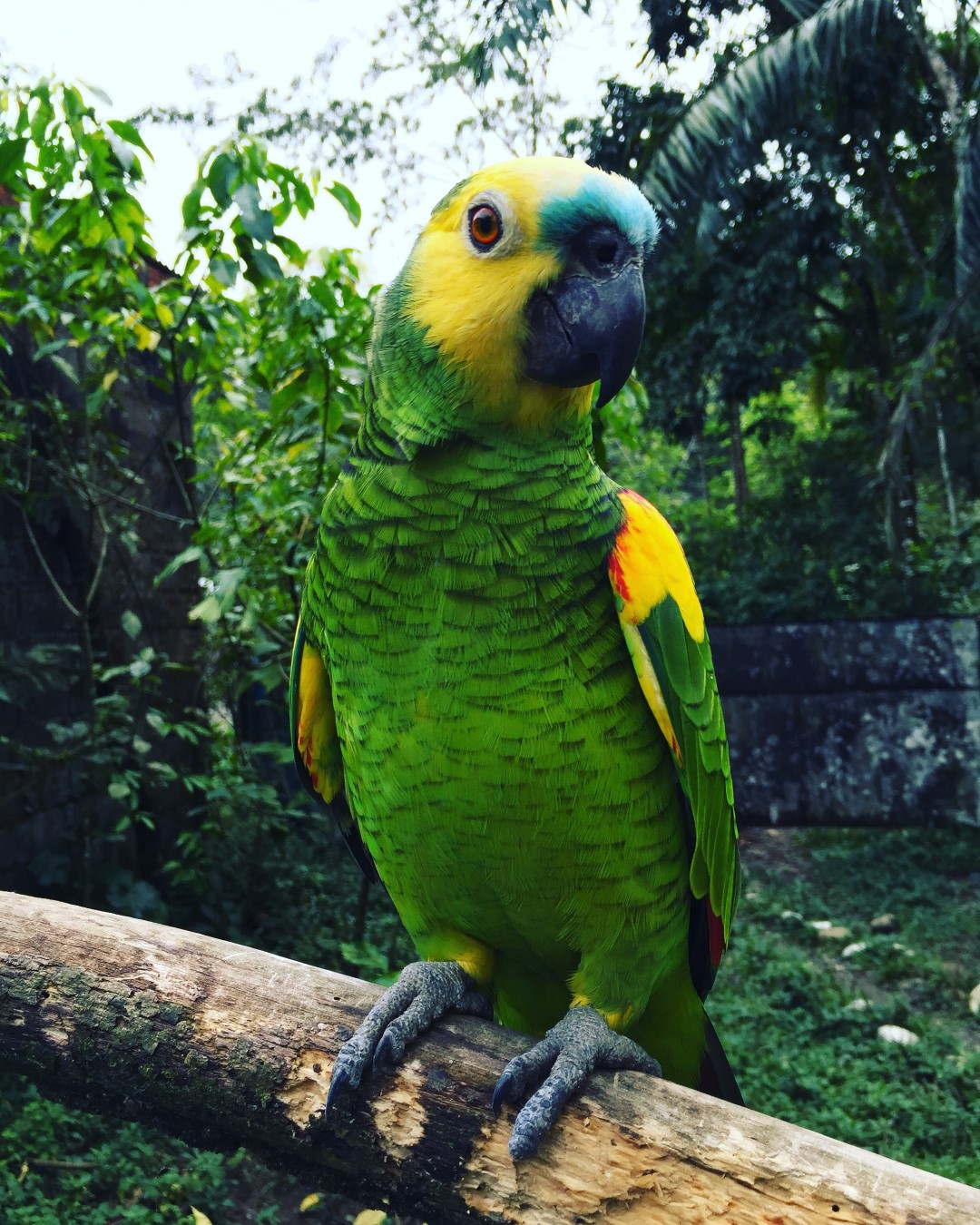
Another favourite word is agua, Spanish for water. When birds begin shouting “agua, agua”, it does not mean they want a drink; they learnt it from the volunteers. I have already said that the kitchen interests them, but one macaw pair treats guarding its door as a daily duty. Hija and Matías climb onto it at roughly human shoulder height, making passage difficult while inspecting everything carried in or out. Their manner is slightly unfriendly, adding adrenaline to every crossing. Sometimes, when they prevent me leaving the kitchen, I shout “Agua!” and pretend to reach for a water bottle. The pair usually retreats several steps without a drop being used. Birds like water but not being splashed. It is our only rescue when a fight begins, although usually shouting “agua!” is enough for them to understand the warning.
When rain comes, birds do not avoid water. Some enjoy it and deliberately stand where it enters the enclosure. They have little desire to go outside, however. When we open the doors, only a brave few visit their trees and sit in the rain. Most interesting is how a parrot’s colour changes when wet—not simply darkening but changing hue. Bright green Amazons become khaki, for example, and Blue-and-yellow Macaws turn grey. I assume nature gave them this ability because strong rain makes flight difficult; sitting in trees, they need camouflage from snakes and other jungle residents. It must be said that jungle rain is serious rain. Paths become small rivers. Even in a raincoat, I could run only a few metres before becoming soaked, with enough water collecting inside my rubber boots to pour out.
Marwan the prodigy
Another important character is a toucan named Marwan. He is highly intelligent, domineering, and tries to irritate the other birds. Yet perhaps because of his bill or personality, they all respect him and refuse his invitations to quarrel. I call Marwan “the little pest” because of his behaviour. While I clean his enclosure, he climbs onto a perch, moves his head, and watches me. Then he rushes over and pokes my back with his bill. A toucan’s bill is very weak and not designed to bite through food, which he throws into his mouth and swallows. Cleaning usually becomes a long fit of laughter because he tickles me mercilessly.
Besides fruit, Marwan needs protein, included in his diet as eggs. Unlike vegetarian parrots, when outside he hunts extra treats himself—insects and butterflies. Once, I watch him staring at something in the grass for a long time in his characteristic fashion. The next moment comes the typical Marwan leap, and a butterfly as large as both my palms hangs from his bill. Three eager gulps, and it is inside the toucan.
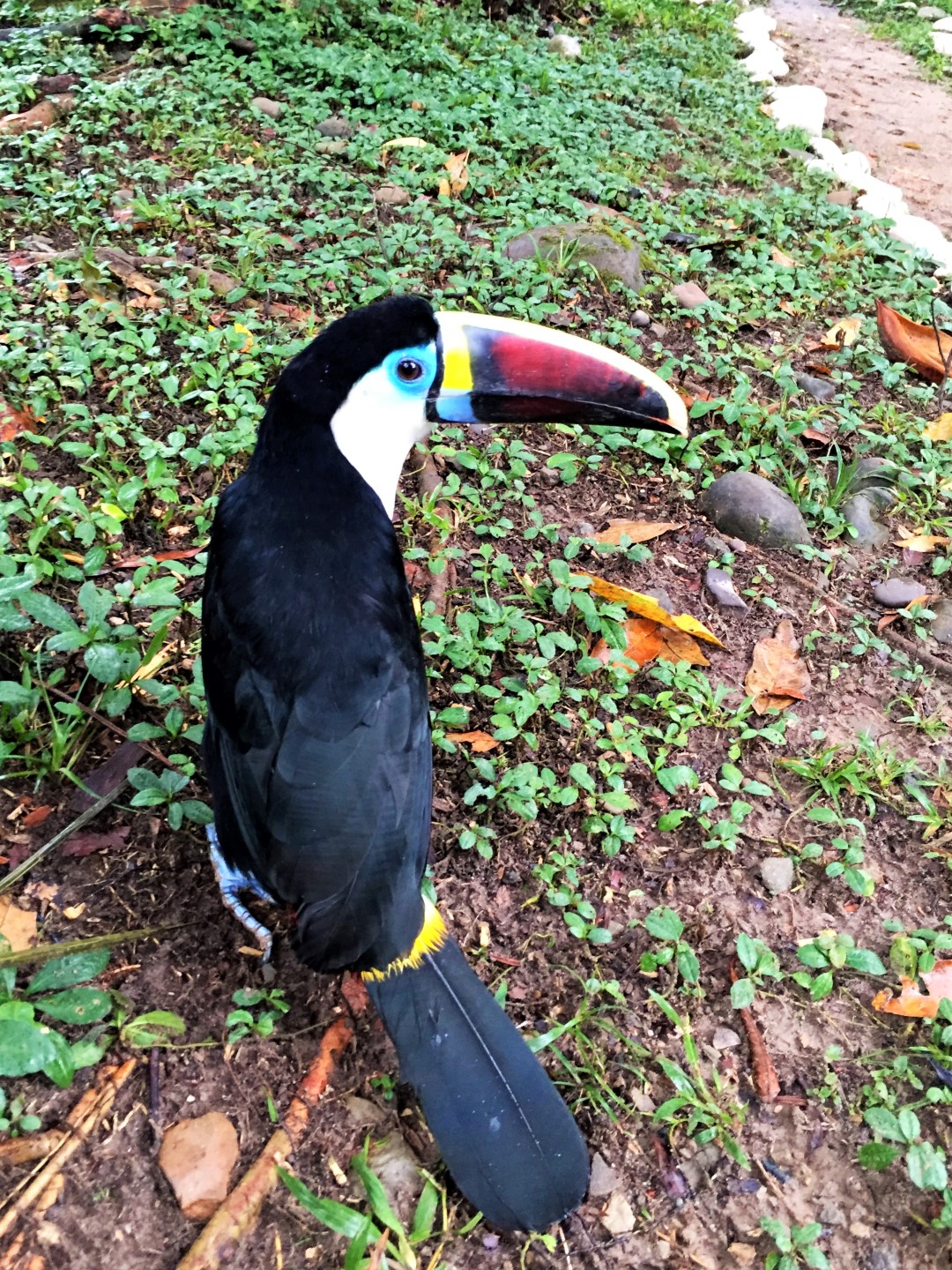
Marwan is not always agitated. When I stroke him, he becomes completely calm, closes his bright blue eyelids, and enjoys it. He is the centre of everyone’s attention. If he disappears from view, an intensive search begins immediately. After a little concern, he is always spotted high in the treetops within the grounds. If he left, however, somebody could simply take him. He cannot fly, his bill is weak, and his voice is quiet, so we worry about him most.
Tortoises
Well, even this article has devoted all its attention to birds. There are not many stories about the tortoises—they are simply lovely. The bird area contains two pools of Californian turtles, yellow-striped in one and red-striped in the other. Turtles are generally easiest to return to nature because they adapt well, have few natural enemies, and require little food. These, however, can never be released in Bolivia. As the name suggests, they originated in California and reached this country—as they reach pet shops worldwide—through export or the black market. They threaten local ecosystems because they adapt readily and displace native creatures. Latvia has a similar example, where Californian turtles released into nature thrive while pushing out the already endangered native European Pond Turtle.
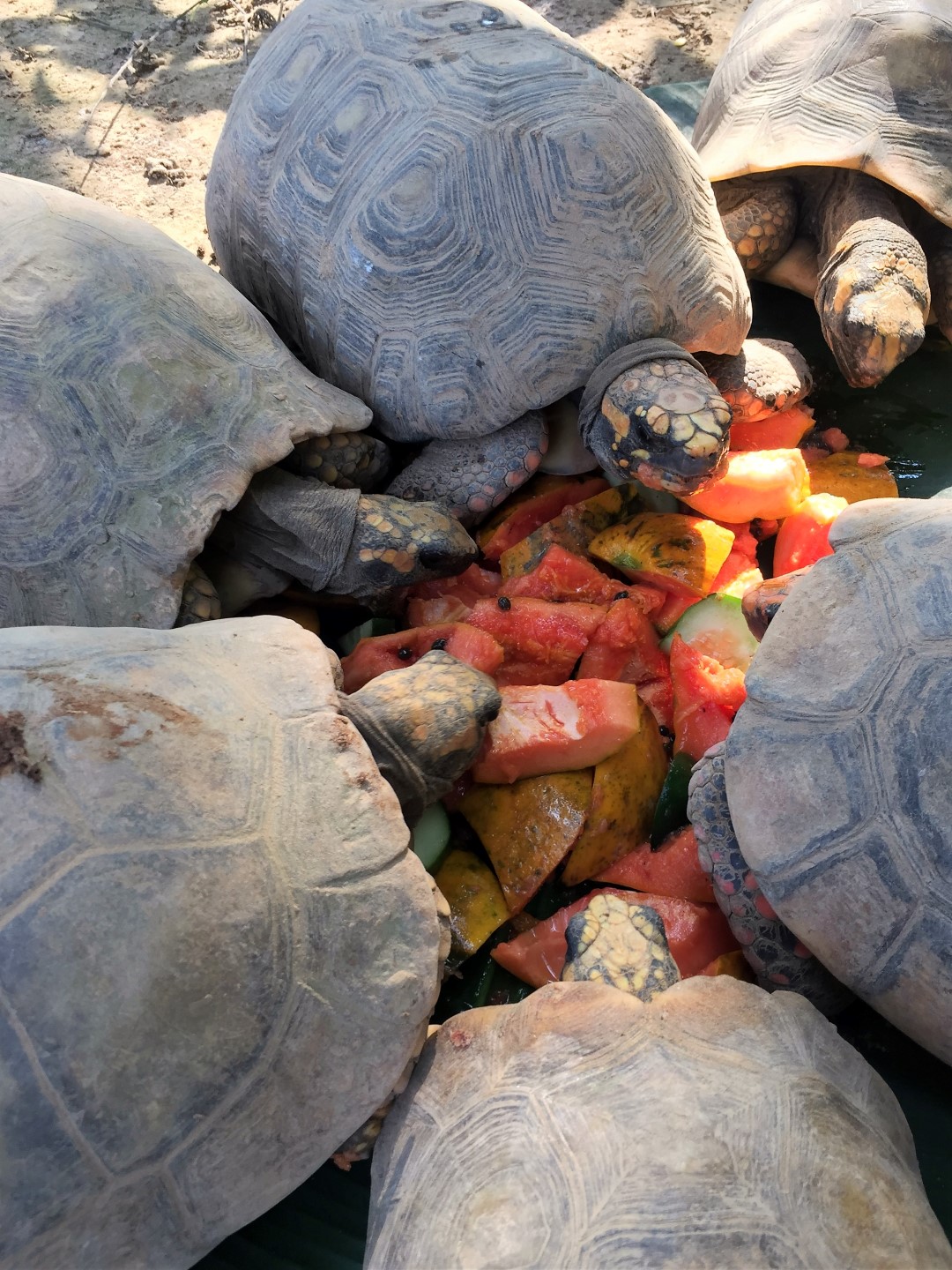
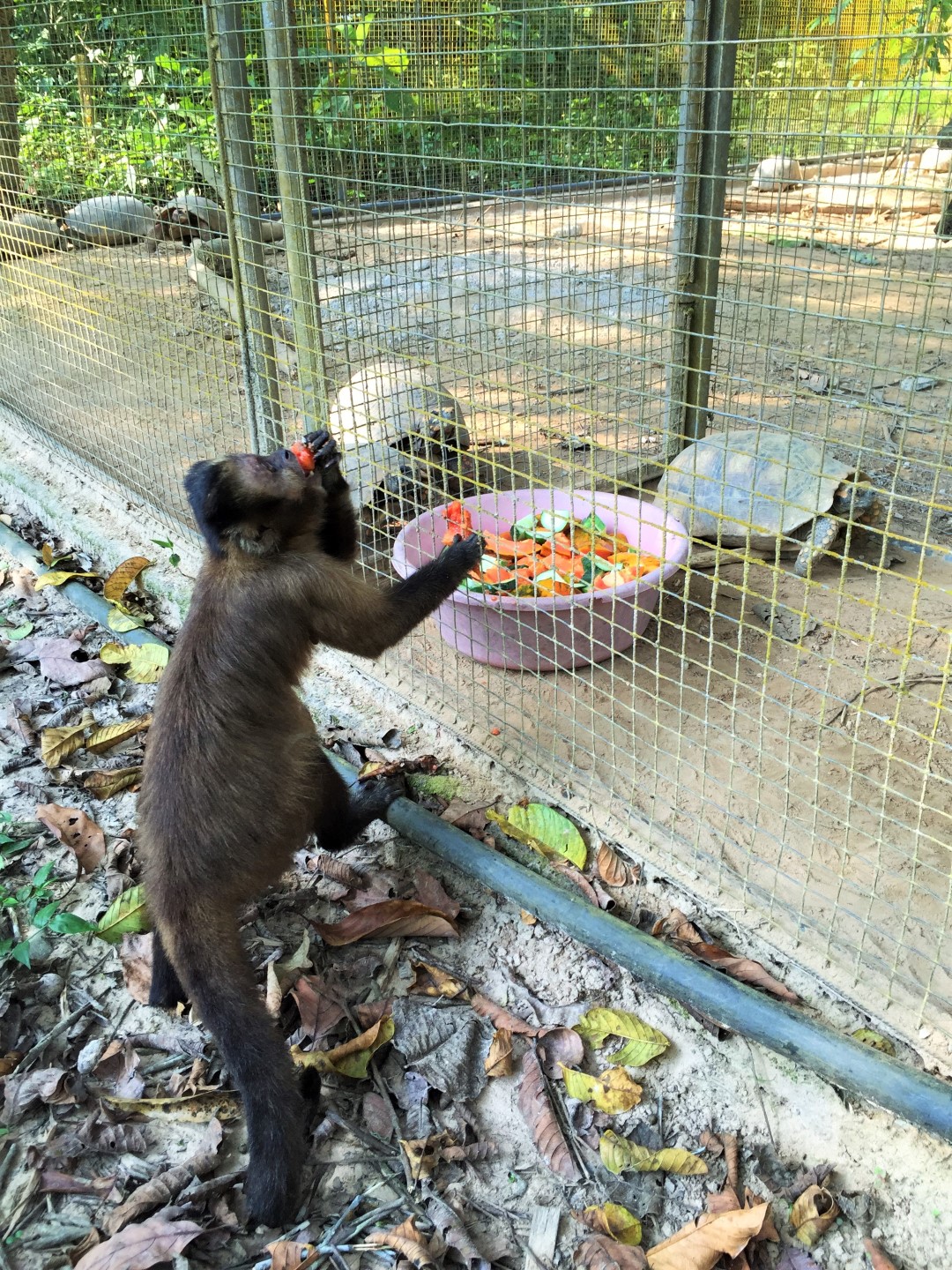
A second tortoise house stands away from the birds near Baloo the bear. It contains twelve Yellow-footed Tortoises native to South America. A major event lies ahead: half will soon be released into the wild, once approvals and paperwork are complete. I especially enjoy visiting to feed them. The usual challenge while carrying a large bowl of papaya is the free-ranging capuchin and squirrel monkeys, cheeky and confident enough to steal pieces. They particularly surround me while I unlock the house and must put the bowl down. The tortoises have noticed me too and slowly approach the door. I have to get inside as quickly as possible. If too many reach the entrance first, they block it, and before feeding, I must move each heavy creature aside. Food is served on large banana leaves that I cut with a machete at the forest edge. Yes, local people walking with machetes is completely normal. Any work in the jungle would be very difficult without one.
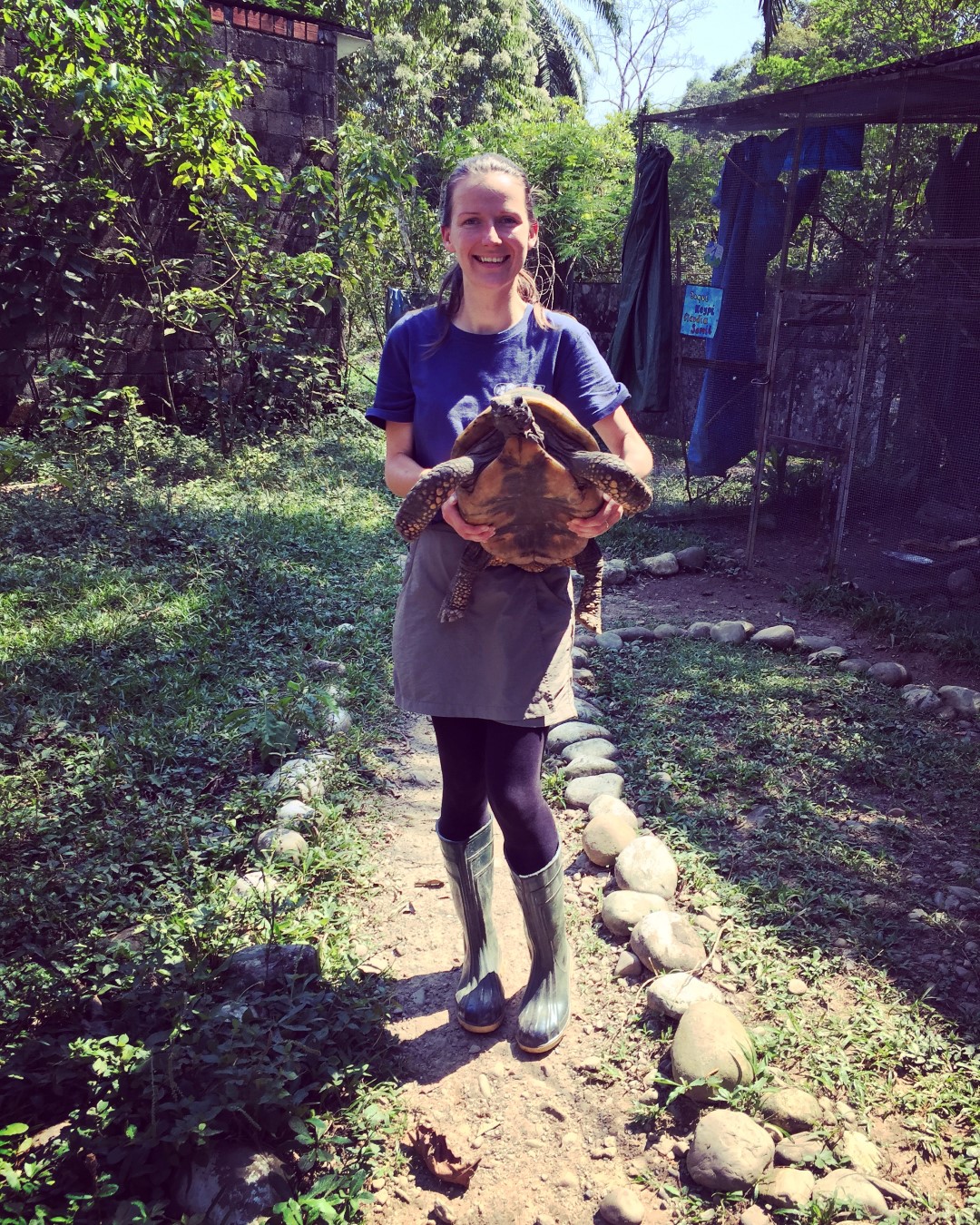
Another female Yellow-footed Tortoise lives in the bird area because blindness requires special care, and she should not share space with her lively relatives. Perhaps she—or perhaps simply the food—is why a free-ranging tortoise named Roberto visits us every day. The first time I saw him, I was shocked that such an enormous tortoise had casually arrived. He usually approaches slowly, opening and snapping his mouth from a metre away as though planning to bite. Over time, I realised that Roberto recognises me and no longer considers it. Sometimes, the vet or another volunteer knocks at the gate while holding the large, heavy Roberto, who wandered onto the farmers’ road. He receives a warm welcome in the bird area because it is safer than the road. This occasionally produces unusual scenes: parrots begin another fight over the cave; we humans try to resolve it; and a tortoise wanders underfoot. :) One day, I understand why Roberto so often reaches the road: I meet him outside the second tortoise house. His daily route runs between it and the bird section, several hundred metres apart.
I imagine society tends to view a large macaw as something like a pet. We are so accustomed to seeing these animals in cages or as “objects” for paid photographs at resorts and entertainment venues. No: a macaw is a wild bird native to tropical regions of South and Central America. This is where they live and where they are removed from nature to satisfy somebody’s whim to decorate a home with a “colourful creature that talks”. I sincerely recommend thinking twice about the consequences of buying one. First, demand creates supply. Purchasing an exotic animal encourages its removal from nature and sale on the black market, which means suffering. Second, consider whether a free macaw—flying, reproducing, and forming part of our ecosystem—can truly be exchanged for one in a cage, with clipped wings and stress-plucked feathers, existing only for the pleasure of one person or family. Only domesticated animals can be happy in a human home. A wild animal belongs in its own home: nature. We make a far greater contribution by adopting a dog or cat from a shelter than by buying a parrot from a pet shop.