The Sacred Valley of the Incas, or the valley of the Urubamba River, lies in the Cusco region and encompasses ancient villages and significant Inca ruins, including Machu Picchu. The Incas valued this place for its exceptional geographical and climatic qualities. The Urubamba River carved out the valley, joined by a succession of streams flowing down from other valleys and ravines. The Sacred Valley was one of the empire’s most important maize-growing regions. Looking for an escape from the bustle of Cusco, we visited the valley three times—and I can say at once that there is something truly special about this place.
Urubamba
Combining research with intuition, we chose Urubamba as our base for exploring the surrounding towns and ruins of the Sacred Valley. It sits near the valley’s centre, making the nearby sights easy to visit on day trips. One particular guesthouse on Booking.com also caught my eye—and perhaps my heart—because it offered everything we wanted: a location slightly outside town, a garden, and an affordable price.
We reach Urubamba in a colectivo minibus. In immediate contrast to Cusco, the air and temperature feel more like spring. It is September, and spring really ought to be beginning in Peru. Urubamba (2,870 metres), lower than Cusco, has already welcomed it, and the air smells of flowers. And yes, at last we are in the countryside! We hail a mototaxi and follow a gravel road to the accommodation we chose.
Two little dogs welcome us. Both dachshunds bounce alongside us through the garden, where we meet Yamilet, the owner. Perhaps Yamilet was what I had somehow sensed through the internet cables, the computer screen, and the photographs of the house—the reason I wanted to come here in particular. She is such a warm and radiant woman that words struggle to describe her... From the first moment, we feel at home; even our room smells just like the garden cottage in Kuldīga.
That evening, sitting in the garden, we meet a man from Colorado in the United States. He has come to Urubamba for several months to learn how to build traditional clay ovens and hopes to turn the knowledge into a business back home. A desire to change professions also played a part: he used to be an accountant for a company that grows and sells marijuana, which is legal in Colorado. Yes, exchanging accountancy for clay-oven building is quite a transformation. Peru may be the best place to learn. Traditional clay ovens are common in both houses and gardens here. Besides providing heat, they are excellent for cooking. If we decide to eat pizza for dinner, for example, we always look for a restaurant with a clay oven before choosing where to go. Its pizzas are invariably the best.
The next day, we want to see the nearby Inca ruins and have arranged a convenient way to do it: Yamilet’s husband will drive us in his car.
Salineras de Maras
After a delicious breakfast, we set out for our first sight, the Salineras de Maras salt pans. The road from Urubamba climbs the mountain, and within twenty minutes we reach a bend overlooking the white, salt-covered terraces.
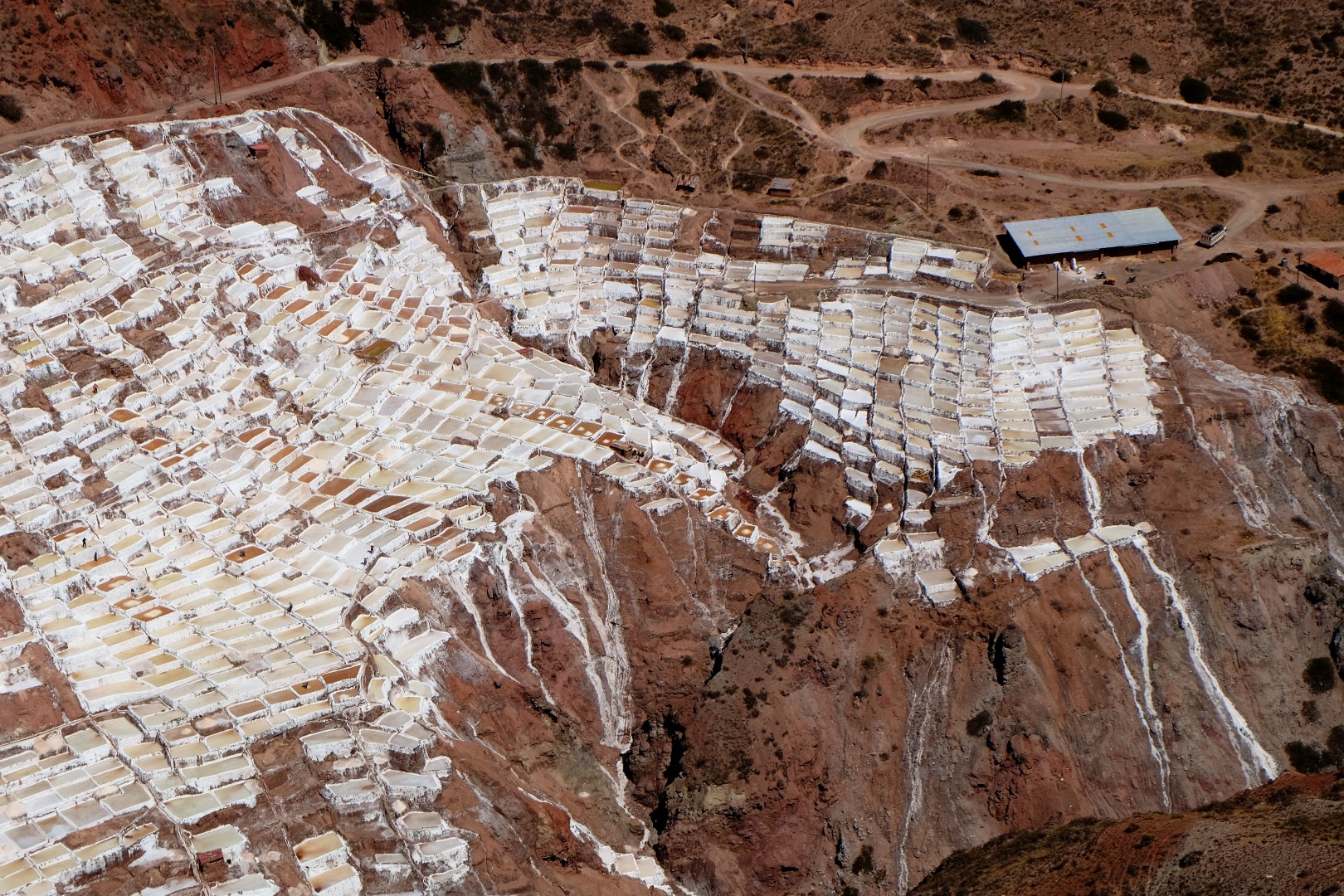
Naturally, we take the opportunity to see the salt-making process more closely. A small stream emerges from underground here, carrying extremely salty water. Farther on, a network of channels diverts its flow into hundreds of tiny pools. None is more than thirty centimetres deep, and each side measures around four metres. Once a pool reaches the necessary level, its water supply is stopped and the sun evaporates the water over several days, leaving salt crystals behind. It sounds simple, but the process demands close supervision: the water in each pool must be kept at precisely the right level for the salt to be harvested. Salt has been produced here since Inca times; it was the Incas who created the pools and channel system. Today, workers at Salineras de Maras maintain it in close cooperation with a collective. Rather like an allotment association, any member of the local community can apply for a salt pool of their own. Once the water evaporates, the owner comes to scrape the salt carefully from its walls and floor. The water supply is then reopened, and the cycle of evaporation and harvesting begins again.
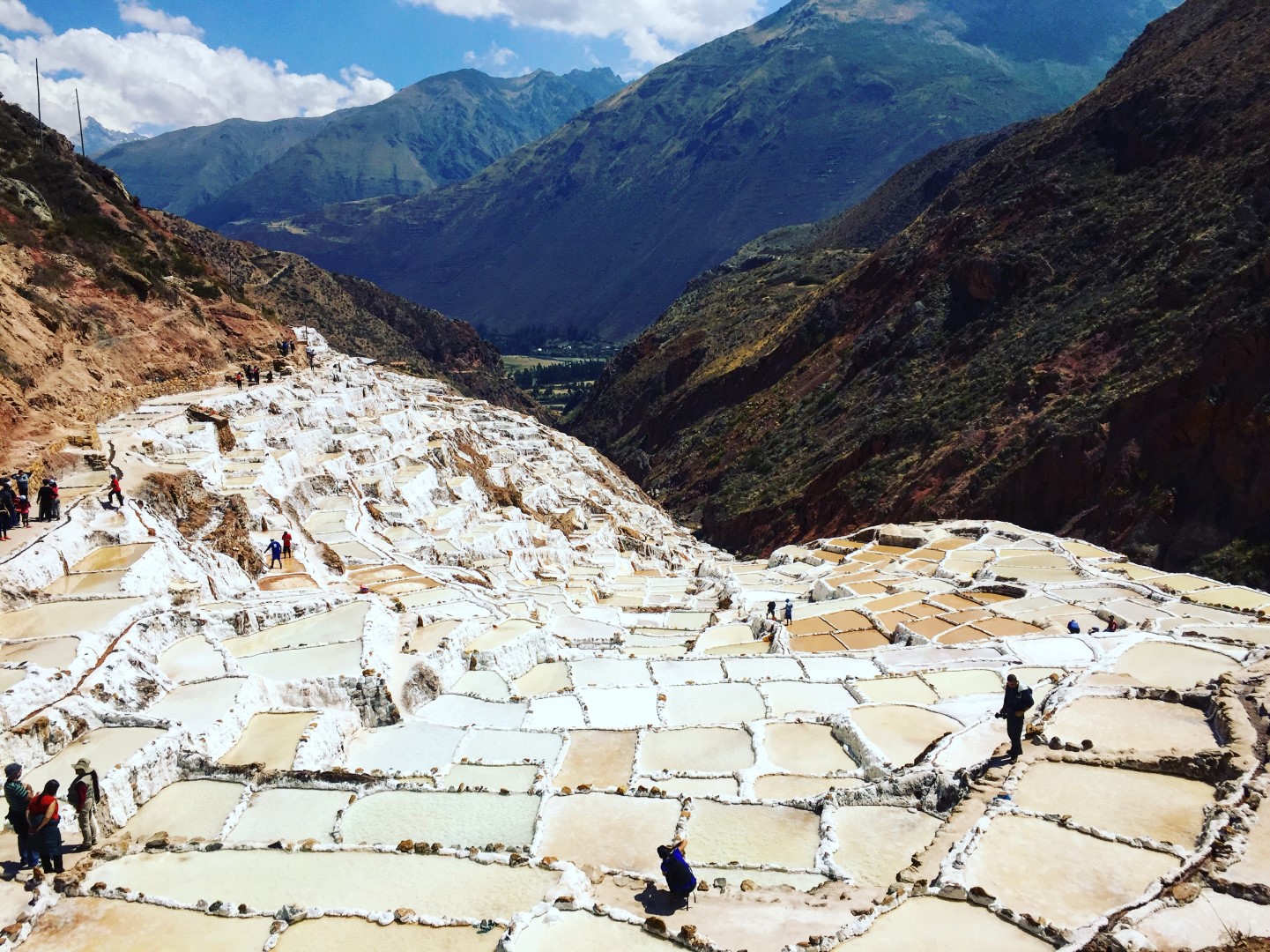
The salt produced here ranges from white to pale pink or light brown, depending on the harvester’s skill. Locals say that its quality has been recognised as among the finest in the world. Naturally, we buy a small packet of pink salt.
Moray
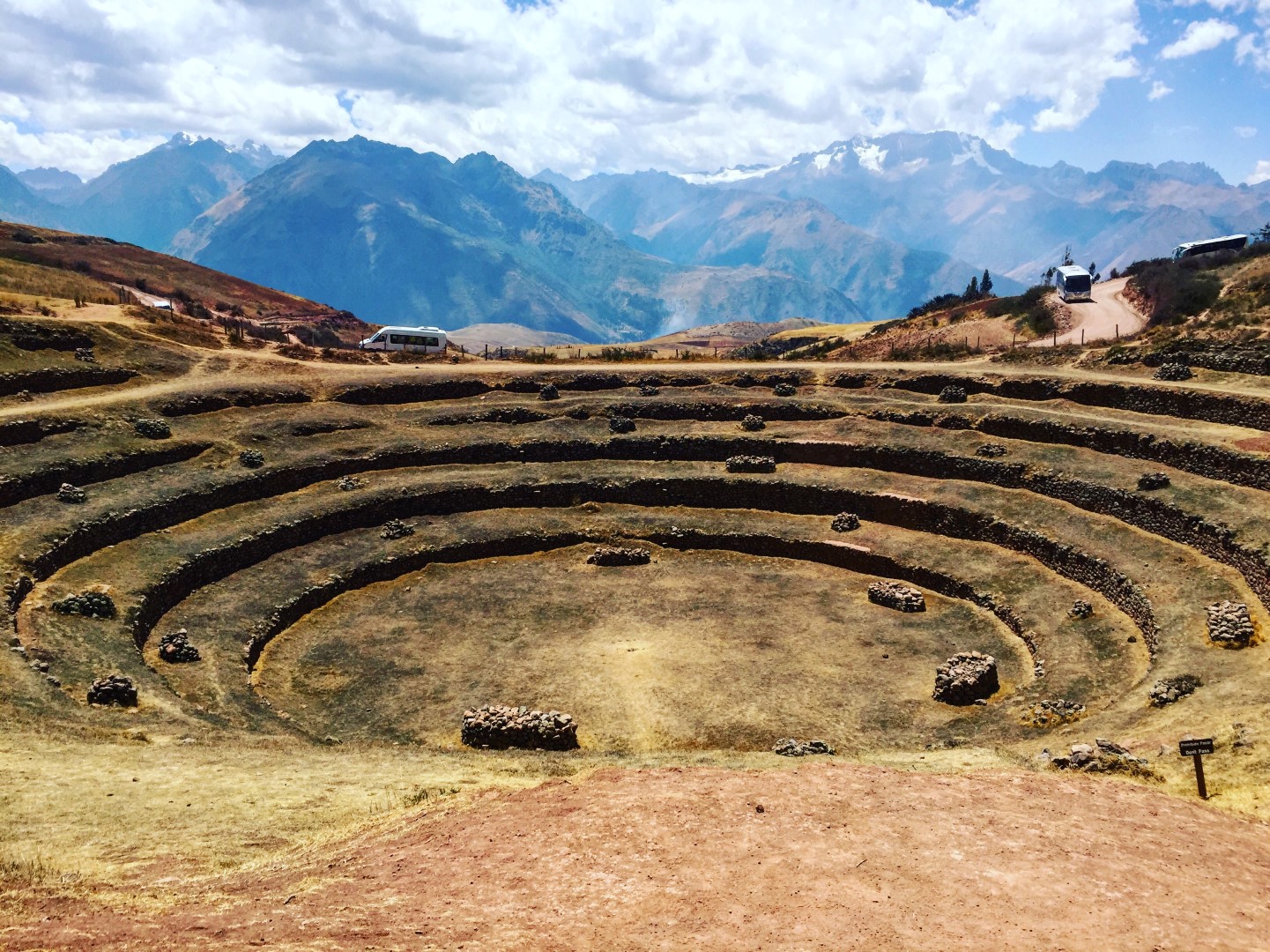
We continue to the Inca ruins of Moray, on a plateau 3,500 metres above sea level. These are unusual ruins: circular terraces descend in a series of levels, with the largest formation reaching a total depth of thirty metres. As at other Inca sites, an irrigation system was installed here.
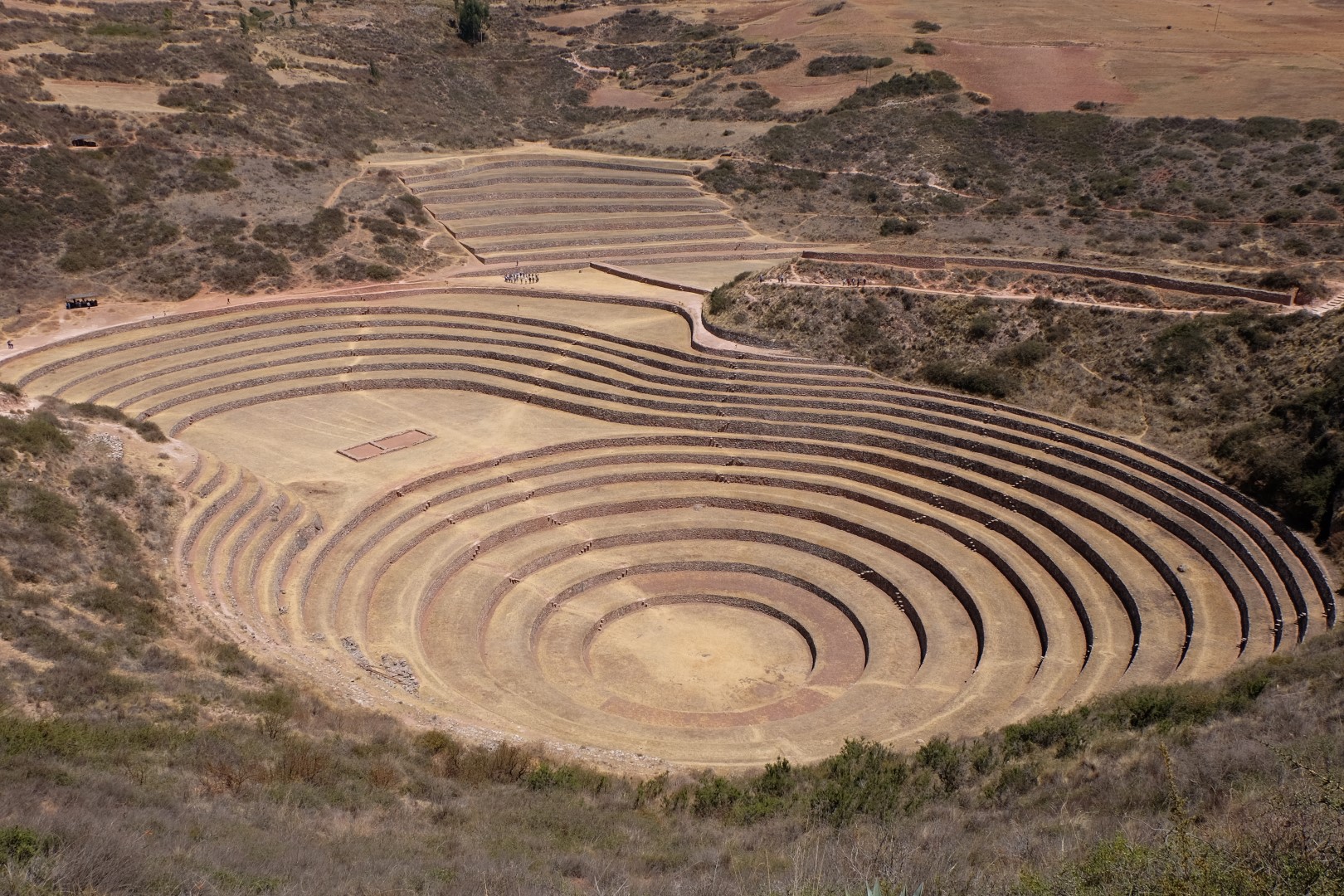
What purpose did these vast circular terraces serve? Even researchers do not know the Incas’ intention with certainty. Studies have shown, however, that the depth, shape, and position were selected with the effects of sun and wind in mind. Together, they create a temperature difference of fifteen degrees between the highest terrace and the bottom. The Incas may have used this wide range to study its effects on crops. Moray, in other words, could have been an Inca agricultural experiment station.
Ollantaytambo
The town of Ollantaytambo has survived into the present and offers an excellent example of Inca urban planning. It remains inhabited, although its appearance has adapted to tourism. There is a souvenir market surprisingly large for a town of this size, along with restaurants in ancient buildings offering food for every taste. Otherwise, apart from the arrival of the internet and motor vehicles, it feels as though nothing has changed in seven hundred years.
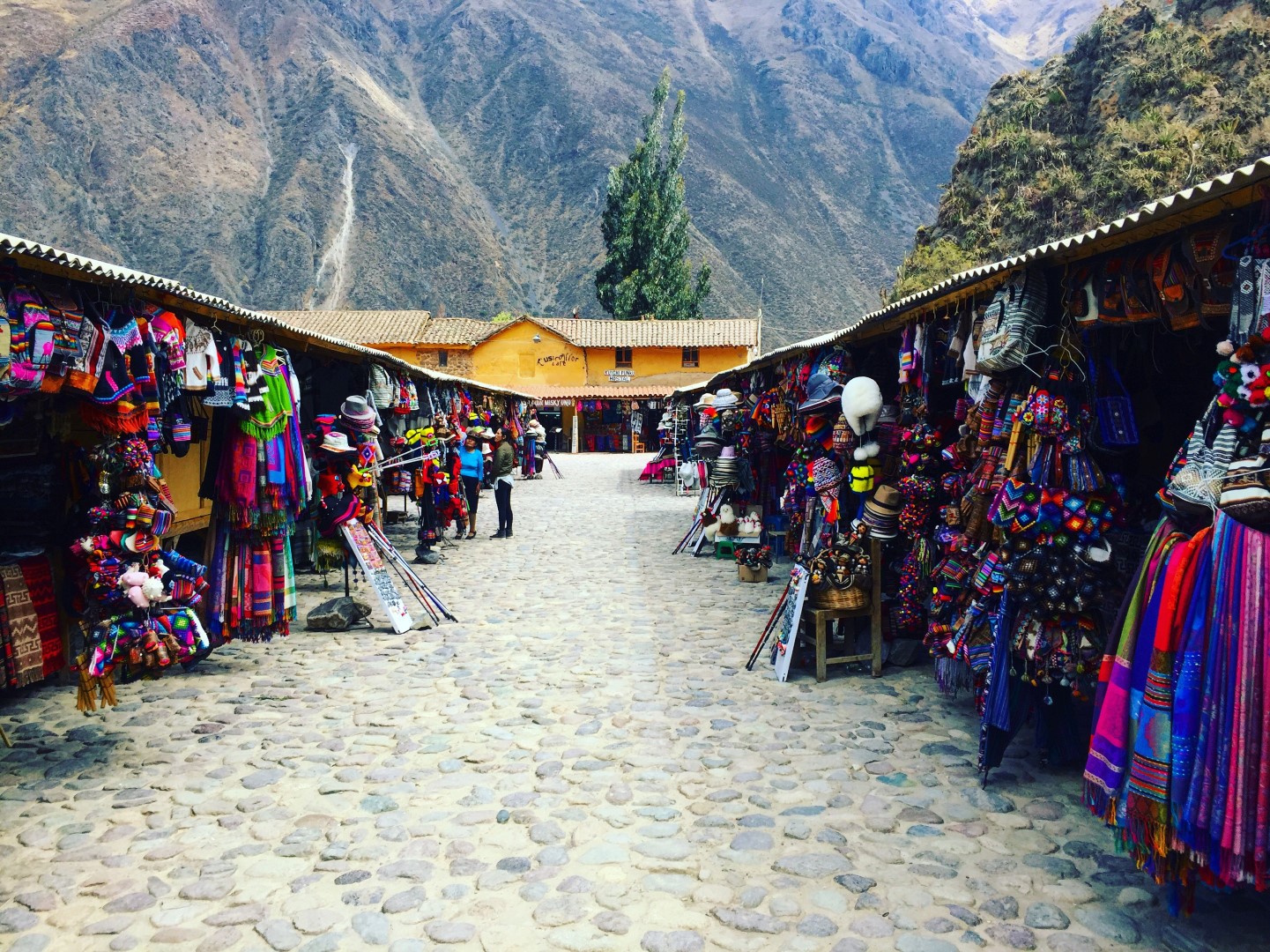
The town lies in a fold of the mountains, where naturally the Incas built terraces and the fortress of Ollantaytambo. This was one of the places where the Spanish conquerors lost a battle against the Incas. From the fortress, Manco Inca’s army hurled projectiles and flooded the town below. The site also served as a temple. Its masterfully constructed ceremonial area lies at the top of the terraces. To reach it, as we do, you must climb hundreds of “Inca steps”. By now, we have accepted that visiting Inca sites will never be a simple stroll through old ruins. An “Inca step” is the height of two ordinary steps.
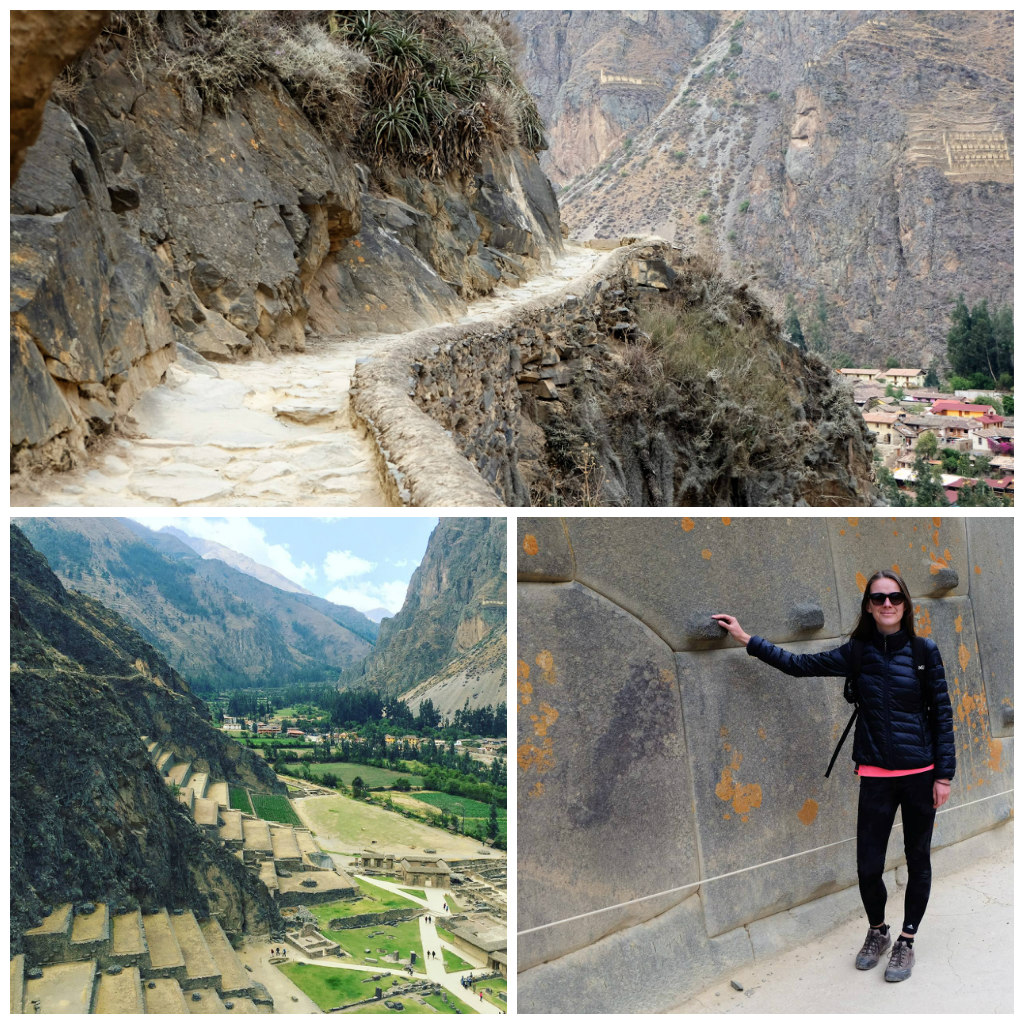
On the mountain opposite the ruins, we see another ancient Inca-style building. It may have served as a storehouse for food. A strong, cold wind blows continuously at that particular location, making it ideal for the purpose.
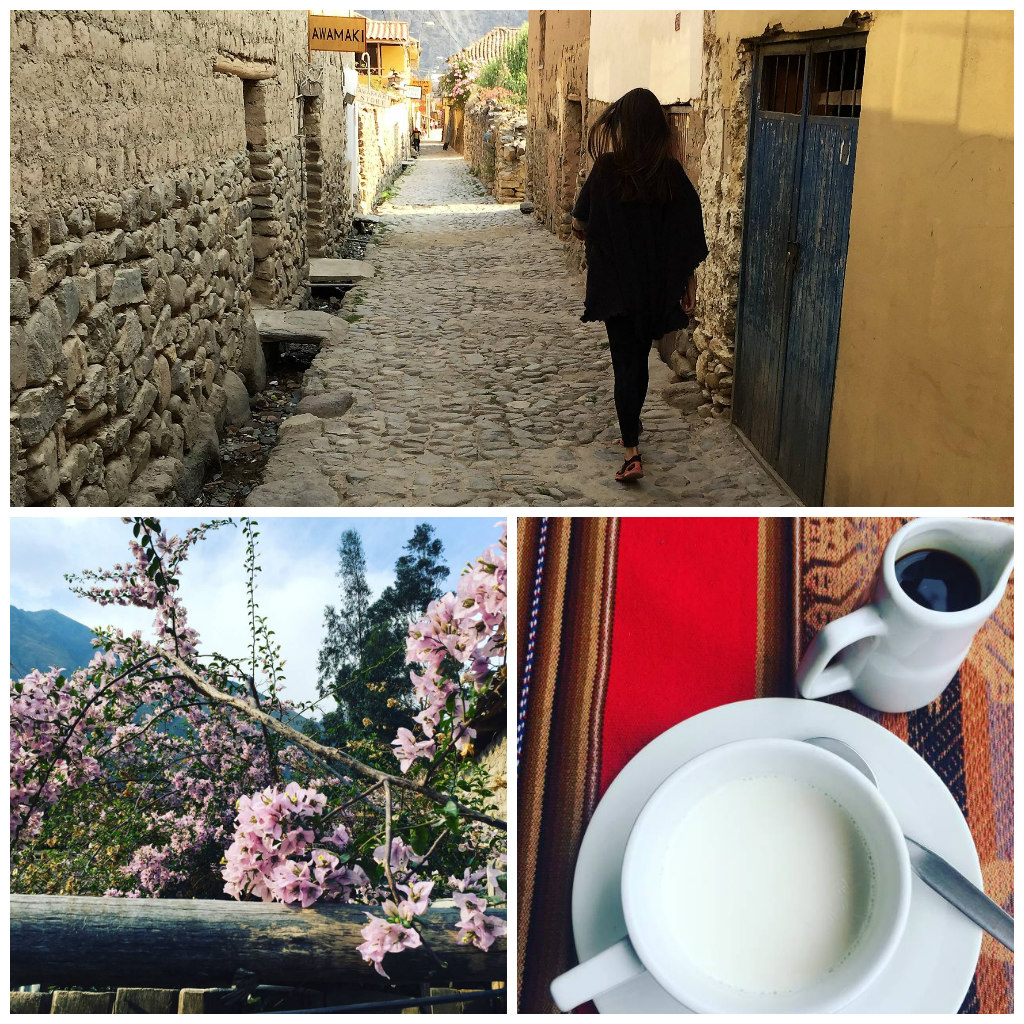
After climbing the mountain, we decide to have coffee. Because we order it with milk, we receive cups full of hot milk and a separate little vessel of concentrated instant coffee. Combined with the rich milk, however, it tastes very good. Peru exports coffee beans, but coffee culture within the country itself is still in its infancy. Most people drink instant coffee because it is cheaper and more convenient.
Pisac
The next day, on our way back to Cusco, we stop in the town of Pisac. As the closest town to Cusco, it is quick and easy to reach and has become very touristy. Once again, cafés and restaurants offer international menus, and a tourist market occupies the main square. An unusual feature of the town is the water channels built into the middle of its little cobbled streets. They look charming but are thoroughly inconvenient for mototaxis and bicycles. Local drivers have learnt how to cross them, and all kinds of vehicles weave through the tourist-filled lanes.
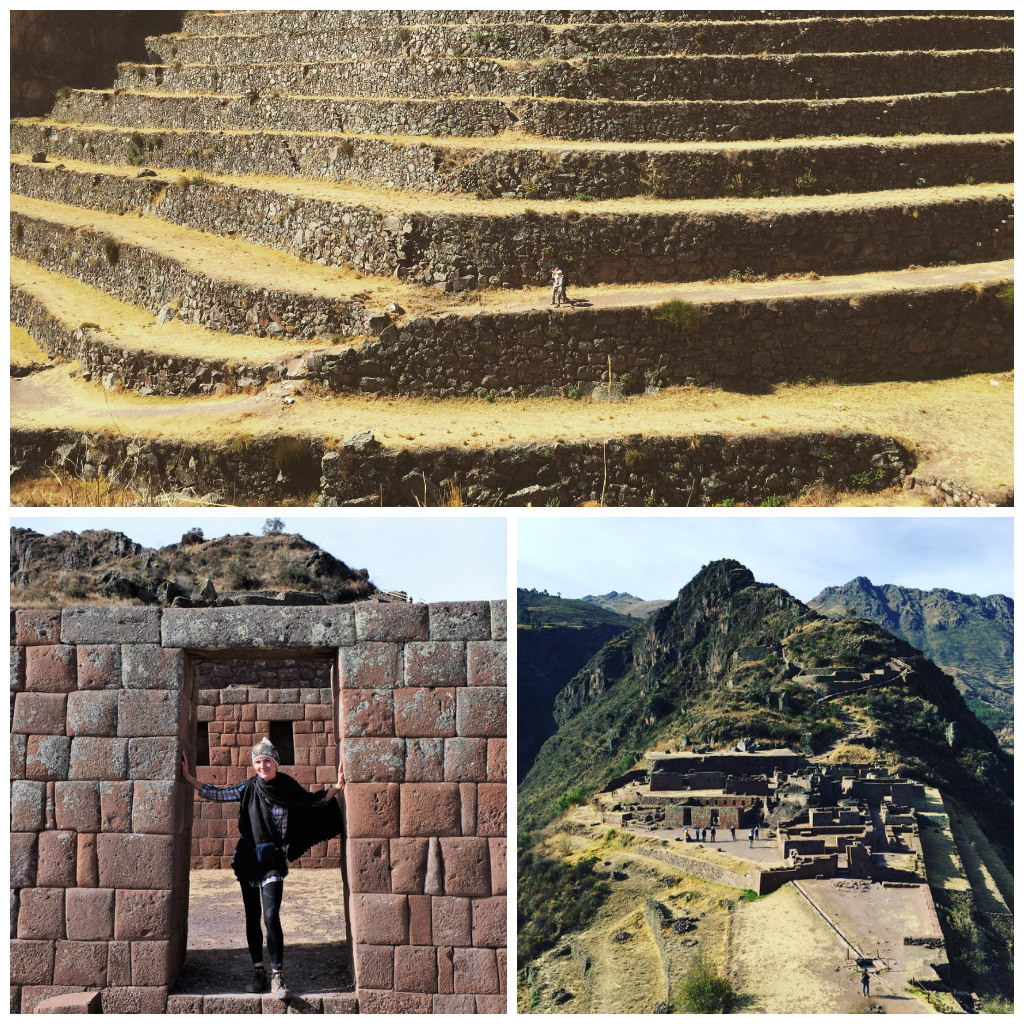
Our destination is the Pisac ruins. Once again, we face a steep ascent through terraces, a ravine to cross, and a path running along the mountainside, where ceremonial baths and a military area once stood. These ruins are unusually extensive, covering what are essentially two mountains. From the summit, home to the ceremonial centre and water channels that still work, you can survey the town of Pisac, the Urubamba River valley, and the surrounding peaks.
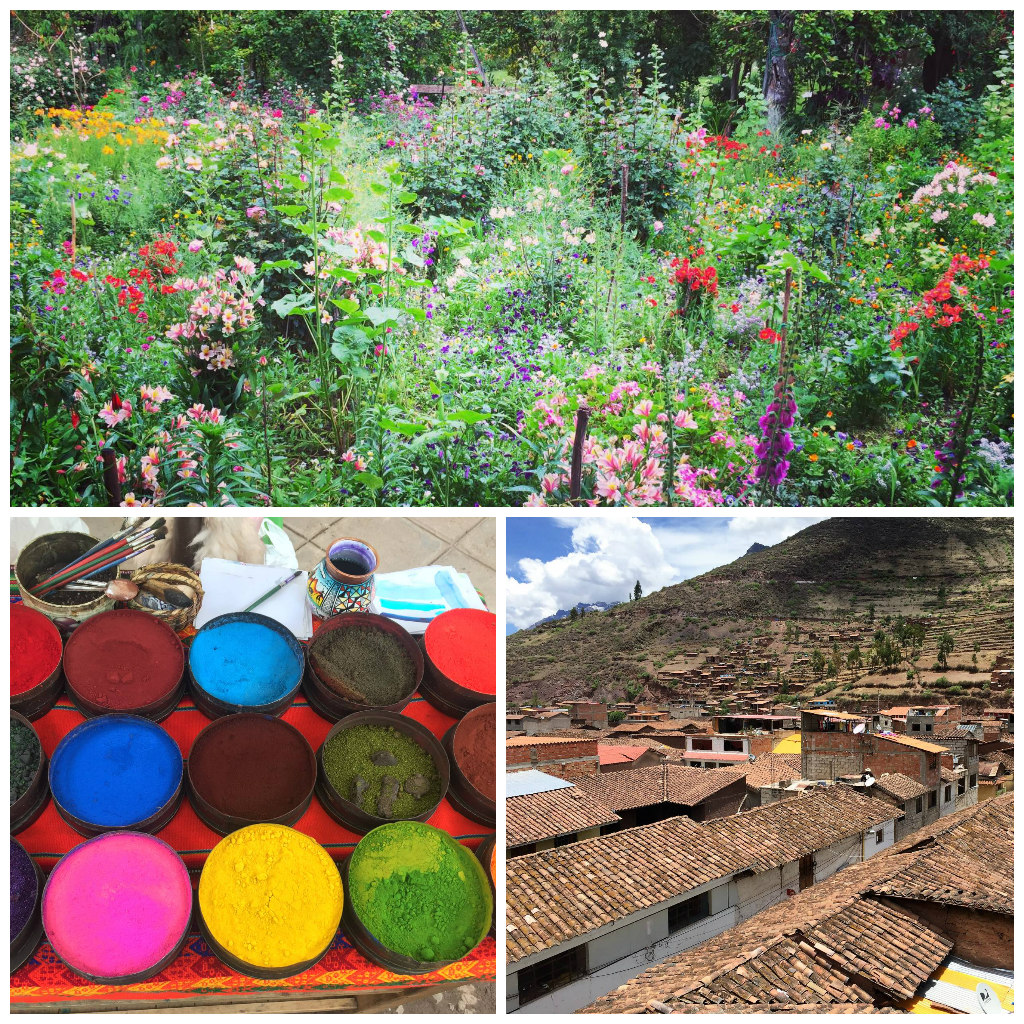
There is another new phenomenon in the Sacred Valley. In recent years, its towns—Pisac in particular—have become popular with New Age followers searching for an Andean Shangri-La. Many foreigners have moved to the valley with their families, influencing the development of the towns and the lives of their indigenous residents, largely in positive ways. Vegan and vegetarian cafés and small art galleries have opened, creating jobs for local people. Probably thanks to the influence of expatriates, Pisac is especially well kept. Even the local market displays friendly educational posters about sorting waste and signs showing where drinking-water bottles can be refilled to reduce plastic use. For such a small town, there is a remarkably wide choice of meditation, reiki, and yoga classes. The region is also known for ayahuasca and other ceremonies. The Sacred Valley is an energetic place that attracts people from all over the world. On that point, we can agree.
Returning to Urubamba
On one of our breaks, Jānis’s “traveller’s stomach” forces us to postpone our plan to hike the Salkantay route to Machu Picchu. We decide that we might return to the Sacred Valley, whose spring fragrance seems to be calling us back. Why change anything when we already know somewhere reliable, welcoming, and beautiful? We return to Yamilet.
As we enter the garden, the little dogs once again give us a warm welcome. Yamilet has apparently not yet seen the Booking.com reservation I made shortly before arriving, and she is pleasantly surprised to see us back and hear that we will stay for several days this time.
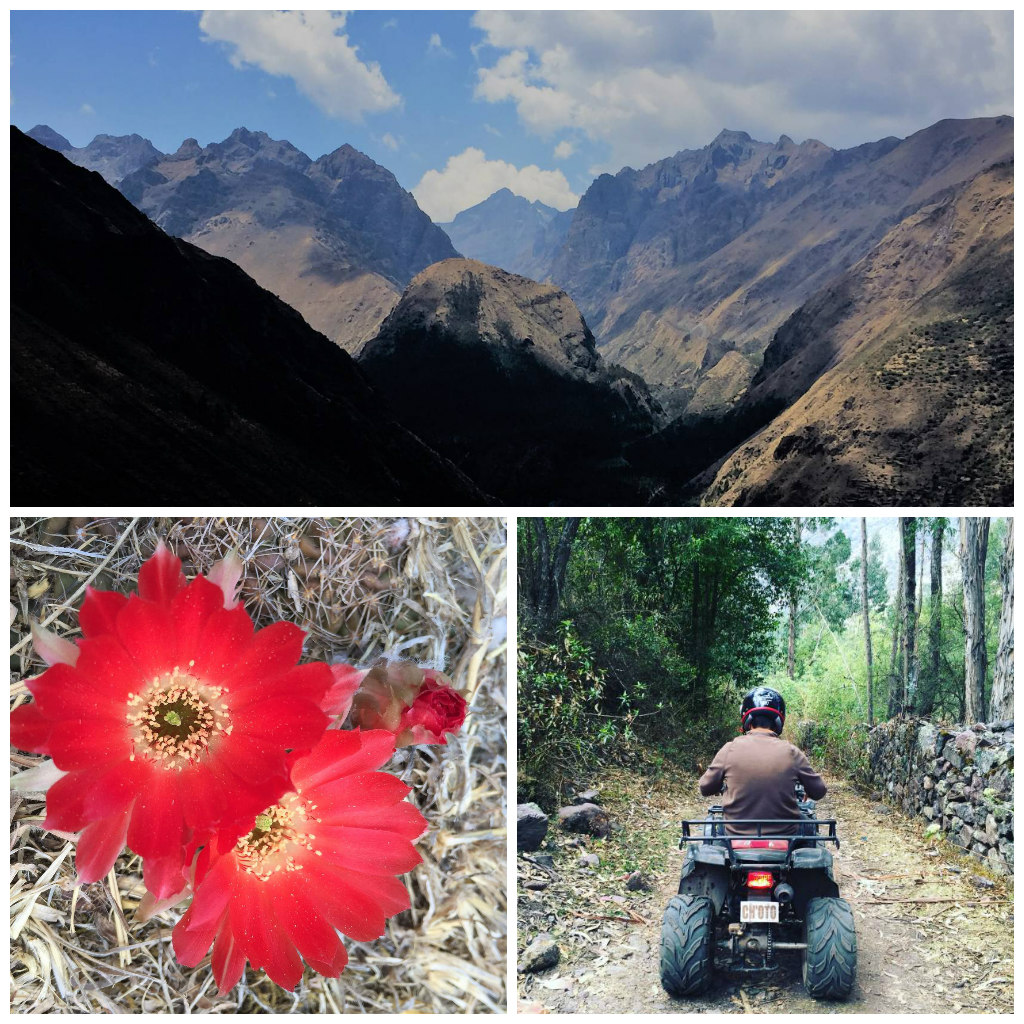
The next day, we hear quad bikes passing along the road beside the house. We saw the surrounding ruins on our previous visit, so we decide to throw ourselves into a quad-bike adventure. There is no need to search for long: Yamilet makes a call and arranges the hire, while her husband drives us to his cousin, who will be our guide for the day.
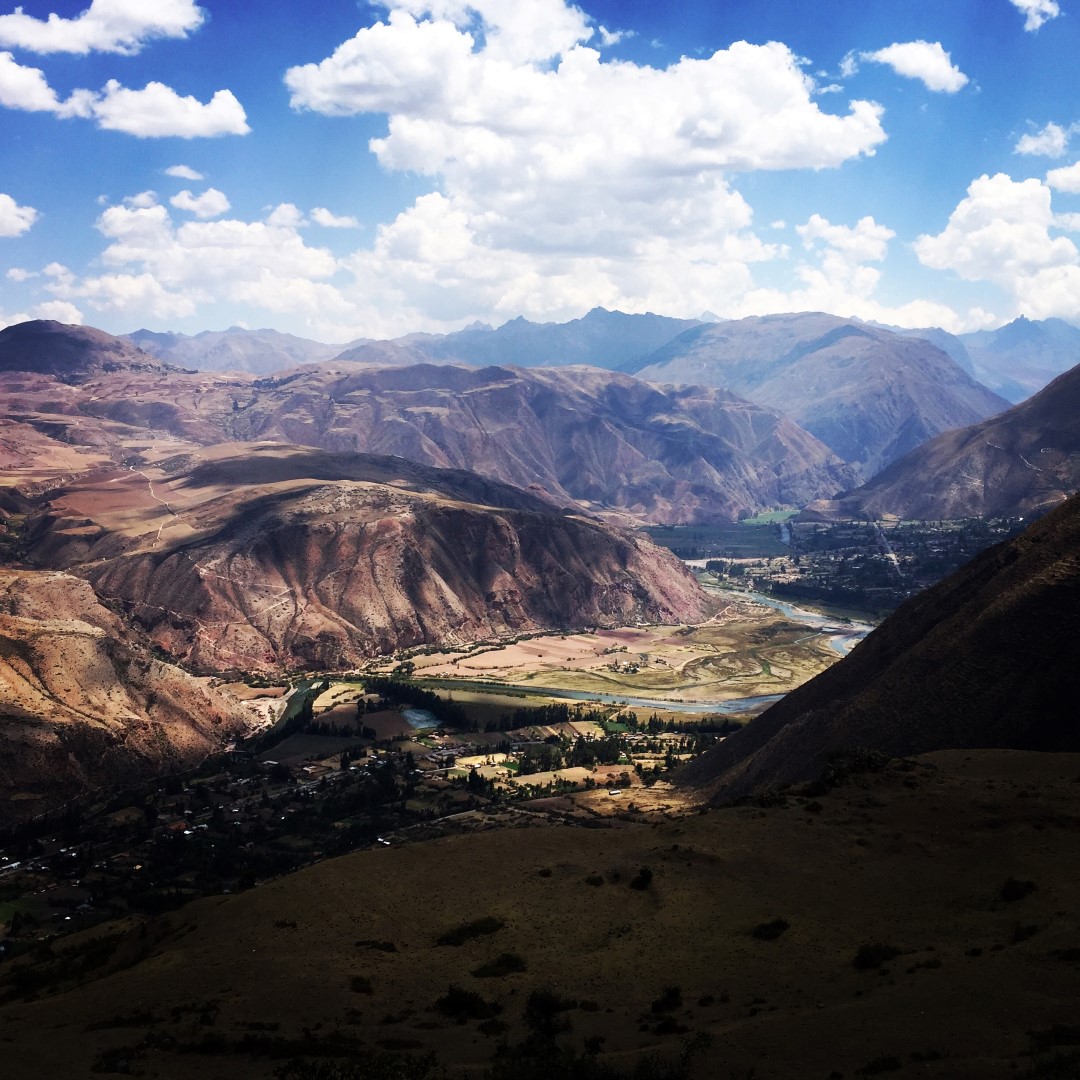
We follow a gravel track beside the cliffs and then through a eucalyptus forest. How wonderful the air smells! Farther on, the road becomes considerably narrower and begins twisting through sharp bends as we approach the summit. From the top, we can see the Urubamba River valley and, in the distance, the villages of the Sacred Valley strung along it. Our guide proves to be an interesting companion and tells us several Inca legends at the summit. By profession, he is a mathematics teacher in one of the valley’s villages; on his days off, he earns extra money leading quad-bike trips.
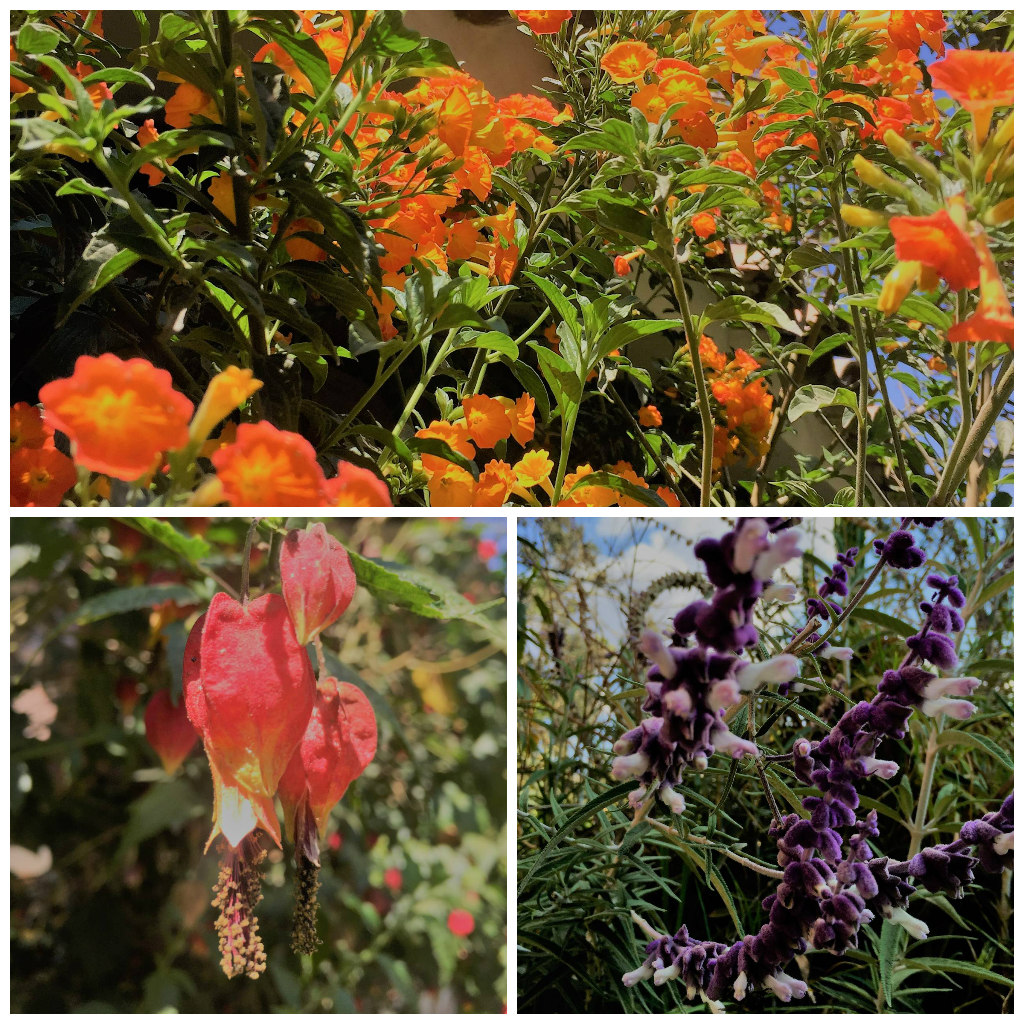
After a wonderful day, I sit in the garden enjoying the fragrance of a shrub that reminds me of the scent of a love tree. It is dark. Suddenly, I hear something enormous moving behind the bushes. A moment later, I see two shining eyes looking at me through the leaves. From the outline and horns, I realise it is a huge bull. The following day, sure enough, I see it grazing in the field. Yamilet explains that it belongs to a neighbour and was brought over to plough the field where maize will be sown. This is common practice here because the plot is not large enough to justify hiring a tractor, which is expensive in any case. The sight of a bull working in the field is quite extraordinary. I do not think I have ever before seen this seemingly ancient and familiar method used in real life.
In Yamilet’s kitchen, I notice a leaflet advertising a day-long workshop involving yoga, meditation, and finding your spirit animal. As I have mentioned, classes of this kind abound thanks to the expatriates living in the Sacred Valley. Hmm... The search for a spirit animal especially catches my interest, so while sitting in the garden, I read about how such a discovery is supposed to happen. I find a website claiming that everyone has a spirit and power animal; you simply need to find it through meditation, dreams, or observing nature. It says that during a lifetime, you may form bonds with different animals that guide you through different stages. Rule number one: you must let the animal choose you. Out of curiosity, I ask Jānis, who is sitting nearby in the garden, whether he has any clue what his spirit animal might be. He has no idea.
That evening, we decide to walk into central Urubamba for pizza. We pass the market, which remains surprisingly busy despite the late hour. At one point, a large black dog runs over. He is so delighted to see Jānis that you would think he had known him all his life. We try not to give the dog attention and keep walking. He comes with us, staying directly beside Jānis. All Jānis has to do is look down at him, and the dog begins panting as though smiling and jumping with joy. When we reach the pizzeria entrance, he understands that he cannot follow us inside and remains in the nearby park.
By the time we have waited for and eaten our delicious clay-oven pizza, a considerable while has passed. We stand and walk outside, where we find the black dog lying beside the door. He has waited for us all this time. The moment he sees Jānis, he leaps up joyfully and comes along. We realise that emotions are beginning to enter the situation and avoid communicating with the friendly creature, not wanting to grow even more attached. Once he has followed us a long way and repeatedly tried to catch Jānis’s attention, we decide there is little more we can spoil. The dog has plainly resolved not to leave us, so we will at least buy him food. Stray dogs are a serious problem in Peru. I believe a dog is intelligent enough to communicate a need, and this time food might be the answer. We find a small shop selling loose dog food and take it to a side street, where we serve it to our loyal companion. Our plan is to slip away while he eats. As though he knows, the dog does not even look at the food; he stares continuously into Jānis’s eyes and follows his every movement. I am hypersensitive in situations like this, but this little fellow has managed to touch Jānis’s heart too. Jānis watches him and says, “If he were my dog, I’d call him Shadow.”
We are certain the dog will continue to follow us, but we cannot take him to Yamilet’s house. Jānis spots a mototaxi driver and goes to explain the route to the house, which stands a little way outside town. The dog stays beside him the entire time and looks ready to ride with us even on a mototaxi. We climb in without him. He watches with desperate, bewildered eyes. As the mototaxi pulls away, the dog begins running after it. Even when we gather speed, I look back and see the black dog still running along the middle of the road in the distance. “I think your spirit animal just found you,” I tell Jānis.
Our most unusual experiences have happened in the Sacred Valley, and something unknown has repeatedly called us back. We returned to Pisac a second time as well, after finishing our time with The Macaw Project. I do not want to describe the indescribable—sometimes the best story is one left partly untold. :) Travel, and follow your heart!