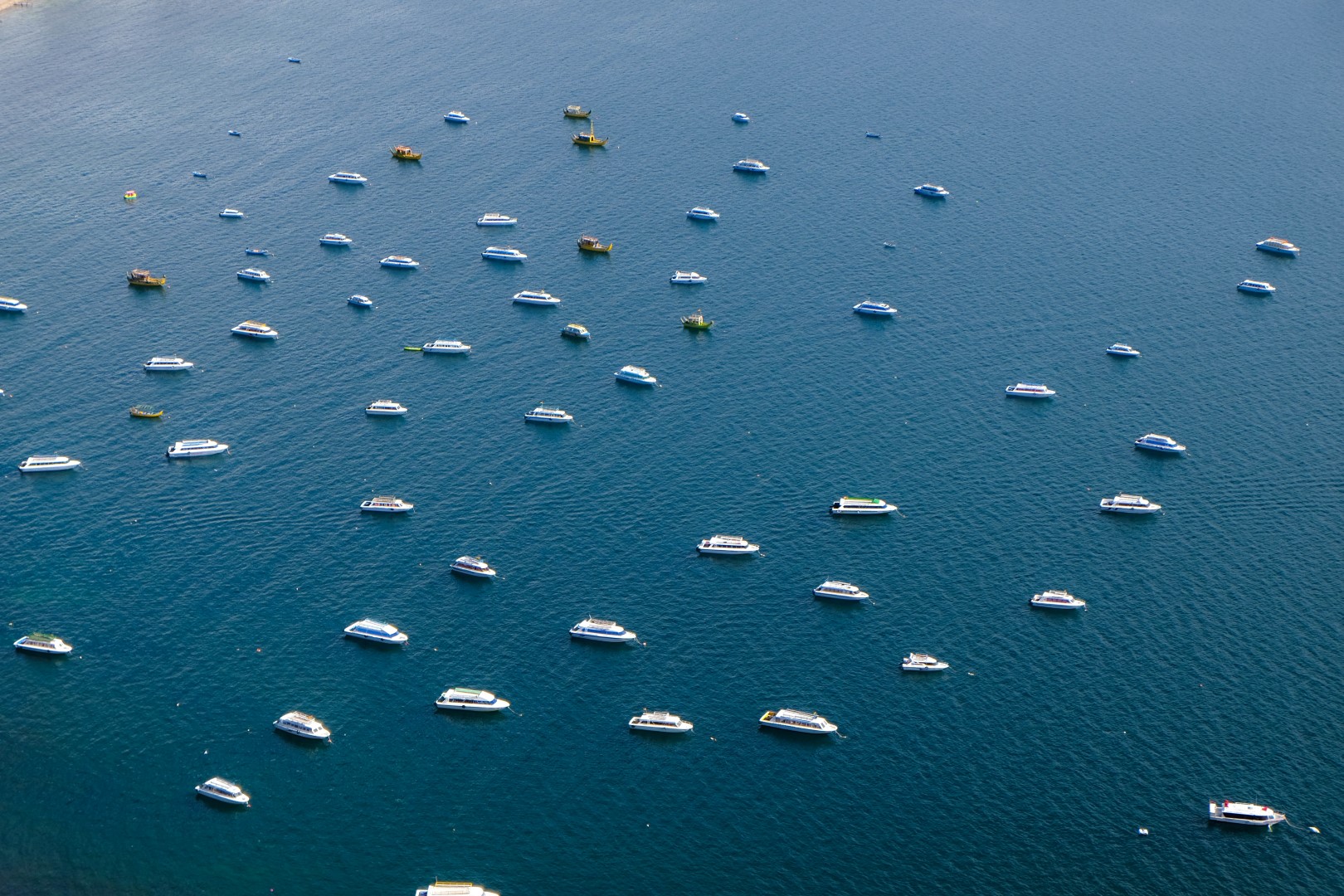
We have spent more time in Bolivia than we originally planned. We have already been here for five weeks, yet somehow it still feels as though we should stay for one more before heading back to Peru. Copacabana (3,841 metres above sea level), a town on the shore of Lake Titicaca, is a logical stop on the way. We had already passed through once, and the little town seemed to suit exactly what we want right now: a break from the big cities, water and nature nearby, and an internet connection.
Jānis suggests making the most of Bolivia’s low prices for one final week and staying somewhere a little more luxurious. After weeks in the jungle, sleeping on a straw bed and taking cold showers full of insects, I am ready to stretch our budget a little. A look at Booking.com suggests that Copacabana is the best place in Bolivia for precisely that. There is a wide choice of rooms overlooking Lake Titicaca, and a stay in a decent hotel costs even less than a motel room in the United States. Besides, I have built up quite a backlog of articles to write... Decision made: it looks as though this will be a week of testing hotels!
A hotel marathon
For our first night, Jānis chooses Hotel Onkel Inn Torres de Copacabana, right on the lakeshore and outside the town centre. As promised, the room overlooks the lake, immediately putting this hotel at number one in the “View” category. It is a design hotel with a restrained, minimalist interior. The shower is hot, and the water comes straight from the shower head rather than through the electric device so popular in Latin America, which heats the water as it flows through. It is the first shower of its kind I have seen in five weeks. It almost takes away the authentic Bolivian feeling. :) The only drawback is that the beach, which is the only route into the centre, is unlit. On the way home from dinner, we use a torch to find our way. Suddenly, we are startled by a pack of dogs that simply begins walking with us. At first it is a little unnerving, because we cannot understand why the whole pack has joined our stroll. After walking with us for a while, however, the dogs gradually drift away. It must have been pack instinct: one dog started walking beside us, and all the others followed.
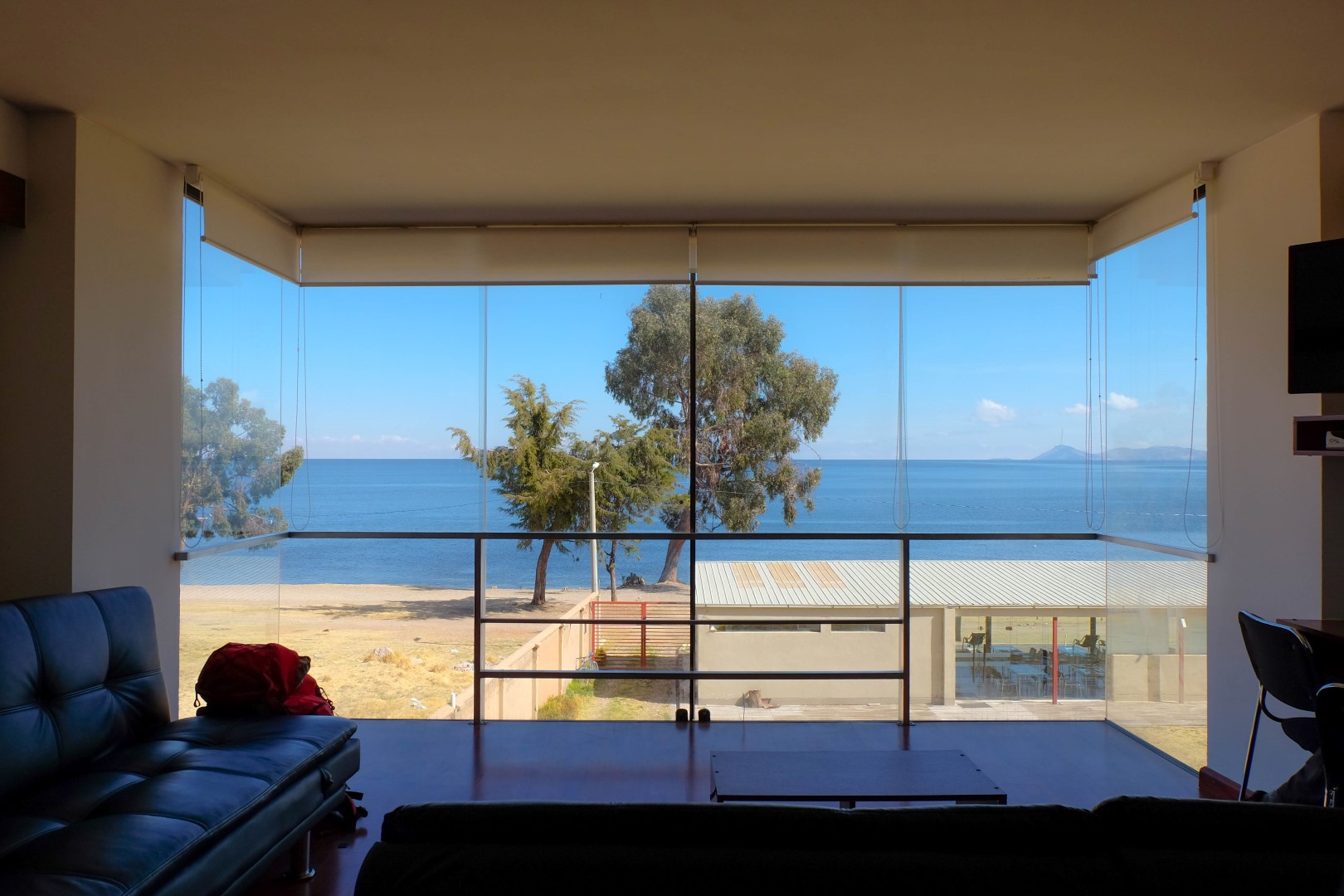
The next morning, I lift my head from the bed and Lake Titicaca fills my view in all its blueness. A beautiful view has a wonderfully positive effect on your mood, especially the moment you wake up. Today we have decided to move to another hotel, one I read about in Lonely Planet. It is not listed on Booking.com, though, and nobody has replied to the email I sent the previous evening. I make my first-ever phone call in Spanish, and we agree that we can arrive at noon. On the way, Jānis takes a bracing swim in Titicaca.
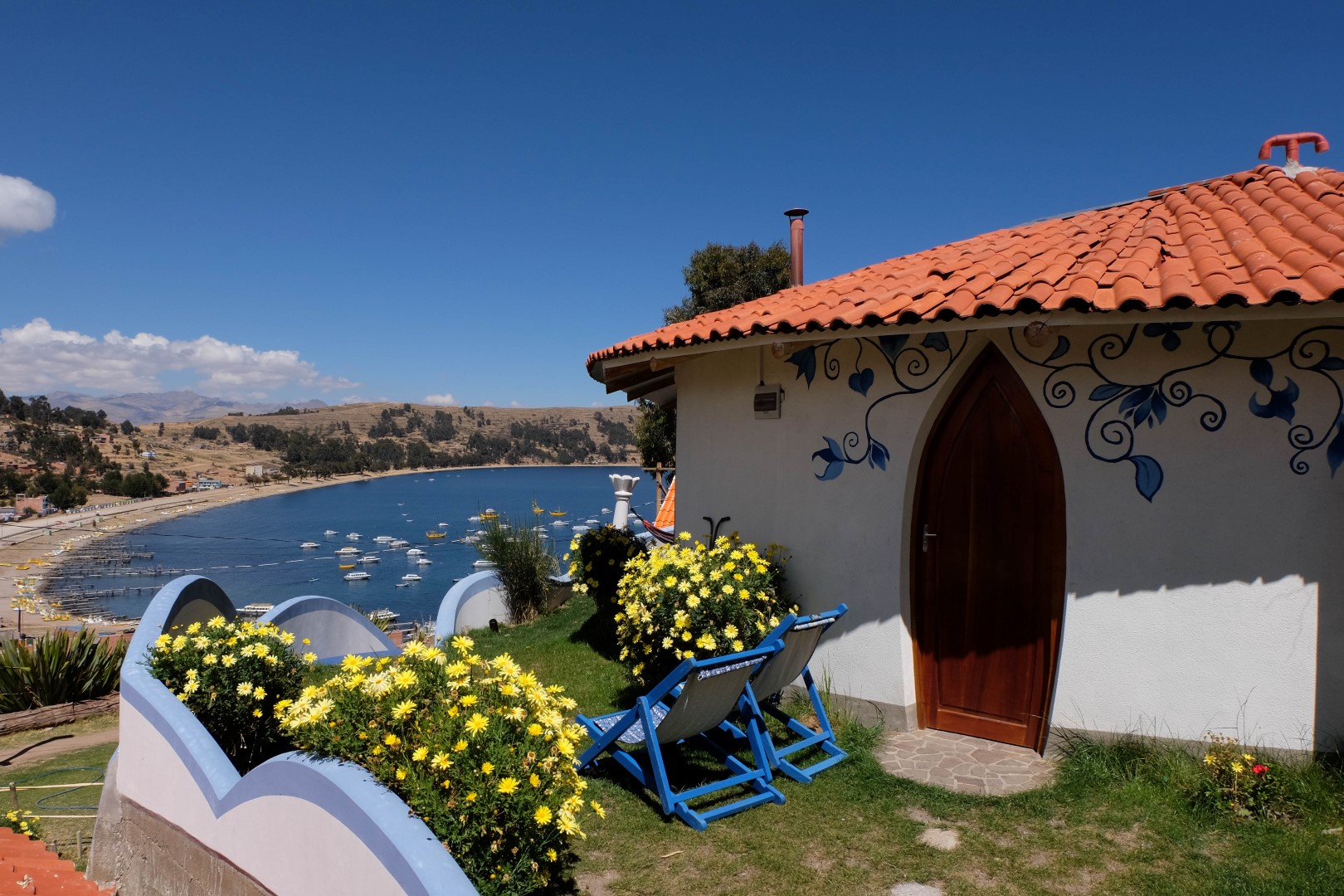
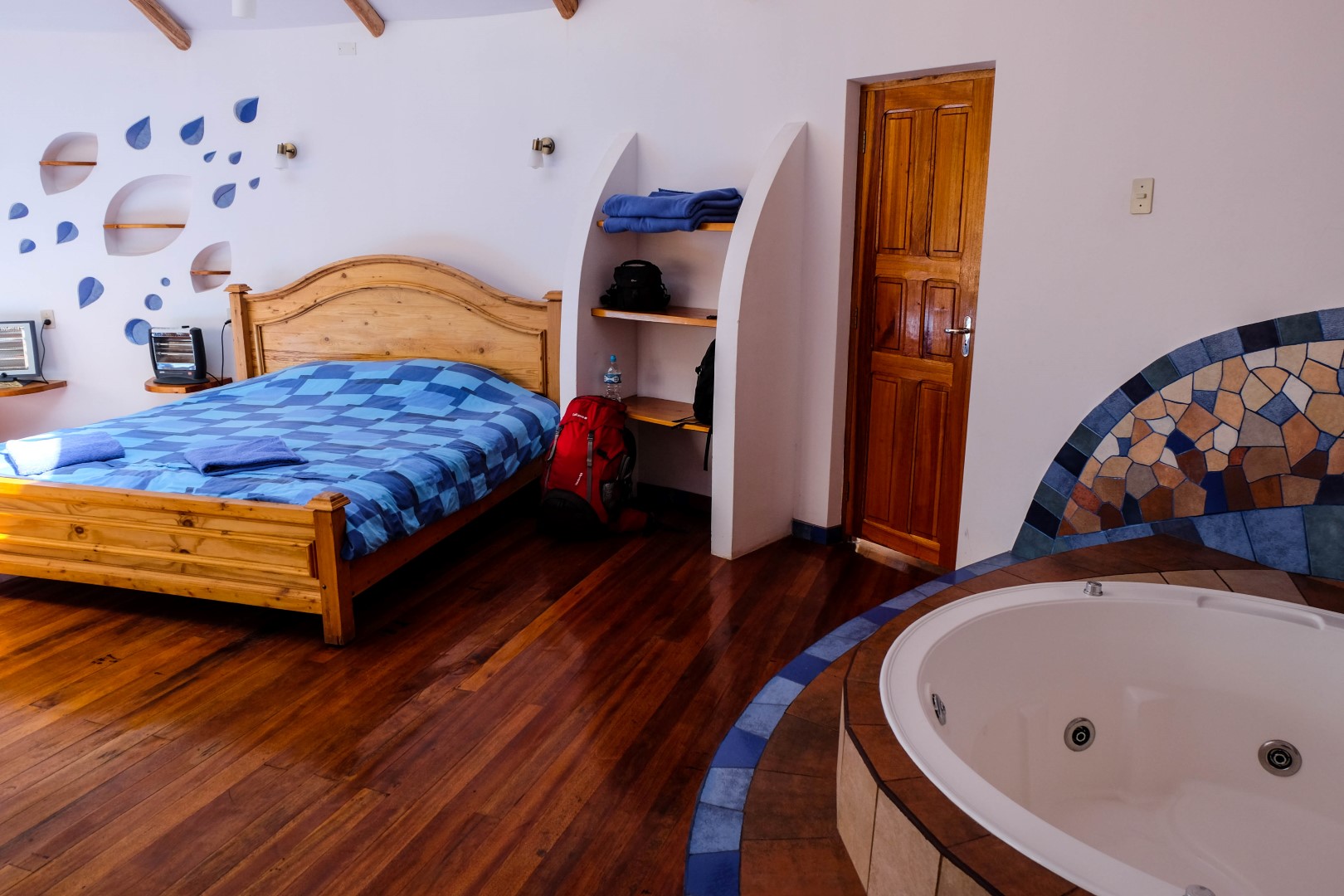
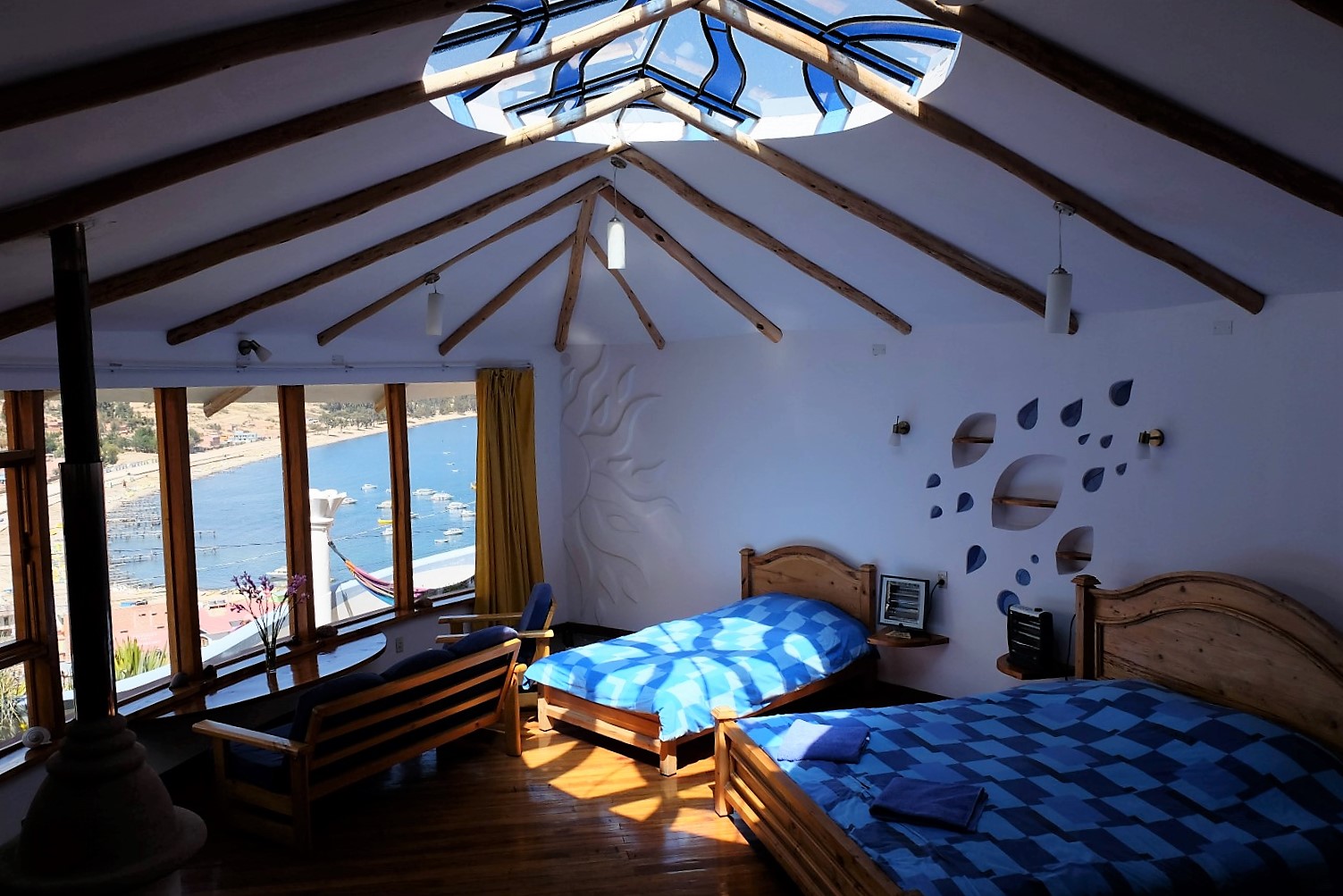
We arrive at Las Olas and are shown to our little house, El Cielo (“the sky” in Spanish). Apparently, we are lucky: all the houses are usually booked far in advance, but we have happened upon a gap when one is free. Better still, it is the very one I wanted most. We cannot stop marvelling at people’s imagination and their ability to create something so fantastic. We are going to sleep in a work of art—literally! The house itself is round and has two floors. The ground floor contains a bed, a kitchenette, and a bathroom, while upstairs is a kind of little den with a desk and another bed. One enormous window looks out over Titicaca, and an equally large one looks up at the sky. The downstairs bed is round, and even its duvet has been made to match. The upstairs bed has five corners and, naturally, its duvet has also been tailored to the shape. I spend the first hour photographing the house and discovering one unusual detail after another. Every detail here is a creative idea brought to life. Seeing how much work has gone into it inspires both respect and admiration for the person who made this place. I am fascinated by the windowpanes and their frames, because every piece of glass has been cut into an irregular shape. Jānis, meanwhile, appreciates the electrician’s work: unusually for Bolivia, the sockets and light switches have been put in sensible places.
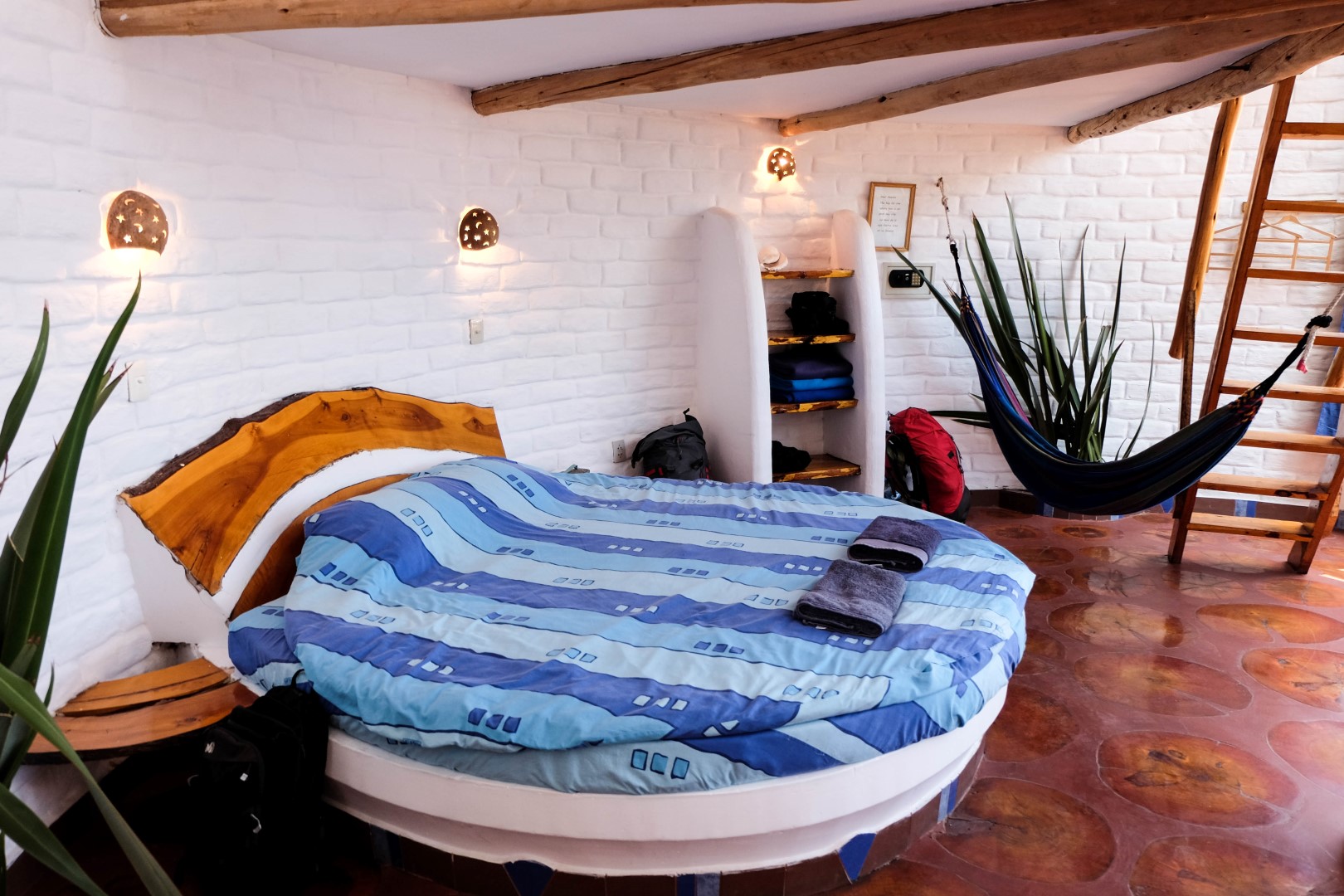
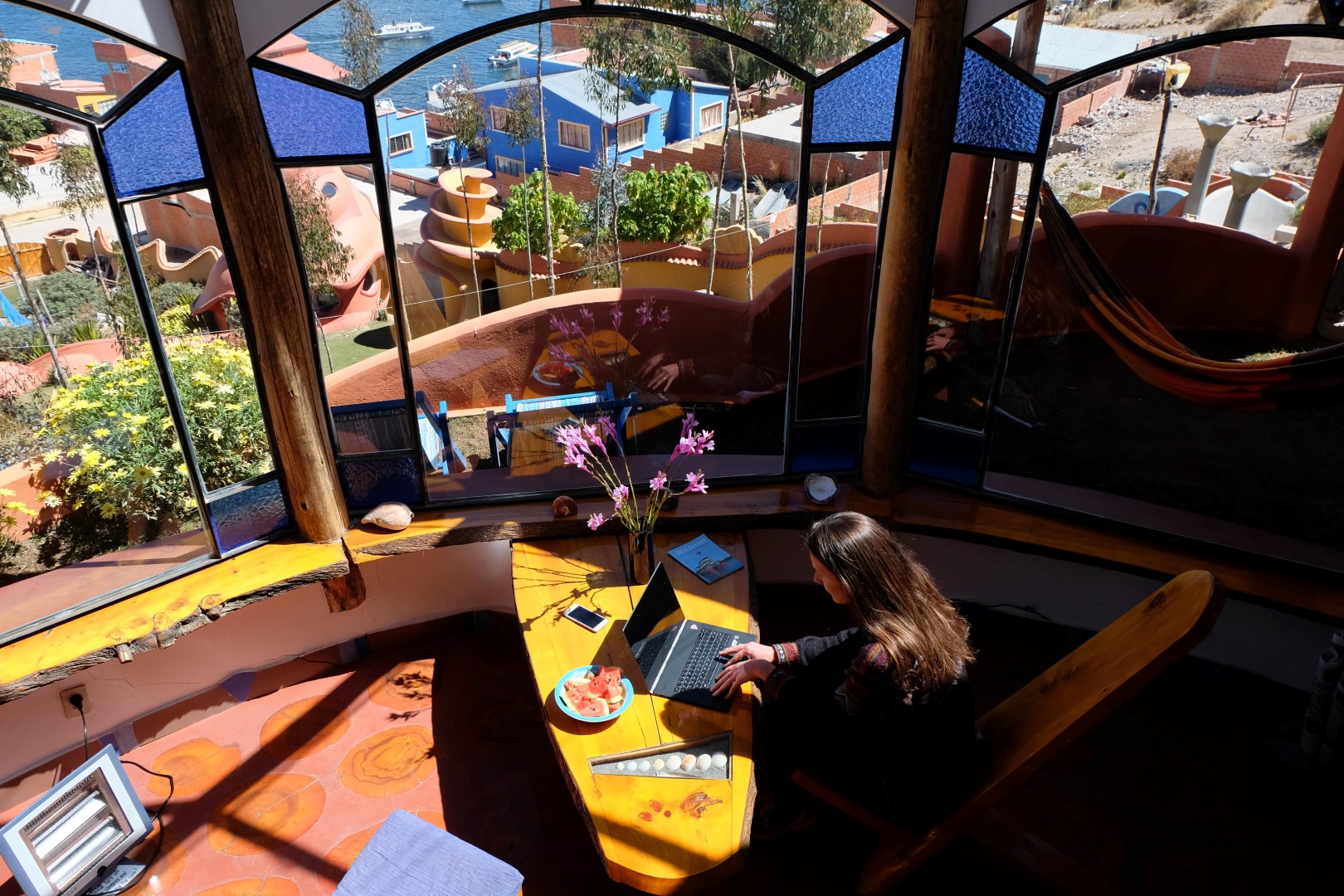
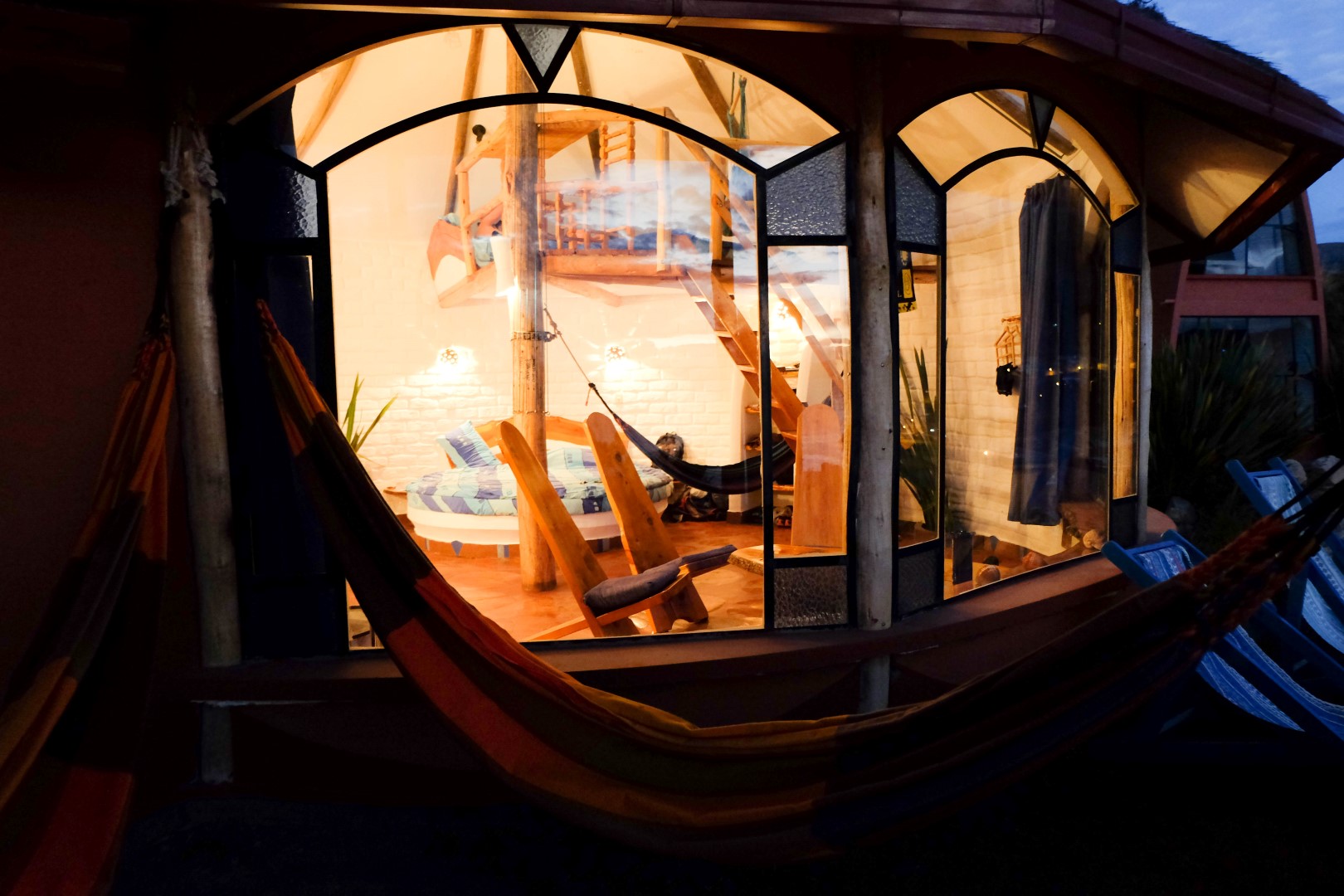
But that is not all! Besides our house, guests can also stay in a turtle, a snail, the waves, a tower, a wigwam, and several other intriguing little dwellings. Once we have admired ours from the outside, we sit in the garden and take in the other houses, each one a sculpture in its own right. Three alpacas wander around the grounds, eating all the grass so thoroughly that there is no need for a lawnmower. The owners try to run the hotel as ecologically as possible.
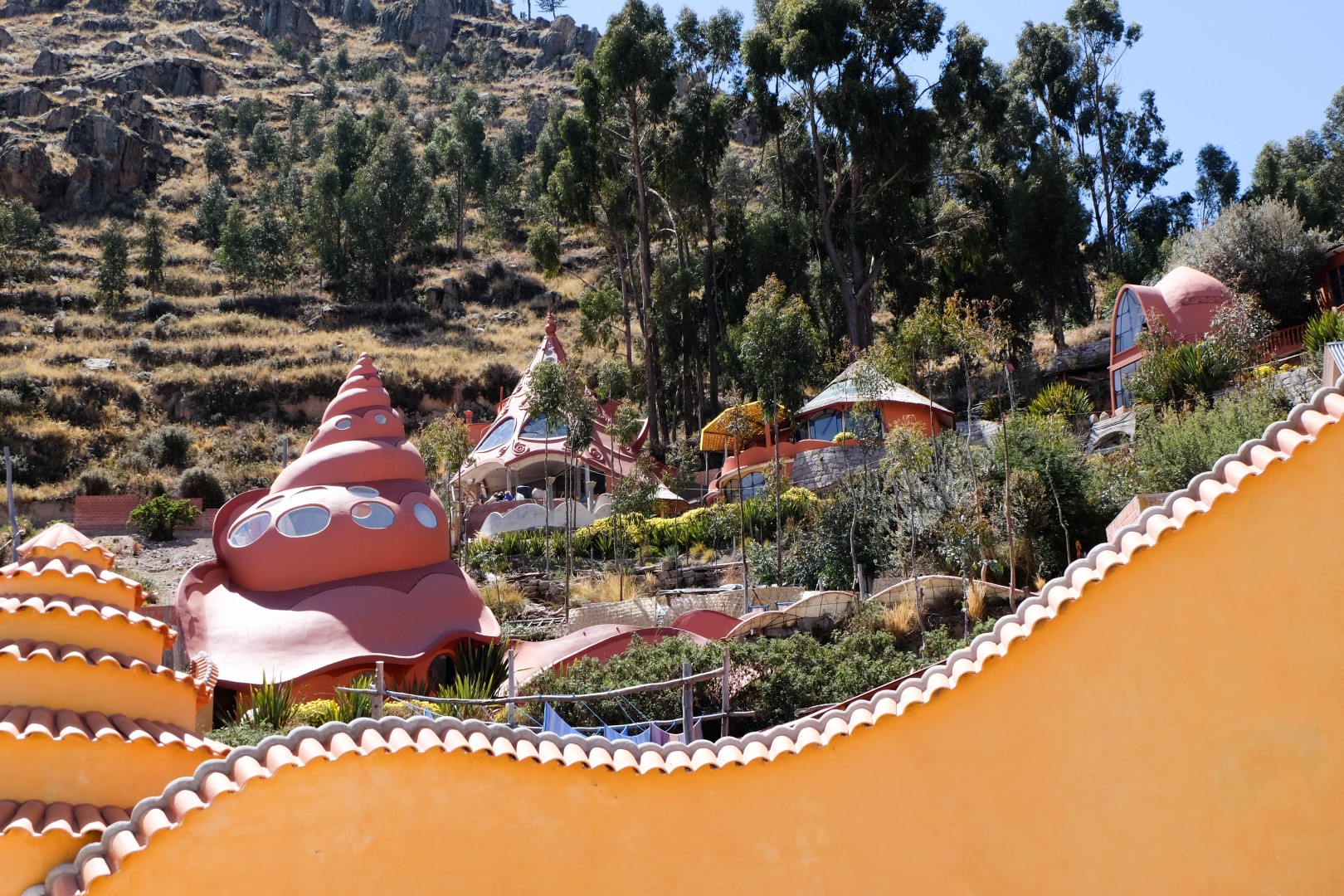
No calculations are needed here: this is unquestionably the most interesting and beautiful place we have ever stayed on any of our travels. I begin to wonder who created it. We do not have to look far, because the next day we meet Martin, the man who conceived and built all these houses. He is a German sculptor whom love brought to Bolivia. At the moment, Martin and his team are building their newest house, the wigwam.
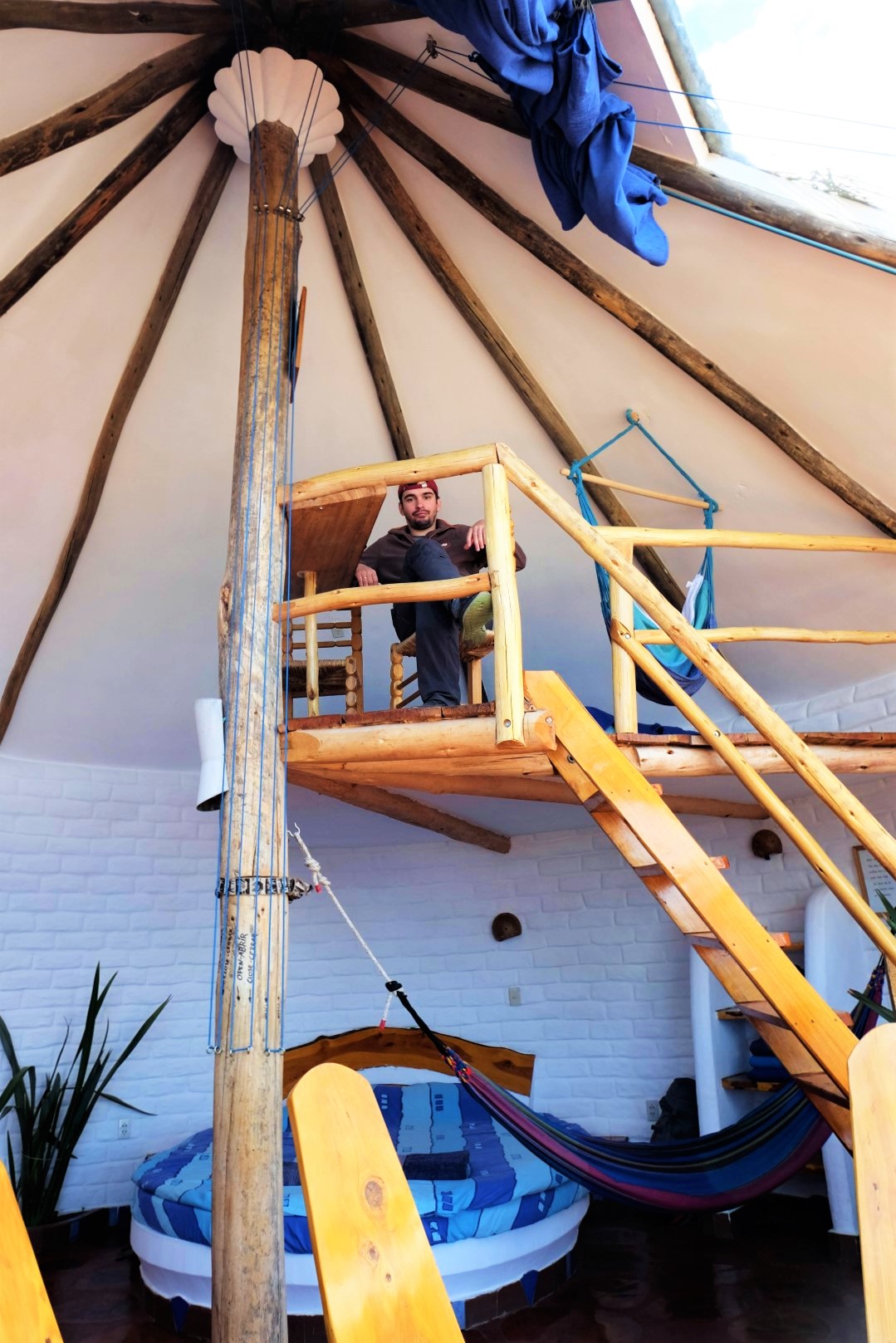
Martin has succeeded in putting together an excellent team with whom he turns these unusual ideas into reality. On the Constru Arte website, you can read more about Martin and his team, and watch videos showing how some of the houses were made.
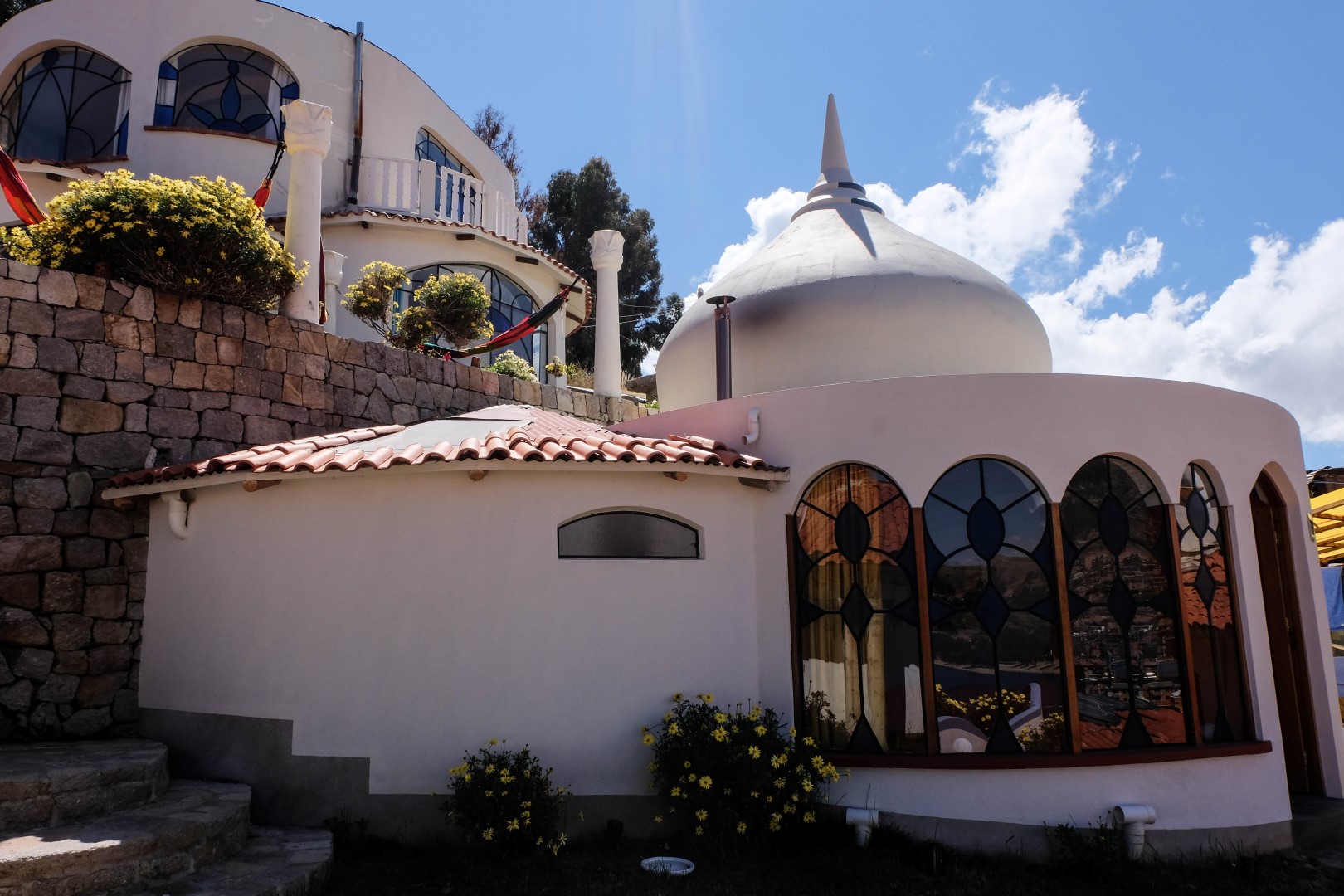
We had booked El Cielo for only two nights because all the other dates were taken. Martin also owns the neighbouring La Cupula, which is almost as busy, but he personally finds a solution and gets us a room. The design of La Cupula was inspired by Arabic domes, and this feature appears throughout its rooms and main building.
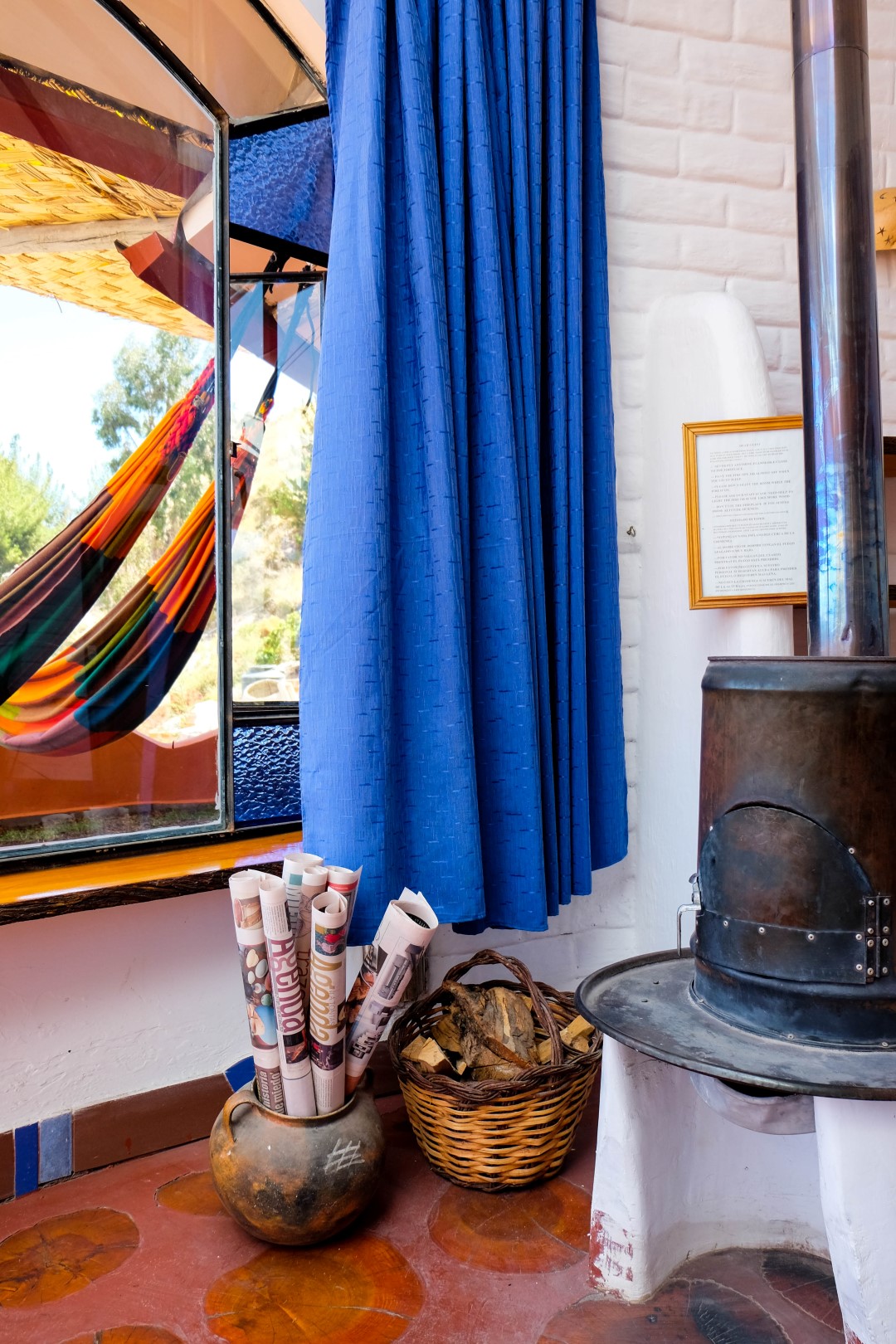
On the first night, we have a simpler room with a clay stove—heating of any sort, let alone a stove, is a great rarity in Bolivian hotels—and works of art on the walls.
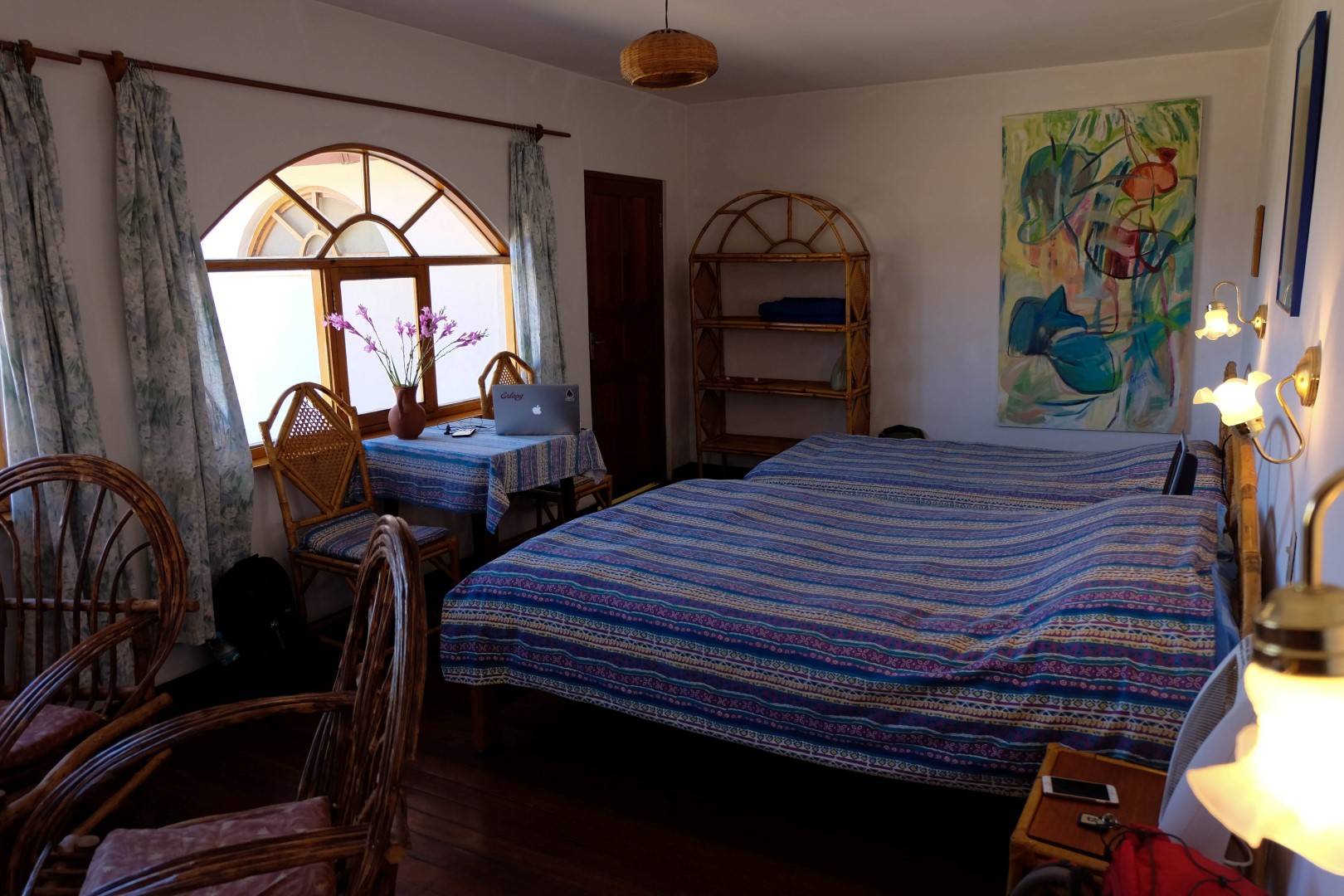
On our second night, we are moved to a suite that once again surprises us with its imagination. The bed is so enormous that at least four people could fit in it. There is a huge window overlooking Copacabana and Titicaca, and, as with every room here, hammocks outside the house. I have a lovely moment in one of them when an alpaca quietly approaches and presses its soft muzzle to my face. We have met alpacas many times in the Andes, but I have never received an alpaca kiss before.
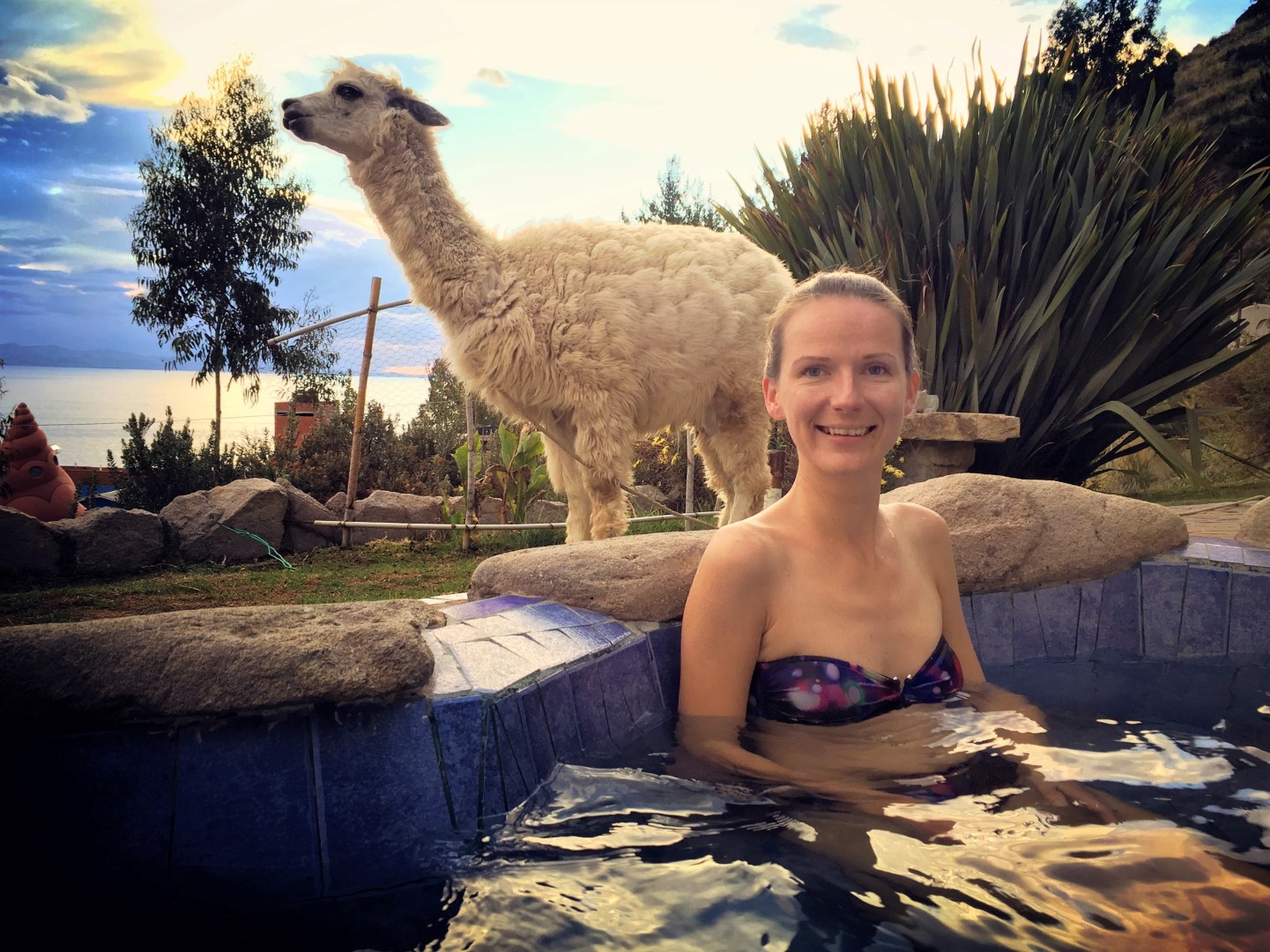
Because of Copacabana’s altitude, the evenings are chilly, so we decide to warm up in an open-air hot tub. Before long, one of the hotel’s alpacas comes over and once again slowly moves towards my face—only to lower its head to the tub and drink the water. This is probably the only place where something like that can happen.
The town of Copacabana
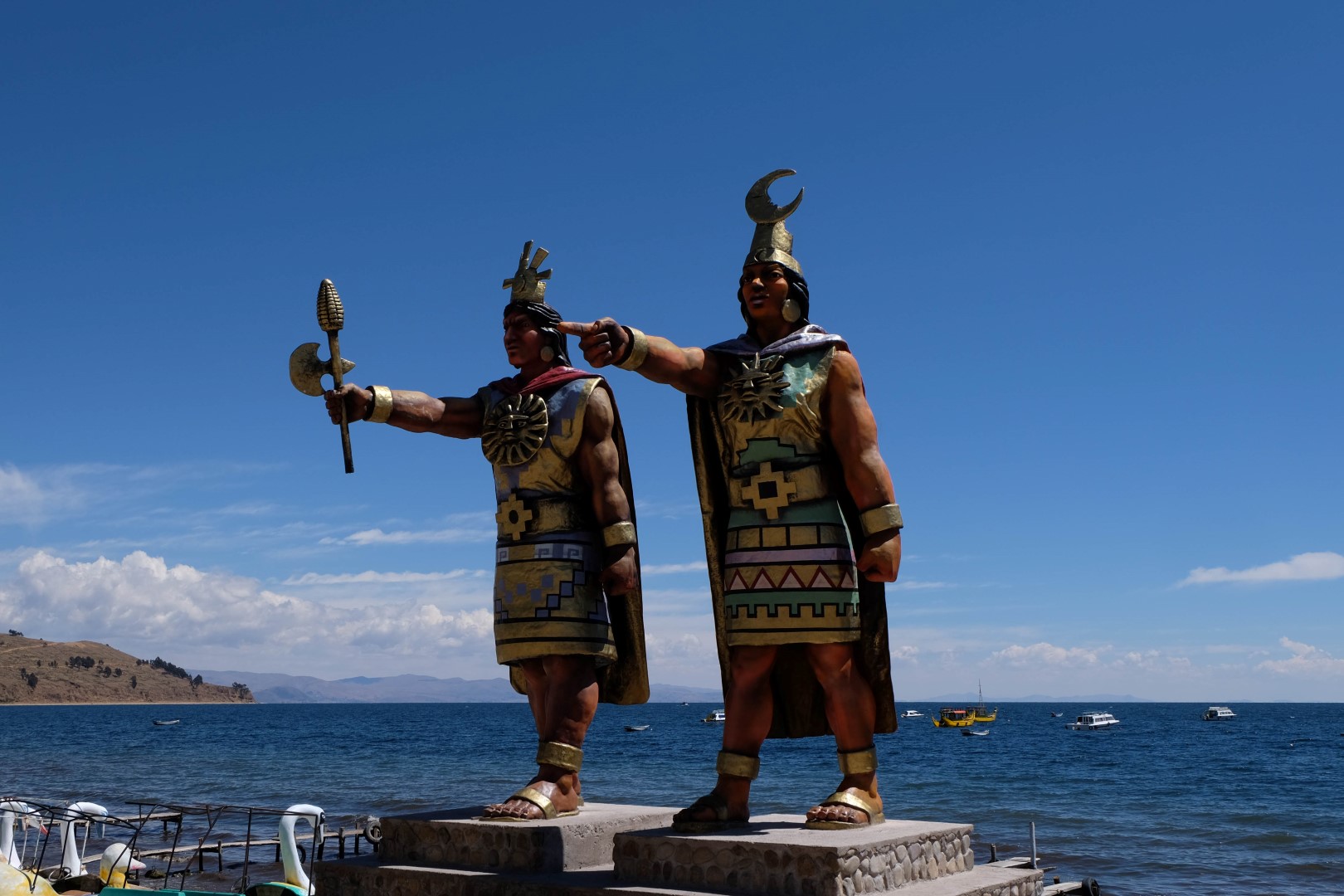
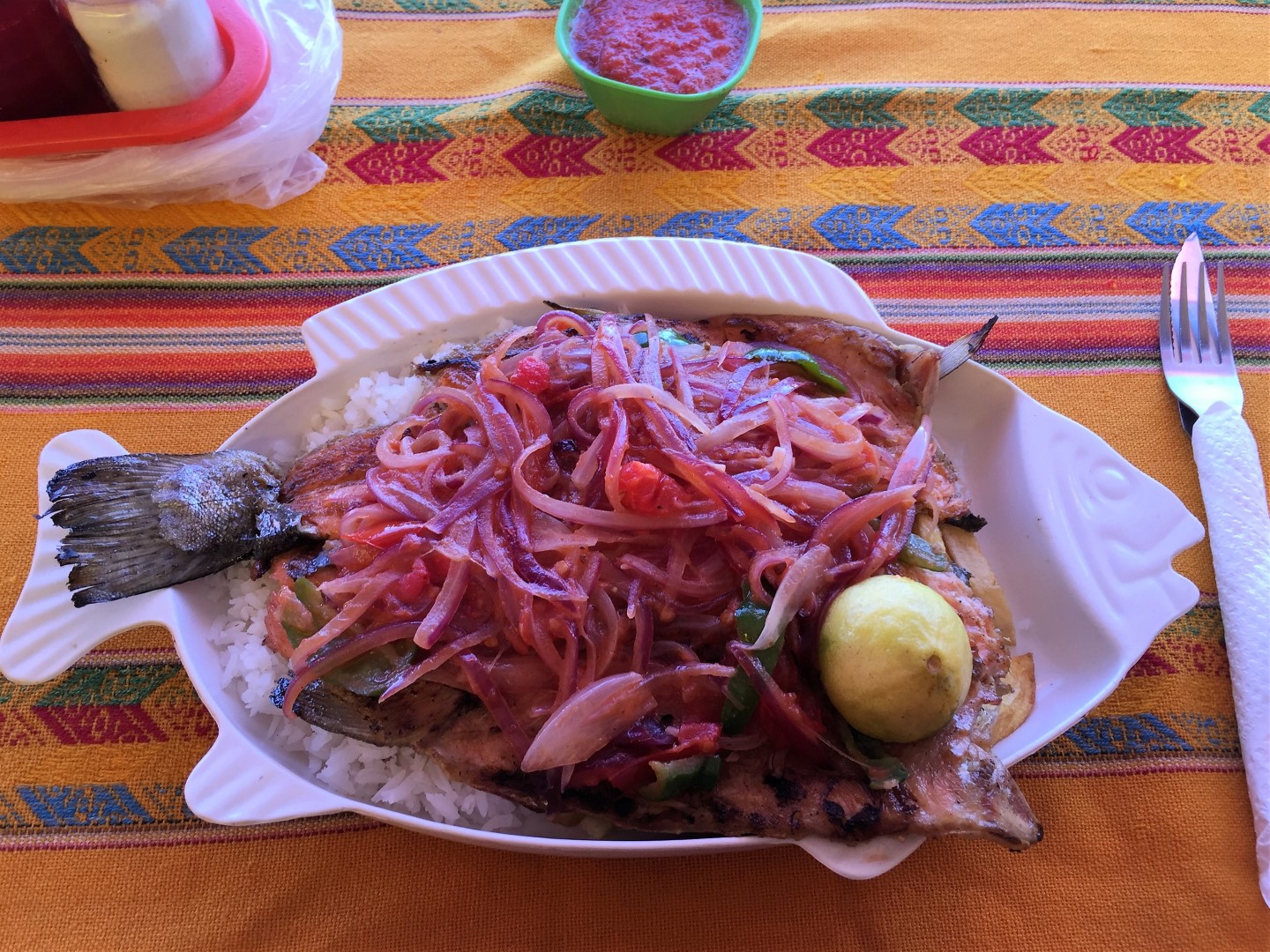
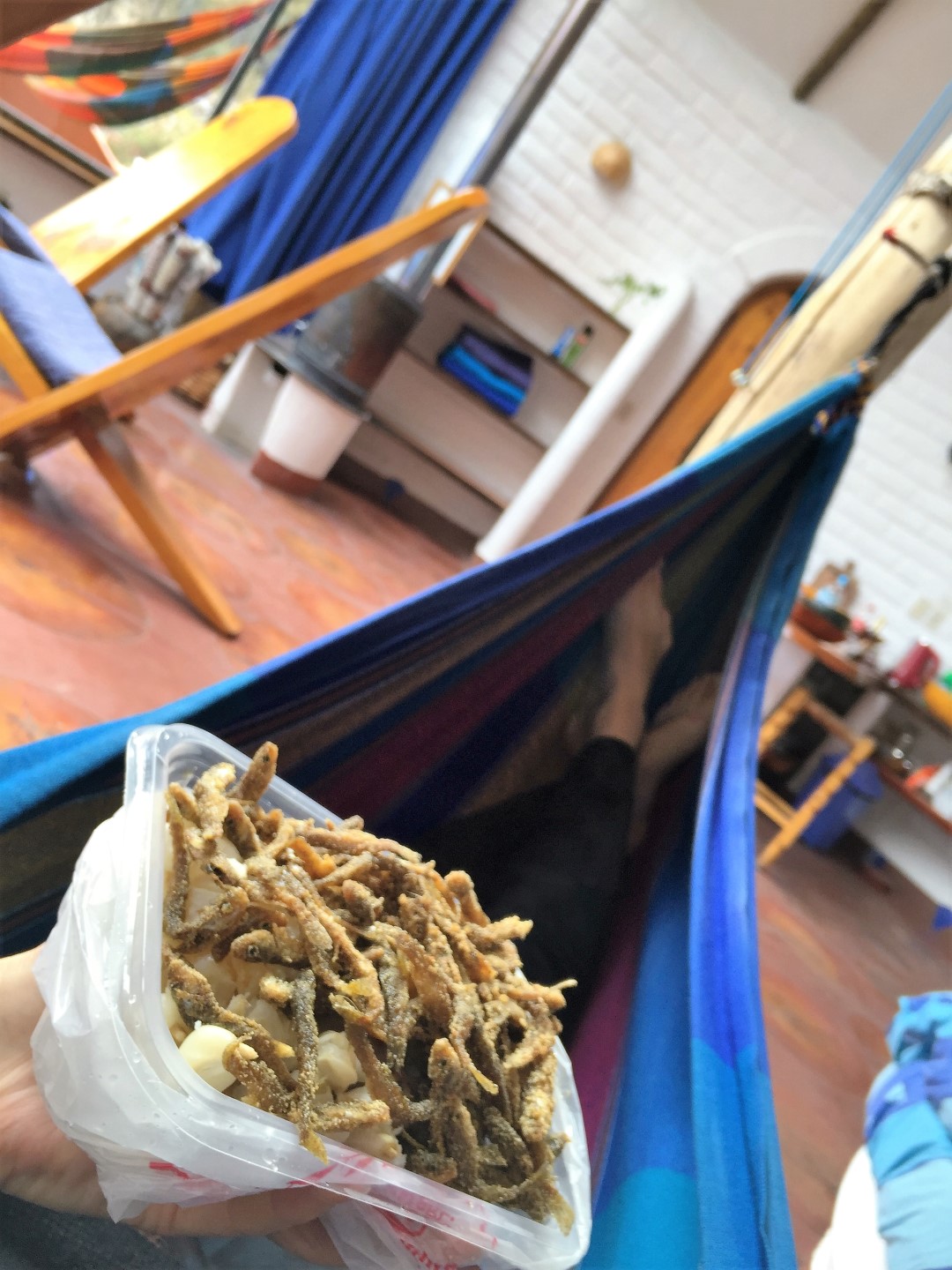
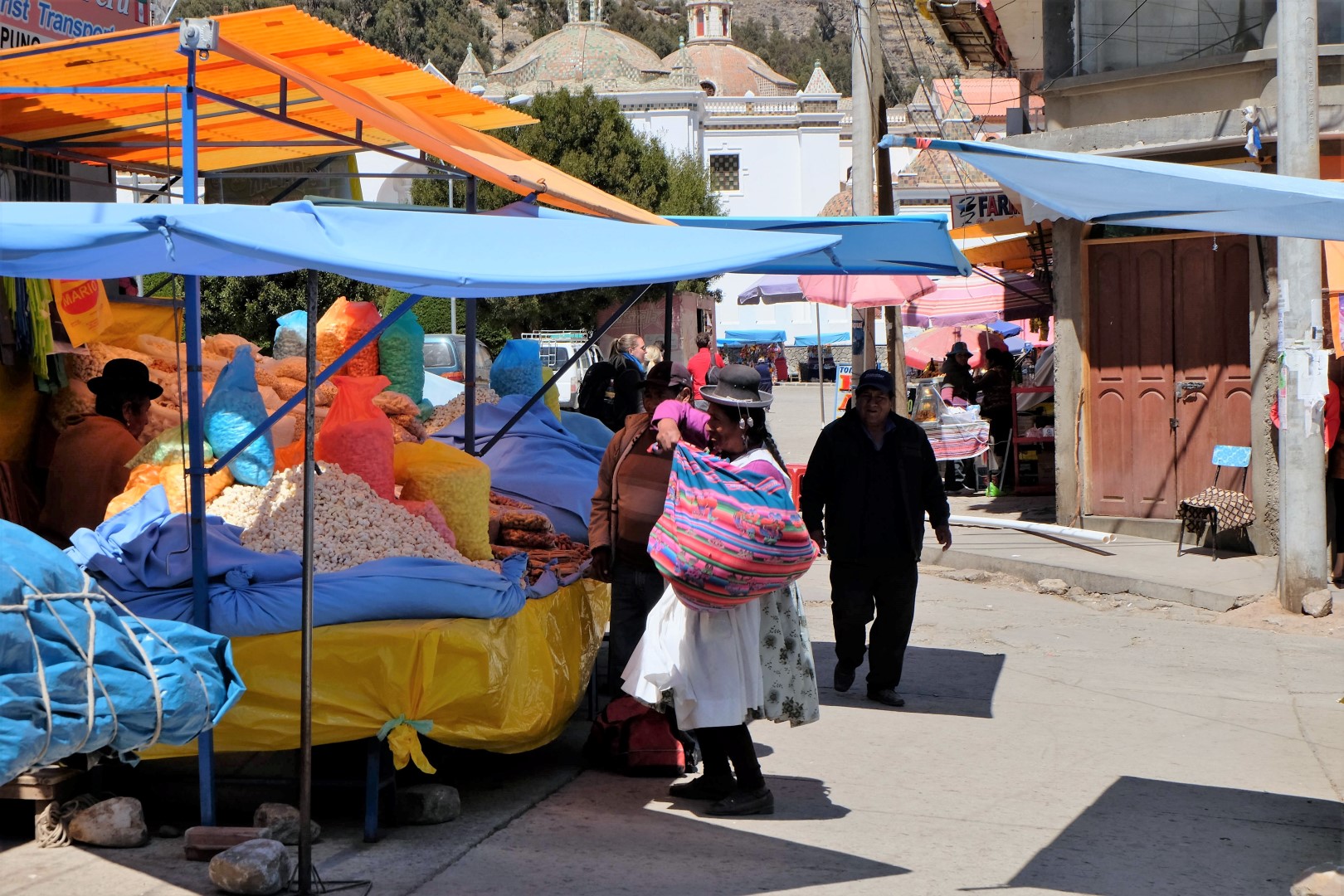
Copacabana itself is small and, thanks to Lake Titicaca, rather touristy. It is the departure point for trips to Titicaca’s islands, Isla del Sol and Isla de la Luna—the Islands of the Sun and Moon. There is a pleasant market where I shop for food every day. One thing sold here in especially large quantities is giant popcorn, made from giant kernels of corn. Just like potatoes, corn comes in many different varieties here. The most common are white corn, which is boiled to eat and used for popcorn, and purple corn, which is made into a drink called chicha morada. Small huts line the lakeshore, serving fish caught in Titicaca. The most popular choices are trout and tiny, crunchy fish called ispi.
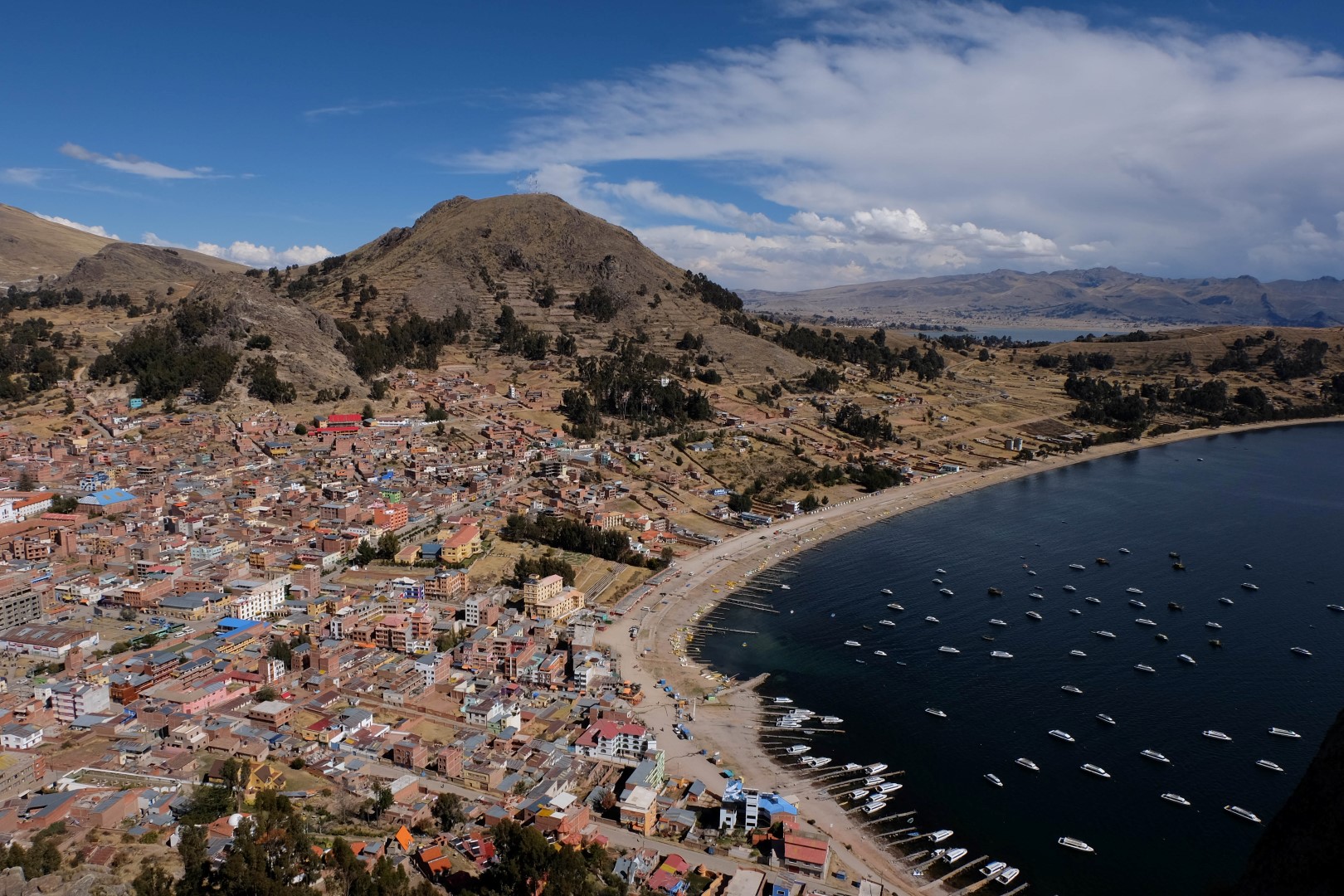
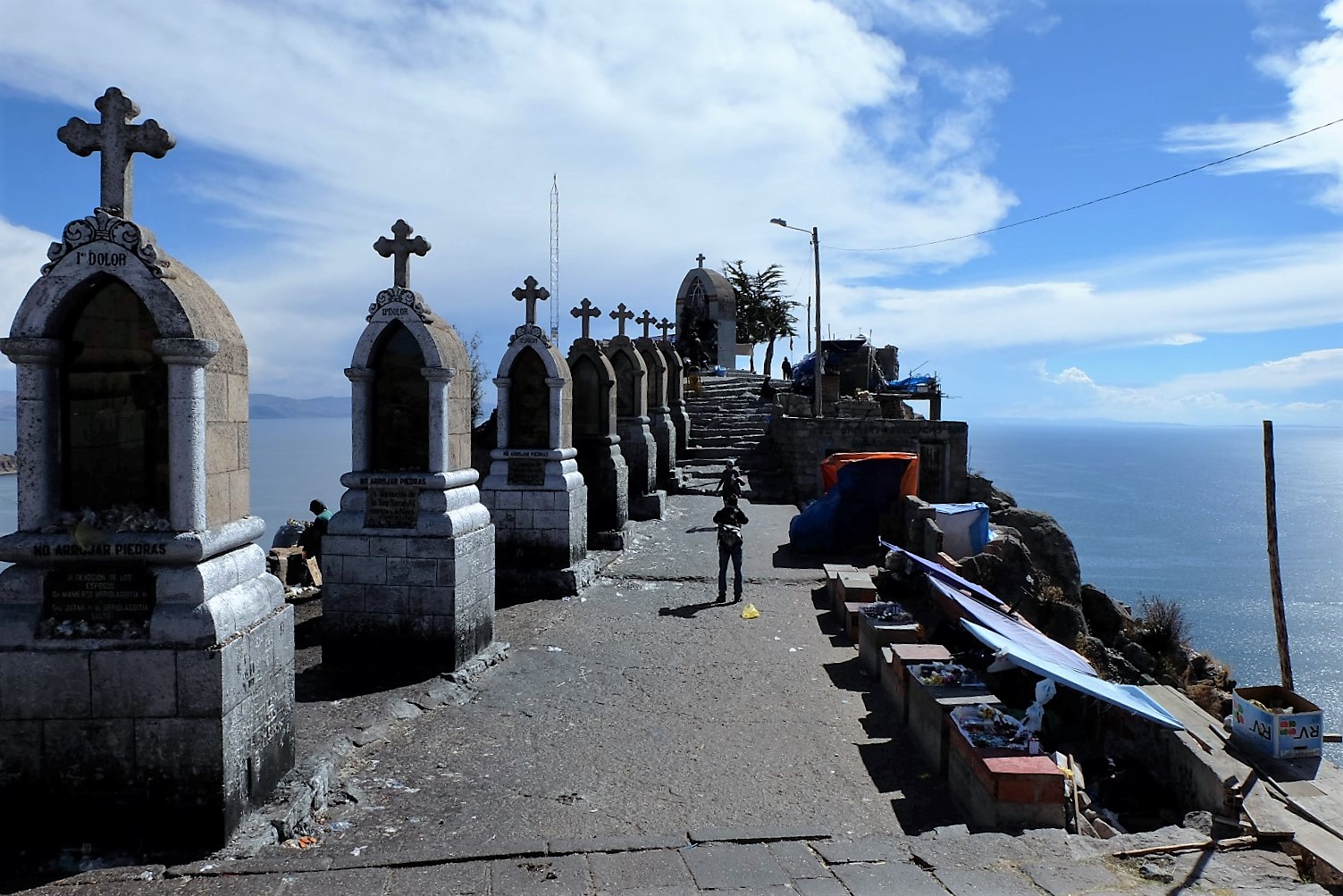
The town lies between two hills, and I decide to climb Calvario Hill (4,200 metres above sea level), at the foot of which our hotel happens to stand. This hill is more than a viewpoint for tourists. Thousands of pilgrims come here every year; after visiting the Basilica of Our Lady, they climb Calvario, stopping to pray at fourteen crosses along the way. The climb is not long, but breathing at this altitude is rather difficult. On the way up, a nun dressed in white, who is heading down, strikes up a conversation with me. She asks where I am from, what Latvia looks like, and so on. After a lovely chat with the kind woman, I happily continue climbing. The summit is coated in wax, with little dots of coloured paper stuck in it. From here there is a magnificent view of the Island of the Sun and the town of Copacabana.
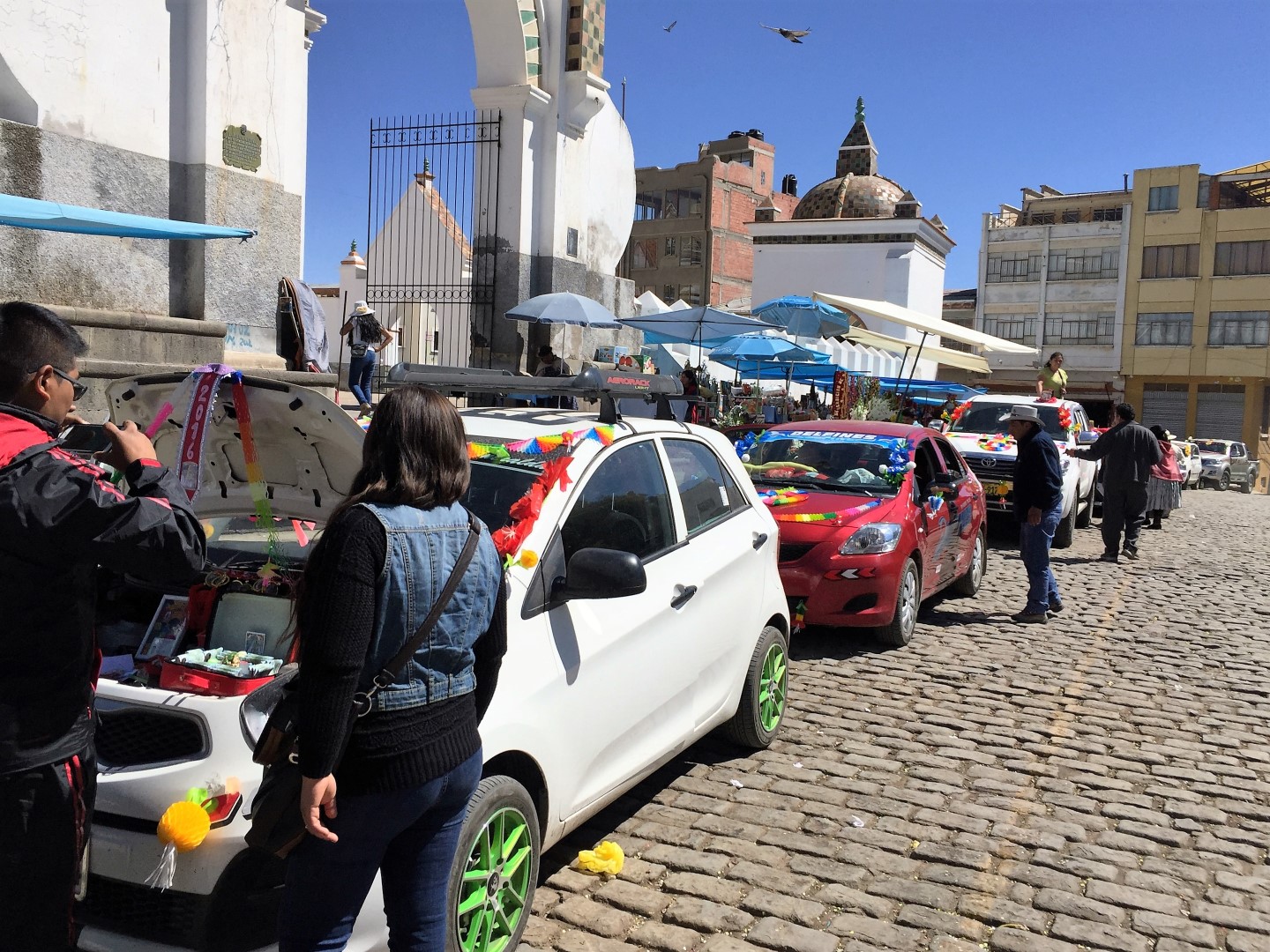
Bolivians themselves come to Copacabana mainly because of the Basilica of Our Lady. Most intriguing of all, a vehicle-blessing ceremony (Bendiciones de Movilidades) takes place outside the church every day at 10:00. Cars arrive and form a queue to be blessed; afterwards, they are decorated with ribbons and all sorts of fresh and artificial flowers. Once the cars have been blessed, their owners cheerfully pose for photographs beside them with the bonnets open. They often drive their decorated cars down to the lake to celebrate with grilled meat and a few beers. The blessing of cars seems rather paradoxical to me, because Bolivian drivers are known for an exceptionally wild style of driving—considerably wilder even than in Peru. We have often been in minibuses and taxis with a charm hanging proudly from the rear-view mirror, showing that the car was blessed that year, while the driver behaves so aggressively that all you can do is freeze in your seat and hope you reach your destination in one piece. It feels as though having the car blessed gives drivers the confidence that “nothing will happen to me”, although it would be more logical to start by changing their attitude to driving.
I also had an interesting experience with Copacabana’s post office, which says a great deal about people’s attitudes too—this time, their attitude to work. I wanted to send a postcard to Latvia, so I went to the post office to buy a stamp and an envelope and mail my letter. A hat was sitting on the postal worker’s chair, giving the impression that its owner had merely stepped out for a moment. Several other tourists with the same purpose were patiently waiting for the employee to return. I decided to come back that evening. In the evening, everything was exactly the same: the hat was on the chair and nobody was there. I returned the next day and began asking in nearby offices where the employee might be and whether there was anywhere else in town from which I could send a letter. This was the only place, I was told, and I should wait because the employee ought to be there. On the third day, when the hat was once again the only thing I found at the post office, I decided to pop into the police station next door and ask about the missing postal worker. Perhaps they knew something, and I also wanted to draw a little attention to the absurdity of the situation, since other tourists were visibly annoyed at being unable to send their post. On the fourth day, I arrived to find the hat gone, but the employee was still nowhere to be seen. Just as I was leaving the office, a woman came in carrying the hat I knew so well. I could not help myself and asked, “Why haven’t you been at work for several days? People have been circling this place and waiting for you.” The woman said nothing, but enthusiastically offered to stamp my letter for posting. Since this post office had no envelopes, which I also needed, I sighed and decided to send the letter when I reached Cusco in Peru. I have to accept this as part of the Bolivian experience, and I am glad that during the past few months I have learned to accept the easy-going attitude of people in Peru and Bolivia.
After Copacabana, we plan to return to Peru. The day before leaving, we go to buy bus tickets, only to be told that we will have to cross the lake to the border by motorboat, where a bus will be waiting on the Peruvian side. Bolivians love a strike, and this time the border crossing and the roads leading to it have been blocked. The strikers are usually mine workers, and they can be quite aggressive in their efforts to make themselves heard. Bus and lorry drivers generally try to bypass strike locations or avoid travelling altogether, because vehicle keys are often confiscated and the delivery of passengers or goods can be delayed for several days. Although strikes and roadblocks are not pleasant, we decide that travelling to the border by boat will make this our most unusual border crossing yet. The next day, we arrive at the boat well ahead of time, only to be told that everything is fine: the strike has ended and the roadblocks have been cleared, so we will travel to the border by bus after all. Later, we learn that the mine workers ended their strike because of a very tragic event. One of Bolivia’s deputy ministers had gone to negotiate with the strikers in person and was beaten to death. Through the bus window, we see mounds of earth across the roads that have now been dug open again, and scorched ground along the verges. With our own eyes, we see the traces of the horrors that unfolded here only hours earlier.
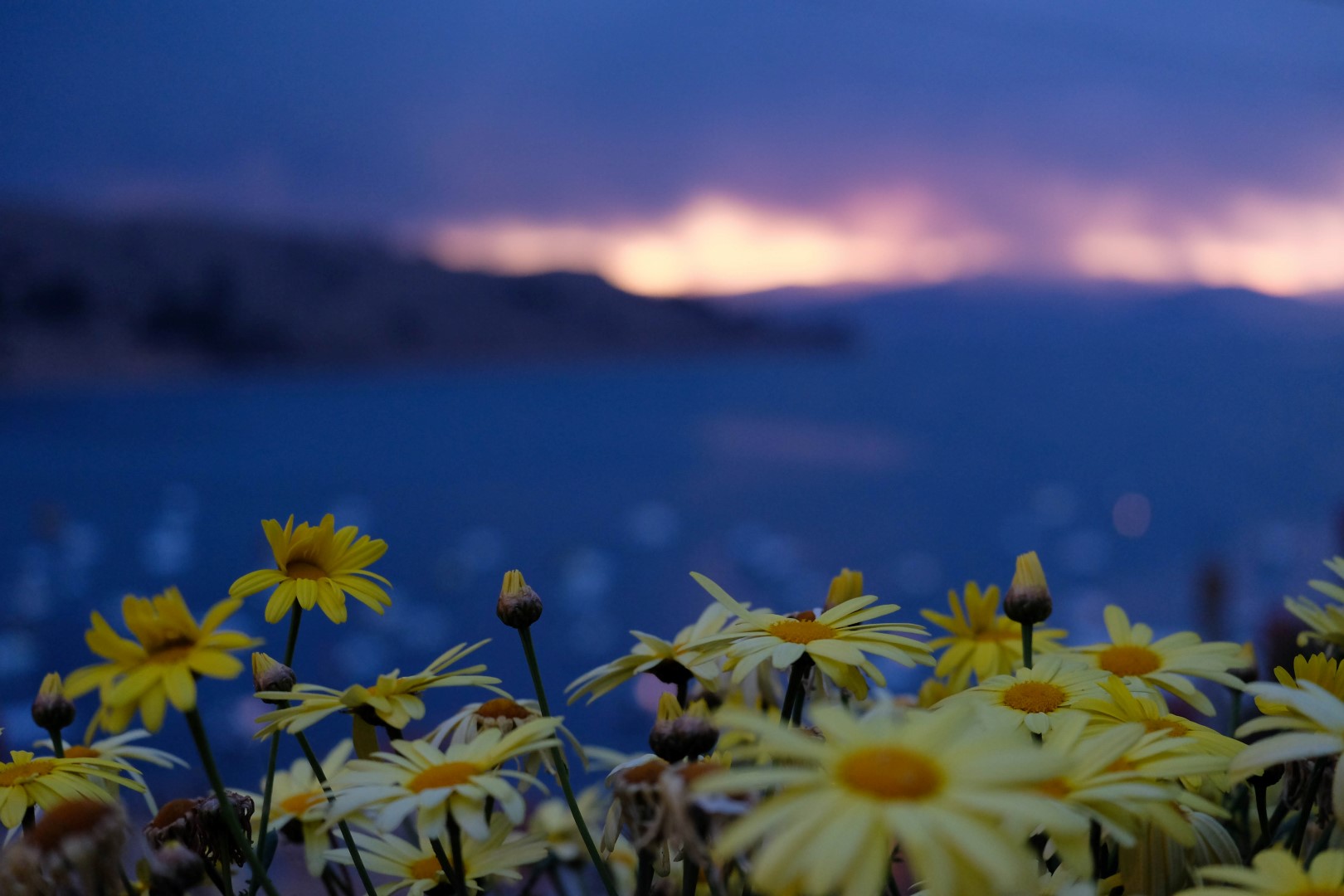
Although we leave on a sombre note, our week in Copacabana has brought us more than enough happiness with its magical sunsets over Lake Titicaca every evening. Incidentally, an interesting belief holds that Lake Titicaca is one of the Earth’s seven energy points—its second chakra. If you ever find yourself in Copacabana, we wholeheartedly recommend spending at least one night at Las Olas or La Cupula and experiencing Martin’s creations for yourself, all at a very reasonable price.