Almost without my noticing, my final working day at CIWY has arrived. I try to spend as much of it as possible with the birds and tortoises. Simply knowing that I will not see these fantastic creatures again makes me sad. At least I am comforted by the fact that Ronnie will not be left without a helping pair of hands: a new volunteer, Jamie, has arrived today and will begin work. In the afternoon, she comes to be introduced to the jobs in the bird section. Ronnie is at lunch, so we walk through the park while I tell her about the birds. When we reach Carolina, I begin talking and she answers in her usual lovely voice. Jamie’s eyes widen in surprise. I remember how startled and delighted I was by my first parrot greetings on my own first day.
That evening, we have arranged a farewell dinner in the village centre. We invite Jamie and another new volunteer from the Netherlands to come with us. Around the dinner table, we talk about animals, as we so often do outside work too. Pippa shares the latest adventures from the capuchin section. Truth be told, it is a rather dangerous section for women because, for some reason, capuchins show far more respect to men. Pippa says that she tries to be careful, but one of the monkeys still managed to launch itself into her hair today. Fortunately, she was not injured. Lisanne from the Netherlands listens intently because tomorrow she will begin working with the capuchins herself. Pippa reassures her that despite the occasional dangerous moment, working with them is emotionally rewarding. As in the bird section, you need to know who is who if you want to avoid trouble. The most entertaining story is what the monkeys do with onions. Every so often, they are given onions cut in half. They rub themselves with them as though bathing, scrubbing their armpits, heads, and ears. The sharpness of the onion makes tears stream from their eyes. Finally, they smash the onion against a stone, dip the end of their tail into it, and use the tail to sprinkle their face.
After dinner comes our traditional stop at the homemade ice-cream shop. As usual, Charlotte eats three scoops of chocolate because it is so good that she never gets around to trying any of the other flavours. I devote myself to experimentation and order the ones I have not yet tasted: coconut, cherimoya, and some jungle fruit whose name I have already forgotten. With full stomachs, we agree that tiredness has caught up with us and we will not make the Piña Coladas we had planned at home. Besides, the market is already closed, so we cannot buy the most important ingredient—pineapple. I have to travel back to Cochabamba the next day, and it promises to be a busy one.
The morning before leaving
I get up at the same time as everyone else because before I leave, I still need to visit the other sections, pack my bag, and say goodbye to my friends. I want to depart around lunchtime so I can reach Cochabamba before dark, but everyone persuades me not to go until after our communal lunch.
After breakfast, I have arranged to accompany Camille to the spider monkeys. Their section is on a jungle-covered hillside, about a twenty-minute hike from the volunteers’ café. Food is packed into buckets for us to carry up, and we begin climbing. A tiny path branches from the country road and rises up the hill. The women know this climb by heart. Along the way, we grip trees and their roots; they also warn me which trunks not to touch, because some have formidable thorns.
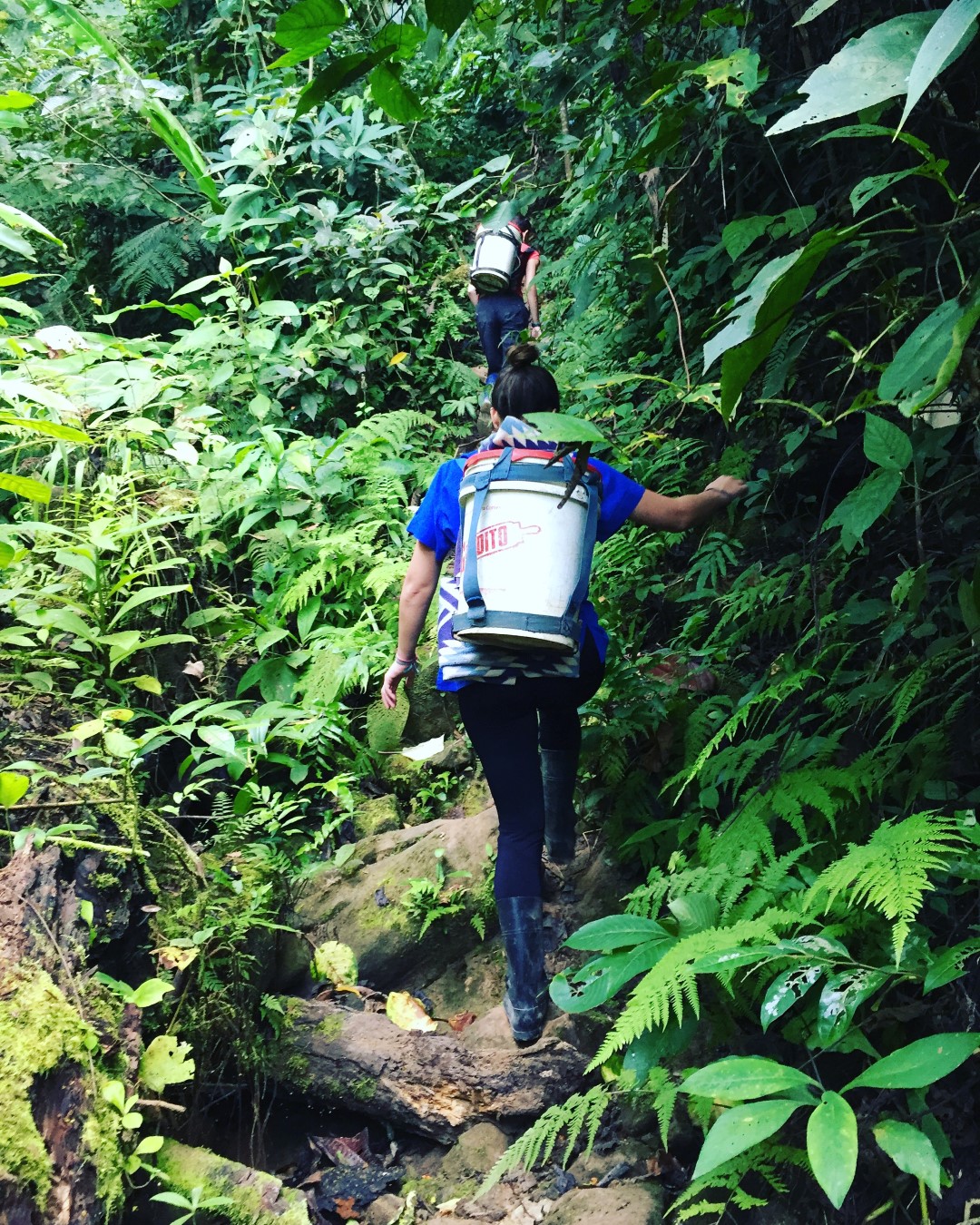
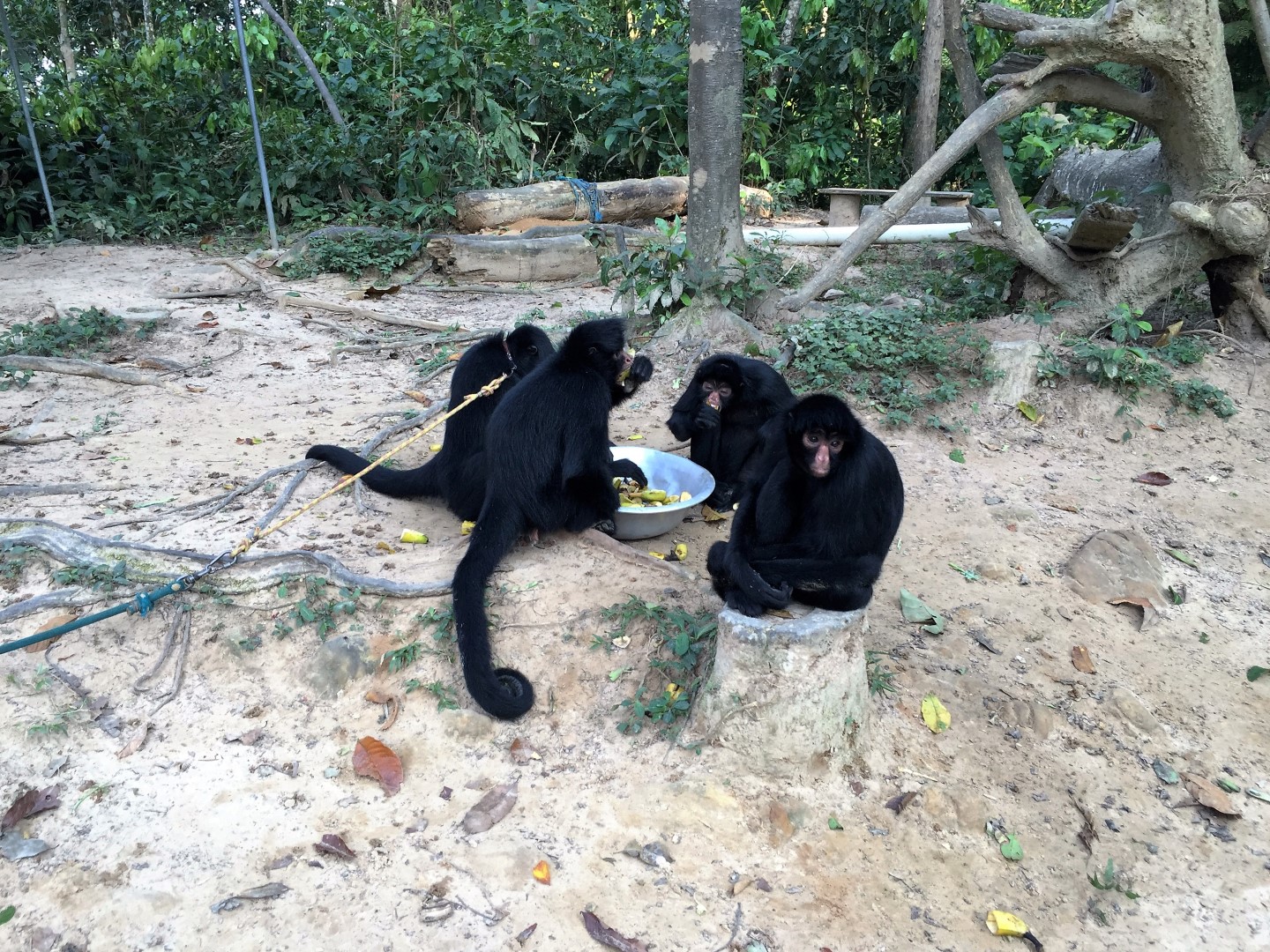
After the strenuous climb, we emerge onto a less overgrown slope, and the kingdom of the spider monkeys opens before me. In the distance, I can see the black, agile creatures climbing trees and swinging from ropes. There are twenty of them altogether. A female spider monkey is waiting beside the path that leads to the volunteers’ hut. As we pass one by one, she watches me and holds out her hand. I have not yet been told how to respond, so I continue walking. She stands up and comes with me, gently resting a hand against my stomach and wrapping her tail around my arm as we go. It is difficult to put the feeling of that first encounter with a spider monkey into words. It was so human.
We squeeze into the hut one at a time to sit down and catch our breath. Getting inside is a whole undertaking in itself, because the free-roaming capuchins must be kept out. They loiter here too and are considerably cheekier than the spider monkeys. In the hut, I help cut bananas for the monkeys’ breakfast. The women carry out large bowls, and the spider monkeys begin eating at an unhurried pace. The capuchins are chased away, but they are so quick that they still manage to steal an occasional piece of banana. The spider monkeys’ behaviour is so calm and human that I can scarcely believe what I am seeing. As in the capuchin section, some monkeys roam freely while others use a rope system that lets them move around the grounds. Unlike capuchins, spider monkeys can safely be cared for by women because they do not distinguish so strongly between the sexes and are not aggressive.
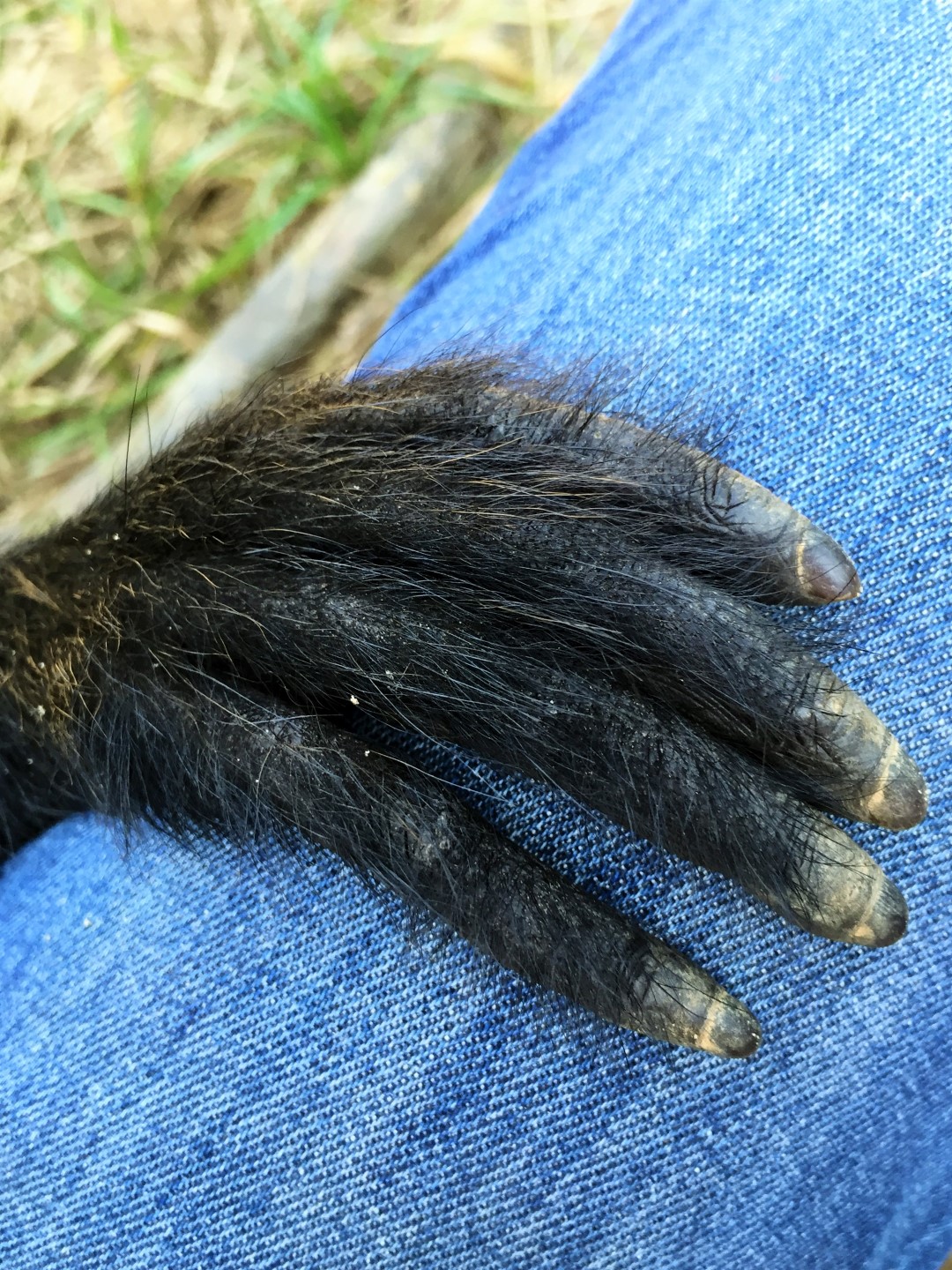
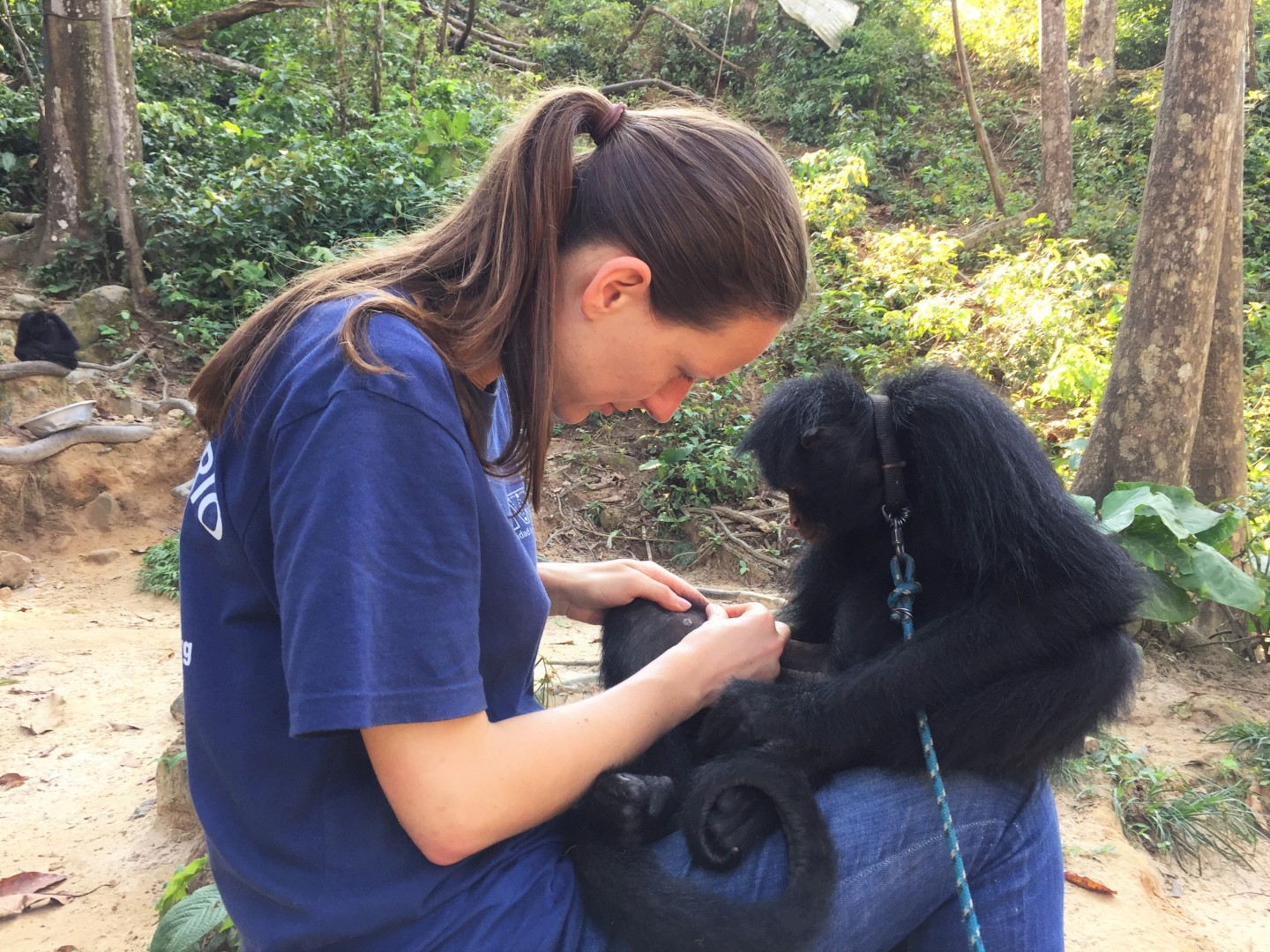
I leave the hut and intend to sit on a log beside Camille, but one of the monkeys intercepts me on the way. Camille says that it is all right, she is female, and I should slowly crouch down. I am inspected and felt all over, after which I can gently stand and continue. When I sit beside Camille, a little girl named Iggy runs over and jumps into my lap. Yes, naturally, every monkey here has a name. Iggy lies sweetly across me and wraps her arms around my knees. I study her hands: every finger has a fingerprint, just like ours. I completely lose the sense that Iggy is a monkey. Her behaviour, her movements, and her curiosity resemble a small human child far more. For me, it is an intensely emotional moment.
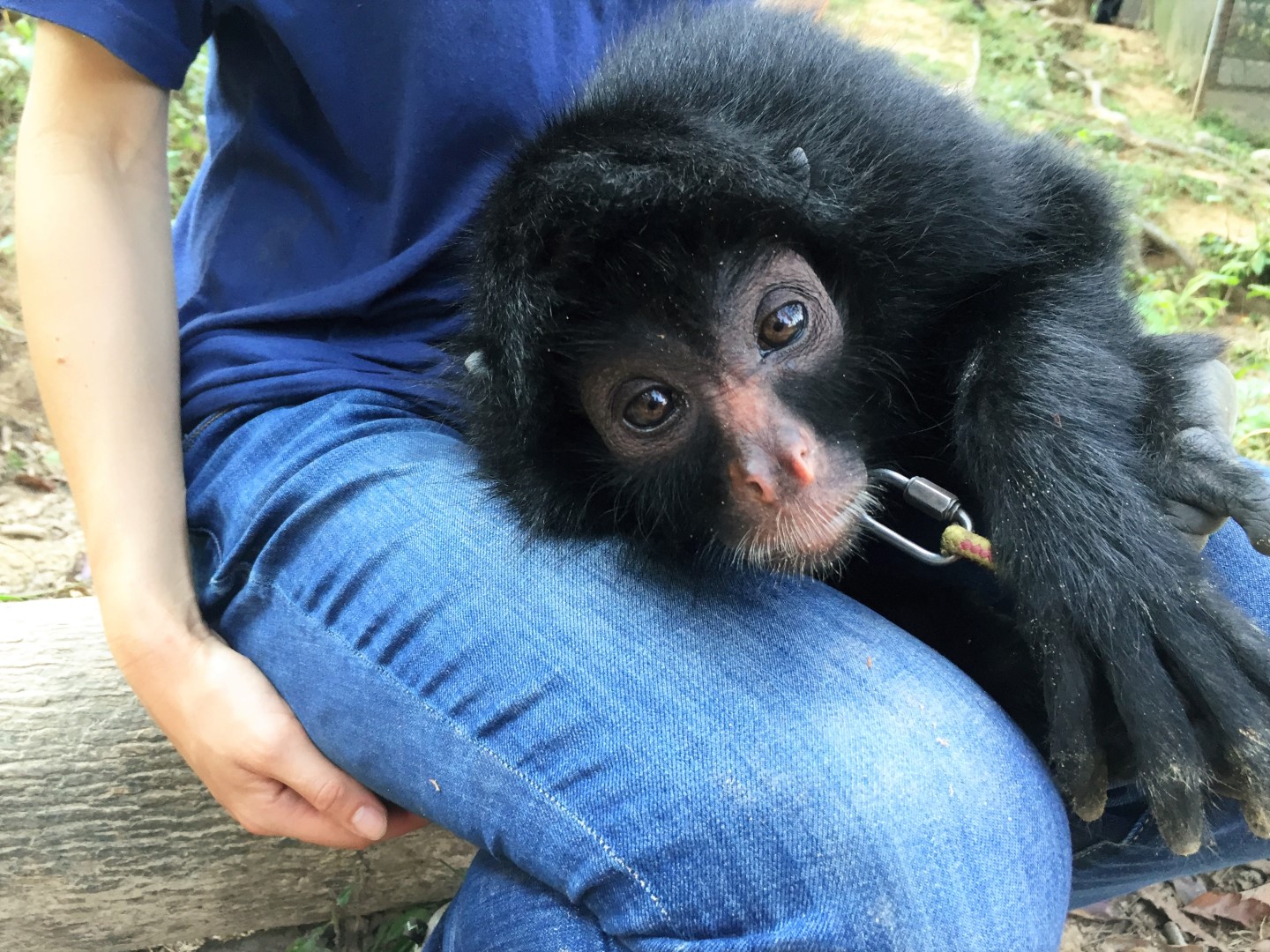
They clearly understand that I am a new face, because they show more interest in me than anyone else. As they pass, they try to touch my back or legs, or curl a tail around my arm. One runs past Camille and “accidentally” catches her hair; she remarks irritably that he does this all the time. Another curious visitor approaches me. Camille cannot identify the monkey at a glance, so she lifts its tail to check—a male! I must slowly stand from the log where I am sitting. I rise, and sure enough, he moves away. You have to be careful with males, whose instincts can turn into aggression. Camille tells me that on her day off, she visited the tourist mirador, or viewpoint, while the free-ranging spider monkeys were there. Naturally, people were eagerly trying to take selfies and touch them. Camille saw that one was male and warned them not to, only to be asked, “Why not?” Nobody was interested in the explanation.
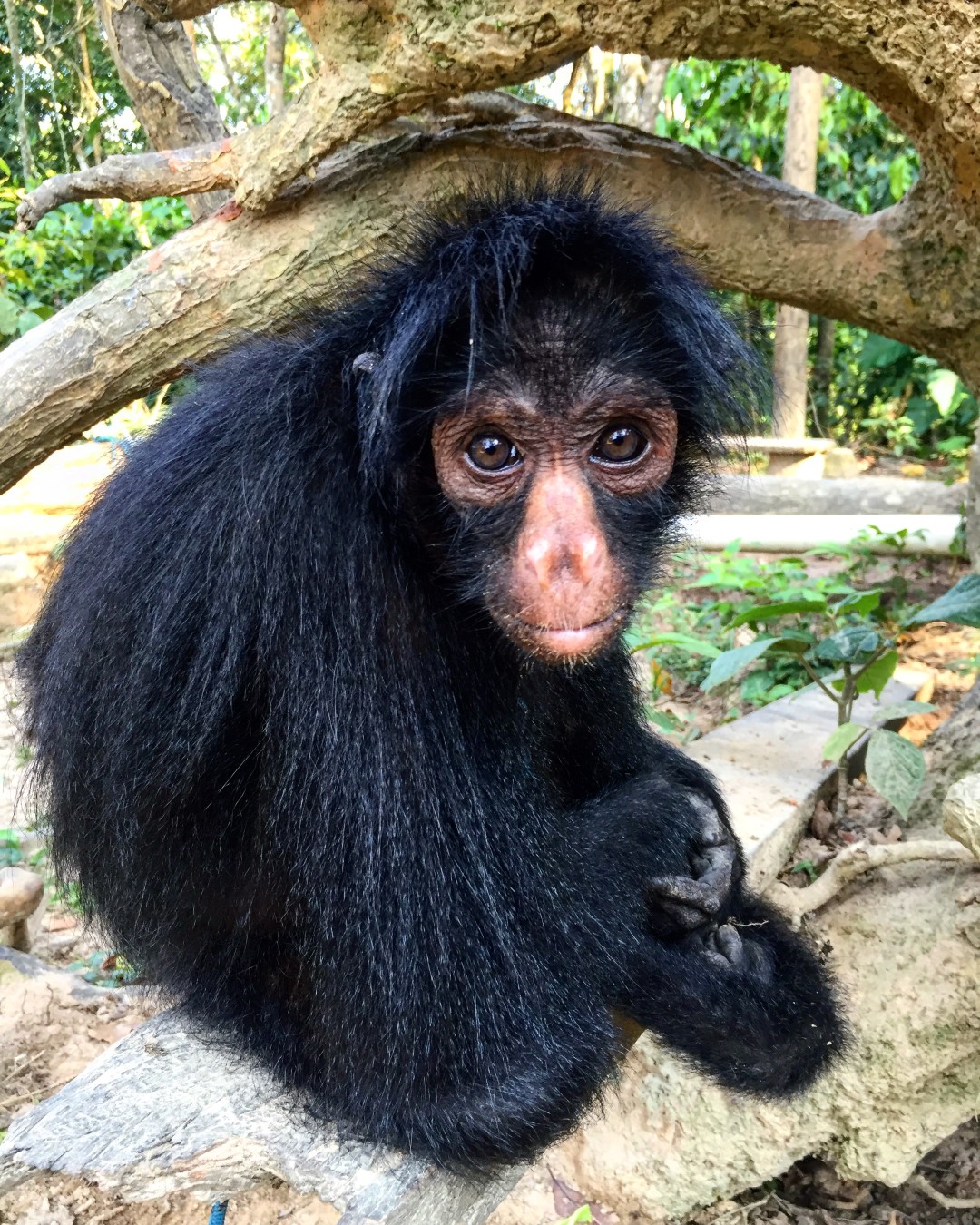
Most of the monkeys, whether close by or farther away, gather around us. I notice one watching intently from the very top of a tree and ask the coordinator, Nicky, who it is. “That’s Bebe. Her ‘owner’ sexually abused her,” Nicky says quietly, as though answering the question of why Bebe is more timid than the others. This is one story—a horrific one. But every animal here has a story, whether or not we know it. The simple fact that they ended up here instead of living in the wild already says a great deal.
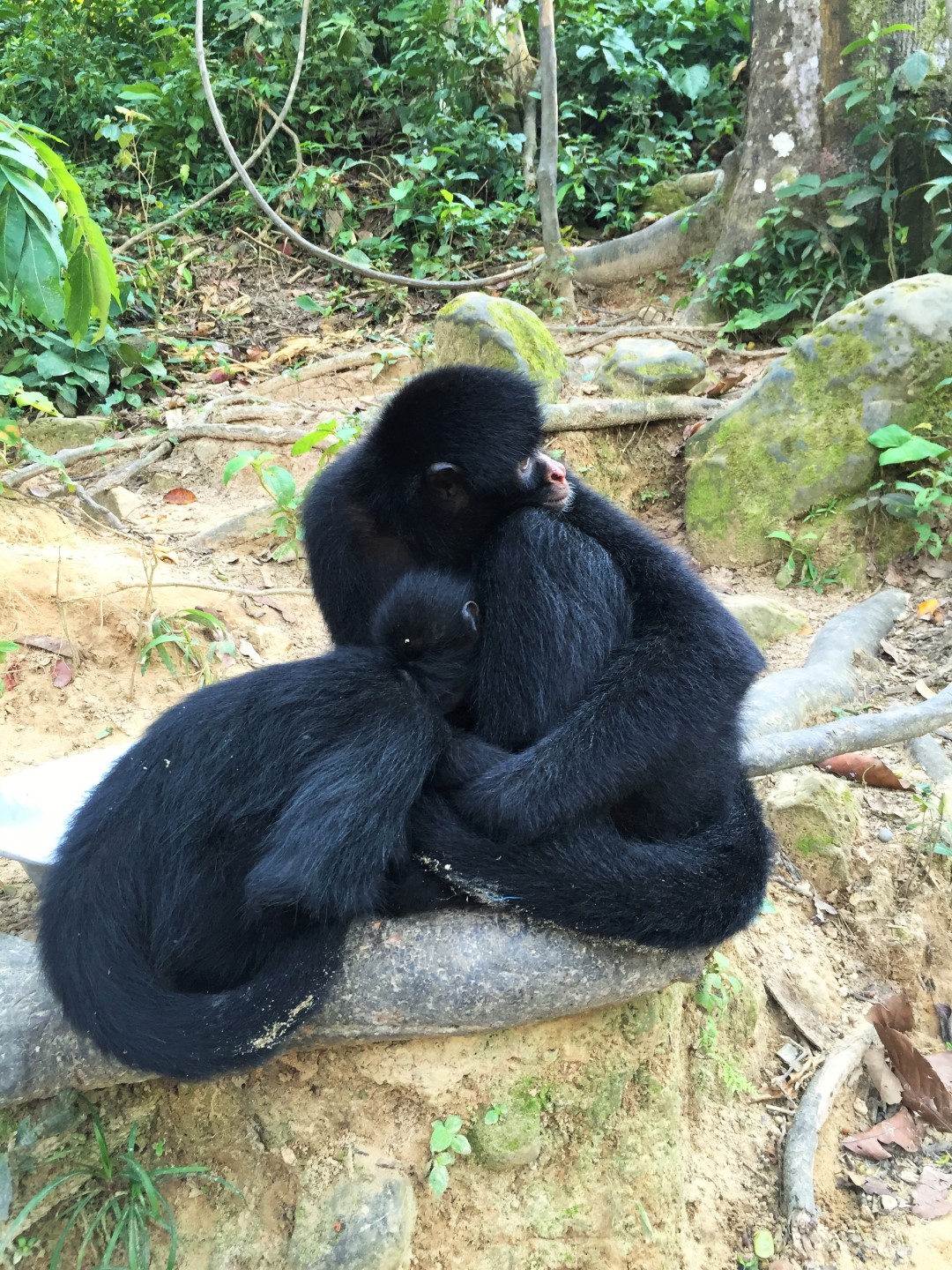
When I sit on the log again, Negra comes over. She is the oldest female in the troop, something clearly visible in her face. She has the expression of a sweet elderly aunt. Camille says Negra can be annoying and grumpy, but today she seems to be in a cheerful mood and settles into my lap. After a while, she points to something on her leg. Camille explains that I need to look there and search for something. All right, I begin pretending to look through her black fur, although it is so clean that there is nothing to find. Since this is part of the socialising process, I continue searching for the nonexistent object. At one point, I want to stroke Negra’s head; she catches my hand and puts it back where I am supposed to be looking.
Negra has adopted and raised several baby monkeys here after they lost their mothers. The horrifying truth is that to capture a baby for sale, poachers first shoot its mother. CIWY often receives orphans that should still be drinking their mother’s milk. Negra selflessly takes on the maternal role and raises them. She even produces a little milk. While Negra and I sit “picking fleas” from one another, one of the youngsters runs over and jumps into my lap, and Negra begins nursing. With her long black arms, Negra embraces the baby; I put my arms around them both. The little one receives a double hug.
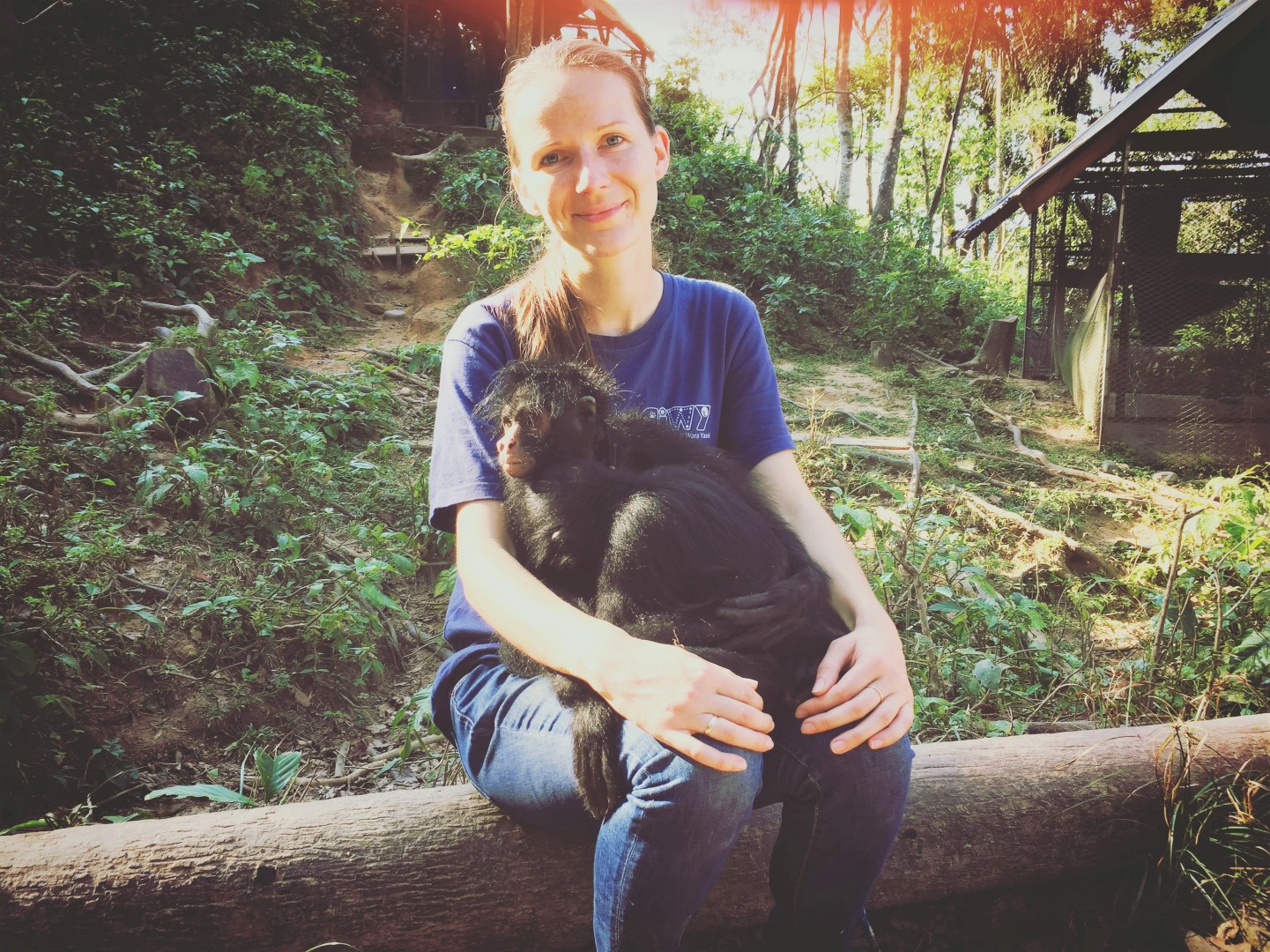
María, a Bolivian student who will work here for several months while conducting research for her bachelor’s degree, watches us and says I should come back to work with the spider monkeys. Plans are already forming in my mind: I might be in Argentina or Chile in December and could return to Bolivia to volunteer at the same time. It will be the rainy season, with few volunteers but no reduction in the amount of work.
I realise that my time with the spider monkeys has flown by and I have lingered too long. I have also arranged to join Pippa and Ali in feeding Baloo the bear, and I still have to climb to the famous tourist viewpoint. And, of course, the hardest thing of all: saying goodbye to the birds and Ronnie... I hug Negra, thank the women, and, still slightly euphoric from what has just happened, set off alone down the jungle path.
Once I reach the bottom, I save time by turning directly onto the tourist trail climbing to the viewpoint, or mirador. It is said to take forty minutes, but the ascent is steep, the weather is very hot, and I have no water. Still, I decide that it is not a long route and I can drink afterwards. Every so often, I meet a Bolivian family or group of tourists moving slowly along the trail or sitting down to rest. We greet one another and I hurry past them all. At some point, I realise that I am probably now the first person on the path, because snakes scatter in every direction when they hear my louder footsteps. Sorry, ladies, for disturbing your sunbathing, but I have a busy schedule!
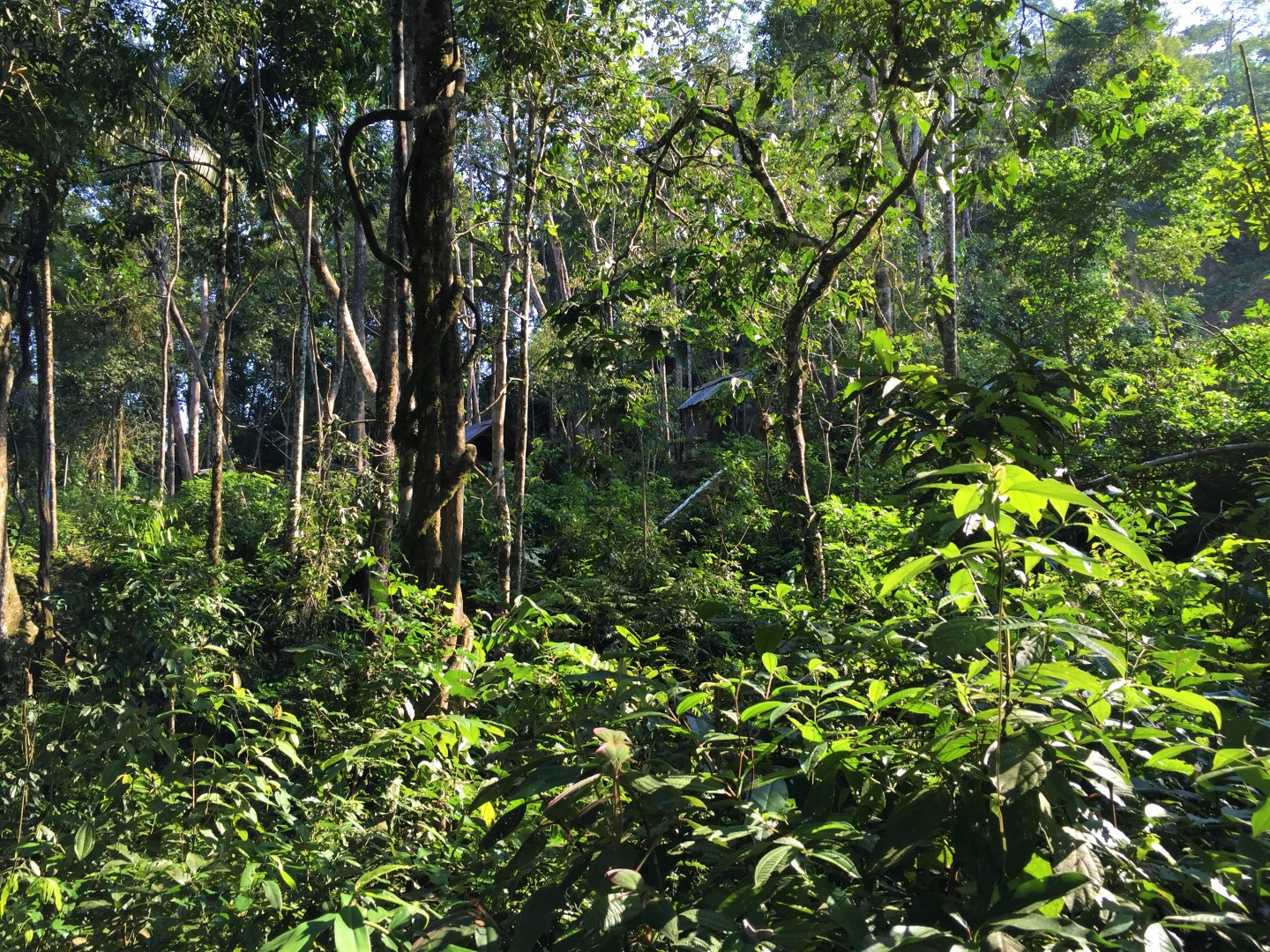
I reach the viewpoint out of breath. It stands on a hill with broad views across the jungle, the village of Villa Tunari, and the river. I take a few photographs and begin descending. A family coming the other way asks how much farther it is to the top. They look exhausted, so I say about five minutes, although I know it will take longer. Jānis often scolds me for telling people on hikes that the remaining distance is shorter than it really is. :) I think it makes it easier to summon the strength for the final stretch. Farther down, I meet some young people who notice the word “voluntario” on my T-shirt and begin asking about CIWY. I tell them everything they want to know and suggest visiting the CIWY administration when they reach the bottom. Secretly, I hope that before leaving, I will have sold at least one person on the idea of signing up for this unforgettable experience.
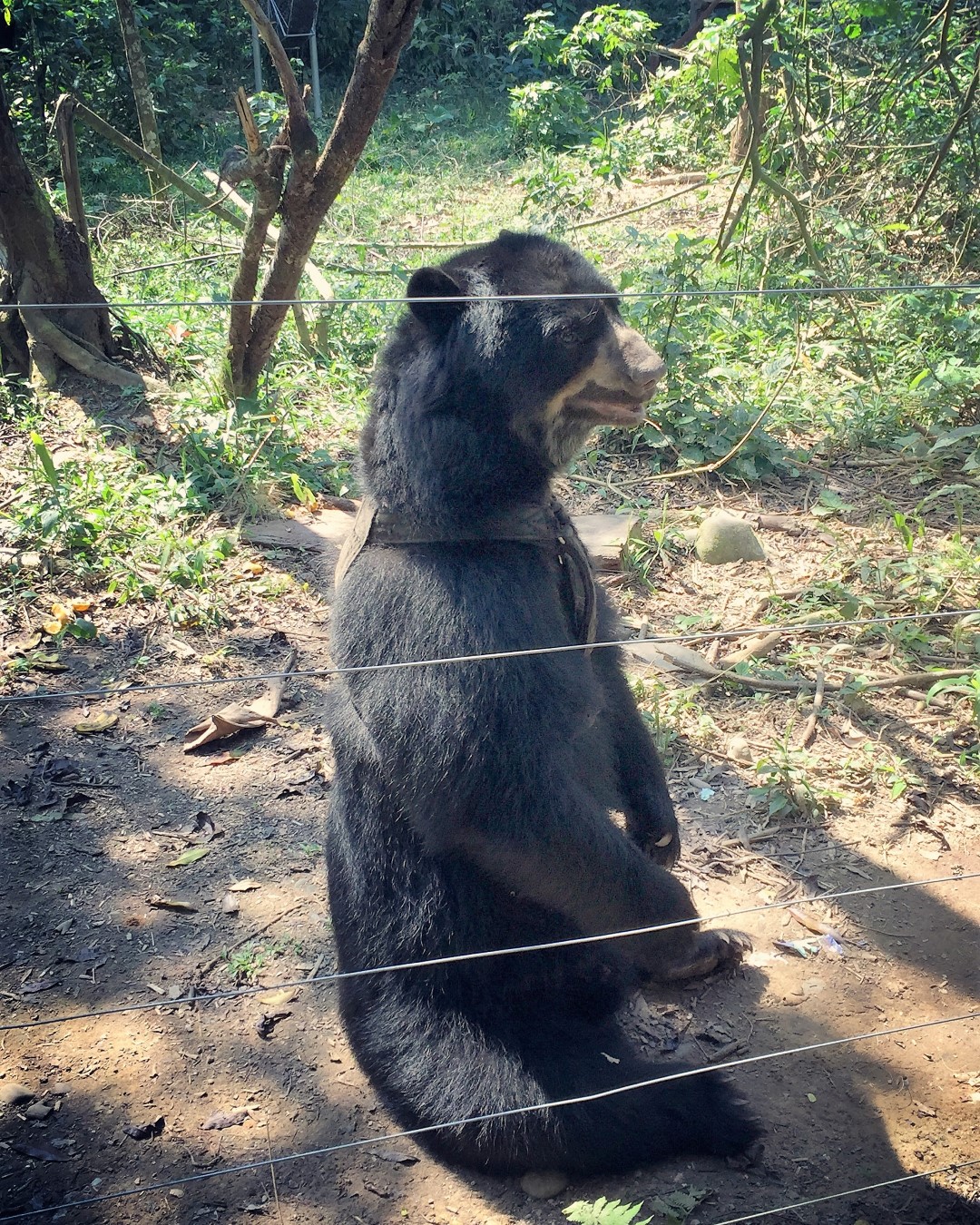
I meet Pippa and Ali, and we go to give Baloo the bear a snack. Pippa calls, “Baloooo!” and the happiest-looking bear I have ever seen emerges from the forest. Baloo is an Andean spectacled bear and eats a vegetarian diet. Perhaps that is why these bears look so endearing? There is no trace of a predator’s image. His snack consists of two bananas and two oranges. While he slowly and delicately peels an orange, a thieving capuchin sneaks up and steals one of the bananas. Ali tells us about taking Baloo for a walk through the jungle yesterday. The bear thoroughly exhausted him, charging uphill along his familiar trail and leaving Ali no choice but to run behind. On other days, when Baloo does not feel like exercising, he decides to lie down in the middle of the walk. Then there is no alternative but to wait an hour or two while the fellow sleeps. Climbing a tree is also on his list of preferred activities, which again means waiting until the bear has had his fun. Baloo really is a happy bear. After his harsh past, he seems to appreciate profoundly that he can live in nature and be treated with dignity by people.
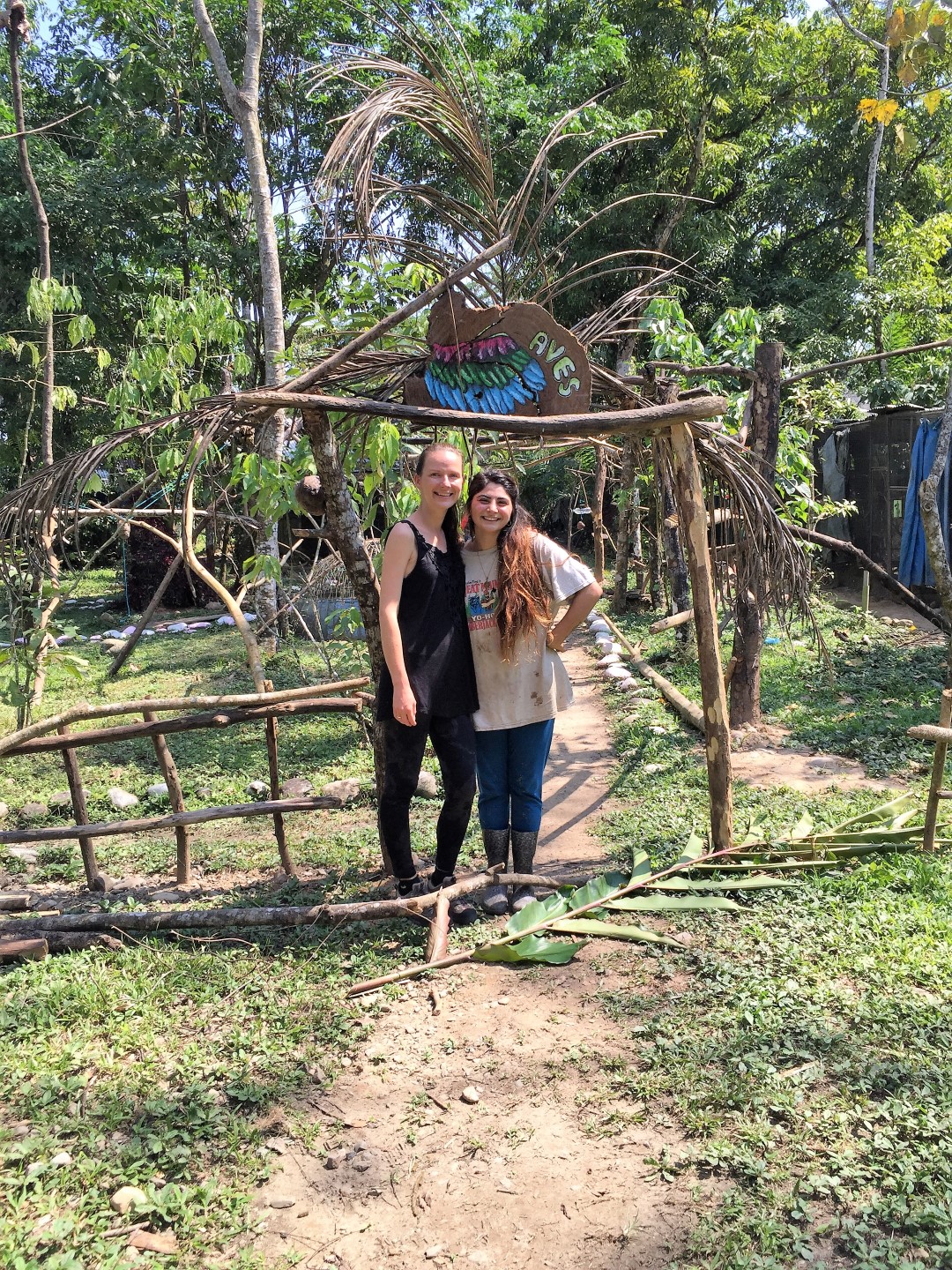
Right, it is time to pack my bag. Then I gather myself and go to say goodbye to the birds. I visit each one and say farewell. When I reach Monchito, he signals that he wants to step onto my arm. This will be our last cuddle... I say goodbye to Ronnie. She thanks me and says that although the animals cannot express their gratitude, my time here has meant something even without their knowing it. But I do not need a “thank you” from the birds. I have never felt so rewarded as I have while doing this work without pay! This place has taught me something very important all over again: that I am happy. In the stress and rush of Riga, it turns out, I had forgotten that long ago. To top it all, Ronnie tells me that I have been the best volunteer she has ever worked with. Could there be a better thank you than that? :) “I have a feeling you’ll come back,” Ronnie says before I leave.
As agreed, I remain for our communal lunch at the volunteers’ café. I say goodbye to Nena and to the vets, Fernando and Lani. Then come my final words with my friends. Camille suggests that I should ride to the bus on a mototaxi. Agreed! We say goodbye, and I go to flag one down. With my large backpack on my shoulders, blowing kisses to those staying behind, I set off on one final motorcycle ride along the jungle highway.
Bright green colours flicker past the bus windows, the same colours that fascinated me so much when I arrived. I reflect on everything that happened and can scarcely believe it. The whole time passed like a dream—but the dream has left behind an indescribable joy. Now I understand perfectly why volunteers from all over the world return to Parque Machía during their holidays.
You can read the stories of CIWY’s animals here.
I have posted photographs and videos of the CIWY animals on my Instagram profile.
Veterinarians Lani and Fernando are still at CIWY, posting photographs and videos of how its animals are doing. You can find them on Instagram at Meet The Furs.
And if you ever feel the desire to do something that will make your heart grow larger, you will always receive a warm welcome at CIWY! Every one of us can make a difference!