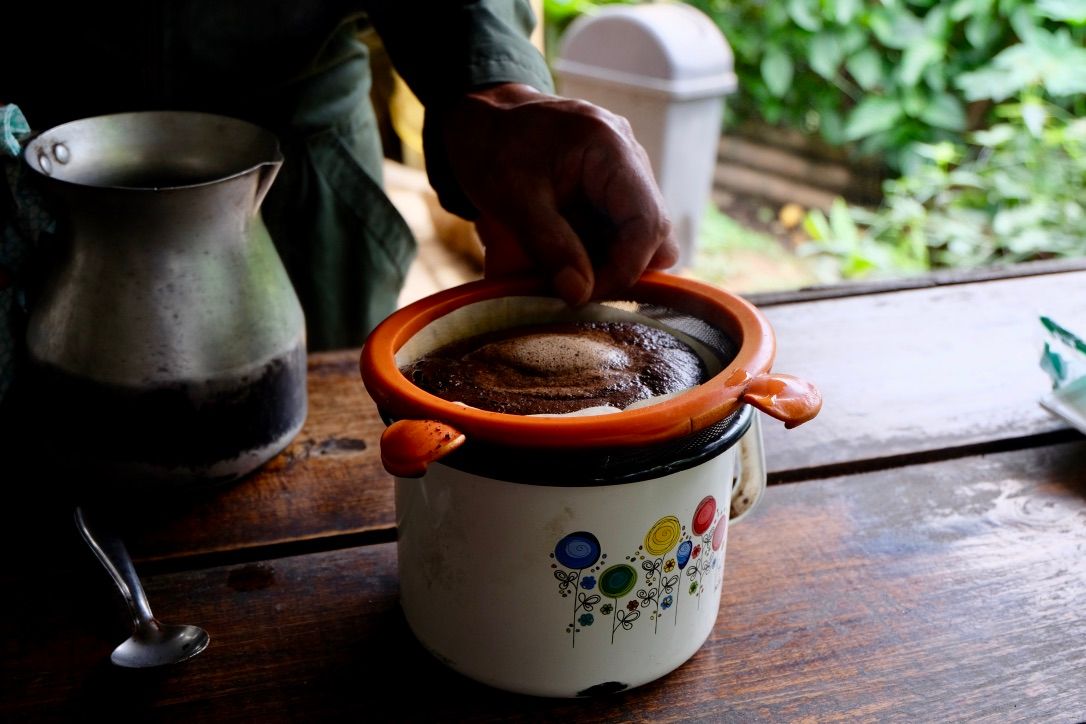
For many people, a morning without a cup of coffee is unimaginable. Yet coffee travels a remarkably long road before reaching our cups—not only in distance, but also from the moment a bean is planted to the finished product. This is the story of traditional Colombian coffee cultivation, as explained to us by coffee grower Tim at his organic farm, Finca Don Eduardo.
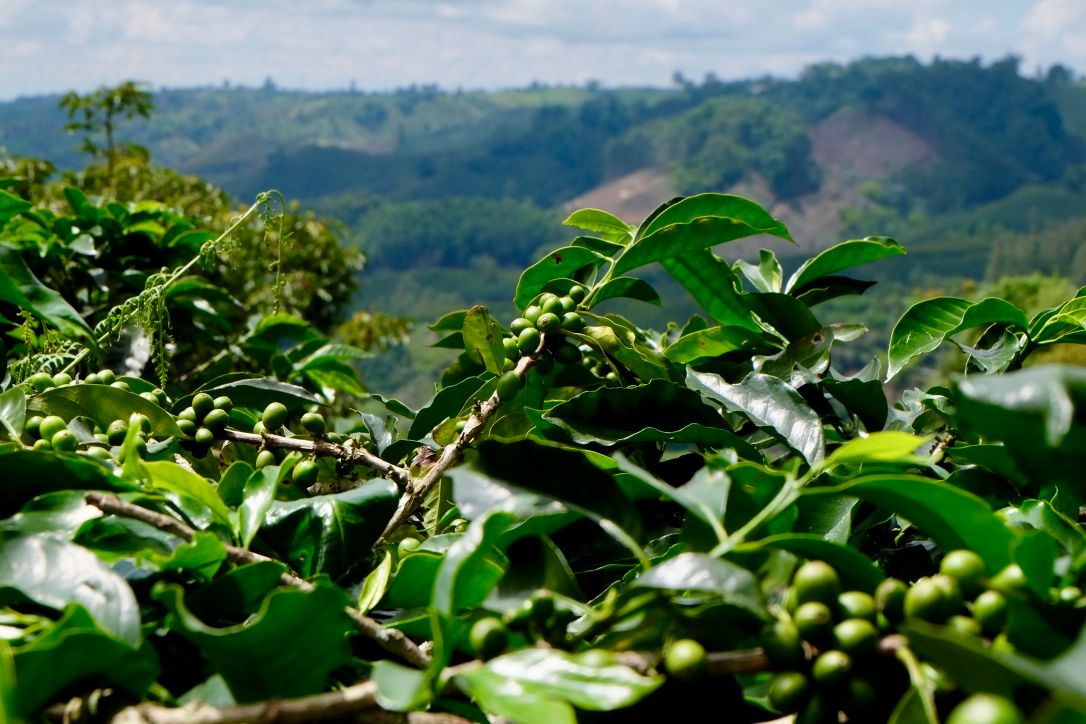
Types of coffee
The two principal types of coffee bean are Arabica and Robusta. Arabica usually produces a finer grind and is regarded as the higher-quality coffee: sweeter, more acidic, and containing far less caffeine. For these reasons, around 98 per cent of Colombian farms grow Arabica, as it is more profitable. Arabica itself comprises roughly forty varieties. The most expensive is Geisha, or Gesha, which is also grown in Colombia. Robusta, meanwhile, has a much stronger flavour and contains approximately twice as much caffeine as Arabica.
The rest of this article focuses on Arabica coffee. It can be divided further into traditional and modified varieties. Traditional coffee bushes are larger and require much more space. Harvesting them therefore takes considerably more effort, as their branches have to be pulled down with rope to reach the crop. Modified coffee, by contrast, is a variety developed through selective breeding and natural mutation. It is more resistant to disease, while its much smaller bushes make harvesting easier. It is worth noting that modified coffee is not the same thing as genetically modified coffee.
Why grow traditional coffee if it is more difficult? Coffee experts say that modified varieties lack subtlety of flavour, although taste also depends greatly on the soil, climate, altitude at which the bush grows, and, quite simply, personal preference.
Coffee in numbers
Colombia is the world’s third-largest coffee exporter, at 696,000 metric tonnes, behind Vietnam (1,650,000 tonnes) and Brazil (2,720,520 tonnes). The country has around 500,000 coffee farms. Approximately 95 per cent are family businesses with plantations smaller than five hectares. The average Colombian plantation measures two to three hectares, but because land area is measured “from above” and coffee grows best on hillsides, its actual surface area may be closer to three or four hectares.
Growing coffee
The ideal conditions for coffee cultivation are found between 1,200 and 1,400 metres above sea level. Coffee cannot tolerate frost, so unfortunately we will not be growing it in Latvia. Like tea, it should grow on a slope to ensure an even supply of rainwater.
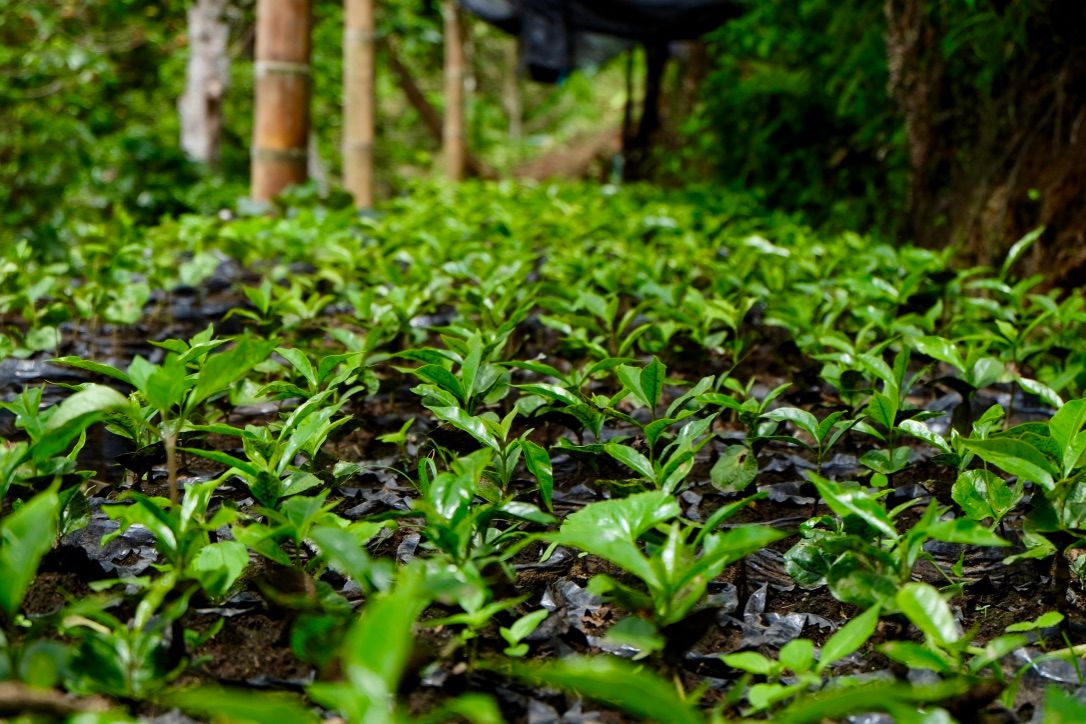
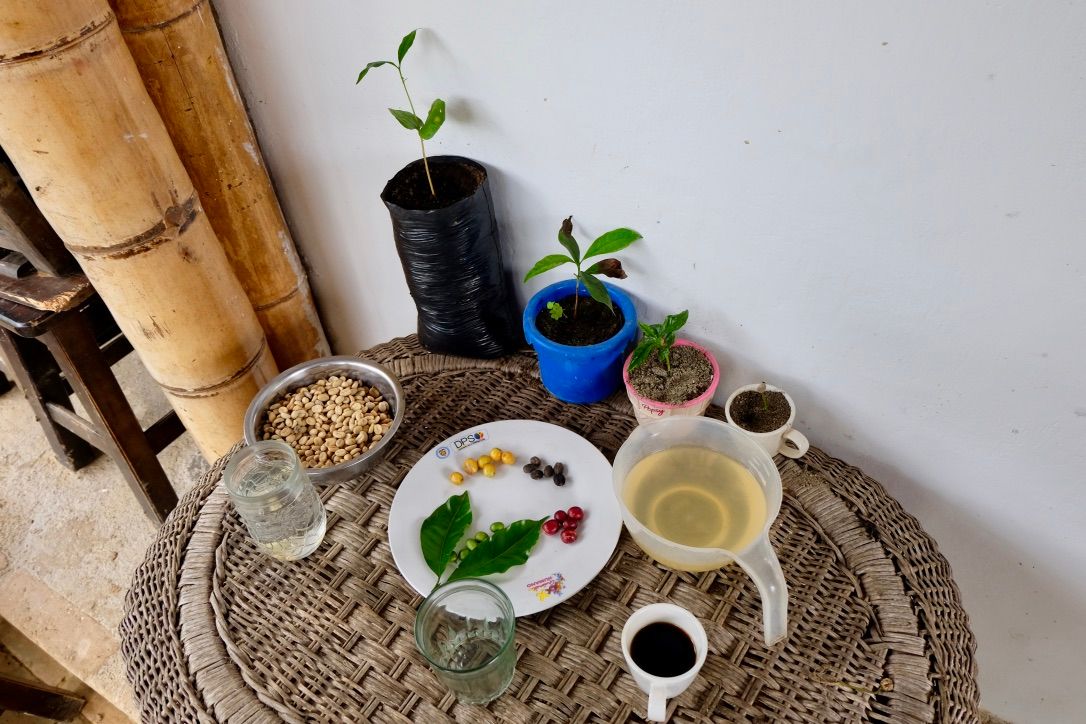
According to Tim, the best method is simply to scatter coffee beans on sandy soil without burying them. This allows the beans to settle naturally and their root systems to grow straight. Tobacco is often planted nearby to prevent insects from eating the coffee seedlings, because pests find it much more appetising.
Once a seedling has grown, it is transplanted into a pot with mineral fertiliser. It remains there for about a year before being planted in the ground, where it develops into a coffee bush over the following years.
Coffee loves shade. “Shade-grown coffee” is even recognised as a distinct category. Tim’s coffee also grows under cover provided by banana or orange trees planted between the rows. A little bamboo is useful too, serving as a natural regulator of soil moisture: when there is too much water, bamboo absorbs it; when there is too little, it releases water back into the soil.
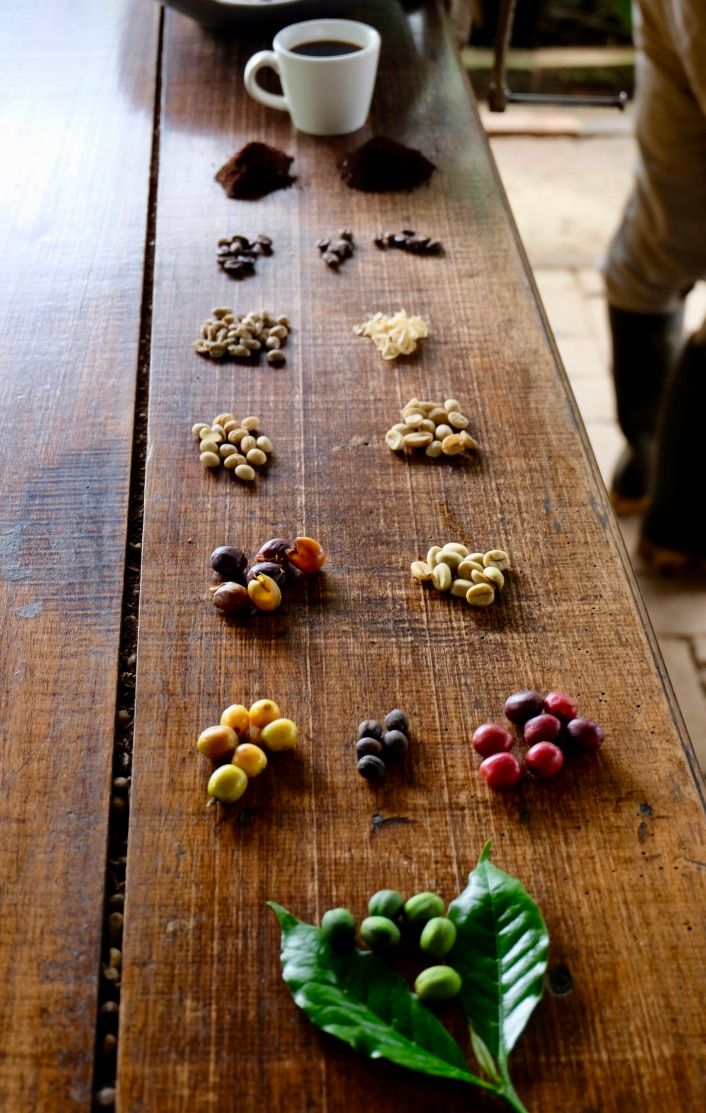
Four to five years pass between planting and the first harvest. The bush then enters a fifteen-year production cycle. After that, it can be pruned and allowed to recover, gradually restoring its ability to bear fruit. Naturally, it becomes less productive with every further fifteen-year cycle.
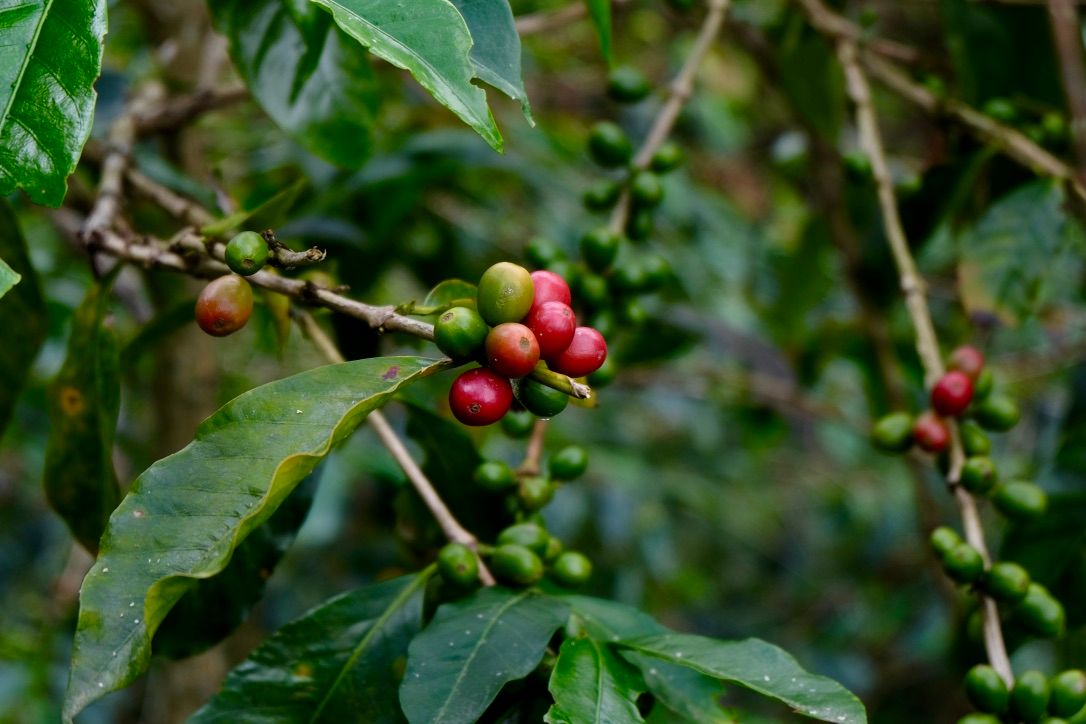
Once the crop ripens, the process is simple: take a bucket and get picking!
Processing the beans
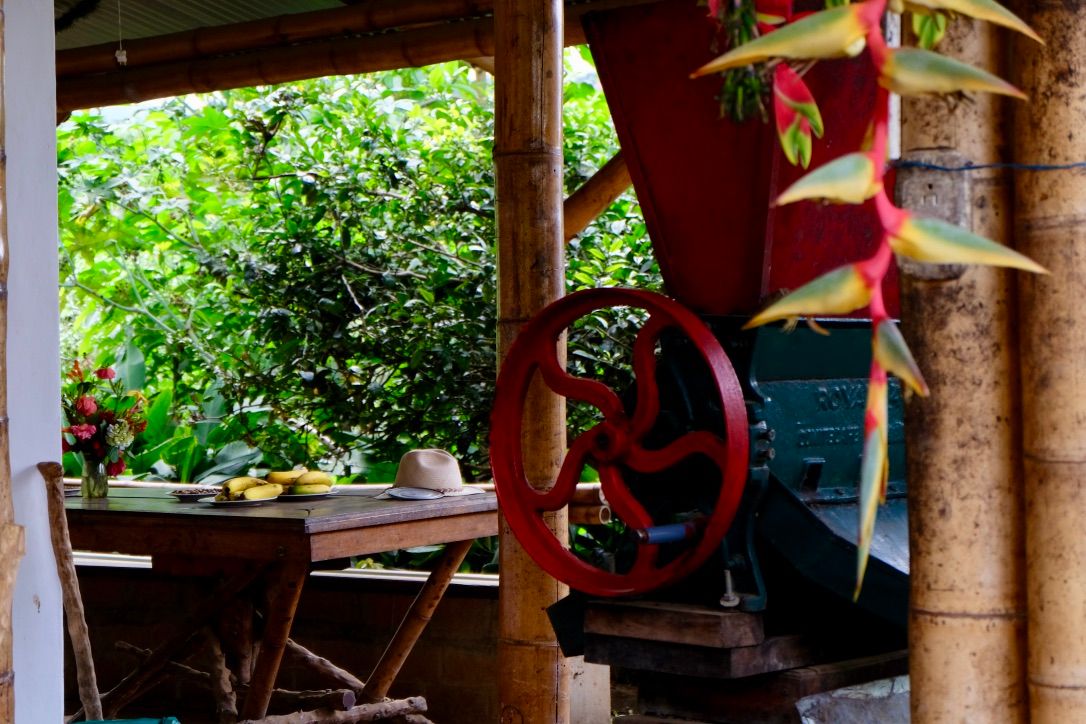
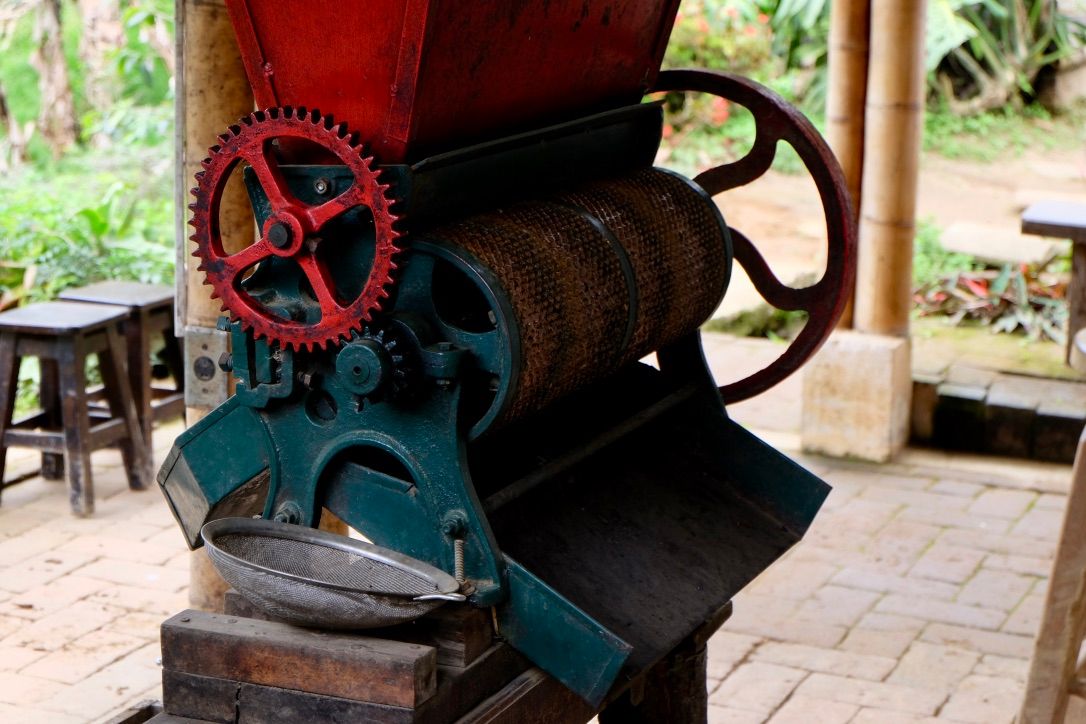
First, a special machine separates the beans from the fruit pulp (pictured below). They are then placed in water, where osmosis draws out all their sugar. This helps the beans roast much more evenly later. Colombian coffee growers generally use rainwater for this process. Beans that sink are separated as high-quality, export-grade coffee, while those that float are considered lower quality and destined for domestic consumption.
Looking back at the South American countries we have visited, coffee culture barely exists in most of them. Local people generally drink instant coffee or herbal tea. Colombia is an exception: good coffee can be enjoyed in specialist cafés and even chains such as Juan Valdez Café, a kind of Colombian Starbucks.
Within a few days, all the sugar has left the beans. The sugary water can then be used to make coffee wine—but that is another story entirely. Next, the coffee is laid out to dry. This can be done in an oven or in the sun. Oven drying is more difficult because the process can unintentionally turn into roasting, and the oven also consumes more energy. In Colombia, as we have already noticed, sun drying is the usual choice: beans are spread over a concrete surface outdoors. The plantation owner tells us that roads and even school sports grounds can often be seen covered in a layer of coffee.
The beans are stirred on the concrete several times a day until their moisture content falls to roughly twelve per cent. The correct moisture level is judged by peeling a bean and rubbing it between the fingers. If the husk comes away easily, the coffee is sufficiently dry. If it has to be scraped off, it is better to wait a little longer, because a buyer will certainly use that fact to negotiate the price down.
At this stage, the dried beans are sold to buyers and exported to coffee-consuming countries. Colombian farmers rarely continue processing them because roasting is an art of its own, and few have the resources to excel at both growing and roasting. Coffee from this plantation that is not sold to buyers or prepared for visitors is taken to a local specialist for roasting.
Preparing the drink
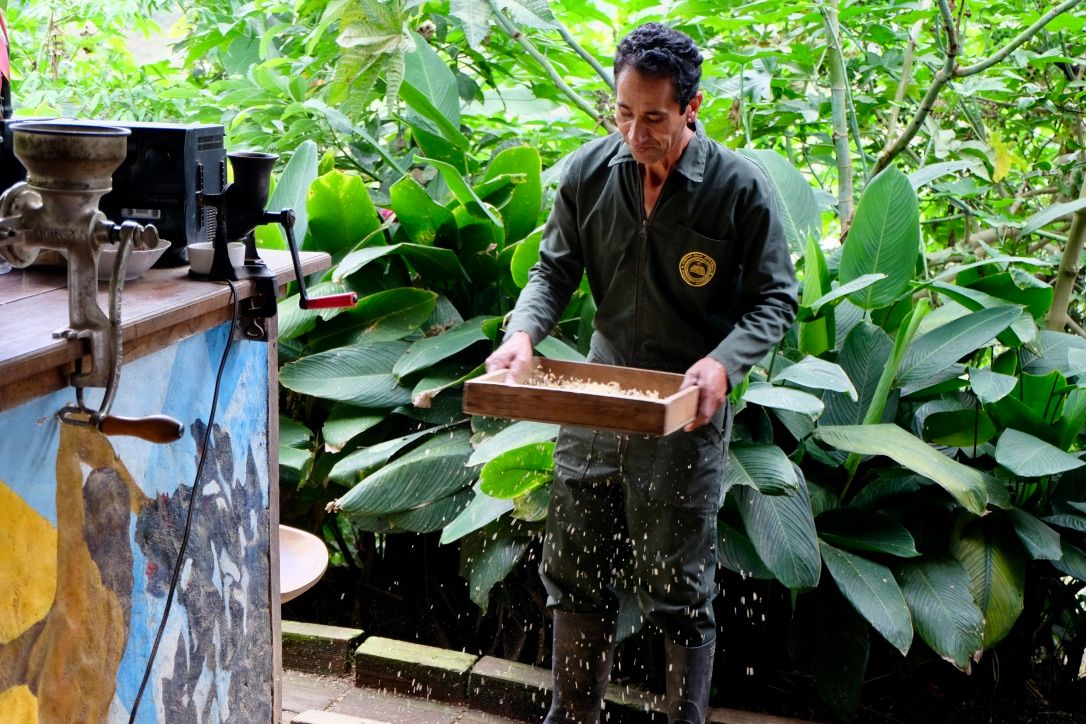
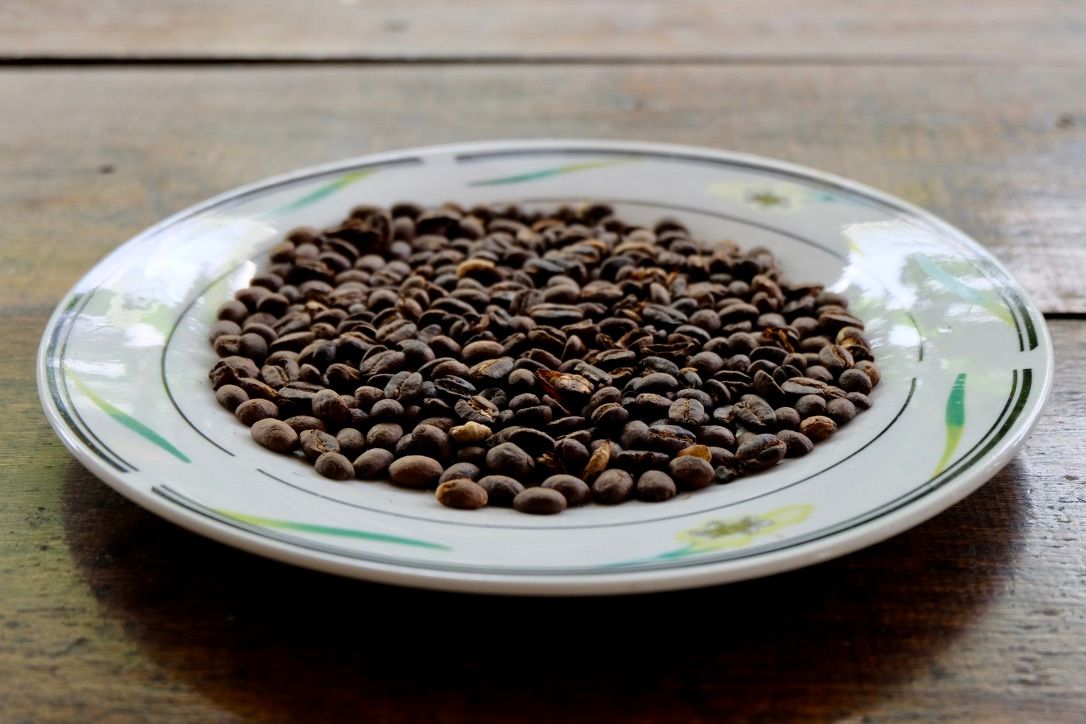
Tim hands the preparation over to the expert, Don Juan, who demonstrates how coffee beans become a drink. The beans have already dried in the sun; now the remaining husks must be removed and the beans roasted. They are separated by tossing them in a sieve: the husks fall to the ground while the valuable beans remain. A pan is heated over a gas stove in preparation for roasting. Knowing when to stop is crucial because, even after the heat is turned off, the beans continue cooking from within. The lighter the roast, the more caffeine remains and the more the bean retains its distinctive aroma. A longer roast makes those unique flavours less pronounced. Naturally, roast time is also a matter of taste. The final step is grinding, which we do by hand rather than with a coffee grinder.
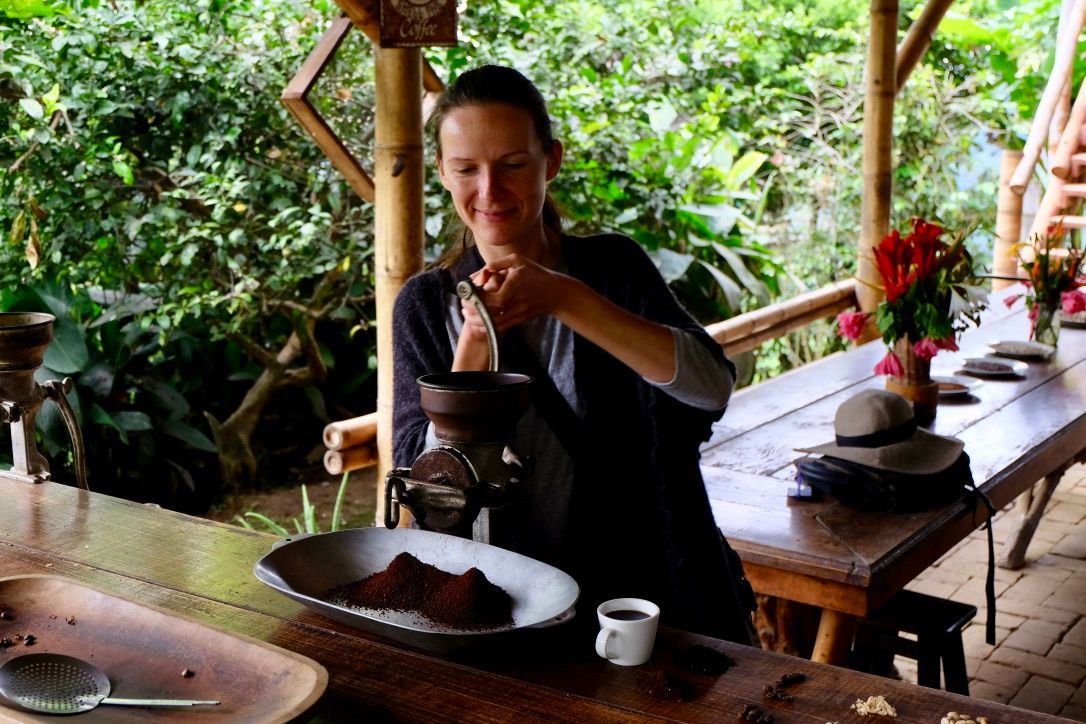
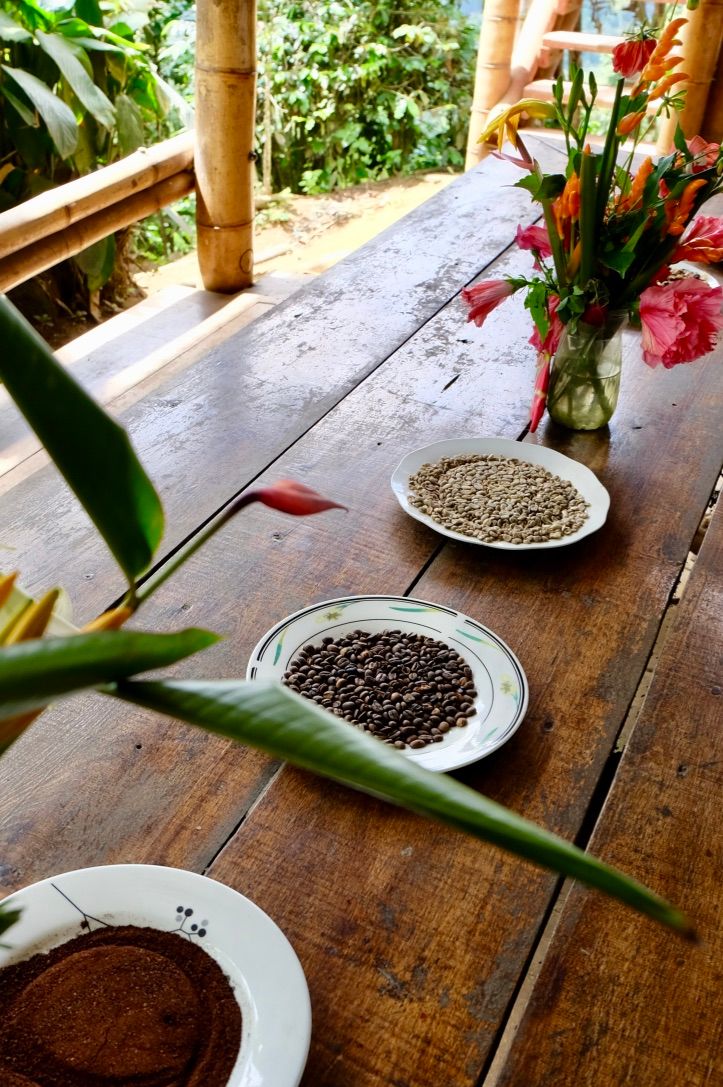
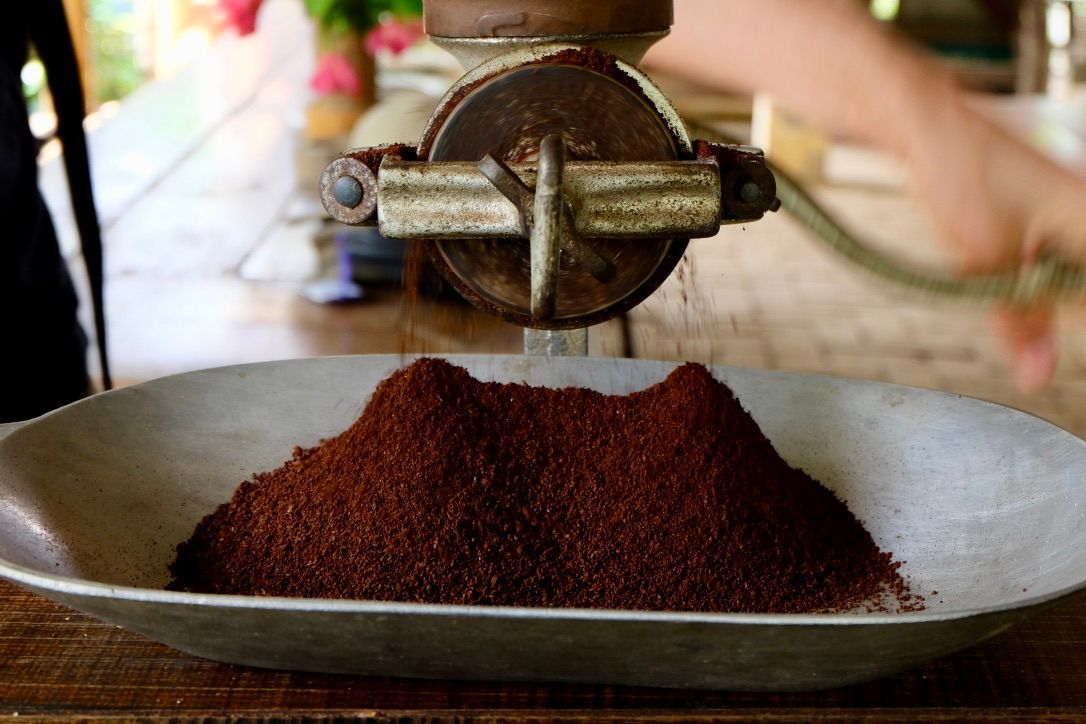
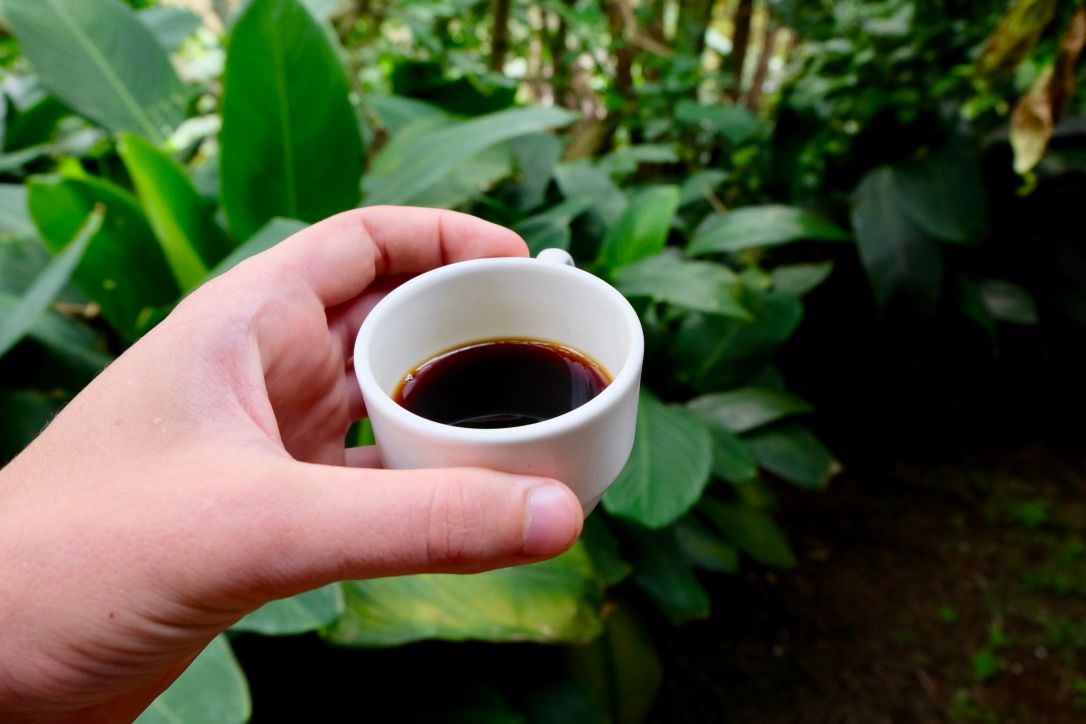
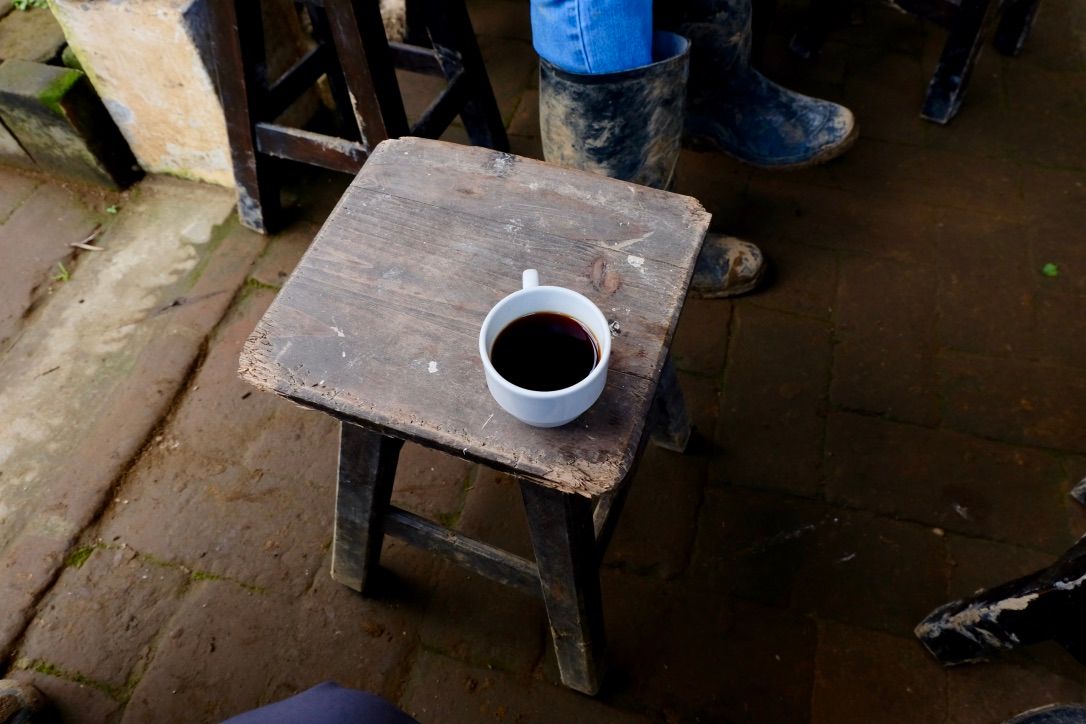
We pour over hot water and an exceptionally fresh, aromatic coffee is ready to enjoy. It may have been the finest cup of coffee I have ever tasted.