In winter, the Canary Islands are the warmest place in Europe. This year I noticed unusually low airfares to the Canaries—Gran Canaria, Tenerife, Lanzarote and Fuerteventura—and naturally did not want to miss the chance to take in a little vitamin D and swim in the Atlantic while Latvia lay beneath the snow. We decided to go at the end of January, when spring usually still feels so far away and you wish you could hurry it along. A return ticket from Riga, with a connection, cost just under €70. Bear in mind, however, the new Ryanair and Wizz Air baggage rules: if you want to bring a 10 kg cabin suitcase in addition to a backpack (Priority boarding), add another €6 for every flight segment. I know quite a few Latvians will be travelling to the Canary Islands this spring, so I hope our recent trip offers something useful. I will describe our route (see the map) and the sights, followed by practical notes on car hire, accommodation and food.
Route:
The Canary archipelago comprises seven islands of volcanic origin and six small islets. Why Gran Canaria in particular? Lanzarote and Fuerteventura can be considerably windier in January and February, while I had already visited Tenerife. So the choice was simple: Gran Canaria. The island is called a miniature continent because its dramatic terrain gives the north and south distinctly different climates. As on Tenerife, the air temperature can vary sharply between the north, the mountainous interior and the south. The north tends to be rainier and cloudier, but also greener. Mountains fill the centre of the island, whose highest point is Pico de las Nieves at 1,949 metres, while the south is drier and warmer.
We would be on the island for just under two weeks, from 29 January to 10 February, with friends joining us for the second week. We decided to devote the first week to exploring the north, staying in two different Airbnb apartments. When our friends arrived for week two, we wanted to minimise the chance of rain, so we would stay in the south—also in an Airbnb—and tour the island in a hire car. Although temperatures of 21–23°C in January and February may sound luxurious enough, these months carry a greater risk of rain, which can continue for an entire week. If that happens to coincide with your holiday, it is unfortunate indeed. Apart from a little drizzle one night, our two weeks were rain-free, although our host said it had rained for several days only a week earlier.
The Capital, Las Palmas de Gran Canaria
Nearly 400,000 people live in the island’s capital. Its narrow streets make parking practically impossible and expensive over longer periods—private car parks cost around €16 per day—so we went without a car during our first days in Las Palmas. Our apartment stood beside the three-kilometre Las Canteras beach, recognised as one of Europe’s loveliest urban beaches. A reef separates it from the open ocean, making it ideal for snorkelling at low tide. Following the seaside promenade, you can walk to the secluded El Confital beach in a protected natural area. The neighbourhoods around Las Canteras, Santa Catalina and Mesa y López form the new centre; the old-town districts of Triana and Vegueta lie about six kilometres away. Public transport connects them well—the yellow Guaguas buses 1, 12, 13 and 17 cost €1.40—while taxis strictly use the meter and charge no more than €5 for the journey.
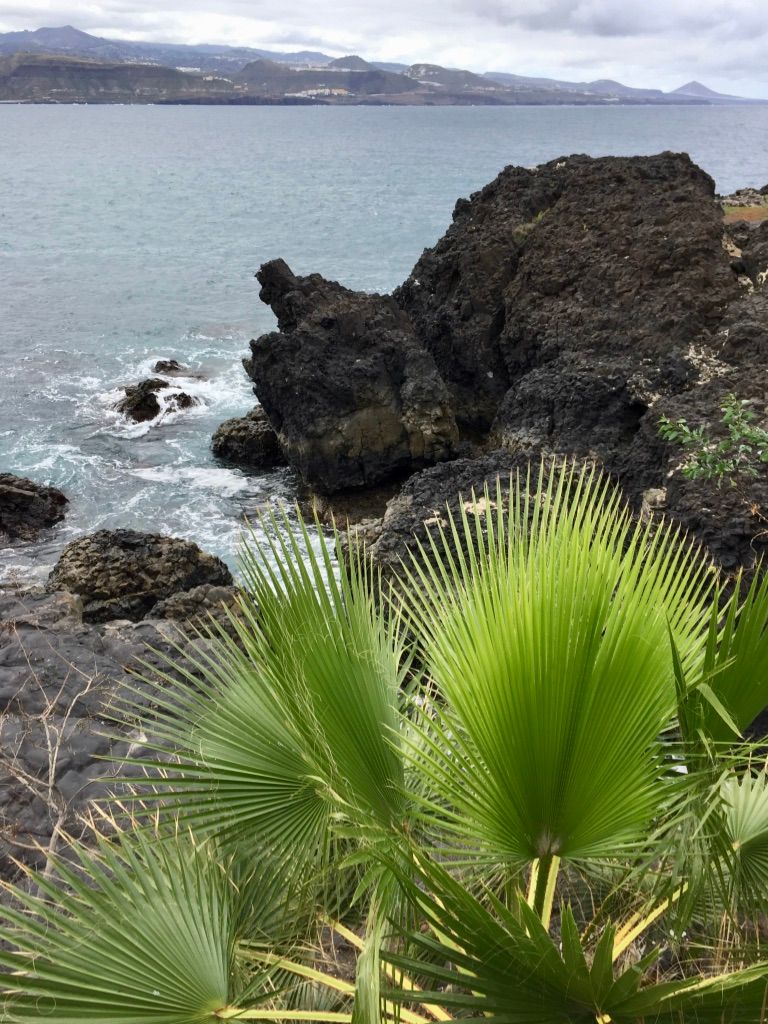
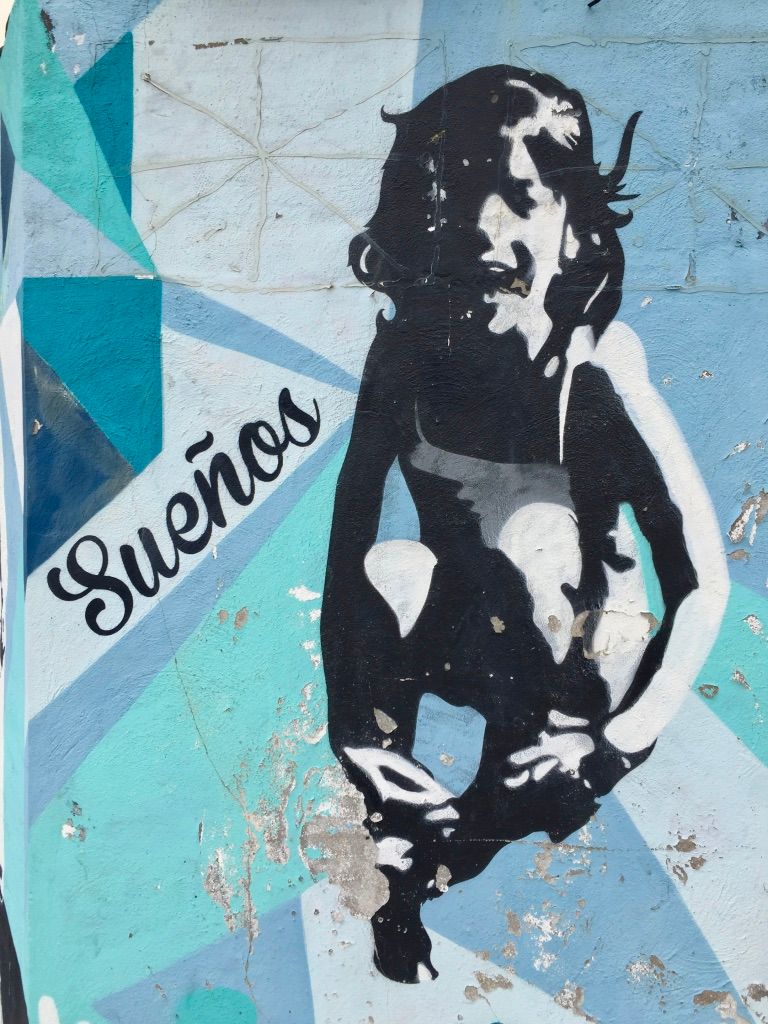
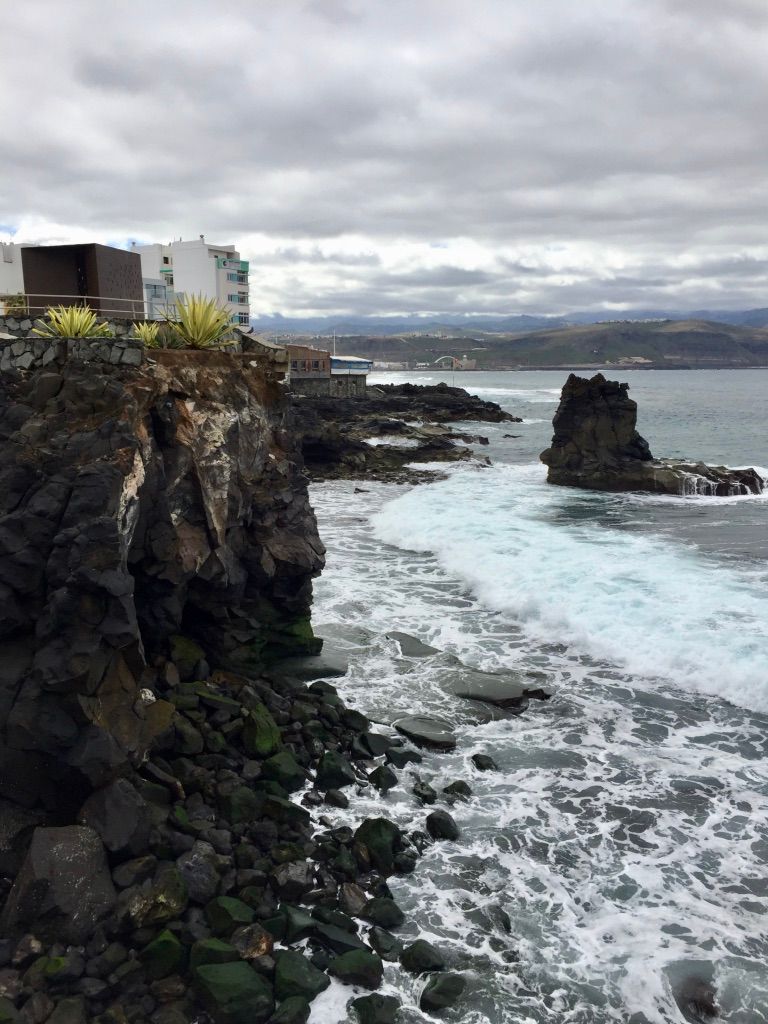
Apart from Las Canteras beach, the new centre is where you are more likely to encounter the islanders who live and work here. It is a commercial district containing the port and a great many workplaces, offices, banks, shops, restaurants, bars and cafés. I think staying in the capital at the start of our trip was the right choice: before exploring farther afield, we could practise our Spanish and settle into the local surroundings. And what a culinary offering! Spanish tapas come first, of course, but Latin American influence is also strong. The Canary Islands—and Las Palmas harbour in particular—are an important stopping point for ships travelling to and from Latin America. The islanders’ historic emigration to South America, and the recent trend of returning to the Canaries, also play a major part. We were pleasantly surprised to find Peruvian cuisine, Venezuelan arepas, Argentine steaks and Asian food (see the recommendations at the end). Remember that many businesses close for several hours in the afternoon while their employees take a siesta. Restaurants, for example, reopen around 7 p.m. and remain open until 1 a.m.
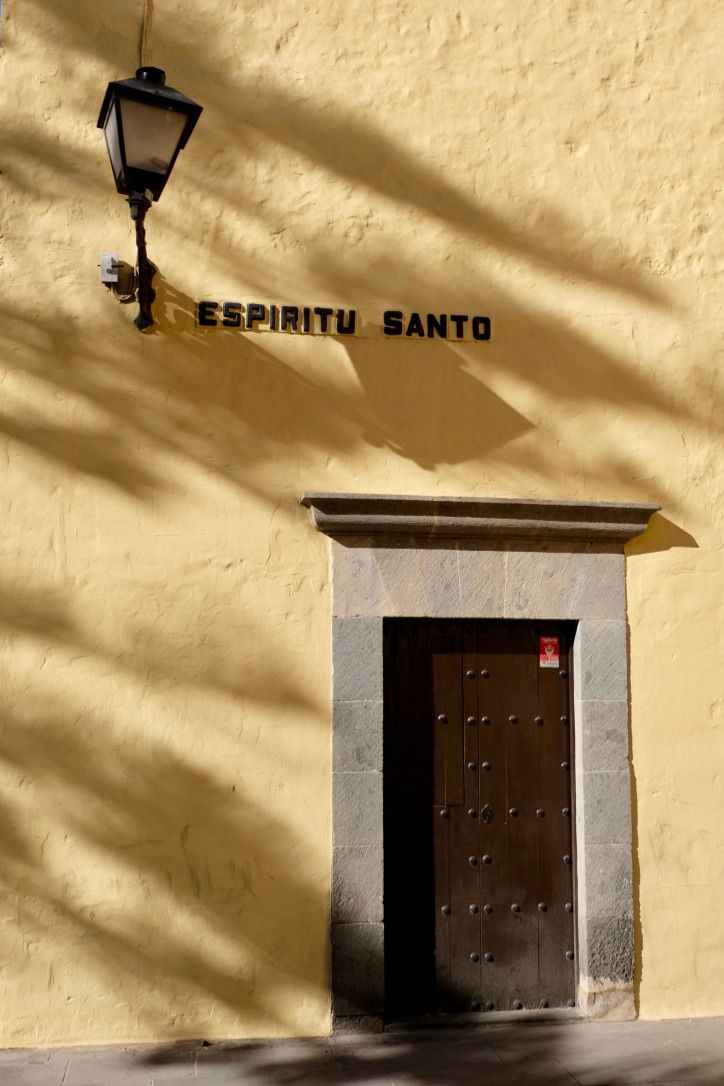
Most of the sights are concentrated in the old town, in the districts of Triana and Vegueta. Traditional colonial architecture gathers here, with several architectural gems lining the pedestrian Calle Mayor de Triana, also the city’s principal shopping street. Palm-filled parks and little squares make the old town highly photogenic. Its most impressive building is the neoclassical Cathedral of Santa Ana, begun in the fifteenth century. It also houses the Museum of Sacred Art (Museo Diocesano de Arte Sacro, €3).
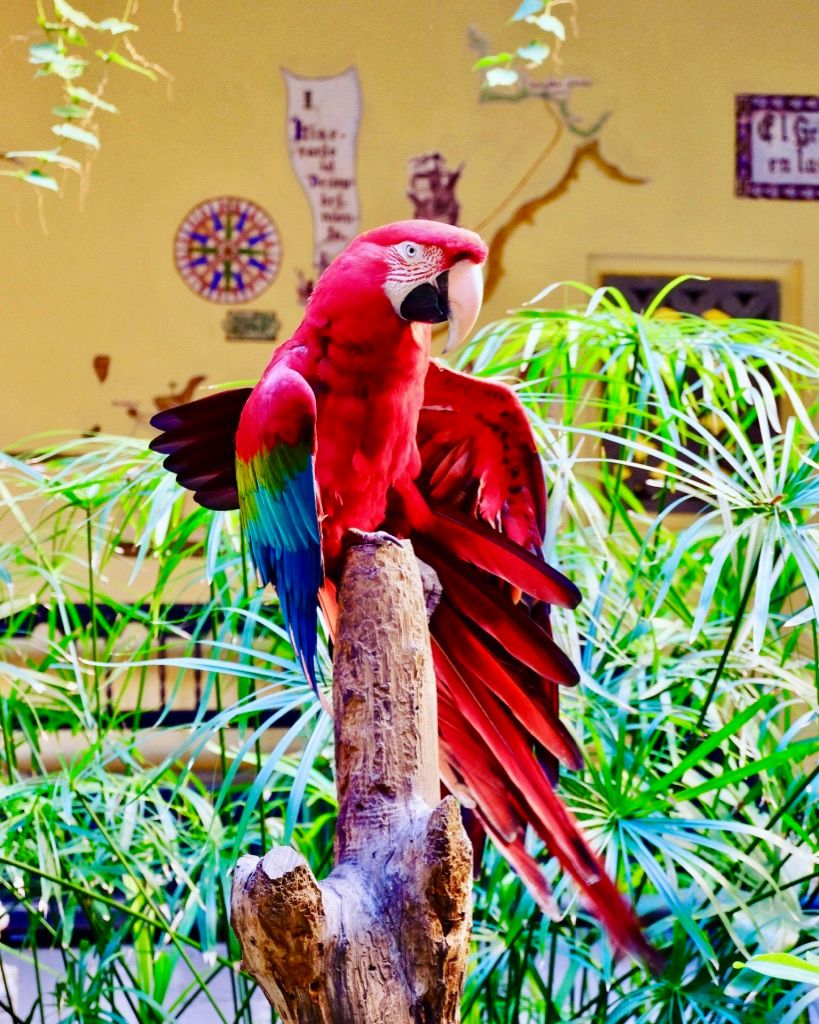
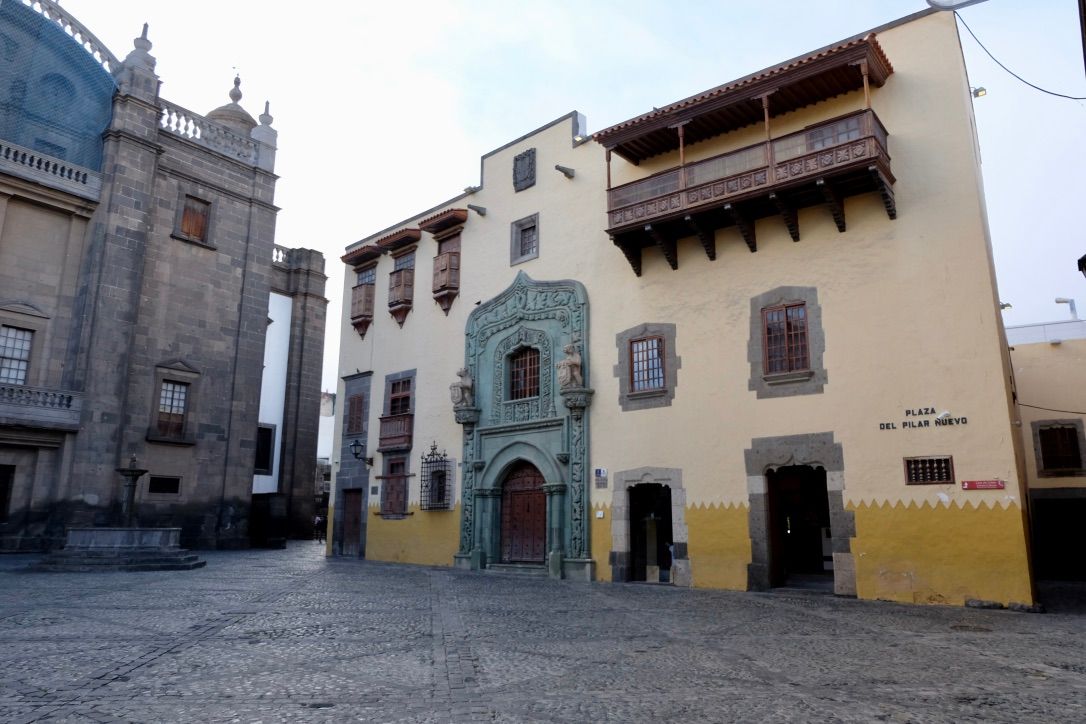
I was most interested in the Columbus Museum (Casa-Museo de Colón, €4), which presents the Canary Islands’ historic role in transatlantic navigation. All four of Columbus’s voyages across the Atlantic stopped in the Canaries, three of them on Gran Canaria. As we know, Columbus hoped to find the most direct route to the Far East but instead reached America, the New World. Sections on his journeys display models of the expedition ships, maps, copies of Columbus’s diary and other evidence from these four journeys that shaped history. A separate room is devoted to cartography and navigational instruments, where map enthusiasts—including me—should allow plenty of time. The permanent exhibition also covers relations between the Canaries and the Americas and contains artefacts from pre-Columbian America. The museum building itself is an excellent example of Canary Islands architecture. In its courtyard I unexpectedly met two macaws, which live there as symbols of Columbus’s voyages and the discovery of the New World.
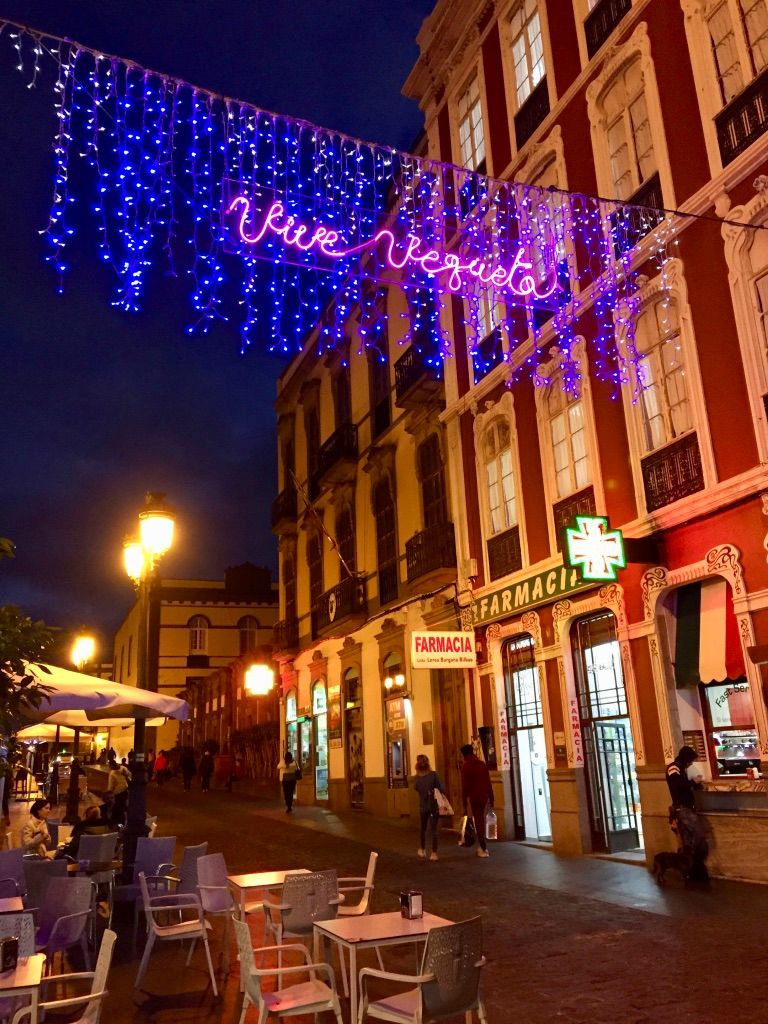
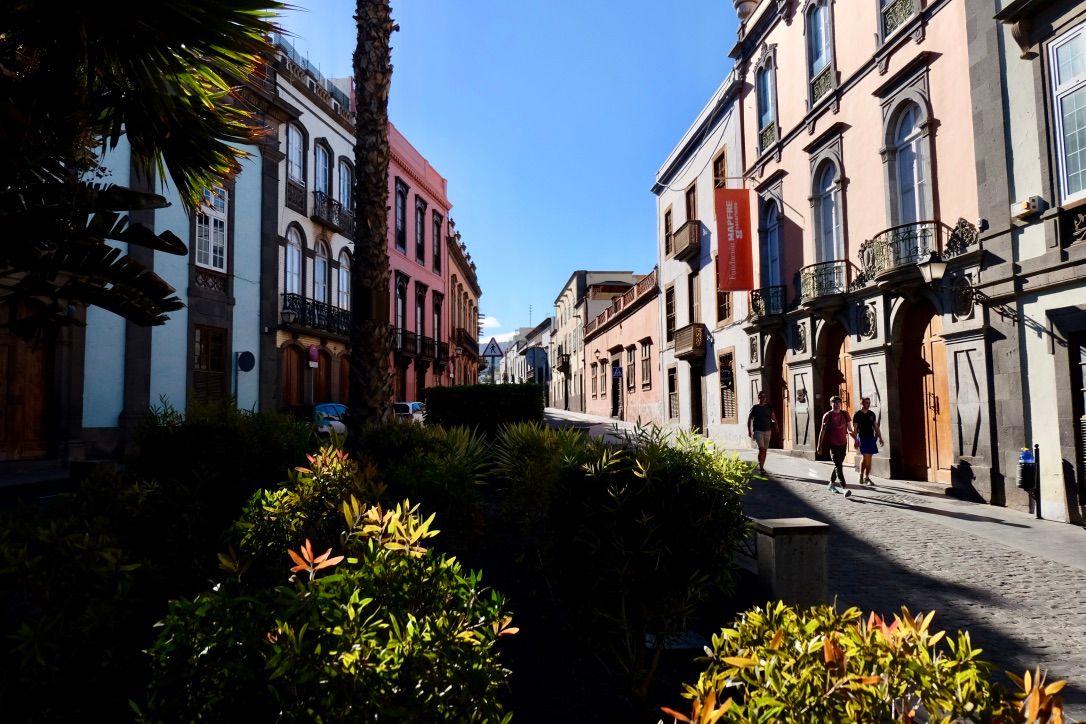
Speaking of Spanish tapas, the old town—and Calle Mendizábal in particular—is the place to sit down among locals and fellow travellers for a glass of beer or wine and a tapa. Restaurant tables line the street, and it becomes especially lively after 8 p.m. at weekends. The local beer brands are Dorada, brewed in Santa Cruz de Tenerife, and the slightly lighter Tropical from Gran Canaria.
The North of the Island
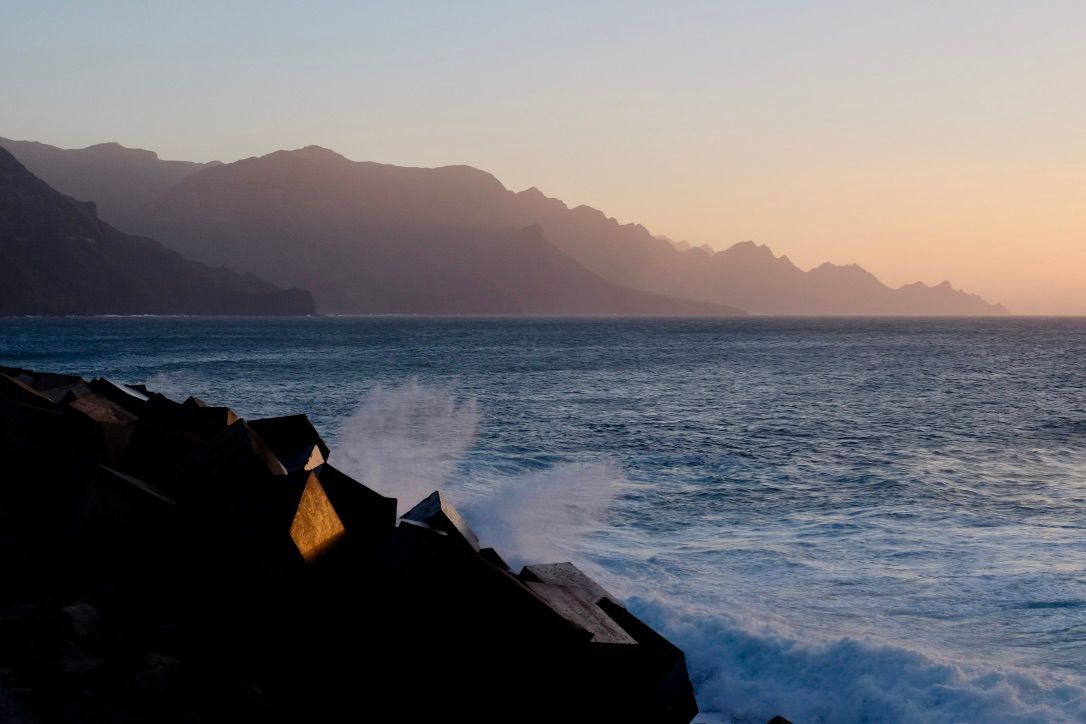
We had hired a car (details at the end) and were ready to explore the north and the central mountains in greater depth. As mentioned, northern Gran Canaria is particularly green and fertile. In places the land is covered almost entirely by greenhouses growing vegetables, tobacco and bananas, the Canaries’ principal exports. Because we booked our weekend Airbnb only a day in advance, we found an excellent deal: an entire three-bedroom house right beside the ocean for €40 a night. It was near Gáldar, a town charming enough to merit a visit in its own right. The main reason our path led there, however, was its history as the principal settlement of a Guanche king and its renowned archaeological sites. Guanche settlements once dotted the region: on one side of our rented house—the ocean lay on the other—were the excavated remains of one such settlement.
To learn more about Guanche culture, we went straight to the Cueva Pintada Museum and Archaeological Park (€6, although we happened to visit on the first Saturday of the month, when admission is free). The visit begins with two documentaries. In short, the Guanches may have descended from a Berber tribe in North Africa that crossed the stretch of ocean from what is now Morocco. They inhabited most of the archipelago’s islands, and Gran Canaria’s population may have numbered 20,000–30,000. The island’s limited resources kept it strictly within those bounds, regulated through infanticide whose victims were always girls. The colonisers’ arrival brought prolonged fighting. Guanches were enslaved, often sent to mainland Spain, baptised and stripped of their Guanche names in an attempt to eradicate both their culture and resistance. The park’s most compelling feature is Cueva Pintada—the Painted Cave—which a local farmer discovered in the nineteenth century. Colourful geometric forms decorate it and are thought to relate to solar and lunar calendars. Today the cave paintings can be viewed behind glass on a set timetable. In the decade after tourists were first admitted in 1972, their colours faded by a shocking 50 per cent. Excavations confirm that Cueva Pintada belonged to a village of more than fifty houses and inhabited caves that stood here from the sixth to the sixteenth century.
Gran Canaria can thoroughly delight seafood lovers. Simply look for fishing villages along the coast and plan lunch or dinner there. With that in mind, we went to Puerto de las Nieves, where a row of seafood restaurants lines the harbour from which fast ferries leave for Tenerife. Its white buildings with blue details recall the Greek islands.
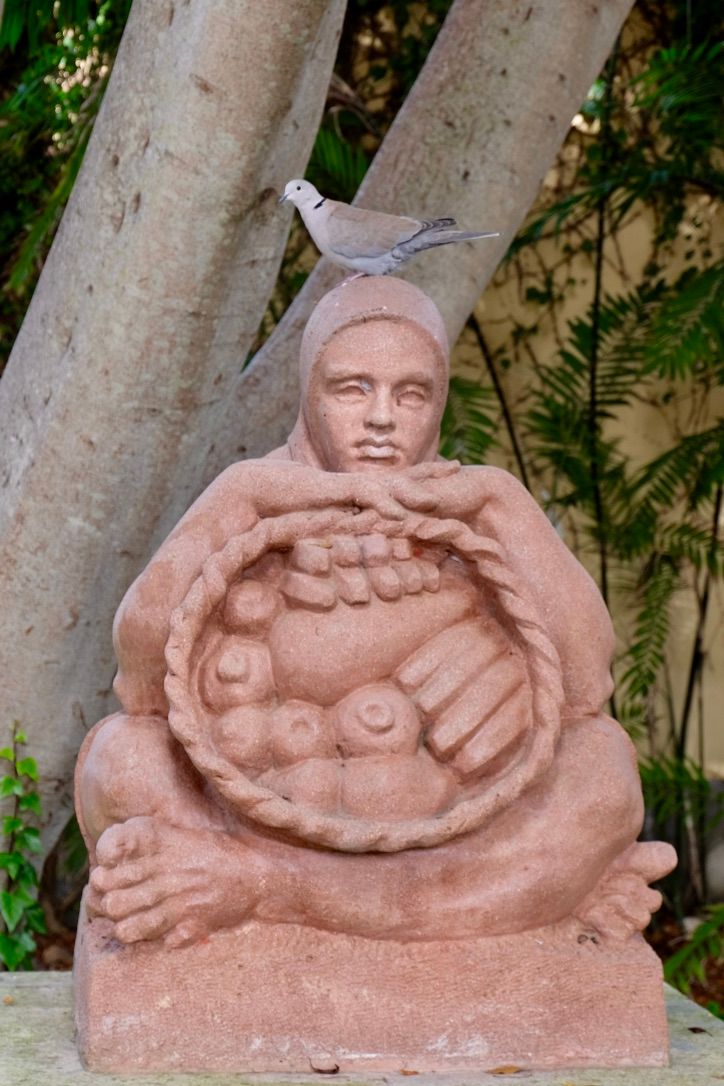
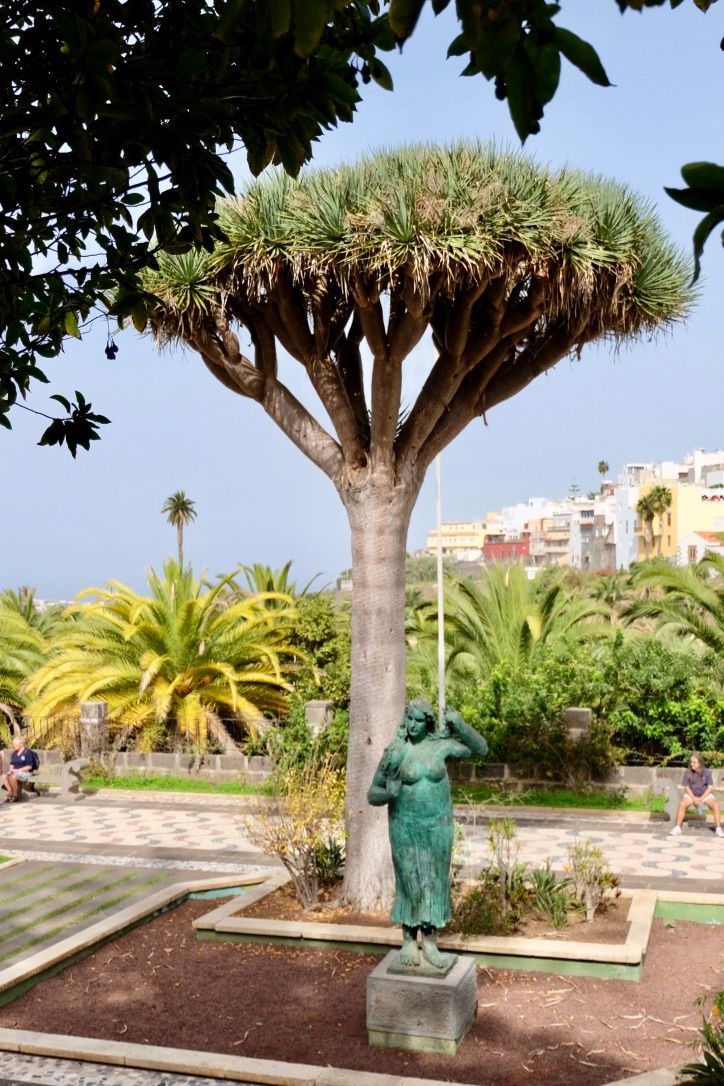
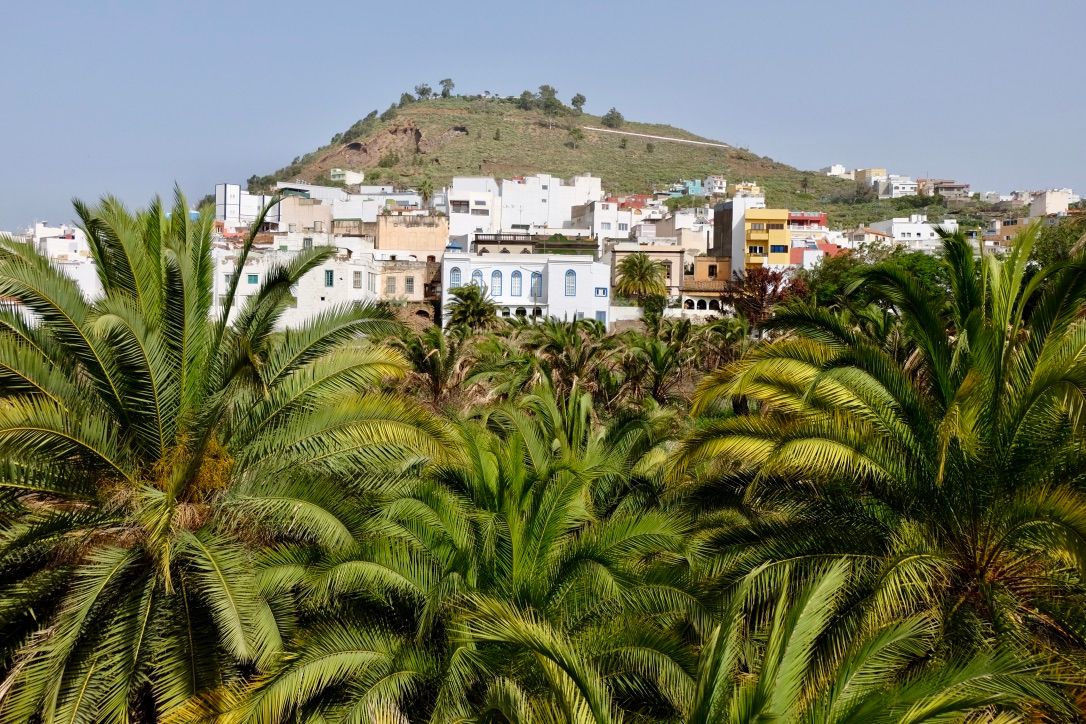
Gran Canaria offers plenty to drink as well: local coffee, wine or beer, for example. If you want something stronger, head to Arucas. Its rum distillery offers free tours that end with a tasting of five rums and eleven liqueurs. Even if that is not your kind of activity, Arucas is worth a stop for coffee, as we did before climbing higher into the mountains. This sweet, compact town surprised us with the imposing neo-Gothic Church of San Juan Bautista, whose towers seem visible from everywhere. Another delight is the French-style municipal garden with sculptures, fountains and tropical trees, including the Canary Islands’ characteristic dragon tree, or drago (Dracaena draco). While there I thought that if I had to live on Gran Canaria—not at all difficult to imagine—I would probably choose green, sunny Arucas.
Mountains in the Island’s Interior
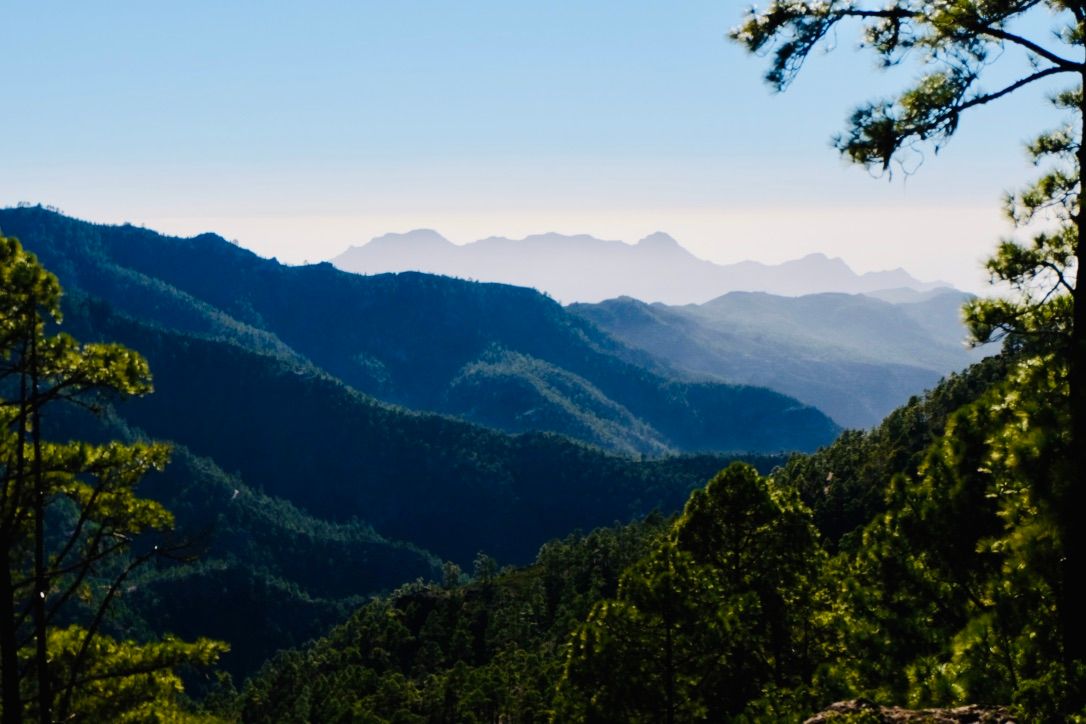
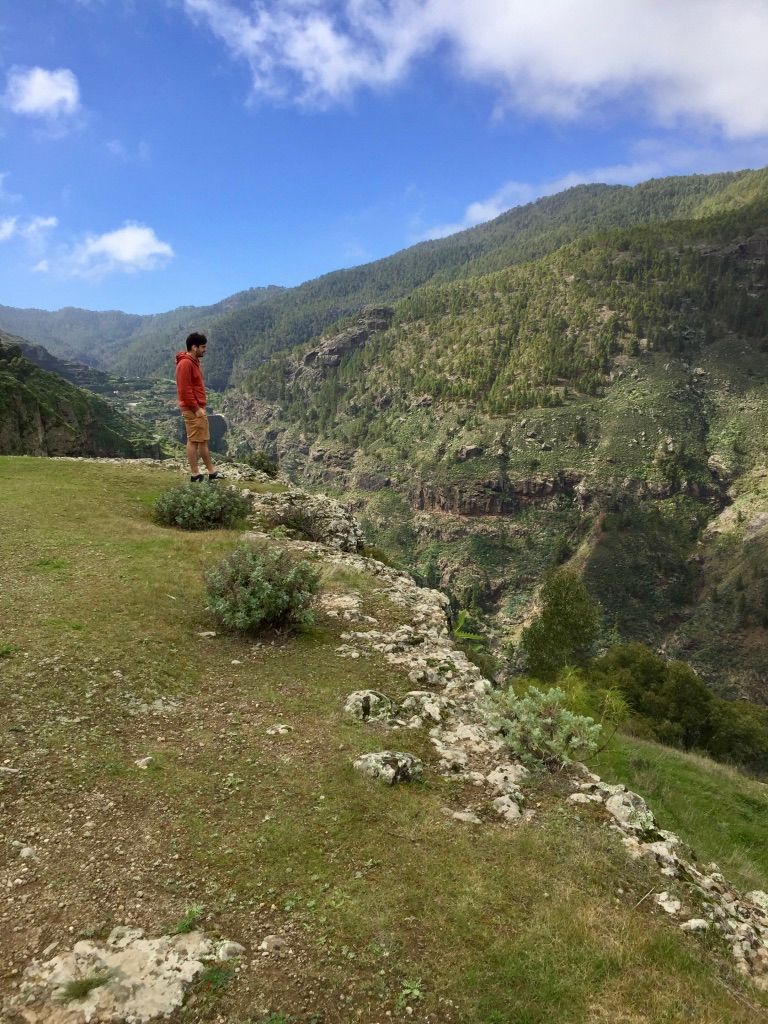
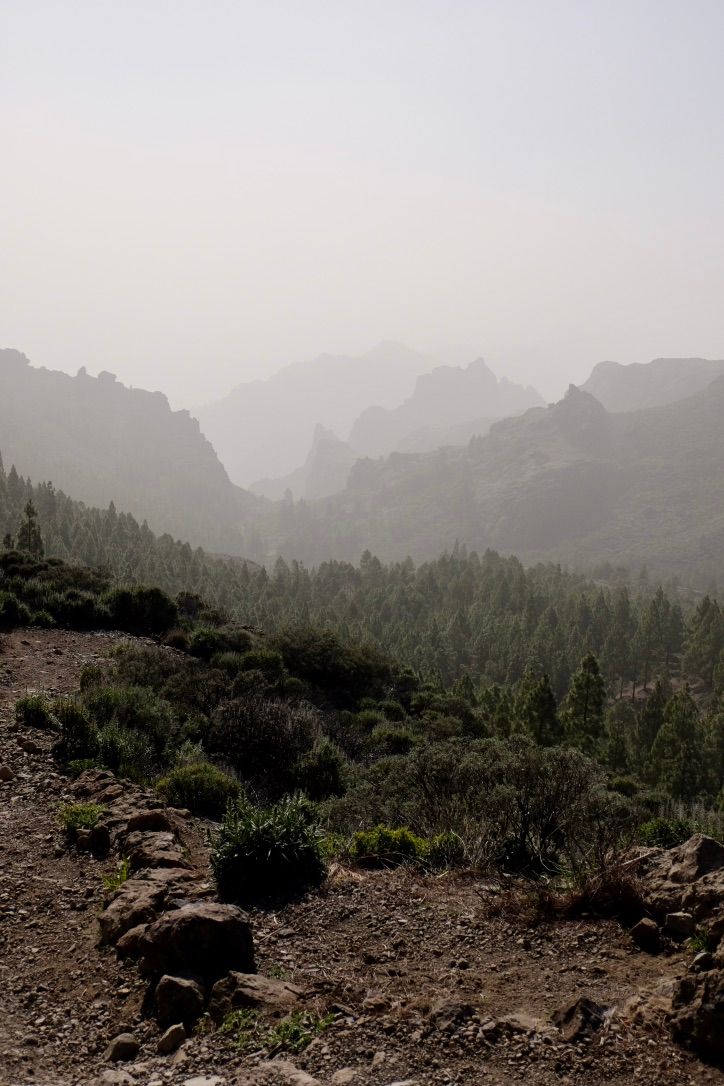
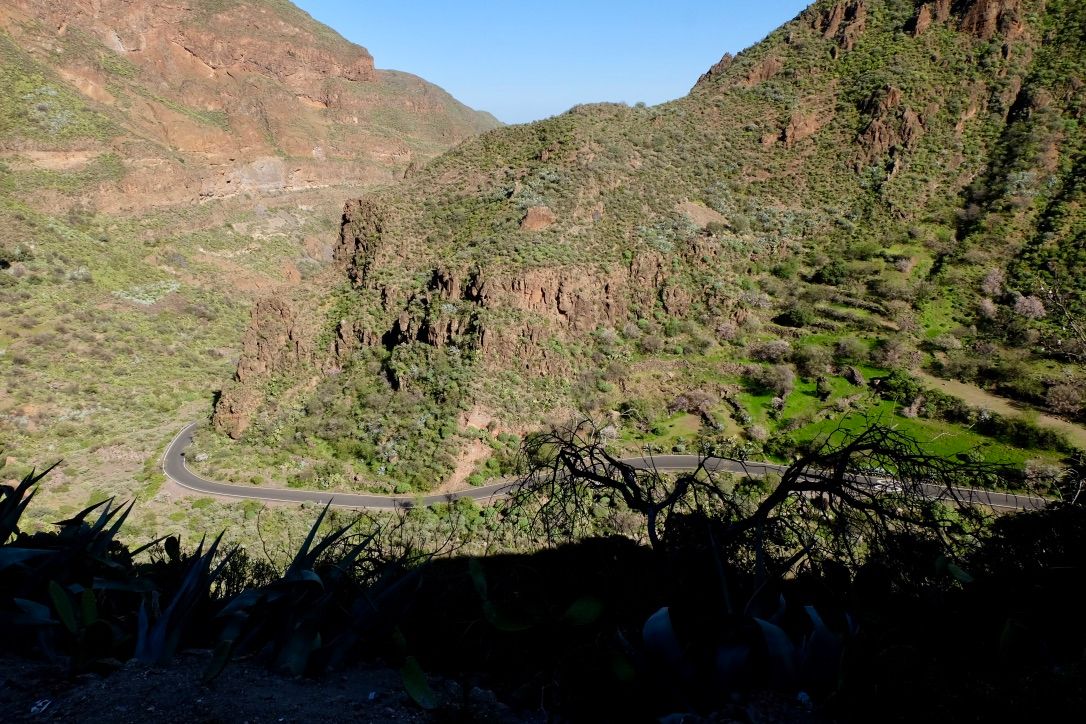
Driving into the mountains is worth it for the magnificent views even without a destination. Everything is so green and in bloom! Spring is in full swing on Gran Canaria. We did have a destination: Artenara, the island’s highest village, where we wanted to explore the region’s cave culture. Cave houses—casas cueva in Spanish—already appear along the way. Their fronts look like “normal” houses, but the rear portions are dug into the mountain, making their true size impossible to judge from outside. The practice arose because this mountainous island lacks space for conventional construction. Cave houses also have free climate control: they shelter residents from the summer heat and retain warmth in winter. Artenara’s spectacular setting has produced viewpoints, or miradores, on several edges of the village, yet almost everything here revolves around caves: a restaurant in a cave, a museum in a cave, even a chapel in a cave (Santuario de la Cuevita). If you would also like to sleep underground, this is one region where you can do it, particularly around Acusa Seca, a village threaded with hiking routes.
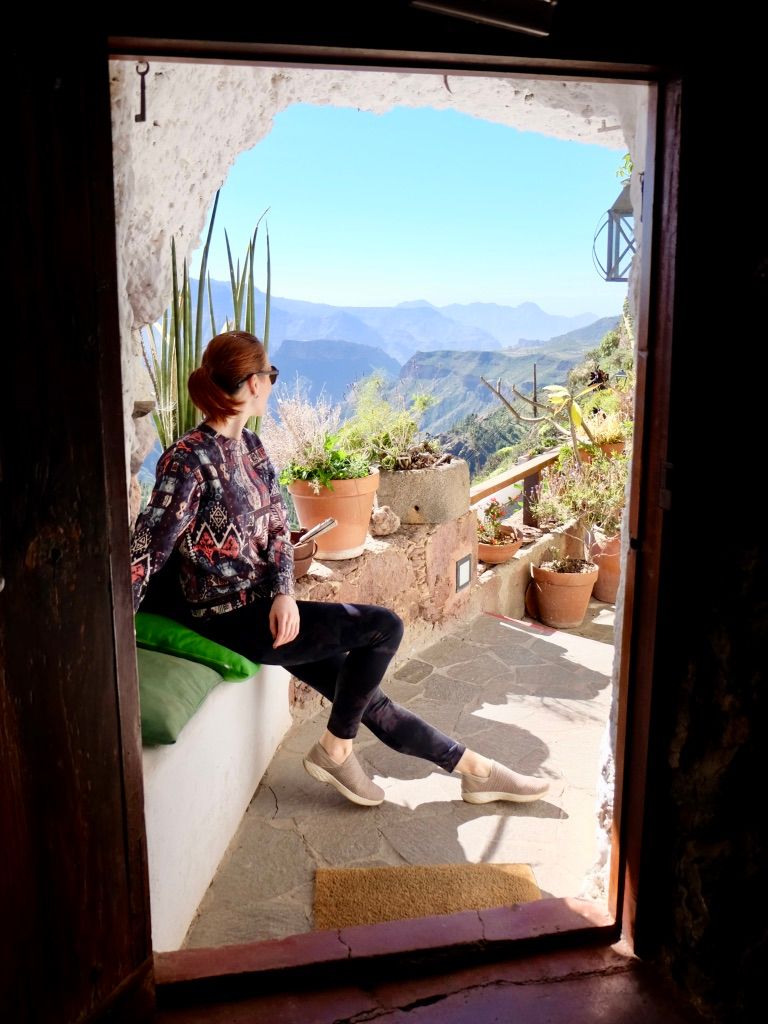
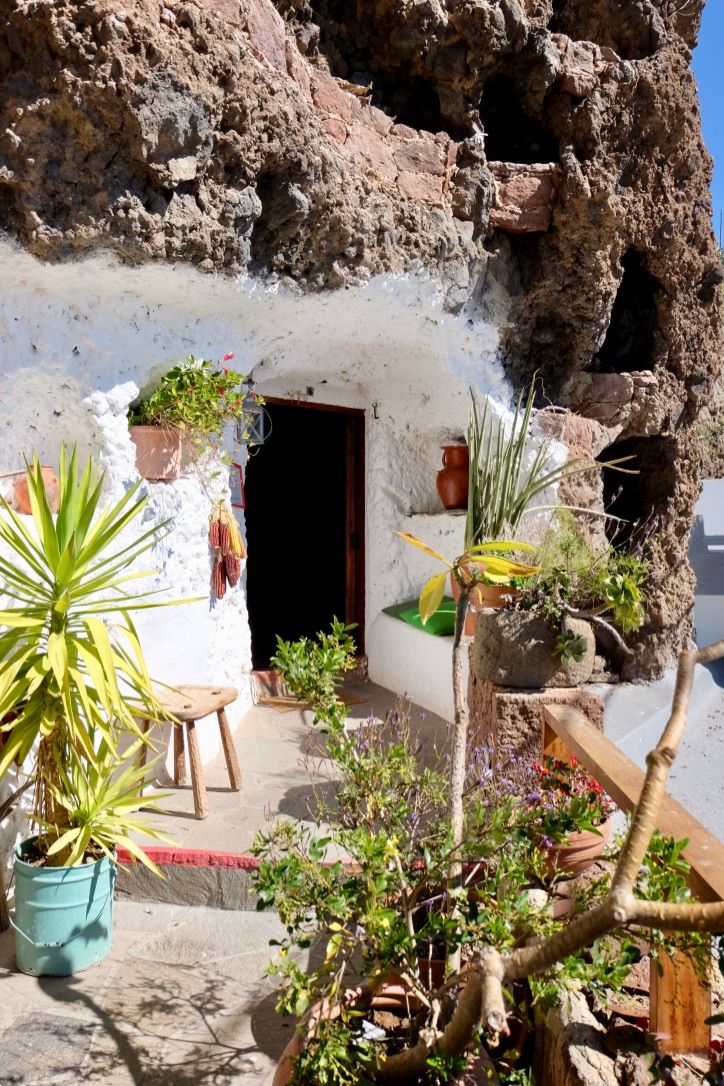
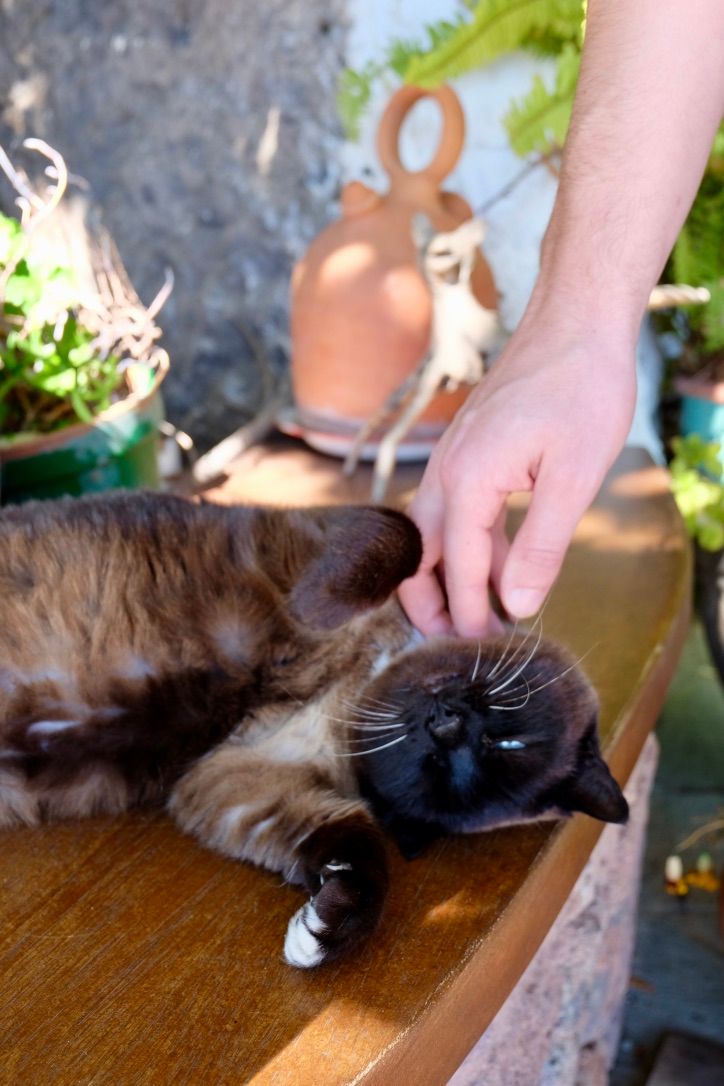
We did not sleep in a cave this time, but we did want to see what cave life was like, so we visited the ethnographic cave-house museum (Museo Etnográfico Casas Cuevas, admission by donation). Its caves depict residents’ living conditions during the last century. Today’s cave homes have electricity, running water and sewerage, but these rooms looked sweet and cosy both then and now. Their walls are painted white to keep moisture out, and even in the deepest part there was no trace of damp. Most importantly—what a view! It makes the choice to live in a cave quite understandable.
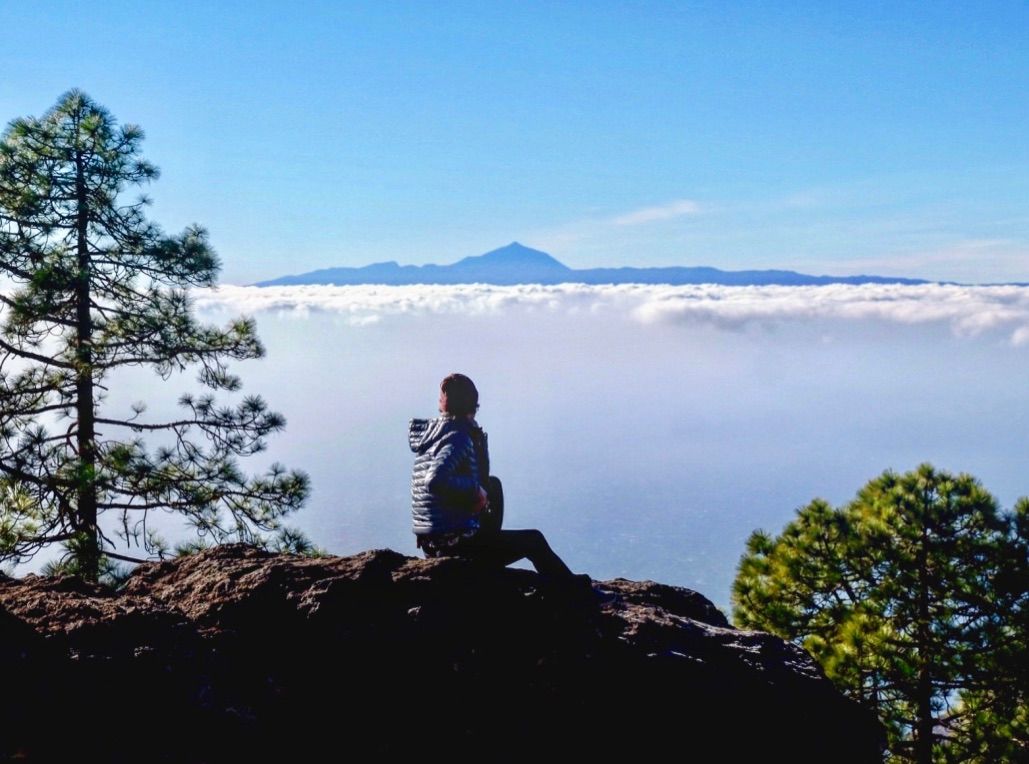
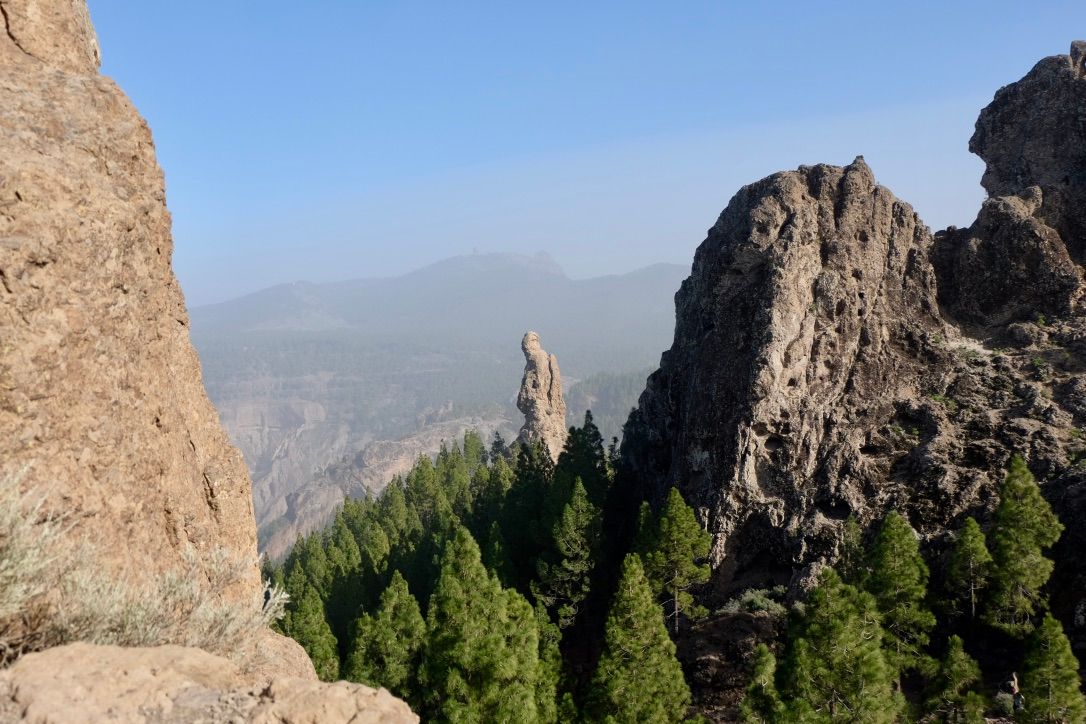
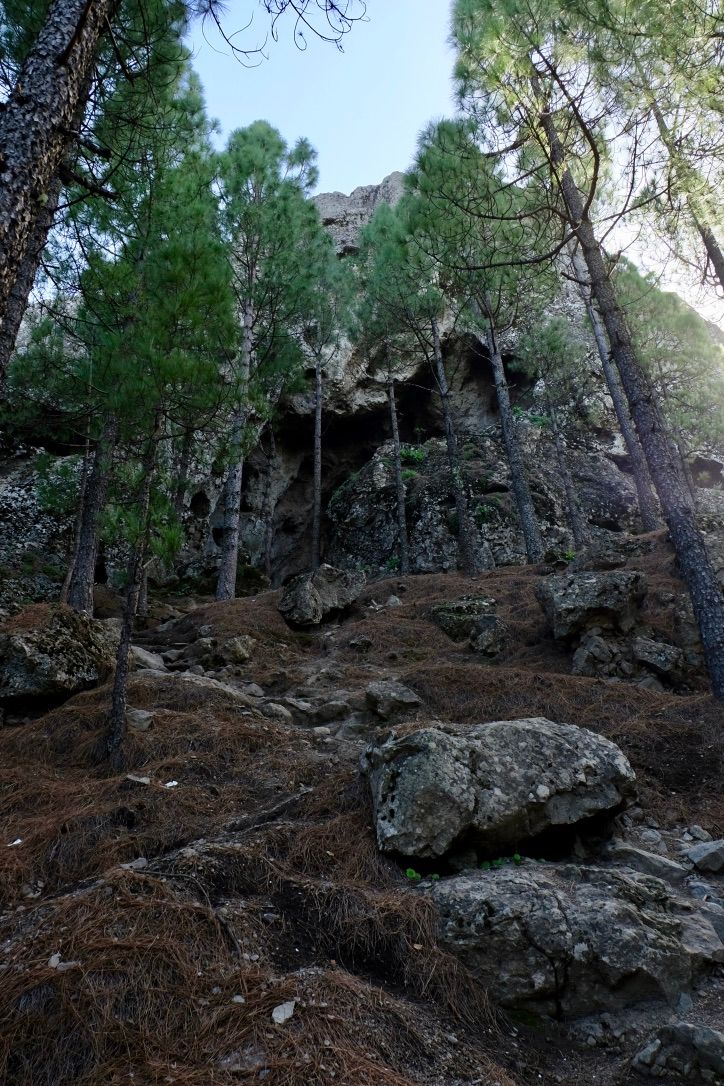
Many varied hiking routes cross the surroundings of Artenara. We combined this excursion with a hike in Tamadaba Natural Park, where Canary Island pine forest (Pinus canariensis) covers 7,500 hectares. We chose a five-kilometre circular trail that took an hour and forty minutes. Its first section climbs to Pico de la Bandera, the park’s highest point at 1,444 metres above sea level. It will make you sweat, but the surroundings provide ample reward. Standing just above the clouds, you can see mighty Mount Teide on neighbouring Tenerife in one direction; in the other lies a valley, beyond which rises Roque Nublo, the island’s iconic rock that finds its way into nearly every photograph. This is a relatively easy hike along well-marked paths, combining expansive views with unfamiliar plants. I will remember it as the “fluffiest” and “softest” hike: the Canary pines have soft needles and branches like feather dusters, while fallen needles cover the trails and cushion both the ground and every step.
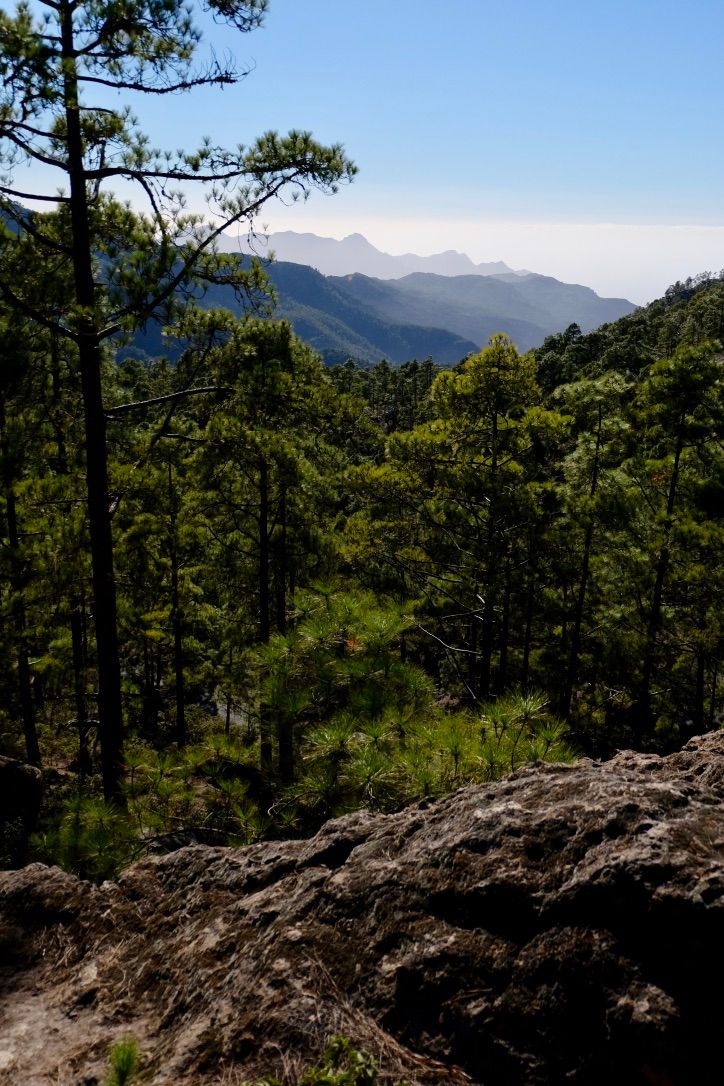
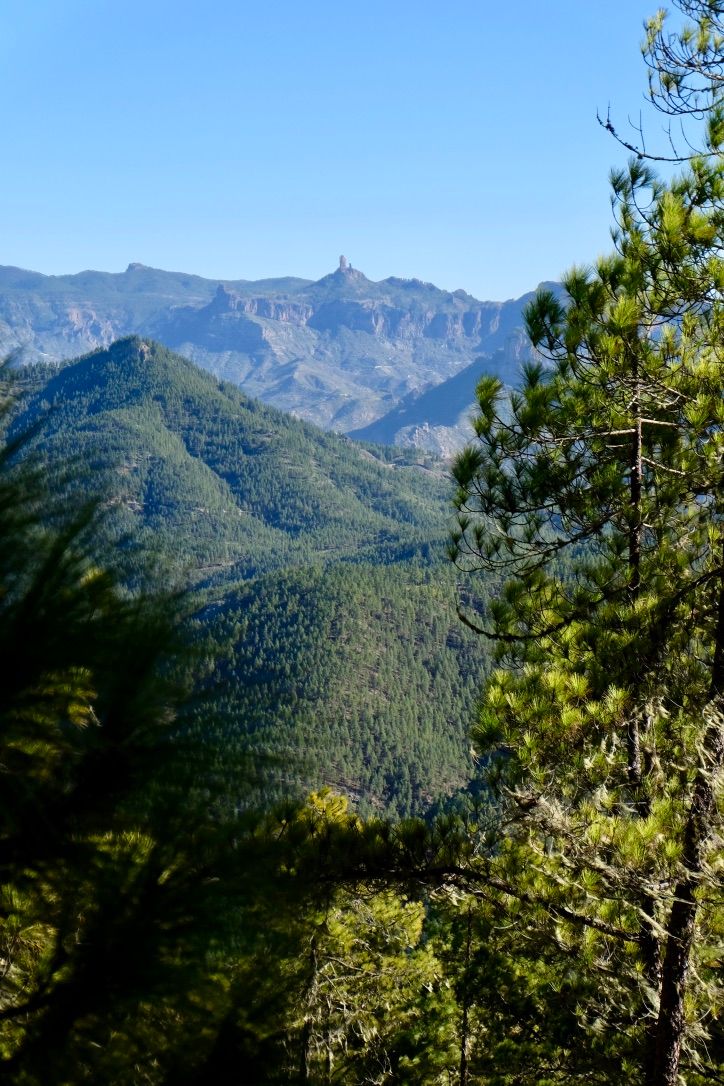
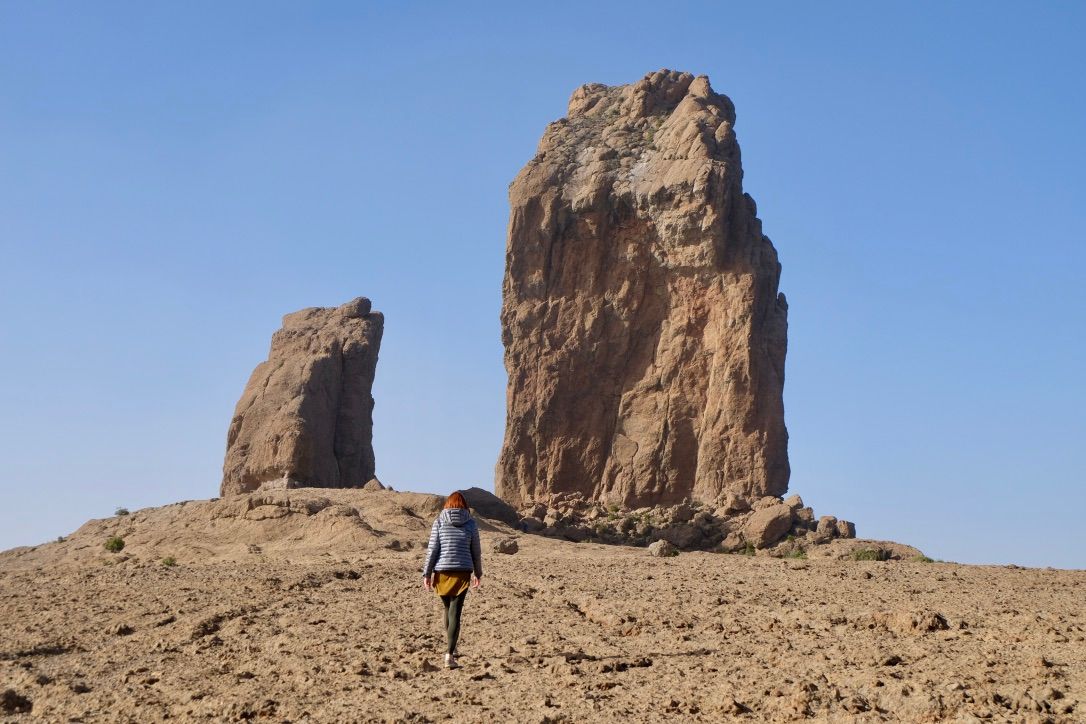
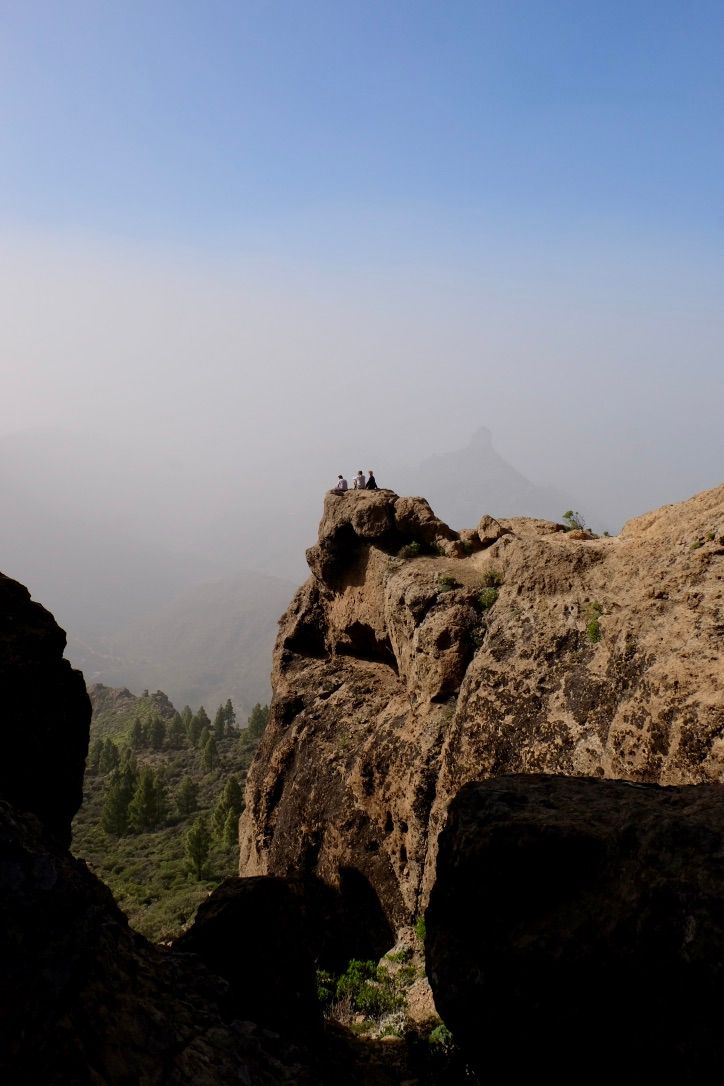
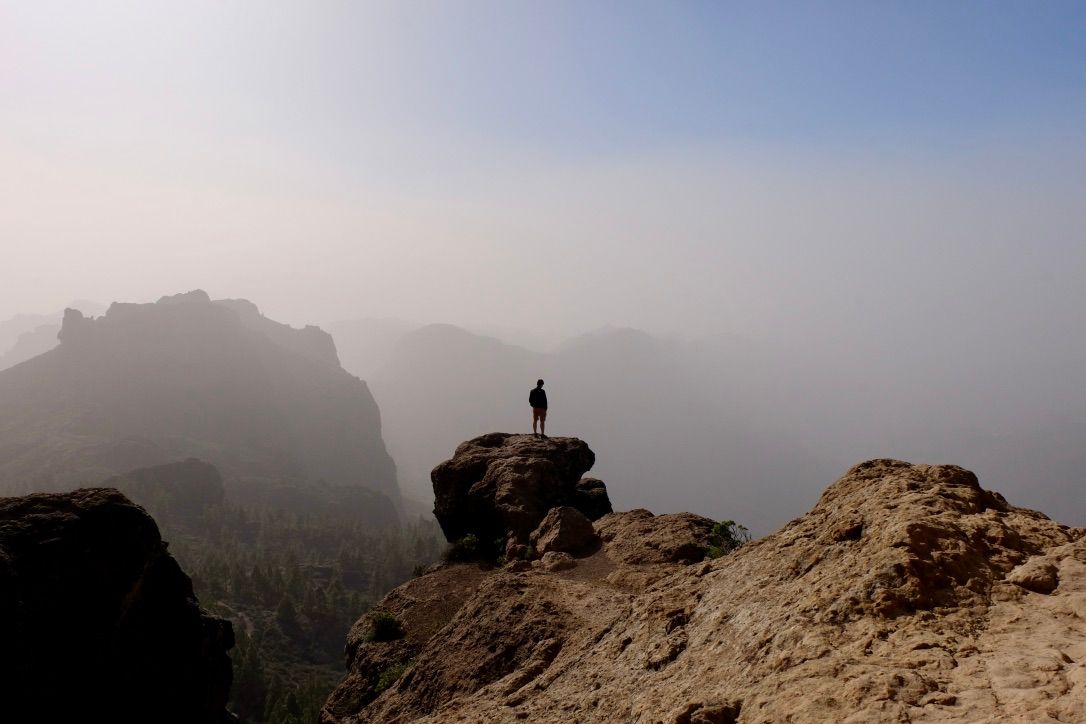
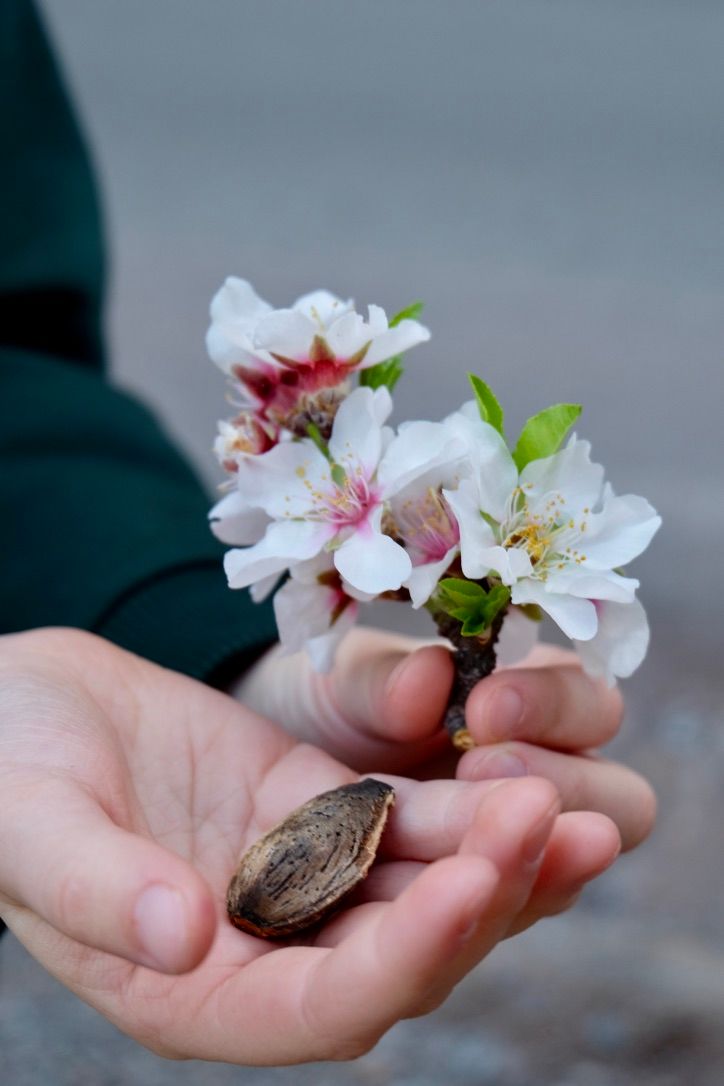
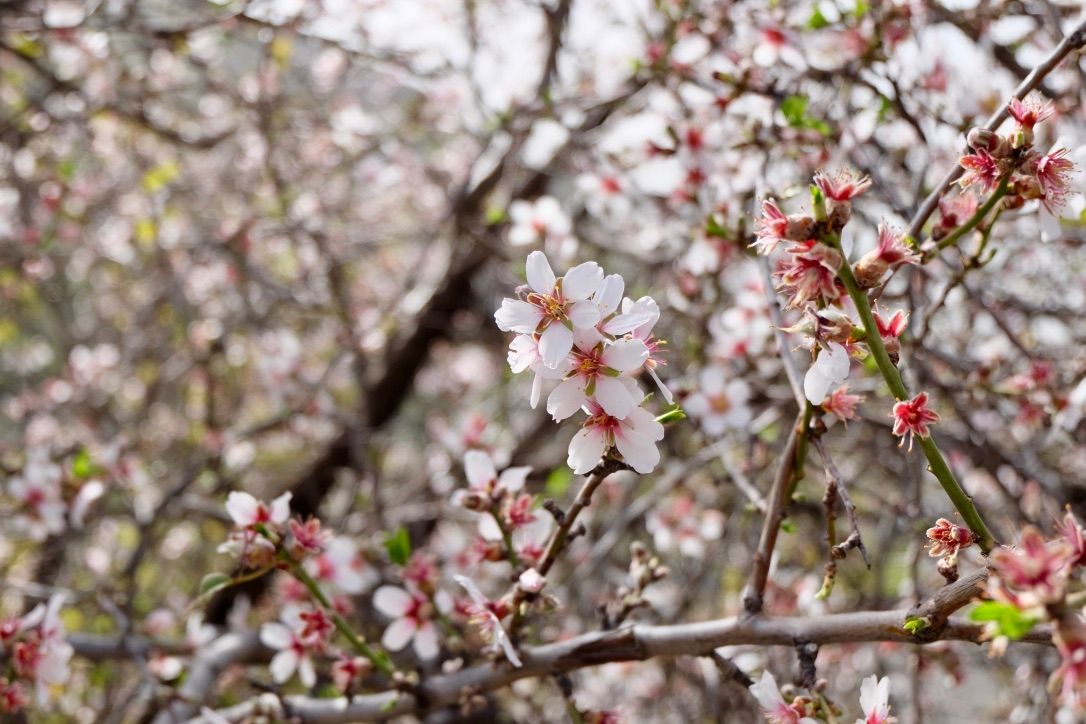
The next day we drove into the very centre of the island, around the village of Tejeda. February is almond-blossom season, and the trees grow here in particularly large numbers. Near the village stands Cruz de Tejeda, a stone cross marking the island’s centre and the historic Guanche royal paths, the caminos reales, which can still be followed across Gran Canaria. This area is another epicentre of hiking routes; you need only decide what you want to see. You can head for the island’s highest point, Pico de las Nieves, or towards the photogenic rocks of Bentayga and Nublo on the mountain tops. We chose the latter: Roque Nublo (1,803 m), an island icon rising eighty metres above the volcanic landscape. It is a thirty-minute walk from the car park, or an hour there and back, and I think children could manage it too. Only the final approach to the rock is uneven and stony, but it is still achievable. Here too, every direction offers breathtaking views. It is genuinely hard not to repeat myself, because Gran Canaria’s mountains are like this everywhere!
The South of the Island
For the second week we had booked an apartment in Playa del Cura on the south-west coast, where a couple of friends and their daughter joined us. We immediately felt that the south was a few degrees warmer and free of clouds—and looking back, it remained that way all week. Evenings were warm too; the temperature did not fall so sharply and we could sleep with the window open. In February the ocean is warm enough for swimming, about like the Baltic Sea in summer at 18–20°C. These ideal conditions do have drawbacks. Because you can catch the sun here throughout the winter, resorts cover the southern coast. Various sources describe them as impersonal and artificial, and they have erased every trace of the fishing villages that once stood here. There is little Spanish character to experience: you hear more German, English and Russian around you than Spanish. Souvenir and grocery shops alternate, yet I noticed that the same products I had bought in Las Palmas cost around twenty per cent more. One advantage of Playa del Cura, where we stayed, is that its beach is not packed with people like neighbouring Puerto Rico and Amadores. Having a car also allowed us to combine our daily swim and sunbathe with excursions to places of interest. On Friday evening, for example, we drove to the capital to see the islanders’ nightlife and enjoy tapas and wine. Following the coastal motorway to the other side of the island takes only fifty minutes; crossing the mountains would require several hours.
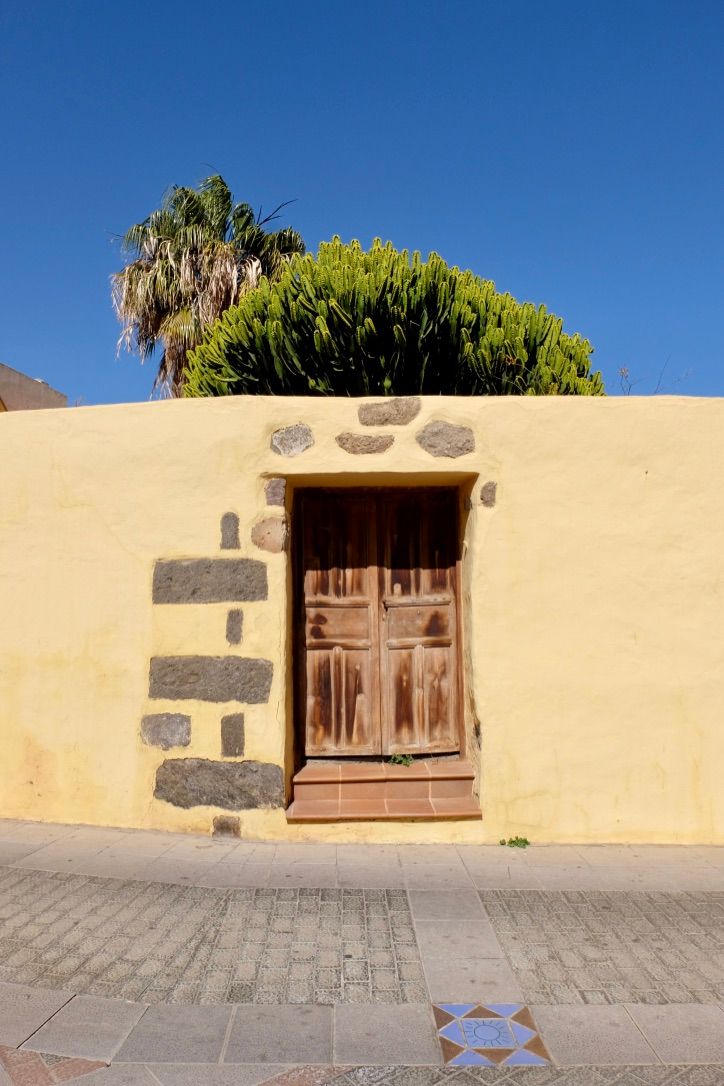
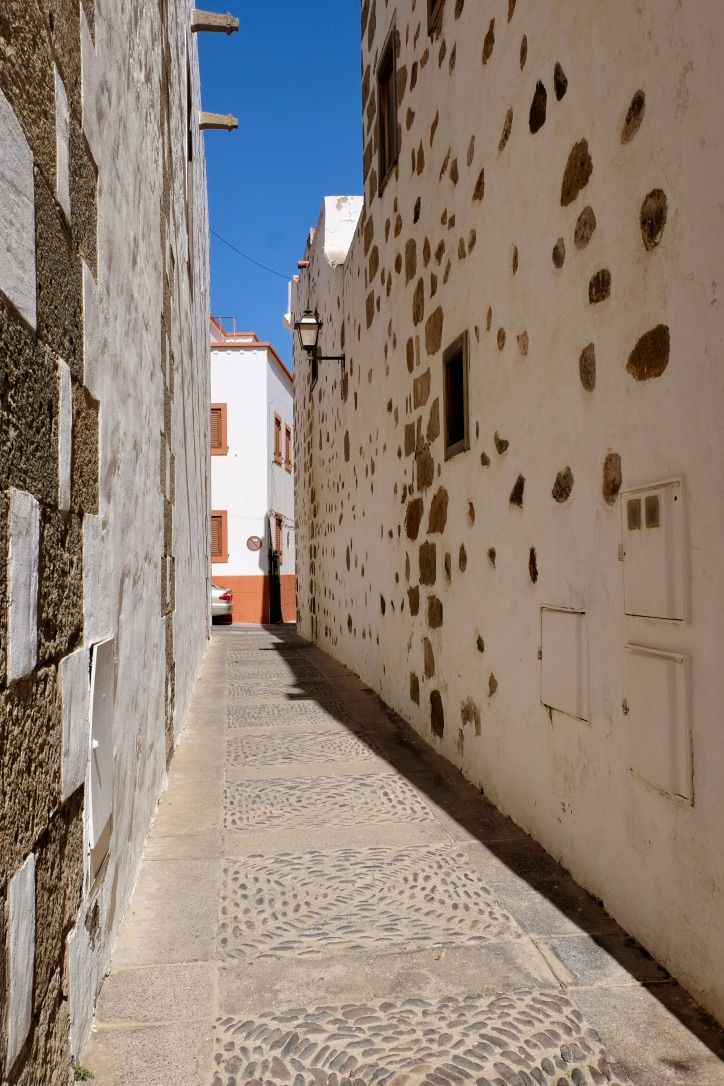
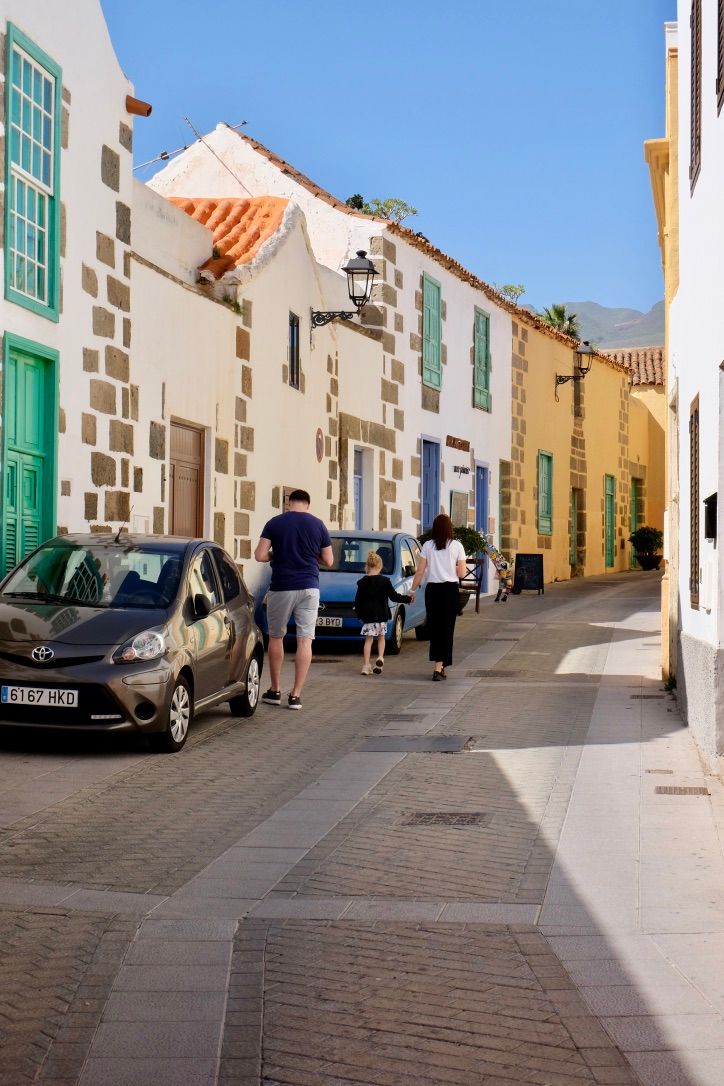
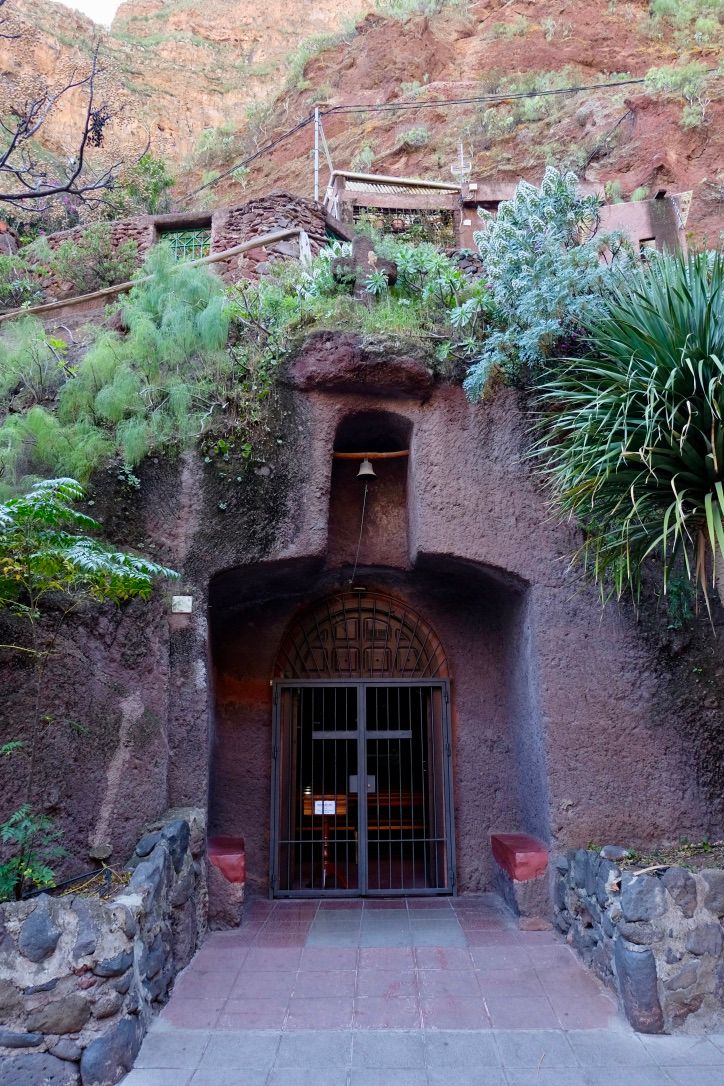
We made a similar day trip to Agüimes and Guayadeque Ravine (Barranco de Guayadeque). Agüimes has a beautifully restored historic centre and is a good place to pause for coffee and admire local Canary Islands architecture. It is also the strategic starting point for a drive into the ravine, the island’s other major cave-house region. Homes appear on both sides as you travel along the valley floor; stop in the settlement of Cueva Bermeja and you can wander through a neighbourhood of private caves—like private houses, only underground. One older gentleman even invited us inside his cave to show us how he lived. The settlement also has the Chapel of San Bartolomé, hewn into the mountain, with its pulpit, altar and confessional all carved from stone. Cueva Bermeja is especially expressive in January and February, when the almond trees blossom.
Driving deeper into the ravine, the next stop is the hill of Las Tierras. You can once again walk past entrances to inhabited caves, although these are newer and smarter. The hill is ideally placed for impressive photographs of the ravine, a longer hike on the trails, or simply lunch in one of the cave restaurants. We returned via the scenic GC-550, stopping at Temisas, a village perched on a natural stone balcony, or Fataga, where original Canary Islands stone houses can also be seen.
Because our travelling party included a child, devoting a day to a dolphin-watching tour seemed a good idea. Guided by reviews, we chose Spirit of the Sea, which sails into the ocean on a catamaran with a transparent floor. Various other dolphin tours also leave from the marina at Puerto Rico; they are cheaper and often tout for customers in the street. I had high hopes because the Canary Islands are particularly well suited to watching dolphins and whales: of the world’s 79 cetacean species, 29 can be seen in the waters around the islands. The tour was meant to last two hours and, time permitting, include a swimming stop. The company also supplies a guarantee code for another trip if you see no dolphins the first time. Ours began promisingly when a flying fish leapt from the water, travelled a considerable distance while flapping its fins and plunged back in. I had never seen anything like it, and my friend and I seemed to be the only lucky ones because it emerged beside the very railing where we sat. We then sped across the ocean for quite some time as the coastline grew ever smaller. A fierce wind blew, it was cold, and the catamaran pitched seriously. We began wondering whether we would even want to use the return trip if no dolphins appeared. At last the guide announced over the loudspeaker that dolphins were ahead. Everyone squeezed into whatever space remained at the bow; now and then a fin appeared above the water, while staying on your feet required gripping the rail with all your might. We had barely seen the dolphins at all—little Elza saw none—when the guide declared, “Congratulations, you saw dolphins!” The catamaran instantly swung around and raced for shore at twice the speed, since the tour had already run well beyond two hours. For the record, on the way back I joined a row of children in vomiting two and a half times (thank you, Anete, for the swift delivery of a bag—twice).
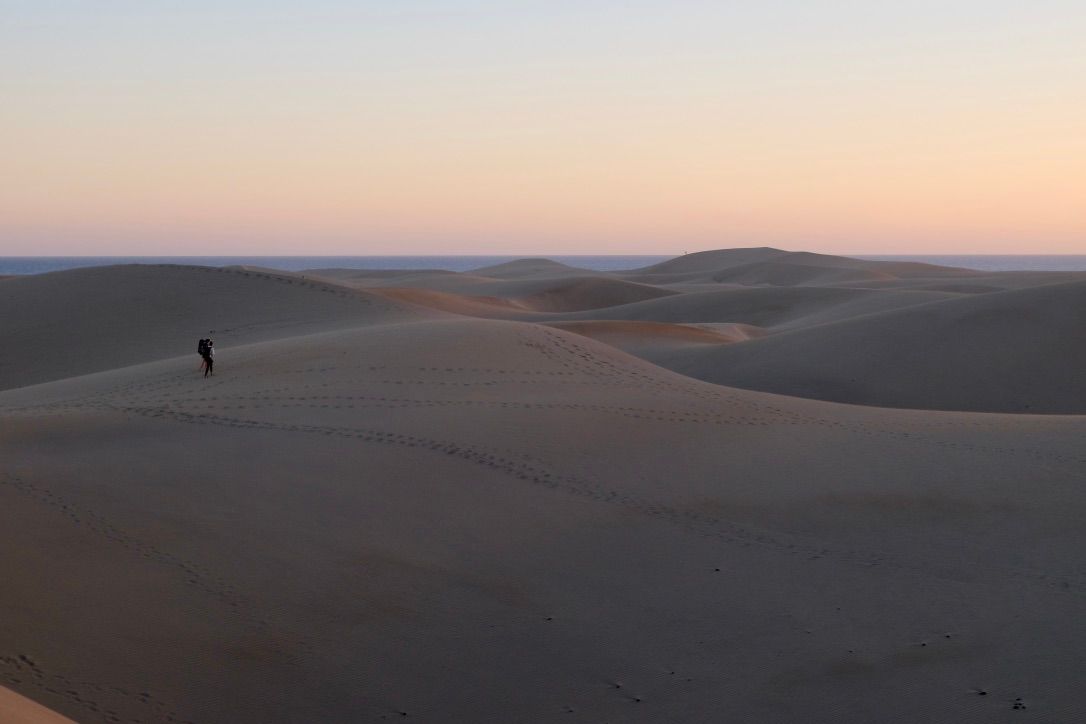
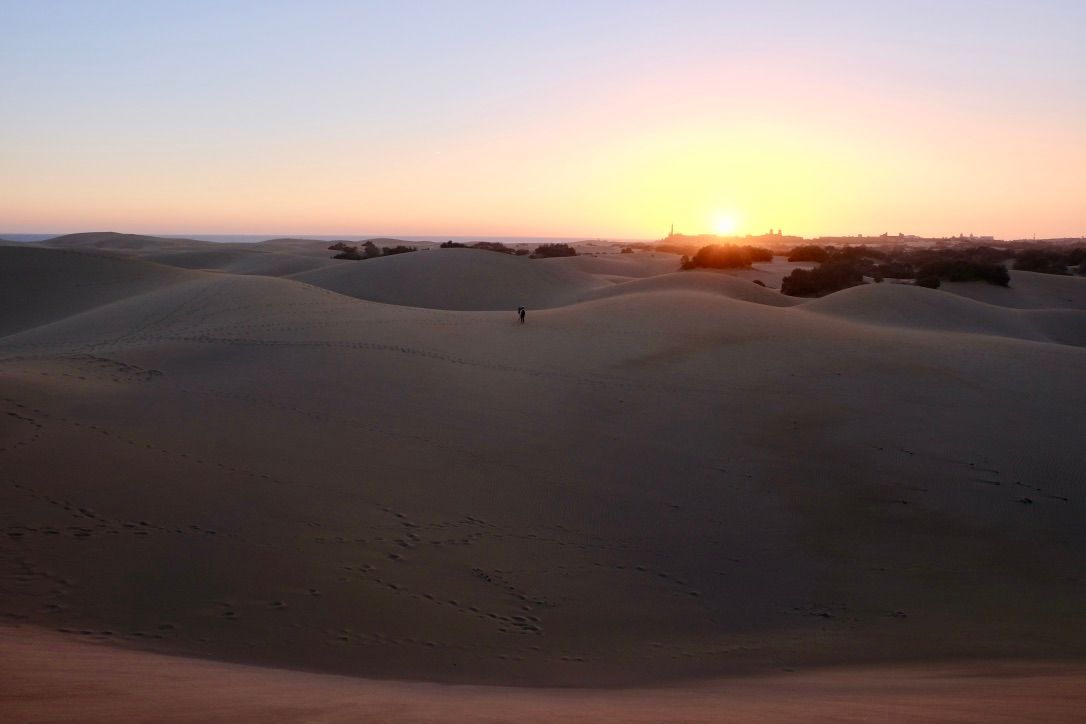
The day did end on a happy note: that evening we went to the Maspalomas Dunes (Dunas de Maspalomas). They cover 400 hectares near the famous Playa del Inglés. In the 1990s the dunes were designated a nature reserve, protecting them from the rapid construction of hotels. We arrived shortly before sunset and stayed through it—surely the best time, as light from the side brings out the dunes’ contours before the setting sun colours the sand a reddish hue. After a proper play in this giant sandpit, we went in search of dinner in the city of Maspalomas, which never sleeps.
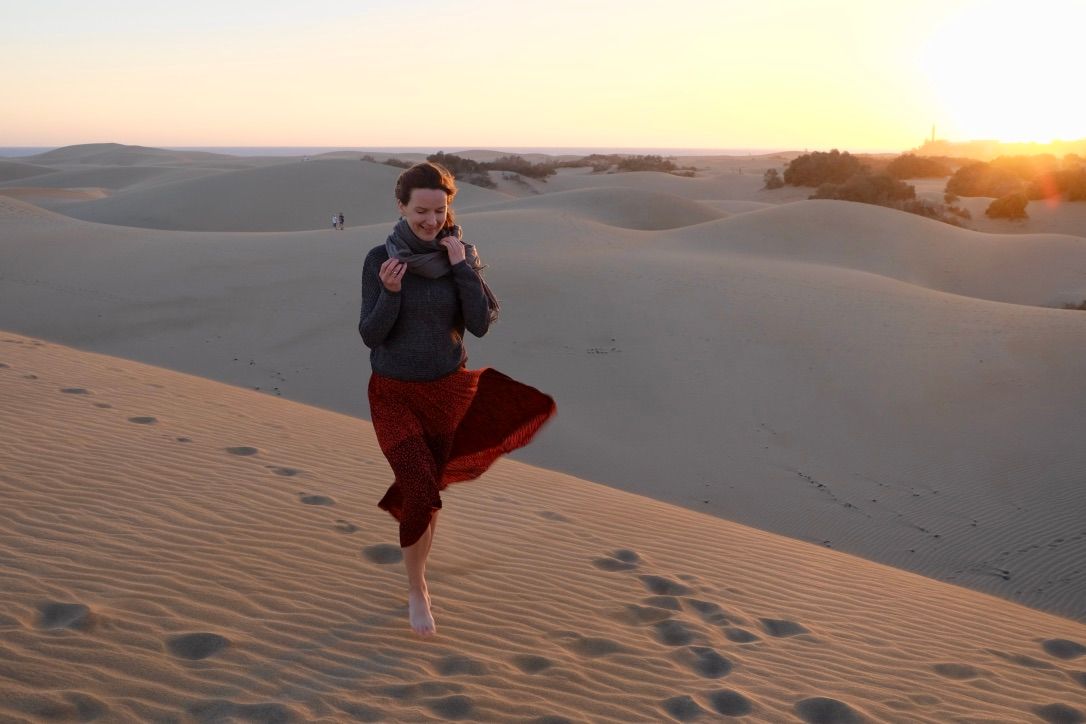
To sum up: in Gran Canaria, go to the mountains! Only there can you truly experience this “miniature continent”, with climates that differ across the island, and shed the impression that Gran Canaria is a desert—as the southern resort zone can appear. Traffic on the narrow roads is not too heavy, and even inexperienced drivers can manage them. The views cannot be put into words, so imagine the therapeutic benefit of a holiday on which you spend at least one day exclaiming “WOW!” in delight a hundred times—perhaps more. Honestly, as you drive through the interior, the view changes around every bend and at moments hardly seems real. How can everything be this beautiful all the time?! I also want to dispel the idea that Gran Canaria is all beaches and resorts. It is not. The island has much more to offer.
Practical Information
Car hire:
We rented from Cicar and drove a new Opel Mokka X. Eight days cost €136, including full insurance, three authorised drivers and a child seat. The greatest advantage is that the company requires no deposit. Fuel on the island cost €1.039 per litre. Although Cicar’s online reviews are good, my feelings are mixed. On the one hand, service was good and free from upselling; prices were fair, the fleet new and high quality, and the offices strategically placed. On the other, we needed to find out whether we could leave the car at the airport before five in the morning. On Saturday no one answered any of the telephone numbers listed on the website or our rental documents, and the two nearest offices were closed, so we had to drive to the airport office merely to ask about returning the car that early. In our case it was a minor inconvenience, but if something goes wrong on the road, it may be difficult to count on technical assistance from a company you cannot reach by telephone.
Apartments:
We stayed in three different Airbnbs on the island and had an excellent experience, both with the apartments themselves and their owners. If you would like to stay in the same places, write to me and I will send the details. A fully equipped kitchen was one of our requirements, as cooking at home can significantly reduce travel costs. Gran Canaria has a very wide selection of apartments for different tastes and group sizes. If you want to use Airbnb on your next trip but have not yet registered, you can use my referral code and receive up to €30 towards future stays after your first booking.
What to taste:
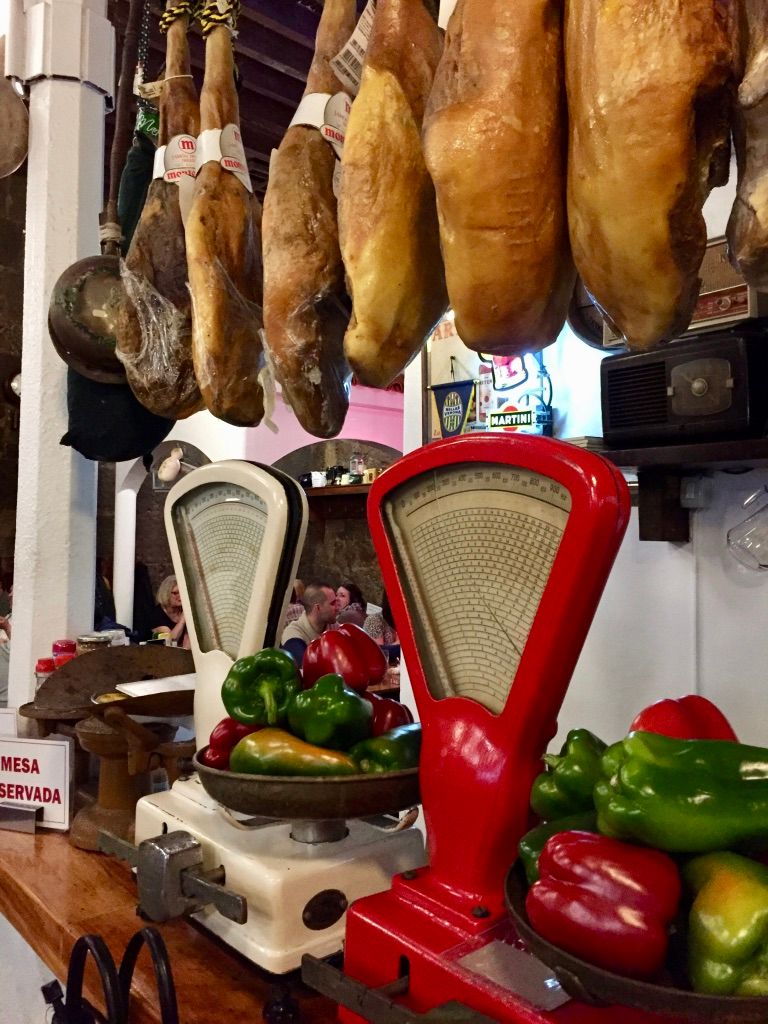
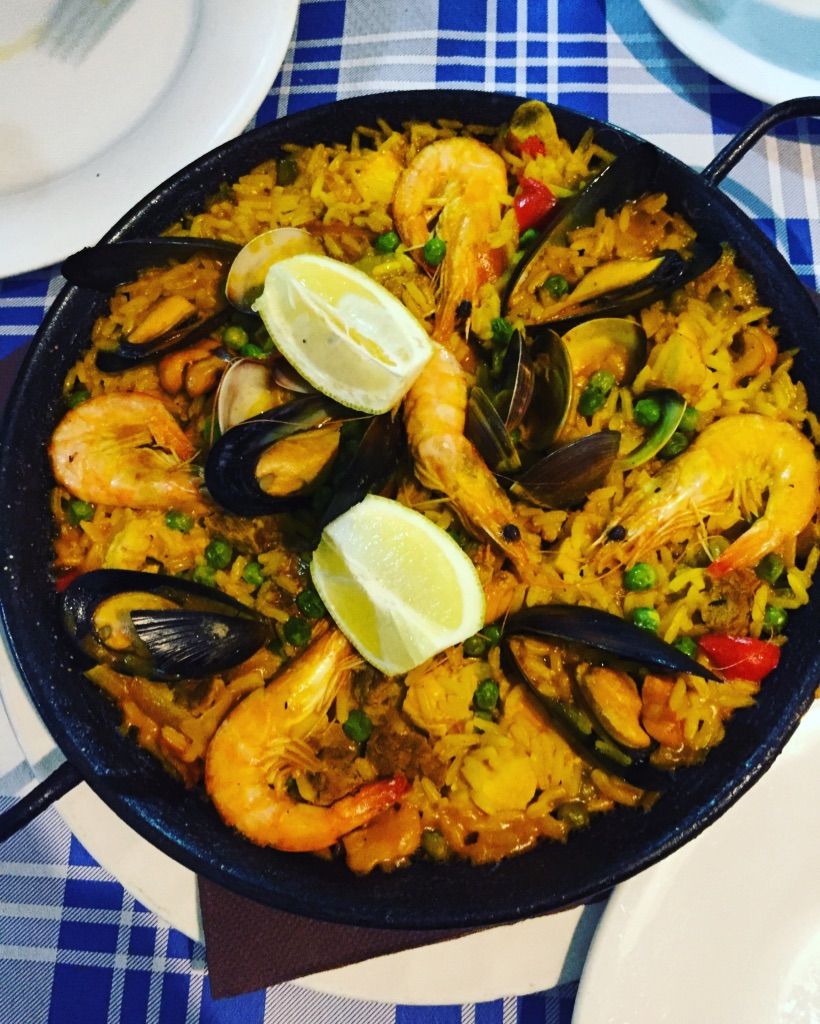
A typical Canary Islands dish is papas arrugadas, potatoes boiled in a generous amount of salt and usually served with one of the islands’ mojo sauces—a spicy preparation made with coriander, basil or red peppers. Menus often feature ropa vieja, a chickpea stew. Many dishes and ideas, including paella and tapas, come from mainland Spain. South America has also had a strong influence: traditions of growing papaya, avocado, tomatoes, maize and potatoes came from there, while mango cultivation arrived from Asia. Every supermarket fruit-and-vegetable section carries produce grown on the islands, although a visit to a local market is also recommended.
Places to eat:
Here are a few cafés and restaurants that did not disappoint us. Everything in this selection falls at the lower or middle end of the price range—bear in mind that main courses on the island start at €7. The most economical option is, of course, cooking in the apartment whenever possible; a packet of prawns or octopus, for example, costs €3.50.
- Las Palmas / “El Modernista”, an idyllic café on a corner of San Telmo Park in the old town / coffee and freshly squeezed orange juice €2.90
- Las Palmas / “Kim’s Pojangmacha”, an inexpensive Korean eatery highly regarded by locals, with no menus and one person both cooking and serving (booking essential: there are only three tables and they are always full) / €9 per serving
- Puerto de las Nieves, near Agaete / “Cofradía de Pescadores”, a restaurant serving freshly caught seafood / main courses €9–16, paella for two €20
- Gáldar / “La Tasca de Juan Pedro”, good-value, high-quality meat and seafood with no menu / main courses average €6–10
- Playa del Cura / Italian restaurant “Jardín” / an excellent pizza for two (around €8) and freshly made sangria
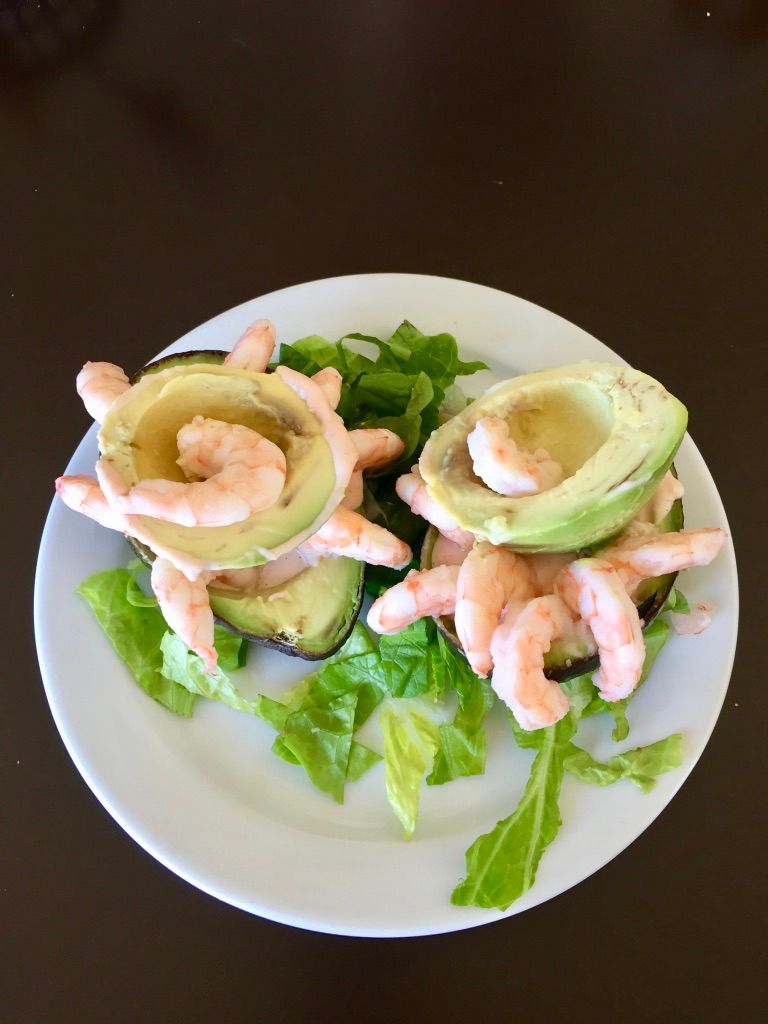
- Playa del Cura / “Vistamar”, a Mediterranean restaurant beside the ocean / garlic prawns or a fresh prawn salad €7.50