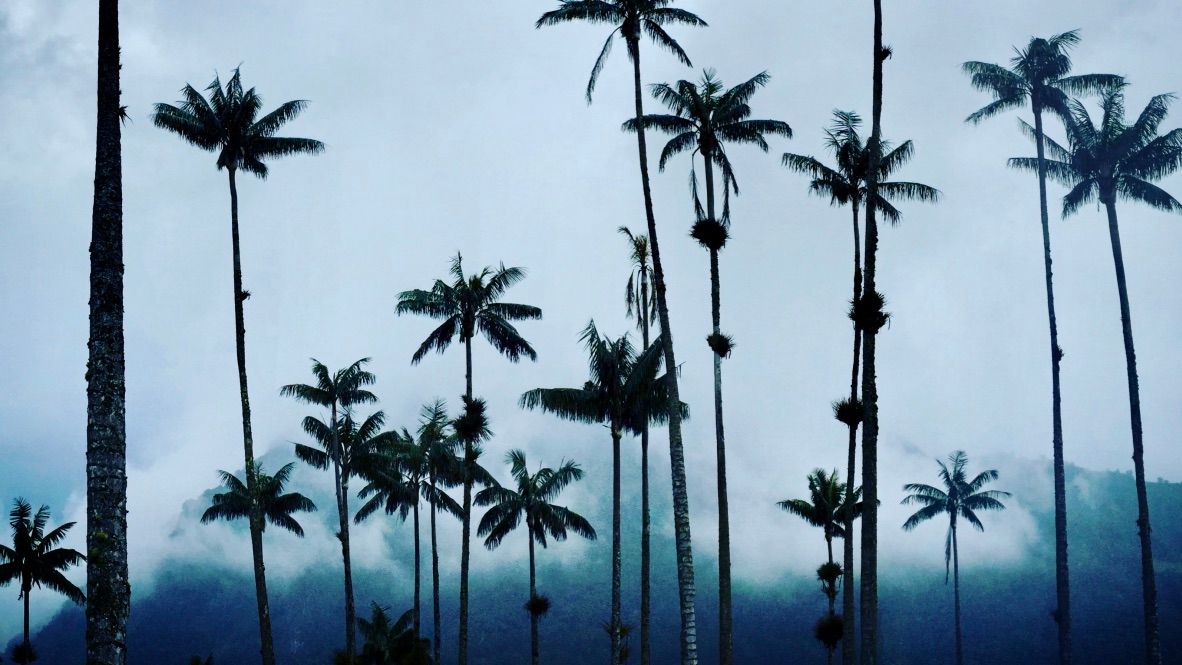
We have decided to welcome the New Year in Colombia’s coffee-growing region, the Zona Cafetera. New Year’s Eve will be spent in the little town of Salento. On New Year’s Day, which is also my birthday, we will hike through the Cocora Valley, home to the tallest palm trees in the world.
How does Colombia welcome the New Year?
On the morning of 31 December, we take a six-hour bus from Medellín to Salento. At the destination, we check into Plantation House, recommended by the man from whom we rent a room in Medellín. We leave our unnecessary belongings and go straight into the centre to find a festive mood.
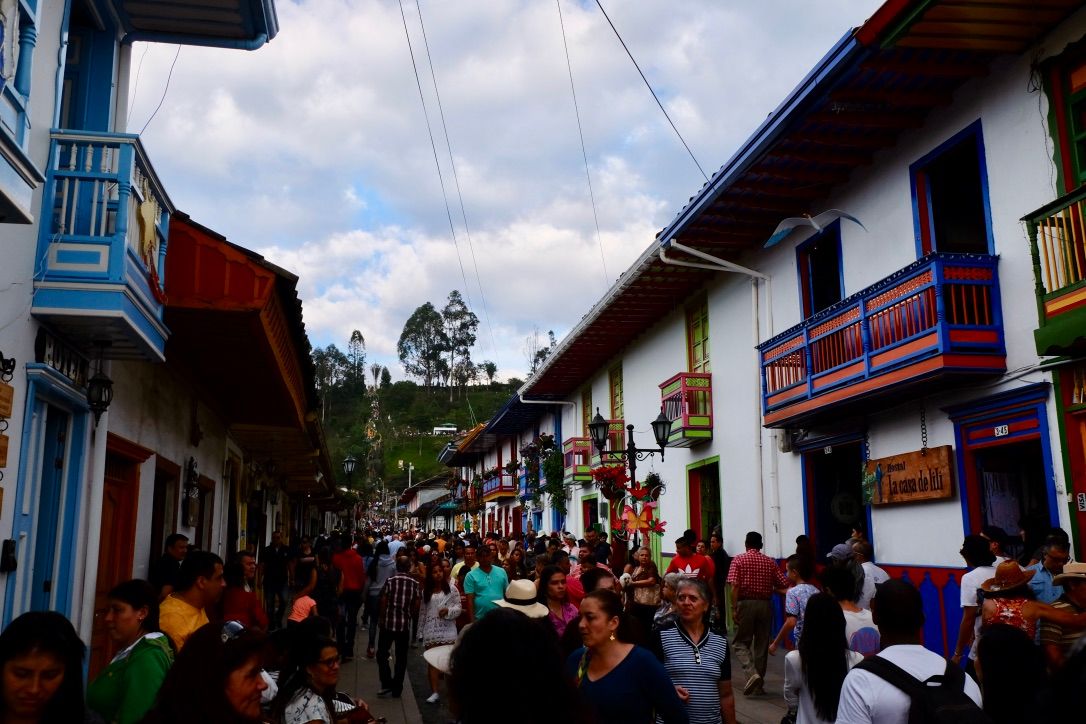
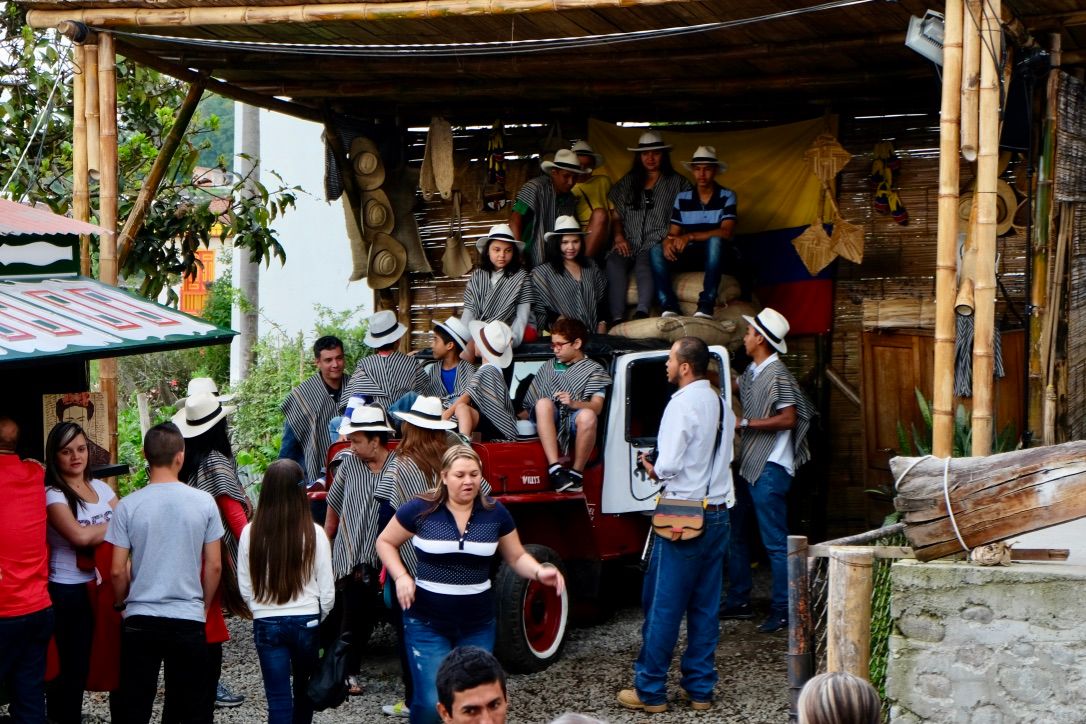
Founded in 1850, Salento is one of the oldest towns in the department of Quindío. Its character comes from colourful paisa architecture: balconies, window frames, doors, and other elements decorated with bright patterns. Local men wear elegant sombreros. Through the open door of one bar, we see a group of older gentlemen, every head topped with a fine, pale hat. It is the kind of scene often shown in films, and I imagine the men riding into town from their ranches to share a drink with friends. Or perhaps they arrived in a Second World War Willys jeep? The region is full of them, another of its distinctive features.
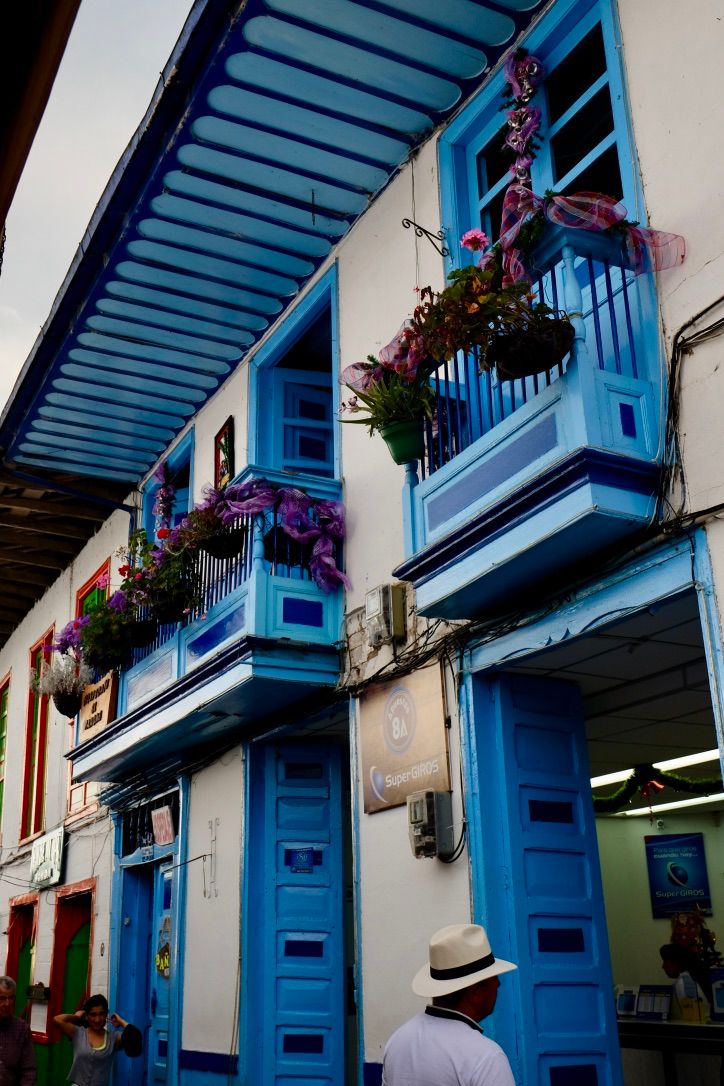
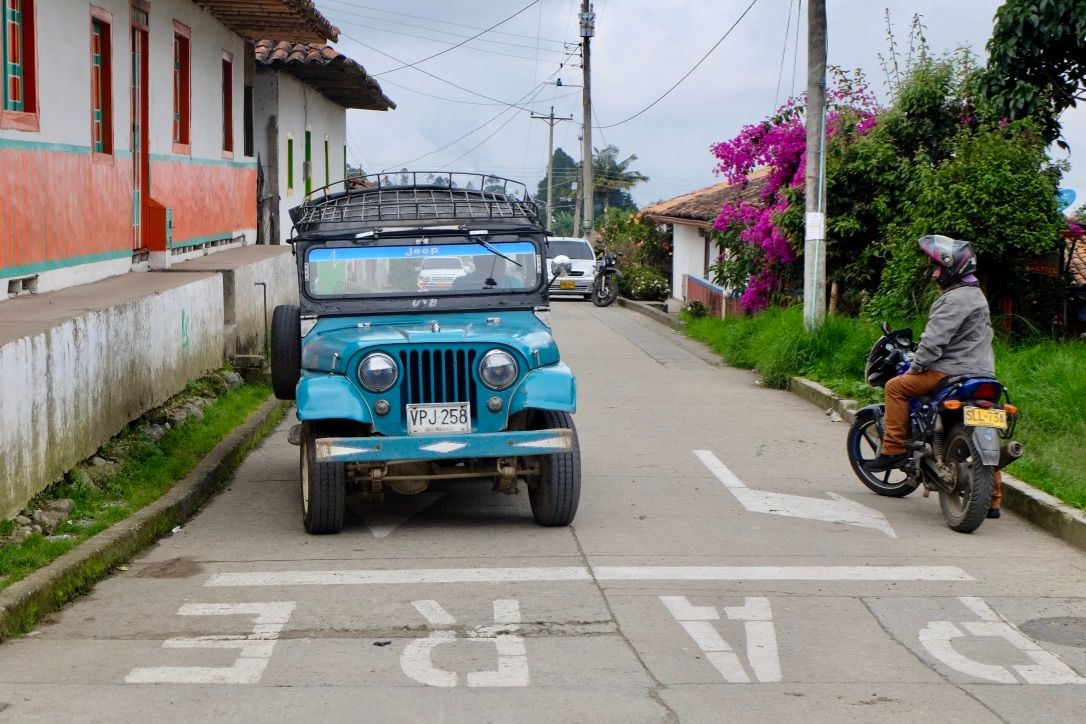
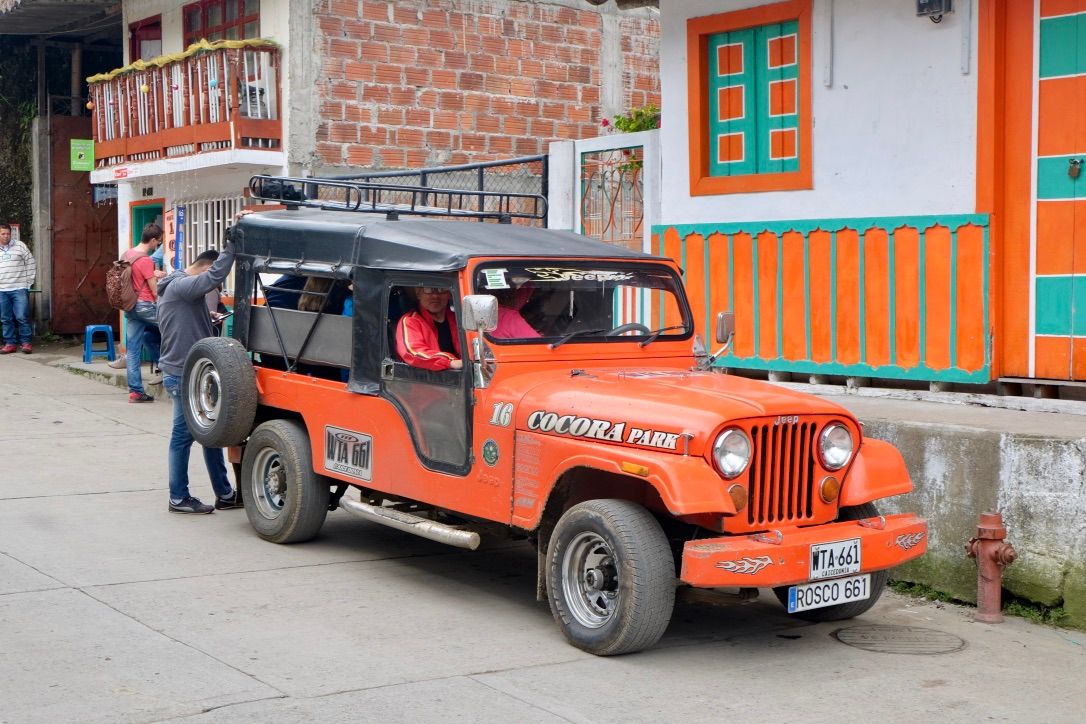
Salento is full of visitors: mostly Colombian tourists, with occasional groups of foreigners. We are clearly not the only people who chose this town for New Year’s Eve. The decision was a good one. Shelters and food stalls already fill the central square—the party is about to begin.
There is still time before midnight. First, we order a celebratory dinner and a glass of champagne in a little restaurant. Connected to its Wi-Fi, I receive a Skype call from Latvia. A friend is calling to wish me a happy birthday because 1 January has already arrived there, seven hours ahead of Colombia. Now the mood feels truly festive.
Naturally, we continue the evening by joining the revellers in the square. We arrive at exactly the right time because dancing is already in full swing. At first, we stand shyly and admire the Colombians’ skill. Young and old dance beautifully in couples. Bachata? Salsa? Rumba? It seems that Colombians need only hear the appropriate music and their feet and hips know exactly how to move. Nobody can stand like a post for long among Latin rhythms. Soon, we are pulled into the whirl.
Our basic salsa steps cannot keep pace with most of the crowd, but when a favourite song plays, our movement becomes smoother. Other gringos appear to enjoy the dance just as much as we do. Whether they know how or not, everyone desperately wants to dance—and actively does.
Jānis reports that midnight is approaching. We wait to see what will happen—how do people here mark the arrival of a new year? There is no countdown. Everyone keeps dancing as though unaware of the time. At precisely midnight, the song Año nuevo, vida nueva begins, singing of a new year and a new life in which days will be happier, healthier, and more prosperous. Cheers rise from the crowd, but everyone continues dancing. There are no mutual congratulations, wishes of happiness, embraces, or fireworks. They simply dance straight into the New Year.
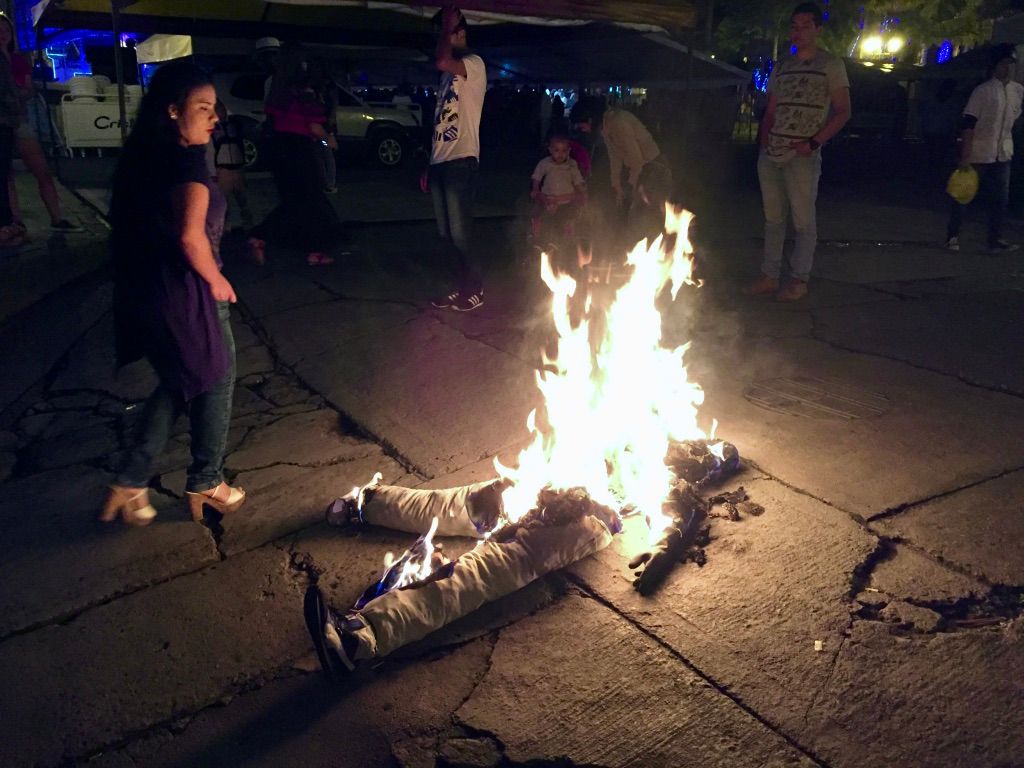
After midnight, something resembling fireworks finally appears. Local people burn human effigies in the streets. Made from straw and dressed in real clothes—jeans, shirts, shoes—they look frighteningly convincing. When I see the first, I genuinely fear that a person is burning. Walking back to the hotel, we realise it is a familiar tradition because blazing effigies appear all along the streets.
Cocora Valley: hummingbirds and the tallest palms
New Year’s morning. Throughout all my adult years—only my adult years, of course—the “morning” of New Year’s Day has been something mythical. Does such a thing as the morning of 1 January even exist? Every year, I woke at about noon, if I was lucky, in a panic that I had slept through my birthday. This birthday morning will enter history as something entirely different. We wake with the attitude that nobody is going to sleep through 1 January and prepare for a hike in the Cocora Valley.
First, we have to get there. The classic Second World War Willys jeep comes to our aid. As we have already noticed, this vehicle enjoys a special status in the coffee region, transporting passengers, crops, livestock, and furniture. It seems capable of anything. Even twelve to sixteen passengers are no difficulty. After thirty minutes with wind in our hair, we reach the destination.
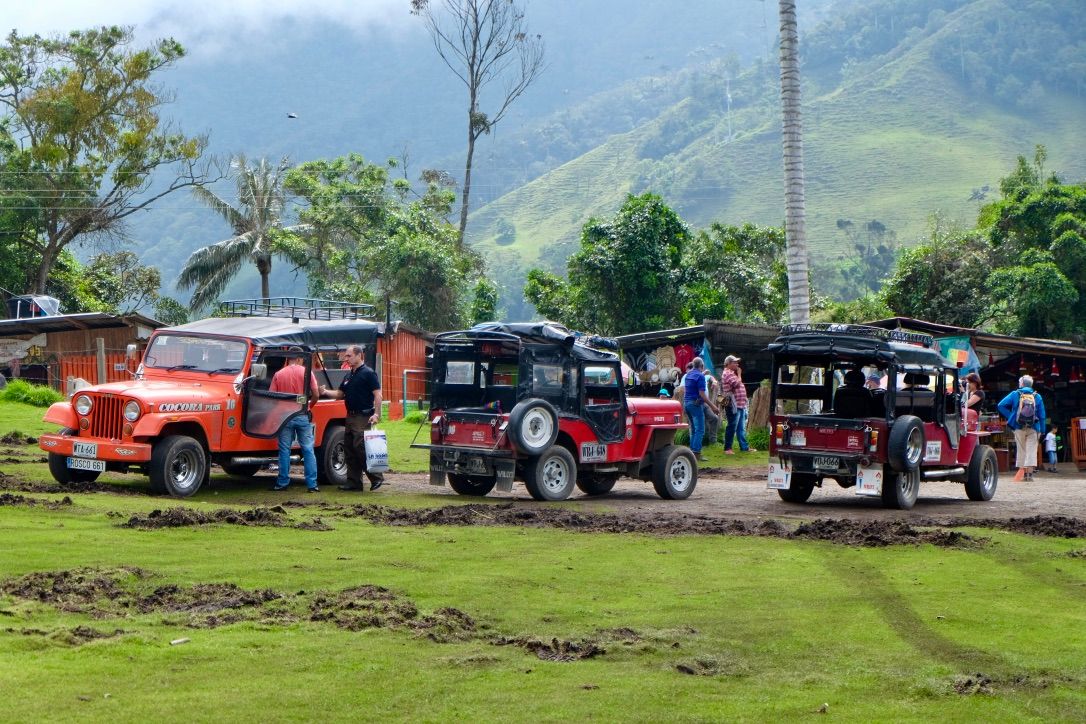
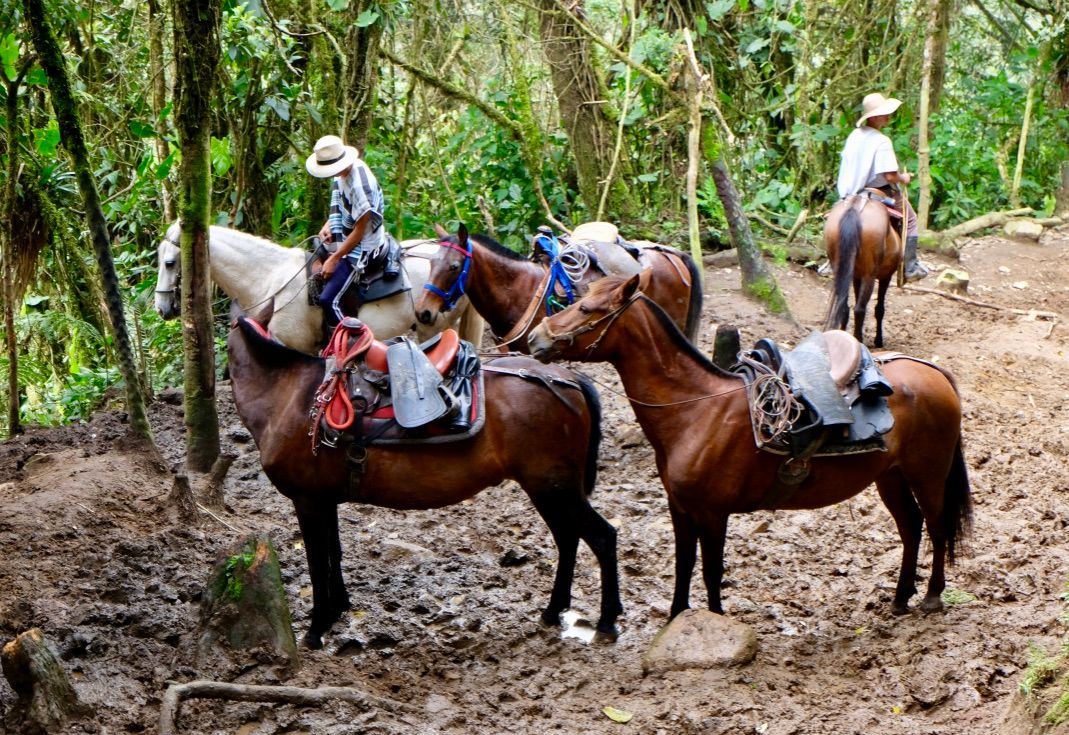
The settlement of Cocora is filled with the sound of Willys engines, slamming doors, human chatter, and occasional horses’ hooves. Arrivals prepare to begin their hikes. Jānis and I will follow the classic circular route, with the Acaime nature reserve as its farthest point. Altogether, it should take around five hours.
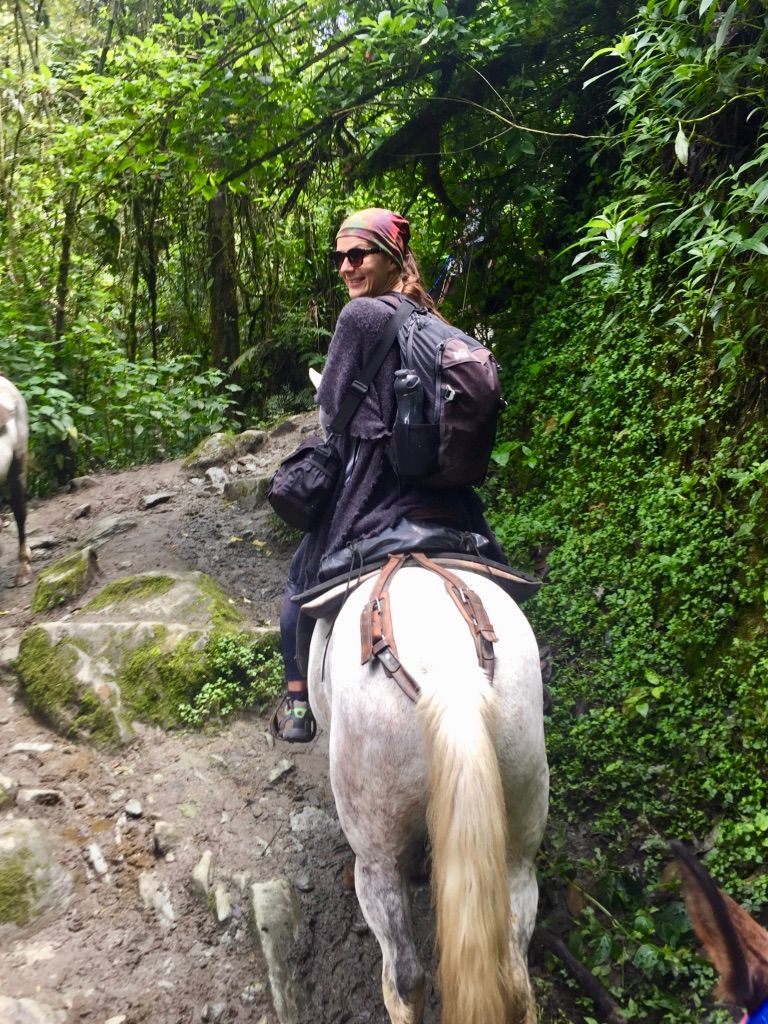
We know that the first two and a half hours cross level ground and later pass through cloud forest. It sounds technically simple, so we decide to combine this section with a leisurely horse ride. The standard price is 45,000 Colombian pesos, about €12 per person. The horses look healthy and well cared for, and we sign forms acknowledging the possible risks. Everything seems proper. I am given a pale horse named Mario; Jānis receives a brown one; and a third horse with our guide aboard leads the way.
At the beginning, heavy moisture has turned the ground entirely to mud. The land is level and I ought to relax and enjoy the views, but my horse seems to test me. He ignores instructions and wants to overtake Jānis’s horse. Several times, he disregards me completely and trots past, at which point the other horse immediately wants to regain the lead.
By the time we enter the cloud forest, I am tired from the constant rivalry. Jānis’s expression says, “We would have been better off walking.” The path has also narrowed considerably, rises steeply in places, and remains completely muddy. I wonder whether the horses have enough sense to concentrate on their footing rather than deciding who is boss.
Naturally, their attitude does not change. Around every bend, Mario squeezes along the flank of Jānis’s horse to get ahead. If he succeeds, the other begins the same manoeuvre while Mario quickens his pace to resist. At one turn, Mario stumbles over a large stone and I nearly fall. The guide has noticed their leadership contest and disobedience. He remarks that these two may not be friends and will not be paired again. Fortunately, we reach Acaime and, after two adrenaline-filled hours, dismount safely to calm ourselves by watching hummingbirds.
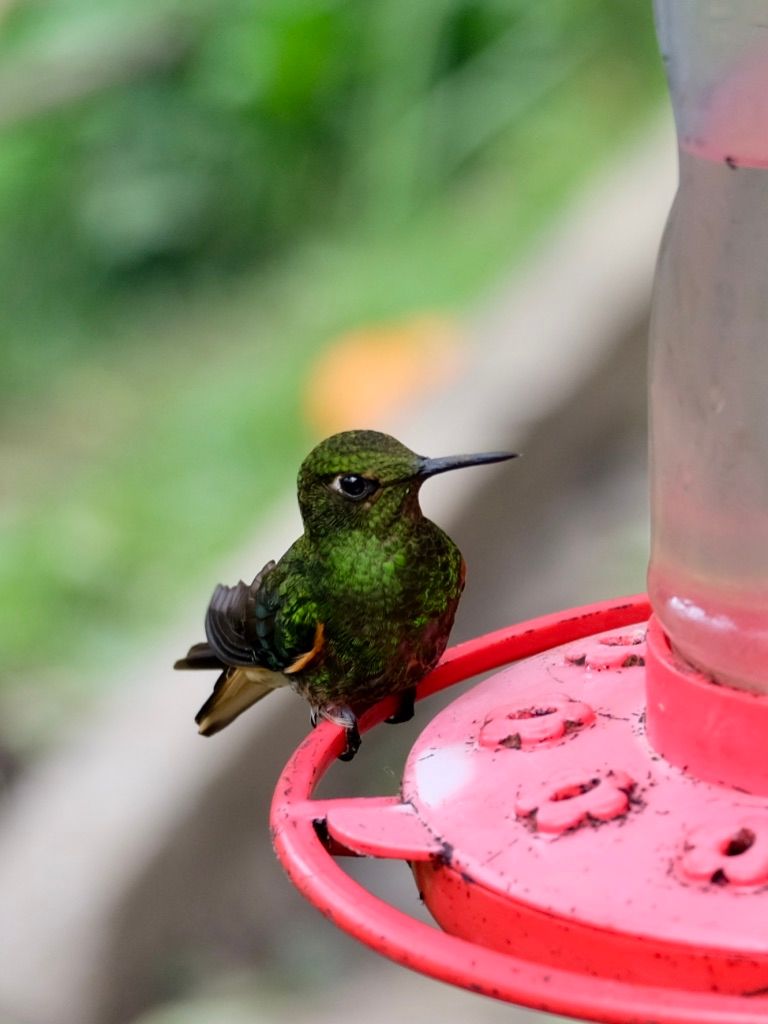
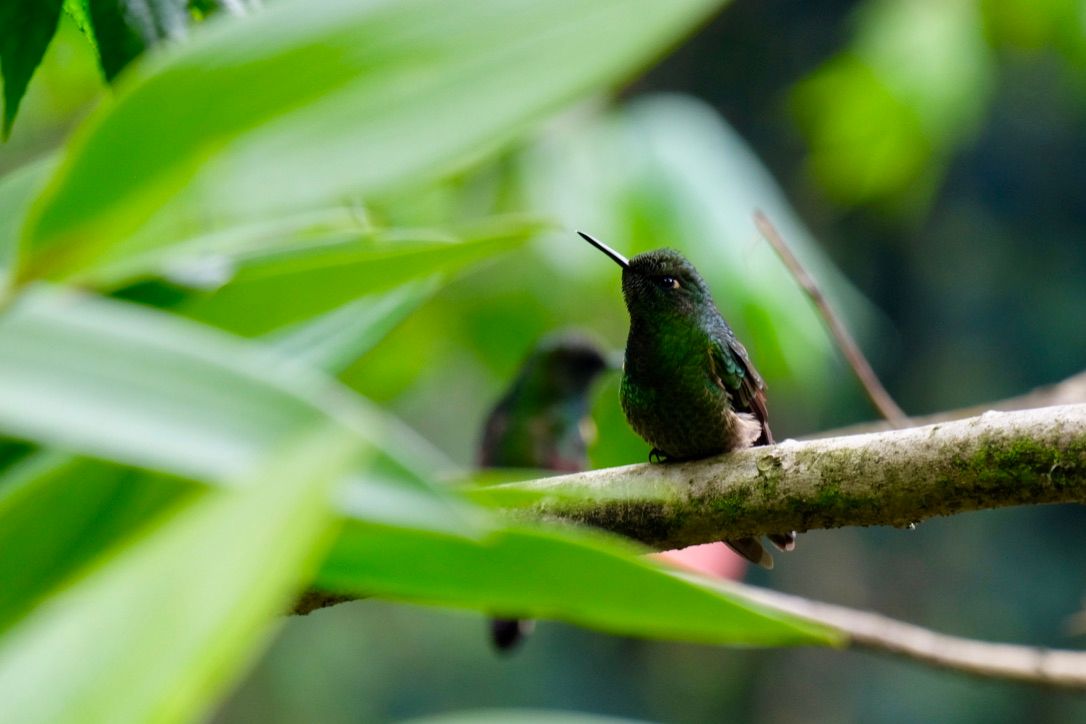
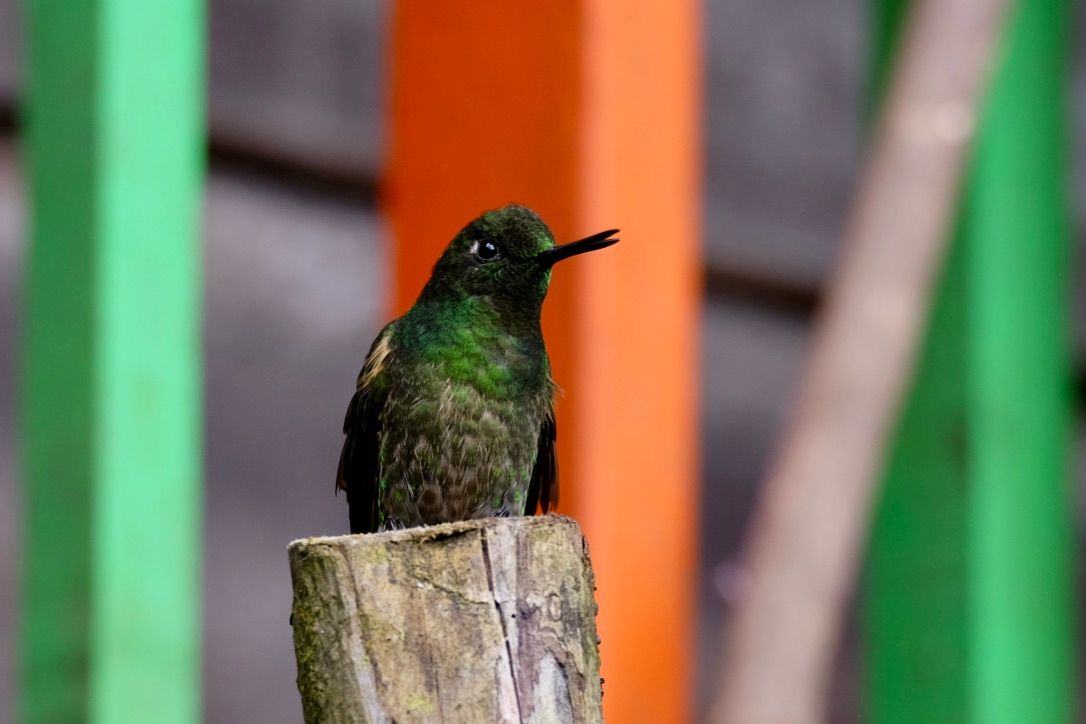
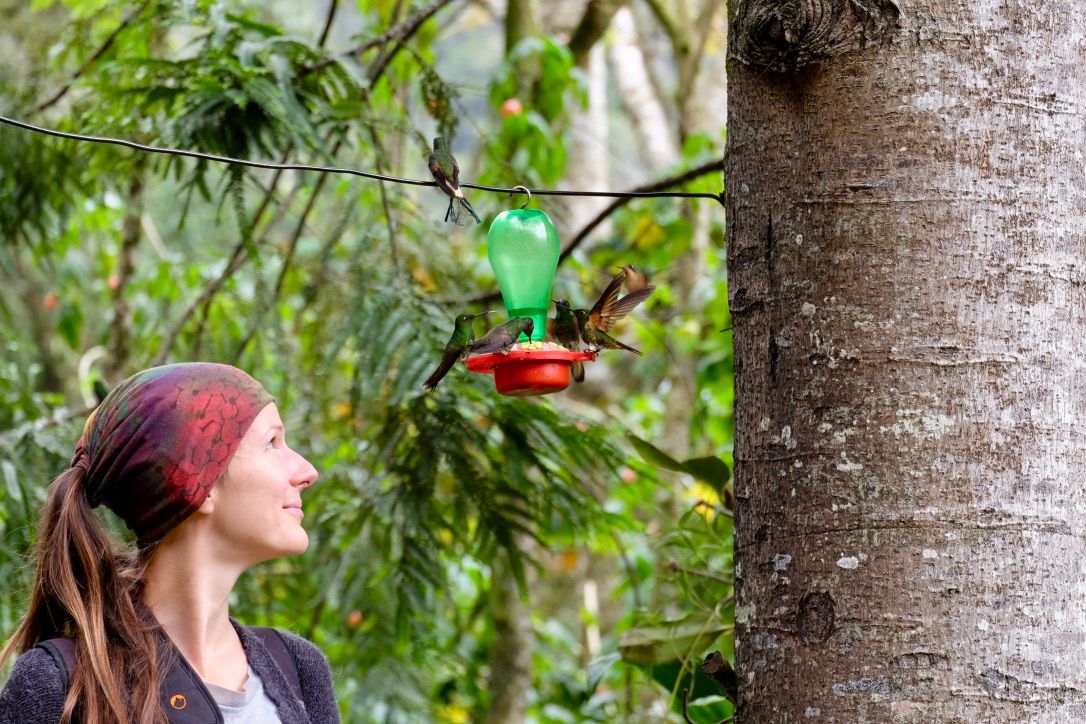
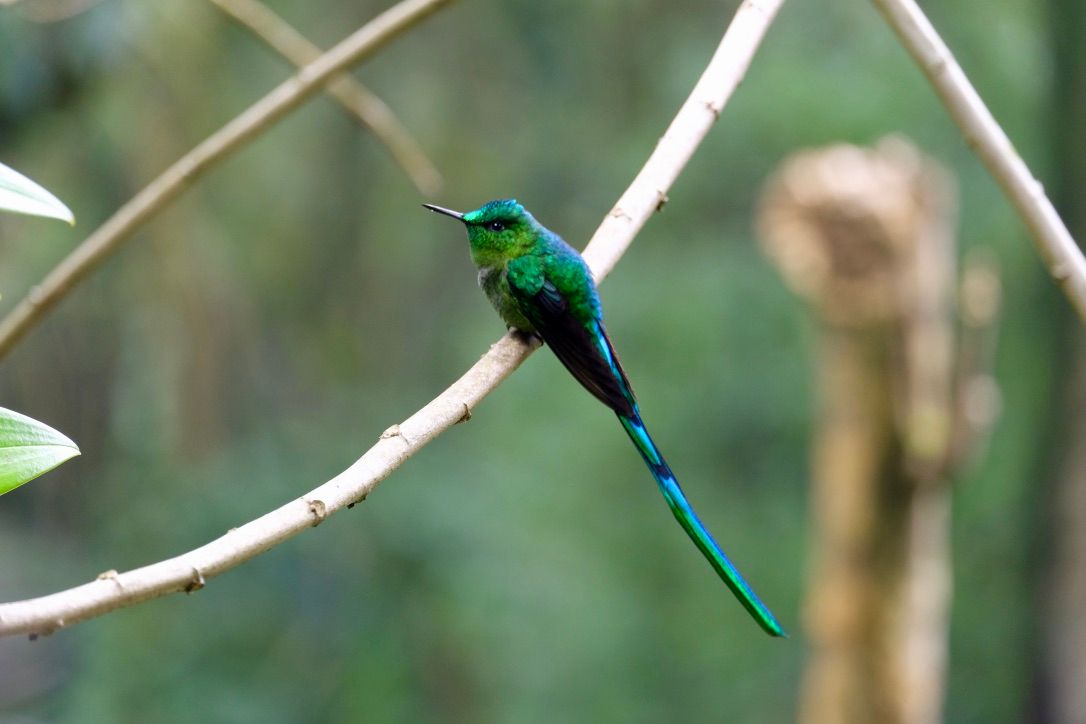
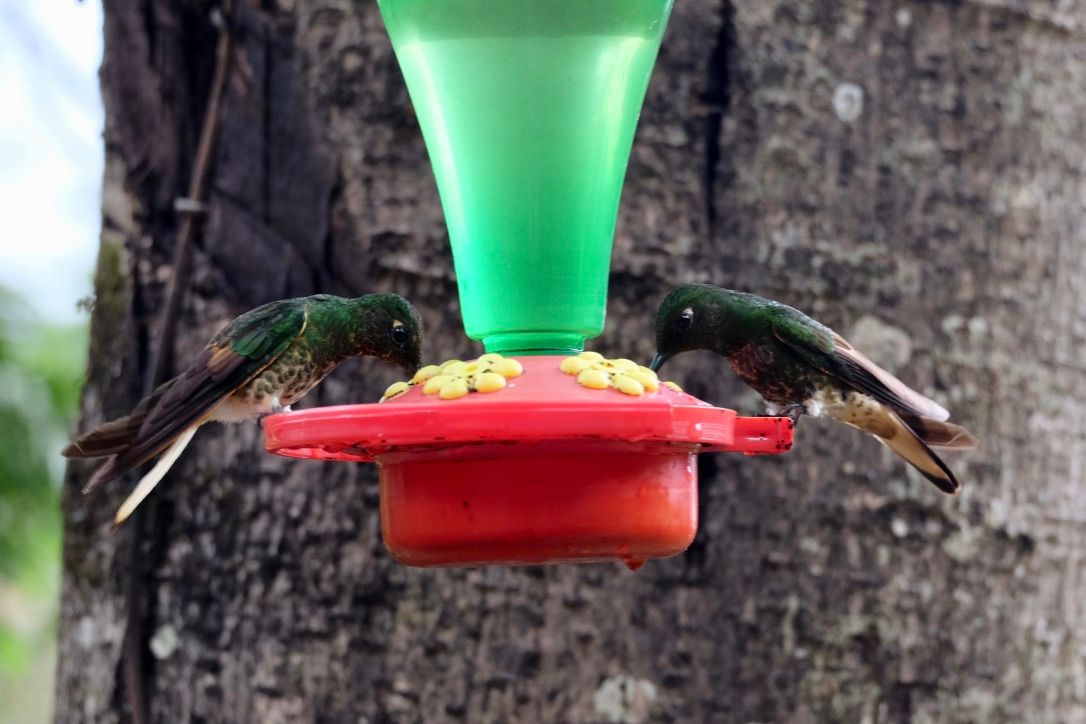
After the ride, Acaime feels like a haven of peace. Its rest area sells coffee and hot chocolate, and hummingbirds arrive for lunch at the feeders. Eight species can be seen here. Each differs slightly in plumage, bill shape and size, and the length and form of its tail.
Hummingbirds are so tiny and agile that the eye struggles to follow them. You have to listen for their wings, which sound rather like flying dragonflies. They are highly territorial birds. Even though there is room for everyone, disputes break out around the feeders. Cautious birds land only for a moment, too briefly to study the details of their feathers. A camera helps: I only discover what they truly looked like by examining my photographs.
While watching them, our attention is caught by a man carrying enormous photographic equipment. His name is Carlos and he works for the newspaper El Colombiano. He has been sent to the Cocora Valley on assignment and is carrying seven kilograms of camera gear on the hike.
The hardest section follows: a steep climb along the side of a mountain. Here, our pace matches two men from Baltimore, and the standard conversation begins—where is everyone from? We are used to people in South America knowing little about Latvia, but this time is different. One man has not only visited Riga but travelled all around the country with a Lonely Planet writer who was researching the guidebook. When we mention our hometown of Kuldīga, he remembers it as “the town with the wide waterfall and red bridge!”
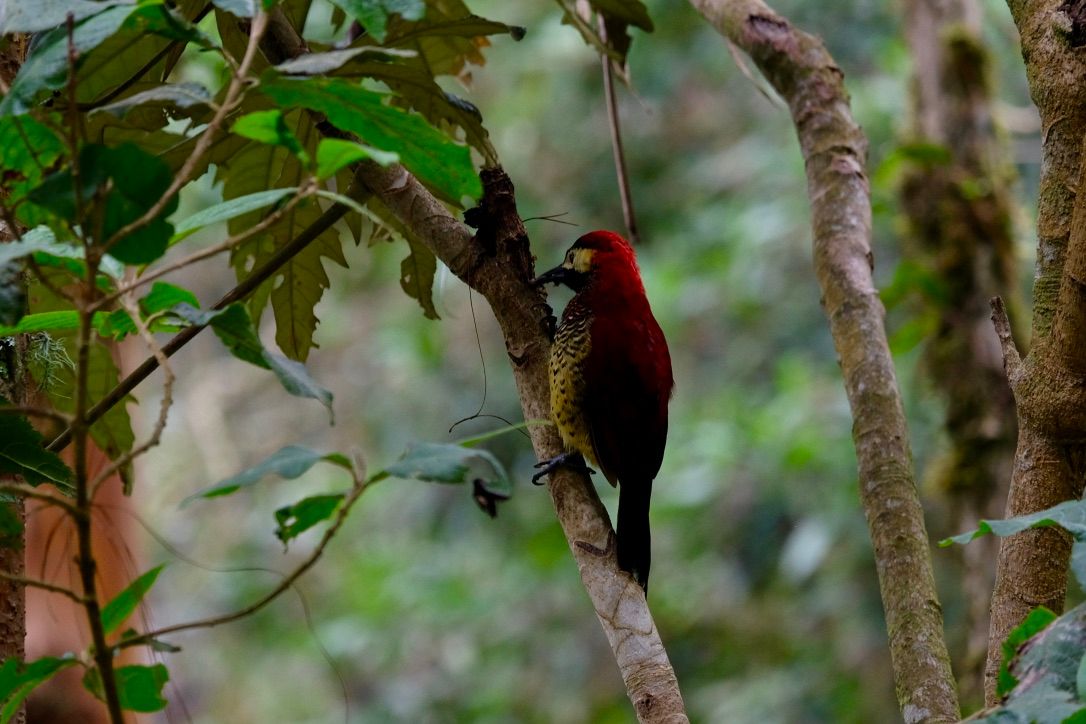
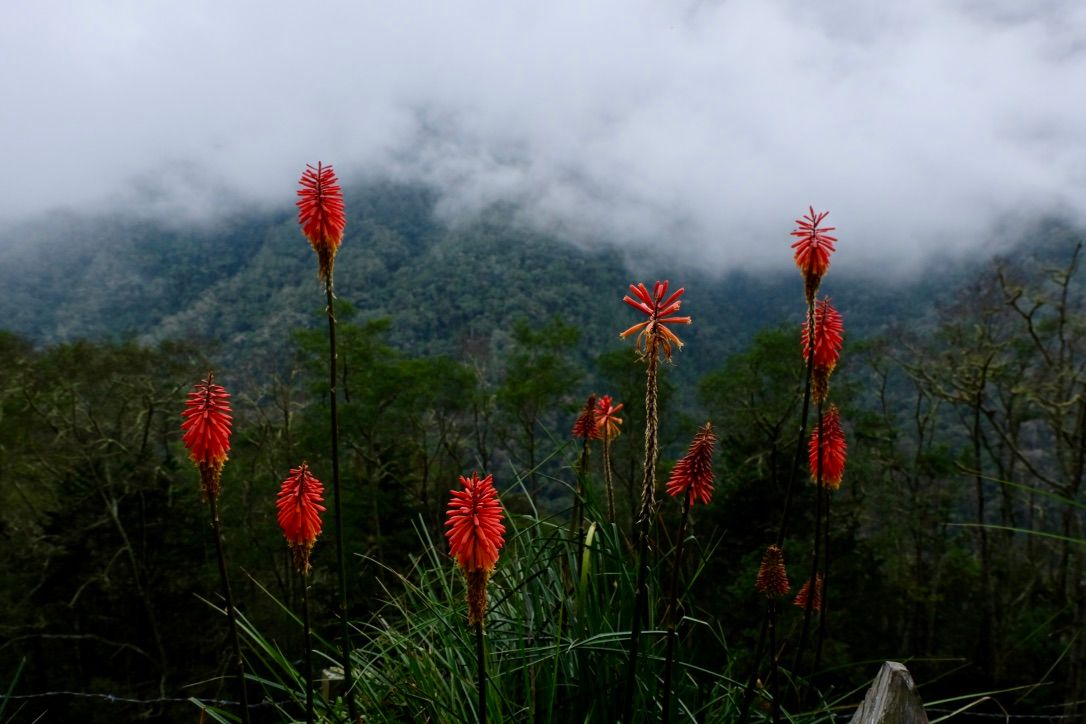
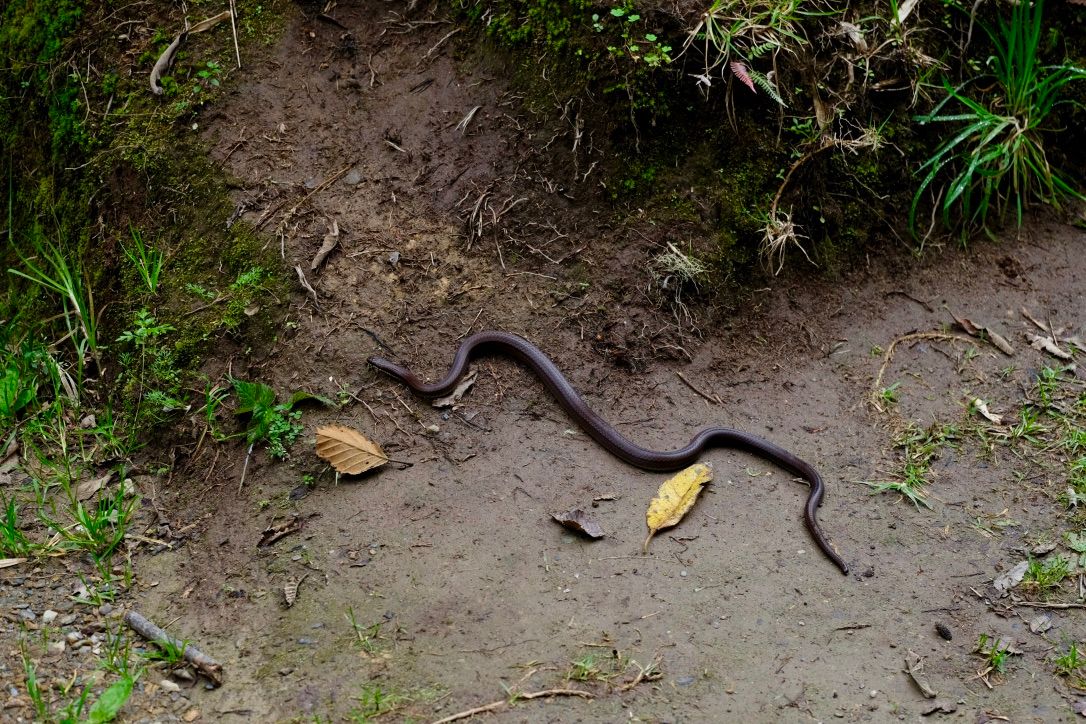
Once we conquer the steep slope, the route becomes reasonably level and descends towards the wax-palm grove in the Cocora Valley. The forest remains dense. Now and then, we see a curious bird, colourful plants—including wild strawberries and dandelions—and even a snake.
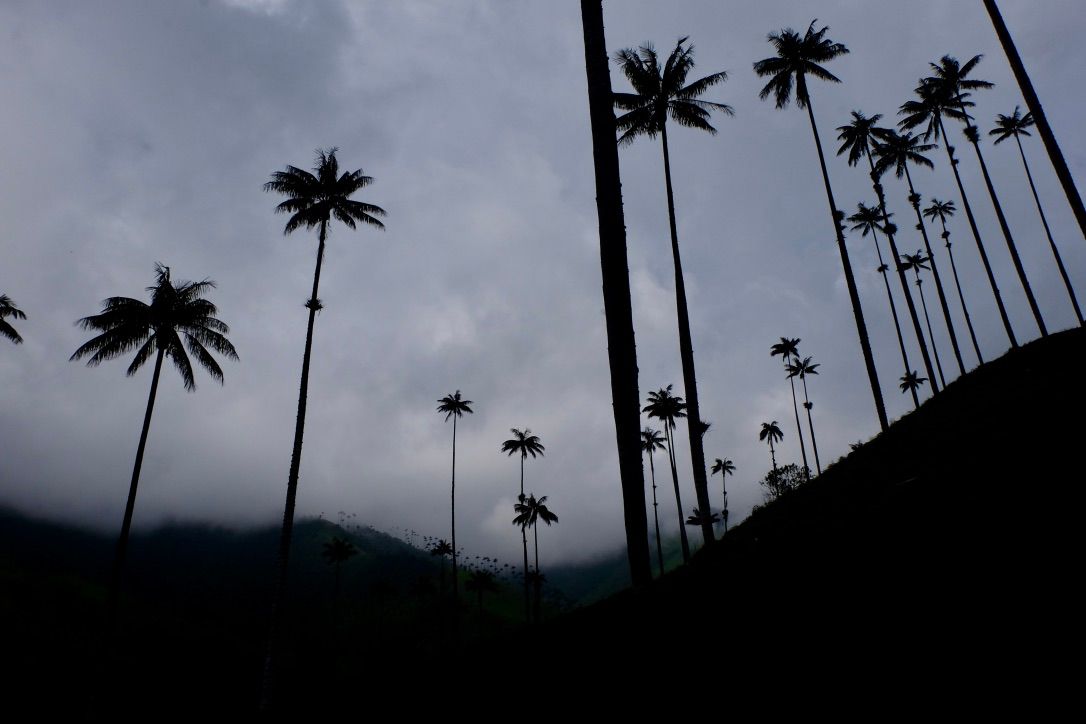
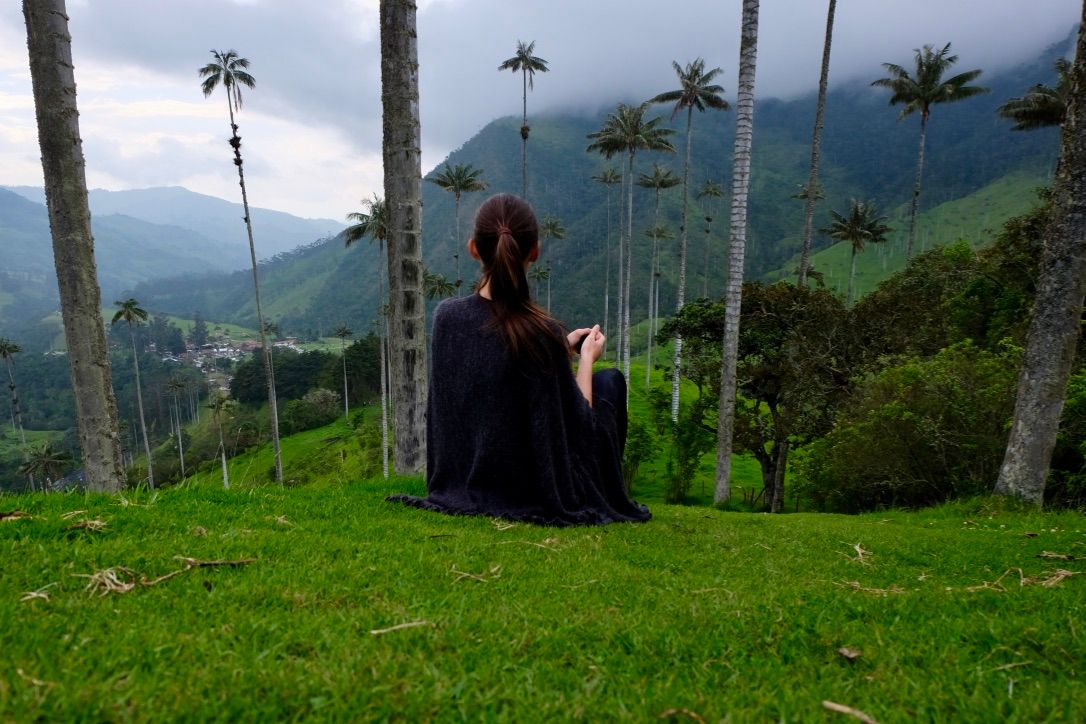
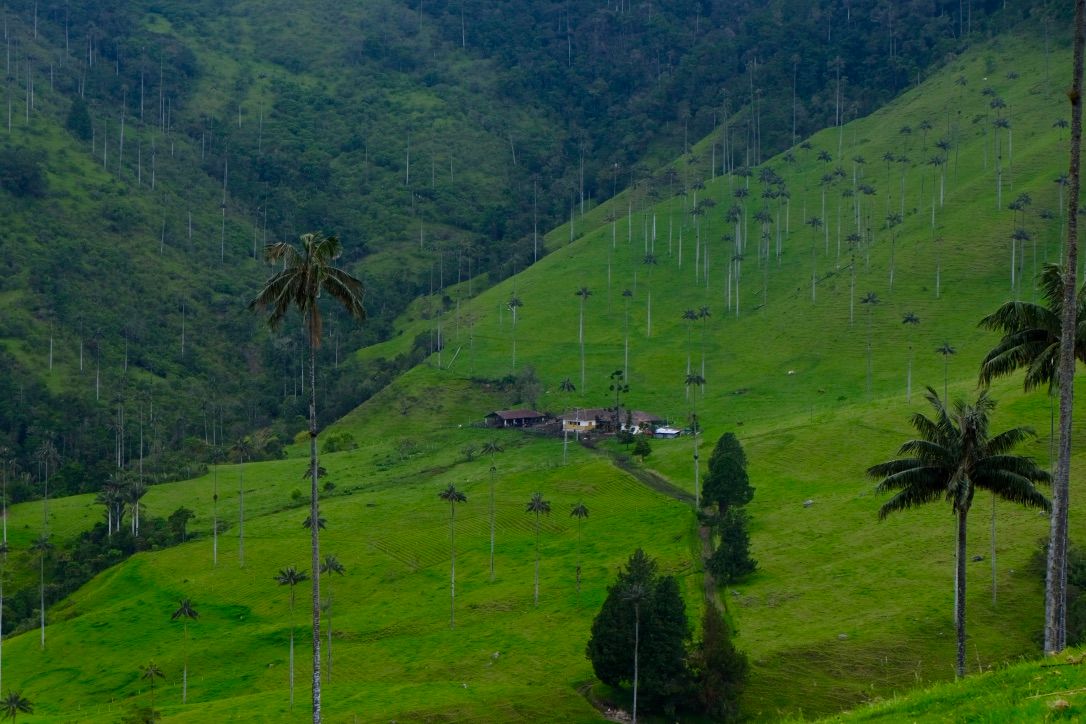
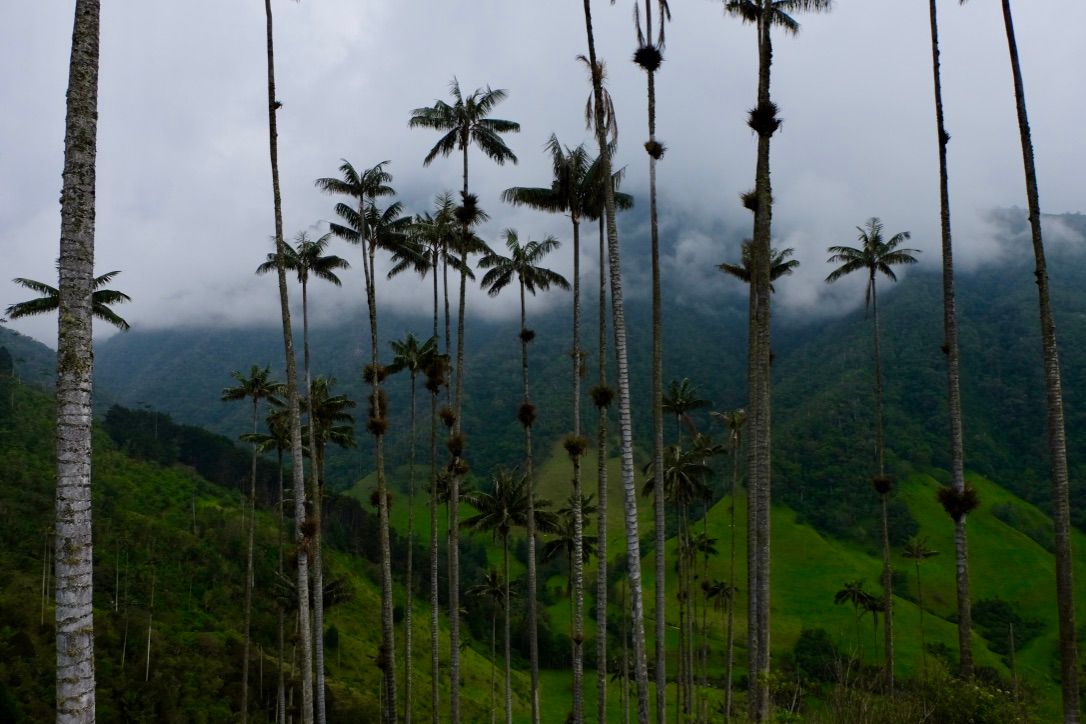
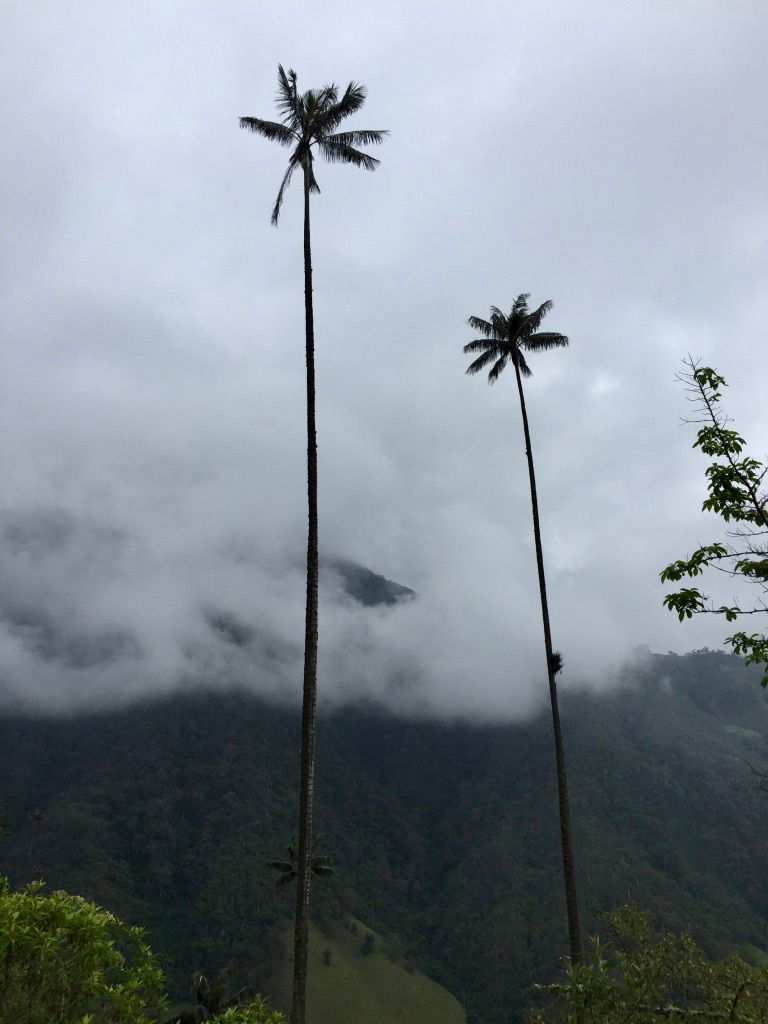
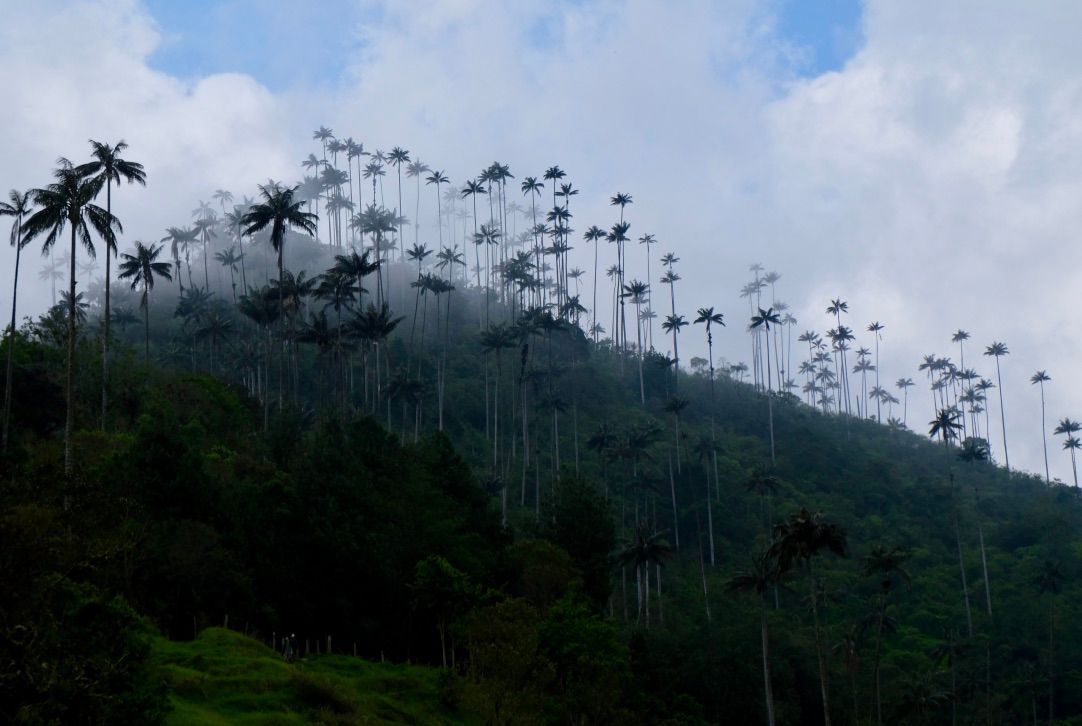
At last, we emerge from the thicket and see the Cocora Valley filled with slender Quindío wax palms (Ceroxylon quindiuense). Reaching forty-five to sixty metres, they are the tallest palms in the world and Colombia’s national tree. Their trunks once supplied wax for candles.
Clouds cover these mountains almost continuously, and mist is common. We encounter exactly those characteristic conditions, and the scene feels like pure magical realism: slender, fragile trees stretch into a dark, hazy sky above a brilliantly green valley. I have never seen a landscape like it. The Cocora Valley is the most beautiful place in which I have ever welcomed my birthday. Thank you for that.
The following day, we will visit a coffee plantation. Delicious Colombian coffee deserves an article of its own.