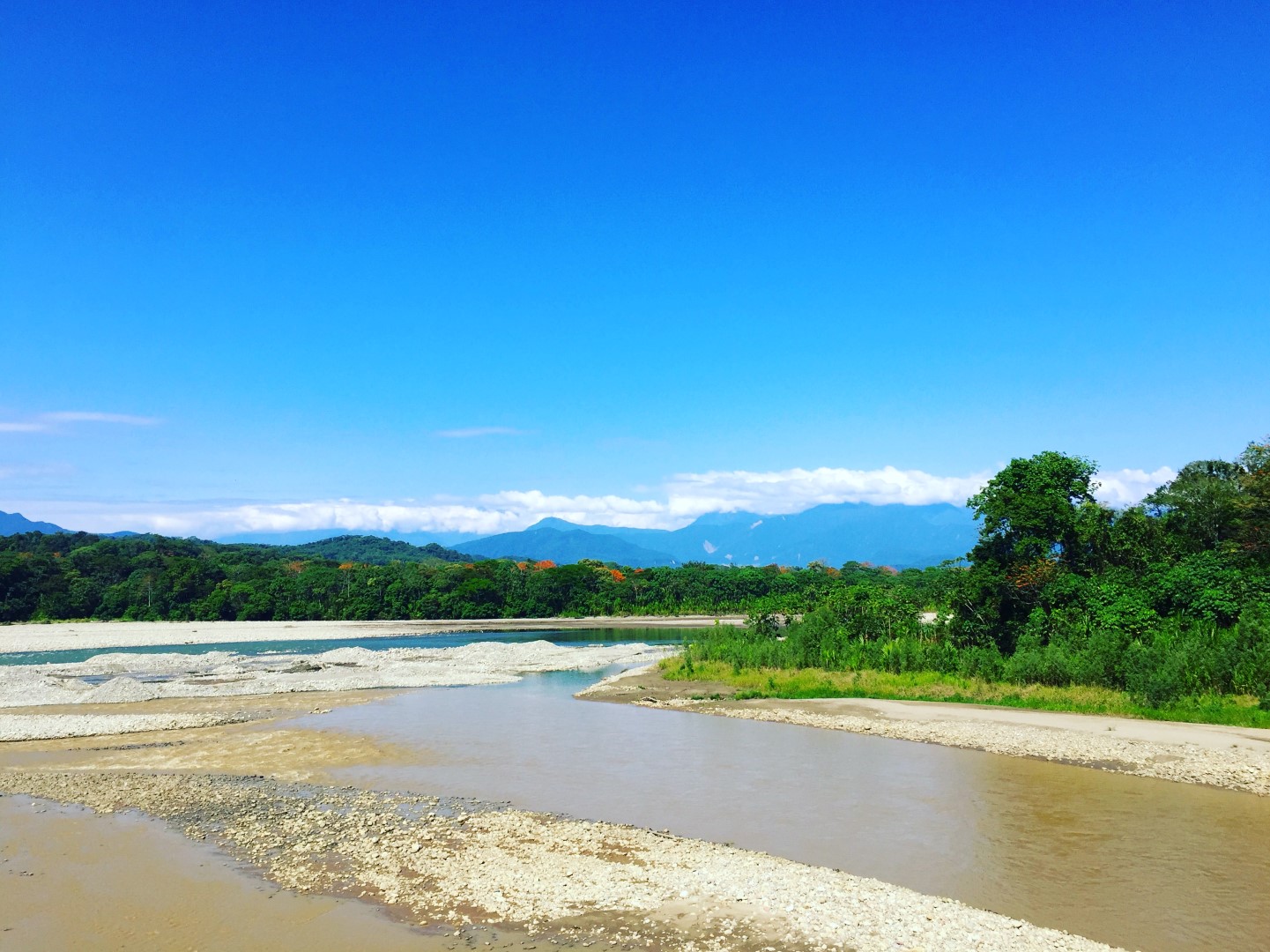
Why did we decide to visit Bolivia? One reason was the Salar de Uyuni, the world’s largest salt flat and a fixture on many travellers’ must-see lists. The decisive moment, however, came one night while browsing online, when I discovered Comunidad Inti Wara Yassi (CIWY), an organisation that shelters wild animals rescued from the black market.
Illegal wildlife trafficking is an enormous problem in Bolivia and other South American countries. I was deeply moved by the stories of what these animals had endured before reaching the park. I felt a powerful call to go there because helping hands are always needed. After Jānis and I made a loop through western Bolivia, we travelled to Cochabamba. He would remain there for the next two weeks while I worked with animals in the jungle.
On the appointed day, we say goodbye and I board a minibus for Villa Tunari, four hours away. It is home to Parque Machía, one of the three parks CIWY now operates in Bolivia. The first hour is spent escaping Cochabamba and its suburbs, after which we begin climbing into the mountains. In the dry season, the landscape is parched and yellowish. There are occasional trees—mostly eucalyptus—and small forests in places.
Beyond one mountain, I see a great mass of smoke. As we approach, a destructive forest fire comes into view. A large area has already burned and continues to burn. Unlike California, where we witnessed something similar, Bolivia lacks the resources to fight remote fires with helicopters, and reaching them any other way is almost impossible. We have also heard that local farmers sometimes deliberately burn forest on level ground to clear it for crops such as coca. We drive higher, and when I look around at one point, the view is shocking: several forest fires are burning simultaneously in different places.
On the far side of the mountains, jungle begins and the climate changes completely. The scenery is transformed—different plants, trees, and colours, with rivers visible at the bottom of ravines. Everything is so green and so powerful. Exhilaration brings tears to my eyes. Inside, I know that the jungle IS my calling. Hills and valleys are covered in impenetrable vegetation, apart from a road that twists like a snake, sometimes paved, sometimes cobbled, and sometimes flooded by little streams.
The temperature changes too: it becomes hot and humid. This part of the journey passes unnoticed because I am too busy staring around in delight. Despite all our travels, I have never been this close to the Amazon jungle, and a childhood dream is approaching fulfilment.
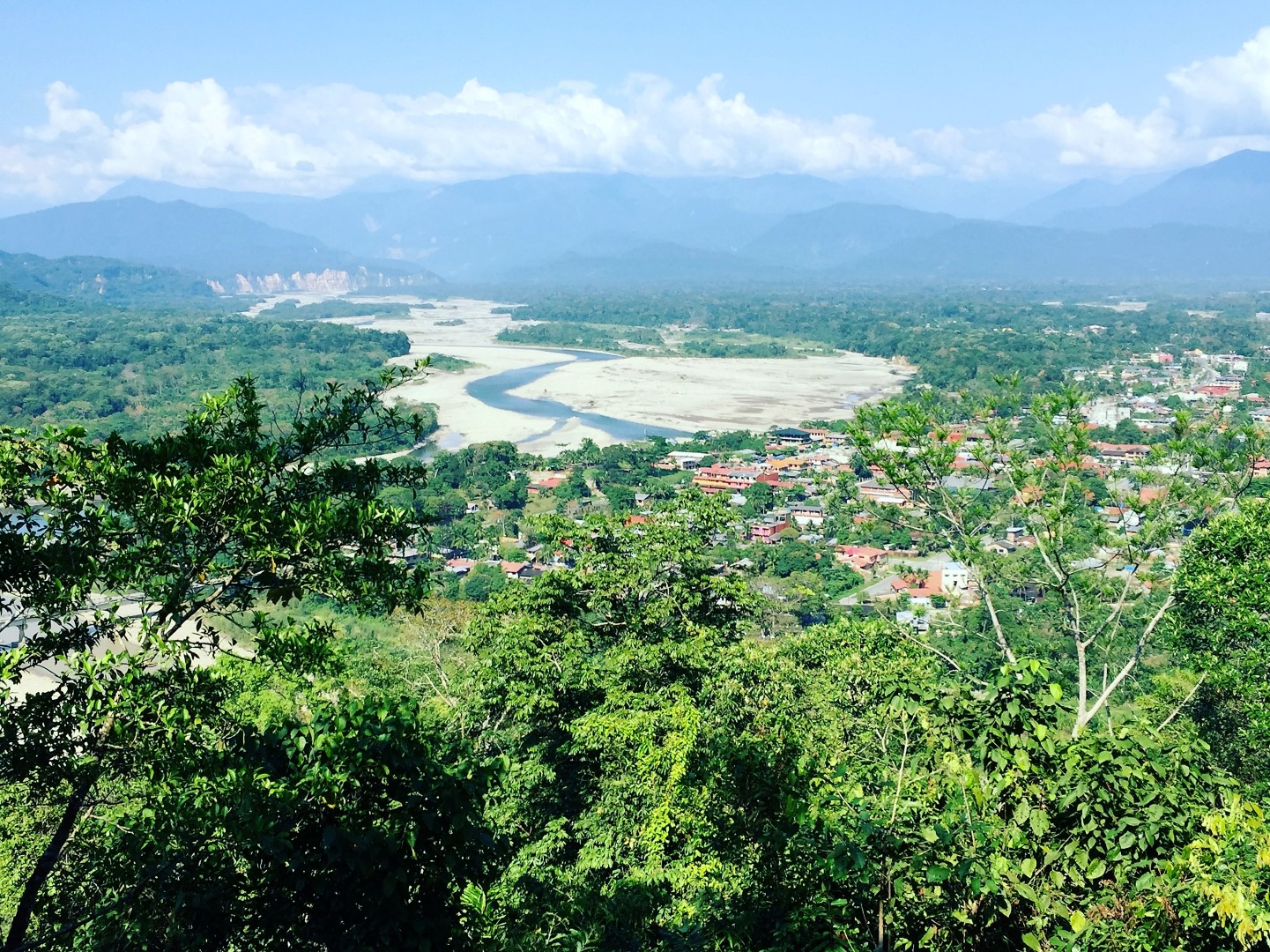
We enter Villa Tunari and I ask the driver to drop me at Parque Machía, a little beyond the village. At the entrance, I have a meaningful first encounter: Nena, the organisation’s founder, warmly invites me into the administration building. Outside, there is a tremendous commotion. Capuchin monkeys jump past the windows and try to peer inside. At that moment, I understand: it is happening, and it is real. I have reached the place that has occupied my thoughts ever since I discovered it.
The new administrator, Xilona, is assigned to show me around and takes me to my room in the volunteer house, known as Copacabana—for reasons one can only guess. :) Everything I had read about the spartan conditions is true; the animals’ welfare is the sole priority here. Copacabana contains eight rooms with four beds in each. My room is upstairs and one bed is already occupied, so I will have only one roommate. The building is empty because every volunteer is working.
I walk into Villa Tunari to buy the rubber boots needed for work and find dinner. Along the way, I enjoy the tropical air and scenery. Darkness falls at around six, and insects glow in the air like little neon lamps. When I return, the volunteers are home. I meet my roommate, Jack from Britain, who works with capuchin monkeys.
The following day, I am taken on an introductory tour of the park, after which I will learn which section I am joining. Yael from Israel leads the tour. She has spent a year here as administrator and will soon leave, with Xilona taking over for the year ahead.
Parque Machía has sections for capuchins, spider monkeys, birds and tortoises, small animals such as coatis, the big cat Marley the puma, and Baloo the bear. Administrators assign volunteers according to whichever section needs people most. Preferences can be expressed, especially by anyone with specialist education or experience with a particular species. I say immediately that I have none: put me wherever I am most needed. Until now, I have done only “brain work” in an office, so more or less every animal is a wonder to me. There is something exciting about not knowing which species I will care for and come to understand closely.
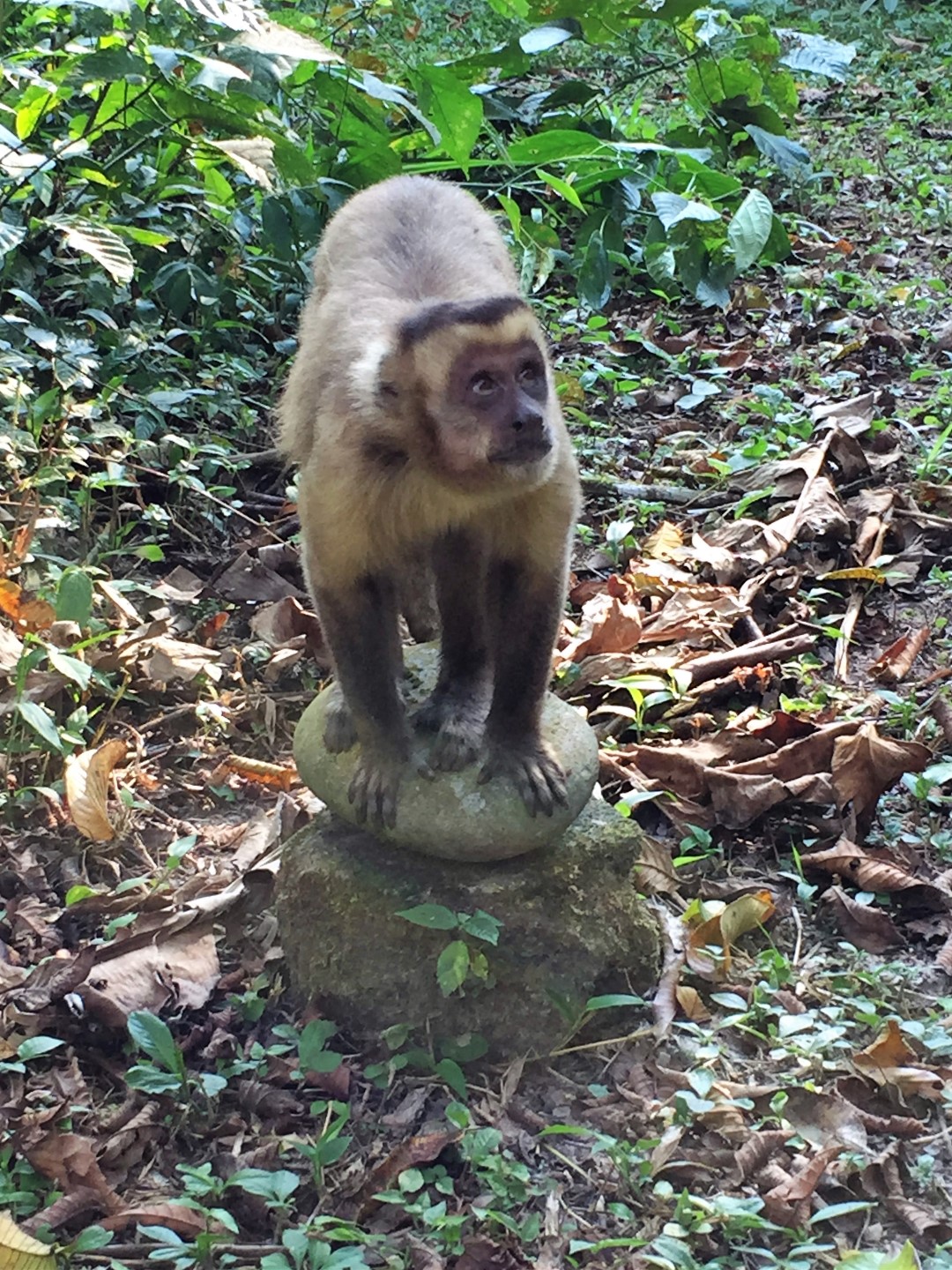
We walk through the capuchin section, divided into “Heaven” and “Earth”. In Heaven, a network of ropes lets monkeys move freely across a wide area and at different heights. For various reasons—health, aggression, and others—the Earth monkeys spend part of each day in cages.
I am also shown the area occupied by Baloo, an Andean spectacled bear. He is not visible because his enclosure is large and includes a private forest and stream. Next come the birds and tortoises. Some birds are outside their cages and walk freely around the grounds. My first impression is slightly surreal: vivid red, blue, and green birds stroll around and sit in the trees. We do not visit the spider-monkey or small-animal sections because they lie deeper in the jungle.
After the tour, we sit down to review the contract. I learn about wildlife trafficking in South America, CIWY, and its history. The facts are desperately sad (from the 2010 South American Conference on Illegal Wildlife Trade in Brazil):
- Around twenty million individual animals are smuggled out of South America every year.
- Only one in ten survives capture or transport, which may cover several thousand kilometres. Animals pass through different intermediaries on the way, each using their own methods to move the “cargo” through checkpoints.
- Animals are tortured to keep them quiet during journeys to North America and Europe, the most common destinations. Parrots, for example, may have their beaks and legs glued together and their eyes injured so that they do not call out when they see light.
- Smuggled animals reach every kind of buyer, including zoos, private collectors, and even pharmaceutical laboratories.
- In profit, illegal wildlife trafficking ranks third behind the drugs and arms trades.
A black market of this scale makes the need for organisations such as CIWY unmistakable. They provide sanctuary and educate the public. CIWY’s central work is rescuing, housing, caring for, and rehabilitating wild animals. Rescues remove animals from trade, circuses, and households where they are kept as pets in unsuitable conditions. In many cases, owners surrender them voluntarily after recognising that they cannot provide proper care. CIWY works with government bodies and environmental organisations, which also help animals reach the parks.
Rehabilitation and care follow. Veterinarians and volunteers play the principal roles, with volunteers performing the daily routines of feeding and tending the animals. The highest goal is, of course, release into the wild, but the process is not straightforward. A tame animal cannot simply be set free.
Most wild animals reach their “owners” when they are very young. They did not grow up with a mother or, for example, within a troop that protected them and taught them to find food. A monkey accustomed to humans would probably no longer be accepted by a wild troop because it simply does not know how to be a monkey or understand the hierarchy. Such an animal is likely to seek human settlements because receiving food from people is the only method it knows. And we know very well how different people can be. Even without bad intentions, ignorance can cause irreversible harm. Of all the animals, tortoises and snakes in good health are the easiest to release.
How did CIWY begin? It started with Nena and her courage to confront injustice. Years ago, while working for an environmental organisation, she visited the jungle town of Rurrenabaque with her students and witnessed a dreadful scene: tourists laughing at a spider monkey that smoked cigarettes and drank beer.
After a long discussion with its “owner”, she persuaded him to sell the monkey to her. Acting on impulse, Nena did not yet know what kind of life she could offer, but she knew it would be better than the one it had. She travelled through the jungle with the spider monkey in a baby sling, searching for a suitable home for an animal that could no longer return to the wild. The search was hopeless. Nearly thirty years ago, Bolivia had no organisations capable of providing a good life to tame wild animals that had been abandoned or kept improperly.
On the morning Nena decided she would have to take the monkey to a zoo, it would not leave her for a moment and clung tightly to the person it loved. In that emotional moment, she resolved to create a sanctuary for wild animals harmed by human cruelty, ignorance, and indifference.
With support from like-minded people and the jungle village of Villa Tunari, which provided land, the first park—Parque Machía—was born. Initially, there was no practice of involving volunteers. Nena and local residents did everything themselves. The organisation’s entire approach changed when a Swiss traveller passing Parque Machía met her. He stayed for a time and worked with the animals without payment, then realised that people needed to hear about this place so it could attract volunteers from around the world. Step by step, that is what happened. Today, the organisation depends entirely on donations and voluntary work.
Nena and everything she has achieved are inspiring. Her story shows how one small but compassionate decision triggered a chain of events that produced positive change at a national level. Nena’s heart is truly in the right place, and it is wonderful to watch someone who has found her calling and is prepared to devote her life to it.
The reward and fulfilment cannot be measured in money. What matters is the respect of people who have met Nena and, inspired by her, chosen a similar path. And that is without even mentioning all the little creatures that have been saved and can now live almost complete lives—fed, free from human violence, and in conditions as close as possible to those they would experience in nature.
Here is the official Comunidad Inti Wara Yassi website, where you can learn more about the organisation, volunteering, or making a donation: http://www.intiwarayassi.org/index.php?id=49
And here is a video in which Nena talks about the organisation and its animals: https://www.youtube.com/watch?v=rpndjpKrvAg