La Paz and Death Road
We visited La Paz twice: when we arrived in Bolivia and when we left. It is the country’s administrative capital, with 1.4 million inhabitants, and stands at 3,660 metres in a valley surrounded by still higher mountains. Our first two impressions are the spectacular view down from the peaks and the excellent shopping. Alpaca-wool products, silver jewellery, and other, more unusual goods are available at lower prices than in Peru.
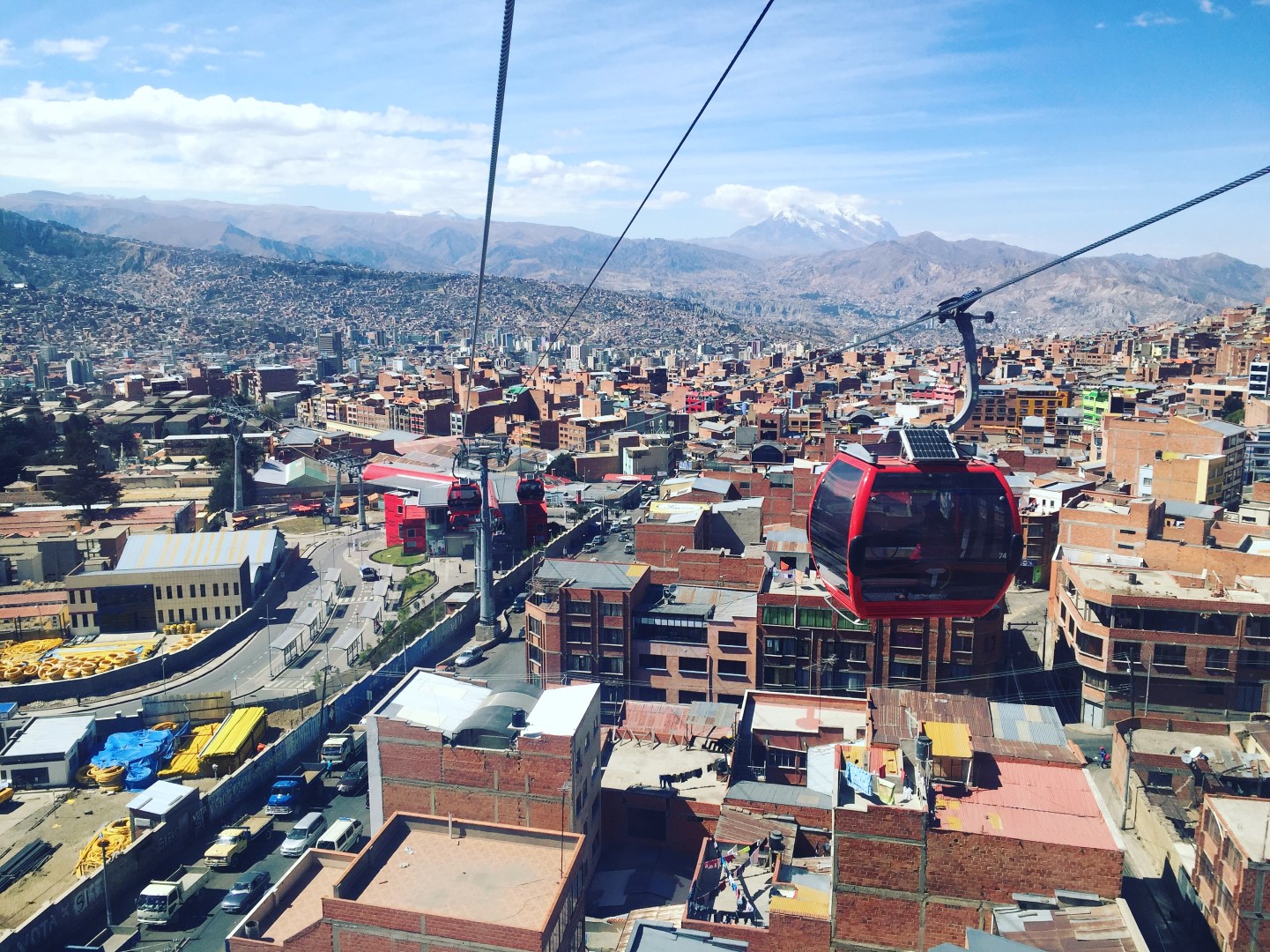
Several cable-car lines serve as public transport, carrying residents home to the city’s higher districts. We decide to use one for a view of La Paz from above. We may not yet be sufficiently acclimatised, because walking through the hilly city repeatedly leaves each breath short and inadequate. We cross a residential district on foot towards the nearest cable-car line. At least forty per cent of the houses appear unoccupied, simply standing empty. Perhaps in preparation for future population growth, they were built four or five storeys high. Reinforcing bars naturally protrude from the roofs in case another floor is ever needed. Soon, we reach the station, which looks exceptionally modern and new against its neighbourhood. The ride up the mountain lasts long enough to confirm that many buildings are empty. We also pass above La Paz’s cemetery district, with its “multi-storey” graves. From above, the city’s outlines become clear: it lies like a blanket across the valley, moulded to the feet of the mountains.
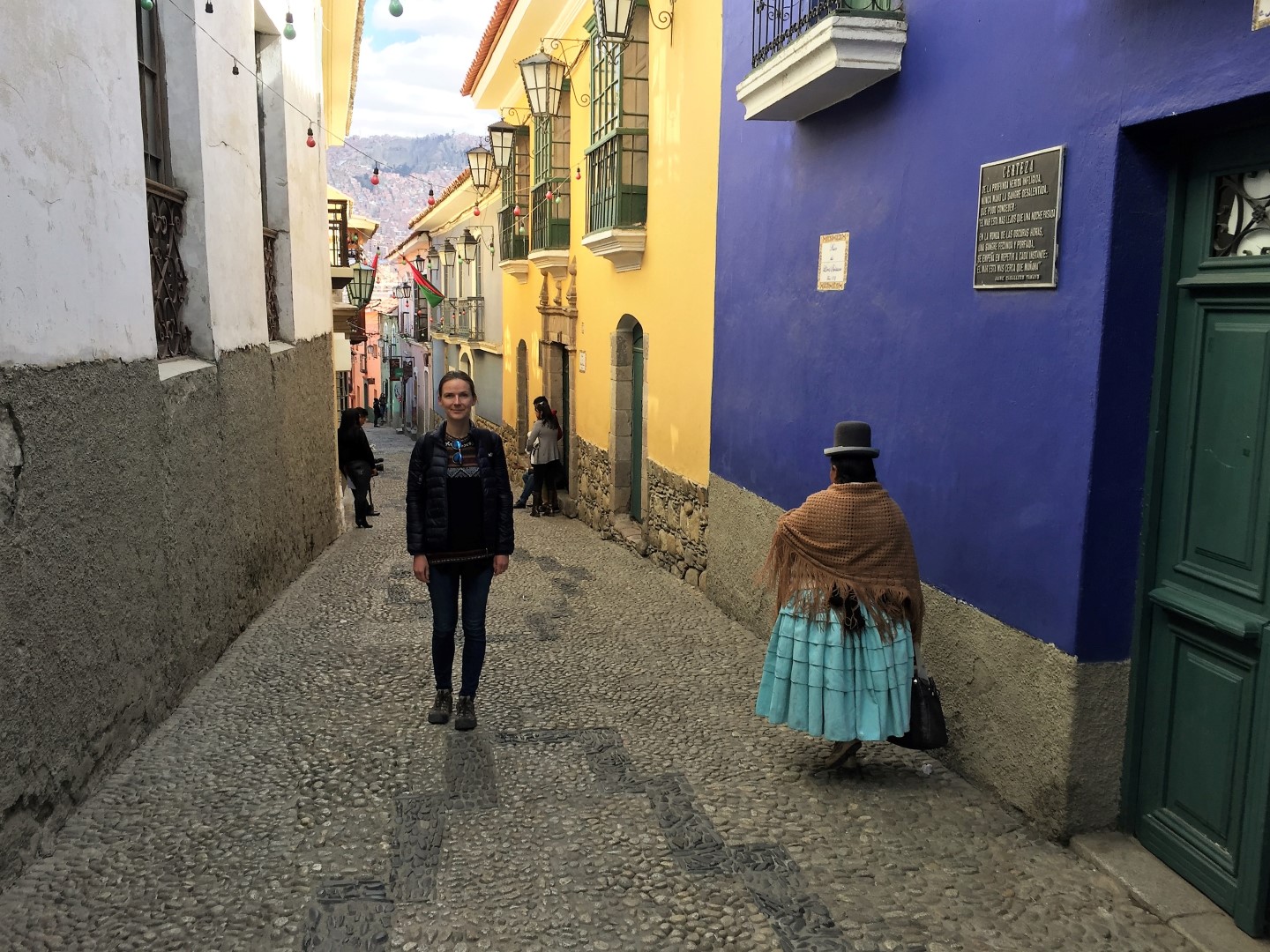
Next, we visit Jaén, the loveliest colonial street in La Paz. Reaching it requires another steep climb. We are already breathless when we discover a flight of stairs ahead—the road became so steep that turning it into steps was more practical. Jaén makes us forget the effort and proves worthy of the ascent: small, brightly coloured houses line a charming little cobbled street. Four small museums stand here and can be visited on one ticket. Unfortunately, for some reason, they are closed today. As consolation, filming is under way in the street, and we parade past the cameras hoping to appear in the frame.
Lunch would be useful too. A menú—soup, a main course, and a drink for a fixed price—is usually so large that I cannot finish it. Jānis and I agree to share one so there will still be room for fruit salad or juice from the fruit section. We ask for two spoons and forks and eat together from the same plate. We have already eaten plenty when I hear an elderly customer ask the cook what we are having, then order another portion. He turns and says he will buy one for us. We politely decline and explain that we did not want much food, so deliberately ordered one meal for two. The man had assumed instead that the poor young couple could not afford to eat. In any case, we thank him for the kind gesture and are glad that people exist who would willingly feed somebody genuinely hungry.
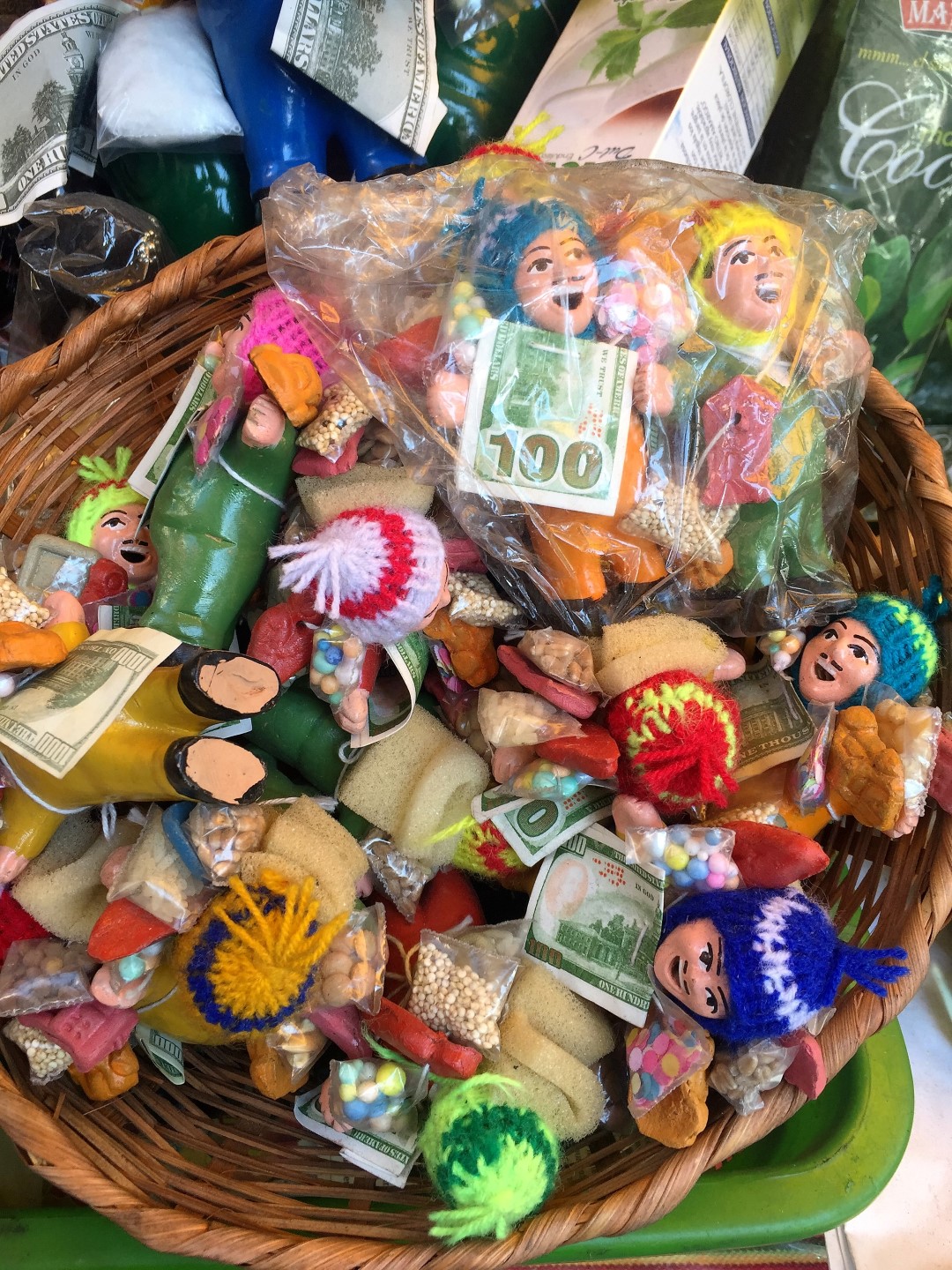
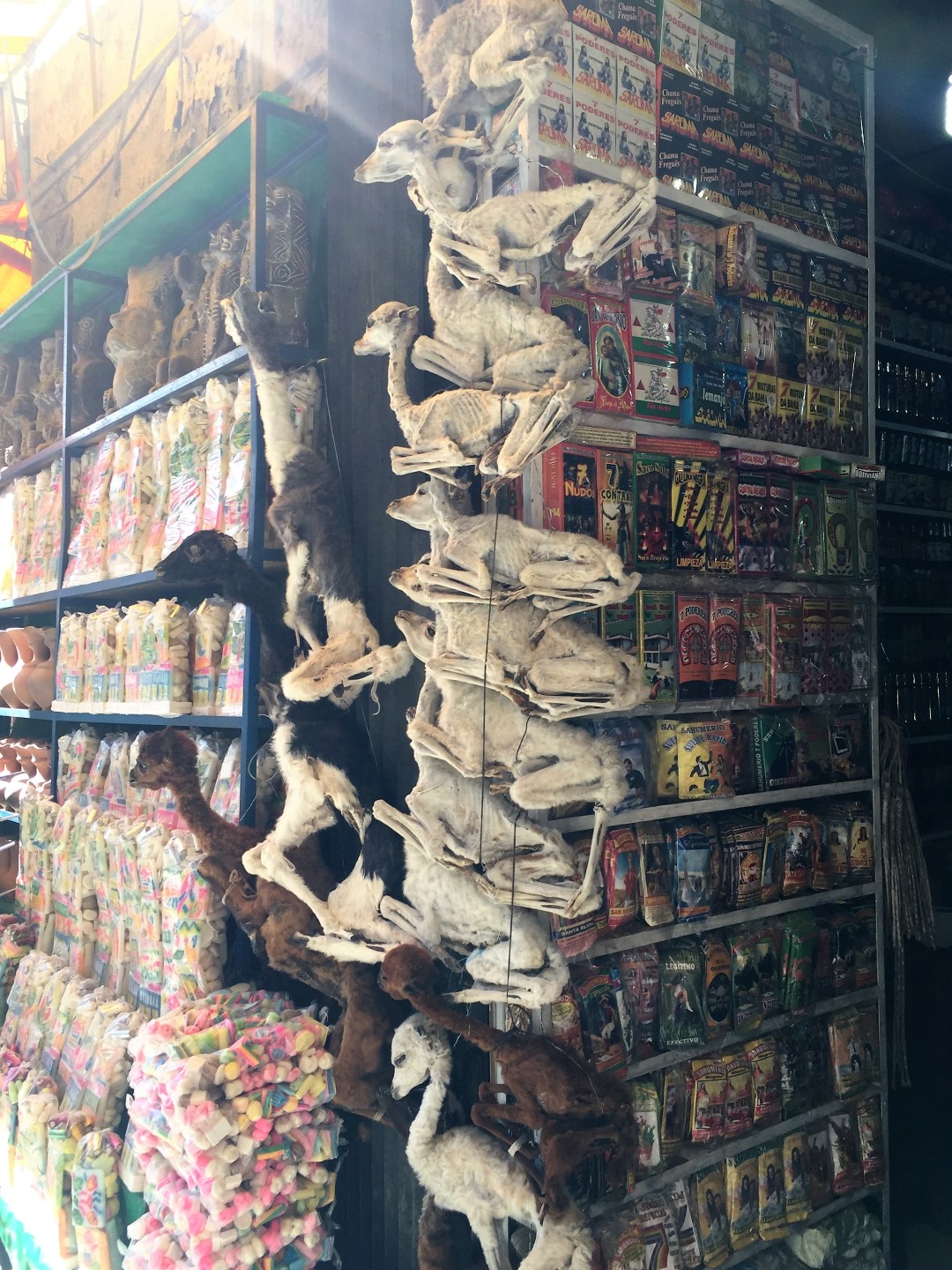
Now for what I consider the city’s most unusual quarter: Mercado de Hechicería, or the Witches’ Market. A small group of streets sells folk medicine and ritual objects, ranging from dried herbs to desiccated llama foetuses and toucan bills. To us, it is strange and incomprehensible. At one stall, I try to take a neutral photograph of the llama foetuses. The vendor notices my interest and comes over to make a sale. “No, thank you!” I think to myself that a dried llama foetus would be the last item I would ever consider putting into my backpack.
La Paz is also the centre for an activity considered one of Bolivia’s signature attractions: cycling down the world’s most dangerous road, or Death Road. It is only 3.2 metres wide, carved into mountains above sheer drops. Statistics say that an average of twenty-six vehicles fell from the cliffs and disappeared each year. Today, the road forms part of a nature park and is used almost exclusively by cyclists, their support vehicles, and odd tourist minibuses. Its replacement opened in 2007, after which ordinary traffic moved to the new route.
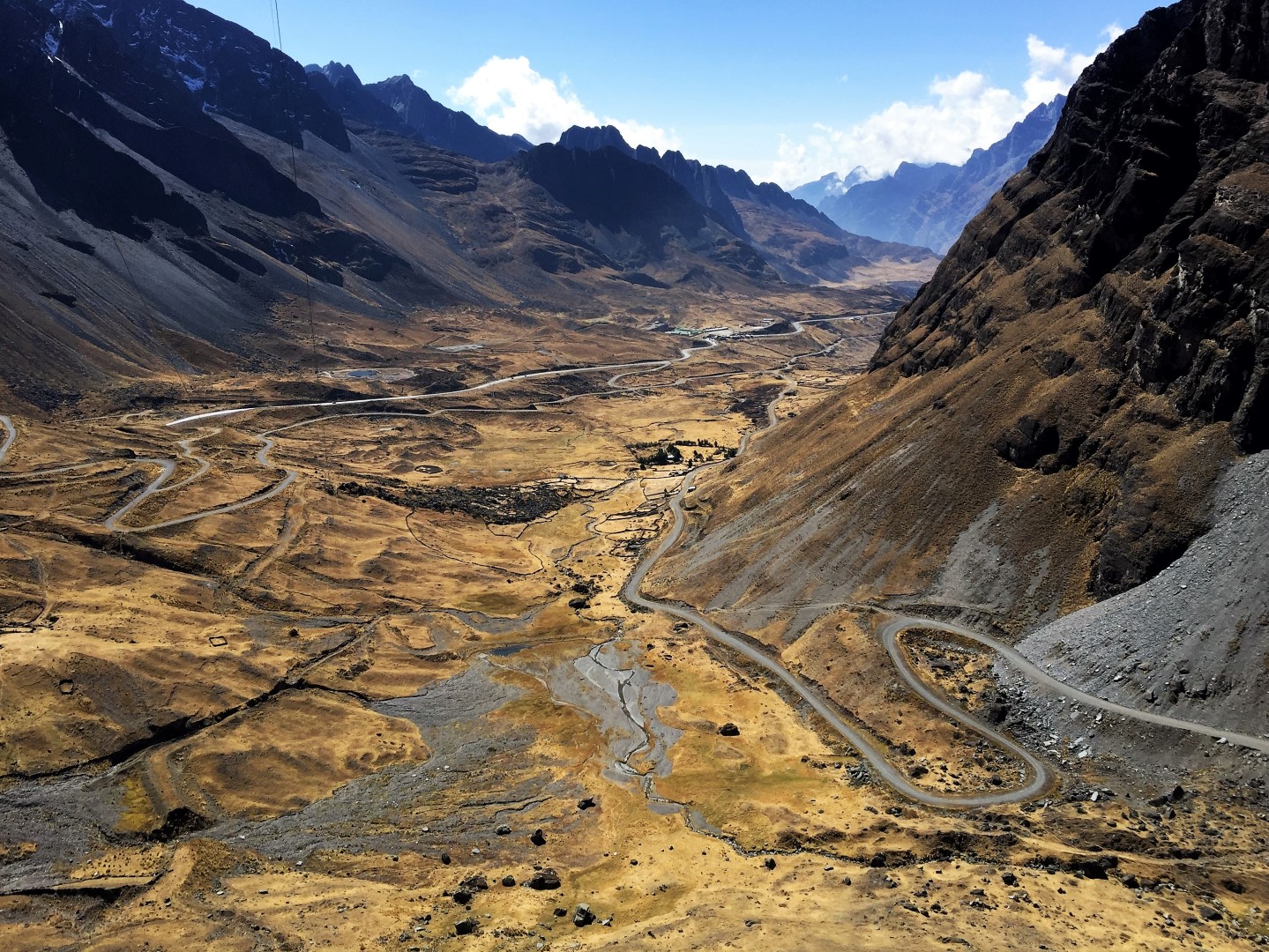
Our mountain-bike descent begins at La Cumbre (4,700 metres) and runs sixty-four kilometres downhill to Coroico. At the summit, we receive bicycles, overalls, gloves, and helmets. We take a group photograph and off we go. A cold wind blows at La Cumbre, where the sandy, rocky mountains are bare of vegetation. The opening section follows the new paved road. Its bends are not too sharp, allowing us to build up a satisfying speed. There is no effort at all: simply race downhill for more than an hour.
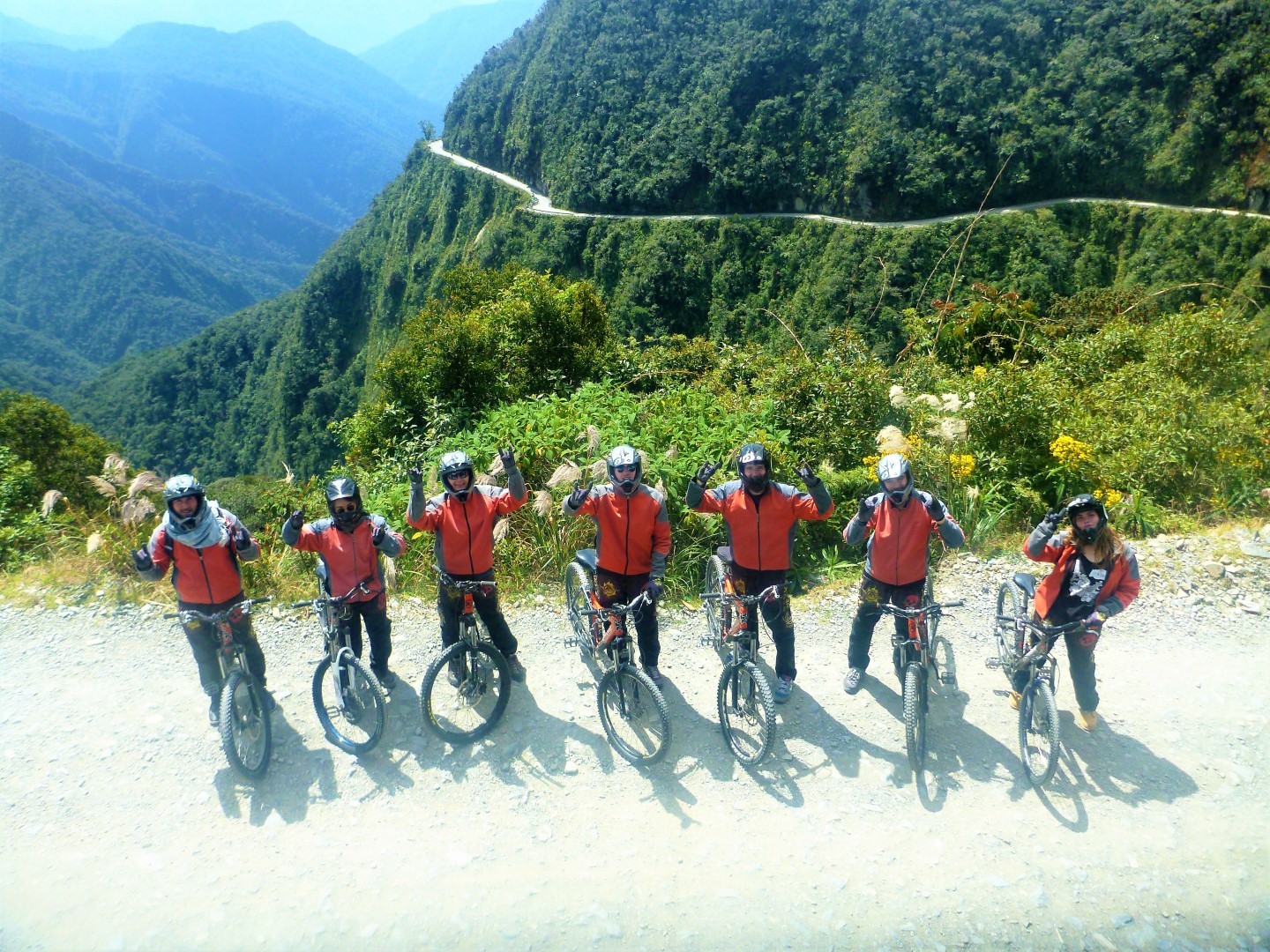
Then we turn onto Death Road itself: unpaved, twisting, and narrow. After a safety briefing, we begin rolling down. Compared with La Cumbre, the altitude is already lower and the view has changed dramatically. The climate becomes more tropical; green vegetation covers every mountain as we approach the high jungle known here as the yungas. After twenty minutes or so, everyone has found their pace and the group spreads out. Now we can travel faster. Every hour, we stop at a fixed point and wait for the others. The descent is breathtaking, both for the sheer cliffs and the view. Occasionally, we cross small rivers or ride beside waterfalls spilling directly across the road, providing welcome refreshment as the air grows warmer.
Our longest-ever mountain-bike descent comes to an end, but the day is not over. We are taken to a hotel near Coroico, where dusty riders can shower and cool down in the pool. Dinner follows, and amid conversation with our lovely companions, the adrenaline-filled day draws to a close.
The mines of Potosí
Potosí was founded in 1545 after the discovery that its mountain was full of silver. Mining began at Cerro Rico—the Rich Mountain—and all the wealth flowed into the Spanish Empire. During the boom years, when its silver appeared inexhaustible, Potosí became the wealthiest city in North and South America. As the reserves declined, work diminished and much of the population fell into poverty.
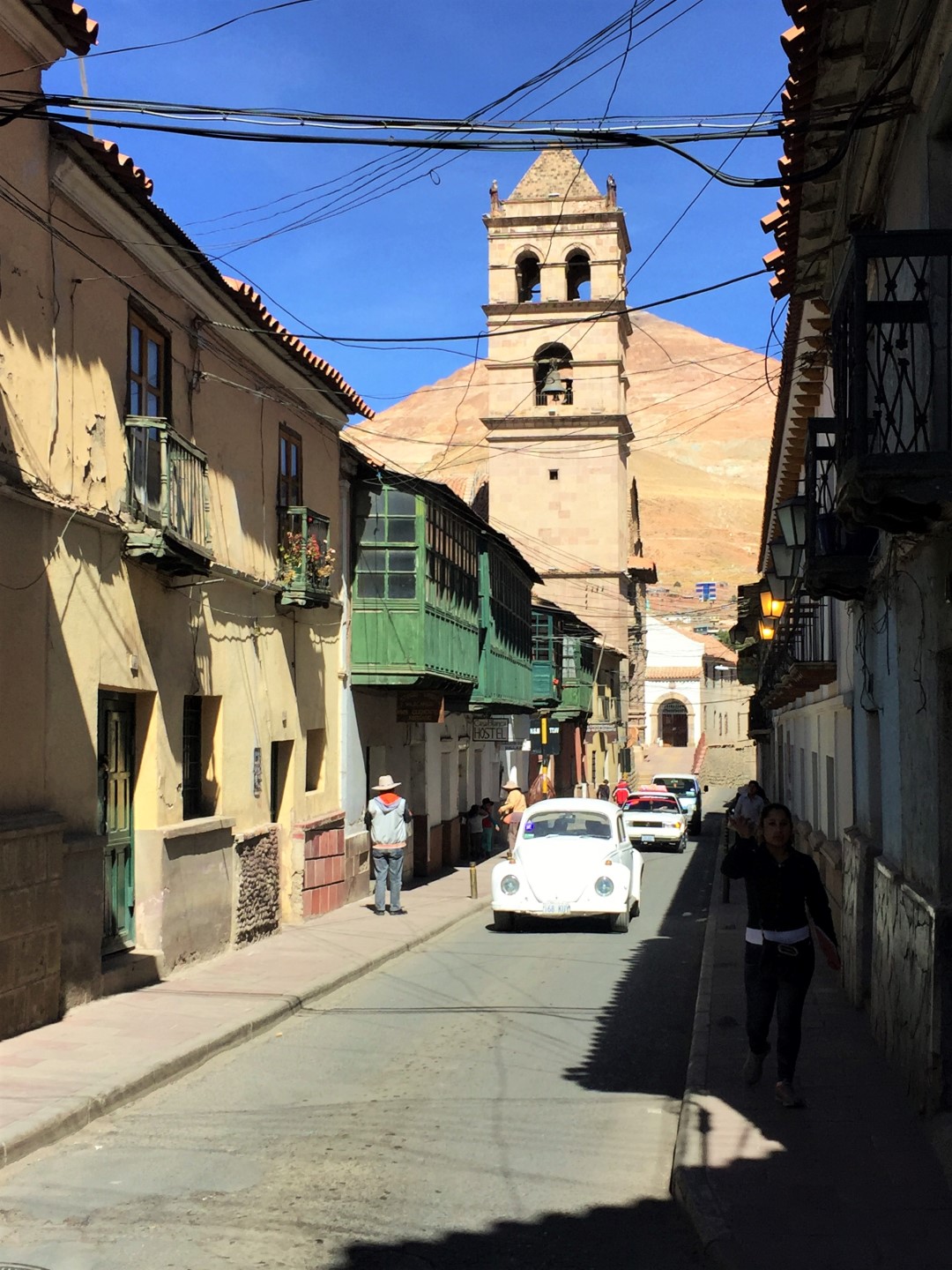
Colonial architecture dominates the city and is a pleasure to see, yet you feel that the good years ended long ago. Beautiful buildings have been neglected and time has done its work: roof tiles sit crooked and dust covers the façades. Their outlines and crumbling decorations nevertheless reveal how the city looked at its height.
More than five hundred years later, minerals are still extracted from the Rich Mountain. The mines are now the principal reason hundreds of tourists arrive each day. We too want to see a real working mine and search for a tour company. There are many choices, and Cerro Rico is equally vast, with an extensive tunnel system. Thanks to our Lonely Planet guide, we find an office whose guides are former miners. That sounds interesting already. An employee describes the tour and says, “Other companies take tourists into mines that stopped operating long ago and put a llama statue inside as an attraction. But why would there be a llama in a mine?” Sold! We have no interest in a place modified specially for tourists either.
At the appointed time, a minibus collects us and four other group members. Our first stop is the market. This is a mining city, and real dynamite can be bought there. We will visit a working mine, so Pedro, our leader and a former miner, suggests buying gifts for the workers. They sometimes remain underground all day without eating, so lemonade, cigarettes, and coca leaves provide energy, while dynamite helps with the job. Jānis and I buy a two-litre bottle of lemonade and coca leaves. A man in our group chooses to delight them with dynamite. If I remember correctly, fifteen bolivianos—around two euros—and he holds a stick with all the necessary components.
Next, we visit the changing area and receive rubber boots, a helmet with a lamp, a fabric bag for water, and overalls to protect our clothes. From what we have read, we expect very harsh working conditions. The dangers cannot be underestimated either: falling rocks and unplanned explosions occur. On the way, we stop at a mineral-cleaning and processing facility, where excavated material is delivered and its value assessed.
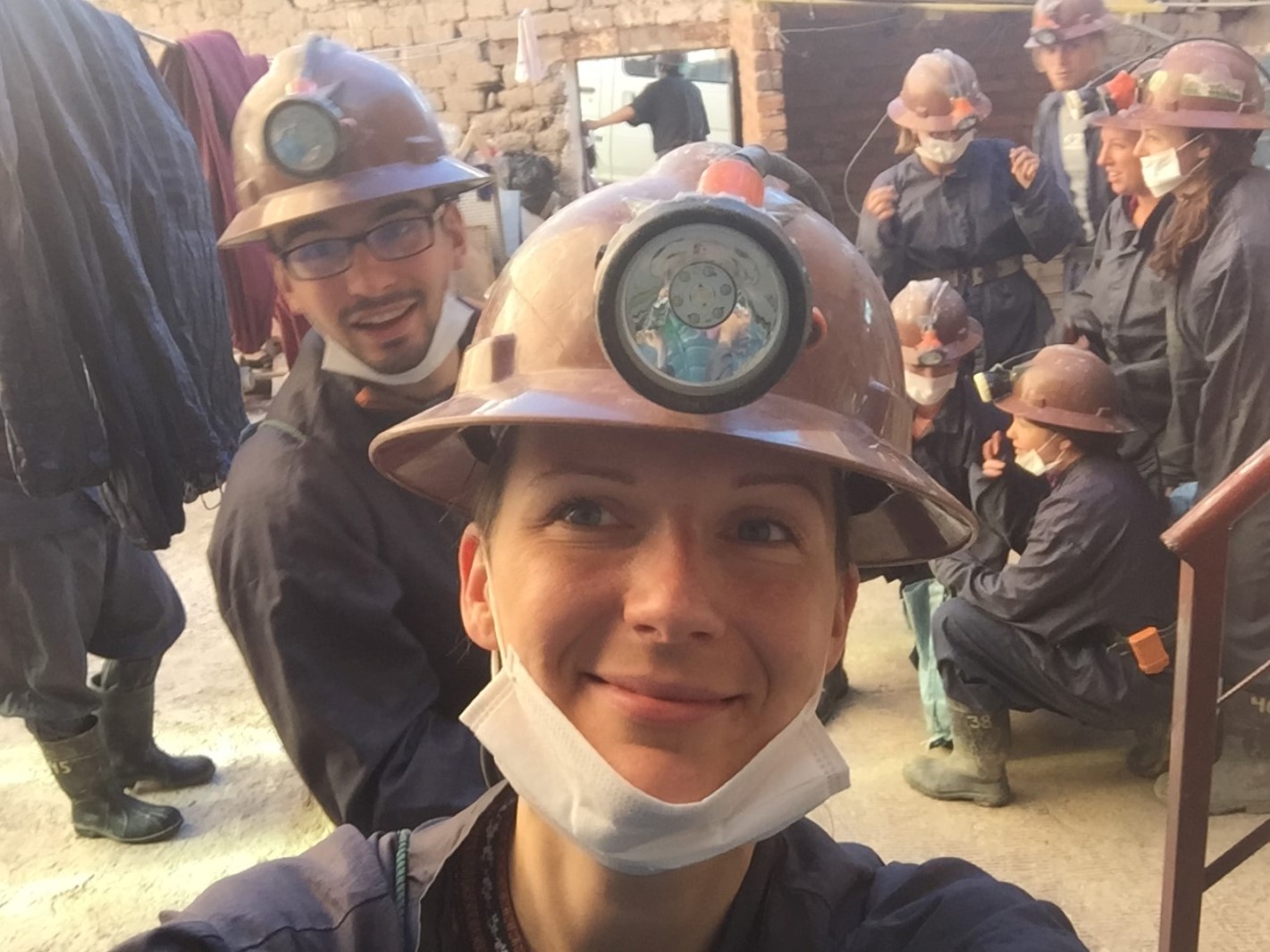
Before even reaching the mine, we are glad to have chosen Big Deal Tours. Pedro is a show in himself! He jokes throughout the journey, sometimes brutally, but that is what miners are like. Working all day in severe conditions has given them a distinctive humour. They speak Quechua among themselves, and apparently the jokes are stronger in that language too. Every miner has a nickname; real names are not used. Naturally, none is flattering: Dog Killer, Barbie Face, and so on. Asked for his own, Pedro grins and refuses. It would be too much for us. Later, he admits that they call him “Donkey Fucker”.
After driving up the mountain, we arrive. The particular mine we will enter has been worked since colonial times and remains active today. The difference is that it now operates as a cooperative. Outside, Pedro shows us little rooms where miners change and rest. One worker is there drinking spirits from a small plastic bottle. Turning towards us in the man’s presence, Pedro says, “Miners drink on Saturdays and Sundays.” Then he takes the bottle, has a sip, and offers it around. Only the men in our group are brave enough. The drink is seventy per cent alcohol.
We enter the mine. At first, the tunnel is tall enough to stand upright, but gradually it becomes narrower and lower. Our lamps illuminate the route and the dust we inhale. Studies apparently show that a single day’s exposure to asbestos and silica dust here does not affect your health. Seeing the volume of it in the torchlight makes the walk uncomfortable nonetheless. Imagine the miners who work here for years. They hammer, drill, blast, and inhale every harmful particle in concentrated form.
Our first stop is beside a statue of Tío—“Uncle” in Spanish. Tío is the symbolic owner of everything valuable within the mountain and decides whether miners will find anything. The workers made his figure from clay and placed it in a recess beside one tunnel. To gain his favour, they leave offerings of alcohol, cigarettes, and coca leaves. We crouch around Tío while Pedro tells stories about the miners’ guardian. He removes a half-smoked cigarette from Tío’s mouth, lights it, blows smoke over him, and returns it.
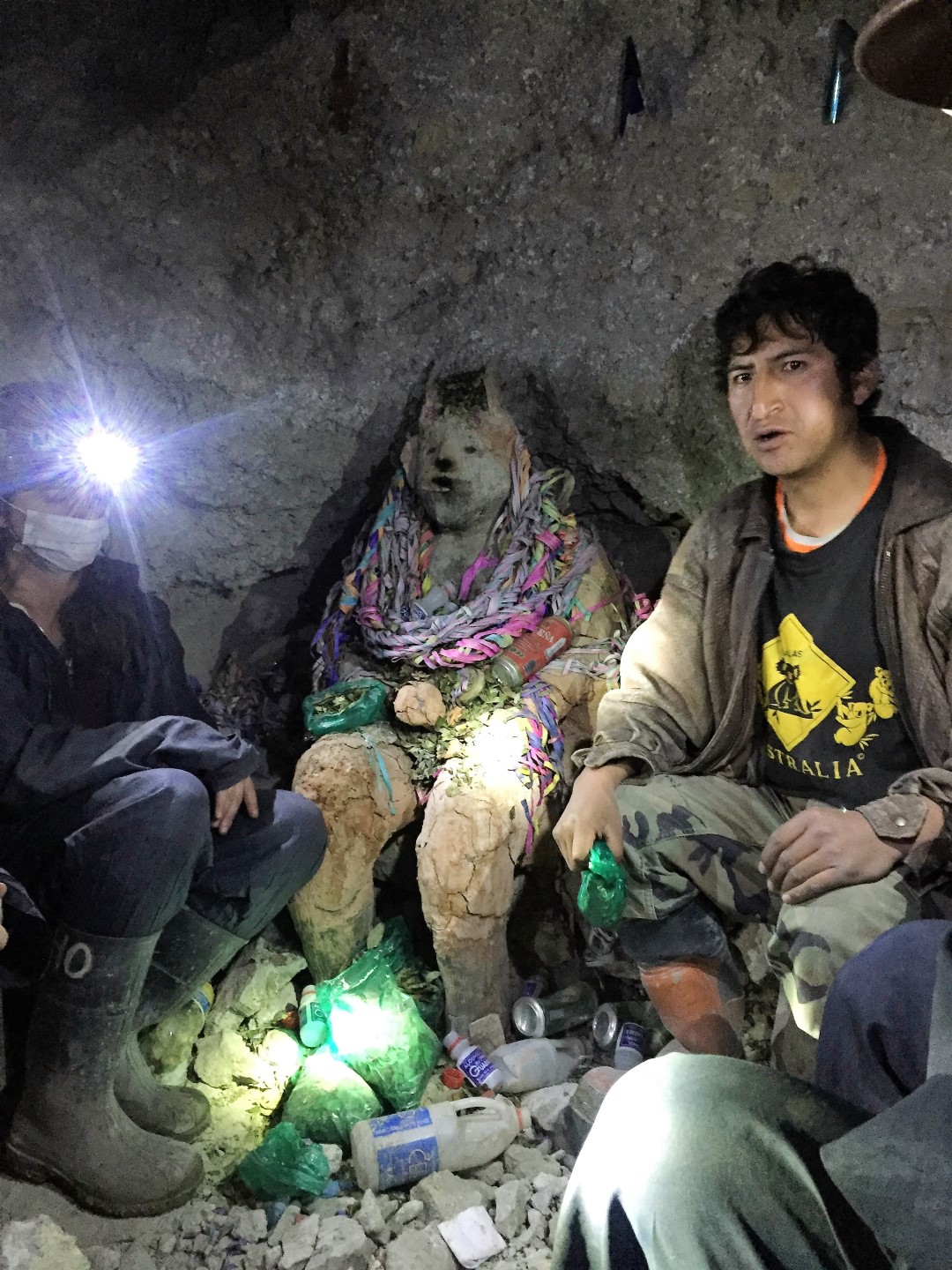
We continue deeper. It grows hotter and the passage narrows. In places, we move for long stretches in a half-crouch, and somebody’s helmet repeatedly strikes the ceiling. Breathing becomes difficult. Suddenly, the cramped space and lack of air send me into panic. I decide to endure a little farther before saying that I want to leave. Fortunately, the tunnel soon widens again, and this is our destination. We sit on rocks while Pedro tells stories about the miners and his own experiences. He began working here as a teenager. His grandfather, father, and uncles—every man in the family—were miners. Pedro decided that he wanted to join and nagged his father for a long time. Eventually, his father agreed. Nobody spared him because of his age; he did the same work as everyone else except blasting. The first day was hard, but he decided to continue and returned the next morning. Anyone can work in the mines; there are no formalities. You simply find a crew to join, or form your own. There are all kinds of arrangements, although the crew leader is usually experienced and knows the mine well. That is essential when using dynamite, deciding where and how powerfully to blast. Women occasionally work here too, in which case the men restrain their jokes a little. Pedro says miners often die young, around forty. He acknowledges that punishing, health-destroying work frequently goes hand in hand with alcohol and cigarettes. Workers also consume many coca leaves as a source of minerals and energy. With a grin, Pedro comments, “We like the small coca leaves. But for some reason, around Cochabamba, they grow large leaves. Those are bitter; we don’t like them...” He is referring to coca intended for cocaine production. Bolivia is the world’s third-largest producer after Peru and Colombia.
How did Pedro become a guide? He was always talkative. Whenever tour groups visited the mine, he joked with them, learnt a few words of English, complimented the women, and gave them pieces of silver he had dug out. Over the years, the whole city came to know him, and a new tour company invited him to work as a guide.
A sticker on Pedro’s helmet reads, “I voted NO!” Bolivia’s president at the time, Evo Morales, held a referendum to change the constitution so he could run again, which would have given him a fourth consecutive term. Mining cities—especially Potosí—are among Bolivia’s most politically influential because of their economic contribution, and their residents’ stance sets an example for others. Potosí’s influence also comes from courage: miners are unafraid to express an opinion and so numerous and united that they are difficult to ignore. Their view of Morales is equally united; the entire city voted no. We too have experienced the effects of their activism: men from Potosí organise miners and arrange strikes with roadblocks throughout Bolivia.
The capital, Sucre
Sucre (2,810 metres) is Bolivia’s capital, yet overturns every idea associated with the word. White colonial buildings decorate its centre, creating the feeling of a small, idyllic town trimmed with lace. By population, Sucre ranks only sixth in the country and, by Bolivian standards, truly is not large. There is no trace of enormous office blocks or any structure that would shatter the idyll. Government officials perform their duties in La Paz, but history left Sucre as the symbolic heart of the nation: Bolivia’s Declaration of Independence was signed here.
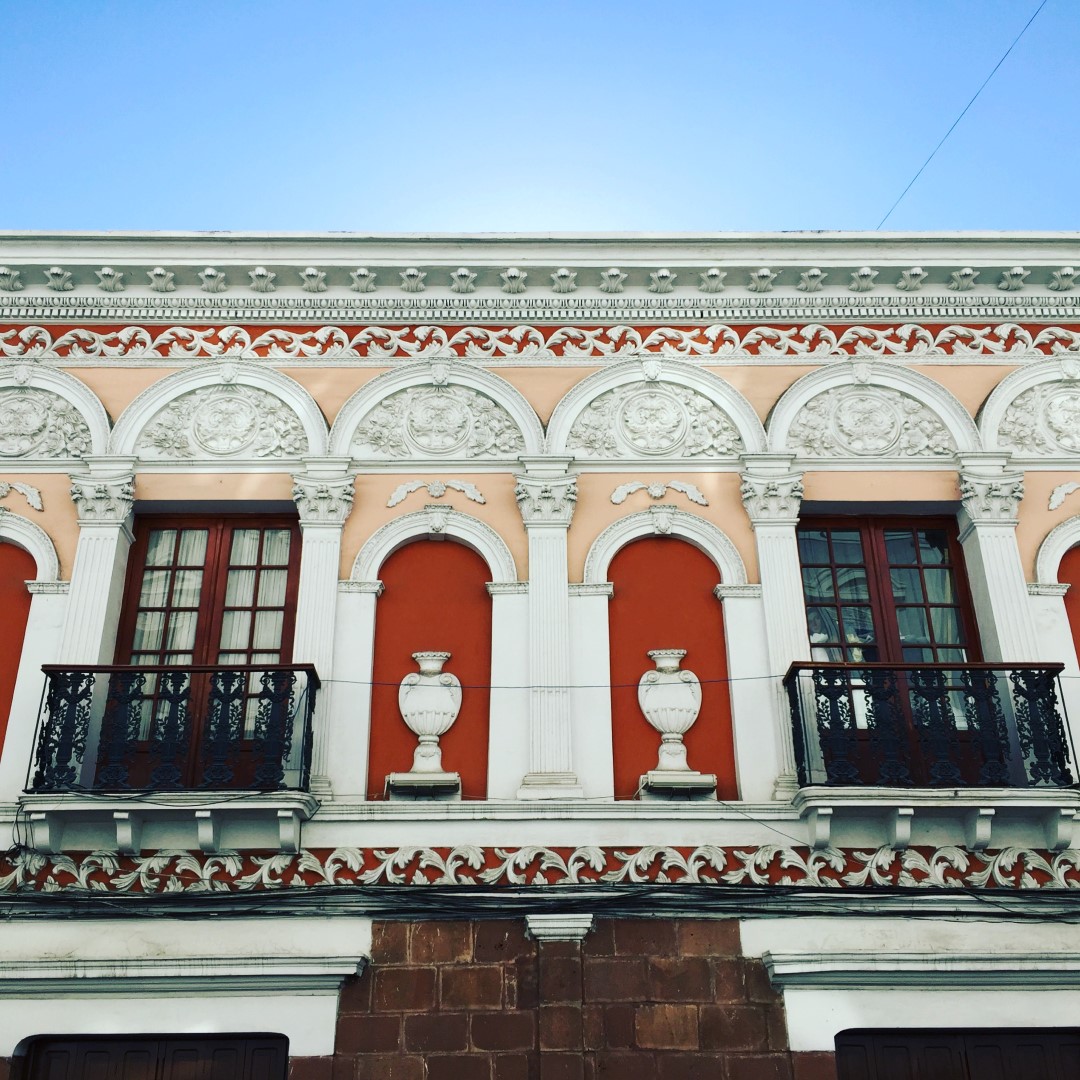
Impressive cathedrals, tasteful parks, museums and galleries telling Bolivia’s history, and small architectural details all characterise Sucre. Strict rules govern what may be built and developed in the centre, protecting this historic jewel. It was declared a UNESCO World Heritage Site in 1991.
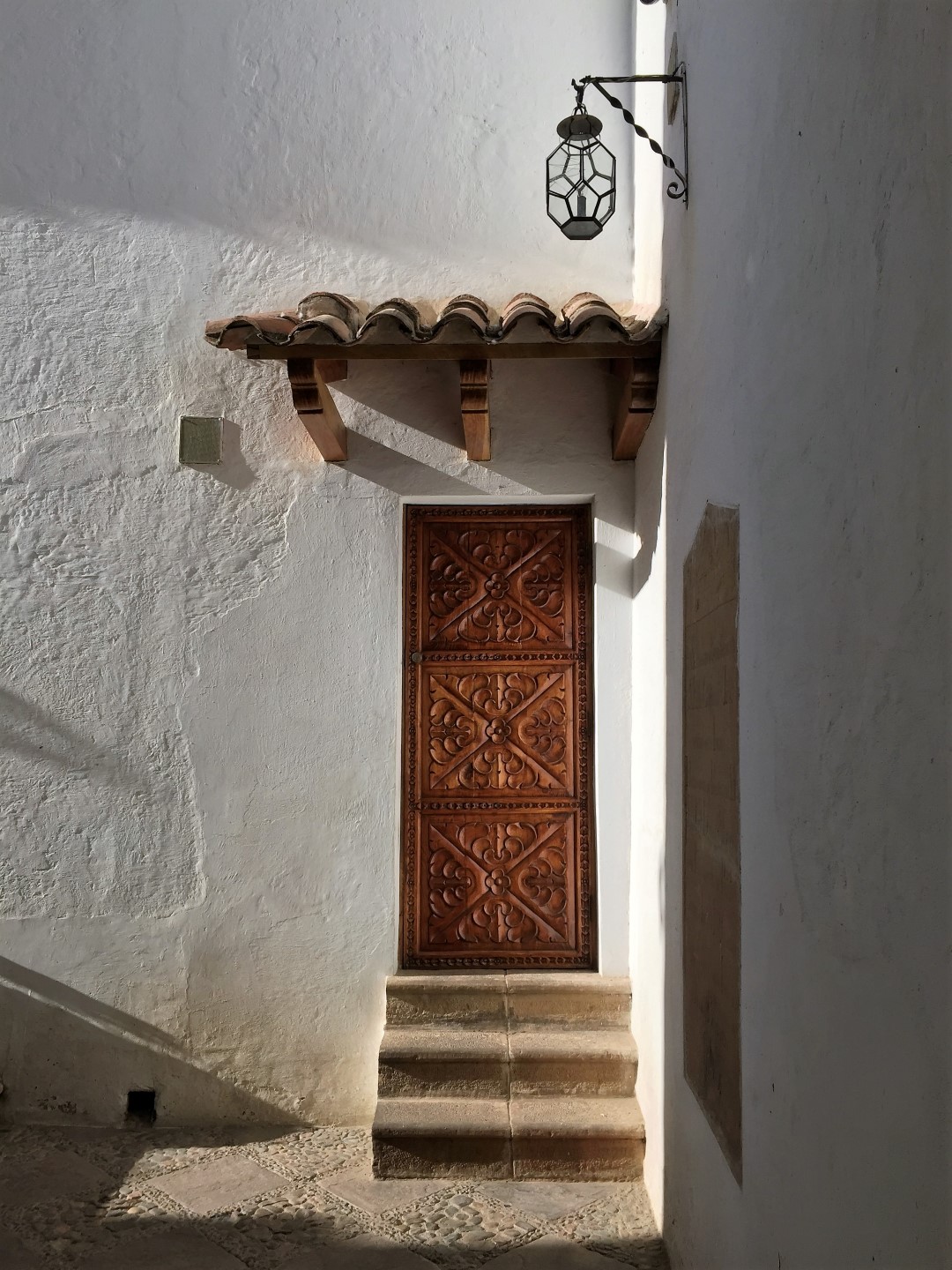
Beauty is not Sucre’s only attraction. The city is one of the principal places for learning Spanish. Affordable classes combined with beautiful surroundings make it perfect for a longer stay and a rest from hurried metropolises.
We spend six peaceful days in Sucre, finally warming up after cold weeks in the highlands. We decide to fly onwards to Cochabamba. A ticket with BoA costs almost the same as a ten-hour bus but takes only thirty minutes. Amusingly, the flight attendants still manage to distribute the snacks and drinks included in the fare during that half-hour. Sucre says goodbye from the air, showing us the surrounding canyons glowing pink in the sunset.
Cochabamba
Cochabamba entered our route merely as a base for Jānis while I went to CIWY. The city receives little attention in guidebooks and is absent from the standard backpacker trail, so we had no particular expectations. We knew only that coca leaves intended for cocaine production were grown somewhere nearby. On arrival, however, our first impression is excellent: “It’s like Los Angeles, Bolivian style.” There is a business district with glass buildings, a tidy centre, and modern cafés—with the rare local phenomenon of good coffee. Cochabamba is currently among Bolivia’s most economically and socially progressive cities.
Like most Bolivian cities, Cochabamba lies in a valley surrounded by mountains. It is called the city of eternal spring because a pleasant spring-like temperature—although I would call it a Latvian summer—lasts all year. This must be one reason why it continues to expand and attracts more residents.
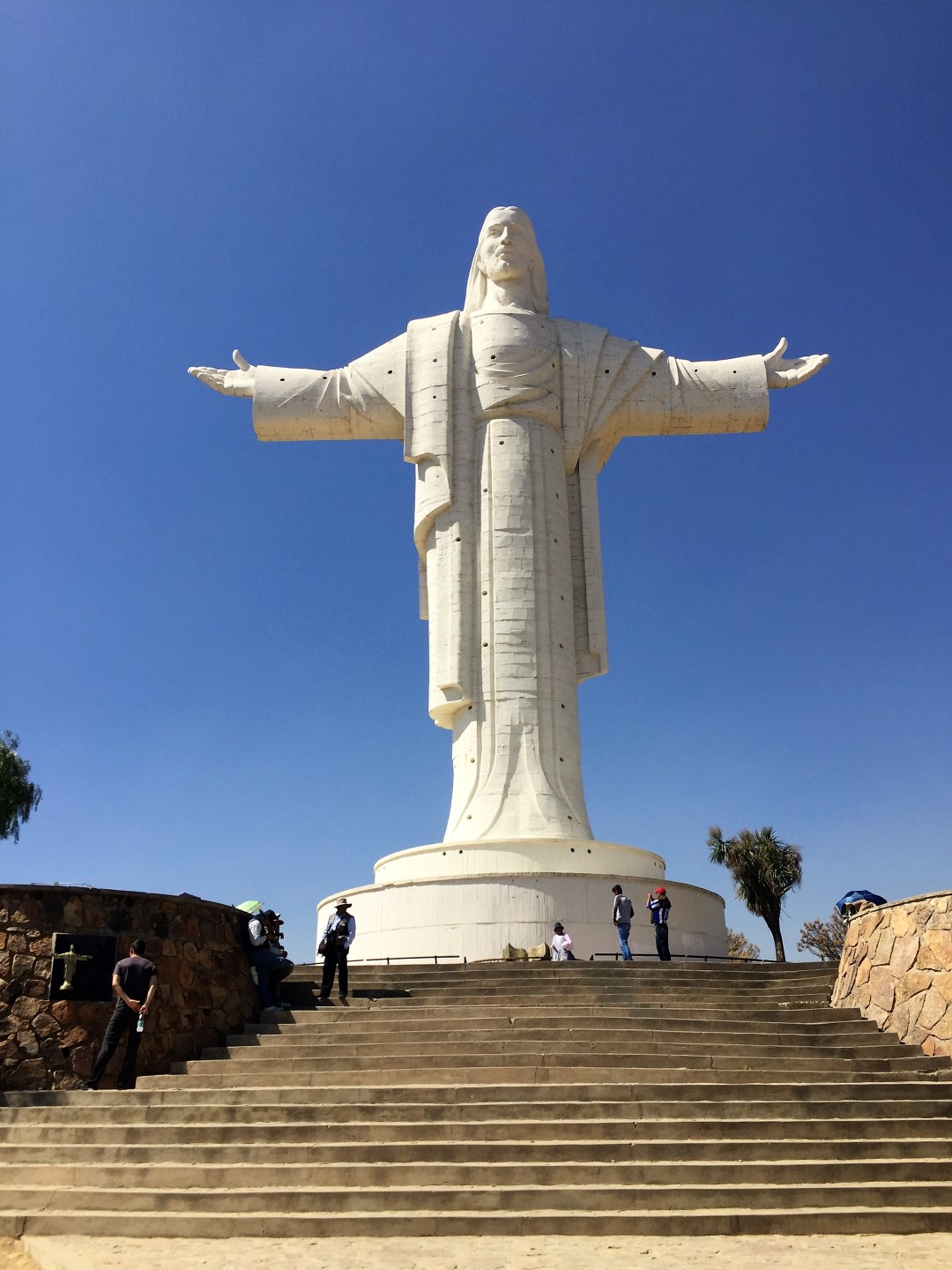
From many parts of the city, you can see the forty-metre Cristo de la Concordia statue on San Pedro hill. It is the second-largest statue of its kind in the world after Rio de Janeiro’s Christ the Redeemer. Naturally, we visit it by taxi. People in Cochabamba like to emphasise that theirs is the world’s highest-positioned statue. When I mention to our driver that it is the second largest, he adds that the Cochabamba figure nevertheless stands on a higher mountain than Rio’s. A cable car carries us farther up San Pedro, offering panoramas of the city along the way.
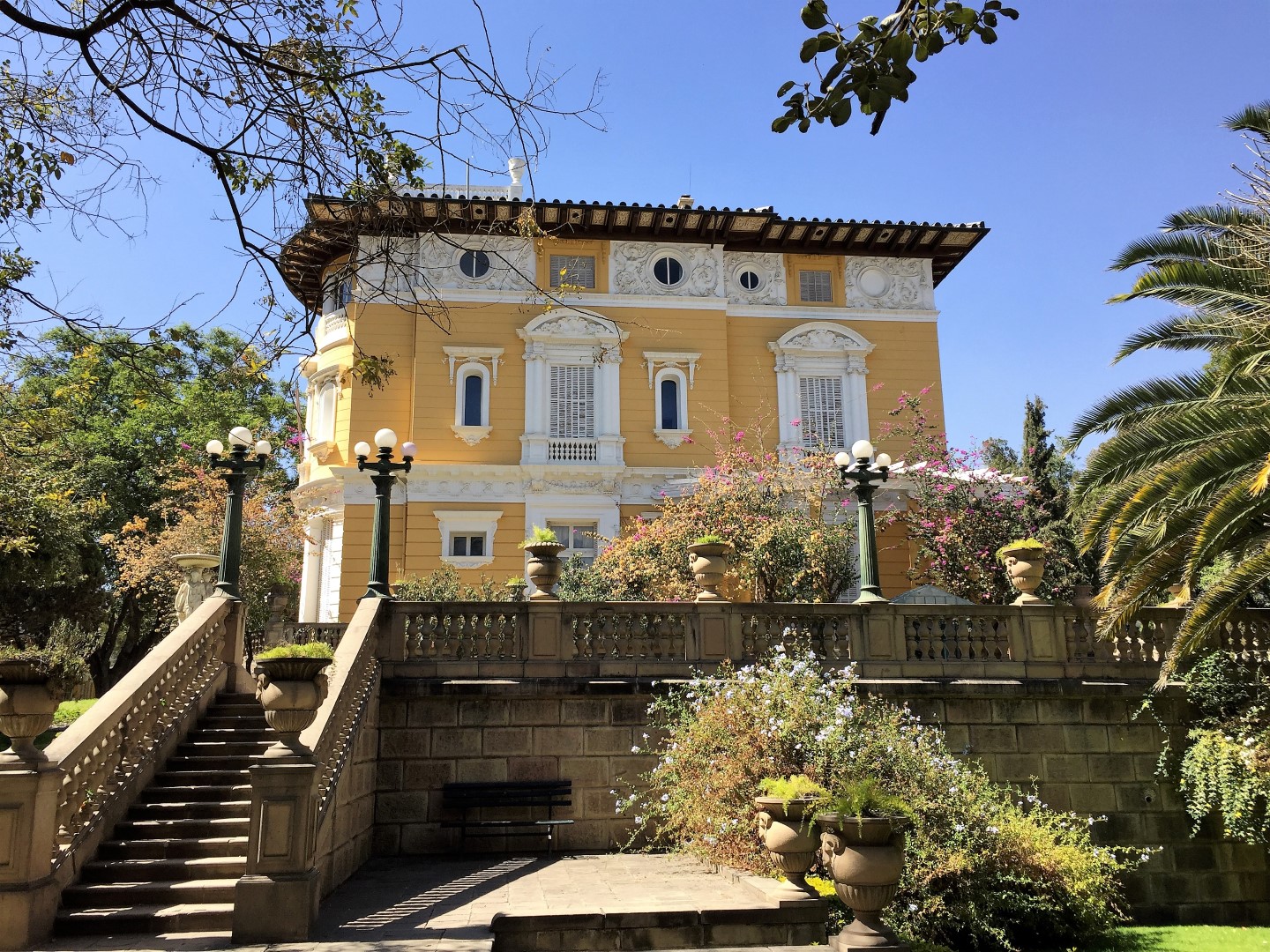
We also visit the former mansion of tin baron Simón Patiño. Palacio Portales stands in an ordinary Cochabamba neighbourhood. Beyond its gates, we enter a park of unusual trees and plants, fountains, and statues. While waiting for the tour, I peek at the baron’s house. Yes, it is extravagant. The guide tells us that Patiño never lived in the mansion, completed in 1927, despite commissioning it. The order was hardly modest: Versailles influenced the garden and exterior. The interior is an even greater surprise, built from materials shipped across the ocean. Floors and walls use Carrara marble, furniture is made from French wood, and Italian tapestries and silks cover the walls. The games room imitates Granada’s Alhambra, while the main hall draws on the Vatican. It is exceptionally tasteful and expensive, showing how the wealthy lived when Bolivia’s mines were still full of minerals. Unfortunately, photography inside is forbidden.
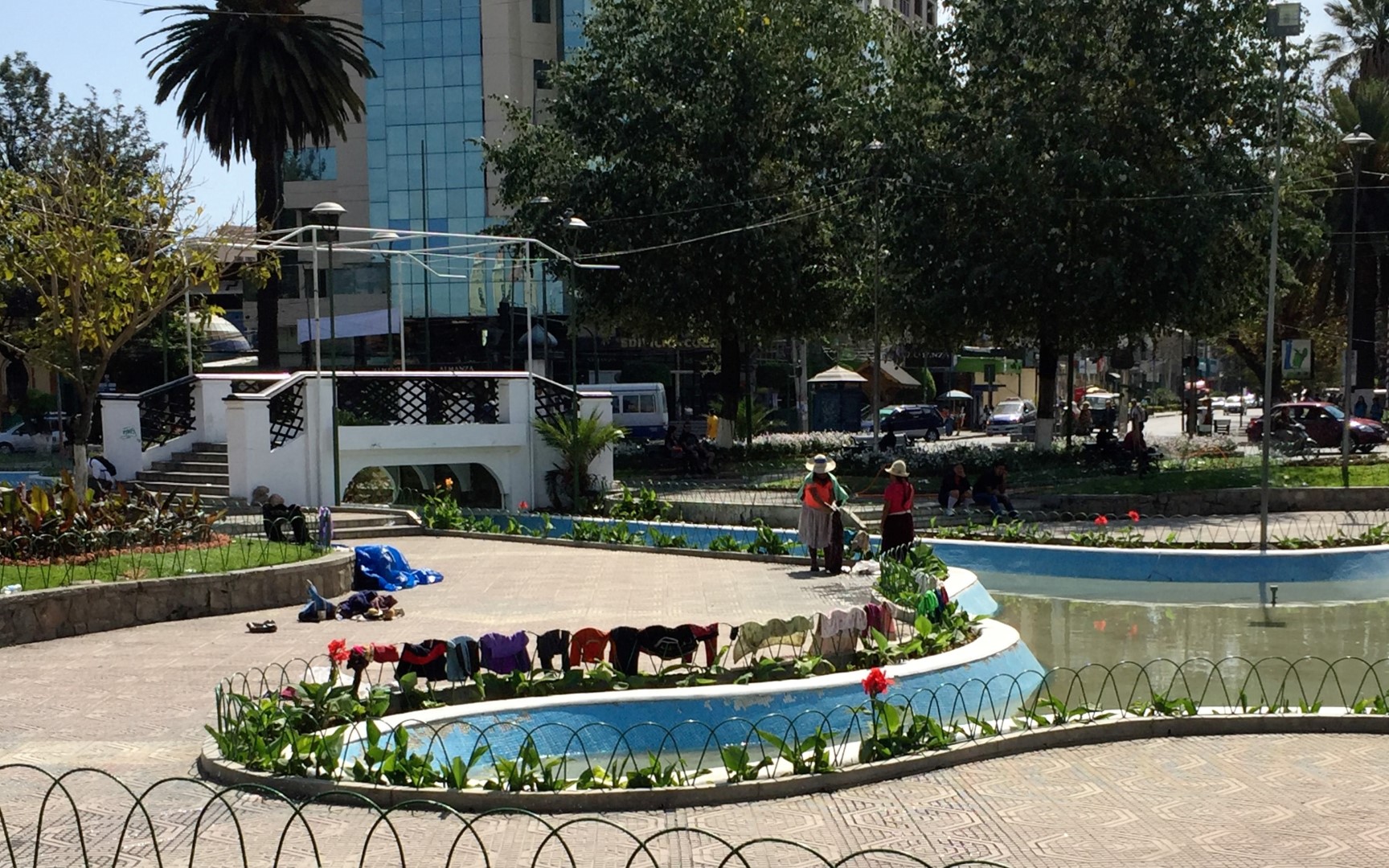
In Cochabamba, we rent an Airbnb room. Gustavo, the owner, lets travellers use two spare bedrooms in his enormous flat. He is a Bolivian civil engineer who returned home after several years in Germany. For us, this is a pleasant change after staying in more than one questionable hotel: Gustavo is helpful, the flat is comfortable, and we can cook in the kitchen. He tells us that Cochabamba’s greatest challenge is supplying water to its residents. The water is often cut off for a day or two, while poorer districts sometimes go without it for weeks. I was therefore unsurprised to see women washing clothes in the pools of the city’s smartest park.