We have arrived in Lima. It is early morning and, unfortunately, our first encounter with the locals takes place at the airport’s lost-luggage desk. Our large backpacks have disappeared. They contain all our clothes, toiletries, and hiking equipment. We are reassured that everything is fine and that the luggage will be delivered by ten o’clock the following morning at the latest. Fortunately, our laptop and other electronics are with us because we did not put them in checked baggage.
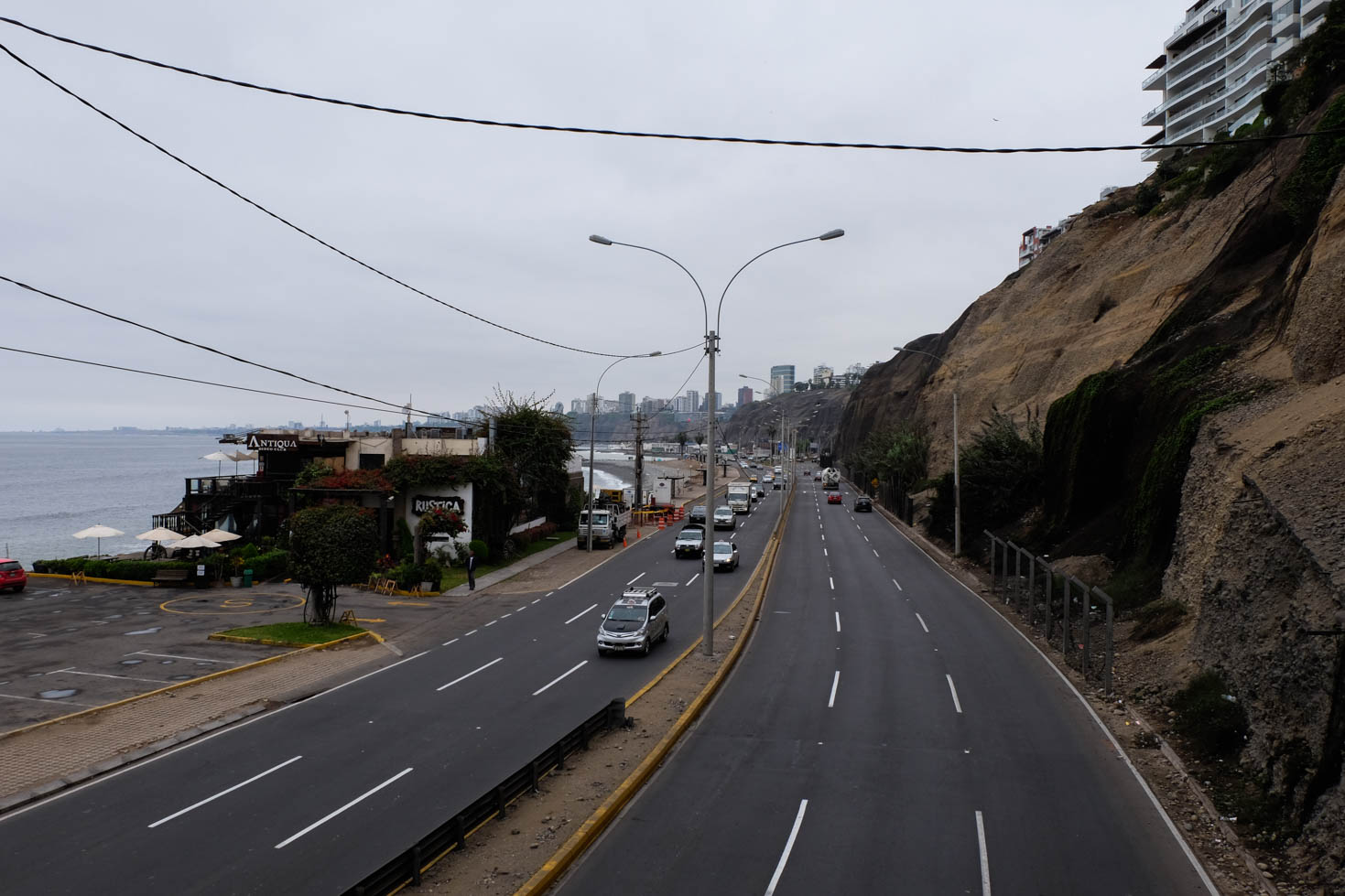
Once the formalities are complete, we go in search of a taxi. We pay 70 soles (about €19) at the airport and, a few minutes later, set off for the hostel an hour away. The first few kilometres prompt the question: “Where on earth have we come?” Even this early in the morning, traffic on Lima’s streets is mad and the air smells of exhaust fumes.
It is winter in Peru, which means high season across much of the country because it is not yet too hot and rainfall is low. In Lima, however, winter means that the already grey city, thanks to the Pacific Ocean and other conditions, will remain beneath genuinely grey clouds for at least the next three months. Today is no exception: a light haze hangs over the city.
Fortunately, thanks to Zane’s article and a high Booking.com score, we have found Marco. His hostel boasts a proud 9.5 rating there. Marco himself welcomes us at six in the morning and offers breakfast, while I wait impatiently for the moment when I can crawl into a proper bed. Undīne, however, wants to explore the city—but that is always how it goes with us. We compromise by heading out to investigate the local cuisine and visit a chifa. There are many such places here, serving Chinese-Peruvian food. We eat and then, finally, go to sleep. That evening, we take a short walk around Surco, the district where our hostel is located.
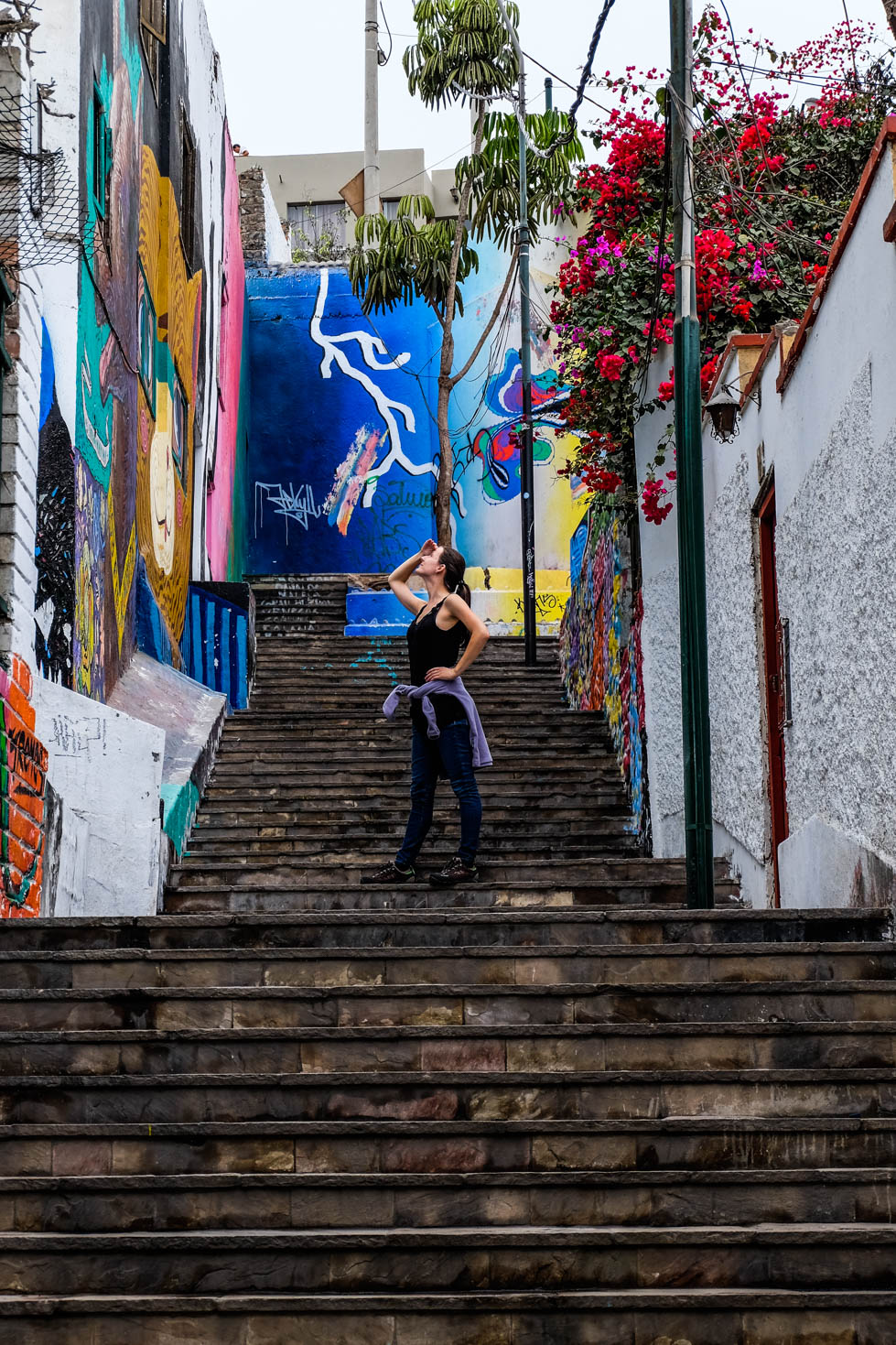
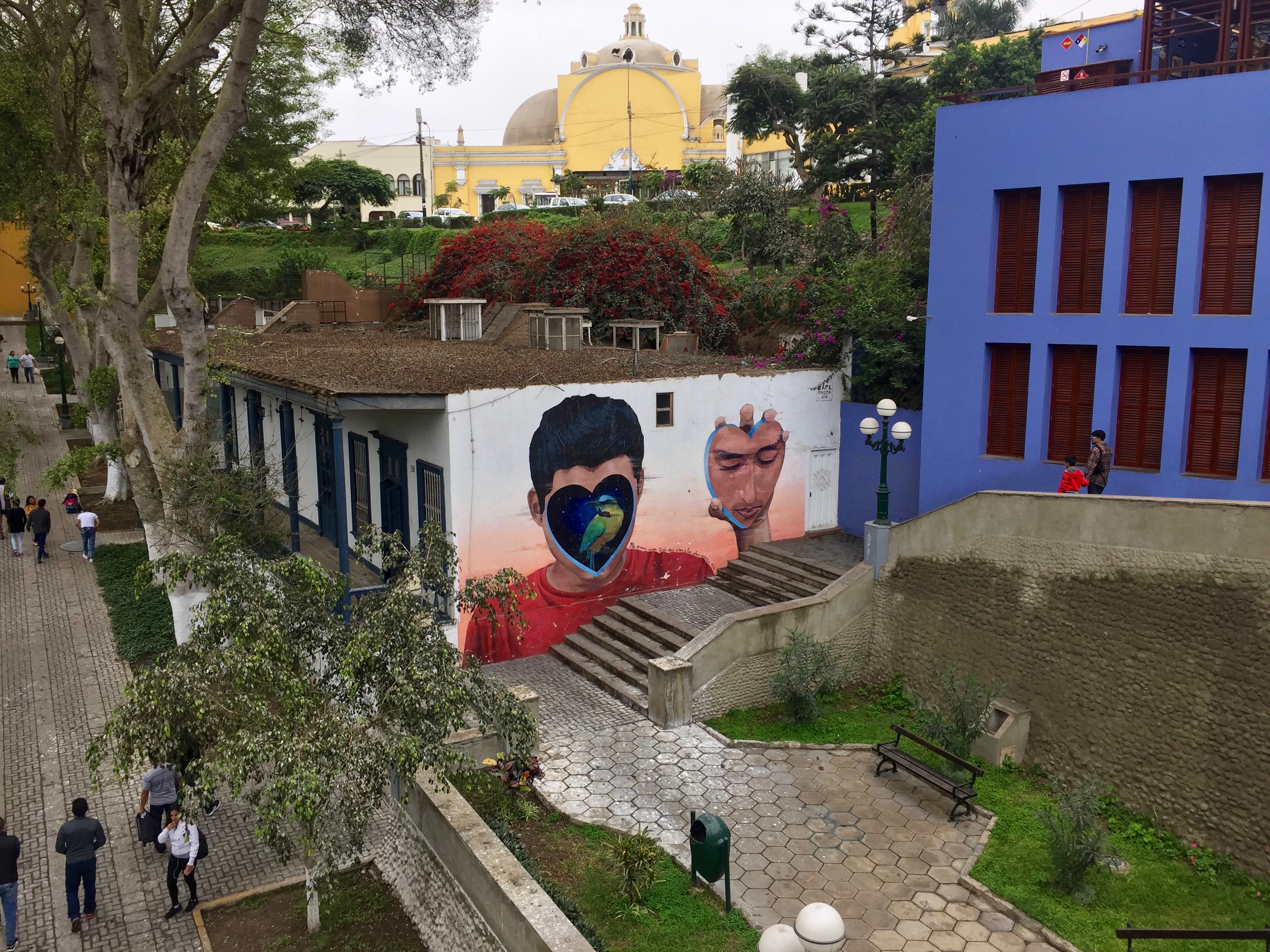
The next morning, we set out to meet the city, beginning with Barranco. This part of Lima makes us forget the grey clouds overhead: colourful houses and street art appear around every corner.
Like proper gringos, we have coffee at the local Starbucks—mostly for the good Wi-Fi.
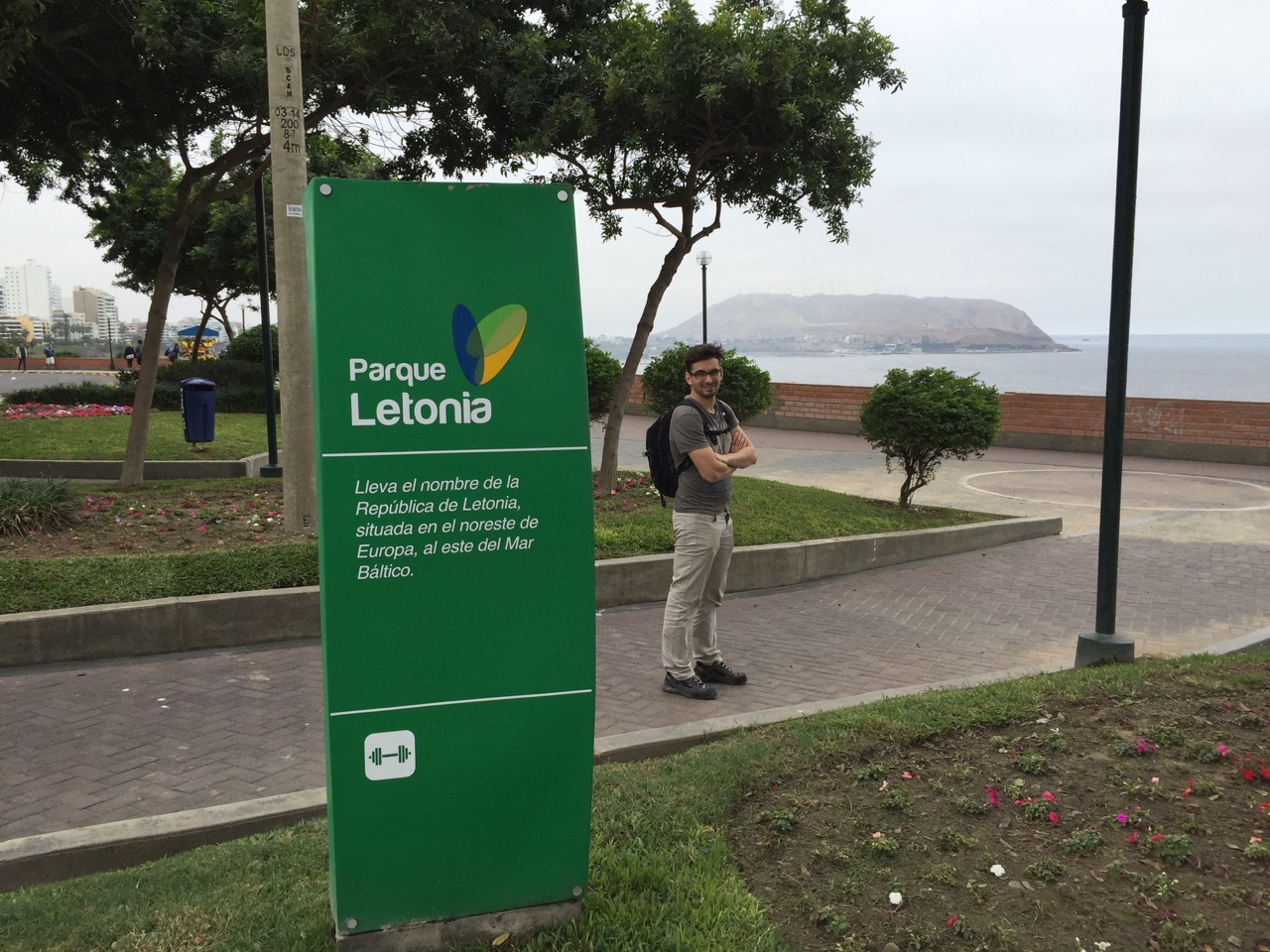
We continue on foot along the Pacific coast to Miraflores, Lima’s most exclusive neighbourhood. The whole coastline is dotted with surfers and surfing instructors. As a genuine tourist haunt, Miraflores has less soul than Barranco. While crossing one of its parks, we decide to sit down and discover that it is called Latvia Park (Parque Letonia). We wonder what we did to deserve that honour.
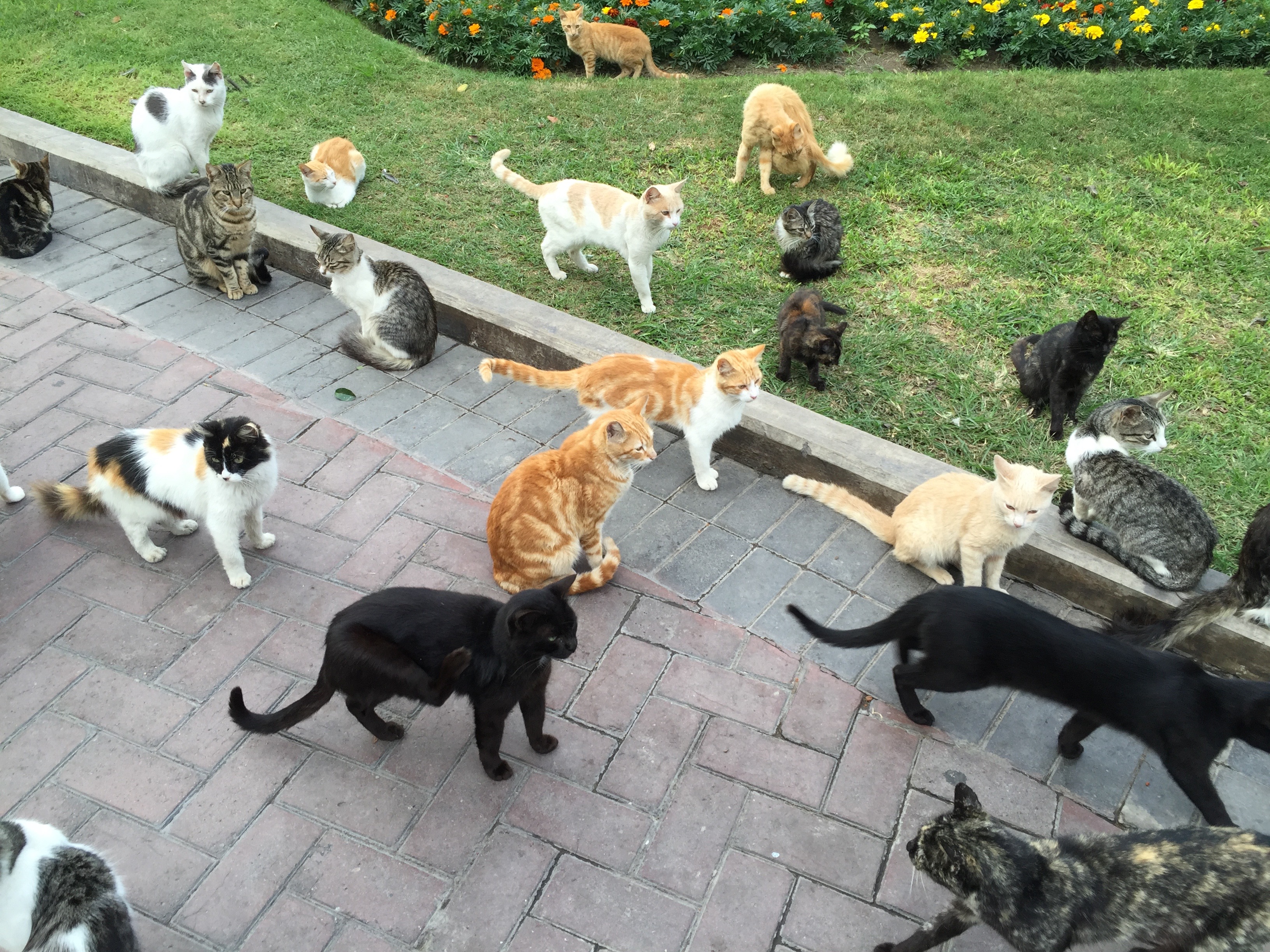
One of Miraflores’s more unusual places is Kennedy Park, where cats “graze”. The park is quite literally covered in purring creatures. Undīne is thrilled and trails thirty metres behind me because she keeps stopping to talk to and photograph the cats.
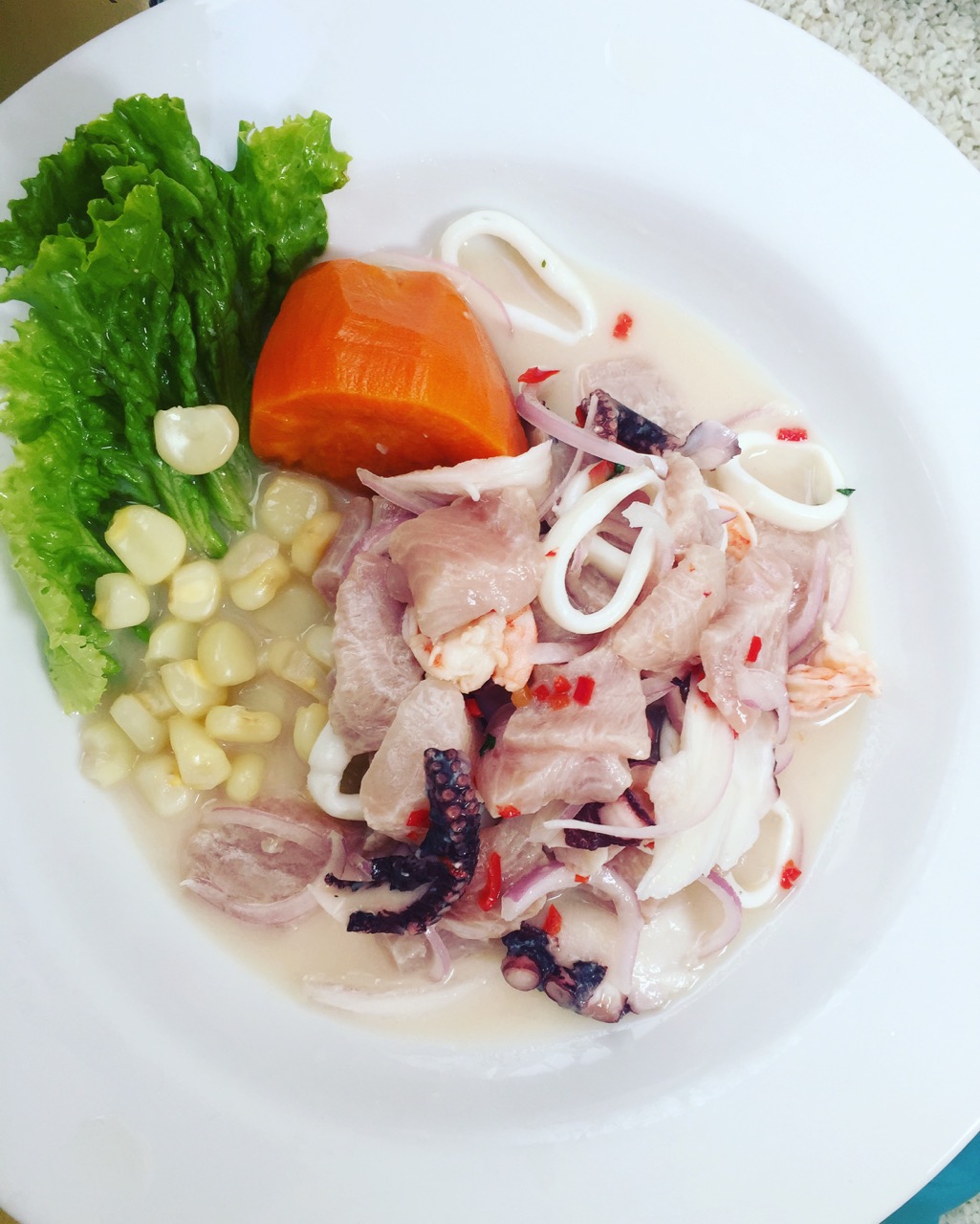
After the park, we visit one of the recommended cevicherías. Undīne is eager to taste Peru’s celebrated ceviche—raw seafood marinated in lime juice. As I am not a seafood fan, I have to make do with coffee.
Then we return to the hostel. Lima is enormous, yet we have walked through all three of these districts on foot. That is what you call first-day enthusiasm.
Morning comes and we are told that our bags will arrive at around two or three. We decide to wait at the hostel so that no one else has to keep watch for the delivery; besides, an excellent group of people has gathered there. The bags do not arrive. I call the airline. Struggling through heavy accents, we learn that they were unable to reach us by phone, so the bags will not be delivered until tomorrow. That means another night in Lima. Unfortunately, LAN’s customer service operates on a “go away” basis and nobody has any information. Undīne is not particularly pleased. At least the hostel has space, so we do not have to move elsewhere. We joke that the delayed luggage entitles us to demand that the airline pay for a hotel—perhaps the four-star Marriott—but Marco’s hostel is much better.
English alone will not get you far in Peru. To order a coffee—or cancel it once we realise we have no cash—we must speak broken Spanish and wave our hands a great deal. We urgently need to learn Spanish!
Our unexpectedly prolonged hostel life deserves a lovely story of its own. We meet a Colombian couple and a woman from Italy. The couple turn out to be from Medellín, one of our possible short-term homes later in the journey. We promise to stay in touch and meet again in Colombia.