We have taken time off from Spanish school for Jāņi, Latvia’s midsummer celebration, because the long weekend gives us a chance to spend three days hiking in Colca Canyon.
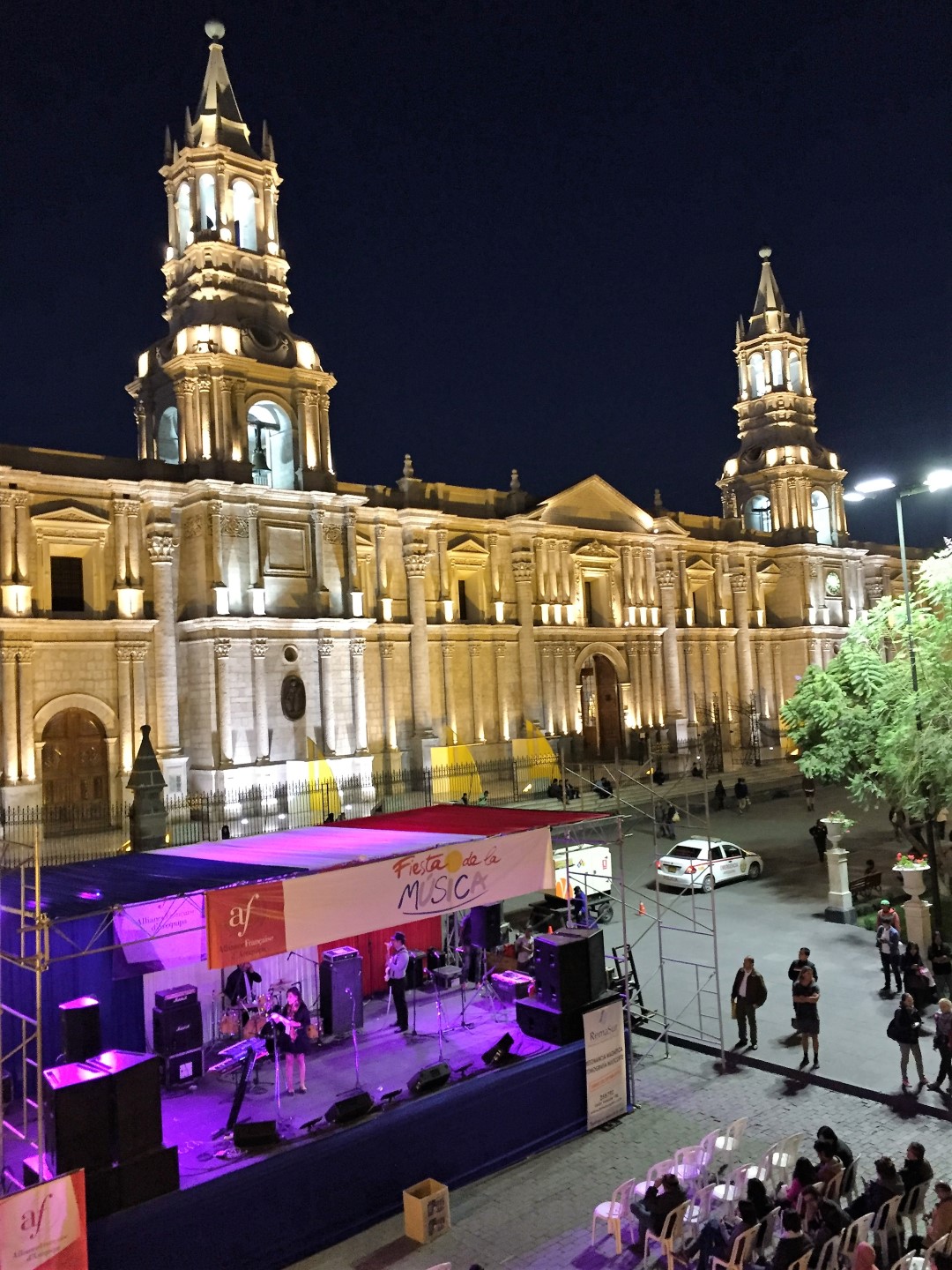
We remain in Arequipa for Līgo Day itself because today is Fête de la Musique, or World Music Day. It takes place around the solstice each year and is celebrated in 120 countries, including Peru’s largest cities. The event has probably never become particularly prominent in Latvia because our own midsummer festivities play such an important role.
Even at breakfast, I feel that this is a special day. We tell our Arequipa housemates about Latvian solstice traditions. Everyone especially likes the idea of searching for the mythical fern blossom at night and washing in dew the following morning. The Incas had their own solstice tradition, Inti Raymi, still observed here by their descendants. The difference is that, unlike in the northern hemisphere, the solstice in the south marks the Inca New Year, the beginning of winter, and the shortest day—equivalent to our winter solstice at Christmas. Here, “the shortest day” means only about one hour less daylight, which is barely noticeable so close to the equator.
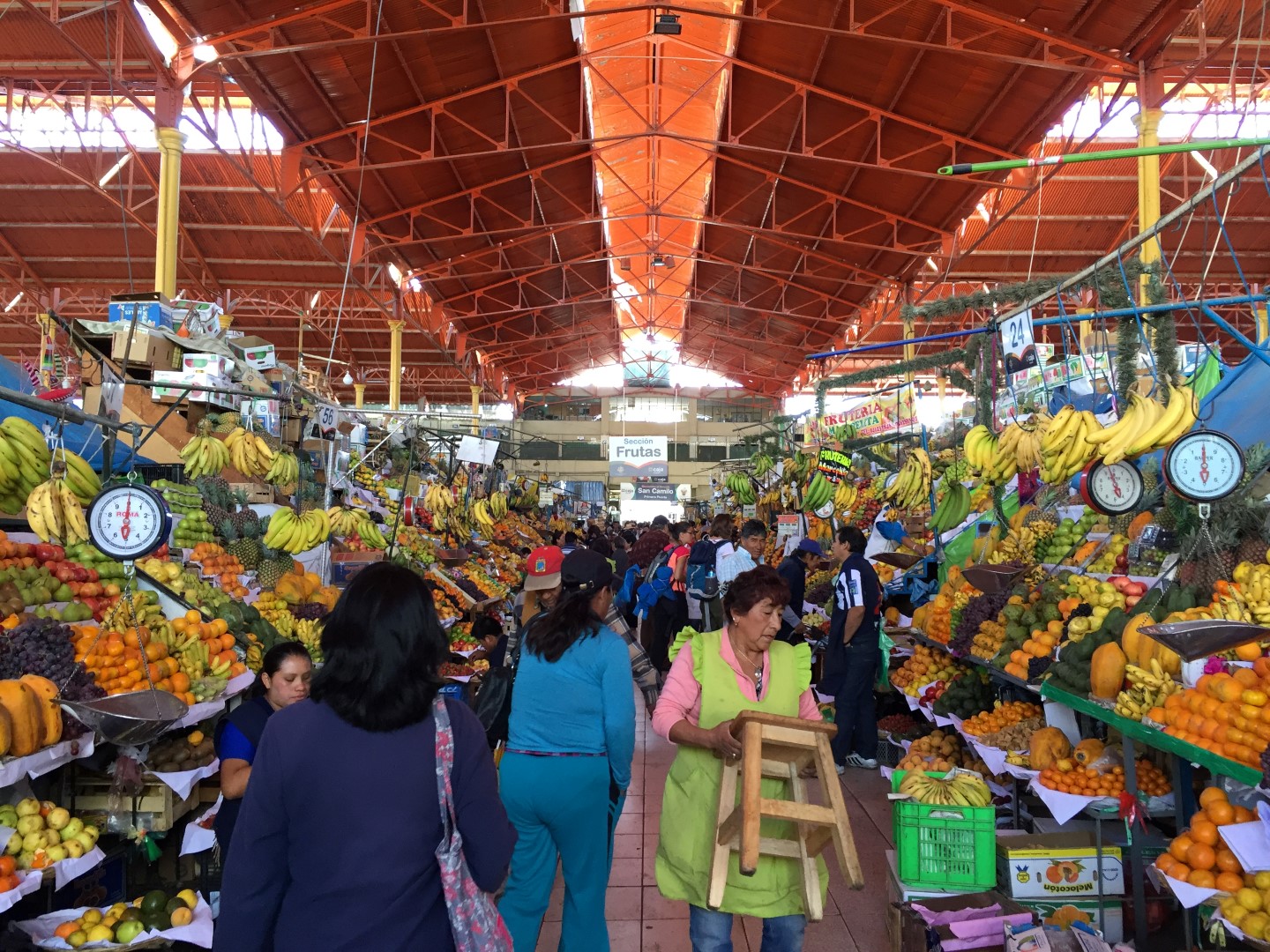
San Camilo Market
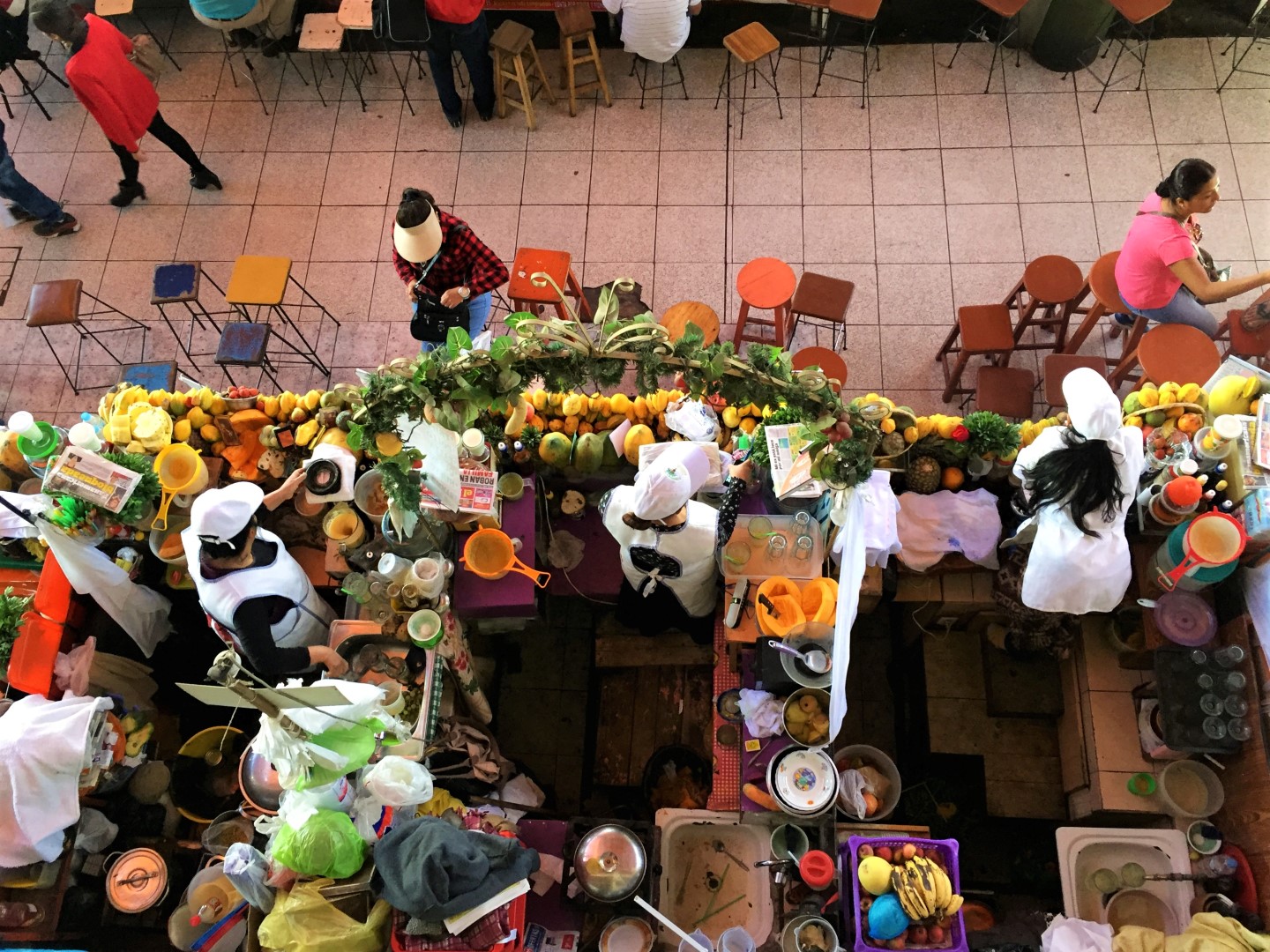
We have no definite plans for the celebration, so our first stop is San Camilo Market. For an entire week, I have been telling Jānis that on our day off we will visit the market and drink so much fruit juice that we will not want lunch. What people call fruit juice—a jugo—here would be considered a smoothie in Latvia. The market has a separate juice section where each woman runs her own stall piled with exotic fruit. There are more than a dozen choices. The customer selects a fruit and it is blended with water, milk, or orange juice until drinkable. Different fruits can be mixed to order too: papaya, mango, cherimoya, and so on. I choose by asking which fruit I have not yet tasted.
After our juice cure, we nevertheless decide to eat proper food at one of the market’s many little eateries. A “daily special”, known locally as a menú, is popular here. For a fixed price—in this case seven soles, or €1.90—you receive soup, a main course, and a drink. After all the juice, we order one menu between us because the portions are enormous. I have ordered soup alone before and been presented with a bowl the size of a medium saucepan. There is always room for dessert, and after lunch we return to the juice section.
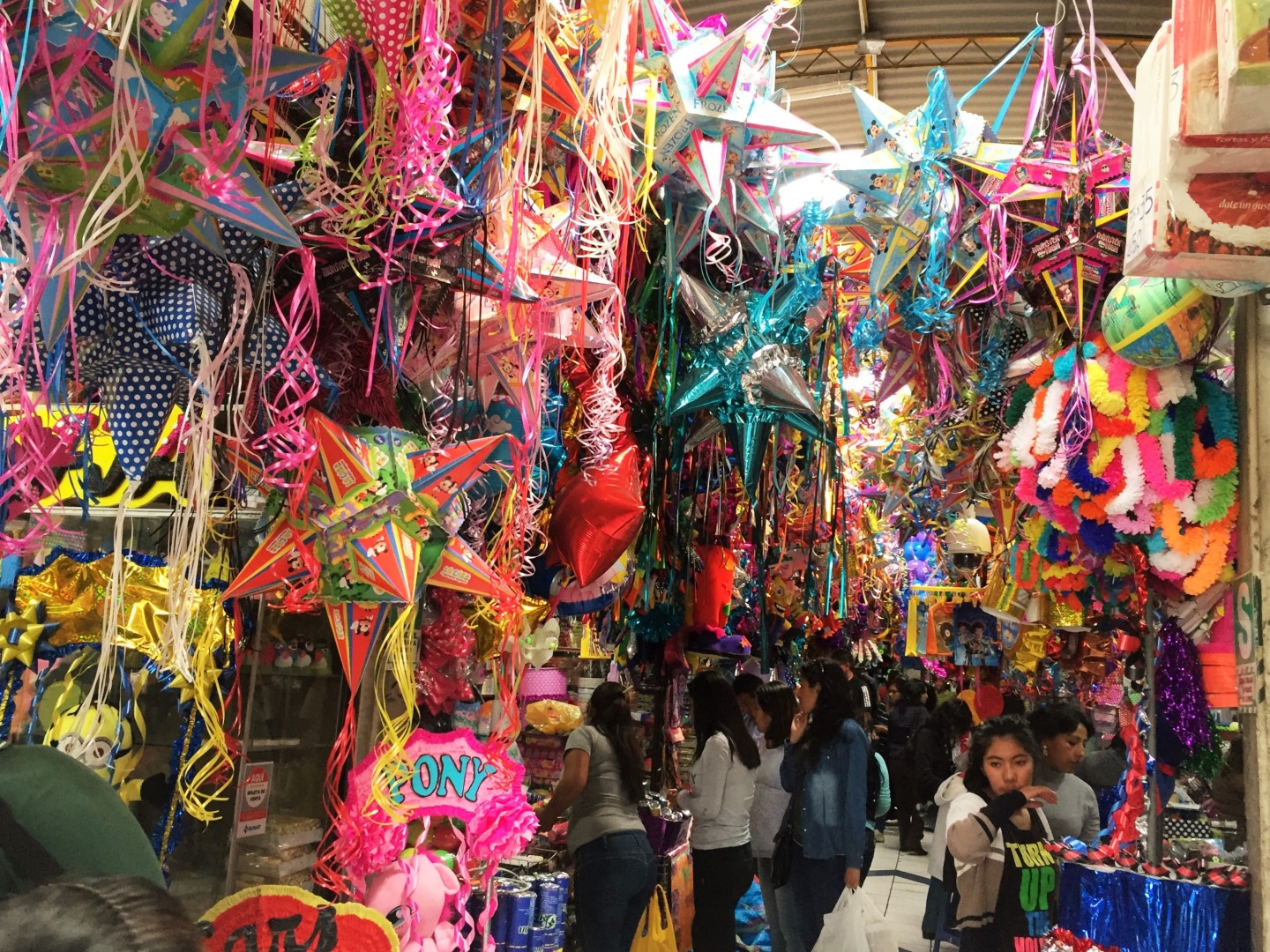
You can buy anything at San Camilo Market and in the surrounding market district—and I mean absolutely anything. Food and household goods are only part of it. One entire building, for example, sells nothing but piñatas and children’s party supplies. I am fascinated by the stalls selling wide-brimmed hats, or sombreros: hundreds of hats in different shapes. Oh, how I would love to buy one, but it would be hopelessly impractical with luggage of our size. Other intriguing stalls sell herbs and objects for rituals. There are also health stalls offering various products and drinks.
I had already noticed queues of customers finishing health shakes at one of them. We follow their example and ask the seller, “Jugo de maca, por favor,” just as the sign says. A little online research reveals that maca is an Andean root associated with various health benefits: vitamins, increased energy, healthier skin, hormonal balance, improved mood, and more. Fresh maca root cannot be bought in Latvia, but health-food shops will certainly stock maca powder, a popular smoothie ingredient around the world. Recommended.
Santa Catalina Monastery
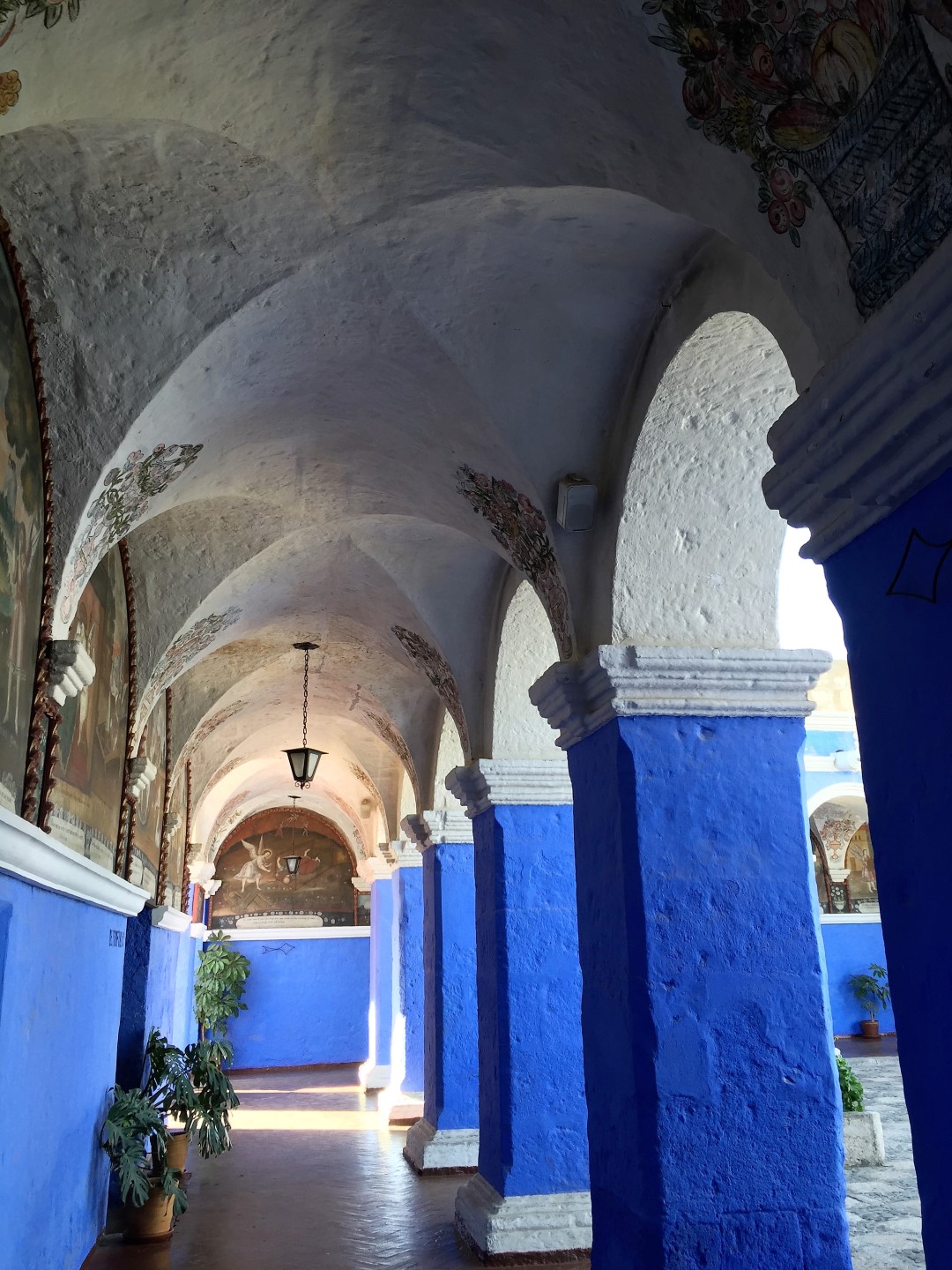
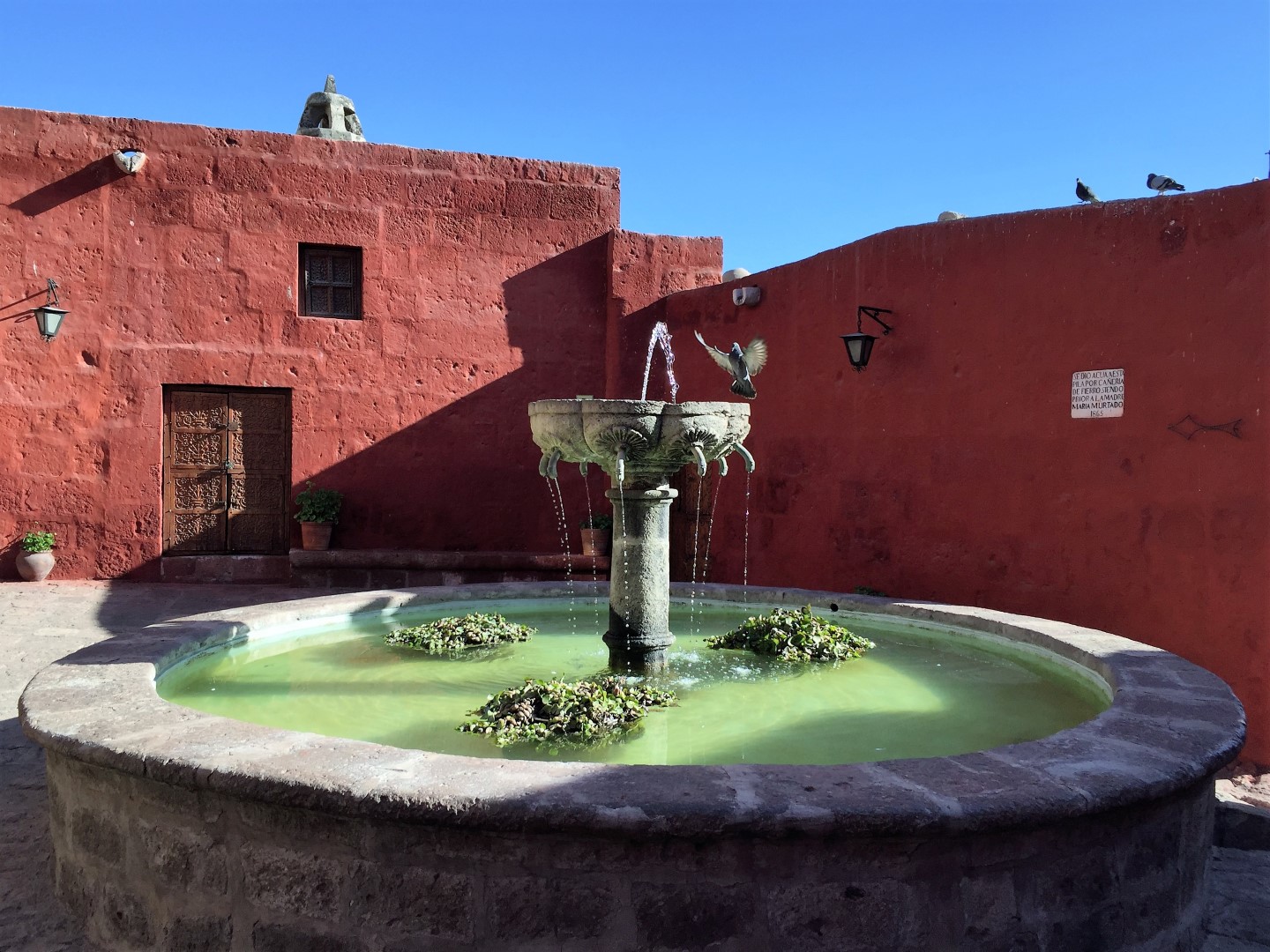
Having shown Jānis the market, we continue to Santa Catalina Monastery. The complex occupies a substantial block in Arequipa’s historic centre and is known as a “city within a city”. The description is accurate: behind the thick walls erected in 1579 lies a network of narrow streets, gardens, prayer rooms, nuns’ quarters, and domestic spaces. The grounds are divided into four cloisters.
Young nuns had to spend their first four years in the Novice Cloister, which occupied a separate area. On entering, they took vows of silence and committed their lives to work and prayer within the monastery. Their families also paid a considerable sum for admission and the first four years of residence. At the time, this was common practice and a matter of honour: a family’s second child was expected to enter the service of the church. After four years, the young women could renounce their vows and leave, bringing great shame upon their families, or continue religious life.
The “graduates” entered the Orange Cloister, named for the orange trees planted at its centre to symbolise renewal and eternal life. The site also contains the Great Cloister and its church, as well as the New Cloister, where around twenty nuns still live today. That section is closed to the public.
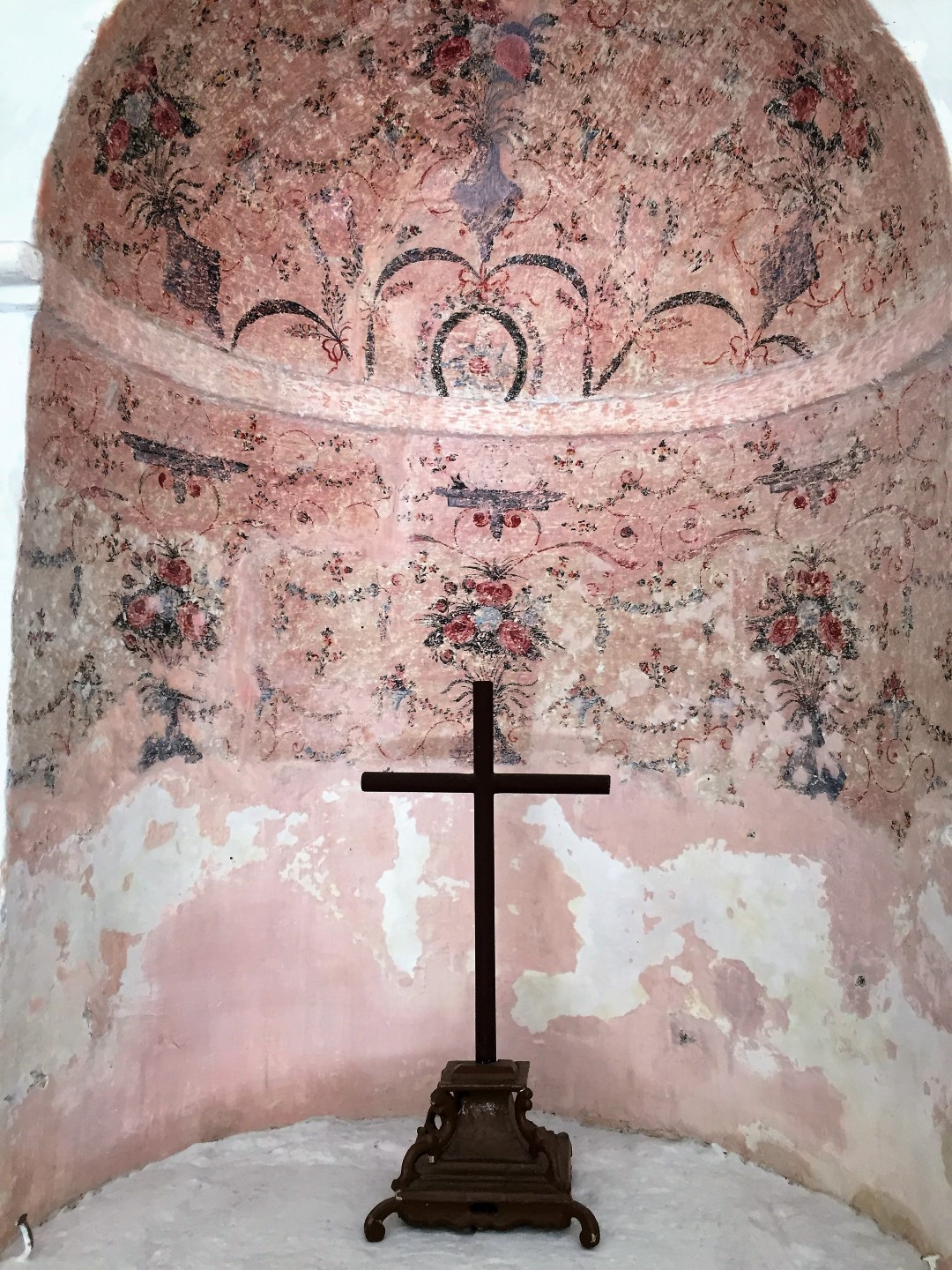
Interestingly, the monastery contains portraits of dead nuns. Painting a living nun was unthinkable at the time, so after a nun’s death an artist was given twenty-four hours to capture her likeness.
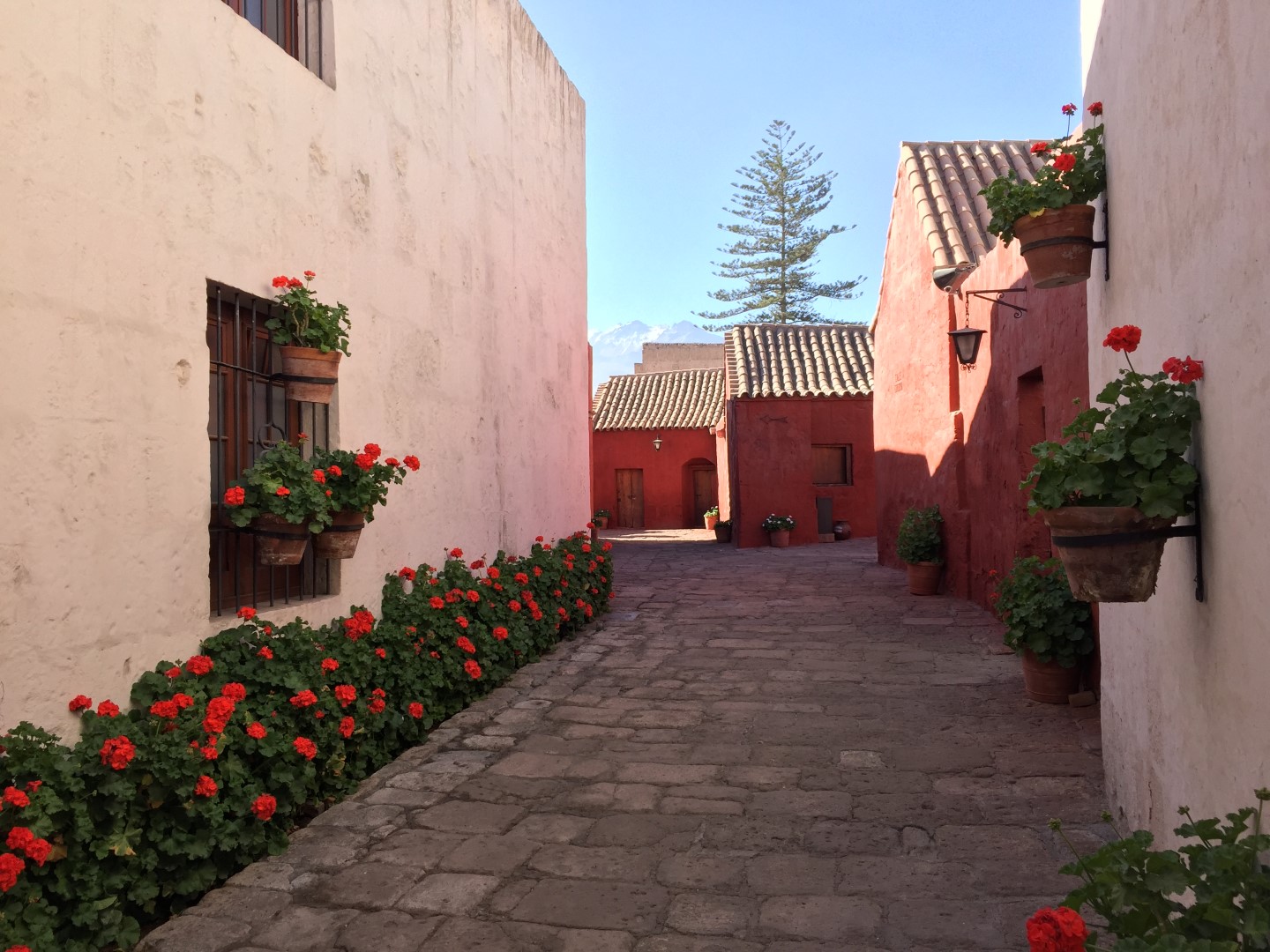
Santa Catalina is extraordinarily photogenic and a genuine feast for the eyes. Unfortunately, we did not bring the camera, but I cannot resist capturing the colours and forms of the buildings on my phone. I enjoy the visit immensely.
Out and about in the city
Next, I hurry to an appointment at a local salon. This is where I have my first substantial conversation in Spanish. The beautician speaks no English, but, as we have already discovered, that does nothing to reduce people’s desire to talk. She asks where I am from, whether I am married, what we like about Arequipa, and where we live here. We discuss Latvian food, and she recommends various things to taste in Peru. After eight days at Spanish school—at that point—I understand what she says and asks, and can answer in fragments. Even when I lack the words to express an idea, she grasps half of it and helps me find the correct Spanish.
Outside the door, I hear that Jānis has arrived to wait. Judging by the word “abracadabra”, the beautician’s five-year-old daughter is demonstrating magic tricks to him. Their conversation suggests that a language barrier is no obstacle whatsoever to a lovely friendship.
We catch a taxi to the bus station and buy tickets for Cabanaconde, the starting point for our three-day hike through Colca Canyon. Jānis sighs when he learns that the bus leaves at 3:30 in the morning, but we cannot waste time by travelling later. The journey to a place less than one hundred kilometres away takes roughly six hours. There is nothing to be done; we cannot move the Andes elsewhere.
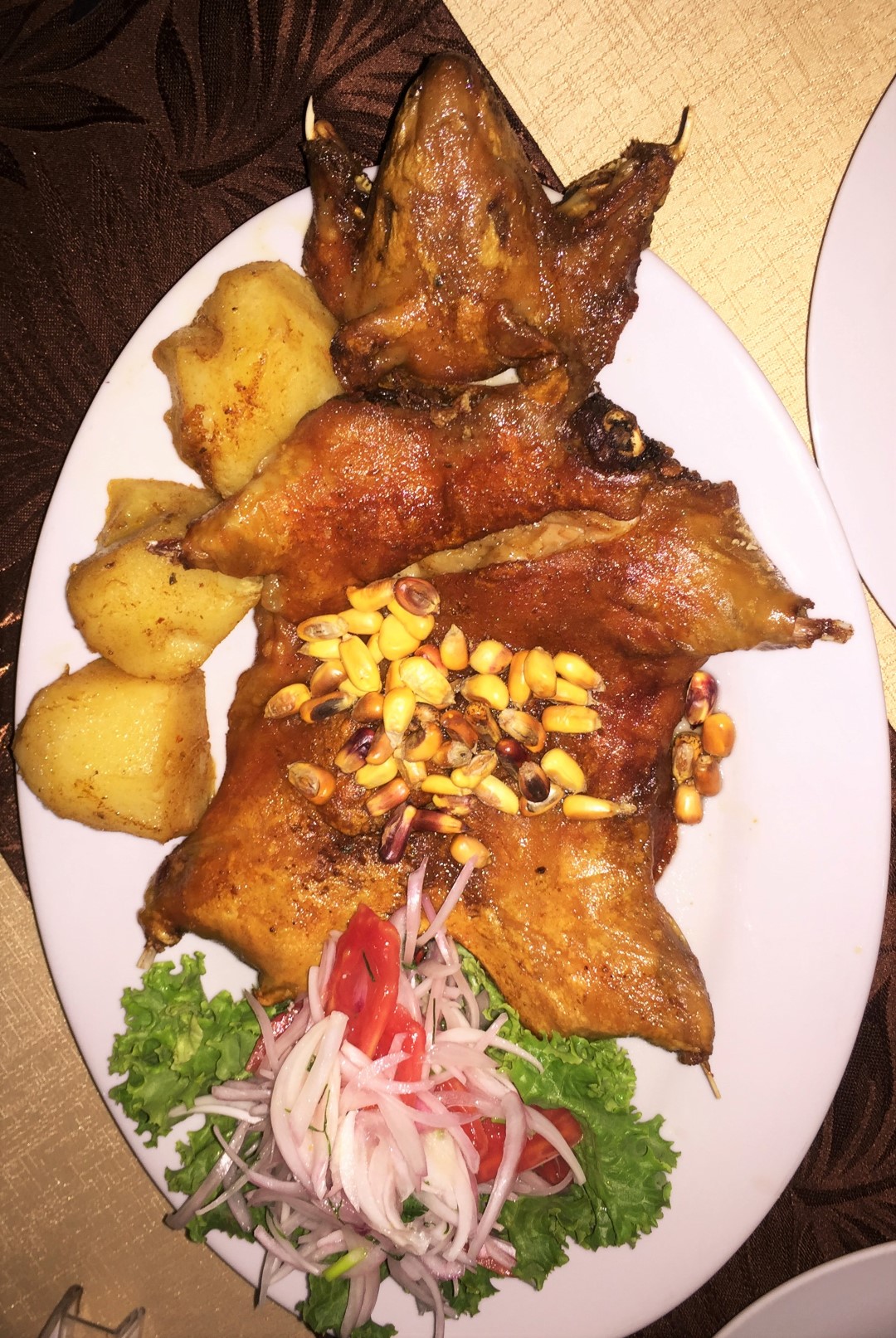
By the time we return to the centre in the early evening, Fête de la Musique is sounding from stages across the city. Jazz plays in the Plaza de Armas. It is the perfect moment for our Līgo-night barbecue at one of the restaurant terraces. Vegetarians should close their eyes for the next few sentences. For a special evening, we order a special traditional dish: grilled guinea pig. Jānis enjoys it, but I cannot stop imagining the sweet, fluffy guinea pigs kept as pets in Latvia, and my appetite does not flourish.
When we later discuss the experience with our Spanish teacher, we learn that many Peruvians raise guinea pigs for slaughter even in city homes, as their size makes this convenient and practical. Our teacher shows us photographs of her own: around ten adults and babies. They are a special meat breed, while the “model” varieties kept as pets in Latvia are not intended for eating. She says that when raising guinea pigs, people never stroke or play with them. They are food, and unnecessary emotions are best avoided.
We continue the evening at an electronic-music concert and finish with traditional music in our neighbourhood park, Plaza de Yanahuara. The music is moving, melodic, and beautiful. Latin Americans certainly know how to sing. At first, we stand unobtrusively beside the seating area. The moment we begin looking for seats, however, it seems that every concertgoer notices us and hastens to point out the empty places. Once again, there is warm understanding without words. I savour the music and atmosphere wholeheartedly. Old and young sing along. On Līgo night, I truly feel as though I am at an open-air concert in Latvia. We go home with warm hearts to pack our bags for the early start.
Incidentally, the Latvian title of this article—“Arequipa Sways, and So Do We”—was inspired by an earthquake during solstice week. At about 5:30 in the morning, just before Jānis’s alarm, it woke us by gently shaking the room, including the bed, and making objects rattle. I would call it a friendly earthquake: the movement was more like rocking and caused no fear. I immediately checked online reports and discovered that the epicentre was near Pacocha, 230 kilometres away, at a depth of thirty-five kilometres and with a magnitude of 4.3. Such is midsummer in a seismically active region.