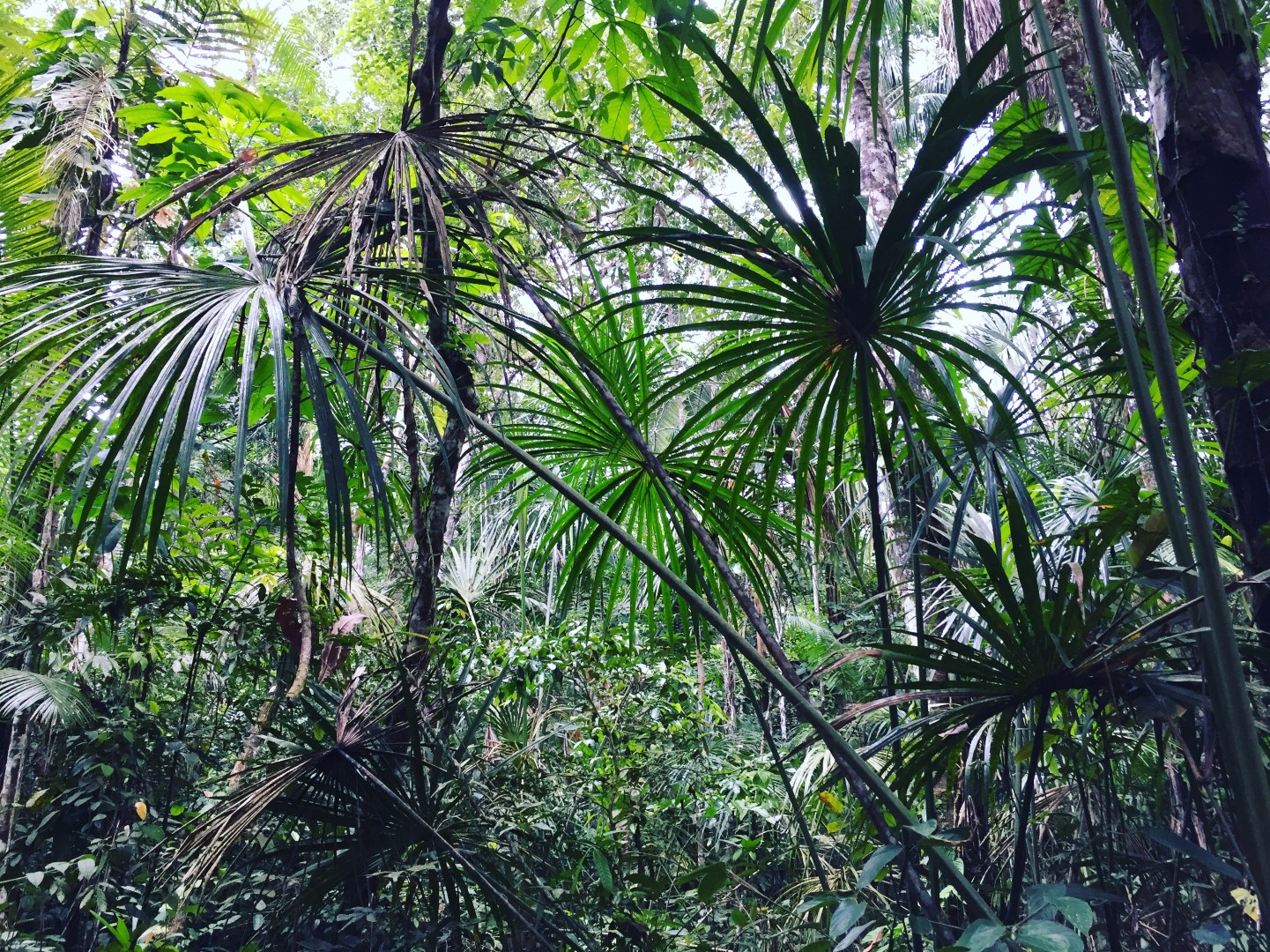
This time, entries from my diary about the incidents and accidents at the Tambopata Research Center: the people and animals we met, and simply some interesting stories from the researchers’ experience.
Snakebite
We are due to visit the colpa this morning. I wake before the alarm because of unusual activity outside. Leaving the room, I meet Jānis drinking coffee in the dark as usual. “I think somebody’s been bitten by a snake,” he says. We go down to the ground floor just as Dylan injects a man with antivenom. An Amazonian bushmaster bit him, and because TRC is the nearest inhabited place, he was brought here after a four-hour delay. On that grim note, we set off for the boat. It is still dark outside, and I illuminate every step with my torch even more carefully than usual.
Peccaries
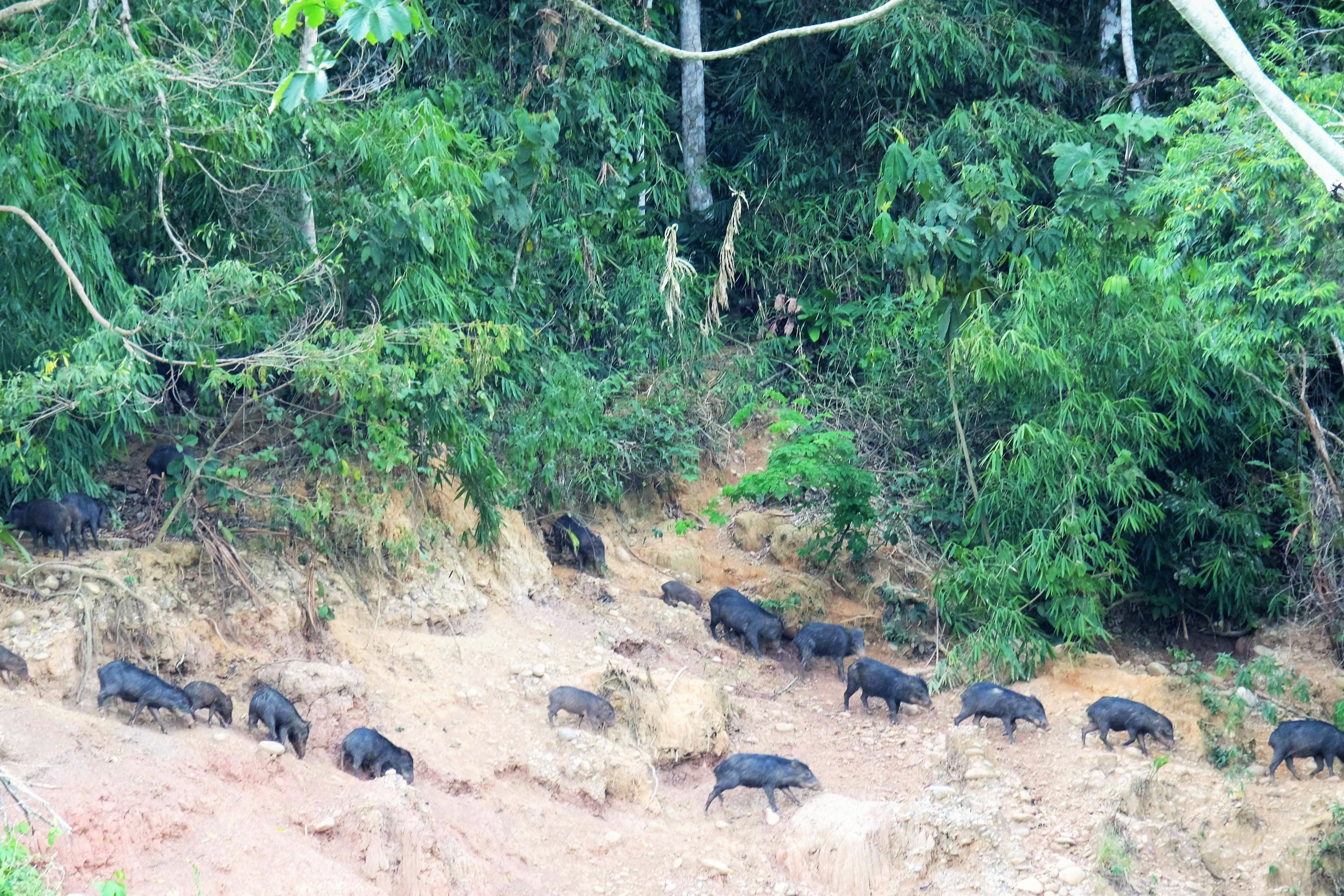
There are many peccaries in the area. Sometimes you need walk only a few hundred metres into the forest from TRC before detecting the distinctive odour with which they mark their territory and one another, then seeing the herd itself. Whenever we encounter them—at least once a day—we strike our machetes against a tree trunk, but only sometimes do they run away. Often, there is no reaction at all; they merely look at us from twenty metres away. If they are not too close or standing directly on the trail, we continue. Lisa says they have a good life in the nature reserve. They are unafraid of people because they have never experienced being hunted. They always travel in herds. We usually meet several dozen in the forest, although groups of seventy or more have been seen crossing the colpa.
One morning, Jānis, Sophie, and I have to visit Nest Fight along one of the more distant trails. Halfway there, we smell and then see that we have caught up with a large herd moving deeper into the forest parallel to the path. Soon, we turn onto a trail being crossed by a long line of peccaries, including several young ones. We make noise with our machetes. Some flee, but many continue towards us. We find ourselves with some of the herd already on one side of the path while its larger portion approaches from the other. Striking the machetes and shouting has no effect; several males even show increased interest. When one of the largest advances confidently towards us, we realise that his curiosity is not friendly. We step behind an enormous tree in case he decides to charge. Fortunately, there is another route to the trail we need. We lose time, but for safety, decide to circle around the peccaries.
Alone on the island
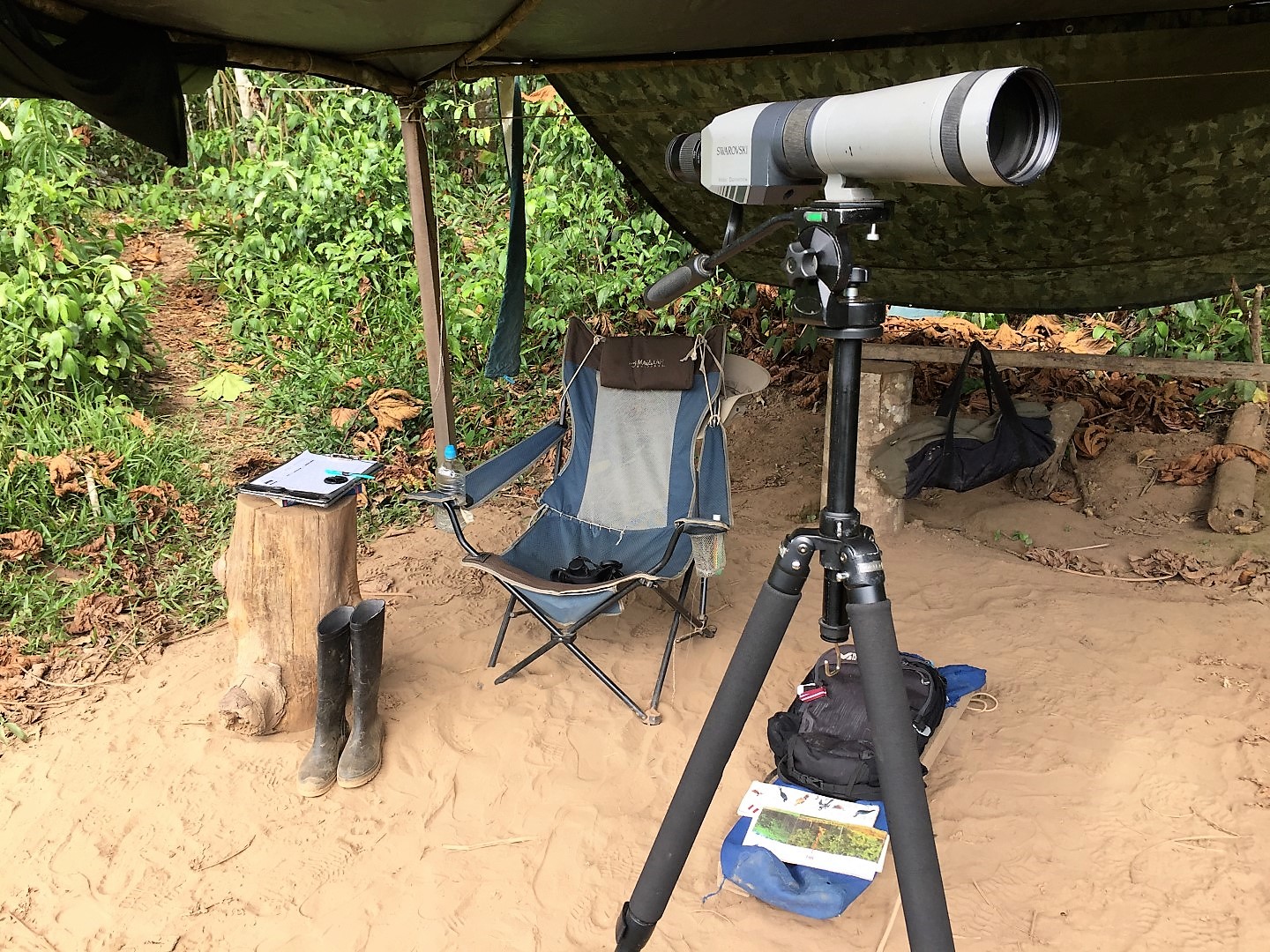
At 11:00, I have to observe the clay lick, or colpa, by myself. Braulio is on leave after his birthday, spending time with his family following several months of work in the jungle. His replacement takes me over, and I tell him to collect me from the same place at 17:00. Drizzle is falling and the birds are sitting in the trees, so everything is quiet and I record only the weather. In the distance, I see peccaries crossing the narrow channel where the river used to flow. Gradually, the sun appears, and little lizards surround me, perhaps interested in the contents of my lunch box. I hear a herd approaching. They grunt, and the group is so large that its footsteps and the cracking branches can be heard from far away. From the sound, they seem to be following the old riverbed. What a show this will be! I am on a bank about two metres high and will be able to watch them directly below. The peccaries, however, have planned a different route. When they are very close, I see the bushes and reeds swaying as they climb the bank only fifteen metres from me. Once the first animals appear at the top, safety defeats curiosity. I grab a branch and beat it against a tree trunk—I did not bring a machete—and add angry shouts for greater effect. It works, and the whole herd bolts. What a sound! The entire forest seems to shake.
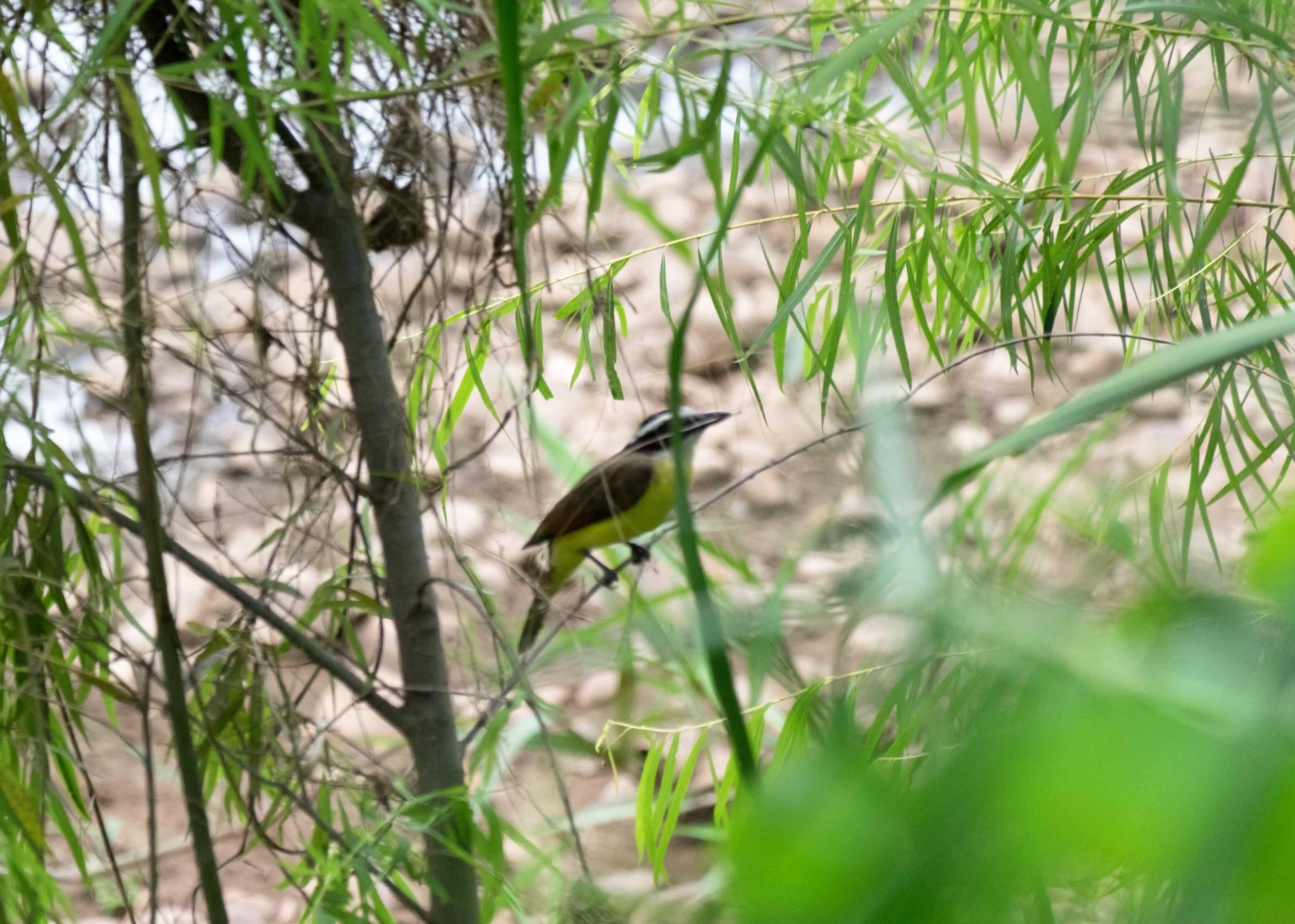
The rest of the day surprises me with the diversity of its animals. I see a toucan on a branch, and a family of howler monkeys with a tiny baby arrives to eat clay. They feast for about an hour while the youngster plays near its parents. Various small birds flutter around me. I am especially delighted by a yellow-breasted Lesser Kiskadee, pictured here, which has built a nest directly beside the observation post. It returns from time to time, chirps, and tidies the nest. Later, its partner arrives, and the two fuss over the nest together while talking to each other. Towards evening, the parrots finally become brave enough to descend to the clay, most of them Cobalt-winged Parakeets. These small parrots visit the clay lick in their hundreds. Every five minutes, I count and record them. The count takes so long that I barely have time to sit before the next five-minute alarm sounds and I must begin again.
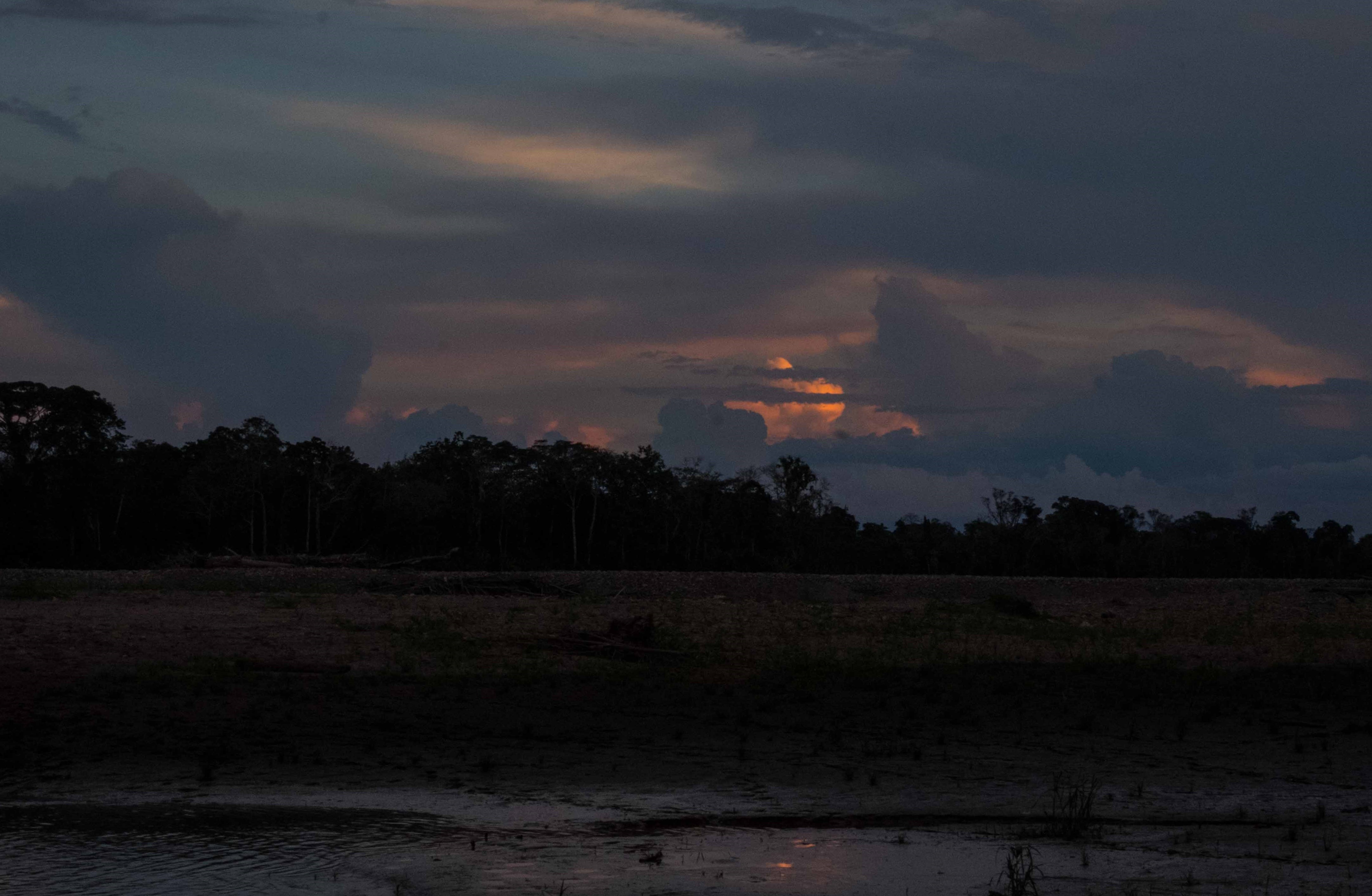
Without my noticing, 17:00 arrives, and I call the boatman on the radio. I gather the equipment and walk to the shore. A sizeable caiman sees me and slips into the water. The boatman is unusually late. Tiny flies bite my hands unbearably while the caiman watches from the water. I begin repeating more insistently into the radio, “Bote, bote, colpa!” Concern creeps in when nobody answers. Dusk begins to fall—the sun sets shortly before 18:00 this close to the equator—and the flies keep biting. The sky is unusually beautiful tonight, so I use the waiting time to take photographs, glancing towards the water every so often in case the caiman has decided to come ashore for a little meat. At last, somebody answers the radio. Later, Jānis responds too, and before long, I see a very slow boat. They have sent somebody else to collect me. By the time I step ashore, it is completely dark.
The chicos
My afternoon activity is data entry. I am alone in the research centre, entering the accumulated protocols into Excel. Tambo, one of the macaws raised at TRC, flies in. Unbothered, he walks through every researcher’s room—curtains serve as doors here—and demolishes something in Jorge’s. I chase him out. He begins walking across the desks, lifting papers, and finds empty biscuit wrappers on Lisa’s table, which he throws onto the floor one by one. I tell him off again. Then Tambo lands on the window ledge with his back to me, gazes thoughtfully into the jungle, defecates, and flies away.
A few minutes later, he returns with his wife, Pata. She is a wild macaw, but Tambo has taught her that visiting TRC is entertaining. They head straight for our room; apparently Tambo found something promising during his earlier inspection. When I run over, Pata is urgently trying to grasp our packet of coffee in her beak. I have caught the thieves, and because the packet is too large to seize quickly, they fail to carry out the crime.
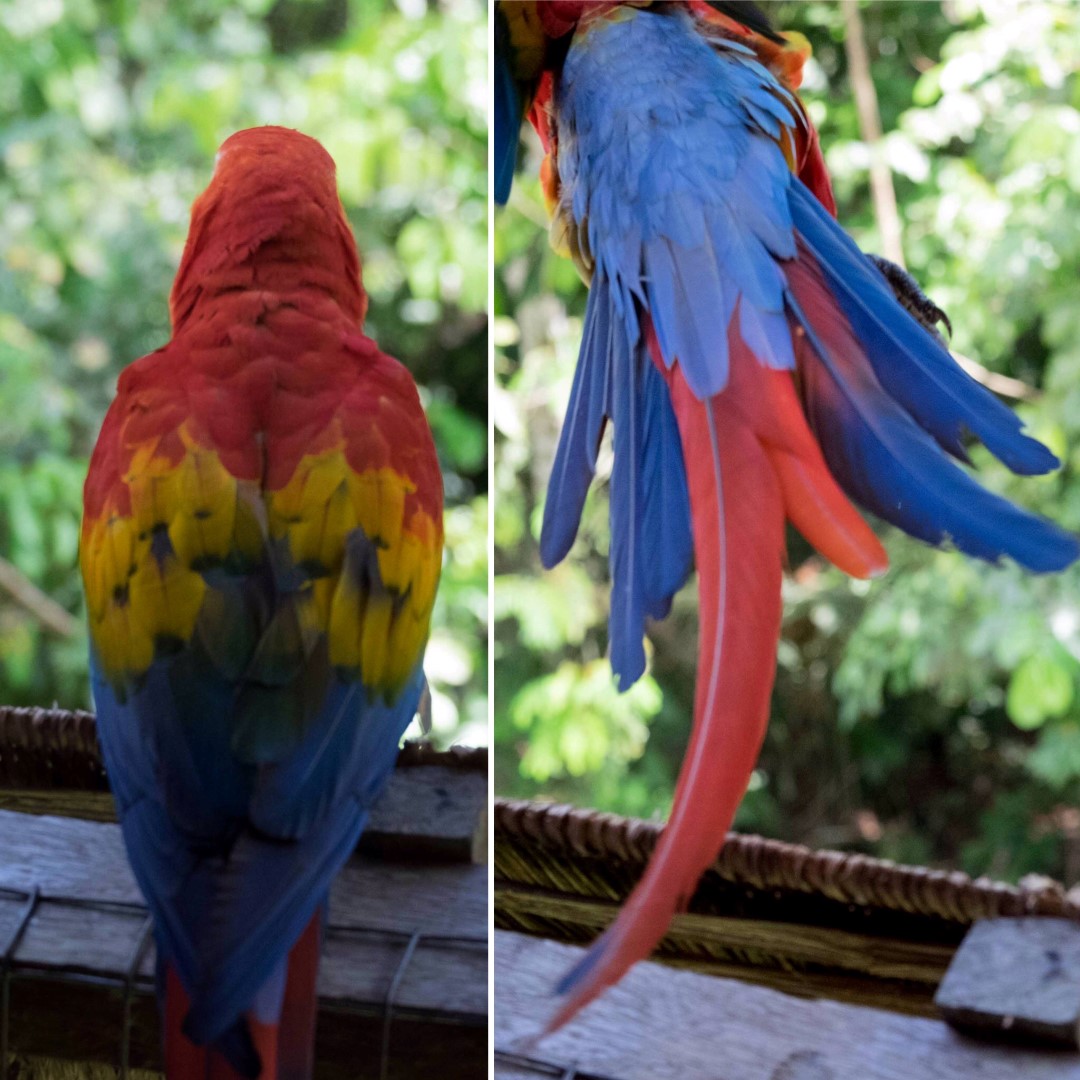
Avecita, a Scarlet Macaw, is a frequent visitor to the tourist dining room. I take a banana from the room and continue towards the researchers’ section while eating it. Avecita notices. Suddenly, I hear wingbeats through the dining room, and she lands directly in front of me. In classic macaw fashion, she moves her head and looks at the banana, making her objective clear. Igor sees this and says, “All right, give her the banana. But only Avecita!” She happily accepts the gift and eats it with great pleasure. Several years ago, under unknown circumstances, she lost one eye. As far as anyone knows, she has no mate and searches for food alone. The researchers are therefore slightly more lenient with her. By begging all day, she occasionally earns a piece of fruit.
Another time, I am making coffee in the same dining room. I add coffee, sugar, and powdered milk, when a tourist runs over and says that the sugar container was left open and a macaw put its head inside. The man’s son rushes over too, showing funny photographs of Avecita on the coffee table with her bottom in the air and her body buried up to the wings in the sugar jar. You have convinced me: I will make another coffee.
Trees
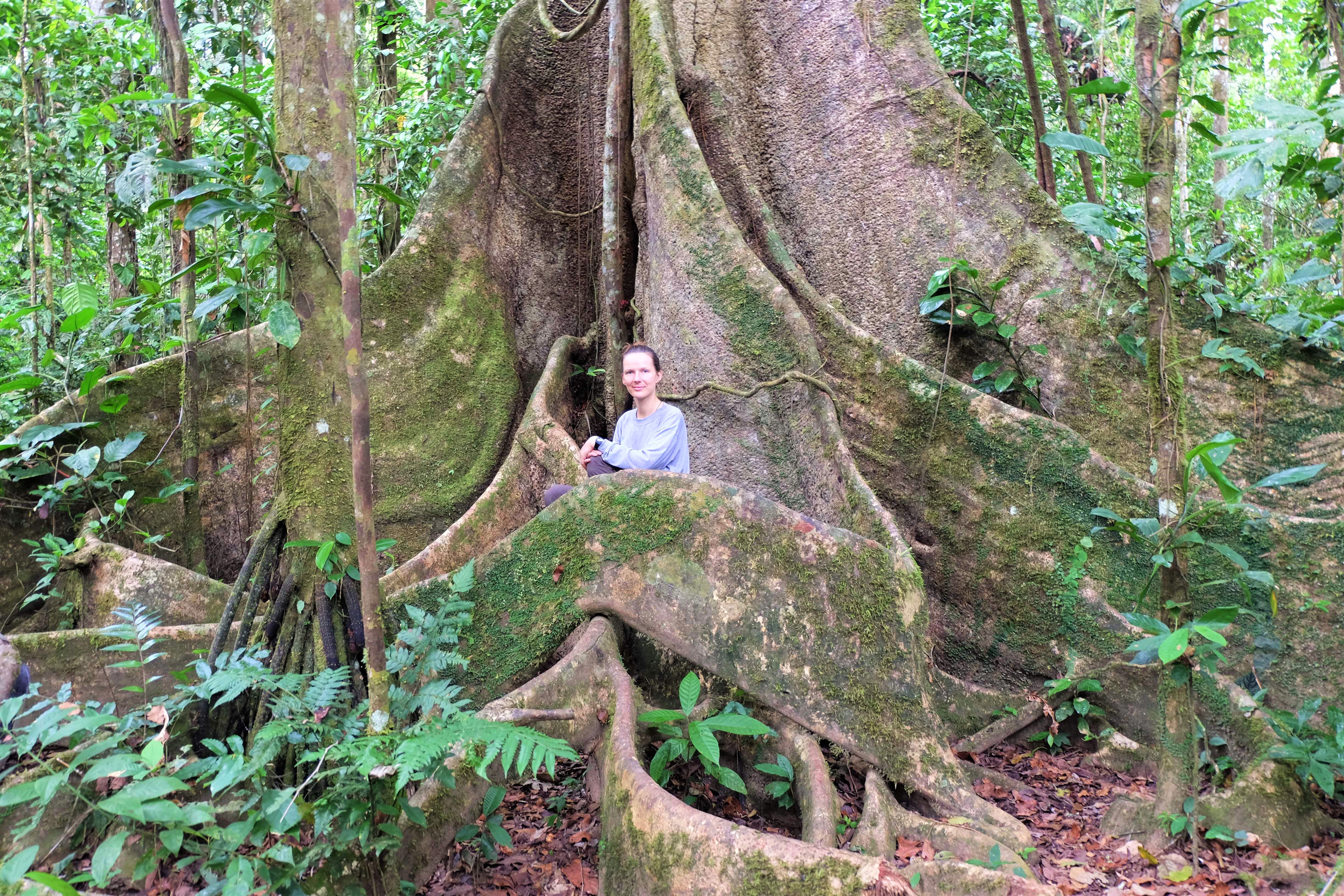
Jungle trees are monumental. The largest specimens inspire reverence; they seem to be something more than a tree and a home for birds. Ayahuasca plants grow here, with enormous vines hanging down. In Peru, ayahuasca is a sacred plant—a teacher—and its vines are used in the ayahuasca ceremony, which heals the mind and soul. For anyone who wants to learn more, here is the film Ayahuasca: Vine of the Soul.
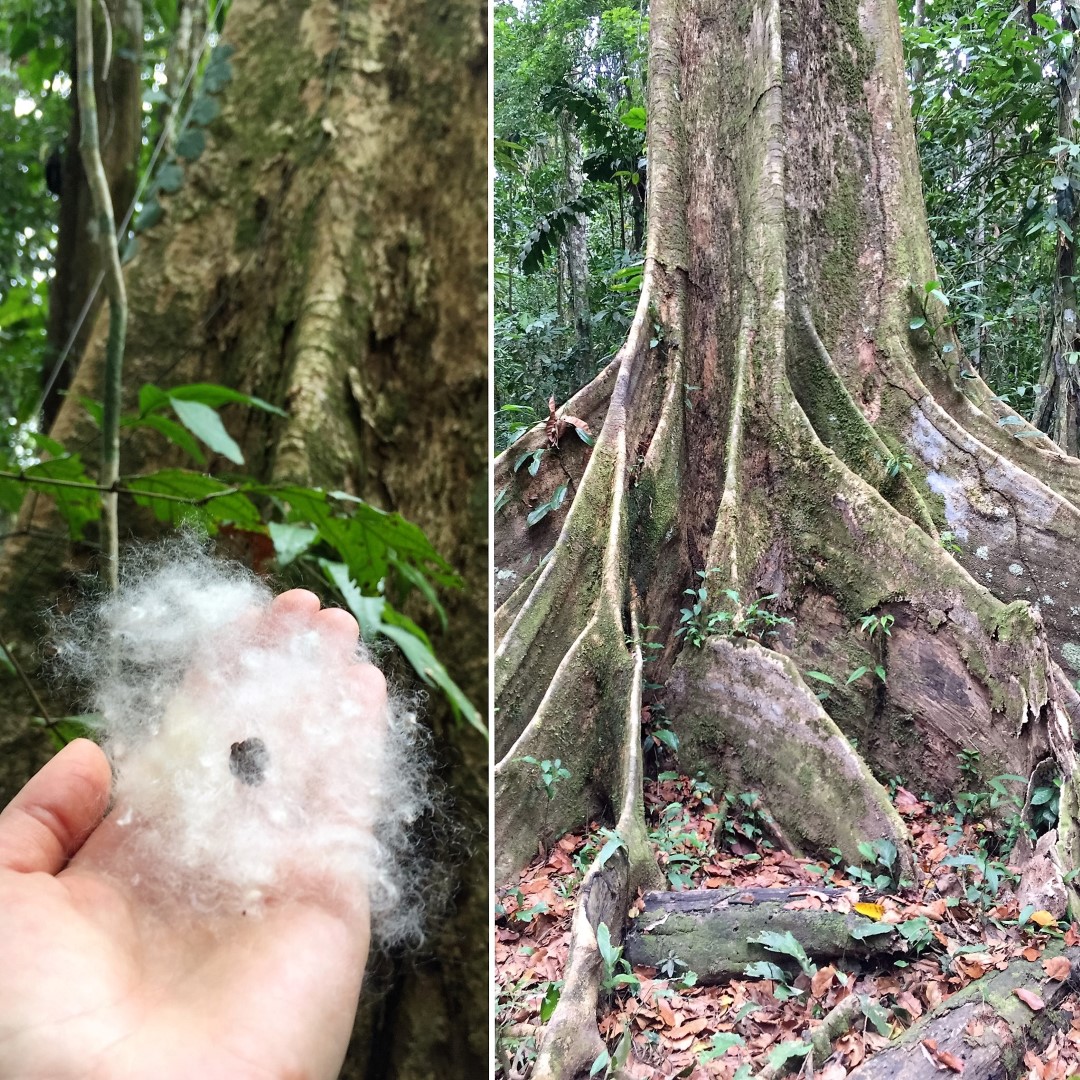
There is also a tree that smells of garlic. People from local communities cut off its bark and rub it onto their skin as an insect repellent. Apparently, it does not taste like garlic.
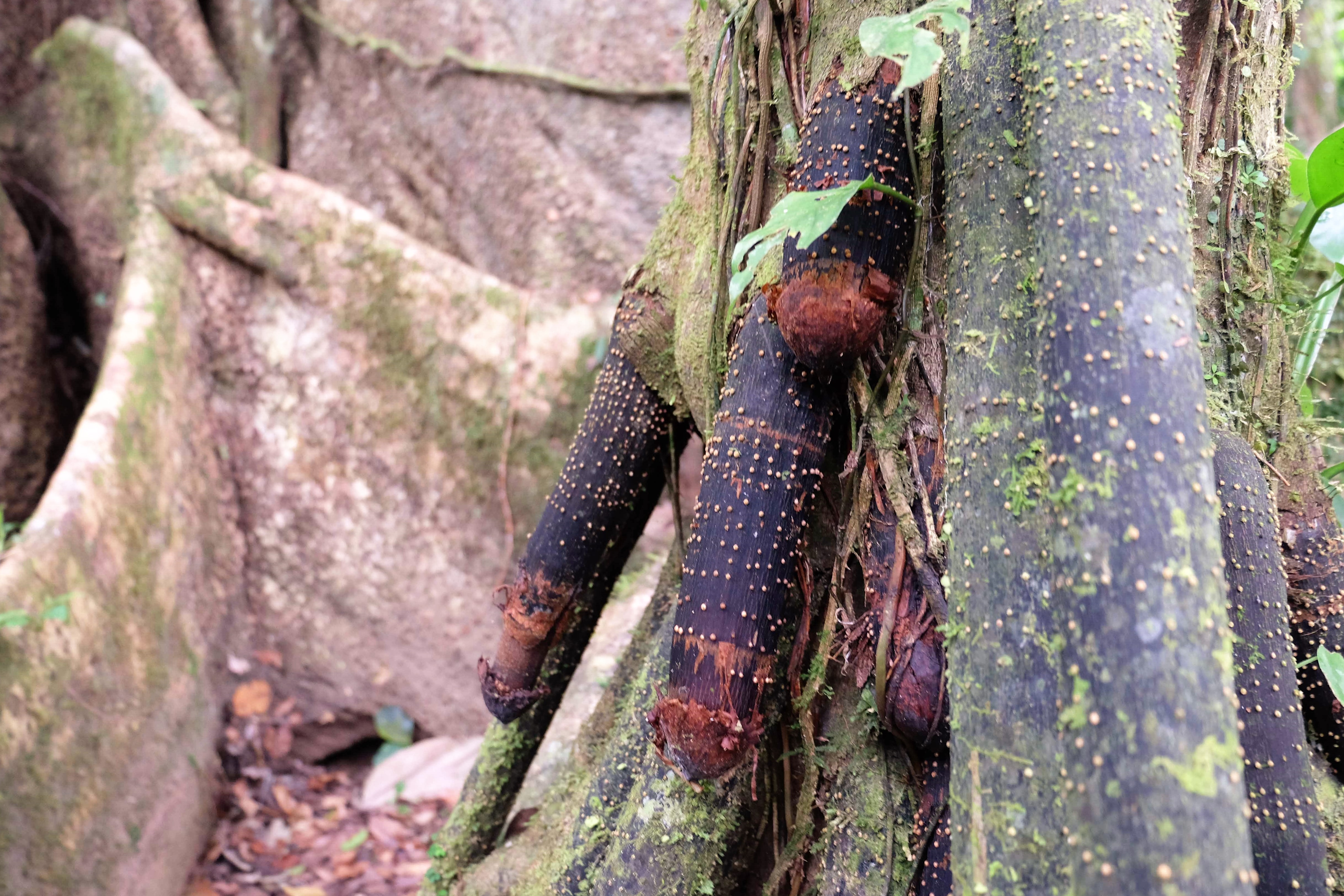
Another tree has roots resembling a phallus. Local communities prepare a decoction from this one too, which men drink to increase fertility.
In the forest, there is also a fascinating example of cooperation between a tree and ants. You recognise it by its pale trunk, which is never covered in moss. Tap the tree, and an army of ants pours from a small hole. The ants clean the trunk and protect it from pests; the tree gives them a home inside.
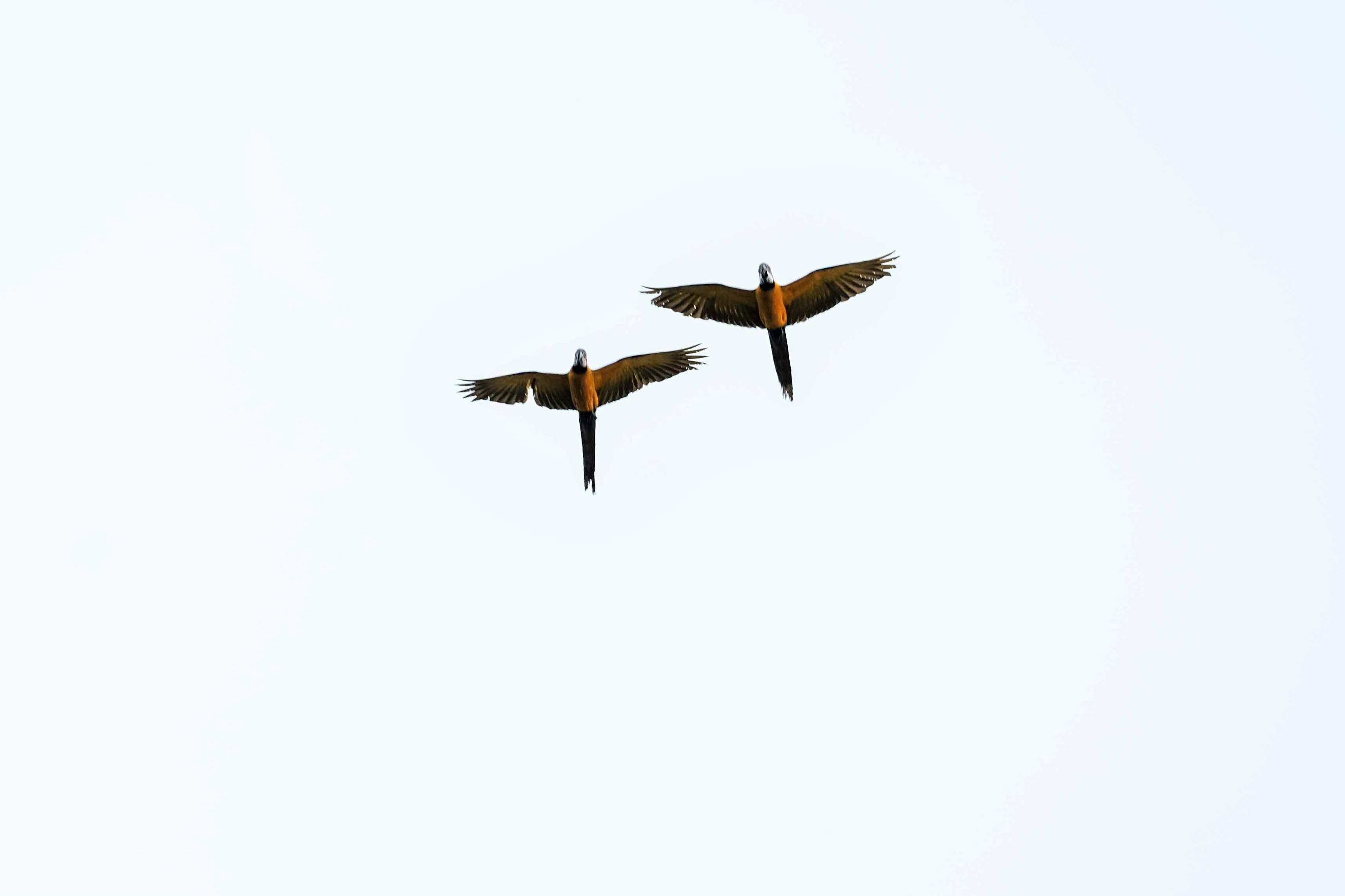
Stories from macaw nests
Jorge is a highly experienced macaw researcher, with a store of stories as large as his store of knowledge. Whenever we visit Nest Fight together, he has a tale about something that happened in one nest or another.
It was the beginning of the breeding season. Chicks had already hatched in one nest, while another pair was still searching for one. A fight began. The nesting female picked up one of her own chicks and threw it out, demonstrating that the nest already held young while knowing that she had two others. The third, weakest chick would probably have starved in any case, but here it was used to defend the nest—and the strategy worked.
On another occasion, researchers arrived to observe a nest just as a predator was inside it. The headless body of a macaw chick was thrown out. The researchers took it away for examination.
Once macaw chicks grow larger—at one stage, they even exceed the size of their parents—they receive a special numbered ring. One day, researchers came to inspect a nest and found the tree covered in ants, with a kind of ant motorway climbing its trunk. When they ascended to examine the natural nest, only the chick’s ring and a few feathers remained. The ants had not even left its bones.
Yes, the nesting stories are all horrors. Most nests do have a positive outcome, however: the chick grows up and begins an independent life.
Botfly
The jungle has specific diseases and all kinds of dangers from plants, animals, and insects. On the way to the boat after a Census activity, Jorge, Sophie, and I discuss rainforest ailments. The most devastating disease possible here is leishmaniasis. In the contest for sheer disgust, however, the botfly larva wins. One kind of botfly lays eggs on both animals and people. It can deposit them on damp fabric; after a while, a tiny larva begins entering the person’s skin. Its preferred development is to grow beneath the skin for several weeks, fall to the ground, and emerge as a fly, although people usually discover it sooner. The worst part is that if found on the first day, it is not large enough to pull out. You must “carry” it a little longer while it grows. A substance is then applied to suffocate it, and it is removed with tweezers. Jorge says there has been one case involving a woman here, although the larvae appear fairly often in animals, including parrot chicks. In the Bolivian jungle, I regularly watched them being removed from CIWY’s dogs. A man from Finland jokingly told me the most disgusting extraction method there. You tie a piece of raw meat over the skin containing the botfly larva. Unable to breathe, it begins burrowing out of the skin and into the meat. The result is positive, at least: the larva crawls out by itself. Although famous for being revolting, this jungle parasite is harmless to people. Removal causes no infection, only a little blood depending on the larva’s size. It can be avoided by washing clothes regularly, because the eggs simply rinse away before beginning their journey into human skin.
Mowgli in the city
Jorge has just left for a month’s holiday in his home city, Lima. He has worked here for about ten years, and I wonder what it feels like to return to a metropolis after months of meditative jungle sounds. At that moment, Lisa and I are on a Foraging Walk, giving me the perfect opportunity to ask. Lisa is also from Lima and recently returned from a holiday taken after seven uninterrupted months in the jungle. She confirms that although the prospect of leave is exciting, arriving in the city is unpleasant. Lima exhausted her so thoroughly that she needed “a holiday within her holiday” and escaped to the mountains for a multi-day hike.
The destroyed nest
Jānis has to spend the afternoon at the colpa. That evening, he returns with troubling news: the nest of the yellow-breasted Lesser Kiskadee has been destroyed. He heard an outbreak of frantic bird calls nearby, then saw a dark bird—later identified from a guidebook at the lodge as a Violaceous Jay—tearing apart the nest and eating two eggs. Three yellow-breasted birds attacked it, trying to drive the culprit away. I say that I had always seen only a pair around the nest, not three birds, but Igor explains that this species is remarkable for cooperating with its fellows. Sometimes they can be seen hunting flies together. In this case, an “uncle” came to help save another pair’s nest. It is desperately sad that the little birds’ nest was destroyed, but these are natural processes: somebody eats somebody else.
Animal Planet
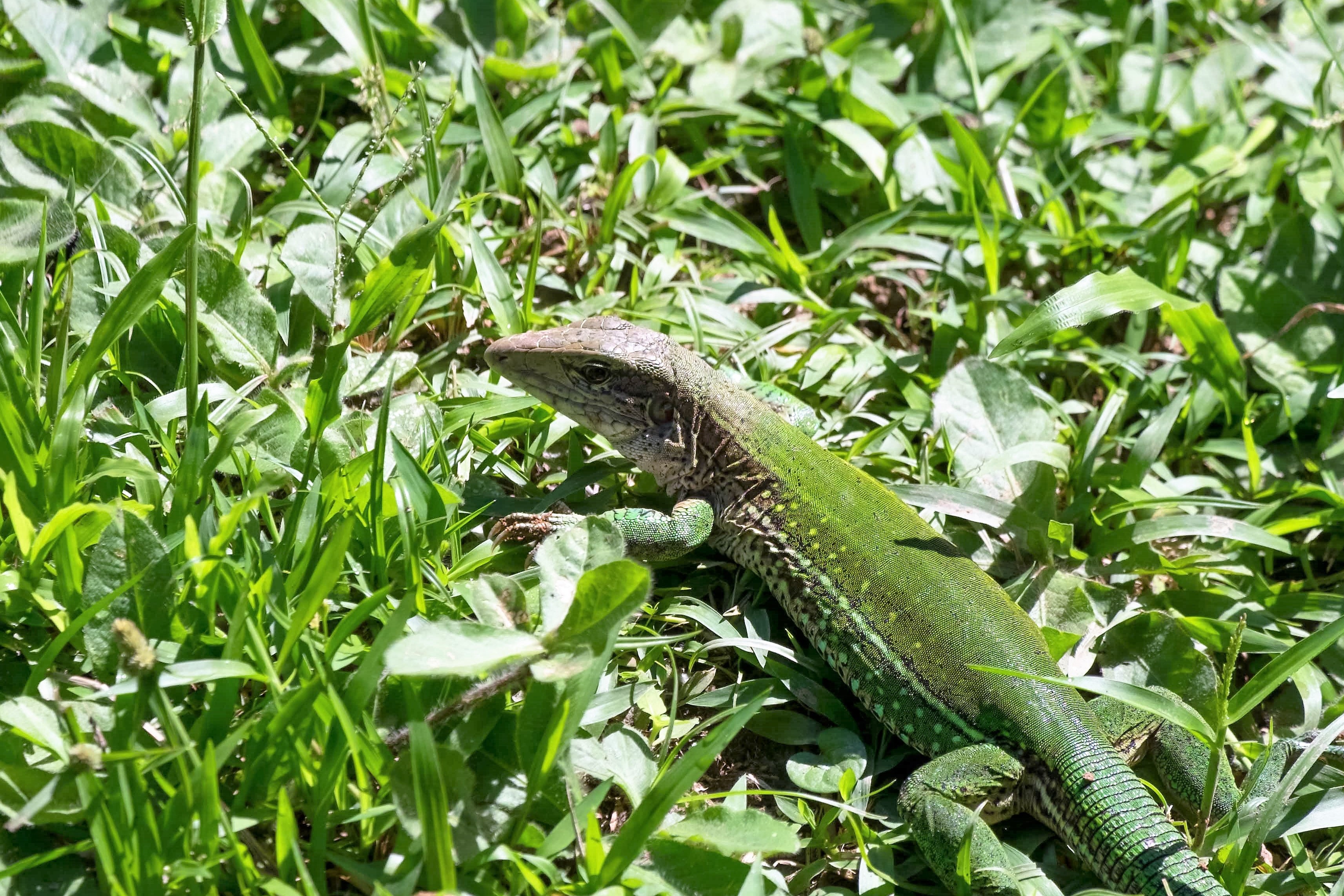
Dylan and I conduct a Foraging Walk on the colpa island. The route includes the Fish Pond, a little pool. We arrive just as two Hoatzins are mating on a branch. They are amusing, fairly large birds with blue heads and punk hairstyles. We also see a waterbird wading at the edge with a freshly caught fish. An unusual pale river turtle rests on a fallen tree in the water. A row of bats sleeps beneath one of its branches. Every so often, the water churns with fish or other creatures. And all of this is visible at one tiny pond! Naturally, I did not bring the camera... As we leave, I spot an extraordinarily colourful bird, one of the motmots. I cannot shake the feeling that I have just stepped into an enchanted fairytale kingdom. Later, we meet Sophie and Igor conducting a Census on the trail and ask whether they also saw what was happening at the Fish Pond. “Yes,” Igor replies with a laugh. “Animal Planet is on over there.”
Who ate my apple?
In the morning, I am packing my backpack when I see that an apple I put inside yesterday has been half eaten. I left the bag open overnight. The culprit plainly feasted inside it and is rather fussy too: the peel has been neatly spat back into the bag. An insect could not manage half an apple, but the animal cannot have been large because it was unable to carry the fruit away. The valuables are untouched.
Jungle sounds
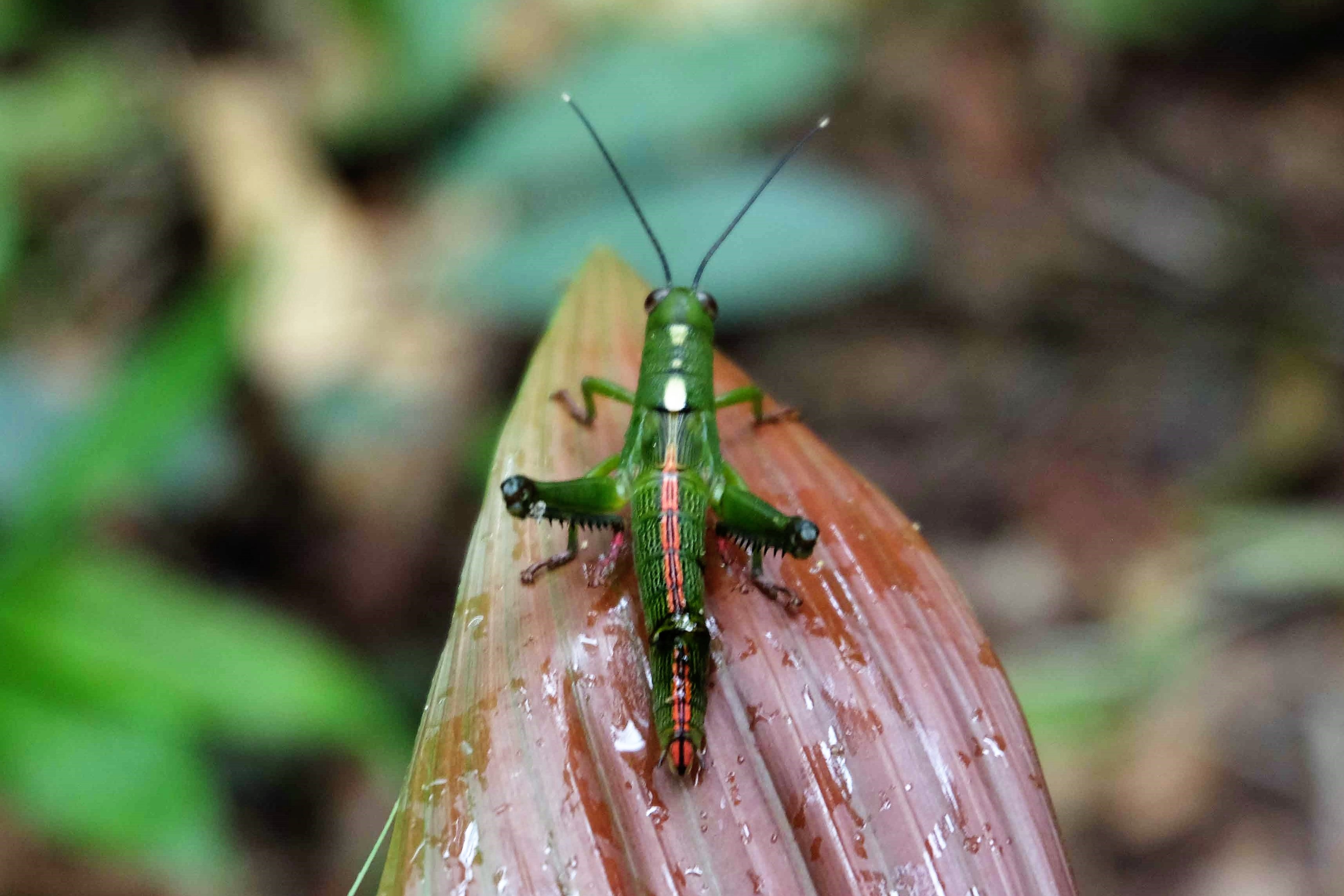
The sounds of the jungle are magical. During the day, there are all kinds of “zzzzzz-makers”, sometimes even “sawyers” and “sirens” so loud that your ears feel ready to burst. Naturally, there are parrots and other birds too. In the evening, the sounds grow more intense and continue all night. Frogs join the chorus, and some of their voices could truly be called songs. At times, I feel as though I am at an electronic-music concert, and the mind cannot reconcile itself to the reality that a living creature can produce sounds THIS unusual. My favourite is the sound of morning, when the frogs’ meditative song is joined by the howler monkeys “blowing wind”. Waking here is a pleasure rather than a struggle. At last, in my life as a night owl, I have reached a moment when I can wake at 4:00 without an alarm and discover the life of an early bird.
People
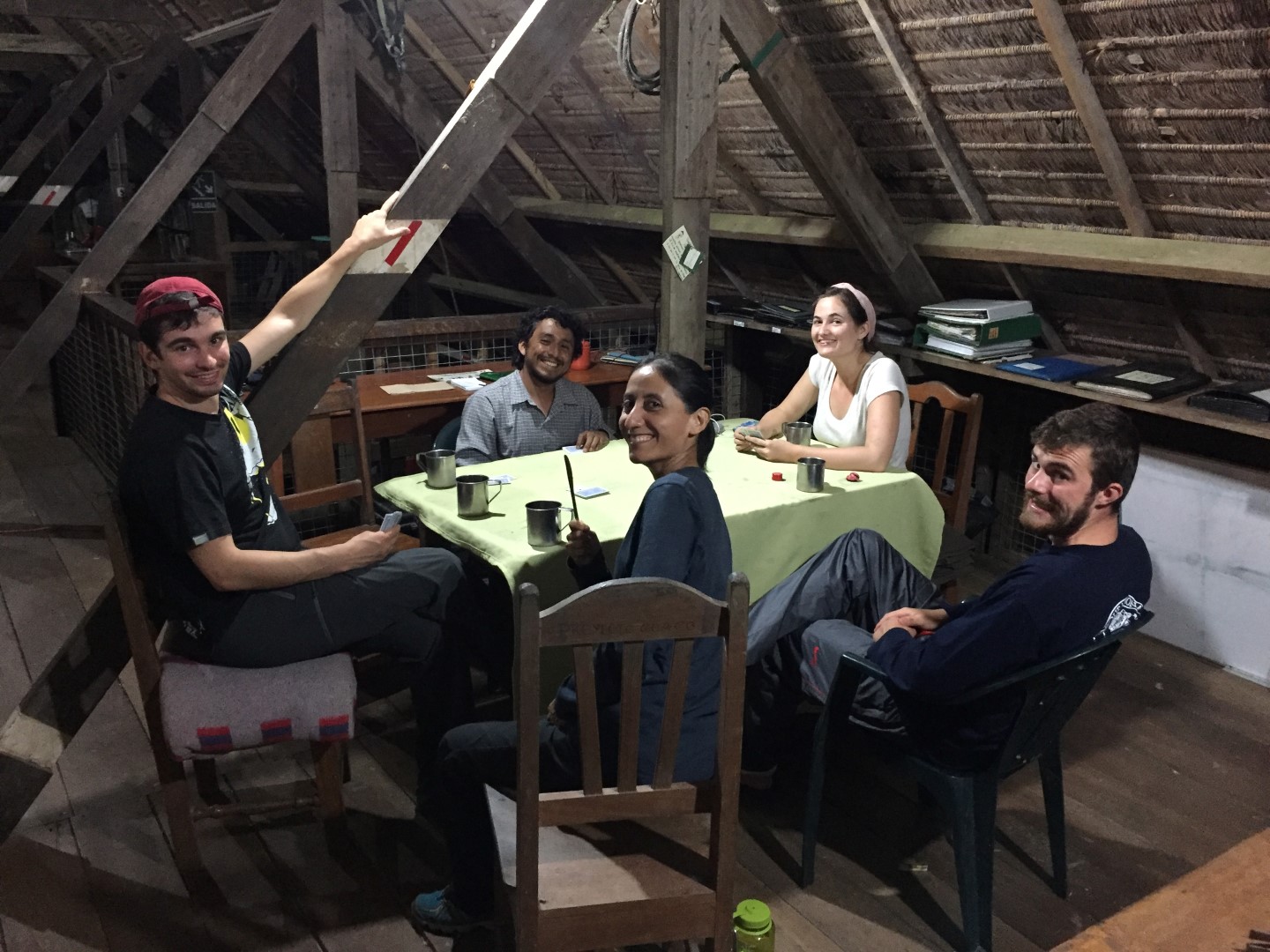
Both the researchers and the lodge staff are exceptionally kind people. Perhaps life in the jungle and harmony with nature are the reason? People here certainly are not tormented by stress and worry. For Latin Americans, greeting one another is a rule, so whenever I arrive for a meal, I pass through a succession of “Buenos días!” and “Hola!”. Every opportunity brings a little conversation: how the food tastes, a passing joke, and so on. In some countries, politeness demands this, but not here—here it is genuine and heartfelt. And it is so beautiful! Thanks to these people, I am learning and becoming more open. Now that I can feel again, I experience so many moments of touching beauty. I know these emotions heal what stress and worry have damaged.
Thank you...
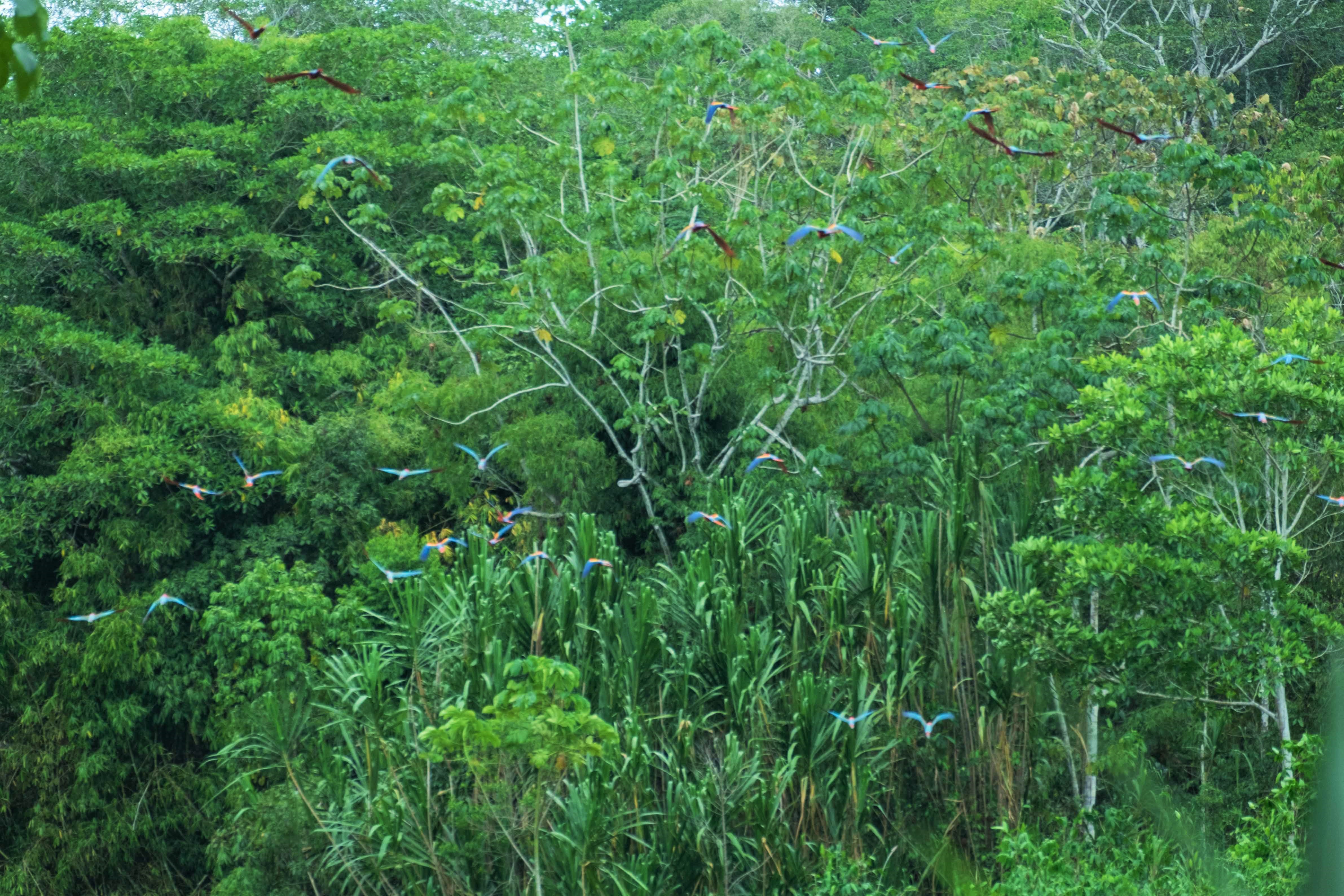
The day before leaving Tambopata, I spend the afternoon alone at the colpa. There is extraordinary macaw activity; I can barely keep up with the counting. When frightened, they fly in enormous flocks and settle in the trees. The sky is full of colour. I sit there, so grateful for the chance to witness this natural beauty with my own eyes...
This experience has shown me again that the unknown and seemingly more difficult path is the best choice. When you summon the courage to fulfil your dreams, the road carries you towards miraculous events.