We are waiting to board the overnight bus to Paracas, a town on the Pacific coast 260 kilometres from Lima. Before boarding, we have to hand over our large backpacks as checked luggage, which feels slightly traumatic after recent events. The bus surprises us with comfortable seats that recline to 160 degrees, along with pillows and blankets. Before departure, an attendant checks that everyone is wearing a seat belt and shows safety instructions on the screens. Once we are moving, bread and tea are served. The service is almost like a transatlantic flight. We fall asleep at once.
Paracas and the Ballestas Islands
We wake on the bus at sunrise, surrounded by desert. Soon we enter Paracas, where someone at the little bus station immediately offers us a tour of the Ballestas Islands. The price matches what we found during our research, so we agree. We jump into a minibus with the rest of the group and head to the jetty, where a motorboat is waiting.
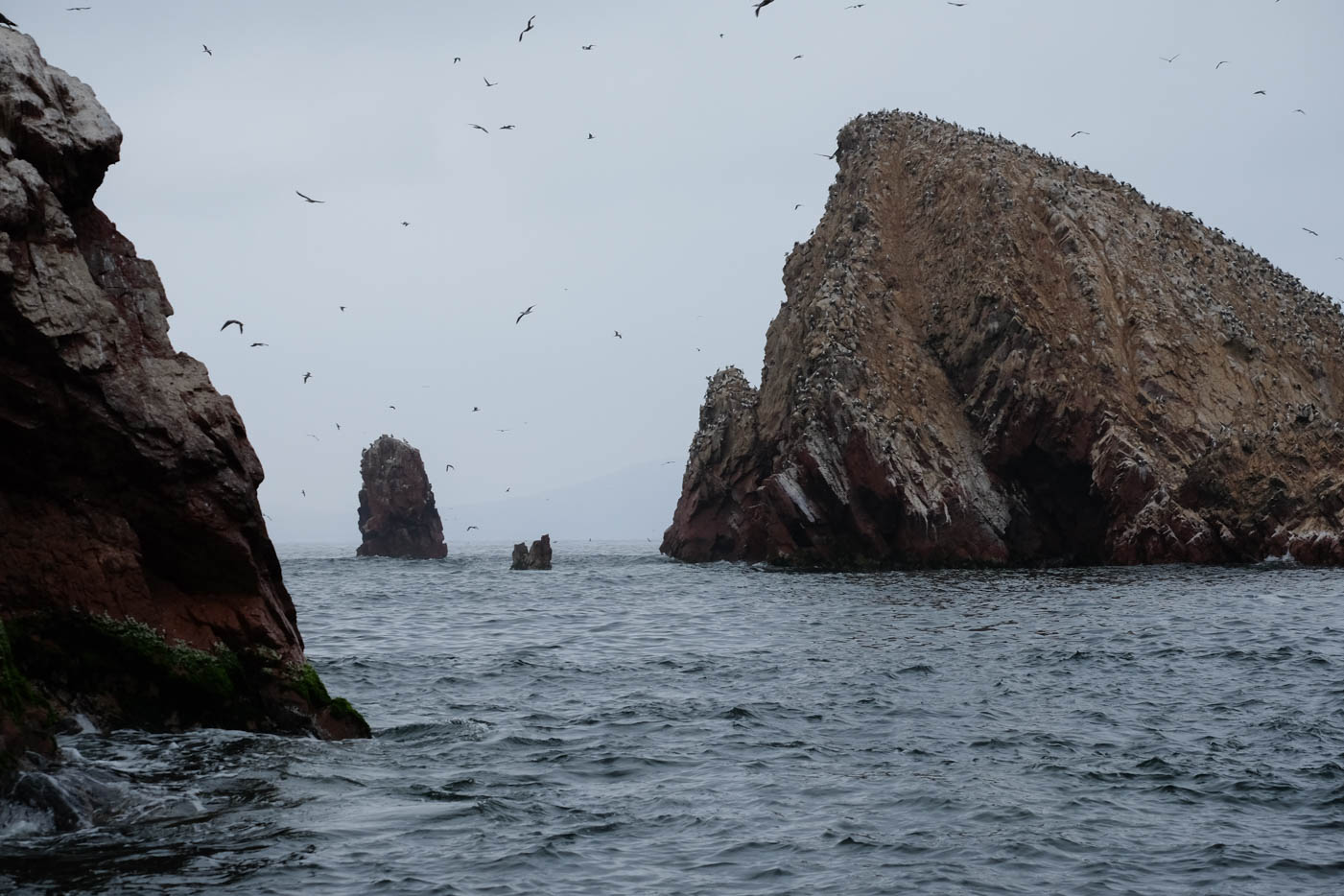
Paracas Bay is peaceful, with pelicans and various gulls flying overhead and floating on the water. We are told there are never waves here, making surfing impossible, although the conditions are excellent for windsurfing. After the big city, it is lovely to arrive somewhere like this.
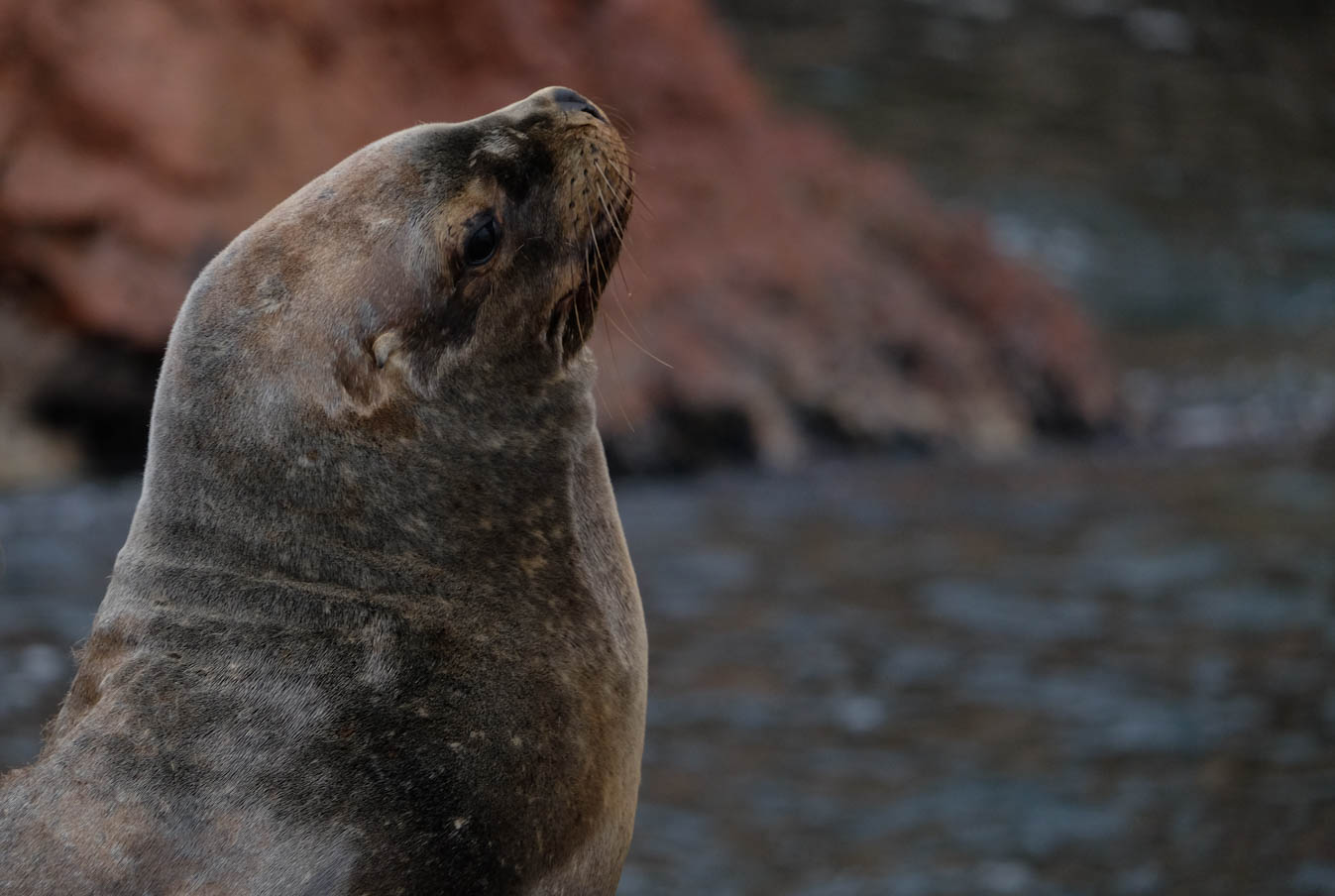
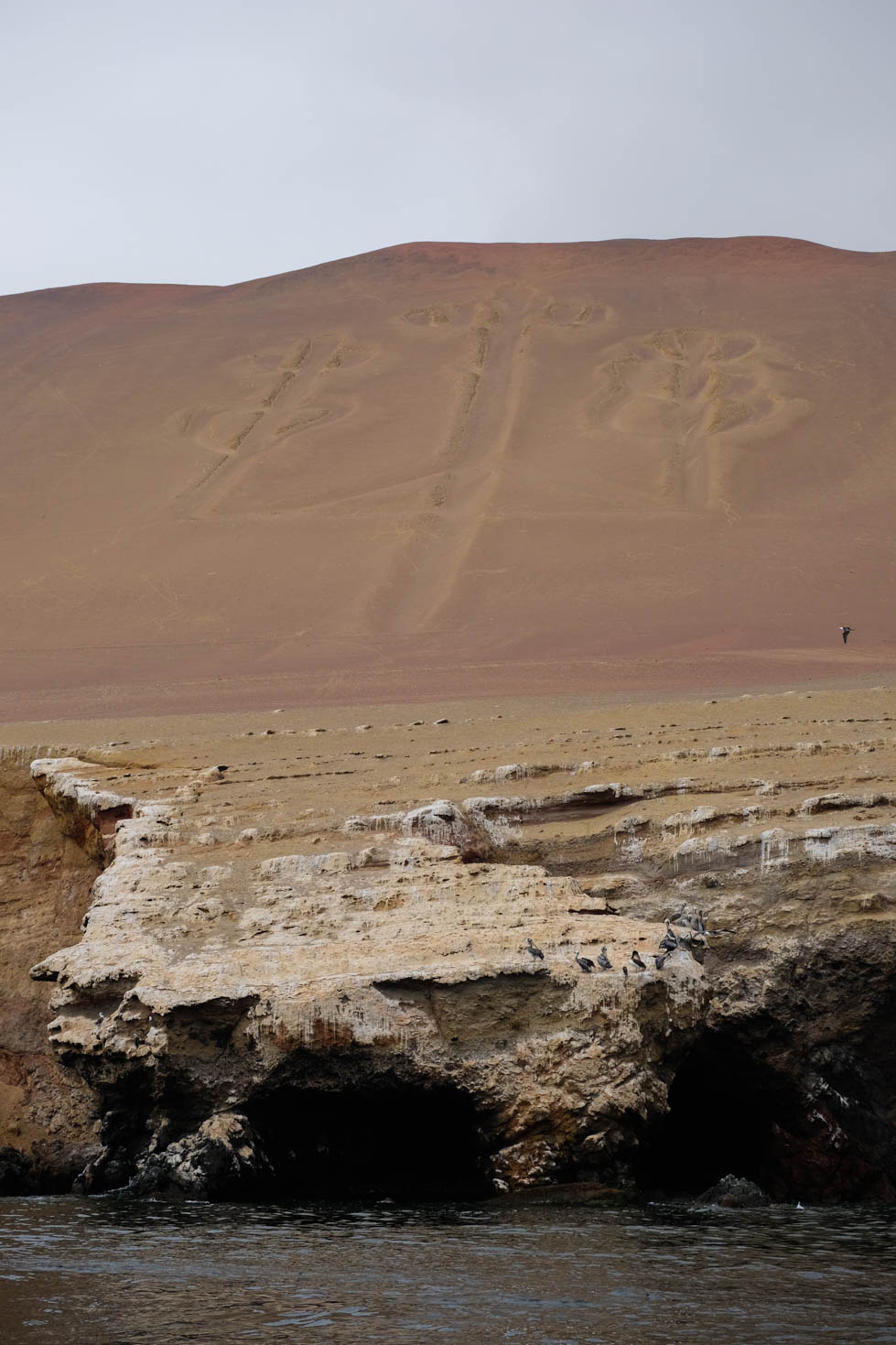
The Ballestas are a group of islands inhabited by thousands of seabirds, sea lions, seals, and endangered Humboldt penguins. On the way, we see the mysterious Candelabra geoglyph carved into the coast of the Paracas Peninsula. Nobody knows who made it, why, or even what it depicts. Theories link it to the Nazca Lines, propose that it served as a landmark for sailors, or suggest that pirates used it to mark buried treasure. Interpretations of the image itself vary just as widely. To me, it looks like a cactus.
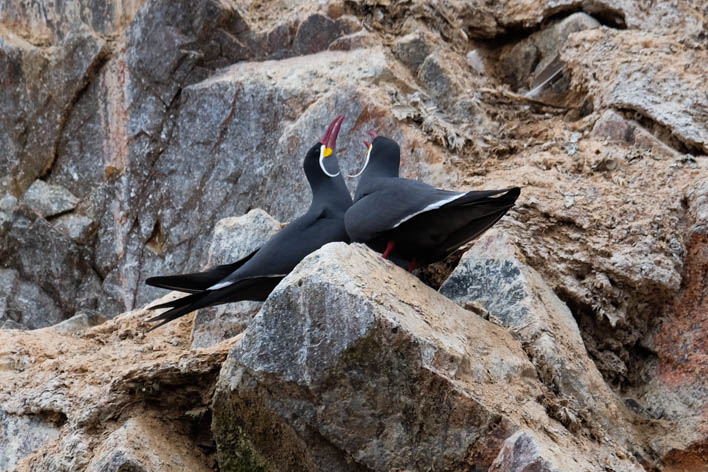
The captain takes us close to one island. Its rocky cliffs, natural arches, and thousands of birds are impressive. We are warned that somebody in our boat is certain to be “lucky”, and at that very moment a gull deposits a present on the shoulder of the woman beside us. The guide has also met some “exceptionally lucky” visitors, so he recommends watching the birds overhead with an open mouth. :)
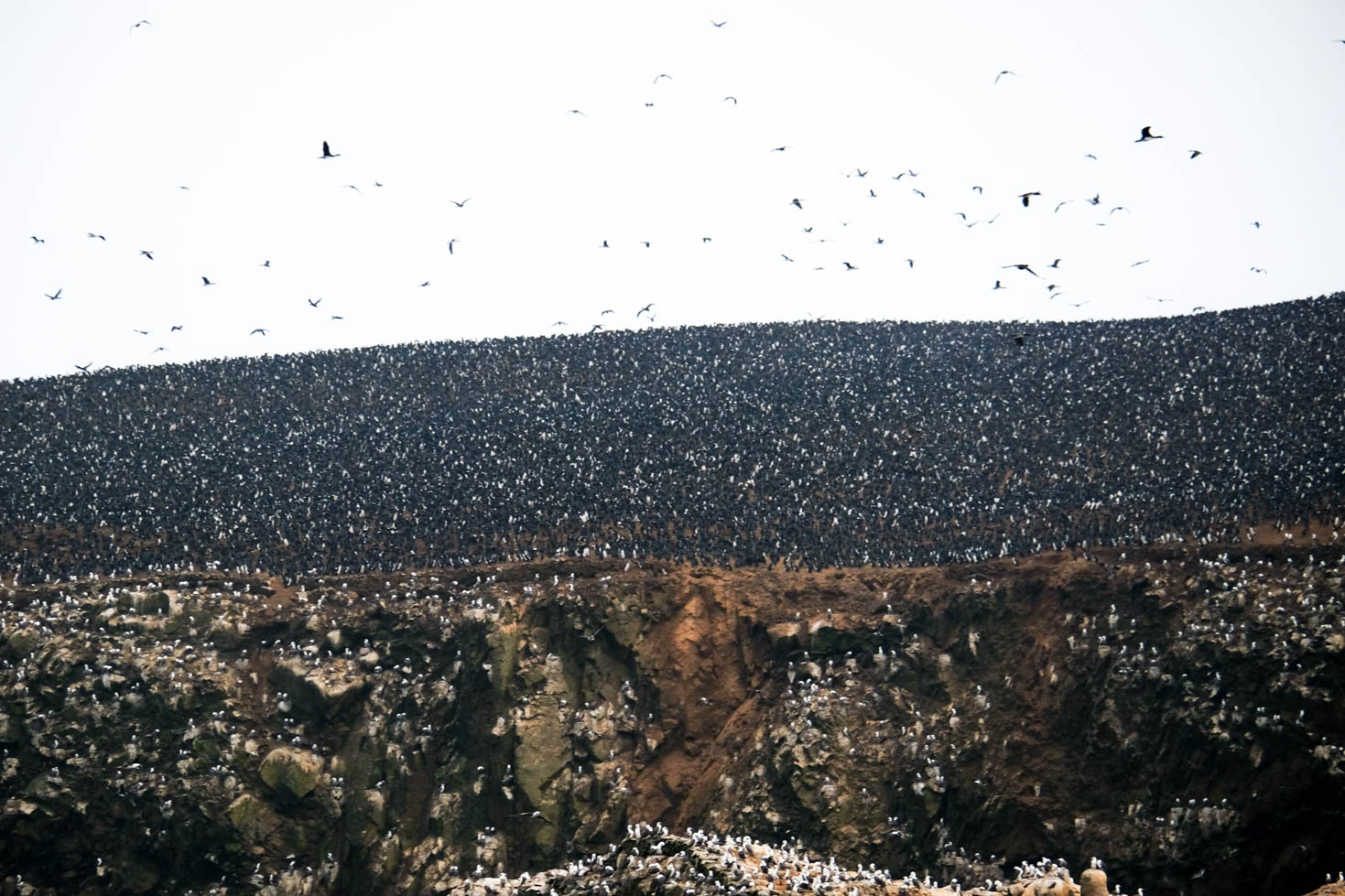
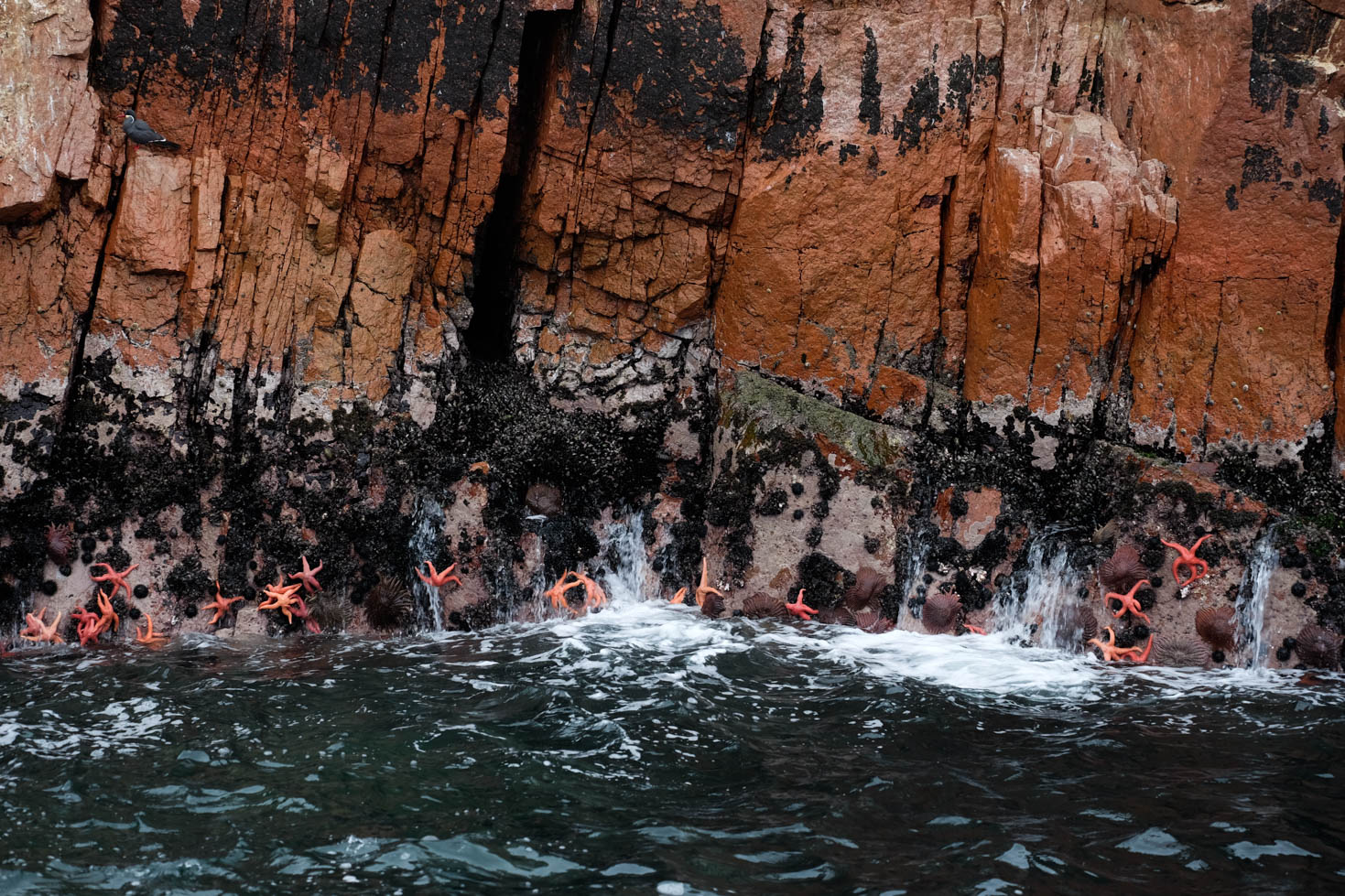
The guide points towards the top of the cliff, where tiny penguins are visible. A moment later, three sea lions appear behind another rock. Now and then, a seal raises its head from the water. Existing and expectant bird families, nests, and brooding parents are everywhere. At the waterline, rising and falling with the waves, we spot red starfish.
Interestingly, guano—bird droppings in plainer language—is harvested on these islands. It is a valuable fertiliser and one of the principal sources of income for businesses along this coast. Between the powerful smell and the rocking boat, my stomach begins to feel… interesting. The guide, who has also named one of the sea lions after me, immediately offers smelling salts. The boat soon turns towards shore. I close my eyes to cope with the nausea and fall asleep. When I wake, most of the other passengers are dozing too, including the guide.
The Huacachina oasis
After visiting the islands, we travel one hundred kilometres to Huacachina, an oasis surrounded by enormous sand dunes. Yes, the place is one hundred per cent tourism: hotels, tour agencies, souvenir stalls, restaurants, and cafés. With good reason, though—the oasis is exceptionally easy on the eye.
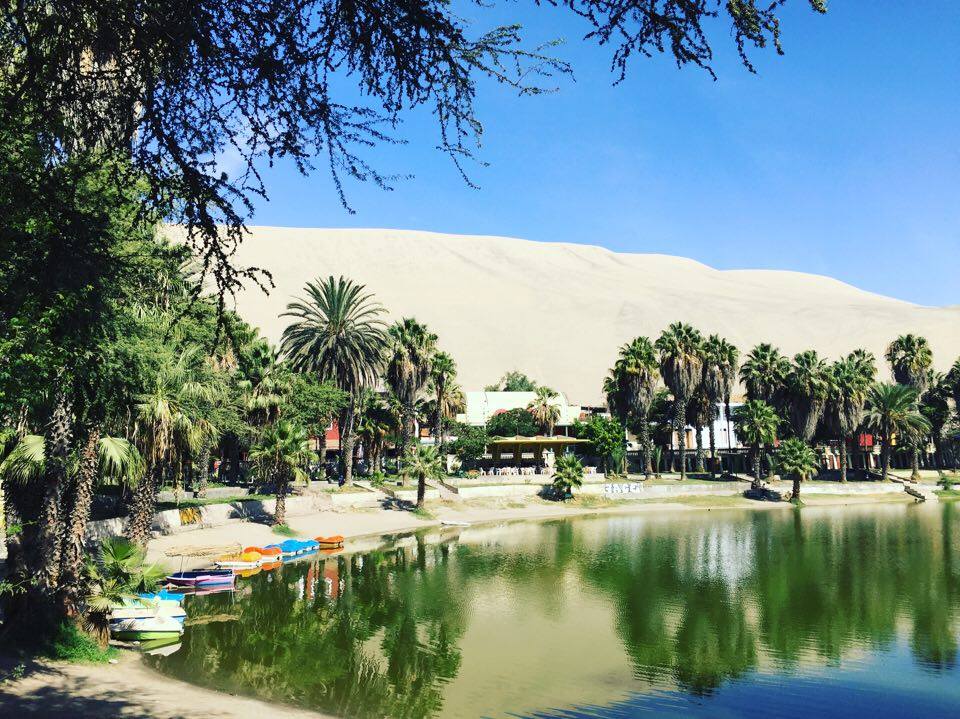
At four in the afternoon, the roar of dune buggies filled with tourists spreads across Huacachina. Jānis and I are going out on the dunes too. We begin climbing one of the walls of sand, and when the desert opens before us at the summit, the driver presses hard on the accelerator. We race up and down steep dunes. Our companions squeal and shout, while I spend the first few minutes frozen: it feels as though very little effort would be required to roll the buggy at speed. The only thought in my head apart from overturning is that perhaps I ought to live in the UK, where health and safety are taken seriously. After a while, I relax, start filming, and enjoy the ride.
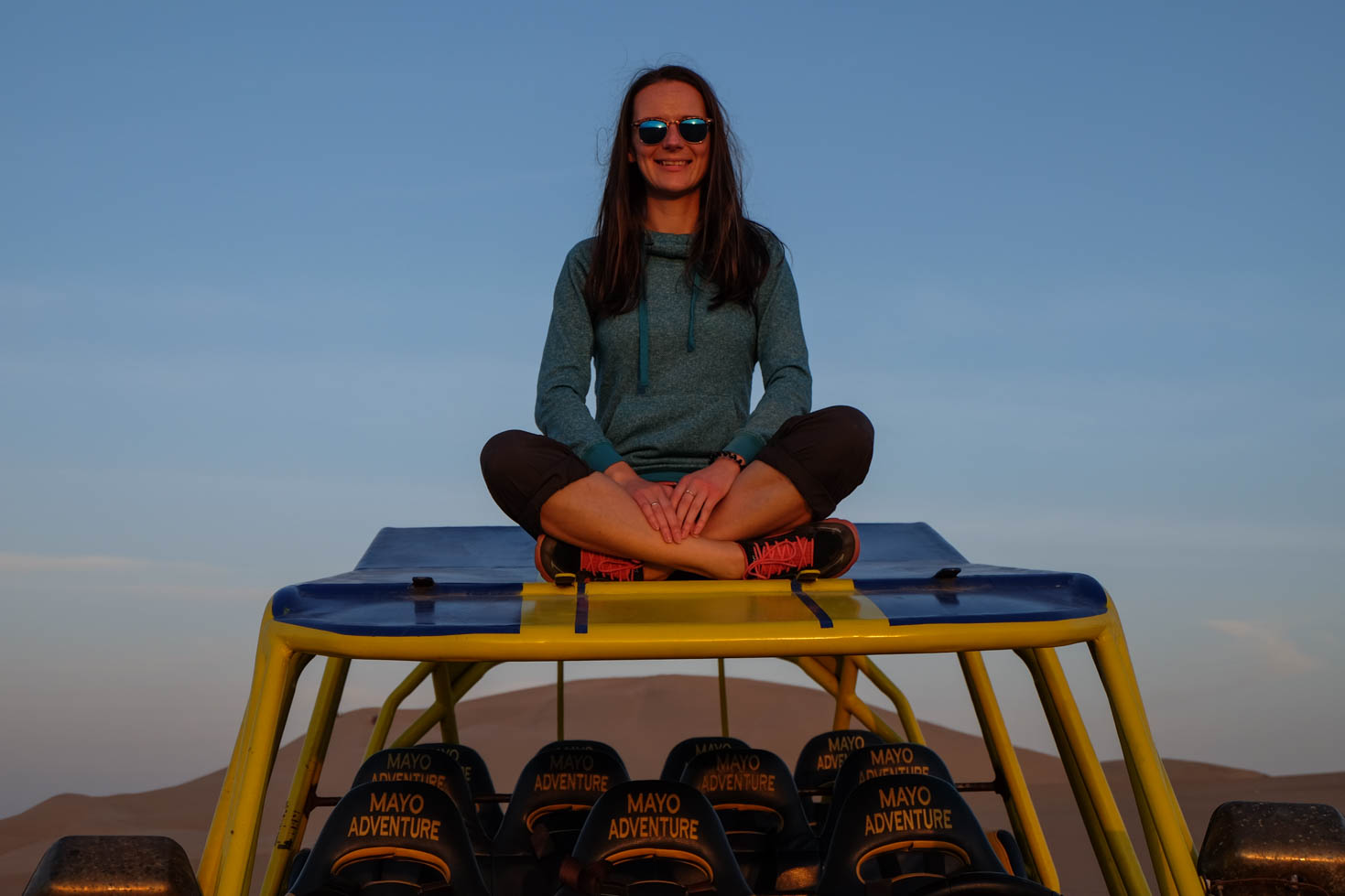
We stop at the top of a dune—it is time for sandboarding. Experienced riders may descend standing up; everyone else lies stomach-down on a board and slides. At the bottom of the first slope, a short walk brings us to another twice as high. All right, down we go. Our buggy collects us below and carries us to an even taller dune. Just before my turn, the driver announces that he has never tried this himself. Everyone waiting below has reached the bottom safely, so I set off too. Everything is fine! At the bottom, I empty sand from my shoes for the umpteenth time and wait for the buggy. We return to the oasis just as the sun sets.
After such an active day, we go out for dinner and take one of the remaining tables. It turns out to be happy hour, which we have no intention of missing. Two Pisco Sours for Jānis, two Banana Coladas for me, and a good night’s sleep is guaranteed.
The Nazca Lines from the air
As arranged, we wait outside our hostel at 7:30 for transport to Ica bus station. By eight, we begin to wonder whether anyone is coming. A man from the hostel reassures us that time here is measured in “Peruvian hours”, not ordinary sixty-minute ones. Sure enough, our transport arrives another ten minutes later. We transfer to a bus for the 160-kilometre journey to Nazca.
Someone is supposed to meet us at the bus station and take us to Nazca airport. I very much hope this person will be holding a sign with our names, because I have always wanted that. When Jānis once collected me at Riga airport, he refused my request on the grounds that “We already know each other, and people don’t do that then.” Nobody meets us with a sign in Nazca either; instead, we are the ones who have to wait for the late driver.
At the small Nazca airport, we pass a brief security check and board a six-seat aircraft. There are two pilots, the two of us, and a woman with her young son.
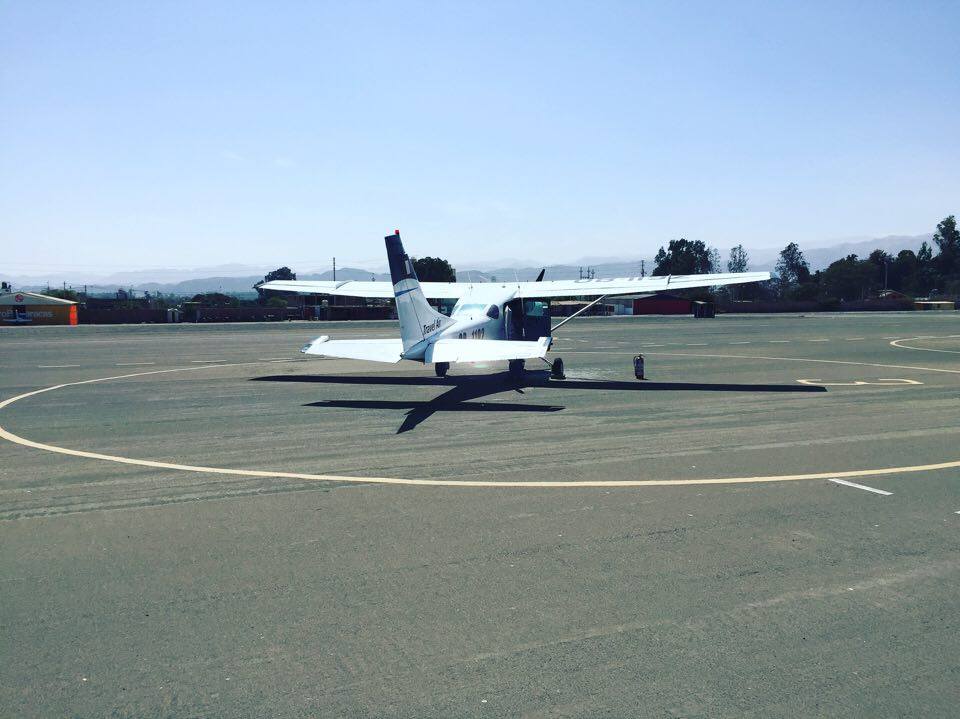
Without the elaborate safety instructions we received even on the bus, we are already on the runway. Before we quite realise it, we are airborne. The Nazca Desert opens below and, after several minutes, we reach the Nazca Lines. From above, we see zoomorphic figures including a whale, dog, monkey, condor, hummingbird, spider, heron, and parrot, as well as various geometric forms.
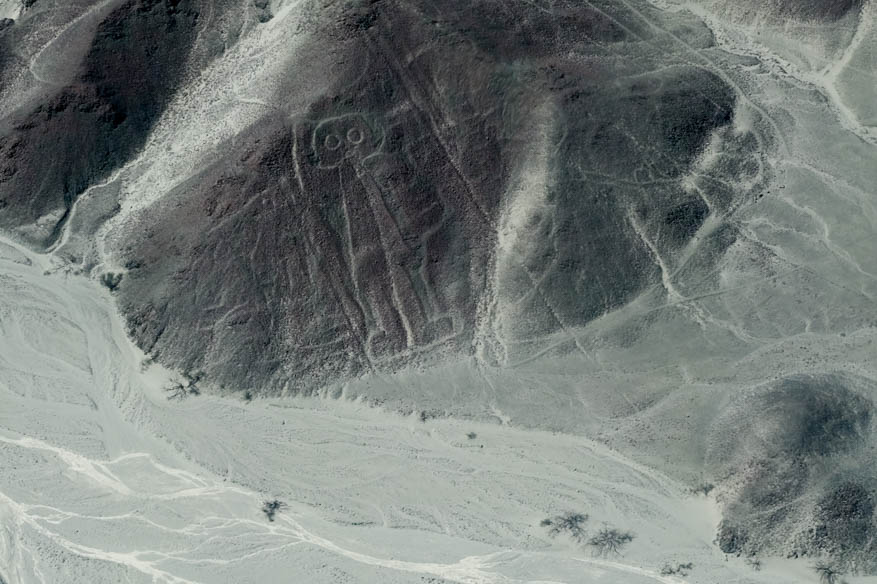
The Nazca culture created the lines between 200 BC and AD 700. Many theories attempt to explain their meaning: they may indicate the movement of water, have served as fertility symbols in rituals, or form an astronomical calendar. Another popular idea is that the drawings were the Nazca people’s attempt to communicate with aliens. Some figures are as much as three hundred metres across, while the geometric lines are visible from satellites. The dry, windless, stable climate has preserved most of them naturally since their creation.
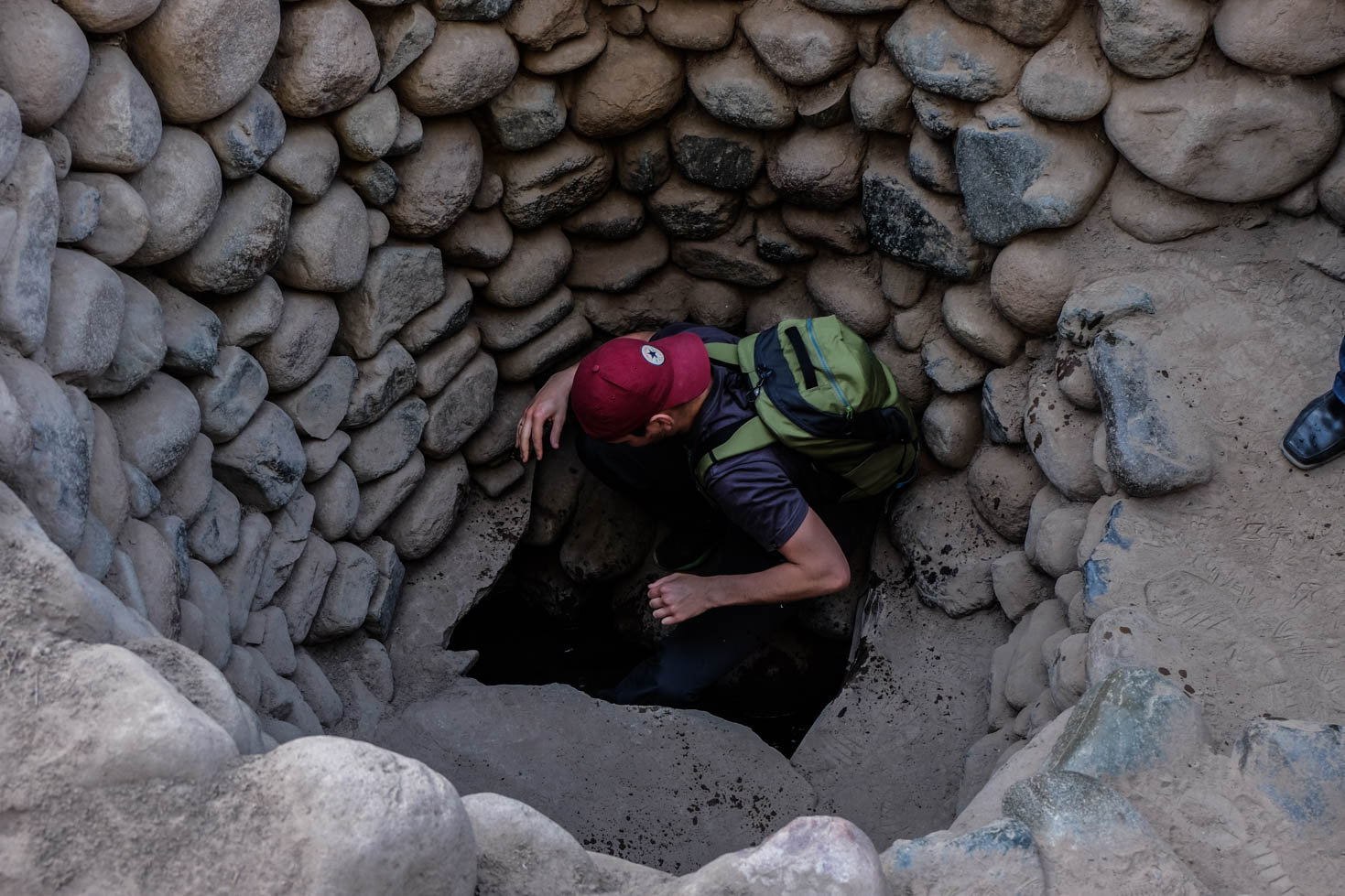
After the flight, we use our free time to visit the Cantalloc aqueducts. This impressive feat of engineering—a system of underground aqueducts—was also built by the Nazca and still functions today.
On the way back to town, we also see the Inca ruins of Los Paredones, which served as an administrative centre for the Ica region. All that remains is to imagine how it looked in Inca times and what daily life was like.
In Nazca, we pass the time in the main square—every city has a Plaza de Armas—then sit in a café and wait for the overnight bus to our new home, where we plan to spend a month.